Retro Television Review: St. Elsewhere 1.1 “Pilot”


Welcome to Retro Television Reviews, a new feature where we review some of our favorite and least favorite shows of the past! On Fridays, I will be reviewing St. Elsewhere, a medical show which ran on NBC from 1982 to 1988.  The show can be found on Hulu!
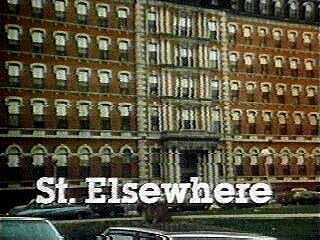
When I started reviewing Homicide, Jeff suggested that I should also review St. Elsewhere because the two shows shared a similar sensibility and a lot of behind-the-scenes personnel.  (Homicide showrunner Tom Fontana started out as a writer on St. Elsewhere.)  Apparently. a few characters from St. Elsewhere would eventually cross-over to Homicide.  Since I’m planning on soon reviewing two shows that were descended from HomicideOz and The Wire — it only seemed right to also review a show that was Homicide’s ancestor.

Though the show aired largely before my time, St. Elsewhere is definitely a show that I have heard about.  Everyone who follows American pop culture has either read about or seen the show’s infamous final episode and knows about the Tommy Westphall Universe Hypothesis.  Obviously, I can’t get into it now because that would be a spoiler but we’ll discuss it when the time comes!

For now, let’s start at the beginning, with the pilot!

Episode 1.1 “Pilot”

(Dir by Thomas Carter, originally aired on October 26th, 1982)

St. Eligius is a hospital in Boston that has obviously seen better days.  From the outside, it looks old.  On the inside, the hallways have the dim and dull look of a building that hasn’t been renovated in over ten years.  As Dr. Mark Craig (William Daniels, long before he played Mr. Feeney on Boy Meets World) angrily puts it, the hospital gets no respect in Boston.  It’s seen as being a “dumping ground” for patients who can’t afford anything better.  Dr. Craig is world-renowned heart surgeon whose wealthy patients have donated what few improvements the hospital has seen over the past few years.  (“All of our clocks now read the same time!” Dr. Craig brags at one point.)  But not even Dr. Craig can change the hospital’s reputation as being secondary to Boston General.

There are actually a few good things about St. Eligius.  For one thing, a young Denzel Washington is on staff, playing resident Phillip Chandler.  Denzel doesn’t get to do much in the pilot but still, his presence fills the viewer with confidence.  St. Eligius is also home to a world-renowned liver specialist, Dr. Daniel Auschlander (played by Norman Lloyd, who also worked with Hitchcock and Orson Welles).  Auschlander has liver cancer but the hospital chief-of-staff, Dr. Donald Westphall (Ed Flanders), assures everyone that Auschlander will probably “out live us all.”  (And he was right, to an extent.  Norman Lloyd lived to be 106 years old before passing away in 2021.  Ed Flanders died, tragically by suicide, in 1995.)  St. Eligius is a teaching hospital and the residents want to make a good impression by keeping their patients alive.  That’s always a good thing.

At the same time, how secure can you feel when Howie Mandel is one of the residents?  Mandel plays Dr. Wayne Fiscus, who wears a baseball cap and acts …. well, he acts a lot like Howie Mandel.  Like Washington, Mandel doesn’t do a lot in the pilot.  He does get a subplot where he apparently has sex in the morgue with goth pathologist Cathy Martin (Barbara Whinnery) but otherwise, we don’t see him treating a patient or anything like that.  Still, it’s a bit jarring to see Howie Mandel as a doctor.  I would not necessarily want him for my doctor because he’s to be easily distracted.  Maybe he’ll change my mind as the series progresses.

Speaking of sex, Dr. Ben Samuels (David Birney) has gonorrhea and spends most of the pilot approaching doctors and nurses and informing them of his conditions and suggesting that they might want to get tested themselves.  That’s not exactly the best way to be introduced to a character but it also lets us know that this show is not just going to be about dedicated doctors who spend all of their time worrying about their patients and making amazing medical discoveries.  Instead, this show is also about doctors who get venereal diseases.  Has anyone checked on Fiscus in the morgue?

(That said, Dr. Samuels does get a scene where he saves the life of a woman who was injured in a terrorist bombing, as if the show does want to make sure that we know that he can do his job, even if he is spreading VD through the hospital.)

The majority of the episode follows Dr. Jack Morrison (David Morse), a first-year resident who has been working several 24-hour shifts and who complains, at one point, that he hasn’t seen his wife for days.  Dr. Morrison gets upset when a surgeon wants to operate on one of his patients, a 15 year-old girl named Sandy (Heather McAdams).  Morrison believes that surgeons always want to cut into somebody.  Morrison gets even more upset when Sandy’s mother requests that Sandy be transferred to Boston General, which has a reputation for being a better, more modern hospital.  In fact, Morrison is so upset and exhausted that he forgets to file a death certificate for a patient who dies during the night.  As a result, it’s believed that the patient, who has a reputation for being violent, has gone missing and is stalking the hospital.  Dr. Annie Cavanero (Cynthia Sikes) spends the entire episode looking for a dead man, which at least gives her an excuse to visit every ward and introduce the viewers to the members of the show’s ensemble cast.

Having lost my mom to cancer and now my Dad to Parkinson’s, I was hesitant about reviewing St. Elsewhere.  (Actually, I was hesitant about reviewing any medical show.)  When my Dad was in the hospital, I felt like I couldn’t get anyone to give me a straight answer about his condition and I often felt the doctors were talking down to me.  To be honest, my worst conflicts were with the nurses, one of whom told me that I would have to “lose the attitude” before she would explain why my father had been moved to the Delirium Ward.  (It didn’t help that, at the same time my Dad was in the hospital, there was a huge storm that left us without power for a week.)  At the same time, there were other doctors who were helpful.  The staff at the rehab center that my dad was sent to were also wonderful.  I have my regrets about agreeing to hospice care but the nurse who was assigned to my Dad was very empathetic and totally understanding whenever I asked her for a cigarette.  (Under normal circumstances, I don’t smoke because I have asthma but seriously, the stress was killing me.)  I’m bitter and angry about a lot of what happened but I’m also thankful for the small moments of kindness.

Watching a show set in a hospital was not easy for me but the pilot of St. Elsewhere appealed to me with its mix of melodrama and humor.  There was a quirkiness to it that I appreciated.  William Daniels made me laugh with his annoyed rant about how little respect the hospital received.  Most of all, I cared about whether or not Dr. Morrison would still be alive at the end of his shift.  David Morse’s performance won me over.  He’s the type of doctor that I would want to have.  Well, actually, I’d probably want Denzel to my doctor but Dr, Morrison could assist.  Just keep Dr. Howie Mandel away from me.  Nothing against him but he seemed to be having way too much fun at the hospital….

Most importantly, the show ended with a cat.

Next week, the drama continues at St. Elsewhere!

Retro Television Review: Mary Jane Harper Cried Last Night (dir by Allen Reisner)


Welcome to Retro Television Reviews, a feature where we review some of our favorite and least favorite shows of the past!  On Sundays, I will be reviewing the made-for-television movies that used to be a primetime mainstay.  Today’s film is 1977’s Mary Jane Harper Cried Last Night!  It  can be viewed on YouTube.

Damn.

I mean, seriously!  I have seen some depressing films before but nothing could have quite prepared me for Mary Jane Harper Cried Last Night.

Susan Dey stars as Rowena, a young single mother whose 3 year-old daughter, Mary Jane Harper (Natasha Ryan), is taken to the hospital with a broken arm.  Dr. Angela Buccieri (Tricia O’Neil) doesn’t believe Rowena’s claim that Mary Jane is just accident prone and when she discovers what appears to be cigarette burns on the little girl, Dr. Buccieri goes to the head of pediatrics (played by veteran screen villain John Vernon) and requests a full set of X-rays to see if there are any previously healed injuries.  Buccieri’s request is denied.  It turns out that Rowena comes from a wealthy family and her father (Kevin McCarthy) is a trustee of the hospital.  Even after Dr. Buccieri opens up about her own experiences as an abused child, she is told to drop the matter.

She doesn’t drop it.  Instead, she goes to a social worker named Dave Williams (Bernie Casey).  Dave does his own investigation but none of Rowena’s neighbors want to talk about all of the crying and the screaming that they hear coming from Rowena’s apartment.  Rowena presents herself as being a stressed but loving mother.  Dave suggests a support group that she can attend.  When Rowena goes to the group, she opens up a little about how overwhelmed she feels.  Unfortunately, she leaves Mary Jane in the apartment alone and, when a fire breaks out, Mary Jane is lucky to survive.

As intense as all of that is, it’s also only the first half of the movie.  The second half is even more intense and emotionally draining and it all leads up to one of the most devastating final lines ever uttered in a movie.  Throughout the film, the system fails both Rowena and Mary Jane.  Mary Jane is failed when all of the evidence of the abuse that she has suffered is either ignored or shrugged away by the same people who are supposed to be looking out for her.  Rowena is failed when no one pays attention to her obvious emotional instability.  When she finally does have a breakthrough during a therapy session, her psychiatrist (played by James Karen) curtly tells her that they’ll have to talk about it next week because their hour is up.

Rowena is a character who I both hated and pitied.  Like many abusers, she herself was a victim of abuse.  Even when Rowena tries to get support, no one wants to admit that a mother is capable of abusing their own child.  That said, Mary Jane Harper is at the center of the film. She’s a little girl who is desperate to be loved by a woman who often terrifies her.  She is continually failed by the people who should be looking after her and it’s just devastating to watch.  I’m sure I’m not the only person who was moved to tears by this film.

What a sad film.  At the same time, it’s also an important one.  If the film takes place at a time when no one wanted to admit to the abuse happening before their eyes, we now live in a time when people toss around allegations of abuse so casually that it’s led to a certain cynicism about the whole thing.  Even when seen today, Mary Jane Harper Cried Last Night works as a powerful plea to watch out and care for one another.

Embracing the Melodrama Part II #74: Perfect (dir by James Bridges)


PerfectOkay,before reviewing the 1985 film Perfect, I have three things to say.

Number one, I nearly captioned the picture above “John Travolta, Jamie Lee Curtis, and Little Xenu.”  And then I laughed and laughed.  But, in the end, I resisted temptation because I’m an adult now.

Number two, Perfect came out in June in 1985, a few months before I was born.  As a result, I have no idea what the 1985 reviews looked like.  However, it still seems to me that you’re taking a big risk when you give a movie a title like Perfect, especially when the movie itself is far from perfect.  How many reviews opened with, “Perfect fails to live up to its name…”

And finally, as a result of seeing both this film and Staying Alive, I have to say, “What the Hell, John Travolta?”  Seriously, what the Hell was going on?  John Travolta gave a great performance in the 1970s, with Saturday Night Fever.  And then in the 1990s, he was good in Pulp Fiction, Get Shorty, Face/Off, Primary Colors, and a few others.  (For our purposes here, we shall pretend that Battlefield Earth never happened.)  Even though most of Travolta’s recent films have been forgettable, his performances have generally been adequate.

So, seriously, John — what was going on in the 80s?  Because judging from both Perfect and Staying Alive, John Travolta apparently totally forgot how to act during that decade.  When I reviewed Staying Alive, I said that Travolta’s performance managed to create a whole new definition of bad.  But he’s actually even worse in Perfect.  It helped, of course, that in Staying Alive, Travolta’s character was supposed to be stupid.  In Perfect, on the other hand, he’s actually supposed to be a brilliant reporter.

Or, at the very least, he’s supposed to be brilliant by the standards of Rolling Stone.  Travolta plays Adam Lawrence, an award-winning reporter for Rolling Stone.  The magazine, by the way, plays itself and so does its publisher, Jann Wenner (though his character is technically named Mark Roth).  What’s interesting is that the film itself doesn’t necessarily paint a flattering picture of Rolling Stone or Jann Wenner, though admittedly a lot of that is due to the fact that Wenner himself gives a performance that is even worse than Travolta’s.  It’s impossible to watch Perfect without thinking about the fact that Adam is writing for the same magazine that would eventually put Dzokhar Tsarnaev on the cover and publish the UVA rape story.

Anyway, if I seem to avoiding talking about the exact plot of Perfect, that’s because there’s not really much of a plot to describe.  Adam, a hard-hitting investigative journalist, is doing research on a story about how people are hooking up at gyms.  Wenner agrees.  “We haven’t done L.A. in a while!” he says.  Adams joins the a gym called the Sports Connection, which he is soon calling “The Sports Erection” because he’s a super clever reporter.  He falls in love with an aerobics instructor, who is played by Jamie Lee Curtis.  She doesn’t trust reporters but is eventually won over by Travolta’s … well, who knows?  Mostly she’s won over because the plot needs some conflict.  She gets on Adam’s computer and she types, “Want to fuck?”  Adam says sure but then tries too hard to dig into the dark secret from her past.  “You’re a sphincter muscle!” she shouts as him.  Adam writes a compassionate and balanced article about the Sports Connection.  Wenner edits the article and turn it into a sordid hit piece.  (And again, you wonder why Wenner agreed to play himself.)  Feelings are hurt, issues are resolved, and eventually everyone takes an aerobics class.

Honestly, the entire movie is mostly just a collection of scenes of Jamie Lee Curtis and John Travolta working out.  And, in all fairness, Curtis does about as well as anyone could in this terrible film.  Travolta, on the other had … well, just check out the scene below and maybe you’ll understand why I had a hard time concentrating on Travolta’s acting.

Perfect fails to live up to its name.