Suspense Film Review: Rope (dir by Alfred Hitchcock)


Rope, an odd little 1948 experiment from Alfred Hitchcock, opens with a murder.

Two wealthy young men, Brandon (John Dall) and Philip (Farley Granger), invite their friend, David Kentley (Dick Hogan), up to their apartment.  When David arrives, they strangle him and hide his body in a wooden chest.  As quickly becomes obvious, Brandon and Philip killed David largely to see if they could pull off the perfect murder.  Brandon is sure that they did and, that by doing so, they proved the concept of Nietzsche’s Übermensch,  The alcoholic Philip is less sure and starts drinking.

Brandon and Philip don’t just have murder planned for the day.  They’re also planning on throwing a little dinner party and, among those on the guest list, are David’s parents, his girlfriend, and his girlfriend’s former boyfriend.  Also attending will be Brandon and Philip’s former teacher and housemaster, Rupert Cadell (James Stewart).  In fact, Brandon regularly claims that he got the idea to commit the perfect murder as a result of discussing philosophy with Rupert.  Apparently, Rupert turned Brandon onto Nietzsche….

AGCK!  JIMMY STEWART LEADING YOUNG MEN TO FASCISM!?  SAY IT’S NOT SO!

Well, fortunately, the dinner party conversations reveals that Brandon and Philip misunderstood what Rupert was trying to tell them.  They assumed, using the same type of logic that currently fuels most debate today, that just because Rupert mentioned something that meant that he approved of it.  As it becomes clear that Rupert would not approve of what his students have done and as Rupert himself starts to suspect that something bad has happened at the apartment, Brandon and Philip start to plot against their former mentor….

Now, it can be argued that Rope is not a horror movie.  And indeed, if your definition of horror is ghosts, vampires, werewolves, or any other type of paranormal creature than yes, Rope has none of those.  Instead, the horror of Rope is the horror of human cruelty.  It’s the horror of two privileged young men who have so twisted the words of their mentor that they’ve become monsters.  The horror in Rope comes from the fact that, in 1948, Brandon and Philip have embraced the same philosophy that, only a few years earlier, had plunged the entire world into war.  While families mourned their dead and Europe struggled to rebuild, Brandon and Philip showed that they had no understanding of or concern for the trauma that humanity had just suffered.  And making it even more disturbing is that they found the justification for their crimes in the lessons taught by the epitome of American decency, Jimmy Stewart.  The idea of that is more terrifying than any Hammer vampire flick.

Of course, Rope is best known for being a bit of an experiment.  Hitchcock edited the film to make it appear as if it was all shot in one take and events, therefore, played out in real time.  It’s an interesting idea and, as always, you have to admire Hitchcock’s ingenuity and, even in a film as grim as this one, his playfulness.  At the same time, Hitchcock’s technique makes an already stagey story feel even stagier.  Some of the actors — like James Stewart, John Dall, and Cedric Hardwicke in the role of David’s father — are able to give naturalistic and convincing performances despite the staginess of the material. Others, like poor Farley Granger, find themselves overshadowed by the film’s one-shot gimmick.

Rope is an experiment that doesn’t quite work but flawed Hitchcock is still a pleasure to watch.  The final few minutes, with Stewart and Dall finally confronting each other, are among the best that Hitchcock ever put together.  I appreciate Rope, even if it doesn’t quite succeed.

Horror on the Lens: The Lodger (dir by Alfred Hitchcock)


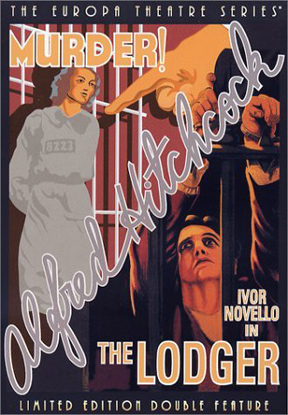
A serial killer known as “The Avenger” is murdering blonde women in London (which, once again, proves that its better to be a redhead).  And while nobody knows the identity of the Avenger, they do know that the enigmatic stranger  (Ivor Novello), who has just recently rented a room at boarding house, happens to fit his description.  They also know that the lodger’s landlord’s daughter happens to be a blonde…

Released in 1927, the silent The Lodger was Alfred Hitchcock’s third film but, according to the director, this was the first true “Hitchcock film.”  Certainly it shows that even at the start of his career, Hitchcock’s famous obsessions were already present — the stranger accused of a crime, the blonde victims, and the link between sex and violence.

Also of note, the credited assistant director — Alma Reville — would become Alma Hitchcock shortly before The Lodger was released.

Horror on the Lens: The Lodger (dir by Alfred Hitchcock)


A serial killer known as “The Avenger” is murdering blonde women in London (which, once again, proves that its better to be a redhead).  And while nobody knows the identity of the Avenger, they do know that the enigmatic stranger  (Ivor Novello), who has just recently rented a room at boarding house, happens to fit his description.  They also know that the lodger’s landlord’s daughter happens to be a blonde…

Released in 1927, the silent The Lodger was Alfred Hitchcock’s third film but, according to the director, this was the first true “Hitchcock film.”  Certainly it shows that even at the start of his career, Hitchcock’s famous obsessions were already present — the stranger accused of a crime, the blonde victims, and the link between sex and violence.

Also of note, the credited assistant director — Alma Reville — would become Alma Hitchcock shortly before The Lodger was released.

Horror Scenes That I Love: The Birds Show Up For School


This is from Alfred Hitchcock’s 1963 masterpiece, The Birds.

This is how you edit a scary scene!

It’s interesting to consider that The Birds was apparently not a big hit with critics when it was first released in 1963.  Much like Kubrick’s The Shining, it’s gone on to become one of the definitive horror films of all time.  It’s certainly one of the most influential.

4 Shots From 4 Alfred Hitchcock Films: The Lodger, Psycho, The Birds, Frenzy


4 Shots From 4 Films is just what it says it is, 4 shots from 4 of our favorite films. As opposed to the reviews and recaps that we usually post, 4 Shots From 4 Films lets the visuals do the talking.

This month, we’ve been using 4 Shots From 4 Films to honor some of our favorite filmmakers!  Today, we pay tribute to the one and only Alfred Hitchcock!

4 Shots From 4 Alfred Hitchcock Films

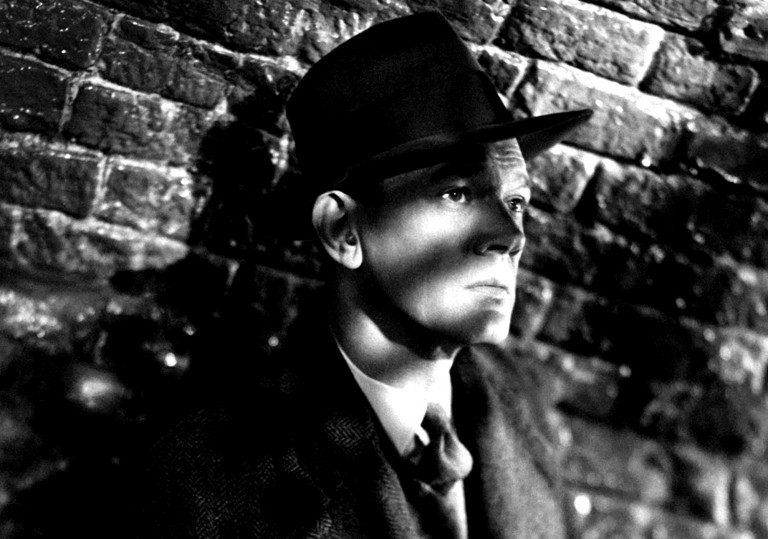
The Lodger (1926, dir by Alfred Hitchcock)

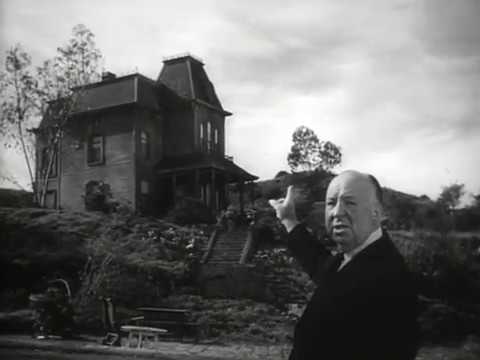
Psycho (1960, dir by Alfred Hitchcock)

The Birds (1963, dir by Alfred Hitchcock)

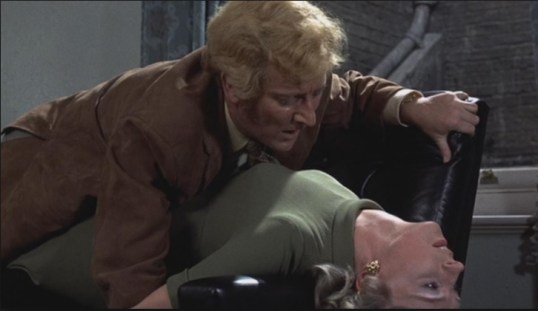
Frenzy (1972, dir by Alfred Hitchcock)

4 Shots From 4 Films: Special Alfred Hitchcock Edition


4 Shots From 4 Films is just what it says it is, 4 shots from 4 of our favorite films. As opposed to the reviews and recaps that we usually post, 4 Shots From 4 Films lets the visuals do the talking!

121 years ago today, the master of suspense, Alfred Hitchcock, was born!

In honor of the most influential director all time, here are….

4 Shots From 4 Films

Spellbound (1945, dir by Alfred Hitchcock)

Vertigo (1958, dir by Alfred Hitchcock)

Psycho (1960, dir by Alfred Hitchcock)

The Birds (1963, dir by Alfred Hitchcock)

4 Shots From 4 Films: In Tribute To Joseph Cotten


The Third Man (1949, directed by Carol Reed)

4 Shots From 4 Films is just what it says it is, 4 shots from 4 of our favorite films. As opposed to the reviews and recaps that we usually post, 4 Shots From 4 Films lets the visuals do the talking!

As you can probably guess from my pen name and my profile pic, Joseph Cotten is one of my favorite actors.  Born 115 years ago on this day, Cotten may be best known for his association with Orson Welles but he worked with several great directors over the years.  Along with playing Jedediah Leland in Welles’s Citizen Kane, he starred in Hitchcock’s Shadow of a Doubt and Carol Reed’s The Third Man.  Even while his film career was flourishing, Cotten continued to appear on the Broadway stage and, during the early days of television, he frequently appeared on anthology series, the majority of which were broadcast live.  Cotten even had a memorable cameo in Michael Cimino’s infamous film, Heaven’s Gate.

In honor of Cotten’s birthday, here are four shots from four of his best films.

4 Shots From 4 Films

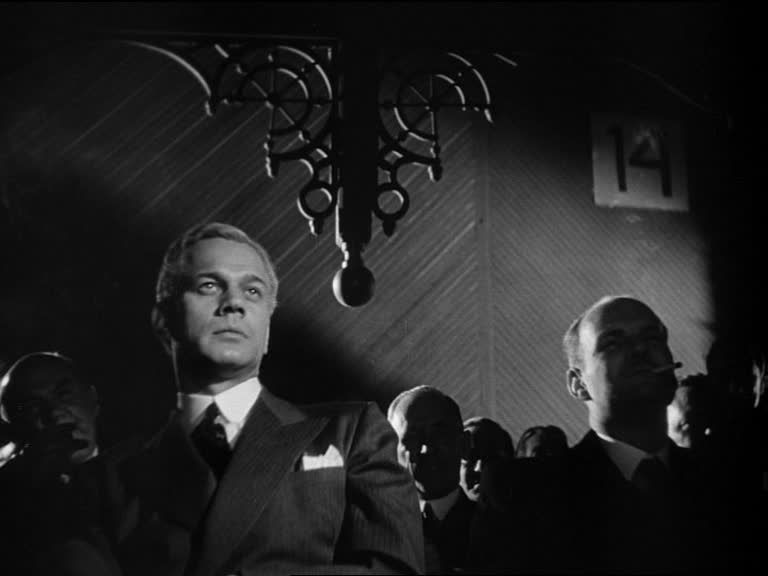
Citizen Kane (1941, directed by Orson Welles)

Journey Into Fear (1943, directed by Norman Foster and Orson Welles)

Shadow of a Doubt (1943, directed by Alfred Hitchcock)

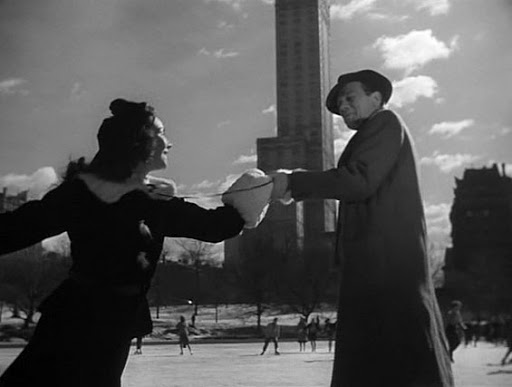
Portrait of Jennie (1948, directed by William Dieterle)


4 Shots From 4 Cary Grant Films: The Awful Truth, The Philadelphia Story, North by Northwest, Charade


4 Shots From 4 Films is just what it says it is, 4 shots from 4 of our favorite films. As opposed to the reviews and recaps that we usually post, 4 Shots From 4 Films lets the visuals do the talking!

Today is the 116th anniversary of one of the greatest stars of Hollywood’s Golden Age, Cary Grant!  And that means that it’s time for….

4 Shots From 4 Cary Grant Films

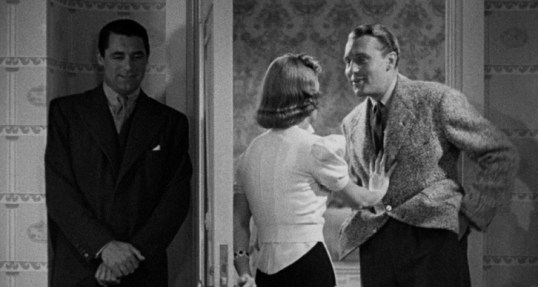
The Awful Truth (1937, dir by Leo McCarey)

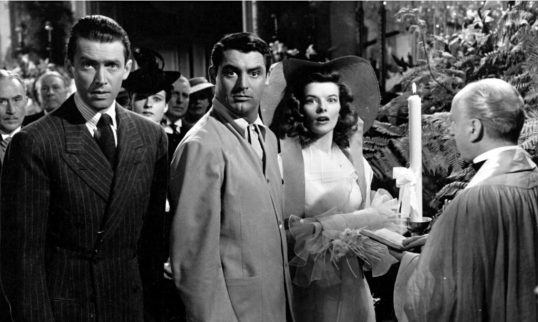
The Philadelphia Story (1940, dir by George Cukor)

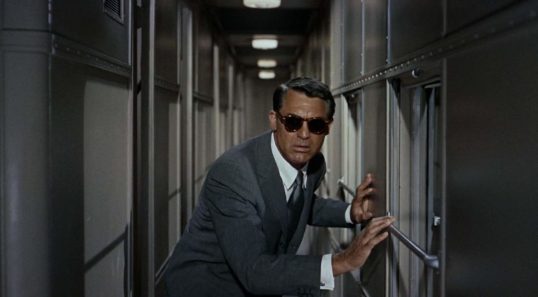
North by Northwest (1959, dir by Alfred Hitchcock)

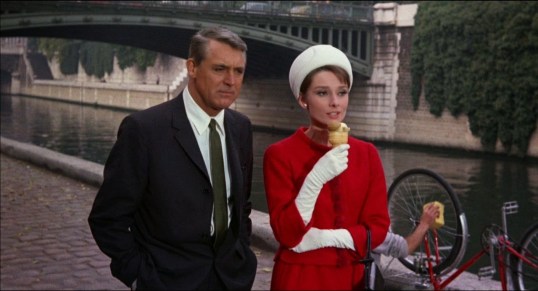
Charade (1963, dir by Stanley Donen)

Horror on the Lens: The Lodger (dir by Alfred Hitchcock)


A serial killer known as “The Avenger” is murdering blonde women in London (which, once again, proves that its better to be a redhead).  And while nobody knows the identity of the Avenger, they do know that the enigmatic stranger  (Ivor Novello), who has just recently rented a room at boarding house, happens to fit his description.  They also know that the lodger’s landlord’s daughter happens to be a blonde…

Released in 1927, the silent The Lodger was Alfred Hitchcock’s third film but, according to the director, this was the first true “Hitchcock film.”  Certainly it shows that even at the start of his career, Hitchcock’s famous obsessions were already present — the stranger accused of a crime, the blonde victims, and the link between sex and violence.

Also of note, the credited assistant director — Alma Reville — would become Alma Hitchcock shortly before The Lodger was released.

Scenes That I Love: Norman and Arborgast Talk In Psycho


When it comes to Psycho, everyone always talk about the first half of the film, in which Marion Crane steals the money, gets interrogated by the highway patrolman, meets Norman Bates, and eventually takes that fateful shower.

Those are all great scenes that are wonderfully acted and directed.  But they’re also the scenes that always get shared whenever anyone shares something about Psycho.  So, for today’s scene that I love, I’m sharing a scene from the 2nd half of the film.  In this scene, Milton Arborgast (Martin Balsam) attempts to question Norman (Anthony Perkins, of course!) about whether or not Marion came by the motel.  Detective Arborgast thinks that Norman is hiding something.  Norman thinks that he can out talk the detective.

This scene is a master class in great acting.  Balsam and Perkins are like two tennis players, just knocking the ball back and forth without missing a beat.  What I love is that both men are pretending as if they’re having a friendly conversation, whereas they both know that they’re not.  Of course, when audience saw this movie for the first time (before the famous ending became common knowledge), they probably thought that Norman was trying to protect Arborgast from his mother.

Anyway, here’s the scene.  It’s Arborgast vs. Bates, Balsam vs. Perkins, and it’s rather brilliant: