4 Or More Shots From 4 Or More Films is just what it says it is, 4 shots from 4 of our favorite films. As opposed to the reviews and recaps that we usually post, 4 Shots From 4 Films lets the visuals do the talking!
4 Or More Shots From 4 Or More Films is just what it says it is, 4 shots from 4 of our favorite films. As opposed to the reviews and recaps that we usually post, 4 Shots From 4 Films lets the visuals do the talking!
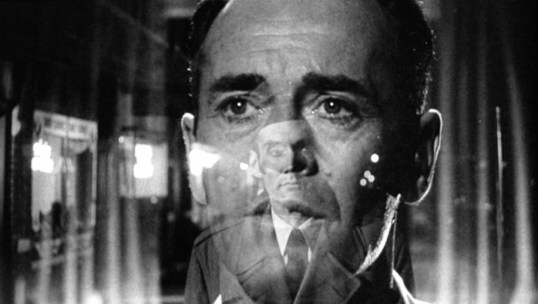
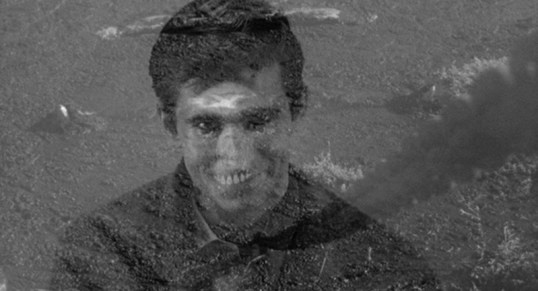
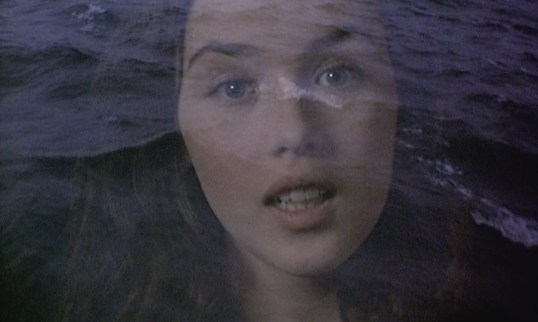
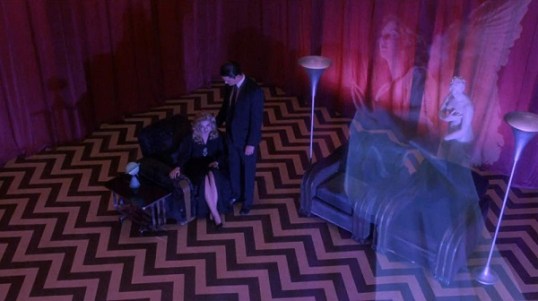
Today, I want to celebrate one of my favorite photography techniques, the double exposure!
4 Shots From 4 Films: Celebrating Double Exposure
The Wrong Man (1956, Dir. by Alfred Hitchcock)
Psycho (1960, Dir. by Alfred Hitchcock)
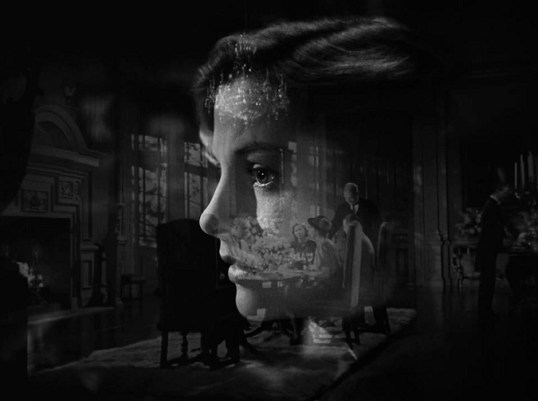
The Story of Adele H. (1975, Dir. by Francois Truffaut)
Twin Peaks: Fire Walk With Me (1992, Dir. by David Lynch)
4 Shots From 4 Films is just what it says it is, 4 shots from 4 of our favorite films. As opposed to the reviews and recaps that we usually post, 4 Shots From 4 Films lets the visuals do the talking!
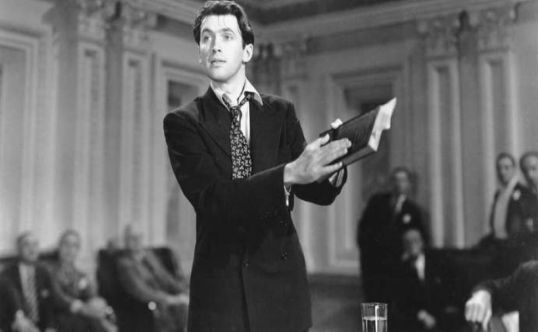
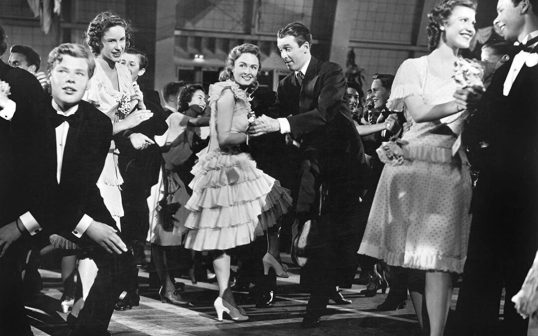
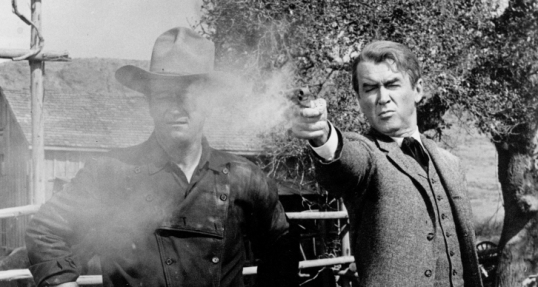
Today, we celebrate the birthday of one of the greatest American actors of all time, the wonderful James Stewart! It’s time for….
4 Shots From 4 James Stewart Films
Mr. Smith Goes To Washington (1939, dir by Frank Capra, DP: Joseph Walker)
It’s A Wonderful Life (1946, dir by Frank Capra, DP: Joseph Walker and Joseph Biroc)
Rear Window (1954, dir by Alfred Hitchcock, DP: Robert Burks)
The Man Who Shot Liberty Valance (1962, dir by John Ford. DP: William H. Clothier)
4 Shots From 4 Films is just what it says it is, 4 shots from 4 of our favorite films. As opposed to the reviews and recaps that we usually post, 4 Shots From 4 Films lets the visuals do the talking!
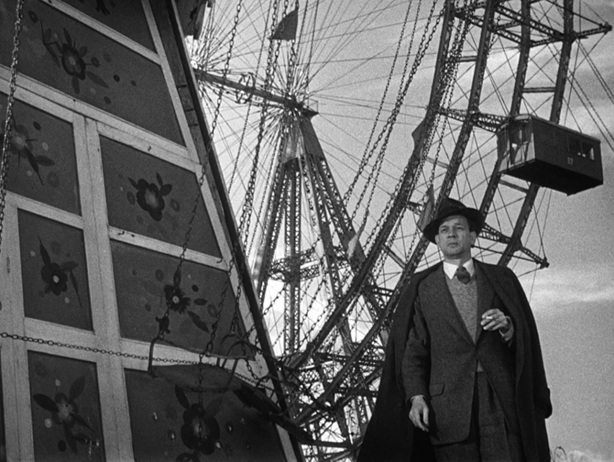
As you can probably guess from my pen name and my profile pic, Joseph Cotten is one of my favorite actors. Cotten may be best known for his association with Orson Welles but he worked with several great directors over the years. Along with playing Jedediah Leland in Welles’s Citizen Kane, he starred in Hitchcock’s Shadow of a Doubt and Carol Reed’s The Third Man. Even while his film career was flourishing, Cotten continued to appear on the Broadway stage and, during the early days of television, he frequently appeared on anthology series, the majority of which were broadcast live.
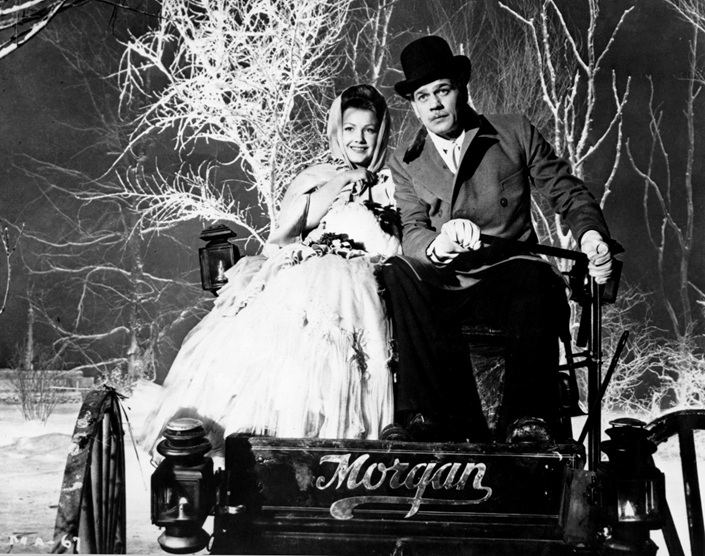
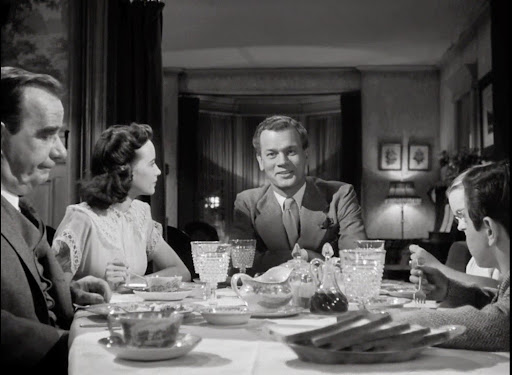
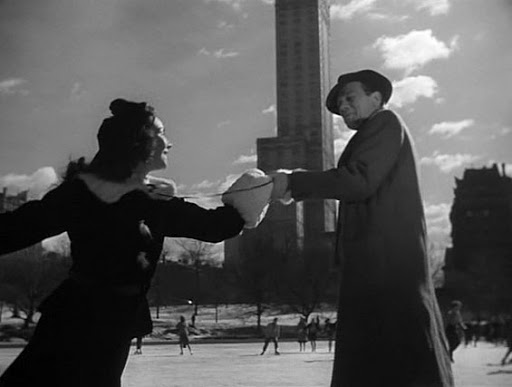
In honor of Cotten’s birthday, here are four shots from four of his best films.
4 Shots From 4 Films
The Magnificent Ambersons (1942, directed by Orson Welles)
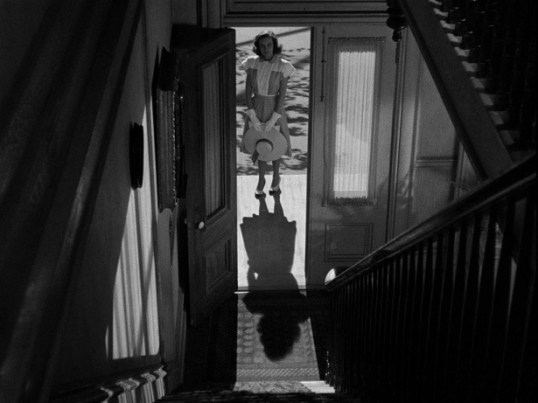
Shadow of a Doubt (1943, directed by Alfred Hitchcock)
Portrait of Jennie (1948, directed by William Dieterle)
Norman Bates, now there’s someone who probably made a big deal out of every Mother’s Day. Today’s scene that I love comes from 1960’s Psycho and features Hitchcock, Janet Leigh, and Anthony Perkins at their absolute best,
4 Or More Shots From 4 Or More Films is just what it says it is, 4 shots from 4 of our favorite films. As opposed to the reviews and recaps that we usually post, 4 Shots From 4 Films lets the visuals do the talking!
Today, let’s celebrate the year 1959! It’s time for….
4 Shots From 4 1959 films
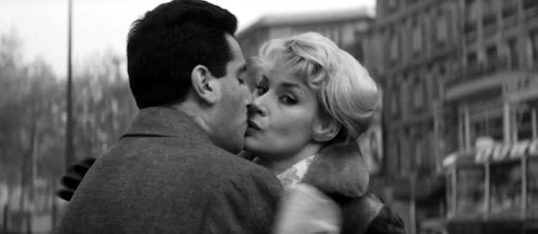
The 400 Blows (1959, dir by François Truffaut, DP: Henri Decae)
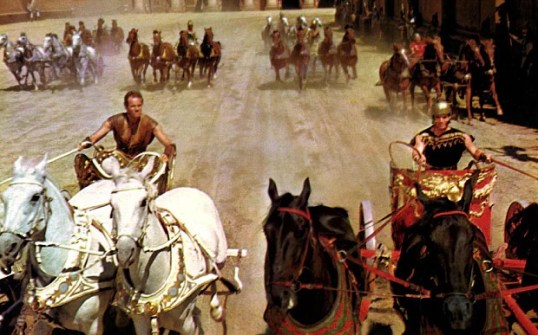
Ben-Hur (1959, dir by William Wyler, DP: Robert Surtees)
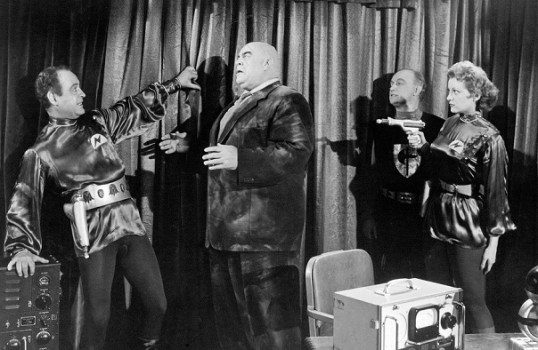
Plan 9 From Outer Space (1957, dir by Edward D. Wood, Jr., DP: William C. Thompson)
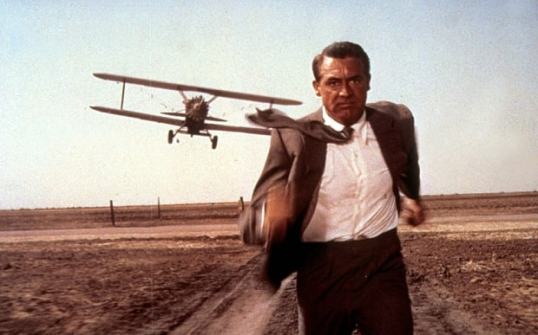
North by Northwest (1959, dir by Alfred Hitchcock, DP: Robert Burks)
Today is the 121st birthday of one of the great actors of Hollywood’s Golden Age, the one and only Cary Grant. For those of us who love to watch older films, Grant is usually the epitome of old-fashioned movie star charisma. He was an actor who could do it all, from screwball comedy to tear-jerking melodrama to exciting thrillers. What one usually hears about Cary Grant is that he was an actor who was taken for granted because he made everything seem so effortless.
And yet, there was a darkness to Grant’s best performances. Like Jimmy Stewart, he was an actor whose affable screen presence often hinted at inner turmoil. And, much as in the case of Stewart, Alfred Hitchcock was a director who immediately understood that. He cast Grant in some of his best films, usually playing a character with a secret or two to hide. One of my favorite “darker” Grant performances and films is 1946’s Notorious.
Directed by Alfred Hitchcock, Notorious opens with T.R. Devlin (Cary Grant) meeting and, it is implied, seducing Alicia Huberman (Ingrid Bergman). Alicia, at the time, was attempting to drink away her sorrow over her father being convicted of treason for his pro-Nazi activities during World War II. As the daughter of an American Nazi with a reputation for drinking too much and being promiscuous, Alicia is indeed notorious. That’s something that Devlin uses to his advantage the next morning when he informs that hangover Alicia that he is an American intelligence agent and that he is investigating the activities of a group of Nazi sympathizers who fled to South America at the end of the war. He wants Alicia, as the daughter of a known sympathizer, to infiltrate their operations.
Reluctantly, Alicia agrees and, while they wait for to learn the exact details of her assignment, they fall in love. Devlin is not happy when his superiors inform him that they want Alicia to approach and seduce Alex Sebastian (Claude Rains), a friend of her father’s who now lives in Brazil with his domineering mother (Leopoldine Konstantin). Alicia is even less happy when Devlin tells her of the assignment, especially as she knows that the weak-willed Sebastian has always been in love with her. She assumes that Devlin only pretended to love her.
After Devlin arranges for Alicia to be at the local riding club at the same time as Alex, Alex meets her and immediately brings her to the mansion that he shares with his mother. Alex is an interesting character. When we first meet him, he hardly seems like a Nazi sympathizer. His happiness when he sees Alicia and the apparent sincerity of his love for her stands in contrast to the often cold, manipulative, and harsh Devlin. Sebastian invites Alicia to move into his mansion and soon, Alicia tells Devlin that he can add Sebastian to “my list of playmates.” When Sebastian asks Alicia to marry him, Devlin tells Alicia to do what she wants. Alicia married Sebastian though she loves Devlin but she soon discovers just how for Sebastian and his mother will go to protect themselves and their Nazi conspirators.
Notorious is famous for its 2 and a half kissing scene between Devlin and Alicia, filmed at a time when the production code specifically stated that kisses could only last for three seconds. Hitchcock handled this by interrupting the kiss every three seconds and then having his two stars get back to it. Both Cary Grant and Ingrid Bergman said the scene was awkward to shoot, specifically because they had to keep finding reasons to split apart without splitting too far apart but the effect onscreen is amazingly romantic and probably about as erotic as 1940s studio production could be. In that scene, you have no doubt that Devlin and Alicia share a passion that Alex, even though he is in love with Alicia, could never understand. Grant and Bergman have an amazing chemistry in this scene and really the entire film.
As played by Cary Grant, Devlin is not always likable in Notorious. He can be cold and manipulative and judgmental but, in the end, we never doubt his love for Alicia. Alex also loves Alicia but he ultimately puts himself (and his mother) first. As for Alicia, she is someone who has been unfairly branded by both the activities of her father and her past reputation and anyone who has ever come to work or gone to school on a Monday morning and heard the snickering that goes along with the rumors about what she did during the weekend will immediately relate to Alicia. Alicia is told that the mission is a way to redeem herself but the film suggests that no redemption is necessary. If anything, it’s Devlin who needs to redeem himself for the way he previously manipulated and judged her. Devlin and his superiors are trying to stop a group of Nazi sympathizers from graining power in South America and their mission is an important one. (That sentiment would be even more true from audience watching in 1946, just a year after the end of World War II). But the important of their mission doesn’t change the fact that the people involved are human beings with very real and very fragile emotions.
Notorious features some of Hitchcock’s best set pieces, from the famous kissing scene to another scene involving the key to a wine cellar. Grant, Bergman, and Rains give three of their best performances in this intelligent thriller. (Watching, one can see why Ian Fleming suggested Cary Grant as a possible James Bond.) I first saw Notorious in a film class in college. At first, the class was a bit hesitant about a black-and-white movie from 1946 but, by the end, there were cheers as Devlin rushed to save Alicia. Notorious is a timeless classic.
Notorious (1946, dir by Alfred Hitchcock, DP: Ted Tetzlaff)
116 years ago, an actor named Mort Mills was born.
Mort Mills may have never been a household name but he will be forever remembered for playing the suspicious highway patrolman in 1960’s Psycho. Anyone was have ever had to deal with a grim-faced, flat-voiced highway patrolman will automatically be able to relate to Janet Leigh’s fear in today’s scene that I love. I’ve watched this film numerous times and I still don’t know if the patrolman was just doing his job or if he really was suspicious of Marion. Mort Mills, with those dark glasses and flat affect, keeps you guessing. In this brief role, Mills makes an impression that will never be forgotten.
4 Shots From 4 Films is just what it says it is, 4 shots from 4 of our favorite films. As opposed to the reviews and recaps that we usually post, 4 Shots From 4 Films lets the visuals do the talking.
Today, we honor the master of suspense, Alfred Hitchcock. Not all of his film were horror films, of course. In fact, the majority were not. But his influence on the genre cannot be overstated. Just try to keep track of how many horror films owe a debt to Psycho or The Birds.
It’s time for….
4 Shots From 4 Alfred Hitchcock Films
Rebecca (1940, dir by Alfred Hitchcock, DP: George Barnes)
Shadow of a Doubt (1943, directed by Alfred Hitchcock, DP: Joseph A. Valentine)
Psycho (1960, dir by Alfred Hitchcock, DP: John L. Russell)
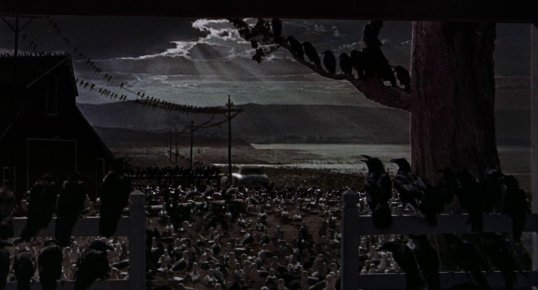
The Birds (1963, dir by Alfred Hitchcock, DP: Robert Burks)
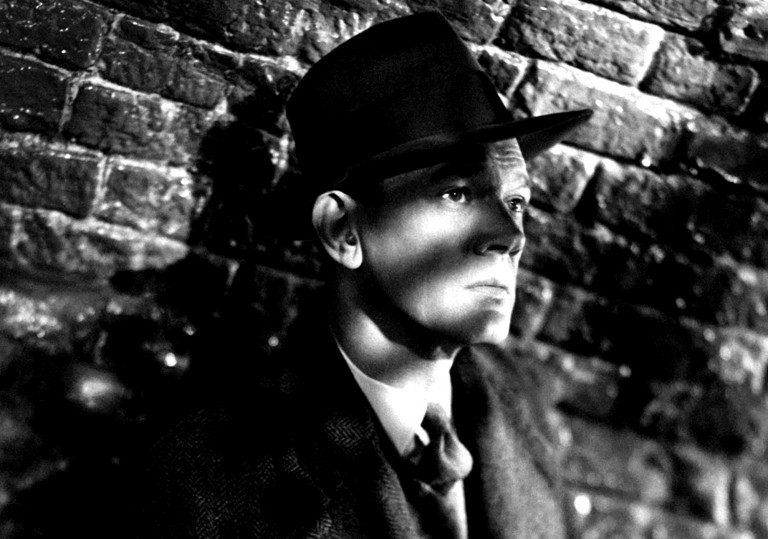
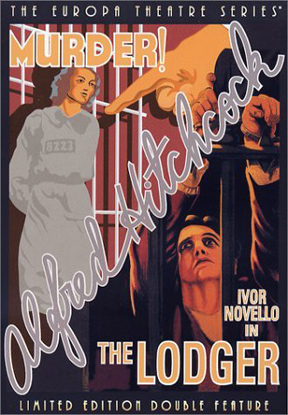
A serial killer known as “The Avenger” is murdering blonde women in London (which, once again, proves that its better to be a redhead). And while nobody knows the identity of the Avenger, they do know that the enigmatic stranger (Ivor Novello), who has just recently rented a room at boarding house, happens to fit his description. They also know that the lodger’s landlord’s daughter happens to be a blonde…
Released in 1927, the silent The Lodger was Alfred Hitchcock’s third film but, according to the director, this was the first true “Hitchcock film.” Certainly it shows that even at the start of his career, Hitchcock’s famous obsessions were already present — the stranger accused of a crime, the blonde victims, and the link between sex and violence.
Also of note, the credited assistant director — Alma Reville — would become Alma Hitchcock shortly before The Lodger was released.




 Through the Shattered Lens