Brad’s “Scene of the Day” – Charles Bronson & Alan Ladd in DRUM BEAT (1954)! Happy Birthday, Charlie!!


Until 1954’s DRUM BEAT, Charles Bronson had been billed on screen as Charles Buchinsky. He then proceeded to steal the film right out from under star Alan Ladd. Bronson’s powerful performance as renegade Modoc indian Captain Jack is an early sign of Bronson’s immense talent and charisma.

Enjoy this action-packed clip from Delmer Davis’ excellent western, and happy 104th birthday, Charles Bronson!

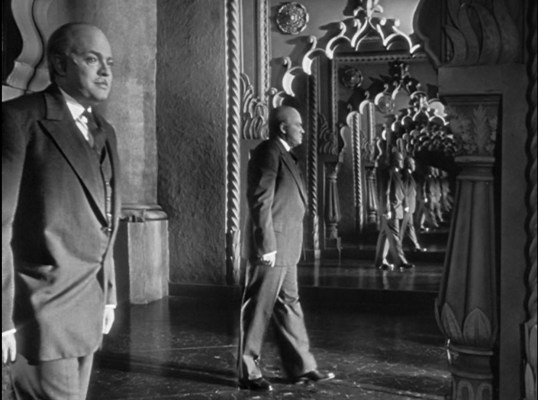
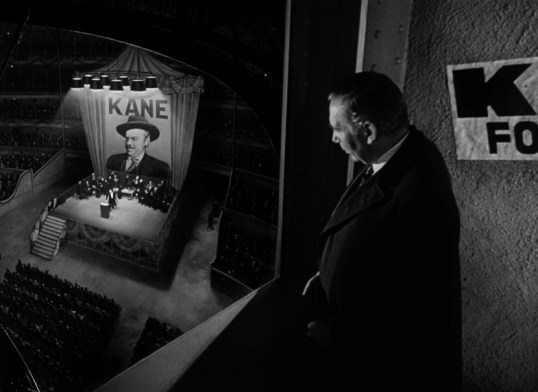
Lisa Marie Reviews An Oscar Winner: Citizen Kane (dir by Orson Welles)


For some reason, certain people seem to feel the need to try to reduce what Orson Welles accomplished with 1941’s Citizen Kane.

In 1971, the famous film critic Pauline Kael published an essay called Raising Kane, in which she argued that screenwriter Herman J. Mankiewicz deserved the majority of the credit for Citizen Kane.  This was Kael’s shot at rival Andrew Sarris and his embrace of the auteur theory.  (1971 was the same year that Kael described Dirty Harry as being  a “fascist work of art” so I guess even the best film critics can have a bad year.)  David Fincher’s father, after reading Kael’s essay, wrote the screenplay for Mank, which not only made the case that Mankiewicz deserved the credit but which portrayed Orson Welles in such a negative fashion that you really did have to wonder if maybe Orson had owed old Jack Fincher money or something.  Herman J.  Mankiewicz himself always claimed that he deserved the majority of the credit for Citizen Kane but then he would, wouldn’t he?

The truth of the matter is that Mankiewicz did write the screenplay for Citizen Kane and he did base the character of Charles Foster Kane on William Randolph Hearst and the character of Kane’s second wife on Hearst’s mistress, Marion Davies.  There’s some debate over how much of the film’s narrative structure belongs to Mankiewicz and how much of it was a result of Welles rewriting the script.  Mankiewicz played his part in the making of Citizen Kane but he played that part largely because Orson Welles allowed him to.  Like all great directors, Welles surrounded himself with people who could help to bring his vision to life.  (That’s something that would think David Fincher, of all people, would understand.  Aaron Sorkin may have written The Social Network but the reason why the film touched so many is because it was a David Fincher film.)

Make no mistake about it.  Citizen Kane is Orson Welles’s vision and Welles is the one who deserves the majority of the credit for the film.  The themes of Citizen Kane are ones to which Welles would frequently return and the cast, all of whom bring their characters to vivid life, is made up of largely of the members of Welles’s Mercury Theatre.  The tracking camera shots, the dark cinematography, and the satiric moments are all pure Welles.  As the Fincher film argues, Mankiewicz may have very well meant to use the film to attack Hearst for his personal hypocrisy and for opposing the political ambitions of Upton Sinclair.  If so, let us be thankful that Orson Welles, as a director, was smart enough to realize that such didacticism is often deadly dull.

And there’s nothing dull about Citizen Kane.  It’s a great film but it’s also an undeniably fun film, full of unforgettable imagery and scenes that play like their coming to us in a dream.  It’s a film that grabs your interest and proves itself to be worthy of every minute that it takes to watch it.  I was lucky enough to first see Citizen Kane at a repertory theater and on the big screen and really, that’s the best way to watch it.  It’s a big film that’s full of bigger-than-life characters who are ultimately revealed to be full of the same human longings and regrets as all of us.  As a young man, the fabulously wealthy Charles Foster Kane thinks that it would be “fun” to run a newspaper.  Later, he thinks that he’s found love by marrying the niece of the President.  He runs for governor of New York and, watching Welles in these scenes, you can see why FDR tried to recruit him to run for the Senate.  Welles has the charisma of a born politician.  When Welles first meets Susan Alexander (Dorothy Comingore) it’s easy to laugh.  The great man has just been splashed by a taxi.  Susan laughs but then winces in pain due to a tooth ache.  Later, Kane insists on trying to turn her into an opera star.  He runs a negative review written by his friend (Joseph Cotten) and then he promptly fires him.  As in all of Welles’s films, it’s all about personal loyalty.  Kane may betray his wife and the voters but he’s ultimately just as betrayed by those around him.  In the end, you get the feeling that Kane was desperately trying to not be alone and yet, that’s how he ended up.

There are so many stand-out moments in Citizen Kane that it’s hard to list them all.  The opening — MIGHTY XANADU! — comes to mind.  The satirically overdramatic newsreel is another.  (Citizen Kane can be a very funny film.)  Joseph Cotten’s performance continues to charm.  Orson Welles’s performance continues to amaze.  Who can forget Agnes Moorehead as Kane’s mother or Everett Sloane as Mr. Bernstein, haunted by that one woman he once saw on a street corner?  Myself, I’ve always liked the performances of Ray Collins (as the sleazy but strangely reasonable Boss Gettys), Paul Stewart (as the subtly menacing butler), and Ruth Warrick (as Kane’s first wife).  Mankiewicz may have put the characters on paper but Welles is the one who selected the amazing cast that brought them to life.

Citizen Kane was nominated for nine Oscars and it won one, for the screenplay written by Welles and Mankiewicz.  Best Picture went to How Green Was My Valley.  When was the last time anyone debated who should be given credit for that movie?

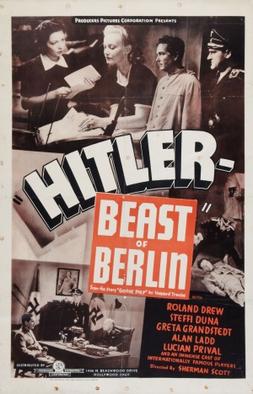
Film Review: Hitler — Beast of Berlin (dir by Sam Newfield)


1939’s Hitler — Beast of Berlin opens with a shot of Nazi stormtroopers marching down a Berlin street.  As they pass, every civilian stands and gives them the stiff-armed Nazi salute.  A couple sitting in a park does it.  A woman pushing a baby carriage does it.  A group of children do it.

Despite outward appearances, not everyone in Berlin is a supporter of Hitler or the Nazis.  Hans Memling (Roland Drew) is an intellectual and a veteran of World War I.  He knows that Germany’s economic policies are, in fact, making the country weaker.  He knows that Hitler is determined to provoke a war that Germany cannot win.  Prophetically, Hans speaks of the risk of German citizens being forced to fight in a war that is only being fought on behalf of Hitler’s ego.  He warns that Berlin and Germany will be destroyed if Hitler is not stopped.

Along with a group of other dissidents, Hans prints an underground newspaper, one that presents the truth about what is happening in Germany.  Working with him, among others, is his brother-in-law, Karl (Alan Ladd, in an early role) and a priest named Father Pommer (Frederick Giermann).  Their contact in the Gestapo is Alfred Stahlhelm (played by Hans Heinrich von Twardowski, a German actor who escaped Germany when Hitler came to power).  Stahlhelm is an alcoholic who fears that he will accidentally slip up when he’s drunk.  As he explains it, a member of the Gestapo is expected to drink and visit brothels when he is off-duty.  If he doesn’t, he will be immediately suspected of insubordination.

When the Gestapo does come for Hans’s operation, Hans finds himself separated from his wife (Steffi Duna) and imprisoned.  The only thing that keeps Hans alive is that the camp commandant is an old friend from World War I.  Hans can only watch as his allies are either executed or forced, after torture, to declare their loyalty to Hitler.  When Hans is finally given an opportunity to escape, he must decide whether to flee to Switzerland or to remain in Germany and continue to fight the Nazi regime.

The most interesting thing about this film is that it was made in 1939 and released into theaters a month after Germany invaded Poland.  The film was released at a time when America was still officially neutral and when isolationism was still a popular policy.  It was released at a time when many Americans were still dealing with the trauma of World War I and, as such, felt that Europe should be left alone to deal with its conflicts on its own.  As such, the film struggled with both the enforcers of the Motion Picture Production Code but also with local censors who felt that the film might offend the German communities within their towns.  James G. Stahlman, editor of the Nashville Banner, was moved to write an editorial calling for the film to be banned because it might inspire audiences to want to go to war with Germany.  Despite all that, Hitler — Beast of Berlin did well at the box office, though many theater owners chose to advertise it as being titled either Beast of Berlin or The Goose Steppers.

Seen today, parts of the film seem naive.  Despite the film being fervently and unapologetically anti-Nazi, it is still obviously a film made at a time when the full depravity of the Nazi regime had not yet been revealed.  The scenes in the concentration camp feel as if they could have been lifted from any 1930s prison film and they certainly come nowhere close to depicting what we now know was actually happening.  Indeed, the film barely acknowledges the anti-Semitism that lay at the heart of Nazi ideology.  But the film does do a good job of portraying life in a society where no one can be trusted and where simply saying the wrong word can lead to prison, torture, and even worse.  The film captures the fear and paranoia of living under a dictatorship and certainly, it deserves credit for calling out the Nazis and their leaders by name.  At a time when many people were living in denial about what was happening in Europe, this film took a clear and firm stand.  In 1939, the film may have been called “propaganda” but today, it feels like prophecy.  Everything that Hans predicts in this film would come to pass in reality.  The film was a warning that was heeded too late.

12 Oscar Snubs From the 1950s


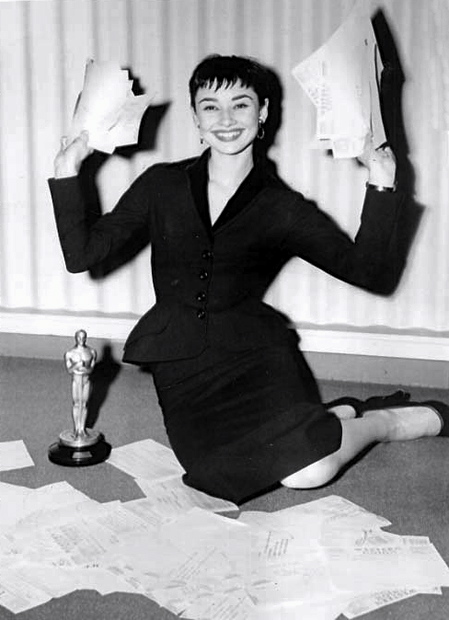
Audrey Hepburn and her Oscar.  At least the Academy didn’t snub her!

Continuing our look at the Oscar snubs of the past, it’s now time to enter the 50s!

World War II was over. Eisenhower was President. Everyone was worried about communist spies. And the Hollywood studios still reigned supreme, even while actors like Marlon Brando and James Dean challenged the establishment.  There were a lot great film released in the 50s.  There were also some glaring snubs on the part of the Academy.  Here’s twelve of them.
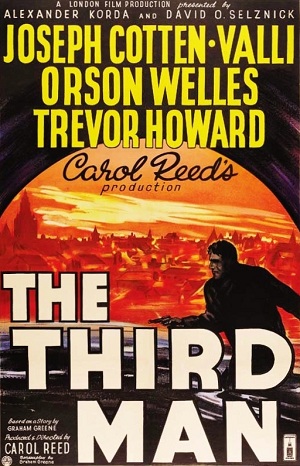
1950: The Third Man Is Not Nominated For Best Picture

….and Orson Welles was not nominated for Best Supporting Actor!  The Third Man received three Oscar nominations, for Director, Cinematography, and Editing.  The fact that Welles, Joseph Cotten, Alida Valli, and the film’s score were not nominated (and that King Solomon’s Mines was nominated for Best Picture instead of The Third Man) remains one of the more surprising snubs in Oscar history.

1952: Singin’ In The Rain Is Not Nominated For Best Picture

What the Heck, Academy!?  This was the year that The Greatest Show On Earth won the Best Picture Oscar.  Personally, I don’t think The Greatest Show On Earth is as bad as its reputation but still, Singin’ In The Rain is a hundred times better.

1953: Alan Ladd Is Not Nominated For Best Actor For Shane

How could Shane score a nomination for Best Picture without Shane himself receiving a nomination?

1954: Rear Window Is Not Nominated For Best Picture

Rear Window was not totally ignored by the Academy.  Alfred Hitchcock received a nomination for directing.  It also received nominations for Best Adapted Screenplay, Cinematography, and Sound.  However, Rear Window was not nominated for Best Picture and James Stewart, Grace Kelly, Raymond Burr, and Thelma Ritter all went unnominated as well.  Today, Rear Window is definitely better-remembered than the majority of 1954’s Best Picture nominees.  Certainly, it deserved a nomination more than Seven Brides For Seven Brothers and Three Coins in The Fountain.

1955: Ralph Meeker Is Not Nominated For Best Actor For Kiss Me Deadly

I guess I shouldn’t be surprised.  If the Academy wasn’t going to nominate Rear Window for Best Picture, there was no way that they would have nominated Ralph Meeker for playing a sociopathic private detective who, even if inadvetedly, helps to bring about the end of the world.

1955: Rebel Without A Cause Is Not Nominated For Best Picture or Best Actor

The 1955 Best Picture lineup was a remarkably weak one.  The eventual winner was Marty, a likeable film that never quite escapes its TV roots.  Picnic has that great dance scene but is otherwise flawed.  Mister Roberts was overlong.  Love Is A Many-Splendored Thing and The Rose Tattoo are really only remembered by those of us who have occasionally come across them on TCM.  Perhaps the best-remembered film of 1955, Rebel Without A Cause, received quite a few nominations but it was not nominated for Best Picture.  And while the Rebel himself, James Dean, was nominated for Best Actor, it was for his performance in East of Eden.  1955 was a strange year.

1955: Robert Mitchum Is Not Nominated For Best Actor For The Night of the Hunter

Robert Mitchum only received one Oscar nomination over the course of his entire career, for 1945’s The Story of G.I. Joe.  He deserved several more.  His performance as the villainous preacher in The Night of Hunter made Reverend Harry Powell into one of the most iconic film characters of all time.
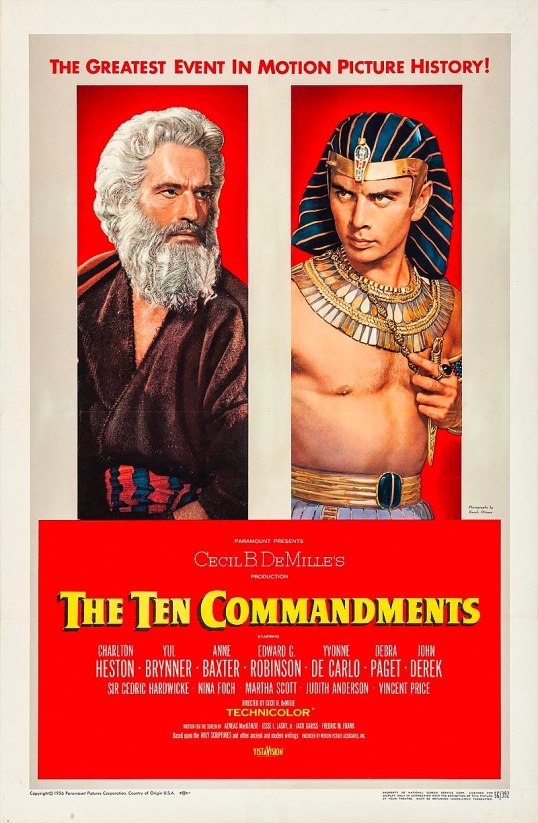
1956: Cecil B. DeMille Is Not Nominated For Best Director For The Ten Commandments

Cecil B. DeMille was only nominated once for Best Director, for 1952’s The Greatest Show On Earth.  DeMille, however, deserved to be nominated for The Ten Commandments.  As campy as DeMille’s films can seem today, he was an expert storyteller and that’s certainly evident when one watches The Ten Commandments, a film that holds the viewer’s attention for nearly four hours.  DeMille deserved a nomination for the Angel of Death scene alone.  The screams in the night are haunting.

1957: Henry Fonda Is Not Nominated For Best Actor For 12 Angry Men

With 12 Angry Men, Fonda did something that very few actors can.  He made human decency compelling.  One gets the feeling that, much like Tom Hanks in Captain Phillips, Fonda made it look so easy that the Academy took him for granted.

1958: Touch Of Evil Is Totally Ignored

Anyone who had researched the history of the Academy knows that there was no way that the 1950s membership would have ever honored Orson Welles’s pulp masterpiece, Touch of Evil.  That said, it still would have been nice if they had.  Touch of Evil has certainly go on to have a greater legacy than Gigi, the film that won Best Picture that year.

1958: Vertigo Is Almost Totally Ignored

Vertigo did receive nominations for Art Direction and Sound but Alfred Hitchcock, James Stewart, and the film itself were snubbed.

1959: Some Like It Hot Is Not Nominated For Best Picture or Best Actress

Some Like It Hot received 6 Oscar nominations, including nominations for Best Director, Best Actor, and Best Adapted Screenplay.  It did not receive a nomination for Best Picture and, sadly, Marilyn Monroe did not receive a nomination for Best Actress.  Much as with Henry Fonda in 12 Angry Men, one gets the feeling that the Academy took Monroe for granted.  It’s sad to realize that, while two actresses have been nominated for playing Marilyn Monroe, Monroe herself would never be nominated.

Agree?  Disagree?  Do you have an Oscar snub that you think is even worse than the 12 listed here?  Let us know in the comments!

Up next: Things get wild with the 6os!
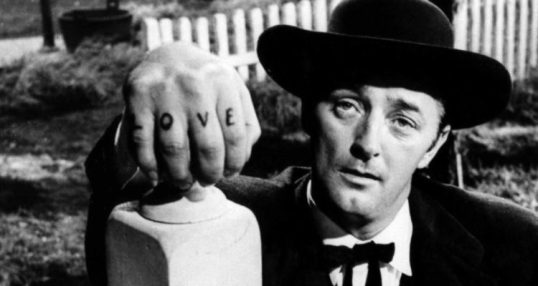
Night of the Hunter (United Artists 1955; D: Charles Laughton)
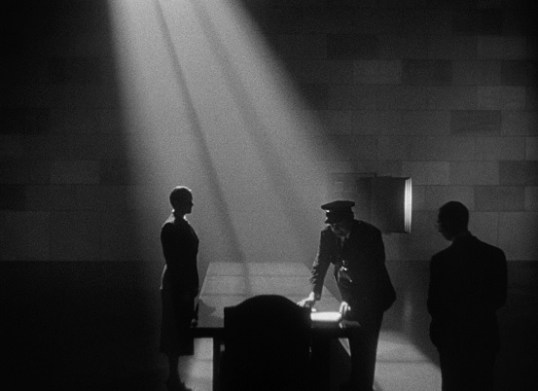
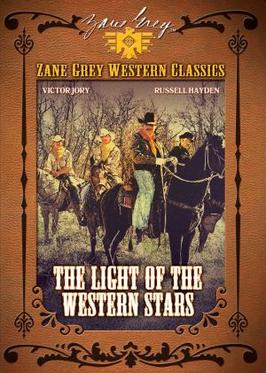
The Light of Western Stars (1940, directed by Lesley Selander)


In the dead of night, a train stops in an isolated western town.  Only one passenger disembarks.  Majesty Hammond (Jo Ann Sayers) is a wealthy Bostonian, who has traveled all the way to the town to try to prevent her bother from marrying a local woman.  Majesty takes a seat in the station and waits for someone to come get her.

After a few minutes, a drunken ranch foreman named Gene Stewart (Victor Jory) enters the station.  He has made a bet with the local sheriff (Tom Tyler) that he can convince the first new woman to arrive in town to marry him.  Stewart’s friends find a priest but before Gene can force the priest to marry them, a local girl named Bonita (Esther Estrella) rides up and tells Gene that one of the ranch hands, Danny (Alan Ladd, the future Shane in one of his earliest roles), has been forced to flee town after getting into a fight with the sheriff.

As if that’s not bad enough, Gene then discovers that Majesty’s brother is going to marry Flo Kingsley (Ruth Rogers), who happens to be Gene’s employer!  Ashamed of his behavior, Gene leads Majesty to Flo’s ranch.

After some initial weariness, Majesty is convinced that Flo and her brother really are in love.  Flo explains to Majesty how life works out in the frontier and Majesty is even able to forgive Gene for his drunken antics.  Majesty decides to buy a ranch in town but what she doesn’t know is that corrupt businessman Hayworth (Morris Ankrum) is using the ranch to smuggle weapons to the Mexican army and that he’s working with the sheriff!  Majesty is going to need Gene’s help to run the ranch but, after getting into another fighting with the sheriff, Gene goes into hiding.  Can Majesty find Gene and convince him to return to town?

Based on a novel by Western specialist Zane Grey, The Light of Western Stars is only 65 minutes long but it packs a lot of plot and a lot of action into those sixty minutes.  Of course, the plot is pretty standard stuff but, for B-movie fans, it’s a chance to see Victor Jory in a rare leading role and also a chance to see what Alan Ladd was doing before he became a noir mainstay.  Hard-drinking and occasionally irresponsible, Gene is an interesting hero and Jory does a good job playing him.  Alan Ladd doesn’t make a huge impression as Danny but he looks convincing fleeing town on horseback and that’s all the role really requires.

For many viewers, though, the main appeal of Light of Western Stars will be the beautiful Jo Ann Sayers as Majesty.  Primarily a stage actress, Sayers only appeared in 16 films before she got married and semi-retired but she made an impression in every one of them.  That’s certainly the case here, where her beauty makes it very plausible that even a wanted man would return to town just to be with her.

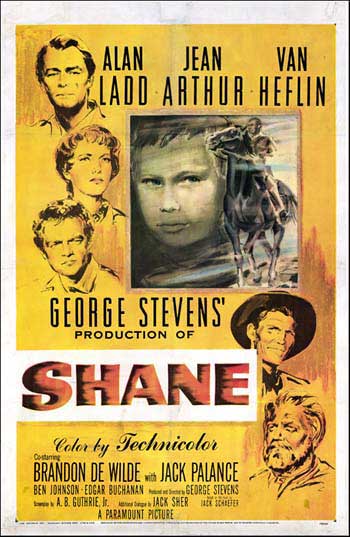
Lisa Reviews An Oscar Nominee: Shane (dir by George Stevens)


“Hey, Shane!  Come back, Shane!”

There’s a few ways in which you can view the 1953 film, Shane.

The more popular view is that it’s a Western about a man named Shane (Alan Ladd) who rides into town and gets a job working for the Starretts, Joe (Van Heflin) and Marian (Jean Arthur).  Joe is a farmer who is determined to hold onto his land, despite the efforts of cattle baron Rufus Ryker (Emile Meyer) to force him off of it.  While we don’t learn much about Shane’s background, it becomes apparent that he’s a man who can fight.  That comes in handy when Ryker brings in a sinister gunfighter named Wilson (Jack Palance).

Another view is that Shane is the story of a man who just wants to settle down but, instead, finds himself continually hounded by an annoying little kid, to the extent that he finally gets involved in a gun battle just so he’ll have an excuse to leave town and get away from the little brat.  Little Joey Starrett (Brandon deWilde) idolizes Shane from the minute that he comes riding up.  When he hears that Shane refused to get into a fight at the local saloon, Joey demands to know whether it was true.  He tells his mom that he loves Shane almost as much as he loves his father.  When Shane does get into a brawl with all of Ryker’s men, Joey stands in the corner and eats candy.  And then, when Shane tries to leave town, Joey runs behind him shouting, “Come back, Shane!  Come back!”

Myself, I think of it as being the story of Frank Torrey (Elisha Cook, Jr.).  Frank is the farmer that’s been nicknamed “Stonewall,” due to his status as a former Confederate and his quick temper.  Stonewall may be smaller than the other farmers but he’s usually the quickest to take offense.  Still, it’s impossible not to like him, largely because he’s played by Elisha Cook, Jr.  When Wilson feels the need to put the farmers in their place, he does so by picking a fight with Torrey.  Standing on a porch in the rain, looking down on the smaller man, Wilson starts to insult both him and the South.  When Torrey finally starts to reach for his gun, Wilson shoots him dead.  While Torrey lies in the mud, Wilson smirks.  It’s a shocking scene, all the more so for being shown in a long shot.  (By forcing those of us in the audience to keep our distance from the shooting, the film makes us feel as powerless as the farmers.)  If you didn’t already hate Wilson and Ryker, you certainly will after this scene.

Shane is a deceptively simple film, one in which many of the details are left open for interpretation.  We never learn anything about Shane’s background.  He’s a man who shows up, tries to make a life for himself, and then leaves.  He’s a marksman and an obviously experienced brawler but, unlike Ryker’s men, he never specifically looks for violence.  In fact, he often seems to avoid it.  Why?  The film doesn’t tell us but there are hints that Shane is haunted by his past.  Shane seems to want a chance to have a life like the Starretts but, once he’s forced to again draw his gun, he knows that possibility no longer exists.

Is Shane in love with Marian Starrett?  It certainly seems so but, again, the film never specifically tells us.  Instead, it all depends on how one interprets the often terse dialogue and the occasional glances that Marian and Shane exchance.  When Shane and Joe get into a fist fight to determine who will face Ryker and Wilson, is Shane really trying to protect Joe or is it that he knows Marian will be heart-broken if her husband is killed?

One thing’s for sure.  Little Joey sure does love Shane.  “Come back, Shane!”  Little Joey follows Shane everywhere, with a wide-eyed look on his face.  To be honest, it didn’t take too long for me to get sick of Little Joey.  Whenever director George Stevens needed a reaction shot, he would cut to Joey looking dumb-founded.  Brandon deWilde was 11 years when he appeared in Shane and he was nominated for an Oscar but he’s actually pretty annoying in the role.  Elisha Cook, Jr. was far more impressive and deserving of a nomination.

I know that many people consider Shane to be a classic.  I thought it was good, as long as the action was focused on the adults.  Alan Ladd plays Shane like a man who is afraid to get too comfortable in any situation and the film works best when it compares his reticence to Wilson’s cocky confidence.  Whenever Joey took center stage, I found myself wanting to cover my ears.

Shane was nominated for Best Picture but lost to From Here To Eternity.

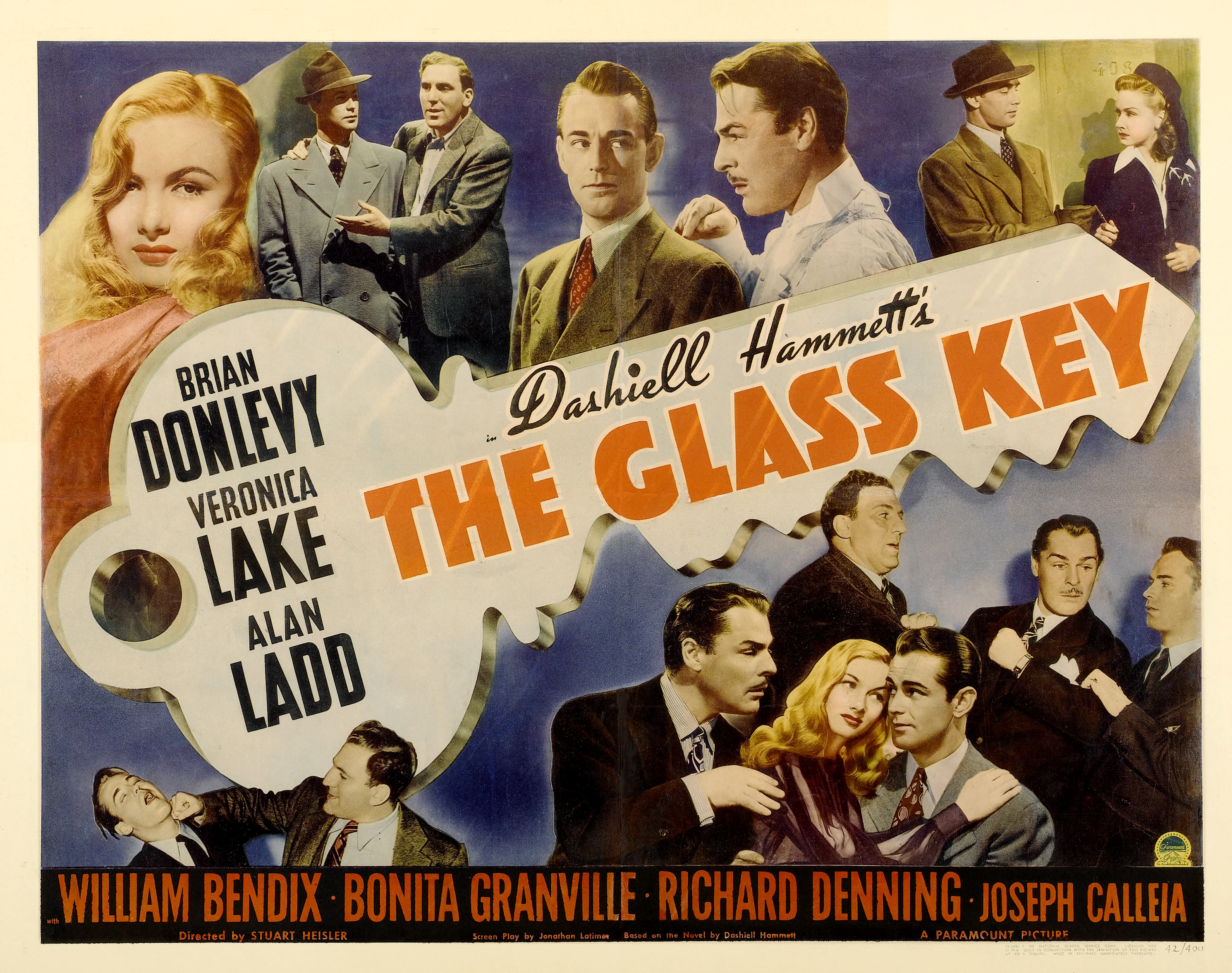
Strange Bedfellows: THE GLASS KEY (Paramount 1942)


gary loggins's avatarcracked rear viewer

glass1

Anyone who watches television, reads a newspaper, or surfs the Internet today knows the axiom “Politics is a dirty business” is dead on point. The mudslinging and brickbats are being tossed at record rates, and it just keeps escalating. Here at Cracked Rear Viewer, we’re just plain tired of all the nonsense. Ah, for the old days, when politics was much more genteel and civil, right? Wrong! Politics has always been a dirty business, proving another old adage, “There’s nothing new under the sun”. Case in point: the 1942 film THE GLASS KEY.

glass2

The story’s based on a novel by Dashiell Hammett, and was filmed once before in 1935 with George Raft, Edward Arnold, and Claire Dodd. In this version, Paramount chose to star their red-hot team of Alan Ladd and Veronica Lake, fresh off their hit THIS GUN FOR HIRE. Brian Donlevy takes the Arnold role as Paul Madvig, a…

View original post 909 more words

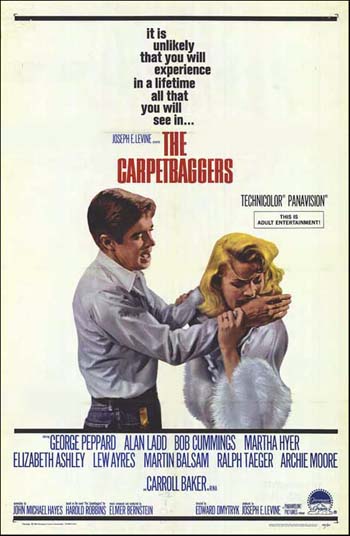
Embracing the Melodrama Part II #28: The Carpetbaggers (dir by Edward Dmytryk)


The_Carpetbaggers_1964_poster

The 1960s was apparently a bad time for talented old school Hollywood filmmakers getting sucked into making big budget, excessively lengthy films.  Joseph L. Mankiewicz spent most of his career making movies like All About Eve and then, in 1963, he ended up directing Cleopatra.  Elia Kazan went from A Face In The Crowd to The Arrangement.  John Huston went from Treasure of the Sierra Madre and The African Queen to directing not only The Bible but Reflections in a Golden Eye as well.

And then there’s Edward Dmytryk.  Dmytryk may not be as highly regarded by modern critics as Mankiewicz and Huston but he still directed some of the best film noirs of the 1940s.  His 1947 film Crossfire was nominated for best picture and probably should have won.  In 1952, he directed one of the first true crime procedural films, The Sniper.  His 1954 best picture nominee, The Caine Mutiny, featured one of Humphrey Bogart’s best and most unusual performances.

And yet, in 1964, he somehow found himself directing The Carpetbaggers.

The Carpetbaggers tells the story of Jonas Cord (George Peppard).  Jonas is the son of the fabulously wealthy Jonas Cord, Sr. (Leif Erickson).  At the start of the film, father and son do not get along.  Senior resents that Junior is more interested in piloting airplanes than in learning the family business.  Junior is angry that Senior has married Jonas’s ex-girlfriend, actress Rina Marlowe (Carroll Baker).  In fact, as far as Jonas, Jr. is concerned, Nevada Smith (Alan Ladd) is more of a father to him than his actual father.

Nevada Smith is Jonas, Sr.’s best friend and occasional business partner.  He’s a former cowboy who, we are told in a lengthy bit of exposition, is legendary for tracking down and killing the three men who killed his parents.  (As we listen to Jonas, Jr. tell the entire lengthy story, we find ourselves thinking, “Okay, so why not make a movie out of that story?”  Well, they did.  Two years after the release of The Carpetbaggers, Steve McQueen starred in Nevada Smith.)  Nevada’s also a film star whose career is in deep decline.

Speaking of deep decline, Jonas, Sr. ends up having a heart attack and dramatically dropping dead before he can get a chance to disinherit his son.  Jonas, Jr. inherits the Cord fortune and the Cord business and proceed to spend the next two and a half hours abusing everyone who gets close to him.  He even mistreats his loving and neurotic wife, Monica (Elizabeth Ashley, giving the only really memorable performance in the entire film).

Yes, there’s really no reason to have any sympathy at all for Jonas Cord, Jr. but the film insists that we should because he’s the main character and he’s played by the top-billed star.  We’re also told that he’s a brilliant aviation engineer and I guess we’re supposed to admire him for being good at what does.  We also discover that Jonas believes that his mother was insane and that she passed down her insanity to him.  He fears that he’ll pass the crazy gene to any of children that he might have so that’s why he pushes everyone away.  Just in case we don’t understand how big a deal this is to him, the camera zooms in for a closeup whenever Jonas is reminded of his mother.

(In the 60s, all mental instability was represented via zoom lens.)

However, Jonas isn’t just into airplanes!  He also buys a movie studio, specifically because Rina Marlowe is under contract.  Soon, Jonas is directing movies his way.  Jonas also finds himself falling in love with another actress (Martha Hyer) so, of course, he starts treating her badly in an effort to push her away.

What can be done to save the tortured soul of Jonas Cord?  Maybe he just need to get beaten up by Nevada Smith…

The Carpetbaggers was based on a novel by Harold Robbins.  The novel was apparently quite a scandal when it was originally published.  People read it and they wondered, “Who was based on who?”  Well, if you’ve ever seen The Aviator, it’s not that difficult to figure out.  Jonas Cord, eccentric movie mogul and obsessive pilot, was obviously meant to be Howard Hughes.  Rina Marlowe was meant to be Jean Harlow, a fact that can be guessed just by looking at the last names.  And I’m guessing that Nevada Smith was probably based on former President Warren G. Harding because … well, why not?

I suppose that, by the standards of 1964, the film version of The Carpetbaggers would have been considered risqué.  For a modern audience, the main appeal of something like The Carpetbaggers is to see what was once considered to be shocking.  The film is overlong, George Peppard doesn’t exactly figure out how to make Jonas into the compelling  rogue that he needs to be, the clothes and the sets are a lot more interesting than any of the dialogue (but not interesting enough to carry a nearly 3 hour movie), and the film’s pacing is so off that some scenes seem to go on forever while others are way too short.  But, as a cultural and historical artifact, The Carpetbaggers does hold some interest.

The Carpetbaggers was made at a time when Hollywood felt it was under attack from both television and European cinema.  With a film like The Carpetbaggers, the studios were saying, “See!?  Television will never be able to make a film this long and big!  And those Europeans aren’t the only ones who can make a movie about sex!”  Of course, as so often happened during this time, the studios failed to take into account that size and length don’t always equal quality (and ain’t that the truth?).  As for the sex — well, we hear a lot more than we actually see.  The Carpetbaggers is one of those films where everyone talks about sex, largely because showing sex wasn’t really an option.  (And it should be noted that most of the sex talk is delivered in the language of euphemism.)  As a result, The Carpetbaggers feels incredibly tame by today’s standards.  As a result, your main reaction to The Carpetbaggers will probably be to marvel at what was considered daring and shocking 50 years ago.

(And before we get too cocky and quick to dismiss those who came before us, let’s consider how our current films will look to movie audiences five decades from now…)

As far as biopics of Howard Hughes are concerned, The Carpetbaggers in no Aviator.  However, it is an occasionally interesting historical artifact.