Review: Repo Men (dir. by Miguel Sapochnik)


In the beginning of 2010 a scifi-horror film arrived in the theaters to much internet hype. This film showed a future world where a massive societal change and the resulting health crisis following it was described in detail. It was a film which cleverly built a world so different from out very own yet still very similar in its foundation. This film was Daybreakers and for all the wonderful world-building it did to establish a foundation for the story being told the film couldn’t find it’s way to having the film’s plot match what the filmmakers’ established in the beginning. I say this because it is now late March 2010 and another film has done another wonderful job of establishing a future world so very different and yet so very similar in many ways. Where the Spierig Brothers failed in more ways than one to have the rest of Daybreakers live up to the world established in the beginning and a premise that was quite new, Miguel Sapochnik did a much better job — albeit still flawed — in allowing the plot for Repo Men live up to the world established in the opening minutes of the film.

In the near future of Repo Men medical science and technology has advance far enough that most organs and parts of the human body can be artificially replaced when they failed. While this detail of the film sounds like the makings of a future utopia it’s actually much closer to our own reality in that these organs, despite being mass-produced, are still only affordable to the rich. Artificial organs (artiforgs in this film’s vocabulary) sold to the rich like luxury items. Those not-so-rich, but desperate to try and find a way to change a fatal health situation, also offered these artiforgs on a monthly payment plan suitable to their current expense situation. It’s mostly these payment plan artiforg owners who experience the skill sets of the so-called “repo men.” These are individuals employed by the artiforg company called The Union who sell the products. When someone misses too many payments on their artiforgs and goes delinquent on their payment plan then the repo men will be knocking on their door to take back the synthetic organ. It’s similar to banks repossessing cars and homes when payments are not made.

The film’s told in the point of view of one of these repo men. Jude Law’s character Remy is one of The Union’s top repo men who we see enjoys his work despite the ultimate consequence of what he does to the people whose artiforgs he takes back. His partner is Jake (played with childish glee by Forest Whitaker). The two have been friends since grade school and both share a similar sense of sociopathy when it comes to violence. To say that they’re like brothers minus the shared genetics won’t be too far off. The first third of Repo Men shows the audience these two organ repossessors in their element as they hunt down those delinquent in their plan and those who have turned to the black market for their artiforgs. The film’s touches upon the current public hysteria of the two sides in the health care debate. While the film touches upon this current debate it does so without being too broad or preachy. It’s done subtly and without having it distract the audience from the film’s story.

The film does sing and move at an entertaining pace during the first third, but inevitably it does reach a point where the conflict of the story shows itself to add a dramatic ingredient to the film. It’s during what was to be Remy’s final repo mission before he heads over to a less paying, but safer job as sales in The Union that he goes from the repossesser to potential possessee. The switch in roles soon has Remy unable to do what he’s been so good at as cutting into someone delinquent on their artiforg when he himself now has one keeping him alive. It’s a common storytelling telling idea of the insider getting a taste of their own medicine and seeing how the other side lives. Avatar used it late last year and Daybreakers did it clumsily earlier this year.

This second third of the film has some character development flaws which could be attributed to some of the script’s weakness. While Remy’s sudden inability to do his job as a repo man after his own artiforg surgery makes sense the one-note characterization of his wife (played by the Black Book‘s Carice von Houten) who leaves him during this crisis of faith adds an unnecessary factor to his problems. In actuality the roles of the wife and Remy’s son could’ve easily been left off the film and just had the story be about Remy and his long-time friend and fellow repo man Jake. This would’ve been enough conflict and drama to power the rest of the film. This is where less would’ve definitely more and keep the story lean, mean and definitely more efficient. But even with this misstep in the film’s script it doesn’t sink the film. This could be attributed to some strong performances from Jude Law who manages to credibly transition from what amounts to be a paid serial killer to one having his eyes opened to the devastation he has wrought on individuals and families. Even the scene-chewing done by Whitaker as Jake doesn’t diminish Law’s performance and instead just shows that despite some of the horrible things Remy’s done he’s actually the sanest person in the film w/ everyone else close around him playing certain caricatures whose roles are to push him one way or another to picking a side on the issue of artiforgs and their repo issues.

It is in the beginning of the third act which may make or break the film for those who have stayed with it through the first acts. A particular even happens which transitions act to three which ramps up the action to it’s bloodiest and, at times, quite Cronenbergian level. It is this third act which pays homage to several great action-thrillers of the past decade. One scene in particular tries to emulate the classic hallway fight scene from Oldboy. This time around more weapons are used from knives, guns and all the way to a medical hacksaw. This scene leads up to another which pays homage to another Jude Law film of the past with a Cronenberg pedigree. While bloodier than similar scenes in eXistenZ there’s no denying that Sapochnik sure loves his Cronenberg. The climactic finish to the film before a sort of epilogue of a twist just builds and builds throughout the third act. For some the epilogue’s reveal may and will ruin the rest of the film as it seems like a cop-out of a plot twist, but I thought it was actually well done and gives a new meaning to the conventional Hollywood happy ending to an action-thriller.

As a first-time feature-film director Miguel Sapochnik has a deft and keen eye for visuals. The artistic design of the near-future world of Repo Men shows influences from the consumeristic dystopian future of Blade Runner up to the grounded in futurist science of Spielberg’s Minority Report. He’s quite adept at blocking and handling the many action setpieces which helped keep the film from being bogged down by flaws in the script and some uninspired characters. Sapochnik does need to get a better feel for how his cast interacts with each other. As stated earlier with the exception of Law’s Remy character and Liev Schrieber’s delicious turn as a gleefully amoral example of corporate evil at its best, the rest of the cast seem uninspired from von Houten’s role as Remy’s wife right up to Alice Braga’s performance as Beth, the artiforg addicted singer Remy hooks up with halfway through the film.

Repo Men could’ve easily gone highbrow in addition to keeping to it’s genre trappings the way the Spierig Brothers tried to do with Daybreakers. Fortunately, Sapochnik w/ writers Eric Garcia and Garrett Lerner kept things focused on Remy’s journey from hunter to prey to “savior” without trying to overly explain his motivations. While they weren’t subtle in all things they tried to tell with the story they gamely tried to stick to the rule of showing and not telling everything. For his directing debut Sapochnik does a good job despite he flaws and shows promise.

In the end, Repo Men is a very good scifi action-thriller which delivers on its title. Despite missteps in the writing and some uninspired characters the film still turned out to be quite entertaining. It was a fast-paced film with several bloody, gore-filled action setpieces timed to pick up the film when dialogue and exposition starts to drag it down. Miguel Sapochnik’s debut feature-film could easily have turned off the rails and went in so many different directions but he kept things on the straight and narrow. While for some the ending will infuriate and negate what fun they were having through most of the film it also would be seen by others as an inspired take on the Hollywood happy ending. Repo Men won’t be mistaken as the next Brazil and Sapochnik won’t be mistaken as the next Cronenberg or Park Chan-wook, but both filmmaker and film is better than it should be and wholly entertaining from start to finish.

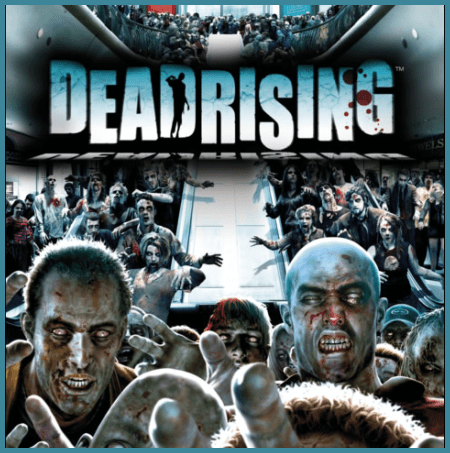
Review: Dead Rising


Capcom’s Dead Rising stands as one of the most fun titles to come out for the Xbox 360 since its initial release in late 2005. From the makers of the Resident Evil series for past console systems, Capcom has taken a new approach in adding to their growing library of zombie titles. Dead Rising is a semi-freeroaming action-horror game which takes the classic premise of George A. Romero’s Dawn of the Dead — survivors trapped in the mall teeming with flesh-eating zombies — and makes a fun and exciting game.

The game takes place Willamette, Colorado, population 53,594 where nothing exciting happens in town outside of visiting the local mega-mall which seems to dominate the entire town. Dead Rising uses a time-based mission system and the intro cutscene in the beginning of the game hints at this. You play as freelance photojournalist Frank West, who never fails to mention that he’s covered riots, wars, and all sorts of dangerous events, who gets a tip from an unknown source that something big is happening in little old Willamette. The intro both introduces Frank West, flying over the town to bypass the military blockade and cordon of the town, and the controls for the photography mechanics of the gameplay. It’s in this hands-on tutorial part of the intro that we see a bird’s eye view of the crisis that has befallen Willamette. From there you’re dropped onto the roof of the Willamette Mall where you meet one of the few survivors of the town. The rest of the game moves on from there at a very frantic pace.

It’s the game itself that shines for Dead Rising. Despite a save system that could’ve been done much better (more on that later), Dead Rising‘s gameplay mechanics has quite a bit in common with Rockstar’s Grand Theft Auto series. From the get-go the player as Frank can just go down into the mall and begin killing zombies left and right, and everyway from Monday through Sunday. All manner of items stocked in the mall walkways and stores can be picked up and used either as a weapon, a change in clothing attire, and/or food. This is where Dead Rising will get most of its mention for being fun. When Capcom programmers decided to allow the player to use anything that could be picked up as a weapon they meant it. There’s over 200 useable items to be picked up as a weapon. These items range from the gore-inducing lawnmower (an homage to Peter Jackson’s Dead Alive zombie film), chainsaws, and excavators (a garden tool that has one of the bloodiest and funniest killing animation) to the ridiculously funny use for CDs, shower-heads, novelty masks, teddy bears and skateboards. There’s also the more traditional weapons such as a pistol, shotgun, submachine gun, machine-gun, swords and axes. Being a game developed by Capcom, Dead Rising has more than a few wink-wink acknowledgement to other Capcom games such as Mega Man and Resident Evil.

One could spend all their time just killing zombies, but the strict time-based missions in the game might make zombie-killing take a backseat to actually solving the mystery of what’s caused the zombie outbreak in the town. There’s two types of missions Frank could try solving. There’s the mandatory “Case Missions” which deal directly with him trying to solve the mystery within the 72-hour time limit. Each case mission must be solved in a linear order to open up the next case. The second set of missions are named “Scoops” and act more as sub-missions that can be taken on and accomplished or ignored. They really don’t affect the availability of further case missions. What they do give Frank are prestige points that can go a long way to levelling him up to gain more skills and abilities. Most scoop missions usually entail finding scattered survivors within the mall and leading them back to the safety of the security office near the roof. Some survivors could be armed with extra weapons Frank carries and defend themselves when attacked, and some survivors are so incapacitated that Frank must carry them to safety. While carrying a survivor Frank will be unable to use a weapon so this type of mission usually takes several tries before the player figures out the best path to safety. Like most game AI, the survivors need a bit of constant attention from the player to make sure they’re actually following you and not stopping every second to fight the closest zombie. It’s not a gamebreaker but the survivor AI could’ve used some more tweaking to make them follow much better.

As mentioned above, Frank can level up to a level cap of 50 by acquiring prestige points (called PP in the game). Prestige points can be acquired through many different ways within the game. Taking pictures of different nature and quality will give Frank prestige points as high as several tens of thousand. Shots with poses that follow a certain genre gives more points than those that are just generic poses. Such genres that shots can be taken of are shots of burtality, horror, outtakes, drama and erotica. Erotica shots are pretty much just photographs taken of survivors and zombies (creepy) in sexually-suggestive poses. Brutality shots are usually pictures where extreme violence and fighting poses are framed and photographed. Horror is pretty much self-explanatory. Drama shots usually involve pictures with survivors and main npc characters in dramatic poses. Outtakes usually entail photographs taken of survivors and zombies involved in any sort of funny situations. Usually them slipping and falling down or wandering around aimlessly with novelty masks over their heads.

Other ways to gain prestige points will be to finish case missions and scoop missions. The PP reward for finishing part or all of each mission usually range from several thousand to as high as 50,000 PP. The high amount of PP reward for taking on and accomplishing these two types of missions go a long way to levelling up Frank. The most fun way of getting PP, though not as much and takes a long time, will be to kill zombies. For every 50 zombies killed Frank gets 500 PP and everytime Frank reaches 1000 zombies killed he gains 20,000 PP. It’s a much slower path to gaining PP but it’s surely the most fun of the three ways.

The main storyline in Dead Rising is actually a very good one. Like most games outside of the role-playing game genre, storylines were usually the weakest of all the games had to offer. In Dead Rising, Capcom was able to create an intriguing storyline that didn’t rip-off the Dawn of the Dead story that the game will always be compared to. There’s conspiracies, betrayals and just outright weirdness to help tie together the mystery of why Willamette, Colorado has suddenly gone zombiefied and why the U.S. military and government were quick to quarantine the whole area.

The game itself leans more towards comedic horror than outright horror. There were some cutscenes and plot developments that were downright creepy and scary, but most of the time you’ll just laugh in glee at all the carnage you’re causing within the mall. The characters of Frank West and those npcs he has to deal with in the context of the case missions were pretty well drawn both in animation and personality. As the game progressed and certain characters were put in danger it was hard not to feel saddened by such tragic events. It helps that the voice-acting in Dead Rising was pretty high quality. The spoken dialogue during the cutscenes were pretty well done and one could sense that Capcom wanted to really capture the cinematic tone they were going for with Dead Rising.

Now to the one glaring negative in Dead Rising. The save system in this game could be called unforgiving and that’s saying it lightly. The game only allows for one save per memory unit. This means that you can only save the game once if you only have the 360 HDD as your memory unit. This means that once you save over a previous save then thats it. If you’re current save doesn’t give you the chance to finish your current case mission then you pretty much have to start the game over. This would sound terrible if not for one saving grace. Dead Rising allows the player to start the game over with all skills, abilities, levels and PP acquired to be transferred over to the new game. This lessens the impact of having to start the game over. It also helps in power-levelling Frank to a level high enough that you can breeze through the case missions. Starting the game over and over with stats and skills included also gives the player a chance to try different methods of solving a case until finding the one thats easiest to do. I know of players who have done nothing but just kill zombies and try on a few case and scoop missions to gain PP to level up then start the game over then repeat the cycle again. This makes the game much easier in the long run, but also takes time.

The graphics in Dead Rising is good to above-average. Capcom went away from making the best-looking graphics and instead opted to go for just good with most of the 360’s power under the hood set aside for the zombies. The game has lots and lots of zombies on-screen and when I say lots I mean in the hundreds, if not thousands. There’s barely any slowdown in frame-rate as the action on the screen gets heavy and crowded. The look of the mall itself was also well done. Each store and utilitarian room has their own unique look with most items rendered with enough detail to be recognized as either weapon, sustenance, etc.

Overall, Capcom has created a great game with their action-horror/comedy Dead Rising. With a choice to either play the game in the free-roaming style of Grand Theft Auto to a more time-based, linear mission-style of an action game this game more than makes up for unforgiving save system its developers decided to give it. Outside of the save system which keeps this game from reaching excellent status, Dead Rising is a great and fun game that should remain fun to pick up long after the player has finished its main mission. With a sequel already set to be released on the tail-end of summer 2010, this game is a good way for one to reacquiant themselves with some zombie-killing.

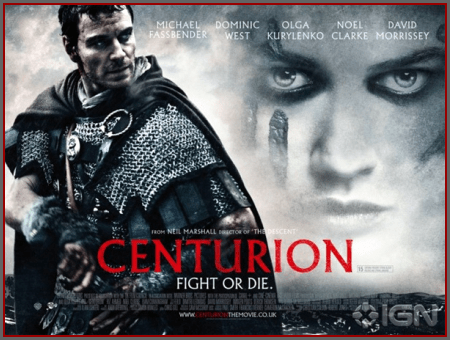
Neil Marshall’s Centurion Official Trailer


I have been a huge fan of Neil Marshall. The British filmmaker burst into the genre scene with his cult-classic werewolf-siege flick, Dog Soldiers. He then follows that up with the excellent all-female cast monster mash, The Descent. His third outing was a bit mixed for some, but I definitely had a great time with Doomsday. Marshall really knows the genre he works in and also enjoys staying in it.

His fourth film is a historical thriller set during the Roman occupation of Britain during the 2nd Century A.D. The film was originally called The Ninth Legion during the production, but has since been officially changed to Centurion. The basic premise of the film is Marshall’s telling of the legend of the 9th Legion and their disappearance north of Hadrian’s Wall. He’s made it known that the film will not be historically accurate and wasn’t meant to be. The film will be his way to re-tell the legend of the legion’s disappearance, it’s cause and wrap an action-thriller around it.

Starring in the film are Dominic West, Michael Fassbender (last seen as the British operative Hickox in Inglourious Basterds) and Olga Kurylenko. The film is tentatively dated to be released in the U.K. on April 23, 2010. No set date has been announced for a NA release, but I’m sure it will get one. It better.

Source: Centurion Official Trailer @IGN

Soderbergh to Traffic in Contagion


Steven Soderbergh has always been an indepedent-minded filmmaker from the time broke-out with his Sex, Lies and Videotape and up to his dabbling into microbudgeted, HD-shot films like Bubble and The Girlfriend Experience. In-between such arthouse fares he’s also managed to churn out commercial-friendly works like the Ocean’s Trilogy and to a certain extent both Erin Brockovich and Traffic.

While he surely has earned the ability to choose his projects his last major production didn’t pan out as some have thought it would. I’m talking about the passion project and, one I call the ego-project, epic biopic about Che Guevara which ran so long that it had to be released as two films: The Argentine and Guerrilla. His latest studio offering in The informant! also didn’t light up the box-office or even do marginally well.

Hopefully, the announcement broken by The Playlist site about his upcoming major project will change this pattern. Soderbergh has put on the fast-track the production of a film from Scott Z. Burns’ Contagion script. He will direct this action-thriller which some have labeled as Traffic meets The Stand/Outbreak. The premise of the script details the reaction of the cast of characters to a developing viral pandemic which goes global. The film will take place across four continents and already has snagged quite a talented rollcall of actors: Matt Damon, Marion Cotillard, Kate Winslet and Jude Law. We’re sure to get more news about further cast developments the closer to the start of filming.

While I like Soderbergh’s “Sundance” films I also think that he can make commercially-entertaining films and has proven that he could with the Ocean’s series. Here’s to hoping that he could create an action-thriller w/ some horror aspects to it with this latest project. It’s always exciting to see a director try on a new genre and see how well they do in it. I’m betting on Soderbergh hitting a home run instead of fouling out.

Source: The Playlist

Review: Dog Soldiers (dir. by Neil Marshall)


Werewolf films have always felt like they’ve been given the short end of the stick when it comes to quality and artistry. In horror cinema, vampires tend to be the ones treated with glamour—getting richly developed lore, elegant aesthetics, and narratives that weave romance with menace. Werewolves, by contrast, are too often relegated to playing second fiddle, treated more as brutish monsters than complex characters. This isn’t to say there haven’t been standout entries in the genre—classics such as An American Werewolf in LondonThe Howling, and Wolfen proved that werewolf tales could be inventive, atmospheric, and even poignant. Unfortunately, many modern werewolf films still feel stuck emulating the aesthetics and narrative beats of the 1940s Universal Wolf Man formula, unwilling to evolve past its roots.

That’s why Dog Soldiers, Neil Marshall’s 2002 action-horror film, came as a breath of fresh air. Marshall, then an up-and-coming director from the UK, took the basic premise of a werewolf story and infused it with the pacing, intensity, and tone of military survival thrillers. In doing so, he leaned into genre hybridity, crafting something closer to Aliens meets Zulu, peppered with elements from siege films like Assault on Precinct 13 and even hints of Night of the Living Dead. This fusion not only differentiates Dog Soldiers from typical werewolf fare, it also helps the film sidestep some of the genre’s usual narrative pitfalls.

The plot is refreshingly straightforward and tightly executed. A squad of British soldiers is dispatched to the Scottish Highlands on what appears to be a routine training exercise. However, the mission is actually part of a covert operation led by Captain Ryan (Liam Cunningham) from British special operations. The higher-ups believe there is an unidentified creature prowling the remote wilderness—something worth capturing and experimenting on. Naturally, plans unravel almost immediately when the soldiers stumble upon the very real threat: a pack of predatory werewolves. In quick order, both the military squad and Ryan’s covert team suffer heavy casualties, forcing the handful of remaining survivors to retreat to the relative safety of an isolated country cottage.

At this point, Dog Soldiers shifts from a creature-hunt narrative to a tense siege story. The soldiers, along with Megan (Emma Cleasby), a young anthropologist who happens upon them while driving along a desolate road, barricade themselves inside the cottage. It’s a familiar setup to horror fans—a small, heavily outnumbered group defending themselves against a monstrous threat—but Marshall handles it with sharp pacing and escalating stakes. The werewolves never attack in full force right away; instead, they probe the survivors’ defenses, testing weaknesses, thinning numbers, and forcing improvisation. The incremental nature of these assaults keeps the tension high and recalls the strategic pacing of Aliens and Zulu. By the final act, the film’s momentum surges into a frenetic, revelation-laden climax, where buried secrets between the survivors come to light, confirming that the encounter in the Highlands was anything but accidental.

The performances are one of the film’s strongest assets. Kevin McKidd anchors the story as Private Cooper, a grounded, quick-thinking soldier with a contentious past involving Captain Ryan. McKidd brings a combination of sharp competence and understated emotional weight, keeping the film from tipping into camp even when the gore and action turn exuberant. Liam Cunningham’s Ryan complements this dynamic by embodying the archetype of the cold, mission-focused officer—aloof, calculating, and ultimately morally questionable.

Sean Pertwee’s Sergeant Wells deserves special mention for his portrayal of a gruff but paternal squad leader. Despite being wounded early on, Wells remains a symbol of resilience, offering the squad guidance and resolve amid desperate circumstances. Emma Cleasby’s Megan strikes a balance between being a narrative catalyst and a functional participant in the group’s survival. As the siege wears on, she lets slip fragments of information about the nature of their attackers, deepening the mystery and tension without leaning on clumsy exposition.

Then there’s Darren Morfitt as Private “Spoon.” His performance injects the film with a lively combat bravado that stands out from the rest of the ensemble. Spoon isn’t just a trigger-happy soldier—he revels in the absurdity and extremity of their plight, seeing it as an ultimate test of British military skill against impossible odds. His confidence and gallows humor recall Bill Paxton’s Hudson in Aliens, but with less overt panic and more disciplined enthusiasm. Spoon references historic battles like Rorke’s Drift—famously depicted in Zulu—as touchstones of courage, further cementing Marshall’s homage to siege war films.

For a production with limited resources, the effects work is impressively convincing. With a budget far below that of major Hollywood horror films, Marshall and his crew leaned into practical effects and selective creature reveals. Some critics have accused the werewolf suits of looking like men in costumes, but in execution the designs work well within the film’s framework. The creatures are tall, lean, and menacing without relying on heavy CGI. Importantly, Marshall applies a “less is more” philosophy reminiscent of Spielberg’s handling of the shark in Jaws. Full, lingering views of the werewolves are reserved for the final act, allowing the audience’s imagination to do much of the work until the climax. This restraint helps sustain suspense while ensuring that, when the creatures finally take center stage, viewers are already fully invested in the world of the film.

When the action does explode, Marshall doesn’t shy away from gore. Dog Soldiers takes a hard-R approach, delivering violent set pieces that are as visceral as they are functional to the narrative. Bodies are torn apart, entrails spill onto floors, and dismembered remains are devoured on-screen—a rare choice for werewolf films, which often cut away from feeding scenes. Yet the gore never overshadows the horror elements; rather, it complements them, reinforcing the brutality of the attackers and the hopelessness of the situation.

At its core, what makes Dog Soldiers so memorable and effective is its clever blend of genre DNA, drawing inspiration and structure from both Aliens and Zulu. Much like James Cameron’s Aliens, Marshall’s ensemble of soldiers must depend on each other to survive, facing off against an external threat in an environment where resources and options dwindle by the hour. The tension is ramped up through a progressive siege, with monsters probing at the group’s defenses, forcing rapid adaptation—an approach that maintains the audience’s suspense and empathy. The way the squad’s camaraderie is tested amid escalating shock and violence feels akin to the Colonial Marines in Aliens, with Spoon and Wells providing flashes of humor and heroism reminiscent of Paxton’s Hudson and Biehn’s Hicks.

Meanwhile, the homage to Zulu manifests in the setting and the sense of a last stand. The cottage becomes not just a shelter, but a makeshift fortress, echoing Rorke’s Drift in Zulu, where British defenders held out against overwhelming odds. Spoon’s direct references to the historic battle, coupled with strategic use of terrain and improvisational defense, strengthen the film’s identity as a genre junction—a supernatural thriller rooted in military siege drama. The sense of camaraderie, tactical ingenuity, and resilience facing certain death is palpable throughout, elevating the intensity far above ordinary monster fare.

By fusing these influences, Dog Soldiers revitalizes the werewolf genre and offers a reminder that horror doesn’t have to retreat into soft scares or ironic pastiche. Its hybrid approach creates a kinetic, emotionally resonant narrative, where supernatural terror and military heroism collide. The suspense not only builds from the threat outside, but also from the evolving relationships and secrets inside, giving the film depth and dimension.

In summary, Dog Soldiers succeeds not only as a visceral werewolf film but also as a smart genre blend, marrying elements of action-horror and siege war drama to make something memorable and genuinely thrilling. For fans of both horror and action cinema—especially those that crave suspense, teamwork, and practical effects—it’s an exemplary demonstration of how fresh vision can rejuvenate even the most familiar legends. Neil Marshall proves with his debut that he understands exactly what makes horror gripping, and with Dog Soldiers, he gives audiences a wild, unrelenting ride they won’t soon forget.

Mass Effect 2 Launch Trailer


Well, it is just days away until the release of one of the most-anticipated games of 2010. The game I am talking about is BioWare’s Mass Effect 2. It is the sequel to the very popular and critically-acclaimed action-shooter/rpg hybrid Mass Effect which came out in late 2007. The launch trailer marks the start of the massive marketing and ad campaign to promote the game. This one includes interspersed within the trailer blurbs of review scores and positive quotes from game reviewing magazines and websites dedicated to games. All throughout the trailer we have Shephard’s erstwhile ally (and possibly, enemy) The illusive Man of the shadowy, pro-human group Cerberus narrating a brief take on what players will encounter in this sequel.

I will say that the trailer is even better than the last one released by BioWare. The other one details the dangers of recruiting the new sets of characters to help the player in their quest, but this one shows how much more epic this particular fight and game really is. Mass Effect was already quite the massive and epic sci-fi space opera when it came out and this sequel seem intent on out-doing that predecessor in every respect from the look of the trailer. It helps that its all classed up by the voice of The West Wing’s President Bartlett also known as Martin Sheen. The trailer even hints at the opening events of the sequel which has been talked about many times at other places. I won’t go into detail about it but lets just say that Shephard and the original Normandy don’t have a nice first-encounter with the sequel’s main antagonists, The Collector.

So, January 26, 2010 should be retitled Mass Effect 2 Day. For some players, it will be just like a holiday as every work must be put down and stop in order for the playing of said game to commence.

Source: Mass Effect 2 Launch Trailer in HD

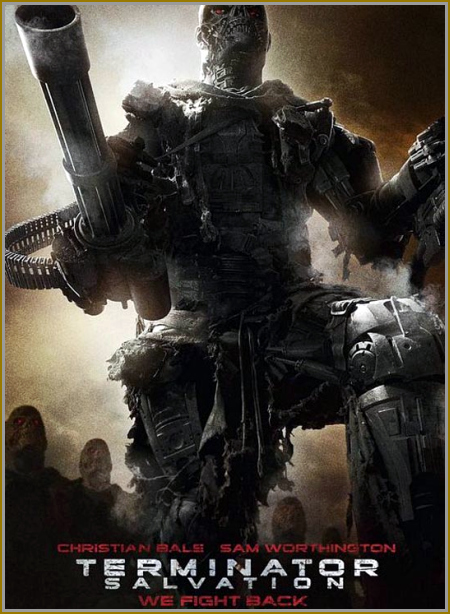
Review: Terminator Salvation (dir. by McG)


It has been 25 years since a certain James Cameron introduced the film-going public to the post-apocalyptic world of Judgement Day. While he’s never really fully shown the war-torn future ruled by the machines in the the two films he directed in the Terminator franchise he does show glimpses of it. It’s these glimpses of desperate humans fighting to survive against Skynet and its machine hunter-killing robots which have always intrigued and made its fans salivate at the thought of seeing it realized. Terminator 3: Rise of the Machines in 2003 tried to show how it all truly began, but again it just hinted at the future battlefield and not the full-blown war. It is now 2009 and the most unlikely filmmaker has finally shown what the future of Judgement Day looks like. McG’s Terminator Salvation succeeds and fails in equal amounts yet has laid the groundwork for the future of the franchise as a war series instead of of its past as installments of what really is one huge chase film.

There are many things which work in Terminator Salvation and one of them happen to be its director McG. A director who is much-maligned for his too campy Charlie’s Angels set of films would’ve been the last name to look to for a restart to the stalled franchise. His direction of this fourth entry in the series was actually very well-done. There’s none of the cartoony and way over-the-top action set-pieces of his Charlie’s Angels past. Instead he moves the film along in a brisk and energetic pace with very little downtime for much introspection. It is this pacing which makes this a good and, at times, an above-average action-film but also serves to make any of the scenes questioning what it is to be human (once again) and machine seem tacked on. The first three films in the series have delved into this theme and question too many times for a fourth attempt make it seem any more relevant than the previous times.

McG went out to make a war entry to the series and to an extent that’s what he did. While there are chases to be had it doesn’t necessarily mean its all about John Connor once again (though the film does make it a point of targeting him again in its own fashion). Terminator Salvation has finally shown what the world looks like after the events of the third film and what had been hinted and teased at in the first two. The world is a desolate place with ruins of landmarks to give the audience a reference point. We see Los Angeles a tumbling and crumbling wreck which looked eerily like something out of the recent Fallout 3 scifi-rpg game. Even San Francisco makes a post-apocalyptic appearance as a major Skynet headquarters. McG achieves this post-apocalyptic look by bleaching out the film’s color palette to the point that browns and greys dominate. He actually achieves to add grittiness to this film which his past films had never shown him having the ability to do. While this film won’t sway people to admiring his skill as a filmmaker it does show some  growth. Then again he does have a hold of a film series which is nothing but B-movies elevated through bigger budgets and access to the latest in film FX. If I have any gripe to point out about the action in the film it’s that there’s not enough of it to truly convey a “War Against the Machine” scenario. We get these tantalizing hints, but not something on par of what a fuure war should look.

The budget could be seen on the screen as the film uses a combination of CGI and practical effects to pull off a much more complex robotic army for Skynet. It’s the robots and machines which keeps bringing the audience back each and every time the series releases a new entry. We don’t just have the Human Resistance fighting the typical T-800 or even the more advanced T-1000 or T-X. We get the earlier versions of these human hunting and killing machines. From a brutish and zombie-like T-600 we see in the LA-scenes to newer and bigger specialized Skynet soldiers like the anime-inspired mech Harvester which towers several stories high and literally harvests humans it finds to take back to SKynet’s R&D bases. When the original Terminator does make an appearance it’s both a welcome and a surprise as McG’s technical wizards find a way to bring back the original exactly the way it’s supposed to look. I’m sure the Governator of California would want to have that physique and youth back.

As an action-film Terminator Salvation works well enough when the action appears on the screen. Now as a film that tries to delve into the philosophical trappings of the series it doesn’t so much as fail and sink the film, but almost does which would’ve been a shame. While not the worst in the series in terms of storytelling it does come across as very scattershot in what story it wants to tell. The film actually has three ideas which could’ve been used to make it’s own film. Is the film a story of John Connor and his rise to his prophesized leadership of the Resistance (he’s a leader of a branch of fighters, but not yet of the whole group in this film)? Or is this film about the search and attempt to make sure the person who will be Connor’s father stays alive to allow what transpired in the past to happen (time-travel can be a tricky and confusing thing to comprehend)? Or is Terminator Salvation the story of the new character Marcus Wright and his quest to find out just who, or what he is exactly? It’s all three of those and all three weren’t explored enough to make one care too much for the story being told. There’s great ideas in all three but trying to combine them into one coherent storyline mostly falls flat and uninsipiring for a film trying to be the war movie in the series. For what are war movies mostly but attempts to show inspiration in the face of desperation. There’s very little of that in this film. If the writers had been given a chance to further streamline the story into one major arc then this film would have benefitted greatly in the long run.

With acting very tightly tied-in with the story being told it’s only logical that the performances by the cast rarely go beyond acceptable. Christian Bale’s John Connor is always dour and brooding. He’s almost becoming a typecast for any role that requires for him to be the down man in any party. He does this ably, but he doesn’t bring anything to the role which hasn’t already been explored in past entries. His performance does show hints of mental instability as the weight of being the savior and prophet of the human race may be starting to get to him. The other two pivotal roles in the film have more meat to play around with. Anton Yelchin as the teenage Resistance fighter destined to become John Connor’s father in the past shines in the scenes he’s in as he elevates a bland script with some youthful energy and hints of the adult Kyle Reese fans of the series know so well. Then we arrive on the newest character in the series: Marcus Wright.

Little-known Australian actor Sam Worthington was recommended by James Cameron for the role of Marcus Wright. Like Anton Yelchin’s performance, Worthington’s work in the role of Wright saves the film from mediocrity. While it is not a start-turning performance by any means Worthington does make it difficult not to pay attention to him throughout the film. The man has presence and every scene he is in shows why Cameron himself has faith in being the latest to carry the Terminator torch. The rest of the cast is quite a throwaway in that we never really get to know any of them and invest anything in their well-being.

Terminator Salvation is a very frustrating film in that there’s so much great ideas to mine. The series has always tried to explore such themes as fate, predetermination and human free will. While the third film in the series was quite lacking in memorable action sequences this fourth entry makes a mess of trying to explore these themes. Again, it seems as if the film’s script was rushed into production with very little doctoring and as the production continued forward no one bothered to point out just how average and bland the storyline does sound despite being the most overly complex of the series.

One thing I am sure of is that the one person people thought would be the weakest link in this film instead happens to be its strongest. McG and some inspired acting from two newcomers keep the film from becoming a total failure. Terminator Salvation is an able and, for most of it’s running time, a very good action film with brisk pacing and energy in its action sequences. Enough of these elements keeps the film’s fractured and scattershot of a storyline from sinking the film into total failure. As a summer tentpole action film it delivers on some of what it promises, but it could’ve been more and better. Some would settle on calling this entry in the franchise a failure, but I am always an optimist and a fan of action thus I’ll land on calling this film a successful failure.

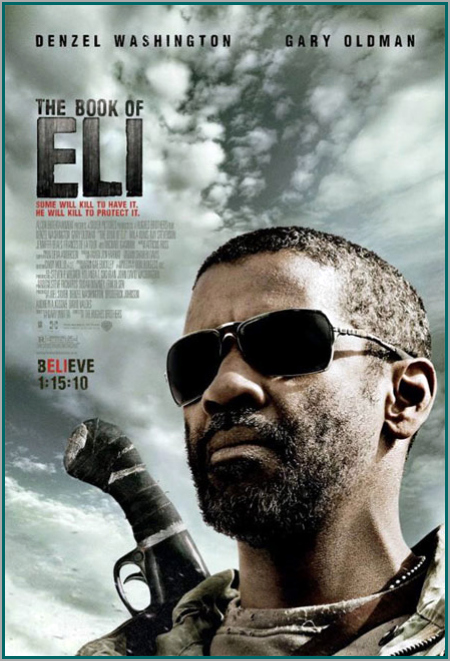
Review: The Book of Eli (dir. by The Hughes Brothers)


In 2001 the Hughes Brothers released their film adaptation of the celebrated and very dense graphic novel From Hell. A graphic novel meticulously researched and every detail reconstructed to tell the tale of Jack the Ripper and his killing spree in the London slum of Whitechapel during the turn of the 19th-century into the 20th. It was a film fans of the graphic novel have been waiting for years since it was initially announced. When it was finally released in 2001 the reception and reaction from both critics and audiences were a resounding thumbs down. The Hughes Brothers first major film outside of their comfort zone of the urban setting was seen as a colossal failure and for almost a decade they seemed to have put themselves into a self-imposed exile from Hollywood. It’s now 2010 and with a cas consisting of Denzel Washington and Gary Oldman on opposite sides it looks like the Hughes Brothers have returned from their exile with a very good post-apocalyptic Western called The Book of Eli.

I call The Book of Eli a post-apocalyptic Western because it’s what the film reminded me most of. The setting may be all ashen gray with the world and the environment decades into what the cast can only describe as “the flash” which ended everything. But with all that the film still felt like a throwback to the Westerns of Sergio Leone with equal parts Akira Kurosawa samurai epics. Taking cue from the screenplay by Gary Whitta, the Hughes Brothers set up the rules of the film from the very first frames. We see a world still raining ash even thirty years since a war (hinted as being caused and fought between the major religions of the world). It is a world where cats have become not just the source of food but also oil for chapped lips. If one bought into the world being presented in the very first ten minutes of the film then the rest the remaining hour and forty minutes would be easy going.

The very first twenty minutes of the film was pretty much free of dialogue as we see the No-Name walker (played by Denzel Washington) survive a day on the road inside an abandoned homestead with only an ancient iPod and the titular book to keep him company. When we finally hear his character speak it is in hushed tones, almost a whisper as if his time of wandering the blasted landscape in solitude has made speaking out loud something almost forgotten. In fact, throughout most of the film Denzel’s character rarely speaks and when he does it doesn’t bode well for those trying to keep him from the path he had been set on for the past thirty years since after “the flash.” It’s during these “encounters” when his character must protect himself that the Hughes Brothers show their unique style in how to film an action scene.

The action scenes owe much of their smooth, precise and deadly ballet to the work of stunt coordinator Jeff Imada and his team of stunt men and women. There’s none of the fast cut and edits to make an action scene seem more chaotic than it really is. Each brutal fight sequence from the hand-to-hand combat to the shootouts are shot with a wide lens to give the audience a clear view of every move, decision and attack made through the fight.  When the camera does move from combatant to combatant it flows from one to another without missing a beat. I will also say that the violence in these fights are quite sudden and brutal. Limbs and heads are cut off with ease that it takes several beats before the audience even realizes what has happened. While the film does have it’s share of action sequences the Hughes Brothers actually seem to hold themselves back from putting in more to keep the fast-pace moving. Instead they use these sudden burst of violence to break whatever monotony may set in during scenes of dialogue.

It is during these downtime from the action that the meat of the story shows itself. The book being protected by Washington’s character may seem to look like a MacGuffin from the onset as he tries to stay on path to deliver it somewhere West. It’s during his brief stop in an unnamed town that we find out just exactly what the book really is. It is also in this part of the film where the audience meets the opposite of Washington’s character in the Carnegie, the town’s dictatorial mayor played by Gary Oldman channeling his inner Stansfield from his time more than a decade ago on the film Leon: The Professional. There really is no one better right now when it comes to playing a villain with some sophistication to go with an equal amount of sociopathic tendencies. Oldman’s Carnegie gets most of the lines in the film and it’s from his lines of dialogue that we learn not just why but also the motivations for his need to have the book in Washington’s possession.

This section of the film where some explaining of the motivations from both leads bring up some interesting ideas about the nature of faith and religion and how both ideas which seem to share a common ground could also be so different from each other. While the ideas of faith and religion gets screen time there’s not much heavy-handed preaching to alienate the audience. Whitta’s script (with some extensive doctoring from a few individuals) gives the audience enough explanation without forcefeeding them. The film leaves it up to the individual viewer to make up their minds about what had been brought up. I do think that the script and the how the two leads in the film were drawn up left little gray area to be explored. We clearly see Washington’s character as the good guy trying to preserve civilization and society as the Good Book teaches while Oldman’s Carnegie wants to use the power of said Book to cement his power and hold over his town and beyond. There definitely could have been room for some more work on the script to actually complicate the two characters’ motivations where both could be seen as correct in what they want done. Instead there’s no delineation as to who is good and who is bad. It is only through Oldman’s performance that the character of Carnegie escapes becoming a one-note villain.

The rest of the cast perform ably enough but still just left to become plot device characters to help move the story forward. It was good to see Jennifer Beals in another major motion picture. The same goes to Ray Stevenson of HBO’s Rome. While their roles were quite small compared to the two leads they still did quite well with what they had to work with. I was surprised to see Tom Waits make an appearance as the town’s Mr. Fixit man and it was a delight to see. Even the small roles played by Michael Gambon and Frances de la Tour didn’t disappoint. Many in the audience, including myself, reacted quite positively to their slightly demented, but funny elder couple. Their time on-screen was brief but they sure made great use of the time they were given.

The one misstep that almost broke the film for me was the miscasting of Mila Kunis in the role of Solara. While I can understand why she looked quite clean in a town and world where everyone’s hygiene was really not a priority she just looked too clean. It seemed like she just stepped out of a Beverly Hills, 90201 remake by way of The Road Warrior. While her performance was good it still paled when compared to the rest of the principals she interacted with. When we finally see what happens to her in the end of the film there’s no reaction of rousing claps, but instead I could hear snickers and more than a few laughs.

While the story was quite good, albeit with some flaws, the film really stands out with its art direction and the work of DP Don Burgess. With the latter, The Book of Eli was given a very washed out looked of browns and greys. There was barely much any color outside of those two that the film, at times, took on a black & white quality in its visual tone. Burgess and the Hughes Brothers’ decision to use the Red HD-camera allowed the team to create a world that’s been turned on its head. This decision also allowed the filmmakers to combine live-action with the matte paintings to show the blasted landscape in the background. But not everything about the look of the film was perfect and/or well-done. At times some of the scenes clearly looked like they were filmed in front of a green-screen. Maybe it was a deliberate choice but one that, at times, became too distracting.

In the end, while not a perfect film, the Hughes Brothers’ The Book of Eli was a very good take on the current spate of post-apocalyptic films. While Hillcoat’s The Road was a depressing and agonizingly morbid take on the same subject, the Hughes Brothers were able to convey the same sentiments with their film but giving enough of a glimmer of hope. The ending doesn’t mean that society is saved by any means, but it does show that the chance for rebuilding is there if given the chance. So, whatever director hell the brothers have been relegated to for most of the last decade this film surely has brought them back from exile. While all was still not forgiven for their work on From Hell they’ve at least gotten back into the good graces of the film-going public and, hopefully, they’ve got more work to come.

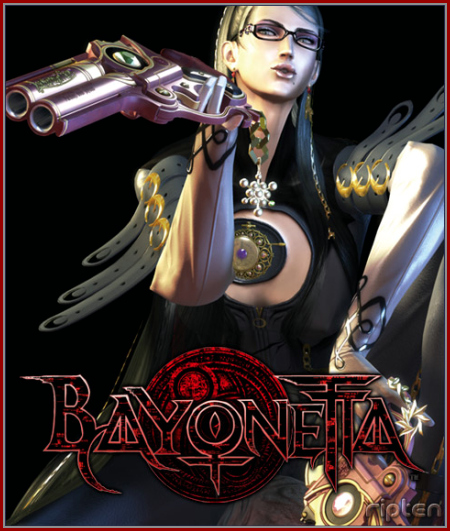
A Non-Stop Infinite Climax Review: Bayonetta


Hideki Kamiya is a name well-regarded by hardcore gamers everywhere. He was the man responsible for giving gamers the iconic action game series, Devil May Cry. The series lasted through four games and released to three different console systems (PS2, PS3, Xbox 360/Windows PC) and was seen by many gamers as one action series on par with Tomonobu Itagaki’s equally iconic franchise, Ninja Gaiden. In 2007, Platinum Games made an announcement about a game being directed by one of its founders (who happens to be Hideki Kamiya himself) that would make it’s way exclusively to the Xbox 360, but which in months ahead would get a PS3 port by way of the game’s publisher, SEGA. This game would turn out to be Bayonetta and looks to be the spiritual successor of Kamiya’s previous franchise, Devil May Cry.

The game received much buzz and fanfare from many gaming sites and bloggers. This was a game that would be a continuation of what Hideki Kamiya was doing with Devil May Cry over at the now-defunct Clover Studios at Capcom. With no news of another installment to the DMC series in the offing it was now up to Bayonetta to satisfy action game junkies the world over. Using the provocative titular character as a selling point for the game, Platinum Games’ was able to keep the title in the public’s consciousness but not so much that oversaturation would set in to create a backlash against a game that wasn’t even out yet when the middle part of 2009 rolled around.

After a couple of release date delays it is now January 2010 and the game has finally been released to both current generation console system in the Xbox 360 and the PS3. The game has turned out just as advertised and promised by Kamiya and his Platinum Games team. It is an action-packed title eerily reminiscent of Devil May Cry both in its presentation and it’s extremely fast gameplay. With Bayonetta developed independently of the much larger and previous employer of Kamiya and his team, the game uses the well-used over-the-top storyline and characters from DMC and adds a very oversexualized sheen to everything from Bayonetta herself to some of the many bosses and cutscenes in the game.

The game’s storyline takes place in a recognizable, albeit alternate Earth, where two clans of witches (the Umbra Witches and the Lumen Sages — Dark and Light respectively) have kept the world’s divine balance in check through the centuries. Using the prologue (and tutorial chapter) to explain some of the particulars as to what caused the destruction of both clans, the player learns some of the mystery behind the character of Bayonetta. She herself is one of the last remaining Umbran Witches who also happens to have forgotten her past as one. All she knows is that she acts as a sort of indepedent contractor for the daemonic side of the equation and hunts and kills the many angels sent by Heaven after her. The rest of the game is Bayonetta’s quest to learn more about her lost memories and to solve the puzzle of why Heaven is after her. Along the way much violence and mayhem ensues with her in the center and all of it heavily tinged with some of the mose provocative cutscenes, camera angles and dialogue outside of Japanese eroge‘s and dating sim games.

The gameplay is easy to pick up with the Y-button and the B-button on the Xbox 360 controller providing both punch and kick attacks respectively. The A-button is where the jump command is mapped to with the X-button relegated to action commands when not in combat and firing a simple pistol when in one. Players who are usually just button-mashers should be able to pull off tons of combos just randomly pressing all four buttons every which way but loose. True action game experts have access to pretty much all the combos in the game right from the beginning and will have a time of their life mastering and chaining all of them to try and get the best combo score in the several Verses which make up the sections in each Chapter (Stage) of the game. It’s pulling off these combos which fills Bayonetta’s magic meter and when full she can pull off the myriad of special finishing moves called Torture Attacks. These attacks are some of the more bizarre and inventive gameplay actions Platinum Games have brought to the action game genre. One Torture Attack has Bayonetta drop an Iron Maiden device behind her target which she then kicks repeatedly until they fly back into the device before it slams shut to kill them.

The one aspect of the combat mechanics in Bayonetta that helps both newbie and hardcore gamers alike is the addition of the “Witch Time Dodge” that could pulled off with the simple pull of the right trigger on the Xbox 360 controller. When a player pulls the right trigger (to dodge an attack)and successfully dodges an enemy who is about to land a blow the gameplay will purposely slowdown  and the screen enter a purple-hazed time-delayed moment. It is in this moment which lasts between 5-10 seconds depending on the level of enemy being dodge that a player stays in regular speed while everything else on the screen stands still. This will allow a player to pull off a godly amount of attacks and combos not to mention avoid getting hit. Mastering the “Witch Time Dodge” is a necessity in the later stages of the game as enemies get stronger, faster and smarter in combat. Hopefully once a newbie player gets that deep in the game they’ve learned the nuances of the game and, at the very least, has gone beyond just button-mashing.

Each Verse in the 17 Chapters which make up the full game brings in an assortment of huge screen-filling Angelic Boss fights which raises the hectic and chaotic fights a player experiences. Some boss fights could end as quickly as under a minute depending on where the game’s difficulty level is set at to almost ten or more minutes. These mid-chapter bosses are not cheapies but could be as difficult to defeat as the big bosses which brings each chapter to a close. One thing which separates Bayonetta‘s fights, both regular and boss types, from other action games of its type is that they never feel cheap. They’re hard enough to do without being so mind-numbingly difficult (a la Ninja Gaiden) and with enough practice even a casual player could defeat in no time. They’re also not too easy that it takes away any sort of challenge and strategy from the gameplay. With patience and attention to detail about how the bosses behave the player can pull off Bayonetta’s Climax Moves which has her spooling out her hair to create a demonic portal for massive Infernal Demons (made up from her hair) which will finish off the bosses in question.

On the graphics and audio side of things Bayonetta ranks as one of the best games released on the Xbox 360. The game runs a consistent 60fps right from the get-go. There’s rarely a slow down in the game’s engine during gameplay even when the action gets extremely busy with the screen full of enemies all doing their own unique actions in addition to the player’s. When there is a slowdown it’s slight enough that it doesn’t cause the player’s commands to fail in pulling off attacks and combos. It actually seem to look like part of the game itself. Like adding a dramatic twist to the boss fight (where it usually occurs) right when the player is about to kill them off. There are some screen-tearing during certain parts of the game where the player navigates Bayonetta through the many varied Chapter environments, but like some of the rare slowdown in gameplay this graphical glitch doesn’t happen too often and when it does occur gameplay is not affected and didn’t pull me out of the gameplay moment.

The game’s art direction and design was well done with enough of an over-the-top 30’s Neoclassical look to the game’s locations to give Bayonetta a recognizable, but unique visual-style. The design of the Angelic host which make up the enemies in the game brings together the classical Renaissance-style of angels and heavenly figures and architecture, but with a slightly demented and disturbing twist to them. One mid-level boss is a flying two-headed dragon whose serpentine necks are attached to a body the size of a small mountain in the shape of a cherub’s face. Platinum Games design team should be commended in their work with Bayonetta. On their design alone I would recommend this game to others just for the sheer audacity of their chosen visual and design styles. But it’s Bayonetta’s look which will bring the most discussion amongst gamers.

Bayonetta I can only describe as combination of sexy British librarian, long-legged model dominatrix and sex personified. Bayonetta also pretty much spends a goodly amount of the game literally naked. I say this because her body-hugging leather outfit is actually created from the locks of her long hair which when she pulls off combo finishing moves (which is often) and Climax Attacks spool off of her body. While none of the special bits are ever shown a lot of skin do show up to be viewed. This design choice adds that touch of sexiness to the the ludicrous and imaginative designs throughout the game. Some may call this as Platinum Games using sex as a selling point for the game and they’ve been heard saying as such, but since that was the intent then people shouldn’t be shocked when they see it.

The voice over work in the game was actually pretty good. The lines of dialogue spoken were done so with panache and flowed well from the actors of the cast. Bayonetta’s voice actor gives the character a seductive and sexy British accent which just adds to an already oversexualized character. Innuendos and double-entendres flow from Bayonetta’s lips with the rest of the cast of characters on the receiving end. The dialogue was really nothing to write home about but when heard through Bayonetta they’re some of the most laugh out loud stuff to come out of games in a long while and will also elicit more than a few “WTF?!” moments. Again it all adds to the chosen decision by Hideki Kamiya and the Platinum Games team to create an over-the-top game which continues what they began with Dante in Devil May Cry.

Lastly, the music used I could only describe as a mixture of J-technopop, techno-jazz riffs and, in one instance, an amped up, bubblegum-pop jazz rendition of the classic song by Frank Sinatra, “Fly Me to the Moon.” Listening to this song as it plays throughout certain areas of the game does get old after awhile, but it still has a certain catchiness to it that I caught myself humming the tune myself while playing the game.

In the end, Bayonetta is one of those games which will appeal to both casual and hardcore gamers. The replay value from trying to unlock new items, costumes and difficulty levels (the hardest difficulty setting aptly named Non-Stop Infinite Climax) makes the game worth more than just one playthrough. The ease with which a player can pick up the game and become very adept in its combat mechanics makes it less of a niche game that only the elite of the elite action gamers could delve deeply into. This game is definitely not like Itagaki’s Ninja Gaiden or even Kamiya’s own Devil May Cry where the gameplay could get so difficulty and frustrating that it loses its appeal to most gamers who fail to see the fun in such a game. While the game itself is not perfect by any means there’s little the small flaws in the game can do to detract from the fun one will have playing it from beginning to end then playing it again to see what they can discover.

As an aside this review is from playing the Xbox 360 version which is superior in every way to the PS3 version whose development was actually given by Platinum Games to one of SEGA’s internal teams. The quality made by that decision of Platinum Games to outsource the port development definitely shows as the PS3 version’s graphics looks washed out, barely keeping a 30fps throughout the game (forget even getting 60fps) and too many long loading times some of which just ruins the game even for the most ardent PS3 supporter and fanboy. Really, the only place to play this game should be on the Xbox 360 and for those who own both systems I recommend they buy the Xbox 360 version.

Official Site: http://www.sega.com/platinumgames/bayonetta/

Extra: This two clips should best show how hilariously oversexed this game really is…AWESOME.

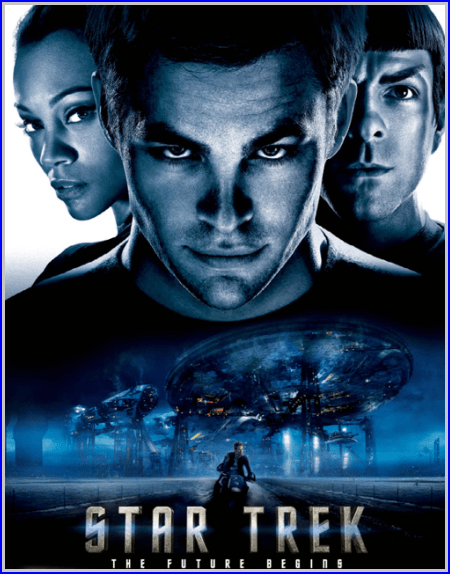
Review: Star Trek (directed by J.J. Abrams)


2009 marks the return of Star Trek franchise to the big-screen. It has been seven years since the last entry in the series with Star Trek Nemesis. The critically-panned and box-office failure of that tenth entry in the film series marked a major low-point for the franchise. The franchise was dead in space with no one seeming to be able to figure out a way to bring the franchise back to big-screen prominence. So, it comes as a surprise that it’s eventual savior happens to be a non-fan of the franchise. J.J. Abrams has confessed to not being a major fan of the series, but wanted to see how he could bring back the franchise to a high bar of standard it had set for itself through the decades of its existence. This latest and eleventh entry in the Star Trek film series marks a drastic improvement over the past decade of film entries in the series. Abrams has crafted an enjoyable and fast-paced film which includes equal amounts of details fans of the franchise love, but also creating a film which would appeal to non-fans as well.

To start off, I’m what one might call a Trekker who has pored over all the details of the franchise. Backstory, character bios and details of the expanded universe is bread-and-butter. When first announced that Abrams would be in charge of trying to bring the franchise back to prominence I was quite skeptical. I’m not the biggest fan and admirer of J.J. Abrams and his work. It didn’t help that his idea to bring in more non-fans to the fold smacked of pandering. I will say that I will be the first to eat my words as Abrams’ Star Trek has been the best entry in the film series for the last 15 or so years. It’s a fresh new take on Gene Roddenberry’s universe which has spanned over four decades starting with the original TV series and continuing with the many novels which continue to churn out year in and year out.

The casting of a relatively unknown actors by Abrams and his crew was a bold move as their performances of iconic characters beloved by tens, if not hundreds, of millions of fans could sink the film and put the final nail in the film series’ efforts to stay up on the big-screen. Fortunately, it is this cast of unknowns who make this film so fun to watch. Chris Pine as James T. Kirk does a fine job of not apeing and micmicking the Kirk of Shatner but instead makes the character his own while at the same time bringing enough of the self-confidence and charm Shatner brought to the role. As good as Pine’s performance as Kirk was the film really belongs to Zachary Quinto’s portrayal of a more conflicted and darker Spock. Where Leonard Nimoy’s work as Spock was more of a mature character whose conflicting dual-nature as an emotional human and logical Vulcan would resurface here and there throughout the decades Quinto’s Spock has that conflicted nature simmering right on the surface. We get a much darker Spock who hasn’t fully accepted his two warring sides. One might even say that this Spock was a much darker portrayal than what had been previously done of the character. Quinto’s performance was a star-making one and should make fans relieved to know that an iconic character was in good hands.

The rest of the ensemble cast do a commendable job in their roles with other stand-out works by Karl Urban as Bones McCoy and Bruce Greenwood as Capt. Pike. Urban, especially, does a remarkable job of channeling DeForrest Kelley’s McCoy without seeming to copy the man. Like Quinto’s Spock, Urban’s McCoy should resonate with fans and non-fans alike. Simon Pegg as Scotty, John Cho as Sulu, Zoe Saldana as Uhura and Anton Yelchin as Chekov all do good work but are not on the screen enough to show what they could really do. With the seeming success of this film I’m sure they’ll have more chance to grab a hold of their characters and make them their own. If there’s a weak link to the cast it would be Eric Bana’s Romulan Nero. The character of Nero wasn’t fully realized beyond the maddened, revenge-fuelled archetype for Bana to truly work his skills on. There’s just not enough in the character to make him a great Star Trek villain. There’s hints of Khan in the role but also hints of weaker villains in the franchise’s history. If the writers had done a better job fully realizing the character for Bana I think Nero would be spoken of on the same level as Khan, but he won’t be and that brings up the other weak link in this film: the writing.

I say the writing is a weak link not because of the dialogue spoken but of the the overall plot of the story. There’s a simple enough plot to hold the film together but writers Orci and Kurtzman tried to create an epic storyline which would keep both loyal fans and new people to the franchise happy. By doing this they oversimplified the story where details were left out that created huge plot holes in the story. Also, the way Kirk’s character meets up with each member of what would become his core group relied too much on timely coincidences. They tried to make each meeting to be a memorable one which ended up with action-sequences that could’ve been left out but added to make the next meeting interesting. Like another origins film of the summer, X-Men Origins: Wolverine, both Orci and Kurtzman tried to lump too much origin details into this prequel. The finished screenplay could easily have used one or two more doctoring to make it a much more leaner and streamlined story.

The good thing was that as simple and pedestrian the story ended up being it did create a way for Abrams to connect both the original stories created by previous films and tv series to this new film which now has given the franchise a new path to move forward on without forgetting the canon established in the previous four decades. Star Trek by Abrams could be compared closely to the James Bond reboot in Casino Royale and the Batman reboot with Batman Begins. All three films share similarities in that all three honors the canon of the expanded universes of their respective franchise but brings enough new ideas and changes to re-imagine the franchises to a new generation of fans. Like those two other films Star Trek has laid the foundation for new stories to be told and not having to worry about continuity problems. Now any future films in the franchise have carte blanche to boldy go where the series hasn’t gone before.

In the end, J.J. Abrams’ Star Trek turned out to be better than expected as he has created a film that is a fun, action-filled ride with a wonderful performance by the ensemble cast of unknowns. Even a weak villain and premise fail to damper and bring down the film. While it is not a great entry to the series it does bring back the franchise to a resounding return to the big-screen that should please most of its loyal fans while appealing to the casual audience. I, for one, cannot wait to see what Abrams has in store for the forseeable future of the crew of the U.S.S. Enterprise.