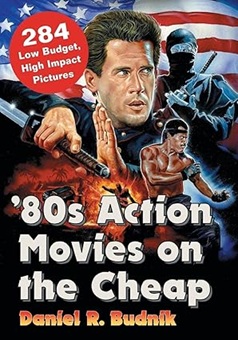
This book features 284 reviews of the 80s action films that tend to be ignored by those who now sing the praises of Stallone and Schwarzenegger. We’re talking about the films of Michael Dudikoff here. We’re talking about the directorial efforts of Cirio Santiago, Nico Mastorakis, Sam Firstenberg, and so many others. We’re talking Italian action cinema. In short, we’re talking about some of the most entertaining and unfairly overshadowed films of all time.
Yes, the AmericanNinja films are reviewed (or, at least, the ones that came out in the 80s are). Yes, there’s a review of The Last Hunter and Space Mutiny and the Deathstalker films. Much like me, Daniel Budnik appreciates Red Brown even if Reb’s habit of shouting during his action scenes does seem to be a bit weird. But what I truly love about this book is that it also features reviews of films that even I previously didn’t know about. I mean, honestly, there are hundreds of film guides out there. What sets the great film guides apart from the good ones is how many previous unknown titles you can discover by just randomly flipping through it. And when it comes to film reviews, the most important question is whether or not the review inspires you to try track down a film that you may not have seen or even heard about before. The best film reviews inspire you to watch so that you can judge for yourself. I’ve discovered a lot just by randomly opening this book. And I now have a long list of cheap 80s actions films that I want to watch and which I will be watching and hopefully reviewing myself.
With 80s Action Movies On The Cheap as my guide, I look forward to all sorts of new discoveries.
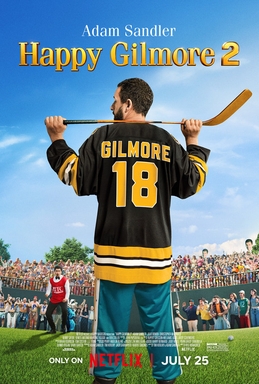
I love 1996’s HappyGilmore and, over the past few months, I have very much been looking forward to the release of the long-delayed sequel, Happy Gilmore 2. Still, I was a bit concerned when I opened the film on Netflix and discovered that the sequel had a nearly two-hour running time. (The original clocked in at an efficient and fast-paced 90 minutes.) Comedy is all about timing and, in general, shorter is funnier. I know that Judd Apatow and Adam McKay might disagree with me on that but let’s be honest. For all of the acclaim that it was met with, when was the last time you actually felt any desire to rewatch The King of Staten Island? For that matter, if you have to pick between Anchorman or Anchorman 2, which are you going to pick? The 90 minute original or the sequel that takes more than two hours to tell essentially the same story?
Having now watched the film, I can say that HappyGilmore2 does run a bit too long. There are a few sequences that could have been trimmed without hurting the film. I can also say that I thoroughly enjoyed the film. I laughed more often than not. It’s a funny film but it’s also a surprisingly touching one.
Taking place 29 years after the first film, HappyGilmore2 features an older and slightly more mature Happy. It also features an older and slightly more mature Adam Sandler and, to its credit, the film acknowledges that. It doesn’t try to convince us that Sandler and Gilmore are still the young hell-raisers that they once were. (Happy’s Happy Place has changed considerably.) I’ve often written that there are two Adam Sandlers. There’s the youngish Sandler who made silly and often stupid films where he basically just hung out with his friends and didn’t seem to put much effort into anything. That’s the Sandler who has won multiple Razzie awards. And then there’s the older and wiser Adam Sandler, the sad-eyed character actor who gives sensitive performances as world-weary characters. This is the Adam Sandler who seems to be overdue for an Oscar nomination. If an alien came to Earth and only watched Adam Sandler’s serious films, they would probably think he was one our most-honored actors. While HappyGilmore2 is definitely a comedy, it still features quite a bit more of the serious Sandler than I was expecting.
At the start of the movie, Happy is not in a happy place. His grandmother has passed away. His wife, Virginia, was killed by an errant tee shot. He has four rambunctious sons and a daughter, Vienna (played by Sunny Sandler, who was so good in You Are So Not Invited To My Bat Mitzvah). After Virginia’s death, Happy gave up golf. He lost his money. He lost his grandmother’s house. Now, he’s working in a grocery store and he’s an almost forgotten figure. He’s also an alcoholic, keeping bottles of liquor hidden around the house. (A tiny liquor bottle is hidden in the cuckoo clock.) And while this film is certainly not UncutGems or even The Meyerowitz Stories, Sandler still does a good job of capturing the reality of Happy’s depression. There’s a true sense of melancholy running through the film’s first hour, as Happy returns to golf to try to make enough money to pay for Vienna to attend a prestigious dance academy. The second hour, in which Happy leads a team of pro golfers against a team of “extreme” athletes is far more goofier but Happy’s love for his family is a theme that runs through the entire film.
Aging is the other theme that runs through the film. Forced to play with three younger players (including Eric Andre and Margaret Qualley) at a local golf course, the rusty Happy grimaces when he hears one of them say, “Is he trying to do the Happy Gilmore swing?” When Happy rejoins the PGA, he discovers that all of the younger players now hit the ball as hard as he used to. An obnoxious tech bro (Benny Safdie) wants to start a new, extreme golf league, one that will “continue the revolution” that Happy started. Happy finds himself defending traditional golf and it’s an acknowledgement that both Gilmore and Adam Sandler have grown up and have come to appreciate that not everything needs to change. Sometimes, you just want to play a nice round of golf on a pretty course without having to deal with the sensory overload of the 2020s.
It’s a funny movie. Even when he’s playing it straight, Sandler still knows how to deliver a funny line. Ben Stiller returns as Hal L., who is now an addiction recovery specialist. (His techniques include ordering people to wash his car.) Christopher McDonald also returns as Shooter McGavin, having escaped from a mental asylum and now fighting, alongside Happy, to save the game that they both love. As someone who always felt that Shooter kind of had every right to be upset during the first film, I was happy to see him get a bit of redemption. Several professional golfers appear as themselves. A running joke about Scottie Scheffler getting arrested and then forcing all of his cellmates to watch golf made me laugh a lot more than I was expecting it too.
The sequel is full of shout-outs to the first film. A fight in a cemetery reveals that everyone who died during and after the first film just happens to have a gravestone and it was actually kind of a nice tribute. (Even the “Get Me Out Of Here” Lady gets a headstone.) It’s a sequel that truly appreciates and values the legacy and the fans of the first film. It’s also a sequel that seems to truly love the game of golf, which is not necessarily something that could be said about the first film.
HappyGilmore2 is a worthy sequel, even if it is a bit long. It made me laugh but, at the same time, it was hard not to be touched by the obvious love that Happy had for his family and that they had for him. (It didn’t hurt that Happy’s daughter was played by Sandler’s daughter.) In the first film, Happy played golf for his grandmother. In the second film, he returns to the game for his daughter. It’s all about family, as Adam Sandler’s unexpectedly heartfelt performance makes clear.
With movies like Top Gun, Labyrinth and Ferris Bueller’s Day Off already out, the summer would give us Big Trouble in Little China, Aliens, & The Fly (Which at one point you could catch as a double feature with Aliens). The two best announcements at home were that a new baby was on the way and Transformers: The Movie was coming out. By August, we knew the baby would be a boy and a name was already set aside for him. We were naming him after a fallen Officer who was a friend of my father’s on the Force.
Impending older brotherhood was nice, but for 11 year old me, it all took a backseat to the Death of Optimus Prime. Up until then, the most shocking fictional event we had in school was either Return of the Jedi closing the book on Star Wars some years prior, K.I.T.T. getting destroyed (and rebuilt with Super Turbo Boost) in Knight Rider, or Rico losing Angelina in a car bomb during the Season Finale of Miami Vice just a few months back.
I didn’t get a chance to see Transformers: The Movie during the film’s initial run, simply because there wasn’t anyone at home who wanted to sit through it with me. My older brother, through other means, managed to score a VHS copy of the film within the first week or so of its theatrical release. I watched and re-watched that video so many times, and would even pause it to try to draw some of the characters. Eventually, I was able to catch a re-release for the film’s 30th Anniversary.
After two full seasons of the show, Transformers: The Movie was basically Hasbro’s way of cleaning house from the 1984 Generation 1 toy line to introduce a new set. The show sold figures, and the hopes were that the film would do the same. Granted, there were already a large number of Transformers to work with by the time the movie came out. With nearly 50 Autobots and about 35 Decepticons to choose from, the film focused on a few, such as the Insecticons, Dinobots and some of the G1 favorites like Soundwave, Starscream, Jazz & Bumblebee. The Constructicons (and Devestator)were the only group set to be featured in the movie. The Stunticons & Aerialbots would sit this one out. Hasbro really didn’t care too much about the impact of any of these changes on the movie’s plot. While most of the trailers asked “Does Optimus Die?”, their toy commercial line already introduced Rodimus Prime.
Produced by De Laurentiis Entertainment Group (Near Dark, Blue Velvet), Transformers: The Movie takes us to the future of 2005. The Autobots and Decepticons are still fighting it out, with a few changes in the war. The Decepticons own the Transformers home planet of Cybertron, but the Autobots have control of two of Cybertron’s Moons and a city on Earth. Lead by Optimus Prime (Peter Cullen, Eeyore on The Adventures of Winnie the Pooh), the plan is get back to Earth and then handle the Decepticons from there. Of course, the Decepticons and their leader, Megatron (Frank Welker, The Golden Child) find out about this and intercept an Autobot shuttle, outright killing classic show staples Prowl, Brawn, Rachet and Ironhide. I can’t imagine what it was like to be a kid, bring your favorite toy to the movies, only to see the character it’s based on killed on screen. To make things worse, a planet eating transformer named Unicron threatens both parties, including Cybertron. Can Unicron be stopped?
It wasn’t a total loss. We were introduced to new Autobots in the rookie Hot Rod (Judd Nelson, The Breakfast Club), the war hero Kup (Lionel Stander, TV’s Hart to Hart), the fast talking Blurr (John Moschitta, Jr., Dick Tracy), would be leader Ultra Magnus (Robert Stack, Airplane), an Autobot First Lady in Arcee (Susan Blu), and Triple Changer Springer (Neil Ross). The two most famous vocal additions were Leonard Nimoy (Invasion of the Body Snatchers) the new Deception leader Galvatron and Orson Welles (The Third Man) as Unicron. As a kid, it was pretty awesome to know that both Spock and the “No Wine Before It’s Time” guy were joining in all of this. It made Transformers seem a bit larger. My parents would point out that Orson Welles was “the” Orson Welles, but as Citizen Kane wasn’t on my radar (despite my Dad owning and watching it), I associated him with Wine commercials. To both their credit, Nimoy and Welles did just fine with their vocal talents.
While the animation for Transformers was never fantastic, the movie was a bit of an improvement. It never quite reached the levels of anime films like Fist of the North Star & Golgo 13: The Professional. The Soundtrack was ultimately where the film shined, with a mix of rock music from bands like Lion and Stan Bush and a score by Vince DiCola. Coming off of Staying Alive and Rocky IV, DiCola’s work on Transformers: The Movie was great, and remains a go to album for me when music is needed for a situation.
The Death of Optimus Prime was a bit of a shock to the audiences that saw (and cared about) it. Hasbro would eventually bring Prime back temporarily as a Zombie in an episode of the show’s 3rd Season, and then again to lead in the season’s 2 part finale, “The Return of Optimus Prime”.
After seeing the film, I asked me parents for some of the movie based Transformers. Christmas was put on hold by my Mom as she went into labor around Christmas Eve. I was able to open just one gift before Christmas. This happened to be a Hot Rod figure that I found in a toy store back in November, which was quickly snatched and wrapped for the Christmas Pile before I could get to open it. She had my little brother on Christmas Morning, and we eventually celebrated the holiday half a week later. Bless her heart, she gave me almost the entire Movie line – Galvatron, Rodimus Prime, Springer, Cyclonus, and the Predacons (who weren’t in the movie). Playing with them took a backseat to diaper detail, but hey, that Christmas was one of the best.
Overall, Transformers: The Movie is one of those films I happily return to from time to time. It’s not incredible in any major way, but it takes me back to one element of a magical year.
HappyGilmore2, the sequel to my favorite golf movie, is currently available on Netflix. I’ll be watching it later today. I have no idea if it’s any good or not. I’m hoping for the best, though.
Anyway, this seems like a good time to share the best scene from the original HappyGilmore. In this scene, Happy and Bob Barker team up for a celebrity tournament. It does not go well. Reportedly, Barker initially turned down this cameo and only changed his mind after he was assured that he would win the fight.
4 Or More Shots From 4 Or More Films is just what it says it is, 4 shots from 4 of our favorite films. As opposed to the reviews and recaps that we usually post, 4 Shots From 4 Films lets the visuals do the talking!
Today, we pay tribute to a great year in cinema. It’s time for….
4 Shots From 4 1974 Films
The Godfather Part II (1974, dir by Francis Ford Coppola, DP: Gordon Willis)
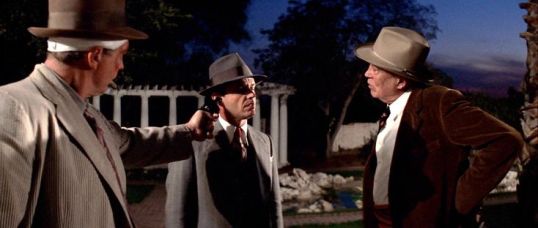
Chinatown (1974, dir by Roman Polanski, DP: John A. Alonzo)
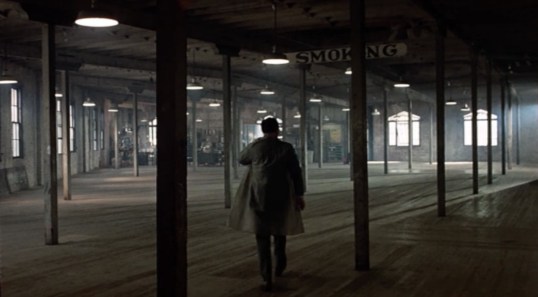
The Conversation (1974, dir by Francis Ford Coppola, DP: Bill Butler and Haskell Wexler)
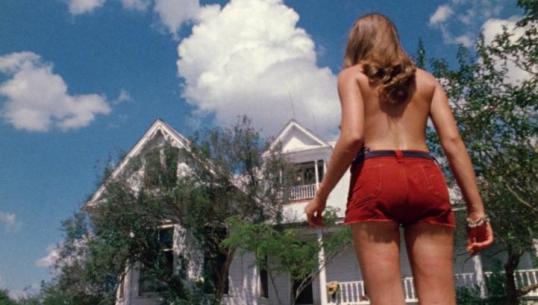
The Texas Chainsaw Massacre (1974, dir by Tobe Hooper, DP: Daniel Pearl)
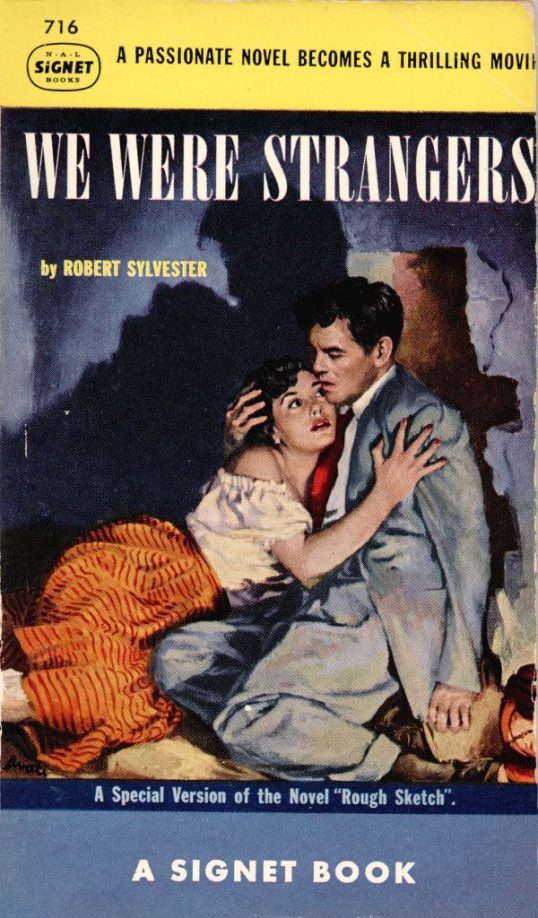
This cover, so full of desperation and longing, is from 1949. As you can tell from reading the cover, this version was released to coincide with a film adaptation.
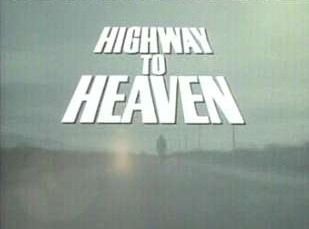
Welcome to Late Night Retro Television Reviews, a feature where we review some of our favorite and least favorite shows of the past! On Thursdays, I will be reviewing Highway to Heaven, which aired on NBC from 1984 to 1989. The entire show is currently streaming on Tubi and several other services!
This week, HighwaytoHeaven makes a mockery of legitimate theater.
Episode 4.6 “Playing for Keeps”
(Dir by Michael Landon, originally aired on November 4th, 1987)
Jonathan and Mark are directing a play!
The play stars movie star Rhett Clark (Eric Douglas, the least talented son of Kirk Douglas). Rhett plays a young man who is struggling to come to terms with the impending death of his father. In the play, Rhett’s father is played by his actual father, Jackie Clark (Donald O’Connor), a old-time comedian who can’t get work anymore.
It’s not an easy rehearsal process. Rhett resents his father. Jackie wants to tell jokes. He wants to put on a dress and a wig because, according to him, all of his fans will want to see him play “Aunt Jackie.” Rhett explains that the play is not a comedy. There’s no room for Aunt Jackie. Really, explaining all of that should have been Jonathan’s job. He’s the director!
The problem with this episode is that we’re supposed to be angry at Rhett for not supporting his father’s attempts to turn the play into a vaudeville comedy but actually, Jackie’s a jerk. Rhett’s a jerk too but he’s a jerk who understands that, when you’re doing a dramatic play, the actor playing a dying man can’t suddenly get out of his hospital bed, duck into a closet, and then come out as Aunt Jackie. An actor ad-libbing dialogue and then turning the play into a comedy because he’s petulant and insecure is not the type of behavior that would be tolerated in all-volunteer community theater, much less on a professional stage. The fact that Jackie is getting paid to appear in the show makes his unprofessional conduct all the more annoying.
This episode puts on the blame on Rhett. We’re meant to see Rhett as the ungrateful son who refuses to see things from his father’s point of view. Because Rhett is being played by Eric Douglas, an actor who did not exactly have the most likable screen presence, it’s easy to blame him. I mean, everyone loves Donald O’Connor, But honestly, Jackie is the jerk here.
How big of a jerk is Jackie? On opening night, he gets mad at his son and does his Aunt Jackie schtick. Somehow, this leads to Rhett and Jackie reconciling and hugging it out while the audience applauds. Honestly, though, it should have led to Jackie being fired. If you’re not going to be professional, you have to go. This episode would have been far more touching if Jackie had been willing to put his ego aside and actually allow his son to have the spotlight for once.
This episode will definitely not be remembered as one of my favorites of the series. In the past, I’ve defended this show’s tendency to go for sentimentality over realism but this episode just pushed things a little too far.
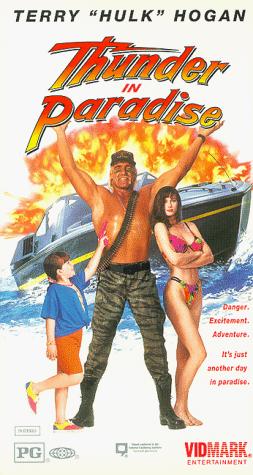
R.J. “Hurricane” Spencer (Hulk Hogan) is a former Navy SEAL who now lives in Florida and makes his living with his superboat, Thunder. Spencer’s best friend, Bru (Chris Lemmon), is also his business partner. There’s nothing that Spencer and Bru can’t do. This movie starts with Spencer taking the boat down to Cuba so he can rescue the family of a dissident and bring them back to Florida. It ends with his using his boat to save the lives of his wife (Felicity Waterman) and his stepdaughter (Robin Weisman) from some treasure hunters who have made the mistake of kidnapping them. Spencer’s marriage is one of convenience. His wife needed a husband to get her fortune and he needed a rich wife to keep his business going. His father-in-law (Patrick MacNee) doesn’t trust him but Spencer’s a top-notch American hero.
Though it was initially released direct-to-video, ThunderinParadise was actually a pilot for a syndicated television show that started a few months later. Both the film and the show were from the producers of Baywatch and it shows with the emphasis on the beach, the bikinis, the corny humor, and the cartoonish villains (led, in this case, by Flash Gordon himself, Sam Jones). Of course, it’s a Hulk Hogan movie so none of that is really a negative. Hogan might be playing Hurricane Spencer but he’s really playing himself and there’s enough self-aware humor to make ThunderInParadise entertaining in a way thatNo Holds Barreddefinitely was not. (I liked that, during a fight on another boat, there just happened to be a wooden chair sitting on the deck that Hogan could break across his opponent’s back.) Chris Lemmon and Hulk Hogan are a surprisingly good team (Lemmon’s brain provide a needed contrast to Hogan’s bawn) and Carol Alt is on-hand as the owner of a beach bar. Naturally, a handful of Hogan’s fellow wrestlers shows up as well, Brutus Beefcake, Jim “The Anvil” Neidhardt, Giant Gonzalez, Jimmy Hart, and others. As a fan of The Avengers, I was happy to see Patrick MacNee, even if his character was just a typical distrustful father-in-law.
Corny, silly, dumb, and more fun than it probably should be, ThunderInParadise is an entertaining product of its time.

 Through the Shattered Lens