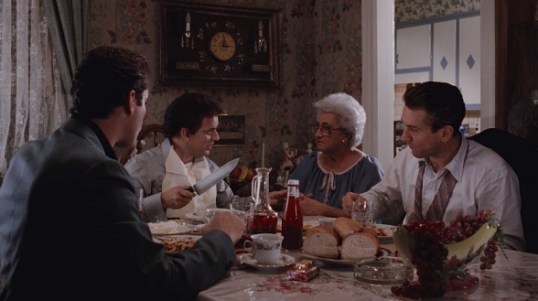
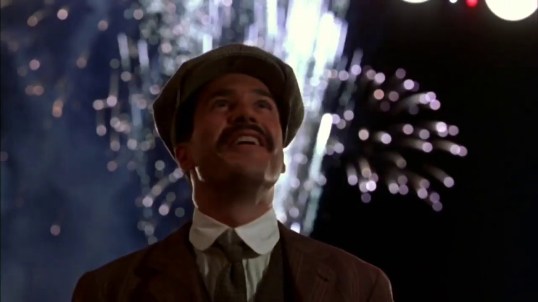
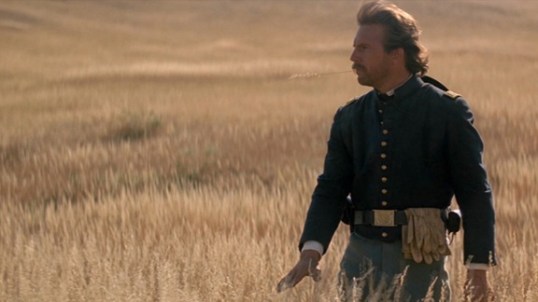
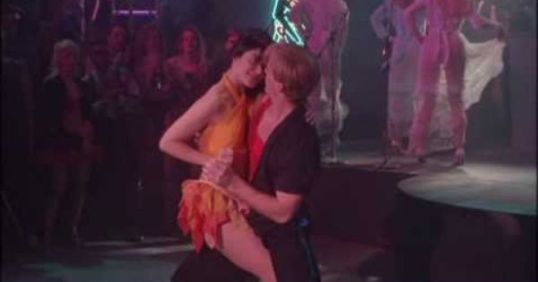
4 Or More Shots From 4 Or More Films is just what it says it is, 4 shots from 4 of our favorite films. As opposed to the reviews and recaps that we usually post, 4 Shots From 4 Films lets the visuals do the talking!
Today, we pay tribute to the year 1990! It’s time for….
4 Shots From 4 1990 Films
Goodfellas (1990, dir by Martin Scorsese, DP: Michael Ballhaus)
Avalon (1990, directed by Barry Levinson, DP: Allen Daviau)
Dances With Wolves (1990, dir by Kevin Costner, DP: Dean Semler)
The Forbidden Dance Is Lambada (1990, dir by Greydon Clark, DP: R. Michael Stringer)
Today, the Shattered Lens wishes a happy birthday to Martin Sheen.
In this scene from 1979’s ApocalypseNow, Sheen shows the intensity that not only nearly killed him when he suffered a heart attack during filming but which also served to make Francis Ford Coppola’s Vietnam epic a true classic.
What happened to summer this year? Seriously, it’s just kind of flying by. We’ve got August and then the first half of September and then it’s going to be Autumn again! Get out there and enjoy yourselves while you still can!
Today’s music video of the day is all about summer. It captures a few essential truths. Number one, it’s fun to get undressed in public. Number two, if you take off enough clothes while walking down the street, some dude with a saxophone will undoubtedly start following you. What I like about this video is how everyone is both intrigued and annoyed by the saxophone player. This is a video that just captures what it’s like to be young and have your entire future ahead of you. It also captures the feeling of summer!
(On a personal note, the Haim sisters remind me of the Bowman sisters, except we’re four and they’re three.)
This video was directed by Paul Thomas Anderson, who apparently has directed a few films as well. No, not the Resident Evil films. That’s a different Paul Anderson, all together.
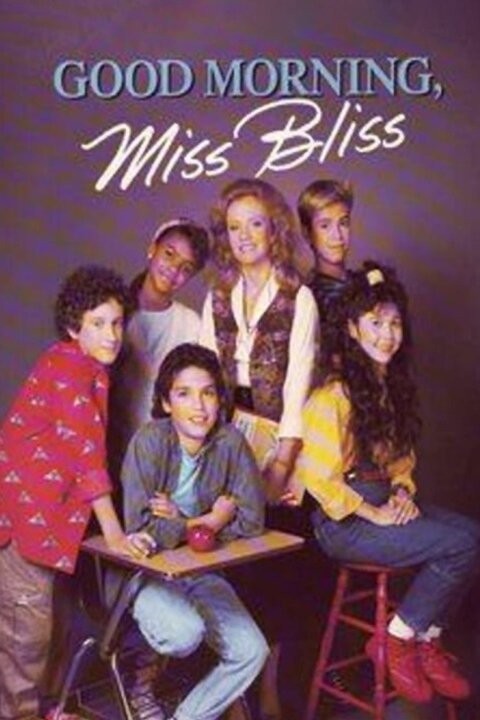
Welcome to Late Night Retro Television Reviews, a feature where we review some of our favorite and least favorite shows of the past! On Saturdays, I will be reviewing Good Morning, Miss Bliss, which ran on the Disney Channel from 1988 to 1989 before then moving to NBC and being renamed Saved By The Bell. The entire show is currently streaming on Prime!
This week, Miss Bliss makes the mistake of trusting her students. Zach Morris also learns a lesson about the Stock Market. Mr. Belding learns better than to try to be nice to Miss Bliss. It’s quite an episode!
Episode 1.3 “Wall Street”
(Dir by Burt Brinckerhoff, originally aired on December 14th, 1988)
Mr. Belding is concerned. Miss Bliss is teaching her class a lesson about Wall Street. Each of her students has donated $2 and the money has been used to buy a safe and dependable stock. Belding doesn’t think that it’s good for the students to invest real money but, as usual, Miss Bliss just smirks away his worries.
However, Zach needs $300 to pay for a video camera that he damaged. With the help of his friend Mickey (Max Battimo), Zach breaks into the classroom, gets on the computer, and invests the class’s money in potatoes. He buys the stock on margin. So, of course, when the stock tanks, Miss Bliss ends up owing $1,500.
“You just cost me my new car!” Miss Bliss angrily exclaims.
What car was Miss Bliss going to buy for $1,500? It sounds like maybe they did Miss Bliss a favor, to be honest.
Miss Bliss gets angry and storms out of her classroom. Mr. Belding comforts her and tells her that she’s a good teacher. He jokes that something even worse will probably happen in the future. Miss Bliss snaps that he should have just said, “I told you so.”
This exchange between Mr. Belding and Miss Bliss gets right to the heart of why I can’t stand Miss Bliss. Mr. Belding is trying to help. He compliments her. He tells her that this sort of thing happen to every teacher. He attempts to lighten the mood with a joke. And Miss Bliss snaps at him. Miss Bliss is someone who has no problem dismissing everyone else’s problems but, once something goes wrong for her, the entire world is supposed to stop. Mr. Belding didn’t say “I told you so,” because Mr. Belding isn’t a condescending know-it-all, unlike a certain teacher who no longer afford a new car.
I liked this episode. The overwhelming smugness of Miss Bliss meets the overwhelming self-absorption of Zach Morris. The end result is Miss Bliss doesn’t get a car but she does get a bag of potatoes. Miss Bliss even forgives her students for stealing from her. To be honest, Zach is in the 8th Grade and most 8th Graders know better. Add to that, Zach sneaks into the school to buy those potatoes. Again, this is not typical 8th Grade behavior. It might be time to get this kid some professional help because God knows what he’s going to be like when he reaches high school….
On Sunday morning, I watched an episode in which Mr. Drummond was being sued by an employee who had lost out on a promotion because Drummond felt he had a responsiblity to give the promotion to a black executive. At first, Willis was all in favor of handing out jobs based on race but then, when he was cut from the school basketball team to make room for a white player, Willis realized that he was actually against Affirmative Action.
I followed this up episode up with a two-parter in which Arnold wore a wire to take down two bullies at his school. Is that really something that the police needed to get involved with? Of course, the middle school bullies did appear to be in their mid-20s so maybe it was a good idea to get the police involved.
On Monday, I watched an episode in which Mr, Drummond gave a promotion to a woman. Willis was all like, “How can you promote a woman!” Kimberly thought the woman was going to try to steal her father. It was a dumb episode. I’m probably not getting the plot right because I was bored. I followed this up with an episode where Arnold wanted to join a football team but the football coach was a jerk. Mr. Drummond told the coach off. Then, I watched an episode where a baseball coach wanted to recruit Willis but Mr. Drummond didn’t approve of the coach’s tactics. Mr. Drummond was kind of a busy body.
Gordon Ramsay’s Secret Service (Hulu)
Gordon Ramsay helped a restaurant that was owned by a woman and only employed women. The owner said that her goal was to empower women. So, of course, she brought in Gordon Ramsay to save the restaurant. This restaurant had a dead rat in the kitchen. Close that place down!
The Prisoner (Night Flight Plus)
I watched two more episodes on Saturday night. Rover is my favorite character.
Untold: The Fall of Favre (Netflix)
I watched this Netflix documentary earlier today. It was about how Brett Favre went from being a beloved football hero to a somewhat shady figure of scandal. It really didn’t dive that deeply into the story but I guess it worked as a reminder that a celebrity’s public self is often far different from their private self.
Untold: Johnny Football (Netflix)
Johnny Manziel was trending on twitter for some reason so Erin and I decided to watch this Netflix documentary about him. The documentary explored why Johnny Manziel failed to make much of an impression as a professional football player. The main reason would appear to be that he was kind of dumb.
Untold: Malice at the Palace (Netflix)
This was a documentary about a brawl that broke out during a basketball game. It was interesting to watch, even though I’m not really into basketball. Both the fans and the players came across as being spoiled and immature. I recognized Metta World Peace from his brief stint on Celebrity Big Brother.
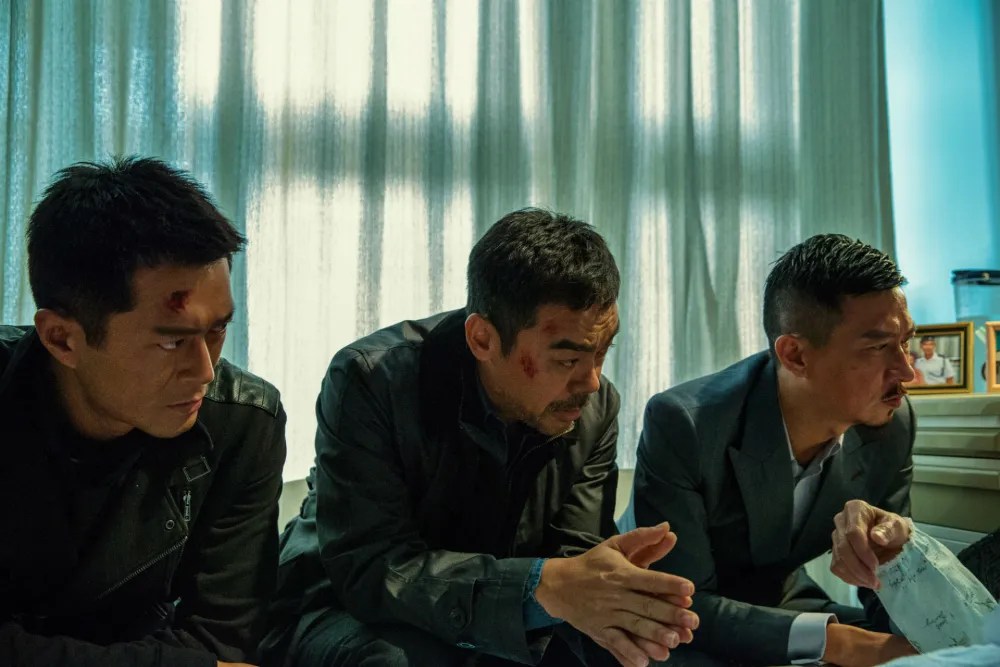
THE WHITE STORM (2013) centers around three lifelong friends and police officers in the Hong Kong Narcotics Bureau: Chief Inspector Ma (Lau Ching-Wan), undercover agent So (Louis Koo), and Inspector Cheung (Nick Cheung). The story follows their mission to take down a powerful Thai drug lord, Eight-Faced Buddha (Hoi Pang-Lo), in a high-stakes undercover operation. So, tired of his undercover work and wanting to just go home and take care of his pregnant wife, finds himself in more and more danger as the operation unfolds. A botched raid in Thailand leads to an impossible choice for Ma that comes with devastating consequences for the three friends. Five years later, those who survived must overcome feelings of guilt and betrayal in a final attempt to bring down the drug lord.
I enjoy director Benny Chan’s THE WHITE STORM for two primary reasons. First, THE WHITE STORM is a modern example of the “heroic bloodshed” genre of action film that was so popular in Hong Kong in the 80’s and 90’s, beginning with the John Woo / Chow Yun-Fat classic, A BETTER TOMORROW (1986). This genre is defined by stylized violence, as well as themes of brotherhood, loyalty, and extremely difficult moral dilemmas. THE WHITE STORM definitely delivers on the stylized violence inherent in the genre, giving us even bigger action set-pieces based on the expectations of more modern audiences. While not necessarily as innovative as John Woo’s best work, the action sequences are exciting and further develop the emotional dynamics between the main characters. The central emotional conflict at hand in THE WHITE STORM seems to be the value of friendship versus each of the cop’s civic duties to stop a drug trade that is crippling Hong Kong. In the best heroic bloodshed tradition, the characters are continually forced to make impossible decisions that may be for the greater good, but are bad for somebody. These decisions lead to a lot of melodrama over the course of the film, but the drama is done well for the most part.
A “heroic bloodshed” film like THE WHITE STORM cannot possibly work without strong performances, and Benny Chan gets excellent work from some of Hong Kong’s best actors. Lau Ching-Wan’s stoic intensity, Louis Koo’s conflicted desperation, and Nick Cheung’s emotional vulnerability create a chemistry that sells the “brotherhood” of our main characters. It’s a delicate balancing act as each character has their own motivations for their actions, but we can understand where they are coming from and still believe that they truly care about each other. Of course, this emotional connection makes the film that much harder to watch as the story heads into more tragic directions.
Overall, THE WHITE STORM is a solid action film that showcases excellent action scenes and emotionally satisfying drama, delivered by some of Hong Kong’s best actors. If you’re a fan of the Hong Kong’s heroic bloodshed genre, in my opinion, it’s a worthy addition and a must-watch.
THE WHITE STORM is currently steaming on Tubi. I’ve included the trailer below:
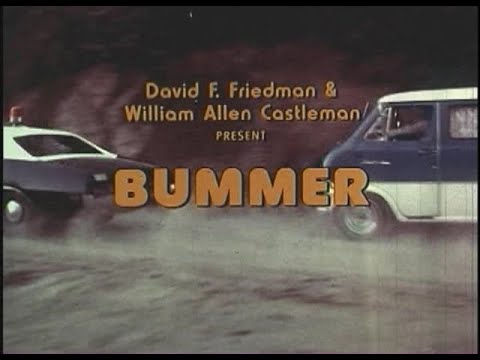
The 1973 film Bummer tells the story of a California rock band known as The Group.
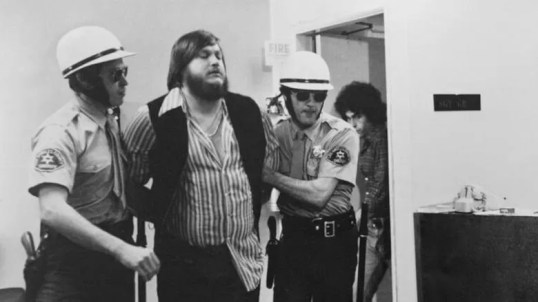
The Group plays groovy music with a mellow feel. The music they play doesn’t sound so much like actual 70s California rock as much as it sounds like what someone from the big band era would have assumed mellow 70s California rock sounded like. The Group is led by the charismatic Duke (Kipp Whitman). The lead guitarist and the drummer look like groovy dudes as well. But then there’s Butts (played by the great character actor, Dennis Burkley), the bass player. Butts is a big fat slop with a beard, unwashed hair, and a genuine aura of grime. Duke’s girlfriend tells Duke that he really should kick Butts out of the band. The problem is that Duke owns the van that the Group travels around in. It’s the type of 70s van that was probably nicknamed “The Second Base Mobile.”
Well, Duke really should have considered kicking Butts out of the band because it turns out that Butts is crazy. He’s a sociopath with a mother fixation and, when he realizes that he’s the only member of the band who isn’t getting laid on a regular basis, he goes crazy and starts assaulting and murdering groupies.
It’s a bummer!
This film was produced by David Friedman, the genial sexploitation producer who is best-known for his collaborations with Herschell Gordon Lewis. Lewis did not direct Bummer and I have to say that I was a little bit surprised to discover that because there’s a scene at a strip club that goes on for so long and which features so many pointless close-ups of pervy men staring up at the dancers that I immediately assumed that Lewis must have, at the very least, snuck onto the set and supervised it. Instead, the film was directed by William Allen Castleman, who also did directed Johnny Firecloud and The Erotic Adventures of Zorro. So be it. I’m still convinced that Lewis has something to do with this movie.
Bummer is one of those films about how wasteful the younger generation is, with their mellow rock music and their bongs and their groupies. The film’s main message seems to be that anyone under the age of 30 is intellectually vapid and spiritually empty but at least they look good without their clothes on. It’s a mix of exploitation and nostalgia. “You know who didn’t murder groupies?” the film seems to be saying, “Glenn Miller, that’s who.”
The film is pretty dull. Scenes drag. It takes forever for any sort of plot to develop. Most of the cast is forgettable but Dennis Burkley makes an impression as the unhinged bass player and watching him in this, it’s easy to understand why be became such a busy character actor. There’s an authentic edge to Burkley, one that comes through even in this film. One of the groupies is played by Carol Speed, who would later appear in Disco Godfather and warn people about the dangers of “whack attack.” Oddly enough, the film looks surprisingly good. Cinematographer Gary Graver worked on films like this in between working on Orson Welles’s The Other Side Of The Wind.
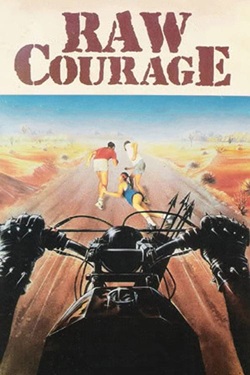
Three friends (Ronny Cox, Art Hindle, and Tim Maier) leave their families behind and go on a 72-mile run through the desert of New Mexico. They’re marathon runners and they are trying to survive the ultimate challenge. Instead, they run into a right-wing militia led by “Colonel” Crouse (M. Emmet Walsh) and Sonny (William Russ). Soon, the joggers are being chased through the desert. Their survival depends on if they have the raw courage to make it back to civilization.
RawCourage was written and produced by Ronny Cox and I like to think that he made this movie as his way to get back at everyone who typecast him as a victim after Deliverance. Cox’s jogger never gives up in RawCourage, even while being chased through the broiling desert by a bunch of madmen on motorcycles. Cox and Art Hindle both give good performances and their well-matched by Walsh and Russ. (Unfortunately, Walsh’s role in pretty small. Most of the actual villainy is committed by William Russ.) Cox and Hindle both play intelligent men who just happened to find themselves in the wrong place at the wrong time. That the victims are sympathetic and you actually care about whether or not they make it back to their families elevates the film.
The film does start to run out of gas towards the end. The scenes of our heroes running through the desert start to get repetitive. Raw Courage is still an exciting action film and it’s flat, made-for-TV look is probably less of a problem when viewed on YouTube than it was when the movie was initially released. The film provides a rare starring role for Ronny Cox, four years before Robocop typecast him as everyone’s favorite corporate villain. Cox delivers. It’s a shame he didn’t get to play more heroes.
Welcome to Retro Television Reviews, a feature where we review some of our favorite and least favorite shows of the past! On Saturdays, I will be reviewing The American Short Story, which ran semi-regularly on PBS in 1974 to 1981. The entire show can be purchased on Prime and found on YouTube and Tubi.
This week, we have an adaptation of a short story by Ernest Hemingway.
Episode #9 “Soldier’s Home”
(Dir by Robert Young, originally aired in 1977)
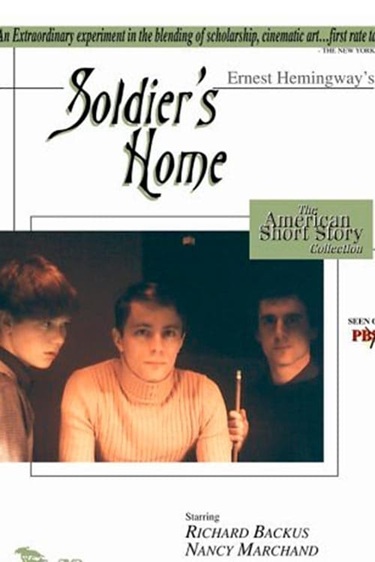
Having gone from attending college to serving in the Army during the Great War, Harold Krebs (Richard Backus) returns home to Oklahoma. He arrives home later than most of the other soldiers who served. (He stayed in Europe until 1919.) As a result, there’s no big parade waiting for him. Everyone in town seems to have moved beyond the war and they no longer have much of a desire to talk about it.
Harold, who was once a popular and optimistic member of the town’s social set, no longer feels that he fits in. He feels detached, watching people as they go about their lives but never feeling any desire to join them. His mother (Nancy Marchand) pushes him to go out and date and have a good time but Harold feels lost, regardless of how much she prays for him.
Ernest Hemingway’s short story was one of the first to realistically deal with the feelings of soldiers returning from combat. Though Harold doesn’t talk much about his experiences, one can tell that he saw and experienced things that left him scarred. After surviving the horror of The Great War, there’s no way Harold can just slip back into his normal routine.
The adaptation sticks closely to Hemingway’s story. Unfortunately, it doesn’t really find the visual style necessary to capture the power of Hemingway’s words. Hemingway was a deceptively simple storyteller and Robert Young’s film is a fairly straight-forward portrait of a young man who doesn’t want to do anything, one that fails to truly capture the subtext of Hemingway’s story. Richard Backus’s blank-eyed acting style worked well when he was playing a member of the undead in Deathdreambut, in this one, he just makes ennui seem boring and petulant. Nancy Marchand, not surprisingly, is far stronger in the role of his well-meaning but clueless mother.
As was almost always the case when it came to attempts to adapt Hemingway, it’s best just to read the original.



 Through the Shattered Lens