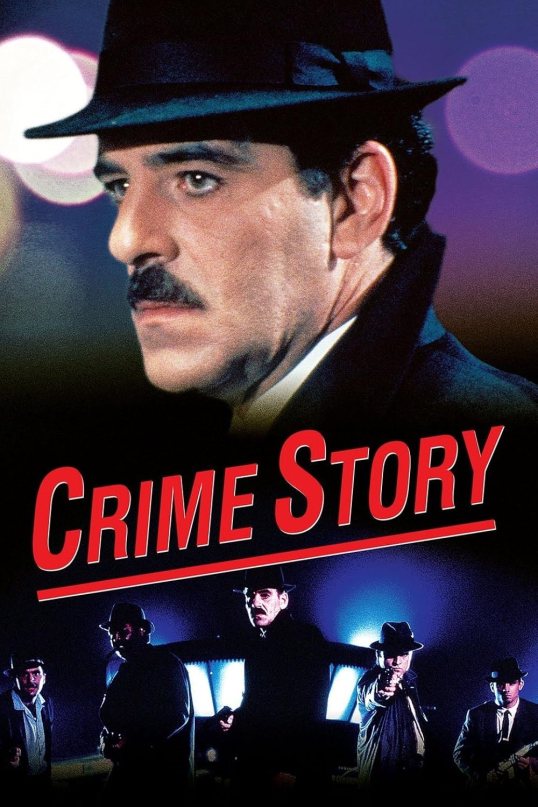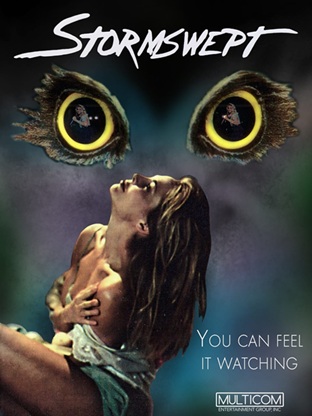
This October, I’m going to be doing something a little bit different with my contribution to 4 Shots From 4 Films. I’m going to be taking a little chronological tour of the history of horror cinema, moving from decade to decade.
In 2004’s Suburban Sasquatch, Bigfoot is stalking the suburbs.
Bigfoot appears out of thin air.
Bigfoot vanishes whenever he’s feeling stressed or local Native American badass Talla (Sue Lynn Sanchez) starts shooting arrows at him.
Bigfoot pulls off arms and legs and tosses them in the air.
Bigfoot likes to drag his victims off to a cave where he apparently just leaves them laying around.
Bigfoot has to eat.
Bigfoot has really big tits.
Yes, you read that last one correctly. Groucho Marx once said that he wouldn’t be seeing a movie starring Victor Mature and Hedy Lamarr because, “‘I never go to movies where the hero’s tits are bigger than the heroine’s,” and let’s just say that Victor Mature had nothing on the Suburban Sasquatch. The sasquatch costume itself is covered in coarse, dark fur except for its belly and chest, both of which are left pretty much bare. It makes me wonder where exactly the production purchased the sasquatch costume. The film was apparently shot in Pennsylvania and Pennsylvania seems like it’s a bit too blue collar to be home to an S&M-themed furry community but who knows?
(Maybe the costume was ordered from Austin.)
As for the film, it’s basically just the Suburban Sasquatch killing people. It was obviously made for next to no money and the dialogue is just bad enough to leave you wondering whether or not the director was specifically trying to satirize no-budget, direct-to-video horror films or if he was just trying to do what he could with what he had available. Personally, I couldn’t hep but smile at the fact that no one seemed to be that panicked about a Sasquatch being on the loose. Throughout the film, people continue to wander around outside as their friends and neighbors aren’t getting ripped apart by Bigfoot.
(“Actually, Lisa, it’s not Bigfoot. It’s a Suburban Sasquatch.” I don’t care. Everyone keeps looking at his footprints and gasping. He’s Bigfoot.)
A few other things I liked about Suburban Sasquatch:
The special effects, especially the scenes of blood-spraying, appear to have been done with MS Paint.
There were only two cops in the entire town and they were both useless.
Reporter Rick Harlan (Bill Ushler) kept showing up at the crime scenes and talking about how the people had the right to know about the killings but he didn’t really put much effort into getting the word out there.
Suburban Sasquatch likes to rip off people’s limbs and smash their heads, all in full MS Paint glory. But, somehow, whenever the bodies are found, the limbs have reattached and the heads are no longer smashed.
The character of Talla, assigned by her Native American ancestors to kill the sasquatch, was incredibly badass, even if she was something of a stereotype. Seriously, if I was told that I had to be someone from Suburban Sasquatch, I would want to be Talla because she shows up, shoots her arrows, tells Rick to get lost, and then she goes somewhere else and shoot even more arrows. She’s the one character in the film who is actually actively trying to do something.
Finally, I should not that there’s an online rumor that the late Neil Hope, who played Wheels on Degrassi High, appeared in Suburban Sasquatch but I definitely didn’t see him and, considering that Hope apparently spent his entire post-Degrassi life in Canada, I have a hard time believing that he hopped down to Pennsylvania to appear in a nothing-budget film. One of the first victims does have a Wheels-style mullet but I’m pretty sure that wasn’t Neil Hope as Hope himself was sporting a bald look at the time this film was made. (That said, on Degrassi: The Next Generation, Jimmy, Spinner, Craig, and Marco did play in a band called Downtown Sasquatch and Jimmy and Spinner briefly owned a clothing store called Squatch Wear.)
Suburban Sasquatch came out in 2004 and probably would have been forgotten if not for Joel McHale featuring a clip from it on The Soup. Much like Bigfoot himself, the film lives on.
I know camel spiders are gross, but there wasn’t a title card made for this short; so, I decided to add something scary for them. This short is only 1 minute- YAY.
A woman listens to a tape that ask them to thing about death. The voice has her do some light neck stretches and wham she sees a ghost. I suppose that this is scary.
There is a beginning, middle, and an end. Also, it is just a minute long. Is it better than the Progressive don’t turn into your parents ads? NO! However, it is better than…well…I had a crown put on recently; so, better than that FOR SURE!
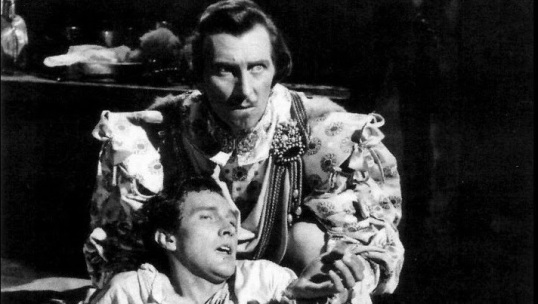
First released in 1958, Fiend Without A Face takes place around an American Air Force base in rural Canada.
The base is home to several nuclear experiments, which have left the local residents uneasy. They grew even more uneasy when people start to turn up dead. Local farmers are found deceased, missing their brains and spinal columns. Two puncture marks are found at the base of each skull. Air Force Major Jeff Cummings (Marshall Thompson) is investigating the deaths, determined to prove to the locals that American nuclear energy is not to blame. Cummings suspects that Prof. R.E. Walgate (Kynaston Reeves) might be involved. Walgate claims to have telekinetic powers and has made a name for himself through his psychic experiments. Cummings has recently become a big believer in the idea of thought projection. Could Walgate’s psychic powers, combined with nuclear power, be at the heart of the mystery?
Of course, they are! Who is responsible for the murders? It turns out that there’s more than enough blame to go around. Yes, Walgate’s psychic experiments have indeed backfired and now, there’s an invisible monster stalking the Canadian countryside. Whoops! Sorry, Canada! And, at the same time, all of the nuclear energy has made that monster far more powerful than it would be under normal circumstances. Whoops! Sorry again, Canada!
(Actually, I guess we should be happy that this happened in Manitoba as opposed to a place that people actually care about, like North Dakota.)
To understand why this is all happening at an American base that happens to be located in Canada, it’s important to know that Fiend Without A Face was a British film that hoped to appeal to both Brits and Americans. As a result, the film may have been shot in England but it needed to be set somewhere closer to America. At the same time, if the film actually did take place in North Dakota, British audiences would have said, “Bloody yanks,” and failed to show up at the theater. Canada was the logical compromise. That’s one thing I love about B-movies. They’ll shamelessly twist the plot any which way that may be necessary in order to appeal to the biggest possible audience.
Speaking of loving B-movies, I absolutely love Fiend Without A Face. The film not only has a morbid streak that one doesn’t necessarily expect to find in a low-budget production from 1958 but it also features the sight of brains (with their spinal column trailing behind them) attacking humans and crawling through the base. Because the effect was achieved with stop-motion animation, the brains move in a somewhat herky-jerky fashion, which just makes them all the more frightening. The brains spend the majority of the film in a state of invisibility. When they are suddenly revealed, it’s a great moment. It’s what Lucio Fulci used to call “pure cinema.”
Clocking in at only 77 minutes and featuring a lot of stock Air Force footage to go along with the moving brains, Fiend Without A Face is a gloriously ludicrous movie that also happens to be one of the best B-pictures of the 1950s.
“It’s not a monster. It’s just a doggy.” — Donna Trenton
In the early 1980s, Stephen King’s novels sparked a cinematic gold rush, producing adaptations that ranged widely in style and quality. Among these, John Carpenter’s Christine and David Cronenberg’s The Dead Zone hold special status for their stylish direction and psychological depth. Lewis Teague’s Cujo, released the same year, occupies a different but notable niche. While it lacks the thematic complexity and artistic flair of those films, it outshines much of the era’s horror output, especially during a time when the genre was dominated by slasher films and gory set pieces designed as cheap thrills.
The early 1980s horror market was flooded with low-budget slashers characterized by relentless body counts, masked killers, and formulaic plots. These films leaned heavily on explicit violence and teenage premarital sex, combining graphic killings with salacious content to hook viewers seeking quick, visceral thrills. This formula dominated the home video boom, prioritizing shock value over narrative or character development. Against this backdrop, Cujo took a more deliberate and grounded approach, offering a taut thriller focused on psychological and physical survival rather than gratuitous gore.
Cujo begins with a seemingly mundane family drama. Donna Trenton (Dee Wallace) is struggling with her crumbling marriage, and her son Tad (Danny Pintauro) battles childhood fears. Their ordinary world quickly tilts into horror when Cujo, a lovable St. Bernard owned by local mechanic Joe Camber, contracts rabies and becomes a vicious predator. The film eschews supernatural elements for biological realism, making the terror brutally tangible.
Teague’s direction is restrained but effective. He builds tension through atmosphere and character rather than cheap scares. Dee Wallace delivers a deeply emotional performance, portraying Donna’s terror, resilience, and fierce maternal instinct with authenticity. Pintauro’s natural vulnerability bolsters the emotional weight, grounding the film in relatable human experience.
Cinematographer Jan de Bont’s claustrophobic framing, point-of-view shots from both dog and victims, and the oppressive imagery of the sweltering, stranded car amplify the suffocating dread. The restrained editing and thoughtfully designed soundscape further heighten suspense without resorting to excess.
While the film’s early pacing leans heavily on domestic drama, some subplots—Donna’s affair and marital discord—feel underdeveloped, losing potential narrative resonance. A few moments push the bounds of plausibility, especially Cujo’s extreme aggression, and familiar horror tropes surface near the climax. Additionally, the film’s ending diverges from King’s grimmer novel, opting for a resolution that some find cathartic, others less satisfying but still emotionally charged.
Compared to Carpenter’s Christine and Cronenberg’s The Dead Zone—which embraced symbolic, psychological, and stylistic complexities—Cujo focuses on survival horror rooted in reality. This grounded approach was relatively unusual for the time and gave it a distinctive identity amid the slew of copycat slashers. Where many early 80s titles peddled blood, teenage promiscuity, and spectacle for quick payoffs, Cujo offered slow-burning dread, emotional depth, and an unrelenting focus on human vulnerability.
This ambition helped Cujo stand apart, making it a stronger, more thoughtful film than most of its low-budget contemporaries. It may not match the artistic heights or thematic sophistication of its King-adapted peers, but it carved out a unique place by delivering a visceral, character-driven thriller that leveraged fear’s everyday, primal roots rather than supernatural fantasy or teenage rebellion.
Ultimately, Cujo excels as an intense, claustrophobic horror film powered by standout performances and atmospheric tension. Its power derives from a terrifyingly plausible premise and an empathetic portrayal of survival against merciless odds. It is a gripping reminder that horror need not be lavish or supernatural to be effective—sometimes, the most terrifying monsters are those lurking close to home.
For fans of 1980s King adaptations and horror outside the slasher mainstream, Cujo remains a compelling watch. Its imperfections, including slower pacing and some narrative shortcuts, are overshadowed by its psychological realism and emotional impact. Cujo is a rare early 80s horror film where the primal terror of a loved pet turned threat, family fractured by fear, and nature’s cruel indifference combine to create a haunting, enduring cinematic experience.
In 1973’s The Invasion of Carol Enders (Meredith Baxter) is attacked while walking in the park with her boyfriend (Christopher Connelly) and strikes her head. At the same time, Diana Bernard (Sally Kemp) crashes her car while driving home in the rain. Both women end up at the hospital at the same time. Both die but Carol is brought back to life. Except now, there’s someone else in Carol’s head….
This is a bit of an odd made-for-TV movie, even by the standards of the 70s. It’s only 69 minutes long and it was shot on video tape, giving the whole thing the look of an old daytime drama. It’s easy to watch this movie and imagine that it’s just a supernaturally-tinged episode of General Hospital or Days Of Our Lives. Both the acting and the plot add to the daytime drama feel of the production. This is a movie that fully embraces the melodrama.
I think the most interesting thing about this film is that everyone is very quick to accept that Diana has somehow willed her spirit into Carol’s body. There’s very little hesitation about accepting Diana/Carol at her word and no one even thinks to suggest that maybe Carol is having some sort of mental episode as a result of the attack. Adam hears that his girlfriend has been possessed and he immediately gets to work helping out the woman who has possessed her. I mean, good for Adam. I like a man who is willing to do whatever has to be done. Still, everyone acts as if possession happens every day.
This is kind of a silly movie, which is probably why I enjoyed it. It’s short, it’s simple, and it embraces the melodrama. What’s not to enjoy?
The Alice Band was not together for long a period of time but they did manage to stick around long enough to record this cover of Don’t Fear The Reaper.
This video was directed by Rob Dickens, the British music industry executive who put the group together. Did this cover need more cowbell? It’s in the ear of the beholder.
2020’s Beckman is one of the most violent faith-based films I’ve ever seen.
Usually, when a religious film is full of death and violence, it’s apocalypse-themed. The rapture has happened. The Anti-Christ is in power. All bets are off. Beckman, however, is not an apocalypse-themed film. Instead, it’s a John Wick rip-off, one in which the Wick-character also happens to be a preacher.
David A.R. White plays Beckman, a former contract killer who stumbled into a church and meets Rev. Philip (Jeff Fahey). Philip converts Beckman, baptizing him and showing him that even a viscous killer can be redeemed. (A Vietnam vet, Philip killed eleven people during the war and it still haunts his nightmares. Incidentally, Jeff Fahey deserves roles in better movies.) When Philip grows sick and dies, Beckman takes over as the church’s pastor. When Philip’s runaway niece, Tabitha (Brighton Sharbino), shows up at the church, Beckman adopts her as his daughter.
One year later, all Hell breaks loose. Gunmen working for rich cult leader Reese (William Baldwin, looking like someone cosplaying Alec for Halloween) storm the church and they kidnap Tabitha. Beckman snaps. He goes back to his old ways, leaving a trail of bodies throughout Los Angeles as he searches for Tabitha. The film becomes a cross of Taken and John Wick with a religious angle tossed in as well. Beckman kills but he constantly hears a voice in the back of his head telling him that he needs to reject his anger.
Beckman does indeed kill a lot of people and I have to admit that it bothered me a bit, just how casual the film got about killing. It made the film’s ending, with Beckman suddenly realizing that he doesn’t need to kill everyone, feel rather hollow. Reese is an Jeff Epstein-like madman who kidnaps teenage girls and makes them a part of his cult. He associates with human traffickers. And yet, when Beckman has a chance to kill him, Beckman suddenly realizes that he doesn’t want to lower himself to Reese’s level. Okay, what about all the people Beckman killed beforehand? I mean, if you’ve already killed 12 people, you might as well take out the worst of them all.
(It reminded me a bit of how Cecil B. DeMille would always be sure to include plenty of sin in the first half of his films so that audiences could enjoy themselves before the second half became all about chastity and redemption. The film portrays a countless number of deaths but still wants its message to be Thou Shalt Not Kill. It feels a bit hypocritical.)
Beckman takes a lot of its cues from JohnWick and there are a few effective fight scenes. The film is also divided into chapters and there’s a lot of time jumps, showing that the filmmakers have, at the very least, seen at least one Tarantino film. But the film itself lacks the self-aware humor and the shameless style that made the JohnWick films memorable. David A.R. White is not a bad actor but he’s better at light comedy than at killing people. The film ends with what appears to be the promise of a sequel but I’m not sure how many more people Beckman can kill while still claiming to be a preacher.
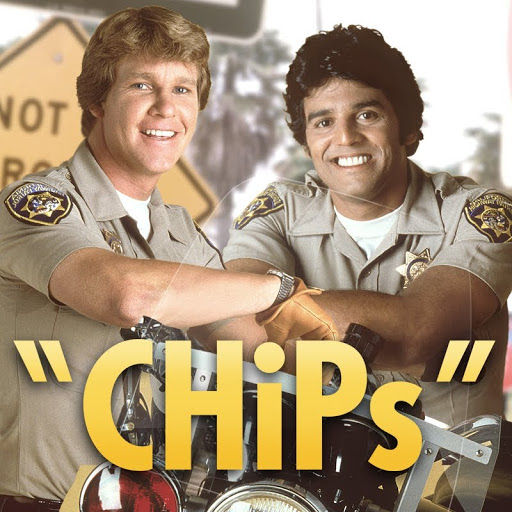
Welcome to Late Night Retro Television Reviews, a feature where we review some of our favorite and least favorite shows of the past! On Tuesdays, I will be reviewing Pacific Blue, a cop show that aired from 1996 to 2000 on the USA Network! It’s currently streaming everywhere, though I’m watching it on Tubi.
This week, the bike cops go undercover and essentially end up looking like a bunch of cops working undercover.
Episode 3.3 “Rave On”
(Dir by Michael Levine, originally aired on August 17, 1997)
The bike cops go undercover!
If that’s not funny enough, they go undercover as ravers.
I swear, you haven’t really laughed until you’ve laughed at the sight of the extremely stiff stars of Pacific Blue hanging out at a rave and giving each other secret signals whenever they spot anyone doing drugs. Chris’s drink gets roofied and, as someone who has experienced that in real life, I appreciated that the show was trying to warn its viewers about leaving their drinks unattended. Seriously, if my friends hadn’t been looking out for me that night, it scares me to think about what probably would have happened. Still, good intentions can’t disguise just how unconvincing Darlene Vogel’s performance was.
Palermo spends this entire episode saying that the parents of teens who go to raves and take drugs should be prosecuted and jailed. Then Palermo discovers that his sixteen year-old daughter (Johna Stewart-Boden) has been attending raves and, while she hasn’t intentionally taken any drugs, she’s stood by while her friends have. Palermo does not arrest himself. He does not throw himself in jail. He does not look in the mirror and smirk and say, “Oh yeah, buddy, your parent-of-the-year.” In other words, Lt. Palermo is a big, freaking hypocrite.
The bike cops break up the rave scene but the music will never die.