
by Robert Gibson Jones
This is from 1948. I don’t know if it’s scary but it’s certainly grotesque.
by Robert Gibson Jones
This is from 1948. I don’t know if it’s scary but it’s certainly grotesque.
Though it’s hard to believe now, this music video was actually banned by MTV for what the channel considered to be “senseless and excessive violence.” I guess Lemmy driving through that wall and giving everyone the finger really upset them.
Ron Swenson, the director of this controversial video, was best-known for being the manager of the Plasmatics.
Enjoy!
Welcome to Late Night Retro Television Reviews, a feature where we review some of our favorite and least favorite shows of the past! On Wednesdays, I will be reviewing Monsters, which aired in syndication from 1988 to 1991. The entire show is streaming on Youtube.

This week’s episode is all about bee keeping and the wages of sin!
Episode 1.3 “New York Honey”
(Dir by Gerald Cotts, originally aired on November 5th, 1988)
Actually, this episode felt kind of pointless. I usually try to come up with at least 500 words whenever I write a review but it’s going to be a struggle tonight.
Jay Blake (Lewis J. Stadlen) and his wife, Emerald (Elaine Bromka) live in an apartment in New York. Their new upstairs neighbor is a mysterious man named Dr. Homer Jimmerman (MacIntyre Dixon). Hardly anyone around the building ever sees Dr. Jimmerman but they definitely hear him moving around and working in his apartment. When Jay and Emerald get annoyed by the loud music coming from Dr. Jimmerman’s apartment, Jay heads upstairs to complain.
When Dr. Jimmerman opens the door to his apartment, Jay barges in and discovers that Dr. Jimmerman is keeping bees in his apartment, a clear violation of his lease. However, Jay gets one taste of the honey that the bees produce and he decides that, rather than evict Dr. Jimmerman, he wants to go into business with him. Dr. Jimmerman says that he doesn’t have enough honey to start selling it but Jay blackmails him into accepting Jay’s offer.
Rich people in New York love the honey and Jay finds himself falling for Dr. Jimmerman’s femme fatale of a girlfriend, Desiree (Andrea Thompson). Jay even sends Emerald to Dr. Jimmerman’s apartment so that he can get some alone time with Desiree. Desiree declares that there can only be one queen and suddenly, all of the bees attack Emerald and kill her. Desiree then explains to Jay that Dr. Jimmerman’s time has come to an end and now, Jay’s going to be the worker bee who gets to look after her needs. That’s right …. DESIREE IS ACTUALLY SOME SORT OF BEE CREATURE! Out the apartment window goes Jay.
And that’s pretty much the entire episode!
Seriously, there’s not much to say about New York Honey. From the minute that Desiree arrives, it’s obvious that she has a secret and that it is linked to all of the bees that Dr. Jimmerman is keeping in his apartment. It doesn’t take a genius to guess that her secret is going to somehow involve her being the “queen bee.” It’s also pretty easy to guess that Jay is eventually going to go out that window because Jay is such a smarmy character that there’s no way he isn’t going to end up getting tossed out a window. Such are the wages of sin and all that. Andrea Thompson gives a good performance as Desiree the Bee Lady but otherwise, this episode was way too predictable.
How many words is that? 503? That’ll work!

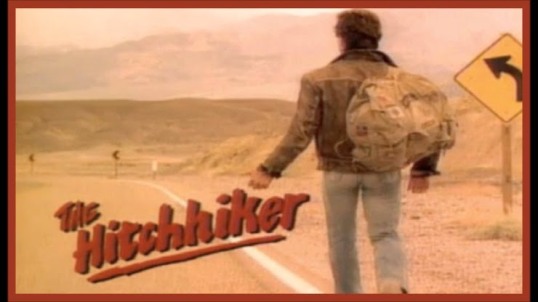
On tonight’s episode of The Hitchhiker, Bruce Weitz gives a strong performance as a man who abandons his family for a stripper and then finds himself haunted by a man that he ran over in his car. A guilty conscience cannot be escaped.
This episode originally aired on November 10th, 1989.

Eh. The 1976 film, Alice, Sweet Alice, is one of the few slasher films to have found critical acclaim and to have been seriously studied in the years after its release but I have to admit that it’s never done much for me.
It’s a film that takes place in 1961, in a Catholic neighborhood of Patterson, New Jersey. It’s perhaps the ugliest setting of a film outside of Combat Shock. The houses that we see are run-down. The apartment building in which much of the action takes place is dirty and rat-infested. Even the local church looks like it could use a bit of spring cleaning. Of course, if you think the neighborhood looks ugly, you should see some of the people who live in it. There’s really not anyone in this film who could be considered to be at all appealing. Everyone’s either angry or disturbed or grotesquely obese or pervy. It’s one of those films where everything is so dirty and sleazy that it’s hard not kind of laugh at it all. John Waters could have worked wonders with this neighborhood but Alfred Sole, Alice’s director, seems to take his story just a little too seriously to give it the camp approach that it deserves.
(In fact, probably the only appealing sight in Alice, Sweet Alice is a picture of John F. Kennedy that is seen hanging in a few offices. There’s a lot of not positive things that can be said about JFK but at least he was handsome.)
Anyway, the plot deals with Alice Spages (Paul Sheppard), an annoying twelve year-old sociopath who lives in the desolate apartment building and who enjoys tormenting people by putting on a Halloween mask and scaring them. Alice is basically a bully but I think we’re supposed to sympathize with her because she’s rebelling against the suffocating hypocrisy all around her. Again, whatever. I was a brat when I was 12 years old too.
Alice’s younger sister, Karen (Brooke Shields, making her film debut), is as perfect as Alice is troublesome. Everyone loves Karen, except for Alice who is obviously jealous. On the day of her first communion, Karen is strangled to death by someone wearing a Halloween mask and a yellow raincoat, one that looks a lot like the one that Alice owns. The killer steals Karen’s crucifix and tries to set the body on fire. Father Tom (Rudolph Willrich) is annoyed that the ceremony has been interrupted. Actually, it’s hard to think of a moment in this film in which Father Tom isn’t annoyed by something.
Did Alice murder her sister? A lot of people think so, especially after other people who get on Alice’s nerves end up getting attacked. Alice ends up getting sent to a mental hospital but, of course, Alice isn’t the murderer. Who is the murderer? No need for me to say. If you watch the film, you’ll figure it out easily on your own.
Alice, Sweet Alice is often described as being an early slasher film. If anything, it’s more of an American giallo, with the emphasis being on figuring out who is the killer behind the mask. Many critics have praised Alice, Sweet Alice for its atmosphere and its anti-religious subtext but, to be honest, I’ve always found it to be kind of boring. Part of the problem is that every character is so repulsive (physically, mentally, and morally) that it’s difficult to really care about whether or not they die or if they’re the guilty party. Even Alice comes across like someone who is destined to start fires once she grows up. None of the actors gives a good enough performance to hold your attention. The film attempts to criticize the Church, as many giallo films did. But one need only compare Alice Sweet Alice to other anti-clerical giallo films, like Lucio Fulci’s Don’t Torture A Duckling or Aldo Lado’s Who Saw Her Die? , to see how simplistic and superficial Alice, Sweet Alice‘s approach really is.
Anyway, a lot of people will disagree with this review and that’s fine. Some films work for some people while failing to work for others and, in this case, Alice Sweet Alice is just a film that does not work for me. Que sera sera.
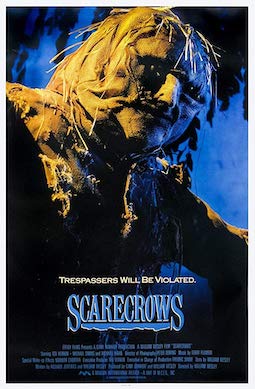
The 1988 film Scarecrows is one that has a very simple but also very effective premise.
Scarecrows are scary as Hell.
And you know what? There’s a lot to be said for the premise. Seriously, I have no problem with clowns but scarecrows definitely make me nervous. It’s the way that they’re just left out there in the middle of a field, tied to a post and seemingly staring at the world through black eyes. I know that some people try to make scarecrows less creepy by giving them smiles but, to me, a smiling scarecrow is even creepier than a scarecrow with no expression at all. At night, whenever you see the shadow of a scarecrow in the distance, it’s always easy to imagine it climbing off of its post and walking towards your house, its dark eyes focusing on your bedroom window the whole way. If you’re not scared of scarecrows, you’re not paying attention.
(Of course, perhaps the scariest thing about scarecrows is that crows don’t seem to be particularly scared of them. I mean, if the crows have figured out that they’re not human, what’s the point of having them unless you’re going to use them to summon evil spirits?)
Scarecrows opens with a daring heist. Five paramilitary mercenaries, people who are paid to fight and kill for a living, steal three million dollars from Camp Pendleton and then force pilot Al (David James Campbell) and his teenager daughter, Kellie (Victoria Christian), to fly them to Mexico. However, in the middle of the flight, one of the merceneries grabs the money and a parachute and jumps from the plane. Two other mercenaries jump after him while the remaining two force Al to land the airplane. The plane ends up landing outside of a small farm, one that appears to be deserted except for all the scarecrows….
Now, seriously, think about this. The majority of the characters in this film are mercenaries. They’ve been trained in every form of combat. They’ve got weapons and they know how to use them. They are used to fighting and, in fact, they even look forward to it. Not only are they mercenaries but they’ve also just successfully robbed a MARINE base. You don’t mess with the Marines unless you’re very stupid or very confident or maybe both. Adam Driver was a Marine. Do you want Adam Driver mad at you? My point is that these characters are not your run-of-the-mill horror movie victims.
And yet, one-by-one, they’re taken out by the scarecrows. We get a bit of backstory about the scarecrows when the mercenaries stumble across a farmhouse and discover that it was owned by three Satanists who transferred their souls into the scarecrows. But really, that’s not important. What is important is that the scarecrows will emerge from the darkness and kill anyone who lets their guard down. The scarecrows even talk to each other! TALKING SCARECROWS! AGCK!
Anyway, Scarecrows is an effective, quickly-paced, and atmospheric horror film, one that I really enjoyed when I watched it last October. The scarecrows make for efficient and frightening monsters. This is the film that proves that scarecrows are scarier than clowns.
Seriously, don’t mess with the scarecrow.
In 1986’s The Drug Knot, Dermot Mulroney plays a high school student.
At the time this show aired, Dermot Mulroney was 25 years-old and he looked like he was 30 but, looks aside, he actually gives a pretty convincing performance as Doug Dawson. Doug is a smart and musically-gifted high school senior. He’s talented enough to make beautiful music with a saxophone and rebellious enough to skip class so that he can play the sax in the school locker room. His girlfriend, Kim (Meryl Streep look-alike Kim Myers), is totally in love with Doug but she also worries that he’s getting too heavily into dugs. He’s gone from smoking weed to snorting cocaine. He hides his drugs in his bedroom. His mother (Mary Ellen Trainor) has no idea that Doug is a drug addict while Doug’s little brother (David Faustino) wants to be just like him.
Can you see where this is heading?
In order to combat the school’s growing drug problem, the school has invited a speaker named David Toma to give a speech at a school assembly. Toma is a former cop who struggled with addiction himself. He inspired not one but two television shows, one called Toma and the other called Baretta. He goes from school to school and he gives speeches about all of the teenagers that he knows who have died as a result of doing drugs. As we see throughout the episode, Toma is a confrontational speaker, one who is not afraid to yell at his audience. Doug shows up for the assembly but his bad attitude leads to Toma kicking him out.
Personally, I’ve always had mixed feelings about the idea of trying to change people’s behavior by yelling at them. I know that it’s a popular technique and there’s been a lot of television shows (Intervention and Beyond Scared Straight come to mind) that are all about getting in people’s faces and screaming at them. My feeling, though, has always been that this approach is more about making other people feel good than actually changing behavior. Everyone wants to see the people who have caused them stress get yelled at. On talk shows, audiences would applaud whenever a disrespectful teen got sent to boot camp but it’s rare that you ever heard about whether or not the approach actually worked. I mean, I assume the approach works for some people but I know that if someone yells at me not to do something, my usual reaction is to go ahead do it just because I resent authority. David Toma’s approach would not have worked with me.
(One interesting thing about The Drug Knot is that David Toma is a real person and he plays himself. Apparently, he’s still out there and still at it, even though he’s in his 90s now. I should note that, on YouTube, there’s a lot of comments from people who say that getting yelled at by David Toma saved their lives so maybe the yelling approach does work for more people than I assumed.)
Anyway, as always when it comes to these made-for-TV anti-drug programs, the drugs lead to tragedy and The Drug Knot ends on a particular dark note. For once, there is no redemption.
Here is The Drug Knot, complete with an anti-drug message from Michael Jordan:
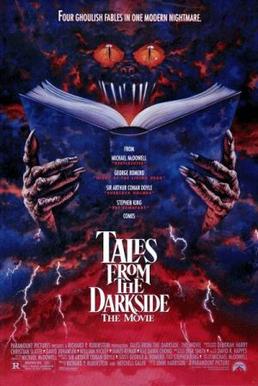
First released in 1990 and based on a horror-themed television series that was created by the one-and-only George Romero, Tales From The Darkside: The Movie is an anthology film. Usually, I can’t stand anthology films because it seems like the viewer only gets one good story and has to sit through two or three mediocre stories to get to the worthwhile stuff. However, I have to say that I really enjoyed all of the stories featured in Tales From The Darkside: The Movie.
The film opens with a wrap-around story, featuring Timmy (Matthew Lawrence), a young boy who is chained up in a pantry and who a local witch named Betty (Debbie Harry) is planning on cooking for a dinner party. Timmy tries to distract Betty from her kitchen duties by telling her three stories.
The first story features Steve Buscemi as a nerdy college student named Edward Bellingham. On the verge of getting a much-needed scholarship, Edward is framed for theft by two of his classmates (one of whom is played by Julianne Moore) and loses the scholarship. Edward responds by doing what anyone would do. He unrolls an ancient parchment and brings to life a mummy who kills his rivals. A very preppy Christian Slater plays Andy, the smug brother of one of the victims who seeks revenge against Bellingham. In a surprise twist, Bellingham is able to get some vengeance of his own.
The second story features William Hickey as Drogan, an annoying old man who is convinced that he is being stalked by an evil black cat. Drogan hires a hitman (David Johansen) to kill the cat but, as we all know, black cats are far more clever than anyone realizes. The story ends on a notably grisly note because cats rule!
Finally, the third story features James Remar as a struggling artist who, one night, discovers that the stone gargoyle that sits atop of his apartment building is actually alive. After witnessing the gargoyle kill someone, the artist promises never to reveal that the gargoyle exists. “Cross your heart?” the gargoyle asks before flying away. Later, the artist meets a mysterious woman (Rae Dawn Chong) who helps him to become a success on the art scene. However, even after he marries the woman and they start a family, Remar is still haunted by his memories of the gargoyle.
As I said at the start of this review, I’m not a huge fan of anthology films but I really liked Tales From The Darkside: The Movie. All three of the stories are equally good and there’s really not a slow spot to be found. This is a horror anthology that manages to balance scares and laughs without becoming too silly or forgetting that the movie is meant to be a horror story. Steve Buscemi, Christian Slater, and James Remar are stand-outs amongst the cast. Even the wrap-around story had a good ending!
If you’re going to watch an anthology film for Halloween, allow me to recommend Tales From The Darkside: The Movie!
 This is the story of two rival snooker players and their grudge match.
Billy The Kid (Phil Daniels) is an up-and-coming snooker player. Cocky and cockney, Billy is arrogant but he is also beloved by the working class. His manager, The One (Bruce Payne), has fallen into debt to a loan shark known as The Wednesday Man (Don Henderson). The Wednesday Man agrees to release The One if he can convince Billy The Kid to play a 17-frame snooker match against Maxwell Randall (Alun Armstrong).
Maxwell Randall is the reigning world champion snooker player. Supported by the upper class, Randall has been playing snooker for centuries. He’s known as the Green Baize Vampire, both because of his resemblance to Bela Lugosi and also because he actually is a vampire, complete with fangs, a casket that doubles as a snooker table, and a London mansion that looks like a castle.
With the help of an unscrupulous tabloid reporter (Louise Gold), The One generates a generational and class rivalry between Billy The Kid and the Green Baize Vampire. The two agree to meet in a snooker match, with the requirement that the loser of the match never play another game of snooker.
Billy The Kid and the Green Baize Vampire is many things. It’s a satire of sports films and the British class system and it is certainly no coincidence that the upper class is represented by a vampire. It’s also a musical, with the cast performing Brechtian songs about how snooker is life. Unintentionally, it’s a tribute to the ability of the British to get caught up in some of the most boring sports even invented. At first, it seems like the last thing that you would expect to be directed by Alan Clarke, though the film does feature his usual political subtext and a few of his trademark tracking shots.
The film is memorably strange and it features strong performances from Phil Daniels, Alun Armstrong, and Bruce Payne but, at times, it can be a chore to sit through. If you’re not already a fan of snooker, this film won’t change your mind. (However, if you are a fan of snooker, you’ll probably enjoy the match between Billy and Maxwell.) For me, the main problem was the songs, none of which are really good enough to justify their inclusion in a film that already felt too self-indulgent even without being a musical. I can understand why this film has a cult following but it didn’t really work for me.
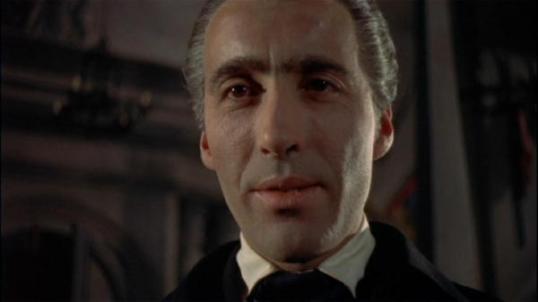
Christopher Lee was a man of many talents. Over the course of his long life, he wrote books, he recorded albums, he performed Shakespeare on stage, and he appeared in so many films that he himself reportedly had trouble remembering them all. During World War II, Lee served in the British Secret Service with his cousin, Ian Fleming, and was reportedly one of the inspirations for the character of James Bond. (Of course, Lee would eventually play Scaramanga in The Man With The Golden Gun.)
Up until he played Saruman in The Lord of the Rings and Count Dooku in the Stars Wars prequels, Lee was best-known for his performances as Dracula in several Hammer films. By his own account, though, Lee never really cared for Hammer’s interpretation of Dracula. He felt that Hammer did the character a disservice by portraying Dracula as just being a snarling villain. In 1970, Lee finally got his chance to star in a faithful adaptation of Bram Stoker’s original novel when he starred in Jess Franco’s Count Dracula.
In the scene, an aged Dracula greets Jonathan Harker.
 Through the Shattered Lens