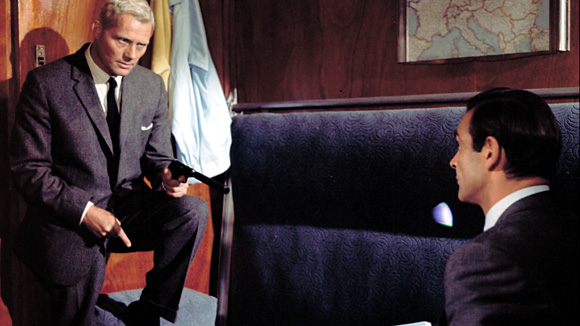
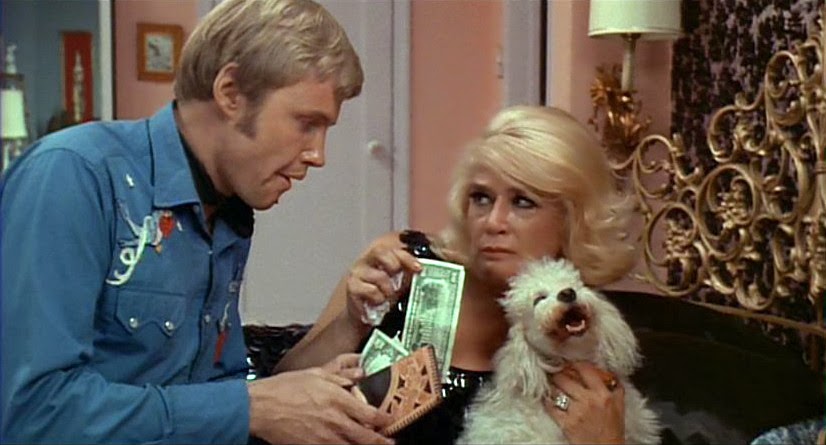
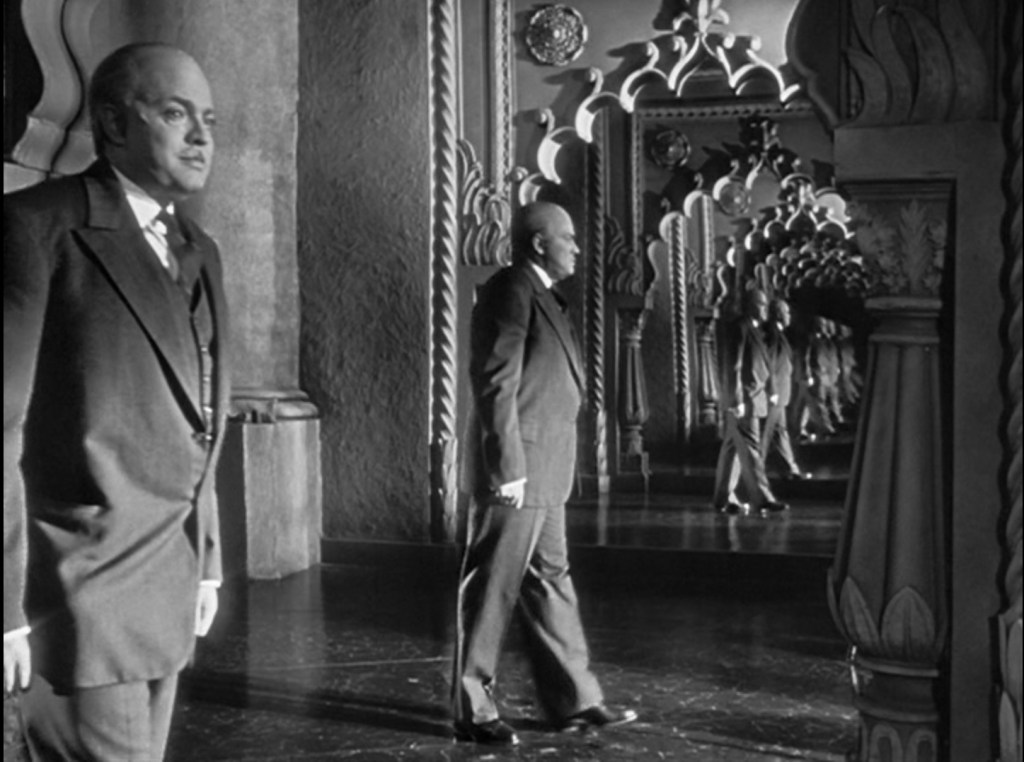
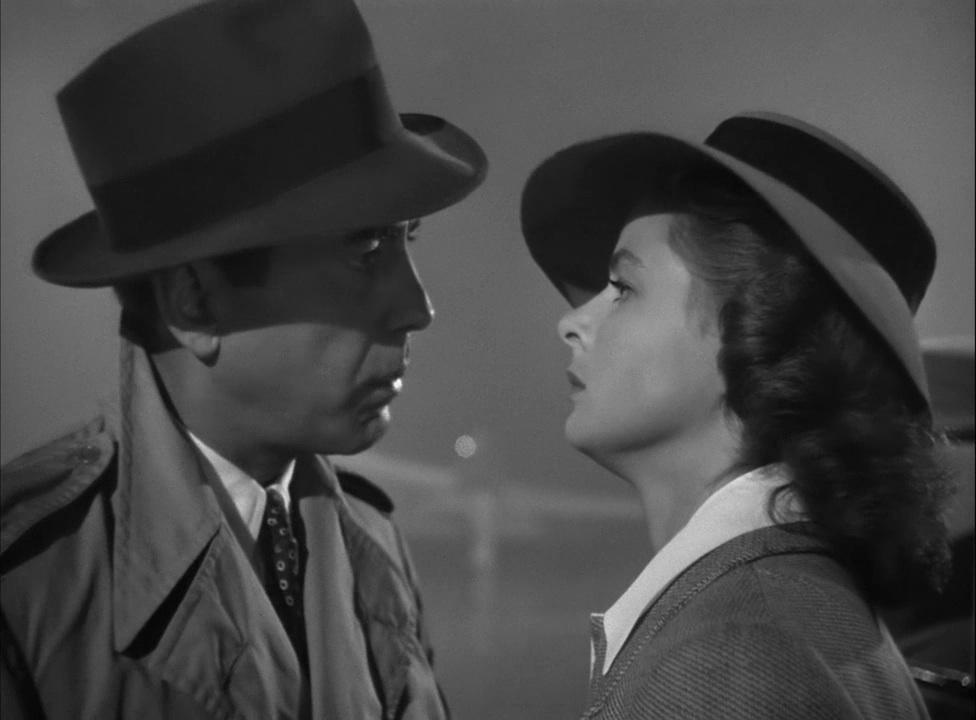
The Naked Gun 2 1/2: The Smell Fear (1991, directed by David Zucker)


Frank Drebin is back!

Now separated from Jane (Priscilla Presley) and working in Washington D.C., Frank (Leslie Nielsen) finds himself investigating a bombing at the offices of Dr. Albert S. Meinheimer (Richard Griffiths), an advocate of renewable energy who has just been put in charge of America’s energy policies by President George H.W. Bush (John Roarke, who was better-known for playing Ronald Reagan on Friday’s).  With the help of Captain Ed Hocken (George Kennedy) and Officer Nordberg (O.J. Simpson), Drebin’s investigation leads him to Quentin Haspburg (Robert Goulet), an oilman who is plotting on replacing Dr. Meinheimer with a double.  It also leads him back to Jane, who is now working as an assistant to Meinheimer and being wooed by Hapsburg.

The Naked Gun 2 1/2 is a worthy sequel to the first Naked Gun.  It’s more plot-heavy than the first film and some of the jokes feel a little bit too familiar but it’s still a very funny film.  That’s largely due to Neilsen, Kennedy, and Presley, all of whom really commit to playing their absurd characters.  (Robert Goulet gives a game performance but he really can’t match Ricardo Montalban’s villainous turn in the first movie.)  Nielsen was probably the only actor alive who could keep a straight face even while hitting Barbara Bush in the face while opening a door and then struggling to eat lobster at a state dinner.  As was often the case with the ZAZ films (even though Jim Abrahams and Jerry Zucker didn’t have anything to do with the screenplay of the sequel), the funniest moments are also the most random and the stupidest.  I laughed a lot harder than I should have at Leslie Neilsen struggling with a very small towel that had been thrown against his face.  And don’t worry, O.J. Simpson fans.  Nordberg gets injured in this movie too.

Leslie Nielsen was one of those actors who could make anything funny.  Whether he was delivering his hard-boiled dialogue or doing absurd physical comedy with an absolutely straight face, it was impossible not to laugh when Leslie Nielsen was onscreen.  He was a true cinematic treasure.


The Cheyenne Tornado (1935, directed by William A. O’Connor)


“You see, stranger, I am a sheep man.” — James Farley (Ed Porter)

On the frontier, a range war has broken out between the cattlemen and the sheepherders.  When rancher Seth Darnell is murdered, the blame is put on the sheepherders.  When the Cheyenne Kid (Reb Russell) rides up on the small camp of the sheepherders and hears their problems, he decides to investigate on his own by getting a job at the Darnell ranch.  Soon, Cheyenne is discovering the truth and also being pursued by both Darnell’s daughter (Victoria Vinton) and the daughter (Tina Menard) of the leader of the sheepherders.

Reb Russell was a former college football star who had a minor B-western career in the 30s.  Supposedly, he didn’t really much care for Hollywood and he retired from acting in 1935, the same year that The Cheyenne Tornado came out.  Russell went on to find a lot of success as a rancher himself.

The Cheyenne Tornado is a typical B-western.  It’s short.  There’s a lot shots of men riding on horses.  There’s a little gunplay and a mystery that anyone should be able to solve.  The acting is bad all the way around with even star Reb Russell failing to make much of an impression.  It probably did not matter to the film’s target audience in 1935.  They were there for the old west action and the movie does deliver that.


Catching Up With The Films of 2025: Anniversary (dir by Jan Komasa)


 Anniversary begins with a party.  Ellen Taylor (Diana Lane), a professor at Georgetown University, is celebrating the 25th anniversary of her marriage to Paul (Kyle Chandler), a restauranteur.  The family has gathered at Lina and Paul’s ocean-side mansion.  Daughter Cynthia (Zoey Deutch) and her husband Rob (Daryl McCormick) are environmental attorneys.  Another daughter, Anna (Madeleine Brewer), is a performance artist who is very close to the youngest child, teenage Birdie (McKenna Grace).  Finally, Josh (Dylan O’Brien) is the only son, a struggling writer who arrives with his fiancée, Liz Nettles (Phoebe Dynevor).

Ellen immediately recognizes Liz as a former student, one who wrote a dissertation advocating for a one-party state.  At the time, Ellen called out Liz’s totalitarian ideology, to the extent that Liz accused Ellen of bullying her and ended up transferring to a different college.  Now, Ellen is not happy to discover that Liz has written a book called The Change and that Josh has abandoned his own “sci-fi trilogy” to help Liz out with her projects.  Liz is polite to Ellen but, before she leaves, she gives her future mother-in-law a forced hug and says, “I’m not scared of you anymore.”

From there, the film jumps forward from year-to-year, from gathering-to-gathering.  Liz’s book is a best-seller that soon sparks a movement.  Ellen watches in horror as her neighbors start to fly Change flags (which is the American flag, with the stars in the center).  Josh goes from being awkward and dorky to being arrogant and finally threatening.  With each year, the Change becomes more powerful and more menacing, until eventually Paul can’t even stand outside at night without a drone warning him that he’s violating curfew.  Anna becomes a fugitive while Birdie tries to find her place in a rapidly changing world.  The tragedies that follow all feel inevitable.

Anniversary is definitely an uneven film.  Some of the performances are better than others.  Diane Lane, Kyle Chandler, Dylan O’Brien, and Phoebe Dynevor all give excellent performances.  If nothing else, this film shows that Dylan O’Brien may be one of the most underrated actors working today.  At the same time, Madeline Brewer goes so over-the-top that I was almost relieved when Anna had to go into hiding and Zooey Deutch is let down by a script that doesn’t seem to be quite sure what to do with her character.  There are a few moments that are a bit too heavy-handed for their own good and the viewer is sometimes left to wonder if the film has the self-awareness necessary to understand that the Taylors, with their combination of wealth and radical chic politics, are often their own worst enemies.

That said, Anniversary is definitely a film of the moment.  There are enough brilliant scenes — like a meeting with two “census takers” that gradually turns menacing — to make up for the scenes that don’t work.  It’s best moments have an undeniable power in which the viewer realizes that the film’s melodrama is far more plausible today than it would have been in a pre-COVID era.  The scene where Paul is told that he is violating curfew would seem heavy-handed if not for the fact that, in 2020, we pretty much saw the same thing happening across the country.

Some online critics have complained that The Change’s ideology is purposefully left vague but that misses the point that most successful movements actually are vague about the details.  (Historically, most American third party movements tend to fall apart as soon as they start taking actual policy positions.)  The Change becomes powerful specifically because people can view it as being whatever they want it to be.  Whereas some people might see it as a return to a “simpler” time, others will view it as the warmth of collectivism replacing the frigidity of rugged individualism.  The Change is all about vibes and paranoia, the feeling that people are being left behind by the system and the only way to solve the problem is for everyone to embrace The Change without question.  The thing that all the followers of The Change share is a belief that dissent cannot be tolerated.

Anniversary is a crudely effective film, one that shows a small act of revenge can grow into something much larger.  It was overlooked when released but it still carries a powerful punch.

Film Review: Old Boyfriends (dir by Joan Tewkesbury)


In 1979’s Old Boyfriends, Talia Shire plays Dianne Cruise.

A sociology professor (or so she claims at one point), Dianne is struggling with an unhappy marriage and trying to recover from a recent breakdown.  After deliberately crashing her car, she leaves her husband and goes on a trip across the country.  She sets out to track down three ex-boyfriends.

Jeff Turrin (Richard Jordan) was her college boyfriend, the one who asked her to marry him three times.  Jeff is now working as a director.  When we first see him, he’s shooting a commercial for a political campaign in which Sam the Fisherman (Gerrit Graham) complains that the current governor of Colorado is a “long-hair” who gets in the way of small businessmen like himself.  Dianne shows up on the set.  Sam hits on her.  Interestingly, it takes Jeff a while before he recognizes her.  (Jeff comments that Dianne used to have longer hair but still, it seems like Jeff should be able to recognize someone to whom he proposed marriage three times.)

After having an affair with Jeff, who is in the process of getting a divorce, Dianne tracks down Eric Katz (John Belushi), the aspiring musician who humiliated her in middle school by telling everyone that she was “easy.”  Eric owns a formal wear store and he still performs with his band. (Belushi sings the Hell out of Jailhouse Rock at one point.)  He mostly performs at proms.  As he explains it to Dianne, most of his customers are teenagers looking for prom outfits so it only makes sense that he should perform for them as well as dress them.

Dianne’s third old boyfriend is Louis Van Til but, when Dianne arrives at his home, she is told that Louis died in Vietnam.  Under the watchful eye of his mother (Bethel Leslie) and his psychiatrist (John Houseman), she starts an obviously doomed relationship with Louis’s sensitive younger brother, Wayne (Keith Carradine).

While Dianne travels around the country, Jeff continues to look for her.  He even hires a private detective named Art Kopple (Buck Henry).

Old Boyfriends is a film that I had been meaning to watch for a while.  (I first read about it in a biography of John Belushi.)  A lot of talent went into making the film.  The script is by Paul and Leonard Schrader.  Director Joan Tewkesbury wrote the script for Robert Altman’s Nashville and indeed, there is an Altmanesque feel to the loose way that the film’s story unfolds.  The cast is full of talented people.  This was John Belushi’s first film after Animal House and Talia Shire’s first after Rocky.  With all that talent, you would think that the end result would be more interesting than it actually is.  The story is intriguing.  The cast is impressive.  But Old Boyfriends falls flat.

Why doesn’t the film work?  A lot of it is due to Tewkesbury’s direction.  She struggles with the film’s frequent shifts in tone and she always seems to be keeping a certain distance from the characters.  Talia Shire is in nearly every scene but the film seems to be determined to just observe her as opposed to actually allowing the viewer to get into her head.  Shire herself never seem to be particularly comfortable with the role and, as a result, none of her visits with her old boyfriends carry much of an emotional impact.  (Unfortunately, they don’t carry much of an intellectual impact either.)  Jordan, Belushi, and Carradine all give good performances but the film itself doesn’t seem to be sure what it wants to say about any of them.

It’s a disappointing film.  It’s not awful but, while watching it, it’s hard not to think about how much better it could have been.  One gets the feeling that Robert Altman, with his eye for quirky detail and his skill with improvisation, could have gotten something worthwhile out of the material.  As it is, Old Boyfriends is an intriguing idea that doesn’t quite work.

Scene I Love: The Bandit Breaks The Speed Limit in Smokey and the Bandit


In honor of National Speed Limit Day, today’s scene that I love features Burt Reynolds breaking the speed limit over and over again in 1977’s Smokey and the Bandit.  This scene is almost enough to make me want to go on a road trip.

4 Shots From 4 Films: Special Todd Haynes Edition


4 Shots From 4 Films is just what it says it is, 4 shots from 4 of our favorite films. As opposed to the reviews and recaps that we usually post, 4 Shots From 4 Films lets the visuals do the talking.

Today, the Shattered Lens wishes a happy birthday to director Todd Haynes!  It’s time for….

4 Shots From 4 Todd Haynes Films

Safe (1995, dir by Todd Haynes, DP: Alex Nepomniaschy)

Velvet Goldmine (1998, dir by Todd Haynes, DP: Maryse Alberti)

I’m Not There (2007, dir by Todd Haynes, DP: Edward Lachman)

Carol (2015, dir by Todd Haynes, DP: Edward Lachman)

Live Tweet Alert: Join #FridayNightFlix for The Alternate!


As some of our regular readers undoubtedly know, I am involved in a few weekly watch parties.  On Twitter, I host #FridayNightFlix every Friday and I co-host #ScarySocial on Saturday.  On Mastodon, I am one of the five hosts of #MondayActionMovie!  Every week, we get together.  We watch a movie.  We tweet our way through it.

Tonight, at 10 pm et, I will be hosting #FridayNightFlix!  The movie?  2000’s The Alternate, starring Eric Roberts!

If you want to join us this Friday, just hop onto twitter, find The Alternate on Prime or Tubi, start the movie at 10 pm et, and use the #FridayNightFlix hashtag!  I’ll be there happily tweeting.  It’s a friendly group and welcoming of newcomers so don’t be shy.

See you there!

Icarus File #25: 1941 (dir by Steven Spielberg)


In the year 1979, a young Steven Spielberg attempted to conquer comedy in the same way that he previously conquered horror with Jaws and science fiction with Close Encounters of The Third Kind.  Working from a script written by Robert Zemeckis and Bob Gale, Spielberg made a film about the days immediately following Japan’s attack on Pearl Harbor.  The name of the film was 1941 and it remains Steven Spielberg’s only attempt to direct a full-out comedy.  There’s a reason for that.

The film follows a large group of characters over the course of one day and night in 1941.  It’s been six days since Pearl Harbor was attacked and the streets of Los Angeles are full of young men who are preparing to ship out and older man who are paranoid about when the next attack is going to come.  However, Major General Joseph Stilwell (Robert Stack) just wants to see Dumbo at the local theater.  Meanwhile, his womanizing aide (Tim Matheson, giving the same performance here that he did in National Lampoon’s Animal House) just wants to get Stillwell’s aviation-lusting secretary (Nancy Allen) into an airplane.

Elsewhere, Ward Douglas (Ned Beatty) is happy to allow Sgt. Tree (Dan Aykroyd) and his men (including John Candy) to set up on an anti-aircraft gun in his front yard.  Ward’s daughter, Betty (Dianne Kay), is only concerned about entering a dance contest with her friend, Maxine (Wendie Jo Sperber).  Cpl. Sitarski (Treat Williams) and dishwasher Wally Stephens (Bobby D iCicco) both hope to be Betty’s partner and their rivalry leads to a massive (and seemingly never-ending) brawl.

While Ward deals with the gun in his front yard, another concerned citizen — Claude Crumm (Murray Hamilton) — keeps watch from atop of Ferris wheel, along with amateur ventriloquist Herbie Kazlminsky (Eddie Deezen).

But that’s not all!  Susan Backilinie recreates her role from a previous Spielberg film, skinny dipping while the Jaws theme plays in the background and running straight into a submarine that is commanded by Commander Akiro Mitamura (Toshiro Mifune, trying to maintain his dignity).  Mifune decides to attack Hollywood but no one on the submarine is sure where that is.  Christopher Lee appears as an arrogant German who is along for the ride.  Slim Pickens shows up as a lumberjack who is temporarily captured by the Japanese.  John Belushi plays Wild Bill Kelso, who flies his airplane through Los Angeles.  Warren Oates yells and laughs.  Dick Miller, Elijah Cook Jr. and Lionel Stander show up in small roles.

“Since when is Steven funny?”  According to Peter Biskind’s Easy Riders, Raging Bulls, this was the reaction that most of Spielberg’s friends had when he announced that his next film would be a screwball comedy set during World War II.  Watching the film, one gets their point.  The majority of the film’s humor comes from people looking at the camera and screaming.  There’s a lot physical comedy, which would undoubtedly work in small amounts but which grows rather tiring when it’s dragged out to the extent that Spielberg’s drags it out.  (A brawl at a USO show seems like it should be funny but Spielberg allows it to go on for too long and the careful choreography takes away any element of spontaneity.)  The film attempts to duplicate the style of Animal House (and it’s probably not a coincidence that Matheson, Belushi, and director John Landis all have roles in the film) but Spielberg often seems as if he’s trying too hard.  There’s nothing subversive about the humor.  It’s more antic than funny.

A huge problem is that there really isn’t much of a story here.  Spielberg, who is normally one of Hollywood’s best storytellers, attempts to do a loose, Altman-style ensemble film and the result is that none of the characters feel alive and there’s never any sense of narrative momentum.  There are a few performers who manage to make an impression amongst all the explosions and the yelling.  John Belushi has the advantage of not having to share the majority of his scenes with anyone else.  Warren Oates’s manic energy is more than welcome.  Wendie Jo Sperber deserved more screentime.  Murray Hamilton and Eddie Deezen frequently made me laugh.  There’s a wonderful moment where Robert Stack’s intense general cries while watching Dumbo.  But, for the most part, the film never comes together.

That said, 1941 is definitely a Steven Spielberg film.  It received three Academy Award nominations, for Cinematography, Sound, and Visual Effects.  (All three of those categories, not surprisingly, are more associated with spectacle than with comedy.)  The film looks great!  Spielberg’s attention to detail is there in the production design and the costumes.  Watching 1941, you can see Spielberg’s talent while also seeing why he never directed another comedy.

Previous Icarus Files:

  1. Cloud Atlas
  2. Maximum Overdrive
  3. Glass
  4. Captive State
  5. Mother!
  6. The Man Who Killed Don Quixote
  7. Last Days
  8. Plan 9 From Outer Space
  9. The Last Movie
  10. 88
  11. The Bonfire of the Vanities
  12. Birdemic
  13. Birdemic 2: The Resurrection 
  14. Last Exit To Brooklyn
  15. Glen or Glenda
  16. The Assassination of Trotsky
  17. Che!
  18. Brewster McCloud
  19. American Traitor: The Trial of Axis Sally
  20. Tough Guys Don’t Dance
  21. Reach Me
  22. Revolution
  23. The Last Tycoon

Made For TV Movie Review: Talk To Me (dir by Graeme Campbell)


Talk To Me, a made-for-television film that first aired on ABC in 1996, takes viewers behind the scenes of daytime talk show.

The Howard Grant Show has built a strong audience based on airing stories that appeal to the more prurient interests of viewers.  Howard Grant (Peter Scolari) may have started out hosting a show about “issues” but now his show features wives who strip, girlfriends who cheat, and the occasional fist fight.  While Howard presents himself as being a smooth-talking, compassionate advocate for society’s forgotten victims, the truth of the matter is that he’s a puppet who reads from a teleprompter and who wears an earpiece so that he can be told which questions to ask.  Sadie (Veronica Hamel) is the one who is in charge of the show and she’ll exploit anyone and anything to get ratings.

Idealistic Diane Shepherd (Yasmine Bleeth) is hired to work as a segment producer for Howard’s show.  Diane used to work on a talk show called “Margolis.”  Margolis was cancelled because it was too concerned with “issues.”  Still, Diane is hoping that she can bring the same earnest approach that she learned at Margolis to The Howard Grant Show.  Why does Diane believe this?  Why does it not occur to her that an approach that got her previous show canceled might not be appreciated at her new show?

Because Diane is kind of an idiot.

The movie doesn’t want us to think of Diane as being an idiot.  We’re supposed to be on Diane’s side and we’re supposed to be just as shocked as she is when Sadie reveals just how manipulative the talk show game is.  Unfortunately, Diane comes across as being so incredibly naive that it’s hard to really take her or her concerns seriously.  It’s one thing to be upset at the way Sadie manipulates the show’s guests.  It’s another to consistently be surprised by it.  Diane spends so much of the movie being shocked that I eventually lost all respect for her.  Diane cross the line from idealism into stupidity.  Yasmine Bleeth’s wide-eyed performance doesn’t help matters.  I watched this movie and wondered how Diane could even survive living in New York, let alone working there.

Jenny Lewis plays Kelly, a drug-addicted prostitute that Diane recruits to appear on the show.  Talk to Me does a good job of showing how the show manipulates Kelly and then essentially abandons her once her episode has been filmed but, again, there’s nothing particularly surprising about any of it.  I would have to imagine that, even in 1996, most people understood that Jerry Springer wasn’t a paragon of virtue and that his show was more interested in exploiting than helping.  Talk To Me feels like an expose of something that had already been exposed.

The best thing about the film is Peter Scolari’s performance as Howard Grant.  Scolari does such a good job as the unctuous talk show host that it’s actually a shame that the character didn’t get more screentime.  (That said, there is a neat twist involving his character towards the end of the film.)  Scolari perfect captures Howard’s fake but superficially appealing concern for his guests.  He asks the most exploitive of questions but he does so in a gentle voice and his television audience loves him for it.  Howard is remote and quiet off-camera but on-camera, he comes alive.  He was born to talk to people.  It’s just too bad that the conversation often ruins their lives.