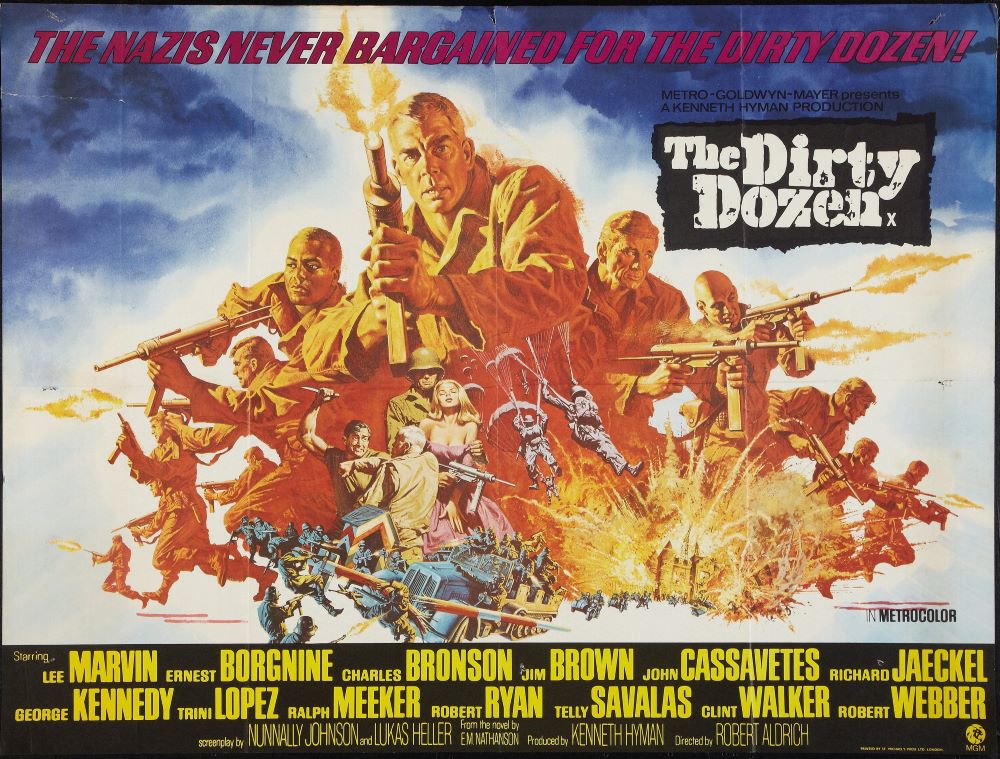
Review: The Dirty Dozen (dir. by Robert Aldrich)


“And kill any officer in sight. Ours or theirs?” — Victor Franko

The Dirty Dozen is one of those war movies that feels like it was built in a lab for maximum “guys-on-a-mission” entertainment: big stars, a pulpy premise, plenty of attitude, and a third act that goes full-tilt brutal. It is also, even by 1967 standards, a pretty gnarly piece of work, and how well it plays today depends a lot on how comfortable you are with its mix of macho camaraderie, anti-authoritarian swagger, and disturbingly gleeful violence.

Directed by Robert Aldrich and released in 1967, The Dirty Dozen is set in 1944 and follows Major John Reisman (Lee Marvin), a rebellious U.S. Army officer assigned to turn a group of twelve military convicts into a commando unit for a suicide mission behind enemy lines just before D-Day. The deal is simple and grim: survive the mission to assassinate a gathering of German high command at a chateau, and your death sentence or long prison stretch gets commuted; fail, and you die as planned, just a little earlier and with more explosions. It is a high concept that plays almost like a war-movie prototype of the “villains forced to do hero work” formula that modern blockbusters keep revisiting.

The film’s biggest asset is its cast, stacked with personalities who bring a rough, lived-in charm to what could have been a lineup of interchangeable tough guys. Lee Marvin’s Reisman is the glue: a cynical, gravel-voiced officer who clearly hates bureaucratic brass almost as much as the criminals he is supposed to whip into shape, and Marvin plays him with a dry, weary sarcasm that avoids hero worship even as the film asks you to root for him. Around him, you get Charles Bronson as Wladislaw, a capable former officer with a chip on his shoulder; John Cassavetes as Franko, the volatile, insubordinate troublemaker; Jim Brown as Jefferson, whose physical presence and final-act heroics leave a strong impression; and Telly Savalas as Archer J. Maggott, a violently racist, fanatically religious, and almost certainly deranged soldier sentenced to death for raping and beating a woman to death. Savalas never softens that portrait, playing Maggott with a creepy combination of sing-song piety and sudden bursts of viciousness that makes him deeply uncomfortable to watch and the one member of the Dozen who feels like an outright monster even compared to the other killers. He sells Maggott’s self-justifying religiosity—quoting scripture, talking about being “called on” by the Lord—as both delusional and dangerous, so every time he starts sermonizing, it feels like a warning siren that things are about to go bad, and that pays off in the finale where his obsession with “sinful” women sabotages the mission. Even smaller roles from Donald Sutherland, Clint Walker, and others get memorable beats, which helps the ensemble feel like an actual crew rather than background noise.

For much of its runtime, the film plays like a rough-and-rowdy training camp movie, and that middle stretch is where a lot of its charm sits. Reisman’s solution to building teamwork is basically to grind the men down, deny them basic comforts, and force them to build their own camp, leading to the nickname “the Dirty Dozen” when their shaving kits are confiscated and they slip into permanent grime. The squad slowly gels through a mix of forced labor, competitive drills, and a memorable war-games exercise where they outsmart a rival, straight-laced unit led by Colonel Breed (Robert Ryan), which lets the film indulge in its anti-authority streak by making the rule-breakers look smarter than the regulation-obsessed brass. Savalas’s Maggott adds a constant sense of volatility to these scenes, his presence giving the group dynamic a genuine horror edge that keeps the movie from becoming a simple “lovable rogues” fantasy and making viewers eager to see him punished.

That anti-establishment energy is one of the reasons The Dirty Dozen hit so hard with audiences in the late 1960s, especially as public attitudes toward war and authority were shifting in the shadow of Vietnam. The movie clearly enjoys showing higher-ranking officers as petty, hypocritical, or out of touch, while Reisman and his misfit killers get framed as the ones who actually understand how war really works: dirty, improvisational, and morally compromised. Critics at the time noted that this defiant attitude, coupled with the convicts’ transformation into rough heroes, gave the film a rebellious appeal that helped it become a box office smash even as traditional war films were losing their shine.

Where the film becomes more divisive is in its moral perspective, or arguably its lack of one. From the start, these are not misunderstood saints: several of the men are condemned to death for murder, others for violent crimes and serious offenses, and the script never really suggests they were framed or unfairly treated. Yet once they are pointed at Nazis, the movie largely invites you to cheer them on, leaning into the idea that in war, the ugliest tools might be the most effective, and that conventional standards of justice and morality can be suspended if the target is the enemy. Maggott stands apart here as the line the film refuses to cross into sympathy, with Savalas’s committed and unsettling performance underlining how poisonous he is even to other criminals.

The climax at the chateau is where this tension really spikes. The mission involves infiltrating a mansion where German officers and their companions are gathering, rigging the place with explosives, and driving the survivors into an underground shelter that is then sealed and turned into a mass deathtrap with gasoline and grenades. It is a sequence staged with brutal efficiency and undeniable suspense, but it is also deeply unsettling, essentially pushing the protagonists into orchestrating a massacre that includes unarmed officers and civilians in evening wear, and the film offers minimal reflection on that horror beyond the visceral thrills. Maggott’s instability forces the team to react mid-mission, heightening the jagged tonal mix of rousing action and casual atrocity.

This blend of rousing action and casual atrocity did not sit well with many critics in 1967. Contemporary reviews complained that the film glorified sadism, blurred the line between wartime necessity and psychopathic cruelty, and practically bathed its criminals “in a heroic light,” encouraging what one critic called a “spirit of hooliganism” that was socially corrosive. Others, however, praised Aldrich for making a tough, uncompromising adventure picture that pushed back against sanitized war clichés, arguing that the cruelty and amorality felt like a more honest reflection of war’s ugliness, even if the film coated it in action-movie swagger and gallows humor. Savalas’s Maggott amplifies this debate, singled out by fans as a great, memorable character who adds real repulsion without turning into a cartoon.

From a modern perspective, the violence itself remains intense but not especially graphic by contemporary standards; what lingers is the attitude around it. The movie’s glee in letting some of these characters off the moral hook, contrasted with the genuinely disturbing behavior of someone like Maggott, creates that jagged tonal mix: part old-school “men on a mission” yarn, part cynical commentary on the kind of men war turns into tools. Depending on your tolerance, that mix either gives the film an edge that keeps it from feeling like simple nostalgia, or it plays as carelessly flippant about atrocities that deserve more introspection than a last-minute body count and a fade-out.

On a craft level, though, The Dirty Dozen still works surprisingly well. Aldrich keeps the film moving across a long runtime by building distinct phases: the recruitment and introduction of each convict, the training and bonding section with its rough humor and humiliation, and the final mission that shifts into suspense and near-horror. The action is clear and muscular, the editing sharp enough that you rarely lose track of who is where, and the sound design—even recognized with an Academy Award for Best Sound Effects—helps the chaos of the finale land with blunt impact.

At the same time, the structure exposes a few weaknesses. The early sections do such a good job of sketching out personalities that some characters feel underused or abruptly sidelined once the bullets start flying, and the film’s length can make parts of the training montage drag, especially if you are less enamored with its barracks humor and macho posturing. The writing also leans on broad types—psychopath, wisecracking crook, stoic professional—which the cast elevates, but the script rarely pushes them into truly surprising territory, beyond a few late-movie acts of sacrifice.

Still, as a piece of war-movie history, The Dirty Dozen earns its reputation. It helped popularize the template of the misfit team thrown into an impossible mission, a structure that later shows up everywhere from ensemble war pictures to superhero teams and modern “suicide squad” stories. Its mix of black humor, anti-authoritarian streak, and violent catharsis captures a specific late-1960s mood, even as its politics and ethics remain muddy enough to spark debate decades later. Savalas’s turn as Maggott ensures that edge never dulls, keeping the film’s thrills packaged with a moral outlook as messy and conflicted as the men it sends to kill.

For someone coming to it fresh now, the film plays as a rough, sometimes exhilarating, sometimes queasy ride: entertaining as pulp, compelling as an ensemble showcase, and troubling in the way it treats brutality as both a necessary evil and a spectator sport. If you are interested in the evolution of war cinema or the origins of the “ragtag squad on a suicide mission” trope, The Dirty Dozen is absolutely worth watching, with the understanding that its strengths—like Savalas’s chilling Maggott—come wrapped in those ethical ambiguities.
Law of the Valley (1944, directed by Howard Bretherton)


Dan Stanton (Edmund Cobb) and Condon (Tom Quinn) are planning to run a bunch of ranchers off their land by cutting off their water supply.  Once the ranchers leave, Stanton and Condon will be able to sell their land to the railroads.  After the bad guys murder a rancher named Jennings (George Morell), the rancher’s daughter (Lynne Carver) sends a message to U.S. Marshals Nevada Jack McKenzie (Johnny Mack Brown) and Sandy Hopkins (Raymond Hatton).  Old friends of the murdered rancher, Sandy and Nevada come to town to rally the ranchers against Stanton and his men and to free up the water that’s been dammed up.

This was a pretty standard Johnny Mack Brown western.  Johnny Mack Brown and Raymond Hatton always made for a good team but the story here is pretty predictable.  After you watch enough B-westerns, you start to wonder if there were any made that weren’t about outlaws trying to run ranchers off their land.  It’s interesting that these movies almost always center, in some way, around the coming of the railroad.  The railroad is opening up the frontier and bringing America together but it also brings out the worst in the local miscreants.

As with a lot of B-westerns, the main pleasure comes from spotting the familiar faces in the cast.  Charles King and Herman Hack play bad guys.  Tex Driscoll plays a rancher.  Horace B. Carpenter has a small role.  These movies were made and remade with the same cast so often that that watching them feels like watching a repertory company trying out their greatest hits.

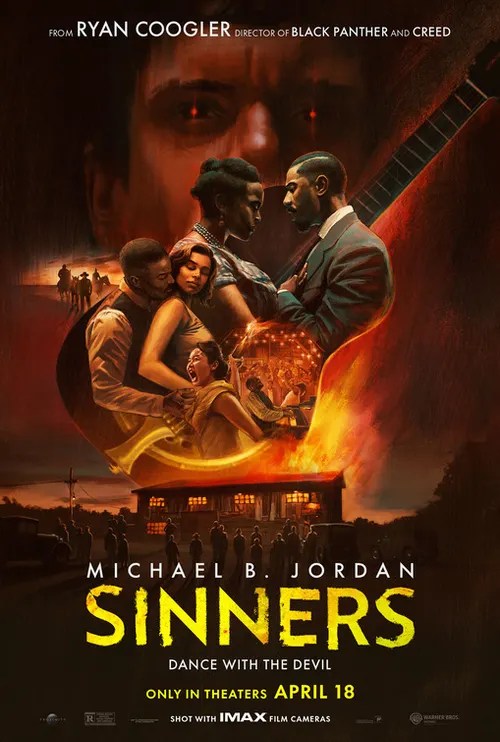
Sinners Dominates The Oscar Nominations


Here are the Oscar nominations!  Sinners received a record-setting 16 nominations but will that be enough to overcome the fashionable radical chic on One Battle After Another?

I’m happy that F1 and Train Dreams were nominated.  I’m less happy that I’m going to have to sit through another Yorgos Lanthimos film.  I haven’t seen Song Sung Blue but I like Kate Hudson and I love her mom and stepfather.

Wicked: For Good was pretty much shut out.  Not even Ariana Grande made the list and I’m okay with that.  Avatar: Fire and Ash received a few technical nominations and not much else so I guess the tyranny of Avatar at the Oscars is now finished.

Best Picture
“Bugonia”
“F1”
“Frankenstein”
“Hamnet”
“Marty Supreme”
“One Battle After Another“
“The Secret Agent”
“Sentimental Value”
“Sinners”
“Train Dreams”

Best Director
Paul Thomas Anderson – “One Battle After Another“
Ryan Coogler – “Sinners“
Josh Safdie – “Marty Supreme“
Joachim Trier – “Sentimental Value”
Chloé Zhao – “Hamnet”

Best Actress
Jessie Buckley – “Hamnet”
Rose Byrne – “If I Had Legs I’d Kick You”
Kate Hudson – “Song Sung Blue”
Renate Reinsve – “Sentimental Value”
Emma Stone – “Bugonia”

Best Actor
Timothée Chalamet – “Marty Supreme”
Leonardo DiCaprio – “One Battle After Another”
Ethan Hawke – “Blue Moon”
Michael B. Jordan – “Sinners”
Wagner Moura – “The Secret Agent”

Best Supporting Actress
Inga Ibsdotter Lilleaas – “Sentimental Value”
Amy Madigan – “Weapons”
Wunmi Mosaku – “Sinners“
Teyana Taylor – “One Battle After Another”
Elle Fanning – “Sentimental Value”

Best Supporting Actor
Benicio Del Toro – “One Battle After Another”
Jacob Elordi – “Frankenstein”
Delroy Lindo – “Sinners”
Sean Penn – “One Battle After Another”
Stellan Skarsgård – “Sentimental Value”

Best Adapted Screenplay
“Bugonia” – Will Tracy
“Frankenstein” – Guillermo Del Toro
“Hamnet” – Maggie O’Farrell & Chloe Zhao
“One Battle After Another” – Paul Thomas Anderson
“Train Dreams” – Clint Bentley & Greg Kwedar

Best Original Screenplay
“Blue Moon” – Robert Kaplow
“It Was Just an Accident” – Jafar Panahi, Nader Saeivar, Shadmehr Rastin & Mehdi Mahmoudian
“Marty Supreme” – Ronald Bronstein & Josh Safdie
“Sentimental Value” – Joachim Trier & Eskil Vogt
“Sinners” – Ryan Coogler

Best Animated Feature
“Arco”
“Elio”
“KPop Demon Hunters”
“Little Amélie or The Character of Rain”
“Zootopia 2”

Best Documentary Feature
“The Alabama Solution”
“Come See Me in the Good Light”
“Cutting Through Rocks”
“Mr. Nobody Against Putin”
“The Perfect Neighbor”

Best International Feature Film
“It Was Just an Accident” – France
“The Secret Agent” – Brazil
“Sentimental Value” – Norway
“Sirāt” – Spain
“The Voice of Hind Rajab” – Tunisia

Best Casting
Gabriel Domingues – “The Secret Agent”
Nina Gold – “Hamnet”
Cassandra Kulukundis – “One Battle After Another”
Francine Maisler – “Sinners”
Jennifer Venditti – “Marty Supreme”

Best Cinematography
“Frankenstein”
“Marty Supreme”
“One Battle After Another”
“Sinners”
“Train Dreams”

Best Costume Design
“Avatar: Fire and Ash”
“Frankenstein”
“Hamnet”
“Marty Supreme“
“Sinners”

Best Film Editing
“F1”
“Marty Supreme”
“One Battle After Another”
“Sentimental Value”
“Sinners”

Best Make-Up & Hairstyling
“Frankenstein”
“Kokuho“
“Sinners”
“The Smashing Machine”
“The Ugly Stepsister”

Best Production Design
“Frankenstein”
“Hamnet”
“Marty Supreme”
“One Battle After Another”
“Sinners”

Best Original Score
“Bugonia”
“Frankenstein”
“Hamnet”
“One Battle After Another”
“Sinners”

Best Original Song
“Dear Me” – “Diane Warren: Relentless”
“Golden” – “KPop Demon Hunters”
“I Lied to You” – “Sinners”
“Sweet Dreams of Joy” – “Viva Verdi!”
“Train Dreams” – “Train Dreams”

Best Sound
“F1”
“Frankenstein”
“One Battle After Another”
“Sinners”
“Sirāt“

Best Visual Effects
“Avatar: Fire and Ash”
“F1”
“Jurassic World: Rebirth”
“The Lost Bus”
“Sinners”

Best Animated Short Film
“Butterfly”
“Forevergreen”
“The Girl Who Cried Pearls”
“Retirement Plan”
“The Three Sisters”

Best Documentary Short Film
“All the Empty Rooms”
“Armed Only with a Camera: The Life and Death of Brent Renaud”
“Children No More: ‘Were and are Gone’”
“The Devil is Busy”
“Perfectly a Strangeness”

Live Action Short Film
“Butcher’s Stain“
“A Friend of Dorothy”
“Jane Austen’s Period Drama”
“The Singers”
“Two People Exchanging Saliva”

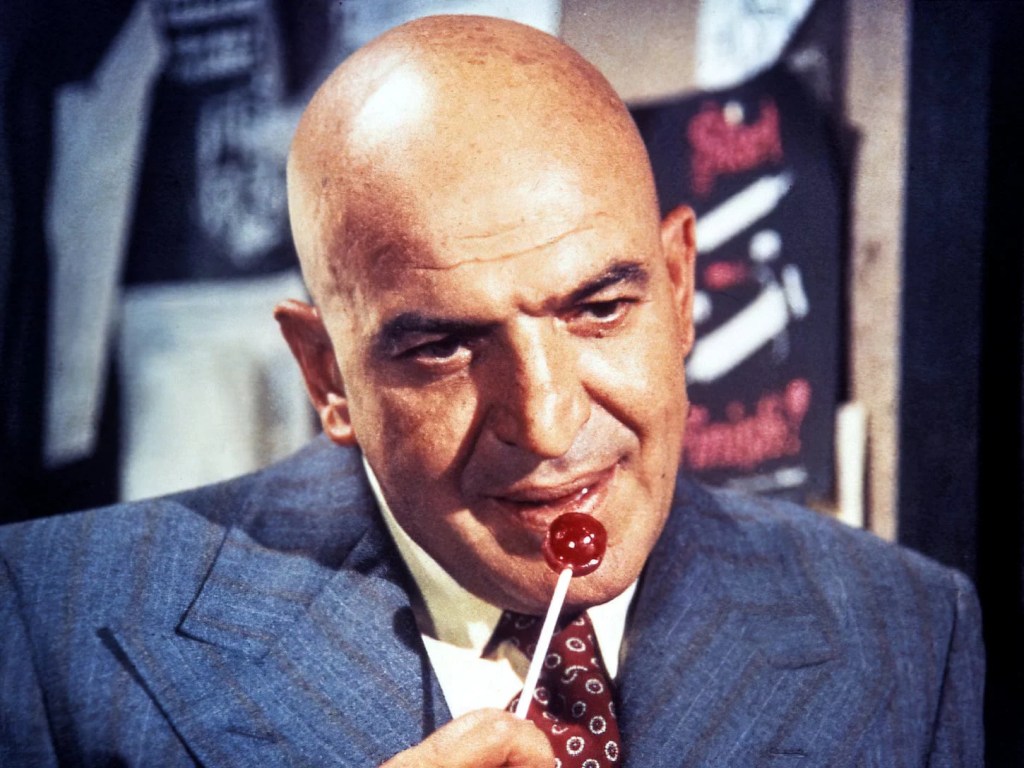
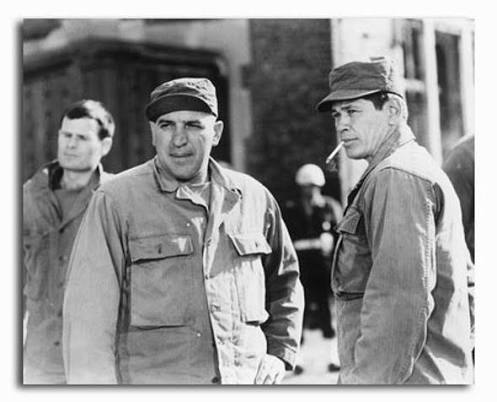
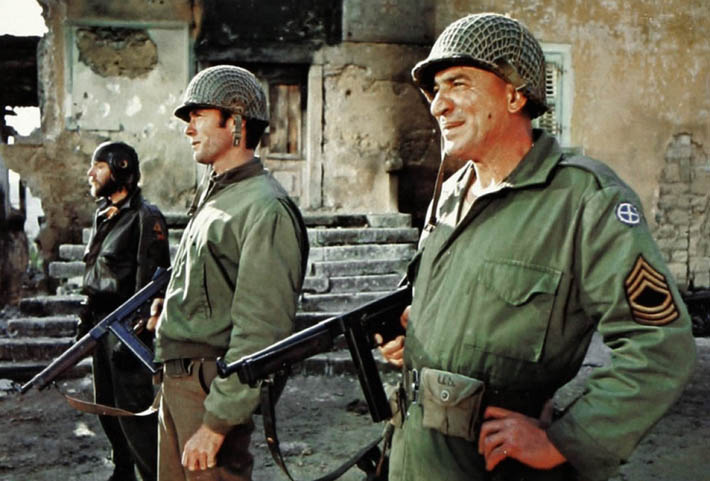
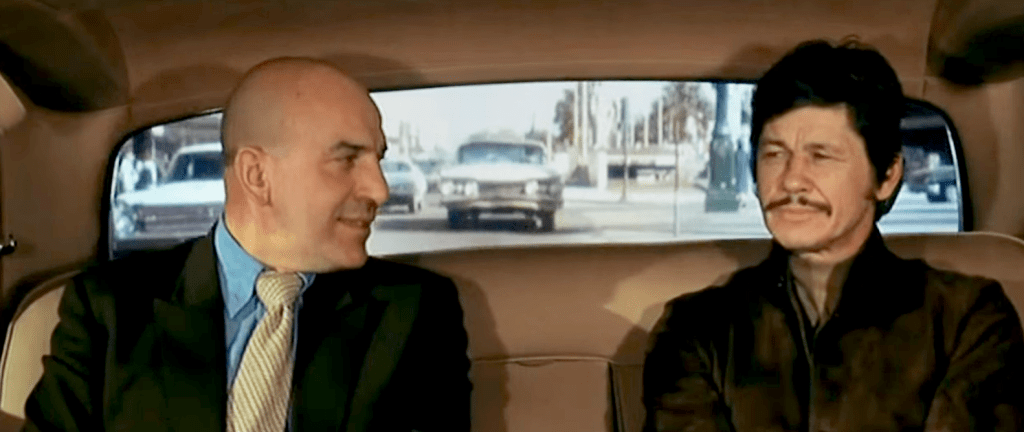
4 Shots From 4 Films: The Telly Savalas Edition! Happy Birthday, Telly!!


Telly Savalas would have been 104 years old today. He’s been in many of my favorite movies so I’m glad to celebrate him today with 4 Shots from 4 of my favorites!

Who loves ya, baby? (Telly Savalas as Kojak!)
With Charles Bronson in THE DIRTY DOZEN!
With Clint Eastwood & Donald Sutherland in KELLY’S HEROES!
With Charles Bronson in VIOLENT CITY!

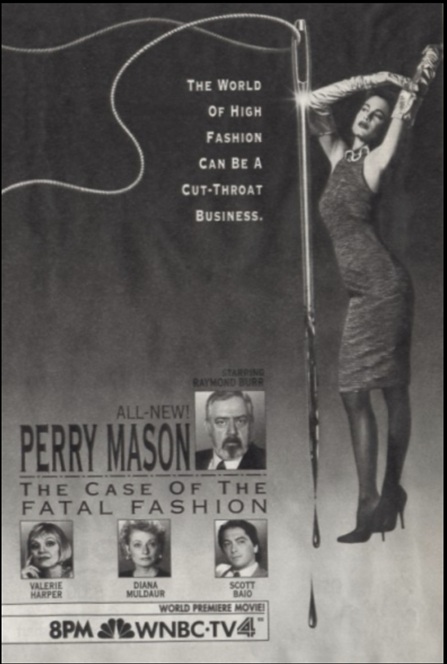
I Watched Perry Mason: The Case of the Fatal Fashion (1991, Dir. by Christian I. Nyby II)


Perry Mason (Raymond Burr), Della Street (Barbara Hale), and Ken Malansky (William R. Moses) are in New York when an old friend of Perry’s, magazine editor Lauren Jeffreys (Diana Muldaur) is accused of murdering a rival editor, Dyan Draper (Valerie Harper). Dyan was infamous for writing about the personal lives of celebrities in her column so there’s a ton of possible suspects. While Ken teams up with a mobster named Tony Loomis (Robert Clohessy) to search for clues, Perry finds himself facing off against a young district attorney (Scott Baio) who is smarter than he seems.

This Perry Mason movie is unique because, for once, the prosecutor is as good an attorney as Perry.  It reminded me of how, when the movies started, David Ogden Stiers always played the prosecutor and came across like someone who would probably win if he has going up against anyone other than Perry Mason.  Even though I immediately thought of Bob Loblaw as soon as I saw him, Scott Baio gives a good performance as a lawyer who worships Perry and can’t wait to face him in court.  For once, there’s mutual respect between the two sides.

The mystery was another one of those where I was able to guess who the killer was from the start.  They had to really stretch things to get the mob involved so that Ken could team up with Tony.  (Ken wanted to bring the killer to court while Tony just waned to shoot them.)  Also, it was obvious that Raymond Burr was not doing well when he filmed this movie.  In almost every scene, he’s either seated or leaning against something.  There are only 6 more Perry Mason films featuring Burr after this one and one of those aired after he died.  Burr still gives a commanding performance whenever Perry’s in court, though.  Sick or not, there’s no other attorney you want on your side.

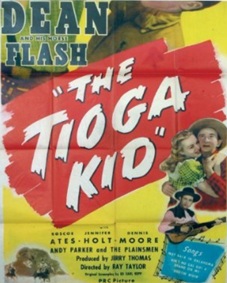
The Tioga Kid (1948, directed by Ray Taylor)


Singing Ranger Eddie Dean (played by the same-named Eddie Dean) and his sidekick, Soapy Jones (Roscoe Ates), are sent to track down the Tioga Kid, an outlaw who happens to look just like Eddie.  Soapy suggests that The Tioga Kid could be a long lost twin brother.  Eddie isn’t sure because his parents were killed in an Indian ambush when he was just a baby.  This seemed to be the backstory for many of Poverty Row’s favorite western heroes.

Dean plays both Eddie and the Tioga Kid.  You can tell them apart because the Tioga Kid doesn’t sing and always dresses in black while Eddie dresses in white and won’t stop singing.  Twin rivals were another big thing when it came to B-westerns.  Thanks to then revolutionary split-screen technology, matinee audiences could enjoy the sight of their favorite heroes shooting at themselves.  Eddie Dean was usually cast as a mild-mannered hero so he really seems to enjoy the chance to be bad as the Tioga Kid.

The Tioga Kid is a film that will be appreciated by those who are already fans of B-westerns.  The Tioga Kid was made late in the B-western cycle and there are a lot signs that it was made in a hurry.  There’s a scene involving a stunt man where he’s not even wearing the same shirt as the person he’s standing in for.  Matinee audiences probably didn’t mind.  They were too busy watching Eddie Dean shoot at himself and cheering him on during the movie’s big fist fight scene.  Eddie Dean may not have been a great actor but he could throw a punch with the best of them.

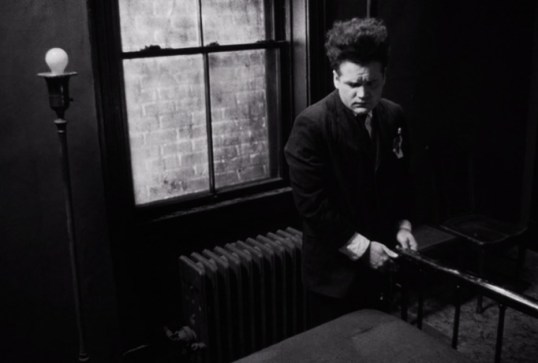
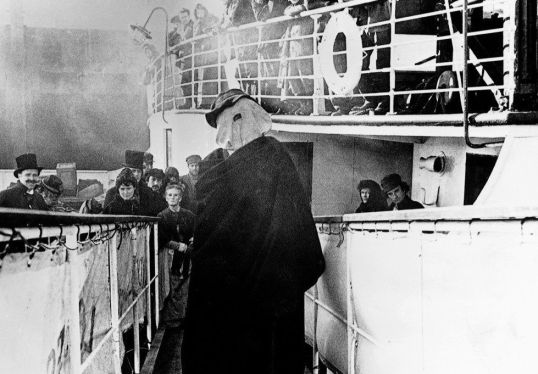
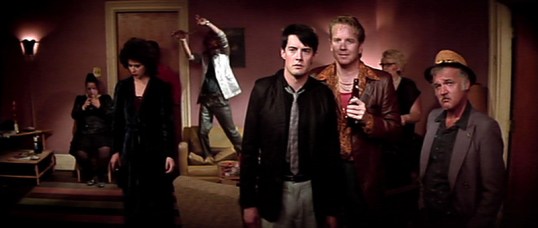
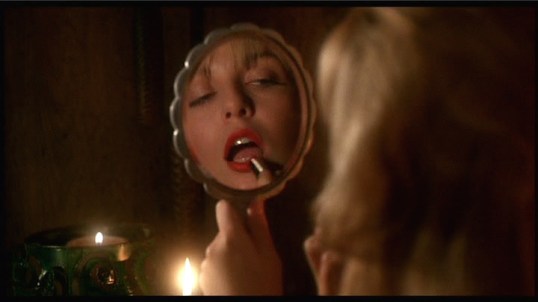
8 Shots From 8 David Lynch Films


4 Or More Shots From 4 Or More Films is just what it says it is, 4 shots from 4 of our favorite films. As opposed to the reviews and recaps that we usually post, 4 Shots From 4 Films lets the visuals do the talking!

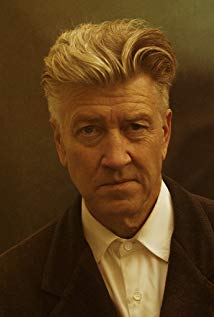
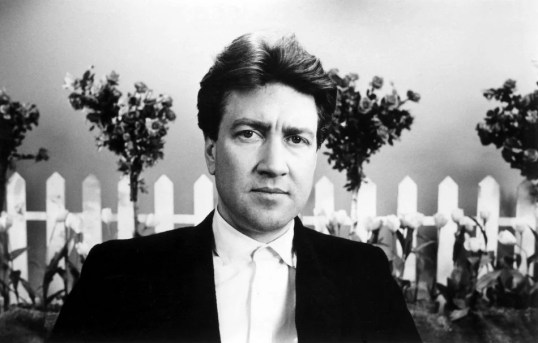
Today, on what would have been his birthday, we take the time to pay tribute to one of our favorite directors.  Needless to say, when it comes to David Lynch, there’s an embarrassment of riches.

Here are….

8 Shots From 8 David Lynch Films

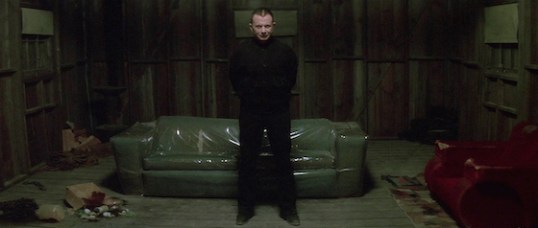
Eraserhead (1977, dir by David Lynch, DP: Frederick Elmes, Herbert Cardwell)

The Elephant Man (1980, dir by David Lynch, DP: Freddie Francis)

Blue Velvet (1986, dir by David Lynch, DP: Frederick Elmes)

Twin Peaks: Fire Walk With Me (1992, dir by David Lynch, DP: Ron Garcia)

Lost Highway (1997, dir by David Lynch, DP: Peter Deming)

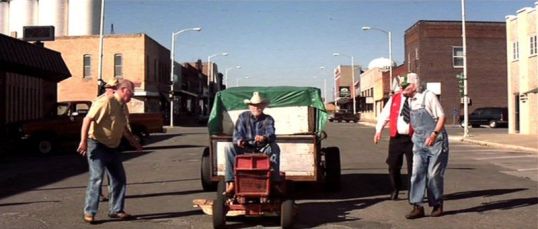
The Straight Story (1999, dir by David Lynch, DP: Freddie Francis)

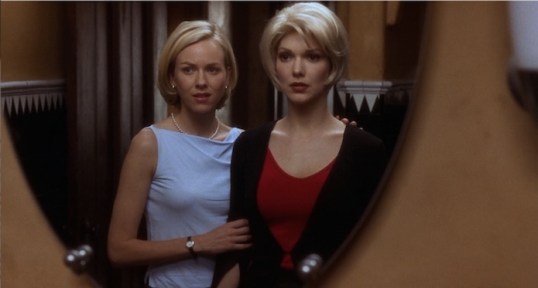
Mulholland Drive (2001, dir by David Lynch, DP: Peter Deming)

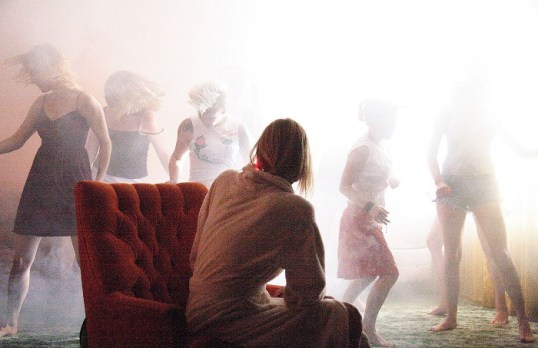
Inland Empire (2006, dir by David Lynch, DP: David Lynch)

So, I Watched Perry Mason: The Case of the Glass Coffin (1991, Dir. by Christian I. Nyby II)


World famous magician David Katz (Peter Scolari) is accused of murdering his assistant (Nancy Lee Grahn) while performing a trick at a charity show.  The prosecution says that David killed her to cover-up a pregnancy that was the result of a drunken, one-night stand.  However, Perry Mason (Raymond Burr) and Ken Malansky (William R. Moses) discover that there were many people who might have a motive for killing the victim.

After the previous emotionally-charged Perry Mason movie, this entry felt pretty bland.  I liked Peter Scolari as the accused magician but otherwise, this was a little boring.  I guessed who would be playing the murderer as soon as I saw their name during the opening credits.  I did find it amusing that Perry and the prosecutor (played by Bob Gunton) seemed to sincerely dislike each other.  That added some bite to the courtroom scenes but I really do miss David Ogden Stiers’s as Perry’s regular courtroom opponent.

At the end of the movie, Perry took the jury to the theater where the murder occurred and then cross-examined the witnesses in the theater.  I guess the movie’s producers were trying to do something new but it just didn’t feel right for Perry to get his confession anywhere other than in a courtroom.