Ving Rhames plays Sonny Liston, one of the greatest heavyweights who ever boxed but whose legacy will forever be overshadowed by the man who defeated him twice, Muhammad Ali.
Phantom Punch hits all of the well-known notes of Liston’s life. He grows up dealing with poverty and racism. He goes to prison as a young man and it is there that a sympathetic priest (Rick Roberts) helps him discover that his talent for fighting can be transformed into the skills needed to be a heavyweight contender. Sonny turns pro after he’s released but, even as he angles for a championship fight, he’s still collecting debts for mobsters like Savino (David Proval). Sonny becomes the champ after defeating Floyd Patterson but is hated by white boxing fans who resent that, unlike previous black champs, he doesn’t seem to care about their approval. Both of his losses to Ali lead to accusations that he threw the fights. With the help of his manager (Nichols Turturro), he works his way back up the rankings and is poised for another shot at the title but the Mafia now wants him to throw his fights for real. In 1971, Liston dies of what the police claim was a heroin overdose even though everyone knew that Liston hated needles. There’s not much new to be found in Robert Townsend’s biopic of Liston but Ving Rhames is convincing as Sonny and even brings some humanity to one of boxing’s most fearsome champs. It was a movie made for boxing fans and Rhames looks credible throwing a punch.
As I watched the movie, I wondered whether Liston really did throw his fights against Ali. I don’t think he did, even though both fights were strange. In the first fight, Sonny put something on his gloves that irritated Ali’s eyes. When that didn’t stop Ali, Sonny retired to his corner and didn’t come out for the seventh round. That led to rumors that the Mob ordered him to throw the fight but if you watch the match, it’s obvious that Sonny was trying to win and he just wasn’t prepared for Ali’s quickness. Liston knew he was losing and, with an aggravated shoulder injury making it difficult for him to throw his heavy punches, Liston bowed to the inevitable and refused to give Ali the chance to knock him out. The second fight was the one where the phantom punch occurred. Liston fell so quickly that, when I first saw it, I thought he had thrown the fight. It wasn’t until I watched the fight in slow motion that I saw that Ali did make contact with Liston before he fell. Liston may have been many things but but he wasn’t a chump. The so-called phantom punch was fast but it was real.
The 1993 made-for-cable television film VOYAGE opens with Morgan Norvell (Rutger Hauer) and his wife Kit (Karen Allen) headed to their 20-year class reunion. Morgan didn’t really want to go, but Kit talked him into it. It seems that Morgan was a champion diver back in high school. We know that because he’s looking at some pictures at the reunion that are meant to illustrate what a great athlete he once was. I say “meant to illustrate” because the man in the pictures looks absolutely nothing like a potentially younger Hauer would. Hauer is a big boned man, known for his blond hair. This guy in the pictures is scrawny with dark hair, but I’ll just move on, I guess. Morgan and Kit seem to be enjoying themselves, when they run into Kit’s old friend Gil Freeland (Eric Roberts) and his wife Ronnie (Connie Nielsen). It’s kind of awkward at first because Gil asks Morgan if he remembers him, and Morgan doesn’t, even though they were in the same class. Isn’t that the worst? I was recently at an Arkansas Razorbacks football game, and as I walked away from the concession area with my beverage, this lady’s voice said, “Well, if it isn’t Brad Crain.” I looked at the group of people standing in front of me, including the lady who said my name, and I immediately knew I was in trouble. They all looked kind of familiar, but a long time ago “kind of familiar,” and I knew none of their names. And then she asked that question I was hoping to avoid, “You don’t remember me, do you?” I had to admit I didn’t. We spoke for a few moments, and then I headed to my seat feeling a little embarrassed. I told my family about the exchange a few days later, and my sister Pam said that the lady was her best friend in school and that she used to spend the night at our house when we were kids. But the truth is that I still don’t really remember her, and now I’m starting to worry about how the hell I can’t remember her!
After that initially awkward moment, Morgan, Kit, Gil and Ronnie sit down together and start talking about their lives. We learn that Morgan is an architect (ala Paul Kersey), that Kit is an author, that Gil is a dentist, and that Ronnie just looks good. If she told her profession, I missed it. In a case of giving way too much information to people you haven’t seen in 20 years, Morgan and Kit tell the couple of their plans to go to Monte Carlo where they have a sailboat, which they plan to sail down the coast of Italy until they reach Malta. It seems that they purchased a hotel that is in much need of repair, and that they are going to live on the boat for a year, while Morgan puts his architect skills to good use and restores the property. The couple, who have had their share of struggles, are using this adventure as a fresh start in their marriage. Well Gil and Ronnie think this all sounds like a ball and even say that they’d love to join them for a few days if they could. No specific plans are discussed, and Morgan and Kit say that would be great, without expecting they’ll see them again after this night. Wrong! While Morgan is getting the boat ready in Monte Carlo, Gil and Ronnie show up. They have a good day on the ocean together and are enjoying some champagne that night when Gil proceeds to invite himself and Ronnie to go along with them on down the coast for a few days. She doesn’t want to be rude, but Kit is not for this idea so she kicks Morgan under the table. This is supposed to be their time to work on their relationship. Morgan should have known better than to say that Kit and Ronnie could join them for a few days, because any person who’s married or in a relationship should understand the under the table “kick to the shin.” But in a complete dumbass move, he invited them along anyway.
And this is where things really start going in a different direction. That first night, Ronnie makes a sexual move on Morgan, which he somehow has the strength to turn down, while Gil and Kit are downstairs reliving old times… Strike 1! That same night, Morgan is awakened to the sounds of a person on the deck and finds Gil up there. Gil says he was needing some fresh air and dropped his champagne, but Morgan finds the fuel cap is loose after Gil goes back downstairs… Strike 2! A couple of days later, Ronnie tries to kiss Kit, Gil catches a fish and bashes its head in instead of just throwing it back and then has the nerve to imply to Morgan that he had sex with Kit in high school… Strikes 3, 4, and 5! Morgan knocks the crap out of Gil and then makes them get off the boat when they get back to shore that day.
And from that point forward, Morgan and Kit sail on down the coast of Italy, making their way to Malta where they rebuild both their relationship and the Hotel Riviera, and live happily ever after! I’m just kidding, the rest of the movie consists of Gil and Ronnie terrorizing the couple, ultimately wanting to kill them for far more nefarious purposes than I’ll reveal here. I believe that most people in the world will fit into 2 categories: those who want to watch a movie where Eric Roberts terrorizes and tries to kill Rutger Hauer, and those who don’t want to watch such a movie. I’m really writing this up for those in the first camp, so I don’t want to spoil this movies surprises!
Back in 1993, Rutger Hauer’s run as a big-screen lead was nearing its end. With a couple exceptions, he would spend the rest of the decade appearing in made-for-cable TV films and other low budget direct-to-video type fare. Eric Roberts, who had received an Oscar nomination a decade earlier, was also mostly doing low budget direct-to-video fare, TV movies, and the occasional character part in a larger budget movie. This is an interesting time for both actors as their careers were transitioning. But we’re talking about two guys who know how to act, as evidenced by Hauer’s 174 acting credits on IMDB and Roberts’ 760 acting credits on IMDB (and counting as he has 4 credits in 2025 already). Both Hauer and Roberts are capable of playing complete psychos, so I’m not sure how they settled in on Roberts to play the psycho in this one. It may be because Hauer played a psycho stalker in his earlier movie from 1993, the made-for-HBO film BLIND SIDE, but that’s just a guess.
I enjoyed VOYAGE when I watched it the night of its premiere on the USA Network on June 2nd, 1993, and I enjoyed it when I watched it again this morning. I’m a huge fan of Rutger Hauer, and I’ve always appreciated Eric Roberts. For me, it’s a real treat seeing these two guys face off. I enjoy that Hauer gets to play the “hero” while Roberts is the dangerous creep, and Roberts is as creepy as it gets in this movie. Hauer’s role isn’t very flashy, as he’s a pretty normal guy who finds himself in a bad situation, but he is Rutger Hauer so it’s not a surprise that he’s able to summon the strength to fight for his and his wife’s lives. VOYAGE was directed by John Mackenzie. Mackenzie made some good films earlier in his career, including the phenomenal British crime film THE LONG GOOD FRIDAY (1980), the Charles Bronson corrupt union drama ACT OF VENGEANCE (1986), and the Michael Caine / Pierce Brosnan spy thriller THE FOURTH PROTOCOL (1987). While VOYAGE is certainly not his most accomplished work, Mackenzie knows how to make a film, and he does a fine job here. And finally, I always enjoy a movie filmed in beautiful locations, and Malta definitely makes for some beautiful views.
Ultimately, I think your enjoyment of VOYAGE will come down to whether or not you like the idea of Rutger Hauer and Eric Roberts fighting it out to the death. I personally like that idea.
I’ve been thinking about Eraserhead ever since I first heard the news about David Lynch’s passing.
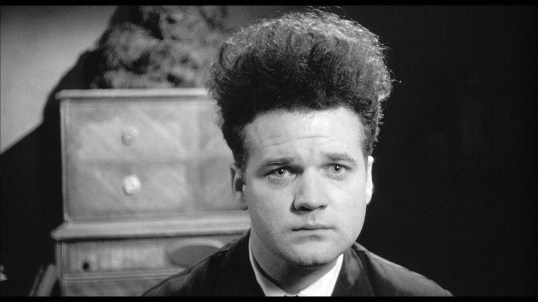
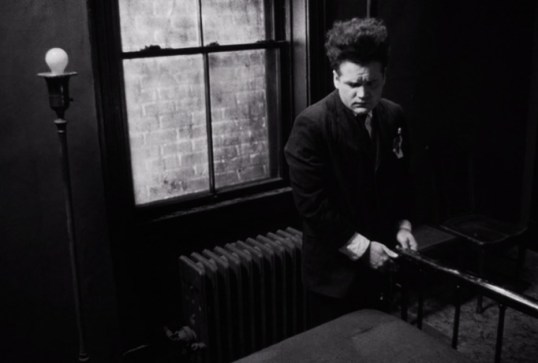
Filmed in harsh but beautiful black-and-white and first released in 1977 (after a production period that lasted for seven years), Eraserhead tells the story of Henry Spencer (Jack Nance), an awkward young man who has the haircut that gives the film it’s name and who wanders through the film like an alienated character in a Kafka story. He lives in an industrial landscape and almost every scene seems to have the sound of machinery droning away in the background. He lives in an dark apartment and it appears that there’s a woman living in a radiator who sings that, “In heaven, everything is fine,” while stomping on sperm creatures. Occasionally, a mysterious woman in the hallway talks to him. Henry doesn’t seem to have a job or any sort of interests. He doesn’t really have much of a personality. Jack Nance, who would go on to become a member of David Lynch’s regular ensemble, has a permanently dazed expression on his face. It’s hard not to feel sorry for Henry, even if he isn’t quite sympathetic. In Heaven, everything is fine but in Henry’s world, it’s much different.
Henry has a girlfriend named Mary X (Charlotte Stewart). Mary lives with her parents in an apartment near the train tracks. When Henry goes over to her place for dinner, her father shows off how he can’t feel anything in his arm. Eating a piece of chicken becomes awkward when it appears to be alive and bleeding. Mary seems to have some sort of seizure. Mary’s mother informs Henry that Mary has had a mutant baby and Henry must take care of it. The baby (represented by a grotesque puppet) has no arms or legs or, it would appear, skin. It cries constantly, despite Henry’s attempts to care for it. The baby is the only truly sympathetic character in the film.
Eraserhead is often described as being a film that’s difficult to understand but, by Lynch standards, it’s not that hard to figure out. Lynch himself said that the film was fueled by his own anxiety over being a father and, throughout the film, Henry tries to take care of the baby but everything he does just makes things worse. As is often the case with Lynch’s film, many viewers get caught up in wondering why when they should just be paying attention to what happens. Why is the baby a mutant? Because it is. Why does Henry live in the middle of an industrial park? Because he does. Who is the scarred man who appears at the start of the film and who apparently pushes the levers that lead to Mary’s pregnancy? Again, it’s less important who he is and more important that he’s there and now, Henry is a father despite being woefully unprepared. Even if the viewer learned the scarred man’s identity (or if Henry even learned of his existence), it wouldn’t change Henry’s situation. (Technically, of course, the man is Sissy Spacek’s husband and frequent Lynch collaborator, Jack Fisk.) Eraserhead is a visually surreal film but it’s also an very emotionally honest one. Henry may be stuck in, as Lynch once put it, a “dream of dark and disturbing things,” but his fears and his anxiety are portrayed realistically That emotional honesty is something that would appear in all of Lynch’s work and it’s why he was one of our most important filmmakers.
Sadly, David Lynch is now gone. So is Jack Nance. But their work will live on forever.
Eraserhead (1977, dir by David Lynch, DP: Frederick Elmes, Herbert Cardwell)
4 (or more) Shots From 4 (or more) Films is just what it says it is, 4 (or more) shots from 4 (or more) of our favorite films. As opposed to the reviews and recaps that we usually post, 4 (or more) Shots From 4 (or more) Films lets the visuals do the talking.
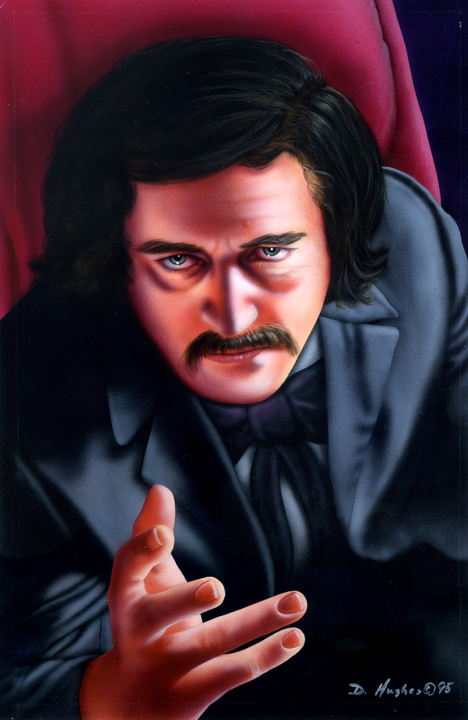
216 years ago today, Edgar Allan Poe was born in Boston, Massachusetts. From his humble beginnings as the son of two struggling actors, Poe would go on to become one of the first great American writers. (It’s been said that, when Charles Dickens first traveled to the United States in 1842, he specifically wanted to meet Edgar Allan Poe. Unfortunately, it appears that popular story my not be true but it’s still a good story.) Poe was controversial in life and even his death generated more questions than answers but no one can deny his strength as a poet and as a prose writer. Both the detective and the horror genres owe a huge debt to Edgar Allan Poe.
Today, in honor of Edgar Allan Poe’s legacy, TSL presents 4 shots from 4 films that were inspired by the work of Edgar Allan Poe!
4 Shots From 4 Films
The Fall of the House of Usher (1960, dir by Roger Corman, DP: Floyd Crosby)
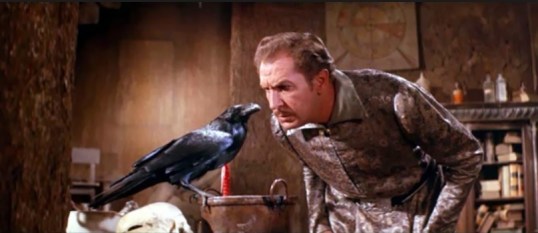
The Raven (1963, dir by Roger Corman, DP: Floyd Crosby)
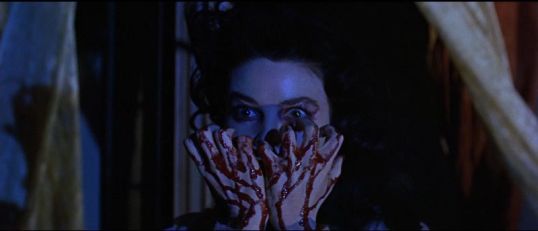
The Masque of the Red Death (1964, dir by Roger Corman, DP: Nicolas Roeg)
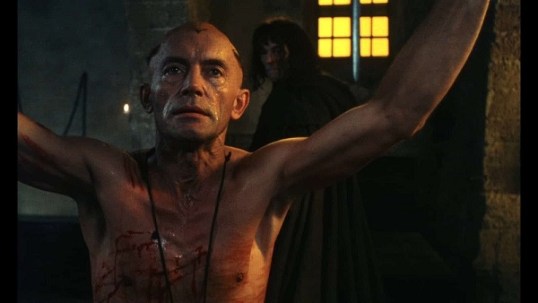
The Pit and the Pendulum (1990, dir by Stuart Gordon, DP: Adolfo Bartoli)
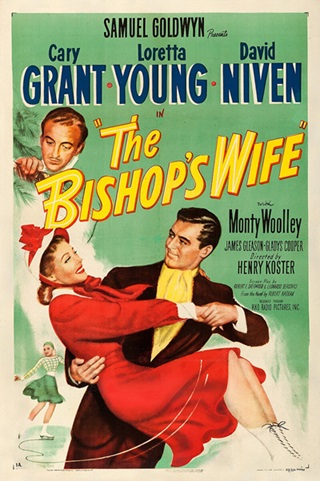
In 1947’s The Bishop’s Wife, Cary Grant stars as Dudley.
We first see Dudley walking down the snow-covered streets of a city that is preparing for Christmas. He watches Julia Broughman (Loretta Young), the wife of the local Anglican bishop. He stops to talk to Prof. Wutheridge (Monty Woolly), a secular humanist who is close to Julia and her husband, despite being irreligious himself. Dudley seems to know all about the professor, even though the professor is not sure who he is. The professor mentions that he was fired from a university because he was considered to be a “radical,” even though he has no interest in politics. The professor says that the town’s church has seen better days, especially since the Bishop is more interested in raising money from the rich to build a grand new cathedral than actually meeting with the poor who need help.
The last person that Dudley visits is Bishop Henry Broughman (David Niven). Dudley reveals to Henry that he’s angel and that he’s come in response to Henry’s prayers. Henry has been frustrated in his attempts to raise money for a new cathedral. Dudley has come to provide guidance.
With only the Bishop knowing the truth about Dudley, Dudley becomes a houseguest of the Broughmans. The Bishop has become so obsessed with his new cathedral that he’s not only been neglecting his diocese but also his family. While Dudley tries to show Henry what’s really important, he also helps Julia and her daughter Debby (Karolyn Grimes) to fit in with the neighborhood. (Bobby Anderson, who played the young George Bailey in It’s A Wonderful Life, makes an appearance as a boy having a snowball fight who says that Debby can’t play because no one wants to risk hitting a bishop’s daughter with a snowball.) The Bishop becomes jealous of Dudley and perhaps he should be as Dudley finds himself falling in love with Julia and considering not moving on to his next assignment.
(And now we know where Highway to Heaven got the inspiration for 75% of its episodes….)
The Bishop’s Wife is an enjoyable film, one that is full of not just Christmas imagery but also the Christmas spirit as well. The Bishop finally realizes that his planned cathedral is more of a gift to his ego than to the men and women who look to him for guidance and comfort in difficult times. David Niven is, as always, likable even when his character is acting like a jerk. That said, this is pretty much Cary Grant’s show from the start. Suave, charming, and gently humorous, Grant joins Claude Rains and Henry Travers in the ranks of great cinematic angels. Never mind that Grant’s character is a bit pushy and has his own crisis of faith. From the minute that Grant appears, we know that he’ll know exactly the right way to answer Henry’s prayers.
Cary Grant was not nominated for Best Actor for his performance here. Undoubtedly, this was another case of Grant making it all look so easy that the Academy failed to realize just how good of a performance he gave. Interestingly enough, The Bishop’s Wife was one of two Christmas films nominated for Best Picture that year, along with Miracle on 34th Street. Both films lost to Gentleman’s Agreement.
During the Dark Ages, Britain is at war. King Uther Pendragon (Gabriel Byrne) leads his men against The Duke of Cornwall (Corin Redgrave). Uther and his men swear their allegiance to God and St. George but they trust in the magic of the mysterious Merlin (Nicol Williamson).
Merlin negotiates peace between Uther and Cornwall but Uther throws that peace away when he becomes obsessed with Cornwall’s beautiful wife, Igrayne (Katrine Boorman). Merlin uses his magic to disguise Uther as Cornwall so that Uther can spend one night with Igrayne. When Cornwall is killed in battle, Uther marries Igrayne and realizes it was never necesarry to use Merlin’s magic and that Merlin, who has the power to see the future, knew that. Merlin takes Uther and Igrayne’s infant son from them and then disappears. Later, Uther is killed by by three of Cornwall’s men. Before dying, Uther drives his magic sword, Excalibur, into a stone. On the true king of England will be able to remove it.
Uther’s son, Arthur (Nigel Terry), grows up with no knowledge about his parentage. When he accidentally draws Excalibur out of the rock, Merlin returns to counsel the new king. And the new king has much to learn, as not all of the nobleman are willing to accept him as their ruler. Arthur proves himself worthy to be king while his half-sister, Morgan (Helen Mirren), waits for her chance to get revenge.
Excalibur is one of the most ambitious films made about King Arthur. John Boorman fits the entire legend of Arthur, Lancelot (Nicholas Clay), Percevel (Paul Geoffrey), Guinevere (Cherie Lunghi), and the search for the Holy Grail into one movie and, as a result, there’s not a dull moment. Boorman presents the reign of King Arthur as a conflict between England’s pagan past and the new era of man. Merlin and Morgan’s magic is powerful but, in the end, power is determined by bloody battles fought by men encased in clunky armor. Arthur, Lancelot, and the other knights claim to live by the honorable, chivalric code but only one of them is able to live up to the ideal. The others become consumed by lust, jealousy, and a thirst for power.
In my opinion, Excalibur is the best movie made about King Arthur, mostly because John Boorman takes the story seriously and makes us feel like we are watching people who truly are living in different world and a different time. The chivalric code is necessary to keep the peace in a time when there are multiple pretenders-to-throne. Mordred (Robert Addie) is not just a villain because he seeks to overthrow his father but also because he is the one person to have no respect for the code or the mystic power of the Holy Grail.
Excalibur has a large cast with many familiar faces. Keep an eye out for Patrick Stewart as one of Arthur’s earliest supporters and also Liam Neeson as a surly Sir Gawain. Of all the Lancelots who have appeared in the movies, Nicolas Clay is the best and Helen Mirren is the perfect Morgan. Nicol Williamson steals the movie as the mysterious Merlin. And while Nigel Terry was too old for the scenes where Arthur is supposed to be a callow teenager, he grows into the role just as Arthur grew into being king of the Britons.
Monty Python and The Holy Grail will always make me laugh but John Boorman’s big, beautiful, and bloody Excalibur is the best film about Camelot.
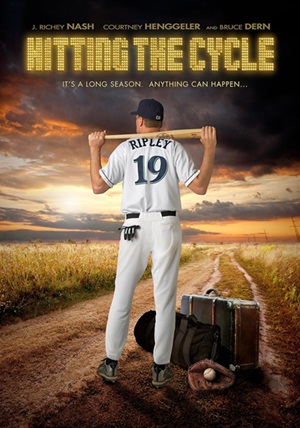
Rip (J. Richey Nash) is a veteran baseball player who started strong and then become mediocre, kind of like this film. He had his chance in the majors but then he injured his knee and now, he plays in the minors. One game, he comes close to hitting the cycle, just missing out on his chance to hit a home run. Immediately afterwards, he told that he’s been released to make room for some young players. That’s baseball. Players come and players go. I thought I’d never get over Elvis Andrus leaving the Rangers and I never did. When Andrus retired last year, he signed a one-day contract with the Rangers so he could retire as a Ranger. We love you, Elvis!
Rip goes back to his small town, where he’s still a big deal because he used to be a pro baseball player. His father (Bruce Dern) is in the hospital but Rip still resents the pressure his father put him under while he was growing up. It’s all really predictable.
I liked the baseball scenes at the start of the game, even though Rip’s batting stance seemed all wrong. They still captured the excitement of watching a good game and they reminded me that, even though football and basketball may get all the attention, baseball truly is the nation’s pastime. Baseball is Americana and I’ll always love it. But once the movie stopped being about baseball and became about Rip being a jerk to everyone in his hometown, I got bored with it. Bruce Dern was good but everyone else was forgettable.
The important thing? Only a month to go until spring training!
As some of our regular readers undoubtedly know, I am involved in a few weekly live tweets on twitter. I host #FridayNightFlix every Friday, I co-host #ScarySocial on Saturday, and I am one of the five hosts of #MondayActionMovie! Every week, we get together. We watch a movie. We tweet our way through it.
Tonight, for #ScarySocial, I will be hosting 1982’s Mortuary, starring Bill Paxton!
If you want to join us on Saturday night, just hop onto twitter, start the film at 9 pm et, and use the #ScarySocial hashtag! The film is available on Prime and Tubi! I’ll be there co-hosting and I imagine some other members of the TSL Crew will be there as well. It’s a friendly group and welcoming of newcomers so don’t be shy!
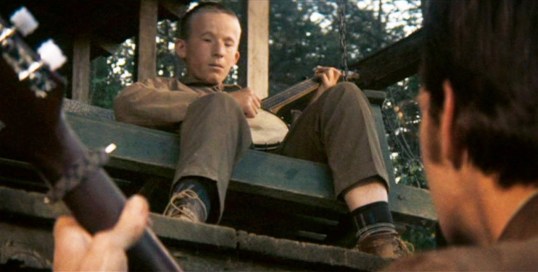
Diliverance (1972,dir by John Boorman, DP: Vilmos Zsigmond)
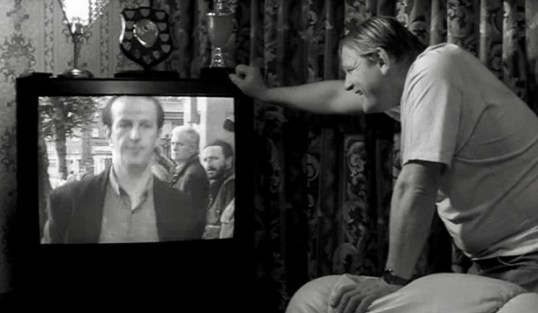
Today’s scene that I love comes from John Boorman’s 1972 film, Deliverance. For the longest time, I thought that this scene was improvised and the kid with the banjo just happened to be hanging out around the set. That makes for a nice story but I have recently read that this scene was actually scripted and the kid, while a local, was hired ahead-of-time to show up and play the banjo.
4 (or more) Shots From 4 (or more) Films is just what it says it is, 4 (or more) shots from 4 (or more) of our favorite films. As opposed to the reviews and recaps that we usually post, 4 (or more) Shots From 4 (or more) Films lets the visuals do the talking.
Today, the Shattered Lens wishes a happy 92nd birthday to British director John Boorman.
Boorman is one of those great director who sometimes doesn’t seem to get as much credit as he deserves. An undeniably idiosyncratic director, Boorman easily moved from genre to genre and who brought his own individual style to each of his films. Sometimes, critics and audiences responded to that vision and sometimes, they didn’t. And yet even Boorman’s so-called failures have come to be appreciated over the years. Zardoz is a cult classic. Even The Exorcist II: The Heretic is not quite the disaster that some insist. If nothing else, it’s one of the strangest studio productions to ever be released.
At his best, Boorman is one of the most influential directors of all time. How many neo-noirs have ripped off the look and the feel of Point Blank? The ending of Deliverance has been imitated by a countless number of horror films and, indeed, every backwoods thriller owes a debt to Boorman’s film about four businessmen spending a weekend canoeing. Excalibur is one of the most elegiac of all the Arthurian films while Hope and Glory retains its power to make audiences both laugh and cry with its portrayal of life on the British homefront during World War II. Meanwhile, films like The General and The Emerald Forest gave underrated characters actors like Powers Boothe and Brendan Gleeson a chance to shine.
So today, in honor of the career and the legacy of John Boorman, here are….
8 Shots from 8 John Boorman Films
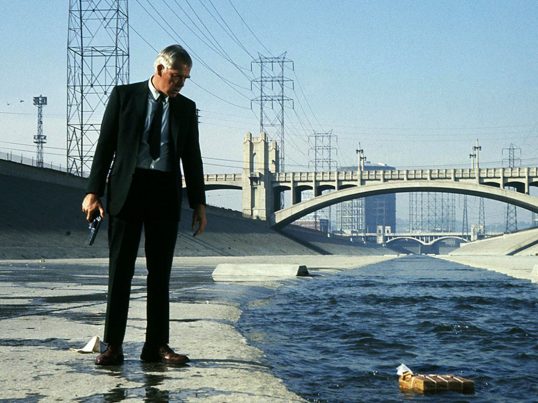
Point Blank (1967, directed by John Boorman, DP: Philip H. Lathrop)
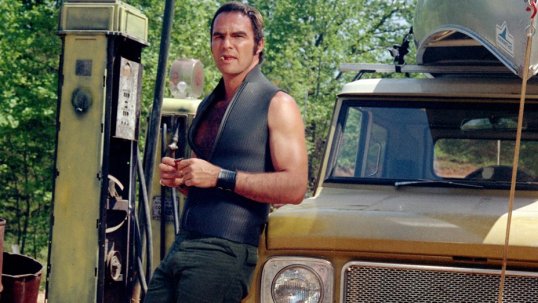
Deliverance (1972, directed by John Boorman, DP: Vilmos Zsigmond)
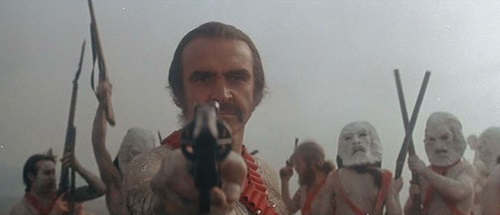
Zardoz (1974, directed by John Boorman, DP: Geoffrey Unsworth)
The Exorcist II: The Heretic (1977, dir by John Boorman, DP: William A. Fraker)
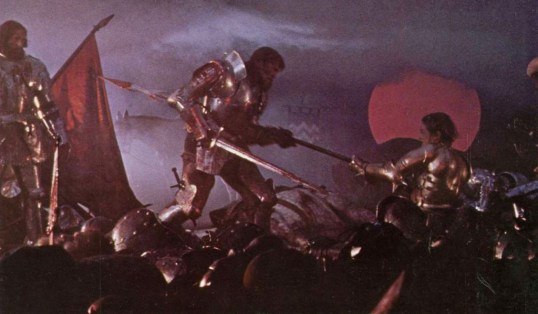
Excalibur (1981, dir by John Boorman, DP: Alex Thomson)
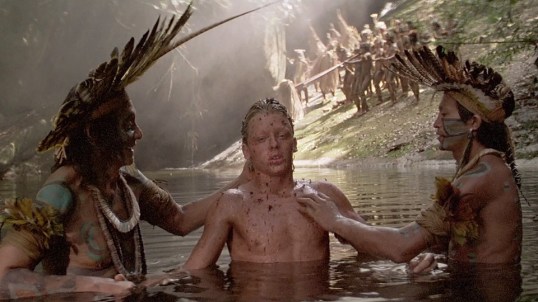
The Emerald Forest (1985, dir by John Boorman. DP: Philippe Rousselot)
Hope and Glory (1987, dir by John Boorman, DP: Philippe Rousselot)
The General (1998, dir by John Boorman, DP: Seamus Deasy)
 Ving Rhames plays Sonny Liston, one of the greatest heavyweights who ever boxed but whose legacy will forever be overshadowed by the man who defeated him twice, Muhammad Ali.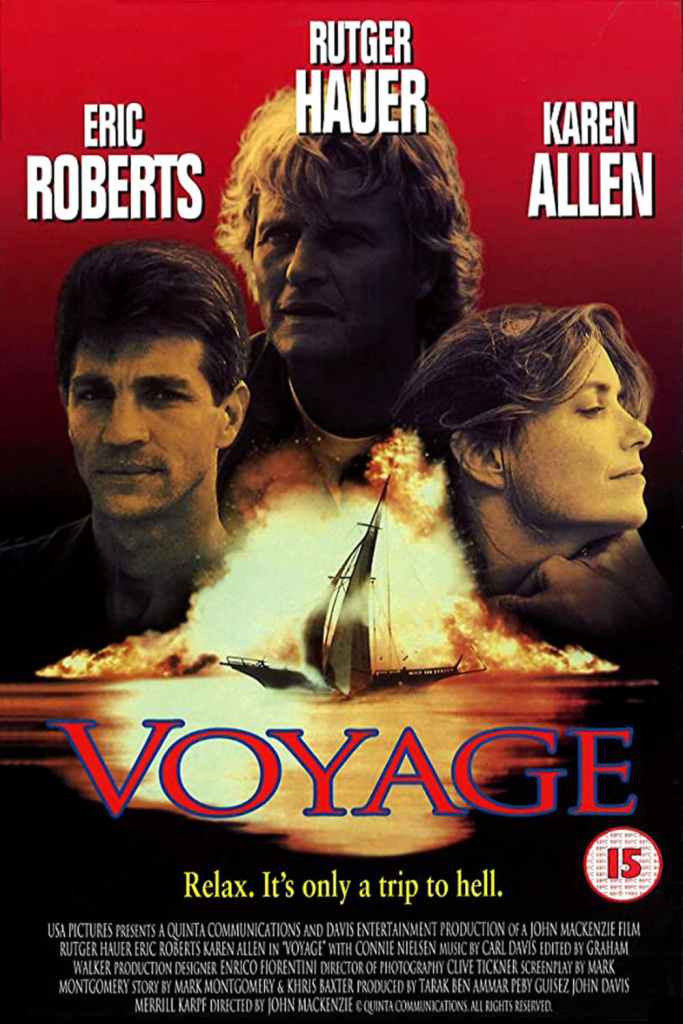






 Through the Shattered Lens