Rest in Peace, Robert Carradine. The veteran character actor and son of John Carradine (as well as brother of Keith and half-brother of David) has passed away at the age of 71.
Most of the articles about his death describe him as being “Lizzie Maguire star Robert Carradine.” Robert Carradine, however, had a long career and it started long before Lizzie Maguire. Eternally youthful, he was still playing teenagers when he was in his 30s. (Let’s just say that he was a bit old to be a college freshman in Revenge of the Nerds.) Robert appeared in his share of 70s exploitation films but he also appeared in films directed by Hal Ashby, Walter Hill, and Martin Scorsese.
In fact, one of Carradine’s first roles was in Scorseses’s 1973 masterpiece, Mean Streets. Here he is, sharing an unforgettable scene with his brother David.
“You should move to a small town where the rule of law still exists. You will not survive here. You are not a wolf. And this is the land of wolves now.” — Alejandro
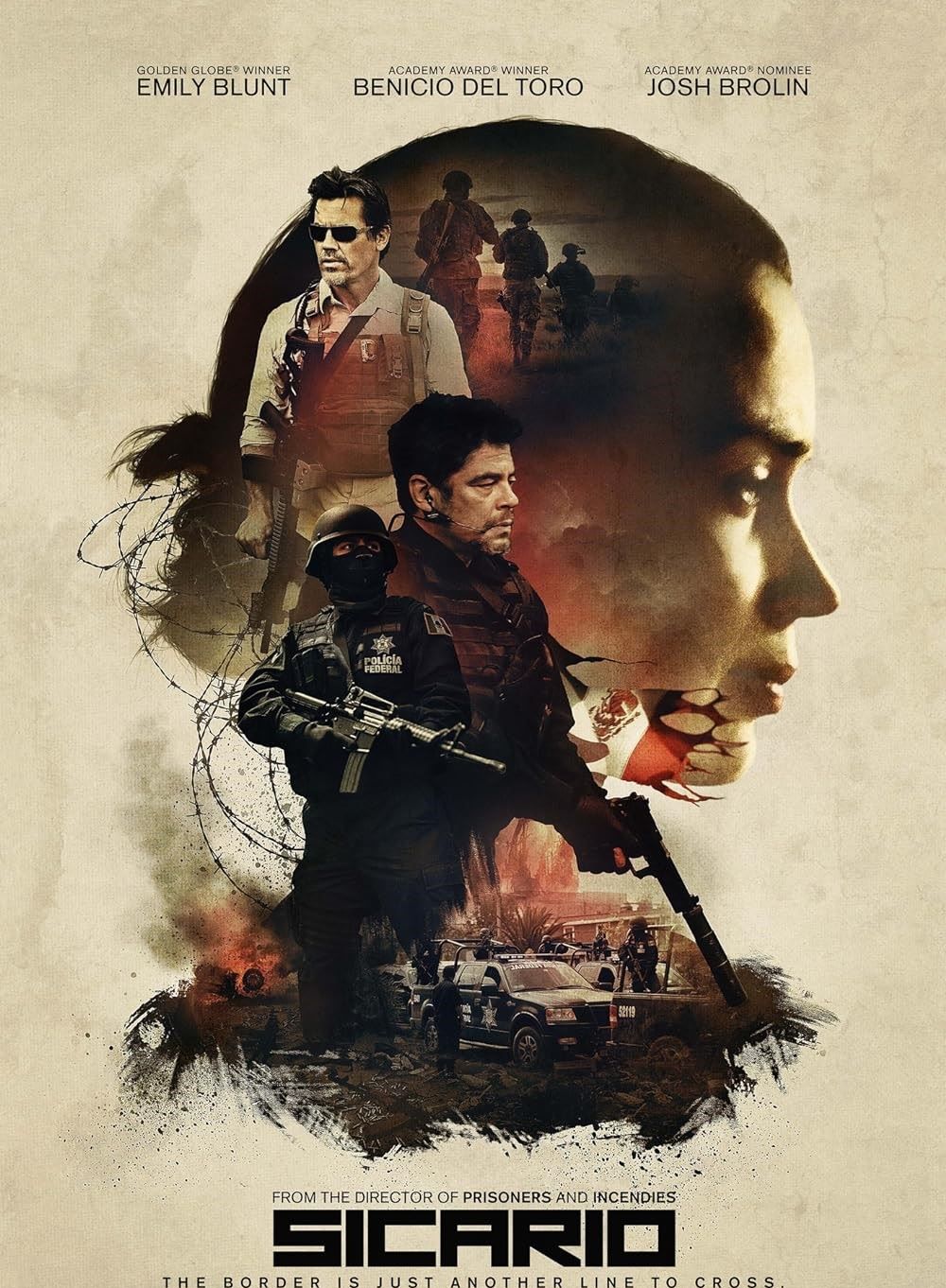
Sicario is one of those thrillers that doesn’t just try to get your pulse up; it wants to leave you sitting there afterward, uncomfortable and a little hollowed out. Set in the murky world of the U.S.–Mexico drug war, it follows an idealistic FBI agent pulled into a “by any means necessary” operation and slowly realizing she’s basically a pawn in a much bigger, much uglier game. It’s not a movie about slick heroes taking down bad guys so much as a slow, grim spiral into the realization that the system is rigged on every level, and that’s where the film is both at its most impressive and its most uncompromising. Overall, it leans heavily positive as a piece of craft—beautifully shot, superbly acted, tightly directed—and its refusal to blink at where its story logically leads is a big part of what gives it power.
The basic setup is simple enough: Kate Macer, played by Emily Blunt, is an FBI agent used to doing things by the book, raiding cartel safe houses in Arizona with her partner Reggie. After a grisly opening operation that turns up corpses hidden in the walls and a deadly booby trap, she’s recruited into a joint task force helmed by Josh Brolin’s Matt Graver, a flip‑flop‑wearing CIA type who treats international borders and legal constraints as suggestions. The team’s official mission is to go after a cartel lieutenant, Manuel Díaz, but very quickly Kate realizes she’s only being told a fraction of what’s really going on. The more she pushes for answers, the more obvious it becomes that Matt and his mysterious associate Alejandro (Benicio Del Toro) are running their own agenda and using her badge and presence as cover.
From the start, Denis Villeneuve frames this story as a descent, and he does it by locking us into Kate’s perspective for most of the film. We’re as confused and kept in the dark as she is: we don’t fully know why the team is crossing into Juárez, why everyone is so tense at the border, or what the deeper objective is besides “disrupt the cartel.” That choice pays off in a huge way during the film’s standout sequences, whether it’s the convoy inching through traffic surrounded by armed federales or the nighttime tunnel infiltration lit by thermal and night‑vision photography. Those scenes aren’t just “cool action beats”; they’re engineered to make you feel boxed in and outmatched, like violence could erupt at any second and no one really has control. Even when nothing is technically happening, you can feel the nerves jangling under the surface.
One of the most striking things about Sicario is how it weaponizes space. The way the film uses its wide, open desert vistas isn’t just pretty scenery—it adds this creeping, suffocating dread to everything, as if the characters are tiny figures swallowed up by forces they can’t hope to understand or control. Those long shots of trucks threading their way across the landscape, or helicopters gliding over seemingly endless scrub, make the world feel vast, ancient, and totally indifferent to whoever’s spilling blood on it today. In those moments, the movie almost channels a kind of Lovecraftian horror, the same cosmic, indifferent menace that Cormac McCarthy managed to weave through his Westerns, where the land itself feels old, hostile, and utterly unmoved by human morality or suffering. It’s not supernatural, but that sense of something bigger, colder, and permanent presses down on every decision these characters make.
Roger Deakins’ cinematography is a huge part of why that dread lands so well. The desert is captured in these wide, ominous skyline shots with tiny vehicles creeping along the horizon, giving Sicario a sense of menace that feels baked into the environment. Even the daylight scenes feel threatening, all washed‑out heat and harsh sun flattening everything into a kind of moral no‑man’s‑land. Then the movie flips into night, and suddenly you’re plunged into infrared and silhouettes, which fits perfectly with the story’s obsession with secrecy and invisible lines being crossed. This is one of those films where you could watch with the sound off and still feel the tension just from how the images are composed, but the use of space and light also nudges the movie into that McCarthy‑adjacent territory where the West is less a backdrop and more a silent, malevolent presence.
The performances match that level of craft. Emily Blunt plays Kate as tough and competent, but not in a superhero way—she’s brave, but she’s also human, constantly trying to reconcile what she’s seeing with what she believes law enforcement is supposed to be. You can see the frustration mounting as she keeps demanding clarity and hitting a wall of smirks, deflections, and “you’ll understand later.” Benicio Del Toro, meanwhile, walks off with the film as Alejandro, this quiet, haunted figure who initially seems like just another operative but reveals layers of trauma and ruthlessness as the story goes on. The script is smart about keeping his backstory mostly hinted at until late in the film, which makes it all the more chilling when you finally see what he’s really there to do. Josh Brolin is the third pillar, playing Matt as casually flippant on the surface but utterly cold about collateral damage, the kind of guy who laughs through briefings because he already knows the moral lines are going to be erased.
On a thematic level, Sicario is very much about complicity and the idea that in this particular “war,” there are no clean hands. Kate comes in thinking she’s going to help nail cartel leadership through some kind of legal, targeted operation; what she slowly figures out is that the task force is really trying to destabilize one cartel to empower another, consolidating power into a more “manageable” single organization. That logic—“create one devil we can deal with instead of many we can’t”—is chilling, and the movie doesn’t really offer a comforting counterargument. Instead of pulling back or softening that stance, it commits to showing what that philosophy looks like in practice, all the way to the bitter end. By the time Alejandro reaches his personal endgame and we see what “justice” looks like in this world, any illusions about moral clarity are gone, and the film refuses to apologize for following that line through.
Where some films might hedge their bets or try to inject a last‑minute note of optimism, Sicario is deliberately straight‑backed about where its story logically leads. The CIA needs Kate’s FBI status to legitimize their operation on U.S. soil, but they don’t actually want her input; she’s there to sign off and be lied to, not to shape policy. Every time she pushes back—like when she tries to build a traditional case after the task force raids a cartel‑connected bank—she’s shut down because “that’s not what this mission is.” Even the brief subplot with the corrupt local cop Silvio is there to underline how the drug war trickles down: this isn’t just cartel bosses and shadowy agents, it’s working‑class people pulling double duty as mules because they’re desperate, and they end up as expendable as anyone else. Rather than treating that as background noise, the movie leans into the bleak implications and lets them sit with you.
The same goes for Kate’s arc. Some viewers see the film as sidelining its female lead in the third act, shifting the narrative fully over to Alejandro just when things are coming to a head. Structurally, that is what happens: the viewpoint tilts from Kate’s confused horror to Alejandro’s mission, and she becomes more of a witness than an active participant. But that shift feels of a piece with the movie’s overall approach—she has been outmaneuvered and used from the start, and Sicario isn’t interested in pretending otherwise just to deliver a more empowering or conventionally satisfying ending. There’s something bracing about the way the film sticks to its guns here; it says, “this is the world we’ve shown you for two hours, and this is how someone like Kate gets treated in it,” and then follows through.
All of this could have tipped into empty cynicism if the film didn’t feel so precise and purposeful. Jóhann Jóhannsson’s score, all pounding, low‑end rumble and ominous strings, practically turns the highway scenes into horror set‑pieces; it feels like the sound of something massive grinding forward that you can’t stop. Villeneuve keeps the pacing deliberate but never sluggish, using long stretches of quiet to make the explosions of violence feel random and brutal instead of exciting. Even small scenes, like Kate’s attempted hookup with a local cop who turns out to be on the cartel payroll, are staged to underline how deeply compromised everything is. There’s no safe space, no “off the clock” moment where the larger conflict doesn’t intrude, and the movie doesn’t pretend there is just to make you feel better walking out.
If you go into Sicario looking for a clean, cathartic crime thriller where the good guys outsmart the bad guys, you’ll probably come away irritated or even angry. The movie’s whole point is that those categories don’t really apply in this corner of the world, and it’s committed enough to that idea that it never gives you an easy out. But if you’re up for something more sobering—an incredibly well‑crafted, morally grim look at the drug war with standout work from Blunt, Del Toro, Brolin, Deakins, and Villeneuve—it’s a pretty exceptional ride. Its worldview is harsh, but it’s also coherent and honestly pursued, and that level of conviction is a big part of why the film lingers. It may not be the kind of movie you “enjoy” in a traditional sense, but it’s one that sticks with you, and in this genre, that counts for a lot.
Hi, everyone! Tonight, on twitter, I will be hosting one of my favorite films for #MondayMania! Join us for 2014’s Stalked By My Neighbor!
You can find the movie on Prime and Tubi and then you can join us on twitter at 9 pm central time! (That’s 10 pm for you folks on the East Coast.) See you then!
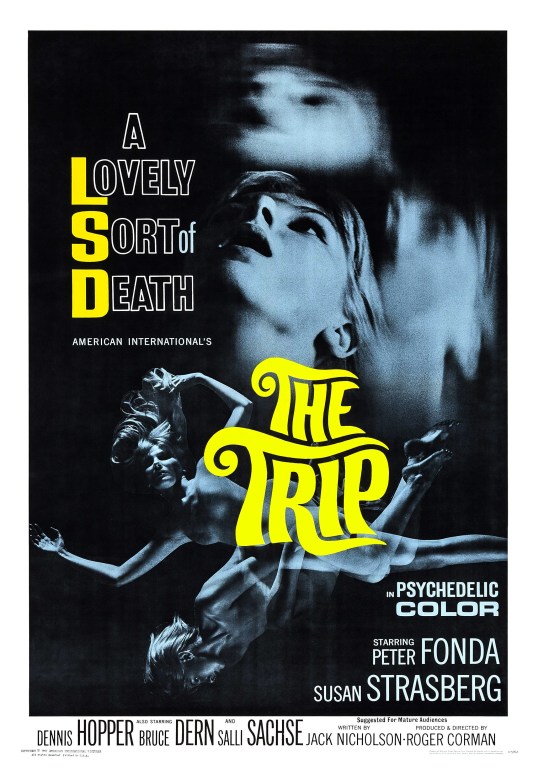
Today would have been Peter Fonda’s 86th birthday.
This scene is from Roger Corman’s 1967 film, The Trip. Corman dropped acid himself before filming Peter Fonda doing the same thing in this film. Regardless of how one views Corman’s cinematic recreation of Fonda’s experience with acid, The Trip is considered to be one of the first nuanced drug films. While it doesn’t endorse drug use, it also doesn’t descend into the hysterics of a film like Reefer Madness. Interestingly enough, the script was written by Jack Nicholson.
Here is Peter Fonda, exploring the city on LSD, in The Trip:
4 Shots From 4 Films is just what it says it is, 4 shots from 4 of our favorite films. As opposed to the reviews and recaps that we usually post, 4 Shots From 4 Films lets the visuals do the talking!
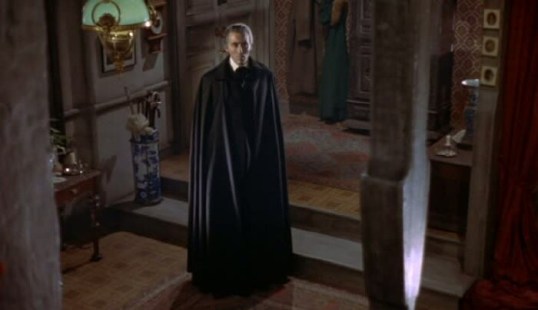
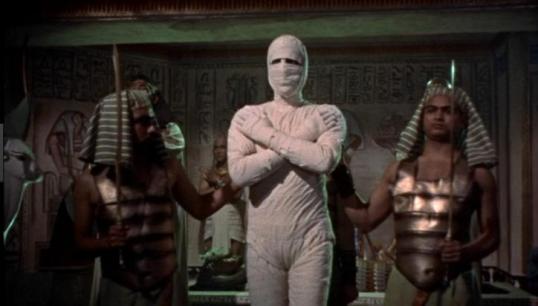
Today, we celebrate the 122nd anniversary of the birth of the great British film director, Terence Fisher. Though Fisher worked in all genres, he is best remembered for the horror films that he directed for Hammer Studios. Along with proving that there was still an audience for horror, he also helped to make stars out of Peter Cushing and Christopher Lee.
It’s time for….
4 Shots From 4 Terence Fisher Films
The Curse of Frankenstein (1957, dir by Terence Fisher, DP: Jack Asher)
The Horror of Dracula (1958, dir by Terence Fisher, DP: Jack Asher)
The Mummy (1959, dir by Terence Fisher, DP: Jack Asher)
The Two Faces of Dr. Jekyll (1960, dir by Terence Fisher, DP: Jack Asher)
As some of our regular readers undoubtedly know, I am involved in hosting a few weekly live tweets on twitter and occasionally Mastodon. I host #FridayNightFlix every Friday, I co-host #ScarySocial on Saturday, and I am one of the five hosts of Mastodon’s #MondayActionMovie! Every week, we get together. We watch a movie. We snark our way through it.
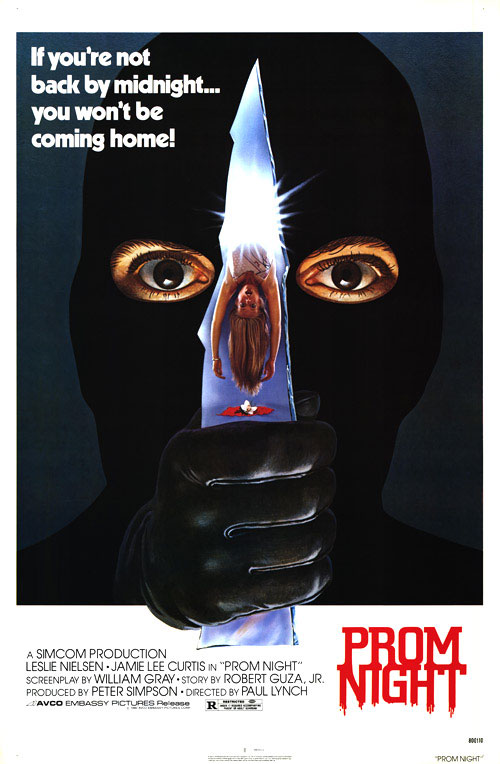
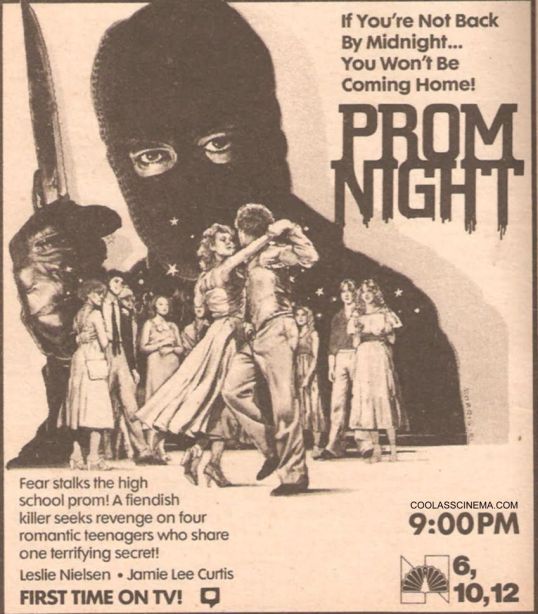
Tonight, for #MondayActionMovie, the film will be 1980’s Prom Night, the greatest Canadian film ever! I picked it so you know it’ll be good.
It should make for a night of fun viewing and I invite all of you to join in. If you want to join the live tweets, just hop onto Mastodon, find the movie on YouTube, Tubi, or Prime hit play at 8 pm et, and use the #MondayActionMovie hashtag! The watch party community is a friendly group and welcoming of newcomers so don’t be shy.
I was lucky to be part of a recent interview with actor Jordan Rhodes on the “This Week in Charles Bronson” podcast. Jordan worked with Bronson on two separate movies almost twenty years apart, MR. MAJESTYK (1974) and THE INDIAN RUNNER (1991), so he does offer valuable insight to my favorite actor. Jordan also worked with so many great actors like Joe Don Baker, Sean Penn, Andy Griffith, Gregory Peck, etc., etc. One of the most interesting works of his career is a stage play he developed about Ernest Hemingway entitled PAPA: THE MAN, THE MYTH, THE LEGEND. I’ve seen a filmed version of the play on DVD and I can confirm that it’s incredible. He toured this play for over 7 years, with the emergence of Covid in 2020 effectively ending its run. During those Covid years, Jordan did find time to write a biography entitled “The Life of a Blue Collar Actor,” which I also own and have read. It’s such an interesting take on what life is like for your basic working actor who never becomes a star, but somehow carves out a four decade career. I found it very entertaining.
If you’re interested in character actors like Jordan Rhodes, you should enjoy this. You’ll find that we do very little interviewing. He just gets to talking and it goes from there. I did want to point out that he does misspeak about a situation in Bronson’s personal life during the episode. He issued this statement on his Facebook page a few days after we recorded:
“I want to apologize for making a misstatement about the death of Charlie’s son, which I quoted as having shot himself on Charlie’s Vermont farm. I was given that misinformation by a producer prior to working with Charlie on a film, and it was incorrect. Charlie’s adopted son, Jason, died from an overdose, and I apologize for making the misstatement.“
We sincerely thank Jordan Rhodes for taking the time to speak to movie nerds like us! I hope you enjoy!
4 Shots From 4 Films is just what it says it is, 4 shots from 4 of our favorite films. As opposed to the reviews and recaps that we usually post, 4 Shots From 4 Films lets the visuals do the talking!
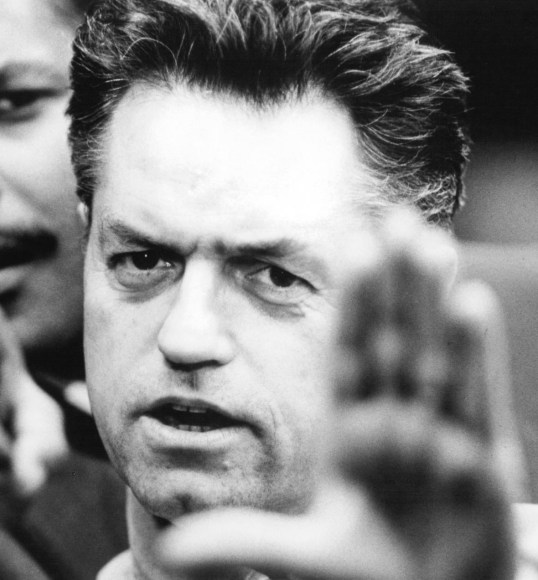
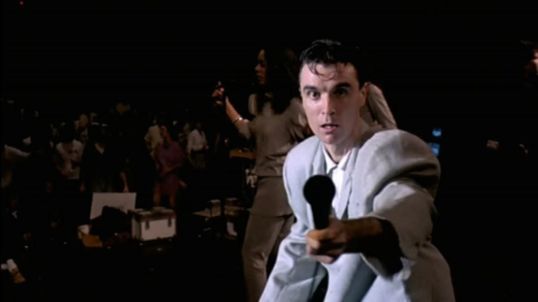
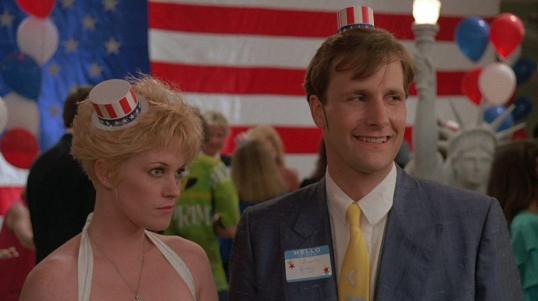
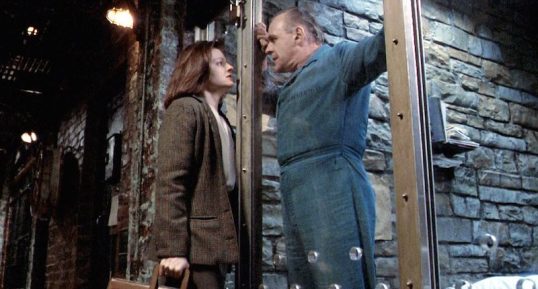
The late, great director Jonathan Demme was born 82 years ago today. It’s time for….
4 Shots From 4 Jonathan Demme Films
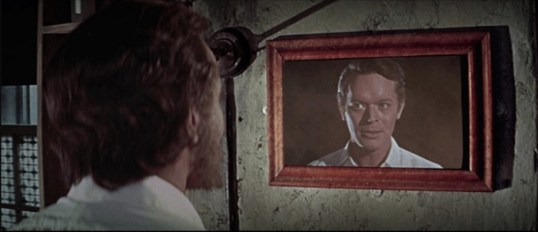
Stop Making Sense (1984, dir by Jonathan Demme, DP: Jordan Cronenweth)
Something Wild (1986, dir by Jonathan Demme, DP: Tak Fujimoto)
The Silence Of The Lambs (1991, dir by Jonathan Demme, DP: Tak Fujimoto)
Rachel Getting Married (2008, dir by Jonathan Demme, DP: Declan Quinn)
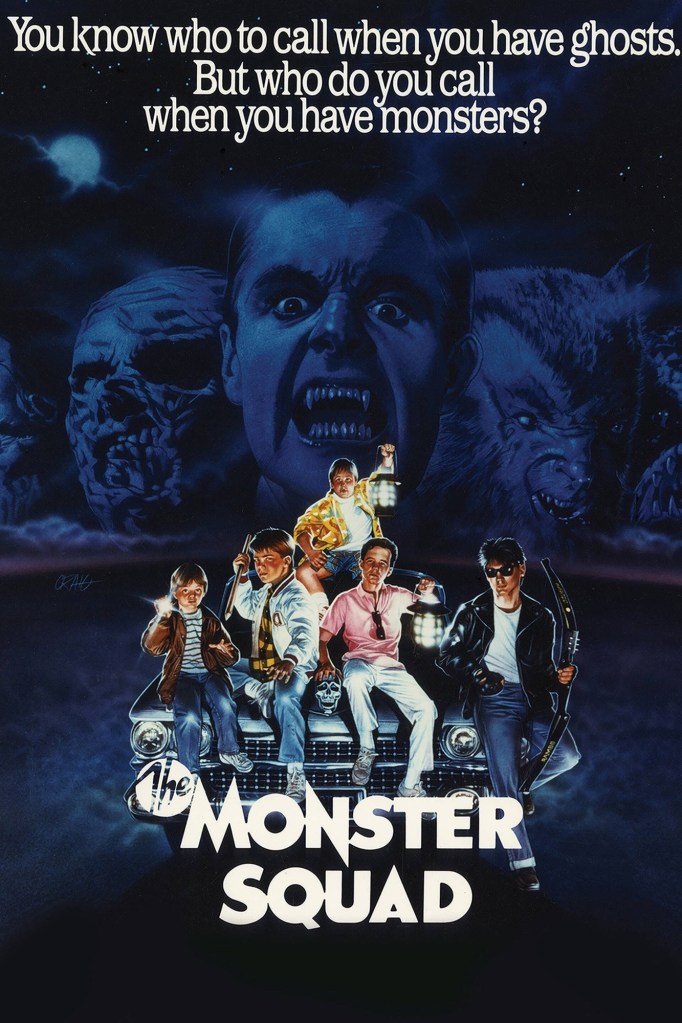
Released in 1987, The Monster Squad has lived one of those strange afterlives that cult films sometimes enjoy—ignored or even ridiculed upon release, only to become a beloved artifact for the generation that found it later on VHS. Directed by Fred Dekker and co-written with Shane Black, the movie occupies an awkward but endearing space between horror, comedy, and kids’ adventure. It never fully settles into one tone, and that’s part of both its charm and its problem. Watching it today, the film feels like The Goonies took a detour through a drive-in double feature of Dracula and The Wolf Man. It’s clunky, funny, occasionally mean-spirited, and loaded with enthusiasm—qualities that make it a thoroughly guilty pleasure for fans of ’80s genre mashups.
The story wastes no time getting into its madcap premise. A group of suburban preteens calling themselves “The Monster Squad” find that the classic Universal-style monsters are real, and worse, they’ve come to town. Count Dracula has a plan to plunge the world into darkness using an ancient amulet, and to succeed he enlists a roster of familiar faces: Frankenstein’s Monster, the Mummy, the Gill-Man, and the Wolf Man. This roster is fan-service before fan-service was a marketing term—a kid’s monster toybox brought to life. The squad, of course, must stop them, armed with comic-book knowledge, wooden stakes, and a blend of reckless courage and youthful sarcasm.
Dekker’s direction and tone play like a movie made for kids but smuggled in some heavy teenage energy. There’s violence, crude jokes, and occasional language that Hollywood would never let slip into a PG-friendly franchise today. Yet that rough edge is part of why The Monster Squad aged into cult status. It’s unapologetically of its time, operating on the belief that kids can handle scares as long as they’re fun and that suburban fantasy can, for a while at least, coexist with real danger. The movie’s depiction of childhood feels filtered through a stack of comic books and Creepshow issues—hyper absurd but still emotionally grounded in a way only ’80s adventure films seemed to pull off.
The kids themselves are a mixed bunch of believable archetypes. There’s Sean (André Gower), the de facto leader with a bedroom plastered in monster movie posters; Patrick (Robby Kiger), his wisecracking sidekick; Rudy (Ryan Lambert), the too-cool-for-school older kid who smokes, rides a bike, and somehow becomes the squad’s weapons specialist; and Eugene (Michael Faustino), the youngest, who still sleeps with his dog and writes letters to the Army for backup. They’re joined by Horace, nicknamed “Fat Kid,” played with surprising vulnerability by Brent Chalem. Each character is drawn broadly but memorably, and even when the dialogue veers into dated humor, there’s an underlying sincerity. You can tell Dekker and Black really liked these kids. They might use slingshots and one-liners, but what unites them is their intense sense of loyalty to one another—the kind of friendship that survives both bullies and broomstick-wielding vampires.
If there’s an emotional anchor, oddly enough, it’s the relationship between the squad and Frankenstein’s Monster, played by Tom Noonan in an unexpectedly gentle performance. When the creature befriends the kids, particularly little Phoebe (Ashley Bank), the film shifts momentarily from wisecracks to something close to tenderness. Noonan gives the character a shy uncertainty, a weary loneliness that offsets the visual absurdity of the rubbery monsters around him. There’s even a tinge of tragedy in his final act, which echoes Frankenstein’s literary roots—a moment of real feeling buried inside an otherwise loud and gleefully messy creature romp.
The monsters themselves, created by legendary effects artist Stan Winston, are among the film’s biggest draws. Each design feels like a loving upgrade to the old Universal look—recognizable but more feral, angular, and rooted in late-’80s aesthetics. The Wolf Man, for example, looks simultaneously comic and menacing, while the Gill-Man costume still impresses for its texture and movement decades later. The decision not to rely on stop motion or heavy opticals gives the monsters a tactile presence that CGI could never capture. There’s something about watching full-bodied suits and prosthetics move in real space that makes the threats feel tangible even when the stakes are goofy. These creatures are fun to look at, even when the script doesn’t give them much to do beyond roar and stalk across smoke-filled sets.
Shane Black’s fingerprints are all over the dialogue—the sardonic banter, the genre in-jokes, the affection for both pulp tropes and subverting them. But perhaps because the film was marketed partly as family adventure and partly as horror spoof, it often can’t decide whether to play sincere or ironic. Some scenes lean heavily on nostalgic affection for monster movies, while others feel almost mean in their mockery of small-town innocence. The tone whiplash means The Monster Squad doesn’t build much consistent momentum; one minute it’s heartfelt, the next it’s a barrage of sarcastic one-liners. Still, its rough tonal juggling has a ragtag energy that keeps it lively, and the sheer commitment to blending genres is endearing.
When it comes to pacing, the movie flies by in under 80 minutes, which turns out to be both blessing and curse. On one hand, there’s no filler—every scene moves briskly to the next piece of monster mayhem. On the other, the movie’s emotional beats and mythology barely have time to breathe. We get glimmers of backstory (like Dracula’s cryptic hunt for the amulet and Van Helsing’s prologue battle) that hint at a larger world that the film never really explores. You sense that Dekker and Black were operating under the fantasy logic of childlike storytelling: don’t explain too much, just move fast enough that no one questions it. It works, more or less, because of the film’s sheer enthusiasm, but it leaves you imagining a richer version of this story that never quite made it onscreen.
Looking back from today’s lens, some parts of The Monster Squad show their age more harshly. Certain lines and stereotypes that went unnoticed in the ’80s now feel jarring, even uncomfortable, and the film’s cavalier tone sometimes undercuts moments that should feel more innocent. Yet despite that, most viewers who revisit it with awareness of its era find themselves disarmed by its sense of fun. There’s no cynicism driving it—it’s pure genre love, messy and sincere, like a handmade Halloween costume that’s somehow cooler precisely because it’s imperfect. The film represents a time when kids’ movies were allowed to have teeth, blood, and a few scary moments, trusting that a young audience could handle being spooked without needing everything smoothed over.
For many fans, The Monster Squad works less as a polished film and more as an experience—a flashback to VHS sleepovers, bad pizza, and rewinding favorite scenes. The movie’s newfound appreciation, fueled by screenings and documentaries like Wolfman’s Got Nards, speaks to that nostalgic bond. It’s less about objective greatness and more about the feeling it preserves. Sure, some of the jokes fall flat, and the plot functions mostly as connective tissue between monster gags, but few movies embody the gleeful chaos of late-’80s pop horror as affectionately as this one does.
The Monster Squad earns its title. It’s not a flawless film, nor even a particularly coherent one, but it’s deeply fun, carried by the conviction that monsters—real or imaginary—are made to be fought with courage, humor, and friends who have your back. Watching it now is like flipping through an old comic book you used to love: you can see every crease and faded color, but that doesn’t make it any less special. And in a cinematic era saturated with irony and nostalgia pastiche, The Monster Squad still feels refreshingly earnest about its own weirdness. Maybe that’s its secret power.


 Through the Shattered Lens