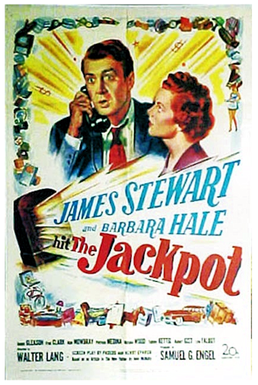
Girls On Probation (1938, directed by William C. McGann)


Eager to get away from her abusive father (Sig Ruman), Connie Heath (Jane Bryan) keeps making the mistake of hanging out with the ultimate bad friend, Hilda Engstrom (Sheila Bromley).  Hilda steals a dress from where they work and when the dress is torn, Hilda lets Connie take the blame.  When the dress’s owner (Susan Hayward, making her film debut) insists on pressing charges, insurance investigator Neil Dillon (Ronald Reagan) helps Connie get off the hook and out of jail.

Having not learned her lesson, Connie continues to hang out with Hilda and her new boyfriend, Tony Rand (Anthony Averill).  This time, Connie gets caught up in a bank robbery.  Will Neil be able to get her out of another jam?

63-minutes long, Girl on Probation is a Warner Bros. B-movie.  Ronald Reagan is surprisingly mellow as someone falling in love with a woman who keeps getting framed for his crimes she didn’t commit.  Sheila Bromley steals the show as the out-of-control dangerous blonde who tells a priest, “I’m about to meet your boss.”  The main problem with the film is that Connie is incredibly stupid.  How many times can one person be framed?  Jane Bryan, who played Connie, ended her acting career when she got married but she and her millionaire husband later helped to bankroll Reagan’s first political campaign and both of them were members of his unofficial “kitchen cabinet” when he was governor of California.

The movie has never been released on DVD and is hard to find.  It plays on TCM occasionally, which is where I saw it.  Online, the only place it appears to be streaming, ironically enough, is on a Russian site.

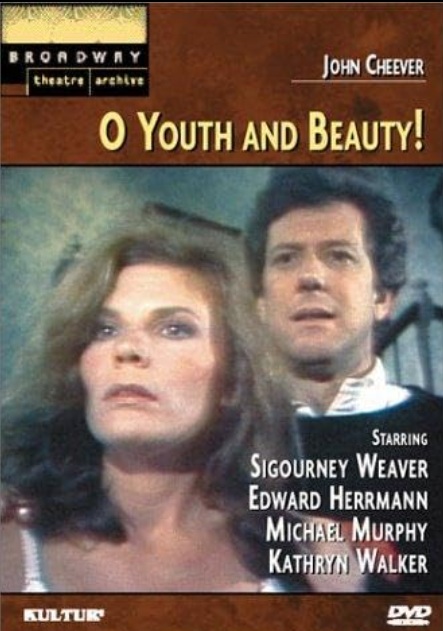
Retro Television Review: 3 By Cheever 1.2 “O Youth And Beauty!” (dir by Jeff Bleckner)


Welcome to Retro Television Reviews, a feature where we review some of our favorite and least favorite shows of the past!  On Saturdays, I will be reviewing 3 By Cheever, which ran on PBS in 1979.  The entire show can be purchased on Prime and found on YouTube.

Episode 1.2 “O Youth and Beauty!”

(Dir by Jeff Bleckner, originally aired on October 31st, 1979)

Back in the day, Cash Bentley (Michael Murphy) was an athletic marvel.  He was a track star who could jump the hurdles with ease and who everyone in high school looked up to.  Now, however, he’s 40 years old and he feels lost.  He’s aging and a new generation of young people have come along.  They certainly have no idea who Cash Bentley used to be.

At drunken neighborhood parties, Cash insists on recreating his youth by having his hosts set up their furniture like an obstacle course.  Giving them a starter’s pistol that he insists be fired to signify the start of the race, Cash will run through the house, jumping over chairs and couches and tables while everyone cheers.  Unfortunately, Cash’s luck runs out and he ends up breaking his leg during one of his demonstrations.

Forced to get around on crutches, Cash feels isolated from the rest of the world.  He doesn’t get a promotion because his bosses say they need someone who can start traveling immediately.  When all of his neighbors get on the train that is heading into the city at the usual morning time, a hobbled Cash arrives late and is forced to wait alone for the next one.  His wife, Louise (Kathryn Walker), gets a job working at a boutique to help pay the bills.  She says that maybe she’ll make enough that they’ll be able to take a vacation.  At the neighborhood parties, no one wants to deal with Cash and his broken leg.  His athleticism was all he had left.  It was what he was known for.  It was the source of all his confidence.  Now that he doesn’t have that, he’s lost.

Eventually, his legs comes out of the cast and he insists that Louise set up all the furniture in the house so that he can run another obstacle race.  He gives Louise the starter’s pistol and insists that she fire it when it’s time for him to start.  The scene cuts to the outside of their suburban home.  The sound of one gunshot upsets the calm.  Later, Louise and her children are seen moving out of the house.  Cash is nowhere to be seen.

The episode ends ambiguously.  Those who are familiar with the original John Cheever short story know that Louise shot Cash and that no one was sure whether she meant to do it or not.  The movie cuts away before the gun is actually fired.  For all we know, Cash did the obstacle course and then just never returned home.

O Youth and Beauty is one of John Cheever’s most acclaimed short stories.  The screen adaptation features an excellent performance from Kathryn Walker but the scenes of Cash running the furniture obstacle course are probably something that worked better on the page and in the reader’s imagination than when actually presented on film.  Michael Murphy is almost too confident and handsome as Cash.  The role calls for a former jock slowly going to seed and desperately trying to hold onto his youth whereas Murphy looks like he’s still in peak athletic form.  Murphy does a good job portraying Cash’s depression and his alienation after he breaks his leg but, physically, he still seems miscast in the role.

Edward Herrmann and Sigourney Weaver, who were the center of last week’s episode, make a brief appearance in this one, hovering in the background of the neighborhood’s endless parties.

Next week, we finish up 3 By Cheever.

4 Shots From 4 Films: Special Joseph Kosinski Edition


4 Or More Shots From 4 Or More Films is just what it says it is, 4 shots from 4 of our favorite films. As opposed to the reviews and recaps that we usually post, 4 Shots From 4 Films lets the visuals do the talking!

Today, TSL wishes a happy birthday to director Joseph Kosinski!  It’s time for….

4 Shots From 4 Joseph Kosinski Films

Tron: Legacy (2010, dir by Joseph Kosinski, DP: Claudio Miranda)

Oblivion (2013, dir by Joseph Kosinski, DP: Claudio Miranda)

Only The Brave (2017, dir by Joseph Kosinski, DP: Claudio Miranda)

Top Gun: Maverick (2022, dir by Joseph Kosinski, DP: Claudio Miranda)

Film Review: The Jackpot (dir by Walter Lang)


In 1950’s The Jackpot, James Stewart plays Bill Lawrence.

Bill has a job at a department store.  He’s not the manager but he’s still a respected member of the staff and who knows?  Maybe his boss (Fred Clark) will give him a promotion someday.  He lives in a big, two-story home with his wife, Amy (Barbara Hale).  He and Amy have two children, one of whom is played by a 12 year-old Natalie Wood.  By all appearances, Bill is doing pretty good for himself.  At one point, it’s mentioned that makes a grand total of $7,500 a year.

That definitely caught my attention.  “I make more than that!” I snapped at the screen.  I pulled up an inflation calculator and I discovered that $7,5000 in 1950 is the equivalent of — wait for it — $102,000 today!  (Technically, I still make more than that but still, it’s six figures.)

When Bill answers a phone call from a radio station and guesses the correct answer to a trivia question, he wins $24,000-worth of prizes.  (I didn’t bother to figure out how much that $24,000 would be be in 2025 dollars but we can safely assume that it would be quite a bit.)  Unfortunately, a lot of the prizes end up costing more than their worth.  Bill wins a side of beef , 7,500 cans of soup, and a 1,000 fruit trees but he doesn’t win anywhere to store it all.  He also wins a maid, an interior designer, a pony, a swimming pool, a trip to New York, and a session with portrait painter Hilda (Patricia Medina).  He also ends up with an income tax bill for $7,000.  Remember, he only makes $7,500 a year.  Damn the IRS!

Realizing that he’s going to have to sell the majority of his winnings, Bill loses his job when he’s caught trying to sell to the store’s customers.  Needing money to pay off his tax bill, he tries to pawn a diamond ring and ends up getting arrested.  With his anniversary coming up, he asks Hilda to paint a portrait of Amy from his description of her but Bill ends up spending so much time with Hilda that Amy becomes convinced that he’s having an affair.

Basically, one terrible thing after another happens to Bill, all the result of having won a contest.  (The film is loosely based on a true story, with James Gleason playing a fictionalized version of the reporter who wrote the original story.)  The movie’s a comedy but, as with the majority of the films that James Stewart made after World War II, there’s a sense of melancholy running through it.  Even before he wins the money, Bill doesn’t seem satisfied with his life.  Much like George Bailey, he’s restless and wondering if there will ever be more to his life than just his house in the suburbs and his job in the city.  Also, like George, Bill learns to appreciate what he has as the result of getting what he wants and discovering that he was happier before.  Few actors were as skilled at capturing ennui and dissatisfaction as Jimmy Stewart.  The Jackpot is a silly comedy but it’s also an effective portrait of a middle-aged man trying to find peace with the way his life has turned out.  That’s almost entirely due to Stewart’s likable but honest performance.
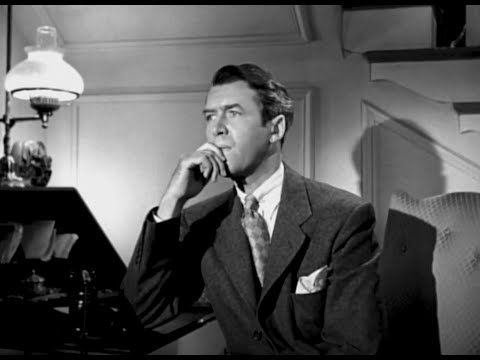
The Jackpot may not be one of Stewart’s most-remembered films but it’s entertaining, with the supporting cast all providing their share of laughs while Stewart provides the film with a heart.  The film may be a comedy but it’s also a look at America and Americans adjusting to life in the years immediately following World War II.  Suddenly, abundance is everywhere but, as Bill Lawrence, not without a price.
Live Tweet Alert: Join #ScarySocial for Alligator!


As some of our regular readers undoubtedly know, I am involved in a few weekly live tweets on twitter.  I host #FridayNightFlix every Friday, I co-host #ScarySocial on Saturday, and I am one of the five hosts of #MondayActionMovie!  Every week, we get together.  We watch a movie.  We tweet our way through it.

Tonight, at 9 pm et, Deanna Dawn will be hosting #ScarySocial!  The movie?  1980‘s Alligator!  

If you want to join us this Friday, just hop onto twitter, start the movie at 9 pm et, and use the #ScarySocial hashtag!  I’ll be there tweeting and I imagine some other members of the TSL Crew will be there as well.  It’s a friendly group and welcoming of newcomers so don’t be shy.

Alligator is available on Prime!

See you there!

Scene That I Love: The Meteor Hits Hong Kong


Today’s scene that I love is a chaotic scene in which a fragments of a meteor cause a tidal wave to crash over Hong Kong.  It’s chaos on a budget in 1979’s Meteor!  This scene was actually filmed in Los Angeles and featured cardboard cut-outs of buildings in a big water tank.

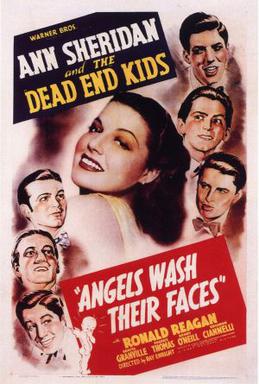
Angels Wash Their Faces (1939, directed by Ray Enright)


Gangster William Kroner (Bernard Nedell) and his henchman Martino (Eduardo Ciannelli) frame teenager Gabe Ryan (Frankie Thomas) for setting several buildings on fire.  Because Gabe has just gotten out of reform school and is a member of a local neighborhood gang, they know that no one will believe him or his sister, Joy (Ann Sheridan).

What Kroner and Martino did not count on were the Dead End Kids (Billy Halop, Bobby Jordan, Leo Gorcey, Gabriel Dell, Huntz Hall, and Benard Punsley).  They’re not going to sit by while the adults send their friend to jail.  Plus, one of their friends was killed in one of the fires.  The kids are out for revenge and sympathetic district attorney Pat Remsen (Ronald Reagan) is on their side.

As a publicity stunt, the city is holding an election for “Kid Mayor.”  The Kid Mayor gets to run the city for a week.  What could go wrong?  Billy Halop decides to run for Kid Mayor so that he can order the arrest of Kroner and then beat a confession out of him.

Angels Wash Their Faces was one of the last of the studio-made Dead End Kid films.  After this one, they would be sent down to Poverty Row and their films would be more obviously comedic.  Angels Wash Their Faces starts out as a juvenile delinquent drama, with Gabe struggling to rebuild his life and keep on the right track.  Then it becomes a goofy comedy, with Billy Halop running for mayor and unleashing vigilante justice on the bad guys.  I’m not sure that any city would actually give the “kid mayor” the power to lock people up.  Whoever came up with the idea of a kid mayor should be run out of politics.

On the positive side, Ann Sheridan is beautiful.  Future president Reagan is his usual friendly self.  On the negative side, the movie, overall, lacks the edge that made the first few Dead End Kids films memorable and the Dead End Kids themselves seem to be pretty much interchangeable.  Huntz Hall would have made a better mayor.


4 Shots From 4 Films: Special 1932 Edition


4 Shots From 4 Films is just what it says it is, 4 shots from 4 of our favorite films. As opposed to the reviews and recaps that we usually post, 4 Shots From 4 Films lets the visuals do the talking!

Today, we take a look at a classic cinematic year.  It’s time for….

4 Shots From 4 1932 Films

The Blood of a Poet (1932, dir by Jean Cocteau, DP: Georges Piranal)

Shanghai Express (1932, dir by Josef von Sternberg, DP: Lee Garmes and James Wong Howe)

Trouble In Paradise (1932, dir by Ernst Lubitsch, DP: Victor Milner)

Vampyr (1932, dir by Carl Theodor Dreyer, DP: Rudolph Mate)

Live Tweet Alert: Join #FridayNightFlix for Meteor!


As some of our regular readers undoubtedly know, I am involved in a few weekly watch parties.  On Twitter, I host #FridayNightFlix every Friday and I co-host #ScarySocial on Saturday.  On Mastodon, I am one of the five hosts of #MondayActionMovie!  Every week, we get together.  We watch a movie.  We tweet our way through it.

Tonight, at 10 pm et, I will be hosting #FridayNightFlix!  The movie?  1979’s Meteor, with Sean Connery and friends!

If you want to join us this Friday, just hop onto twitter, start the movie at 10 pm et, and use the #FridayNightFlix hashtag!  I’ll be there tweeting and I imagine some other members of the TSL Crew will be there as well.  It’s a friendly group and welcoming of newcomers so don’t be shy.

Meteor is available on Prime!

See you there!

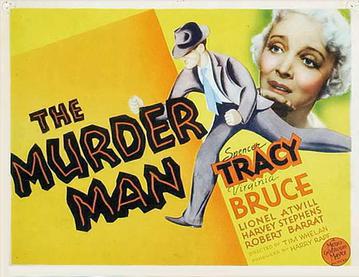
Film Review: The Murder Man (dir by Tim Whelan)


Seven minutes into the 1935 film, The Murder Man, 27 year-old James Stewart makes his film debut.

He’s playing a reporter named Shorty and, since this is a 30s newspaper film, he’s first seen sitting at a table with a bunch of other cynical reporters, the majority of whom seem to be alcoholics and gambling addicts.  Suddenly, words comes down that a corrupt businessman named Halford has been assassinated, shot by an apparent sniper.  (It is theorized that he was shot from one of those carnival shooting gallery games, which was somewhat oddly set up on a street corner.  Maybe there was shooting galleries all over place in 1935.  I supposed people had to do something to keep their spirits up during the Depression.)  While the other reporters run to the scene of the crime, Shorty is on the phone and calling his editors to let them know that a huge story is about to break.

Steve Grey (Spencer Tracy) is the reporter assigned to the story.  Crime is his beat and everyone agrees that no one’s better at covering criminals and understanding what makes them tick.  Unfortunately, it’s not always easy to track Steve down.  He’s a hard drinking reporter and lately, he’s been concerned about the collapse of his father’s business.  Still, when Steve is finally tracked down, he throws himself into covering the story and speculating, in print, about who could have killed Halford.  In fact, his girlfriend (Virginia Bruce) worries that Steve is working too hard and that he’s developing a drinking problem.  She suggests that Steve needs to take some time off but Steve is driven to keep working.

It’s largely as a result of Steve’s actions that a man named Henry Mander (Harvey Stephens) is arrested and convicted of Halford’s murder.  Steve should be happy but instead, he seems disturbed by the fact that he is responsible for Mander going to jail.  When his editor requests that Steve go to Sing Sing to interview Mander, a shocking truth is revealed.

Admittedly, the main reason that I watched The Murder Man was because it was the feature film debut of James Stewart.  (Stewart previously appeared in a comedy short that starred Shemp Howard.)  Stewart is only in a handful of scenes and he really doesn’t have much to do with the main plot.  To be honest, Shorty’s lines could have been given to anyone.  That said, Stewart still comes across as being a natural on camera.  As soon as you hear that familiar voice, you can’t help but smile.

Even if Stewart hadn’t been in the film, I would have enjoyed The Murder Man.  It’s fast-paced mystery and it has a decent (if not totally unexpected) twist ending.  It’s one of those films from the 30s where everyone speaks quickly and in clipped tones.  Casual cynicism is the theme for the day.  Spencer Tracy gives a wonderful performance as the hard-drinking and troubled Steve Grey and the scene where he meets Mander in prison is surprisingly moving.  Clocking in at only 68 minutes, The Murder Man is a good example of 30s Hollywood.