4 Shots From 4 Films: Special Norman Mailer Edition


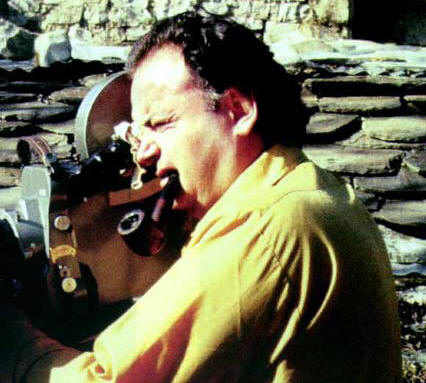
Norman Mailer, running for mayor of New York City in 1969

4 (or more) Shots From 4 (or more) Films is just what it says it is, 4 (or more) shots from 4 (or more) of our favorite films. As opposed to the reviews and recaps that we usually post, 4 (or more) Shots From 4 (or more) Films lets the visuals do the talking.

Norman Mailer wasn’t just a writer and symbol of New York City.  He was also an aspiring filmmaker, a director who made three experimental films in the 60s and one studio film in the 80s.  And while none of his films could really be described as being a hit with either audiences or critics, they do — to a certain extent — epitomize an era.  Plus, the story of Rip Torn hitting Mailer with a hammer during the filming of Maidstone will live forever.

In honor of Norman Mailer the director, here are….

4 Shots From 4 Norma Mailer Films

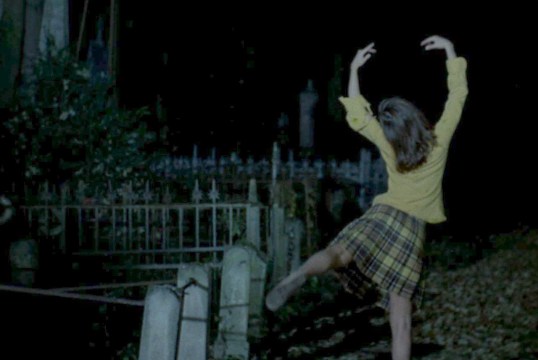
Wild 90 (1968, dir by Norman Mailer, DP: D.A. Pennebaker)

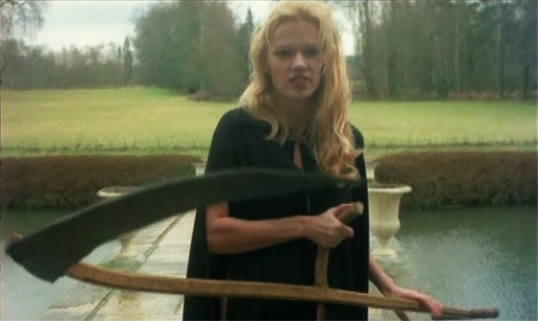
Beyond The Law (1968, dir by Norman Mailer, DP: D.A. Pennebaker)

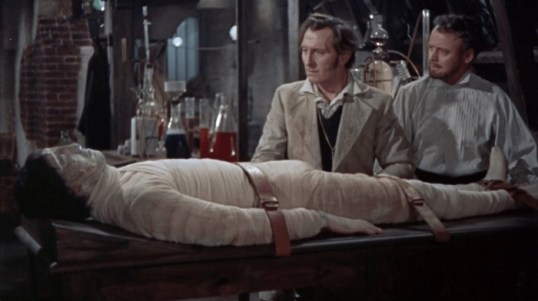
Maidstone (1970, dir by Norman Mailer, DP: D.A. Pennebaker)

Tough Guys Don’t Dance (1987, dir by Norman Mailer, DP: Mike Moyer and John Bailey)


4 Shots From 4 Films: Special Michael Anderson Edition


4 (or more) Shots From 4 (or more) Films is just what it says it is, 4 (or more) shots from 4 (or more) of our favorite films. As opposed to the reviews and recaps that we usually post, 4 (or more) Shots From 4 (or more) Films lets the visuals do the talking.

101 years ago today, Michael Anderson was born in London.  Anderson may have never become a household name but he directed some memorable movies.  Around The World in 80 Days proved that audiences love spectacle and celebrity cameos and it won the Oscar for Best Picture of 1956.  (Though Anderson was nominated for best director, the award went to George Stevens for Giant.)  However, I think that Anderson’s best-remembered film is probably Logan’s Run.  Whenever I shout, “I hate outside!” or I reply to a simple question with, “There is no sanctuary,” people always seem to automatically know which film I’m referencing.  Anderson followed up Logan’s Run with Orca, which is one of the better Jaws rip-offs.

Today, we honor the career and legacy of Michael Anderson with….

4 Shots From 4 Michael Anderson Films

Around The World in 80 Days (dir by Michael Anderson, DP: Lionel Lindon)

Logan’s Run (1976, dir by Michael Anderson, DP: Ernest Laszlo)

Orca (1977, dir by Michael Anderson, DP: J. Barry Herron and Ted Moore)

The Martian Chronicles (1980, directed by Michael Anderson, DP: Ted Moore)

4 Shots From 4 Films: Special Ernst Lubitsch Edition


4 (or more) Shots From 4 (or more) Films is just what it says it is, 4 (or more) shots from 4 (or more) of our favorite films. As opposed to the reviews and recaps that we usually post, 4 (or more) Shots From 4 (or more) Films lets the visuals do the talking.

129 years ago today, Ernst Lubitsch was born in Germany.  It was in Germany where he first started his directorial career, directing his first silent film in 1918.  He came to Hollywood in 1922 and continued to work as a director up until he suffered a sudden and fatal heart attack in 1947.  Lubitsch was famed for the “Lubitsch touch,” which could roughly be translated into the fact that he made sophisticated, sexually-charged comedies for adults.  During the Depression, he provided audiences with an escape from the drudgery of everyday life.  Lubitsch brought the comedy of manners to Hollywood and his influence is still felt to this day.

In honor of Ernst Lubitsch’s career and cinematic legacy, here are….

4 Shots From 4 Ernst Lubitsch Films

Rosita (1923, dir by Ernst Lubitsch, DP: Charles Rosher)

One Hour With You (1931, dir by Ernst Lubitsch, DP: Victor Milner)

Trouble In Paradise (1932, dir by Ernst Lubitsch, DP: Victor Milner)

The Merry Widow (1934, dir by Ernst Lubitsch, DP: Oliver T. Marsh)

4 Shots From 4 Films: Special Henry King Edition


Henry King (1886 — 1982)

4 (or more) Shots From 4 (or more) Films is just what it says it is, 4 (or more) shots from 4 (or more) of our favorite films. As opposed to the reviews and recaps that we usually post, 4 (or more) Shots From 4 (or more) Films lets the visuals do the talking.

Henry King was born 135 years ago today.  He was born in Virginia and, though he may no longer be a household name, he was one of the busiest and most versatile directors of Hollywood’s Golden Age.  He began his career during the silent era, directing his first film in 1918.  He continued to work all the way through 1962, working in every genre and directing at least 8 Oscar-nominated performances.  He was also one of the founders of the Academy.  In short, Henry King was an important figure in the early years of Hollywood.  If you’ve ever studied classic film or just spent a weekend or two watching TCM, there’s a good chance that you’ve seen at least one Henry King film.

Like many of the top directors from Hollywood’s Golden Age, Henry King was prized for being a professional.  In the years when the studios ruled Hollywood and before directors became known as auteurs, King was someone who could be trusted to make an effective film with the minimum amount of behind-the-scene drama.  He was someone who could move from genre to genre and from theme to theme.  He was skilled at getting the best performances from his actors and he knew how to visually tell a story and keep the action moving.  He knew how to engage the audience and his best films hold up surprisingly well.

In honor of Henry King and his career and legacy, here are…

4 Shots From 4 Henry King Films

Tol’Able David (1921, dir by Henry King, DP: Henry Cronjager)

In Old Chicago (1938, dir by Henry King, DP: J. Peverell Marley)

The Song of Bernadette (1943, dir by Henry King, DP: Arthur C. Miller)

David and Bathsheba (1951, dir by Henry King. DP: Leon Shamroy)

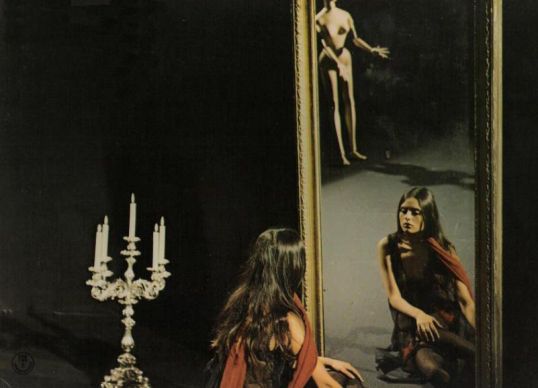
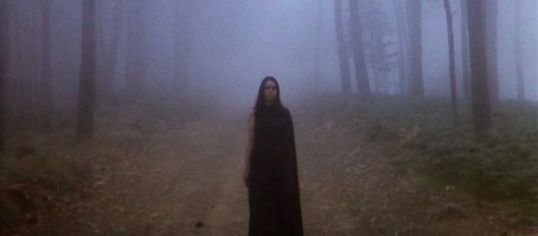
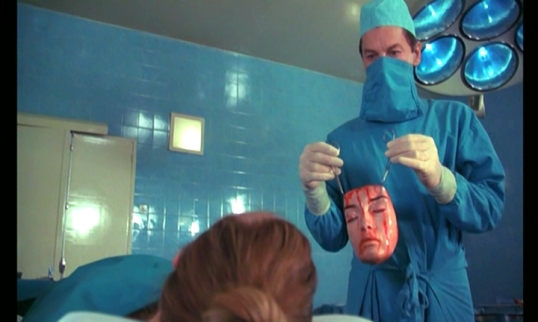
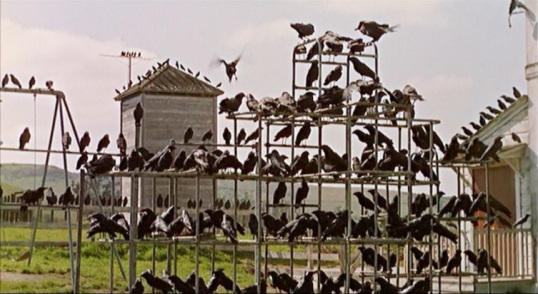
4 Shots From 4 Films: Special Radley Metzger Edition


4 (or more) Shots From 4 (or more) Films is just what it says it is, 4 (or more) shots from 4 (or more) of our favorite films. As opposed to the reviews and recaps that we usually post, 4 (or more) Shots From 4 (or more) Films lets the visuals do the talking.

92 years ago today, Radley Metzger was born in New York, New York.  After serving as a photographer in the U.S. Air Force, Metzger went into film distribution.  He brought European “art” films to the United States and booked them in various grindhouse theaters.  Like so many film distributors and producers, Metzger eventually realized that he could make a lot more many by making his own films.  In the late 60s and the early 70s, Metzger was one of the pioneers of what would eventually become known as “porno chic.” He directed adult films that were distinguished by their strong sense of composition, intelligent storylines, and their sense of characterization.  Remember in Boogie Nights, when Burt Reynolds said that he wanted to make real films that just happened to feature graphic sex?  Well, Radley Metzger actually did that.

Unfortunately, Metzger’s films were a bit too arty for the adult crowd and too explicit for the mainstream critics. Still, over the years, Metzger’s work has been rediscovered and appreciated by open-minded film lovers and by people like me who just happen to like artistically-minded decadence.

Today, we honor Radley Metzger with….

4 Shots From 4 Films

Carmen, Baby (1967, dir by Radley Metzger, DP: Hans Jura)

Camille 2000 (1969, dir by Radley Metzger, DP: Ennio Guarnieri)

The Lickerish Quartet (1970, dir by Radley Metzger. DP: Hans Jura)

Score (1974, dir by Radley Metzger, DP: Frano Vodopivec)


14 Shots From 13 Films: Special David Lynch Edition


4 (or more) Shots From 4 (or more) Films is just what it says it is, 4 (or more) shots from 4 (or more) of our favorite films. As opposed to the reviews and recaps that we usually post, 4 (or more) Shots From 4 (or more) Films lets the visuals do the talking.

Today, the Shattered Lens wishes a very special 75th birthday to the one and only David Lynch.  As should be evident by now, we’re big fans of David Lynch around here.  Not only is he a wonderfully unique filmmaker but he’s also literally the only person who can do what he does.  Trust me — I’ve seen hundreds of films that were made by people who obviously thought they were going to be the next David Lynch and none of them even come close.  David Lynch is a filmmaker who can make the most surreal images seem like the most natural thing in the world.

Speaking of images, it’s time for….

14 Shots From 13 David Lynch Films

Eraserhead (1977, dir by David Lynch, DP: Frederick Elmes, Herbert Cardwell)

The Elephant Man (1980, dir by David Lynch, DP: Freddie Francis)

Dune (1984, dir by David Lynch, DP: Freddie Francis)

Blue Velvet (1986, dir by David Lynch, DP: Frederick Elmes)

Twin Peaks 1.3 “Zen or the Skill To Catch a Killer” (1990, dir by David Lynch, DP: Frank Byers)

Wild At Heart (1990, dir by Frederick Elmes)

Twin Peaks 2.22 “Beyond Life and Death” (1991, dir by David Lynch, DP: Frank Byers)

Twin Peaks: Fire Walk With Me (1992, dir by David Lynch, DP: Ron Garcia)

Lost Highway (1997, dir by David Lynch, DP: Peter Deming)

The Straight Story (1999, dir by David Lynch, DP: Freddie Francis)

Mulholland Drive (2001, dir by David Lynch, DP: Peter Deming)

Inland Empire (2006, dir by David Lynch, DP: David Lynch)

Twin Peaks: The Return Part 15 (dir by David Lynch, DP: Peter Deming)

Twin Peaks: The Return Part 18 (2017, dir by David Lynch, DP: Peter Deming)

Happy birthday, David Lynch!

4 Shots From 4 Films: Special Edgar Allan Poe Edition


4 (or more) Shots From 4 (or more) Films is just what it says it is, 4 (or more) shots from 4 (or more) of our favorite films. As opposed to the reviews and recaps that we usually post, 4 (or more) Shots From 4 (or more) Films lets the visuals do the talking.

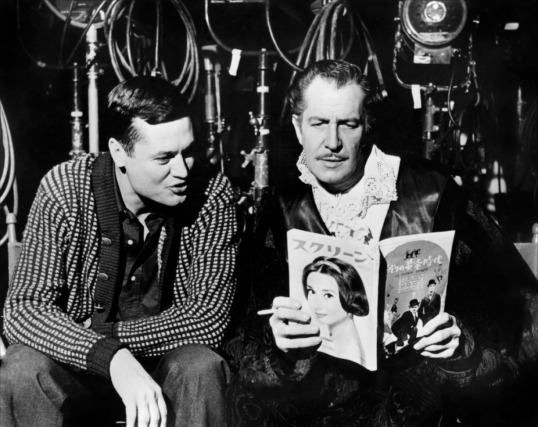
212 years ago today, Edgar Allan Poe was born in Boston, Massachusetts.  From his humble beginnings as the son of two struggling actors, Poe would go on to become one of the first great American writers.  (It’s been said that, when Charles Dickens first traveled to the United States in 1842, he specifically wanted to meet Edgar Allan Poe.  Unfortunately, it appears that popular story my not be true but it’s still a good story.)  Poe was controversial in life and even his death generated more questions than answers but no one can deny his strength as a poet and as a prose writer.  Both the detective and the horror genres owe a huge debt to Edgar Allan Poe.

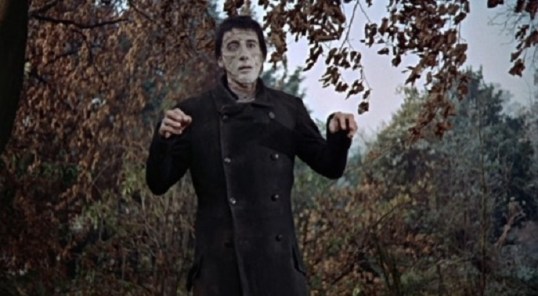
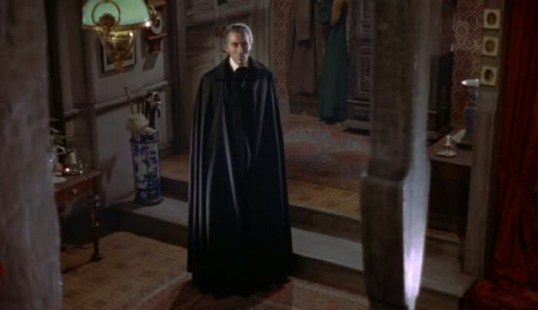
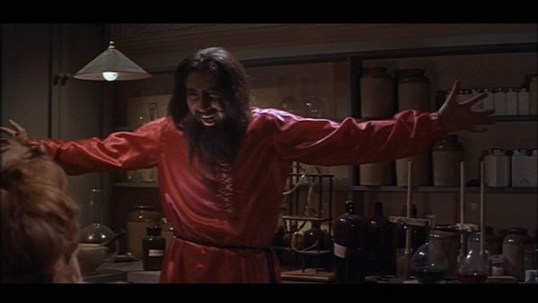
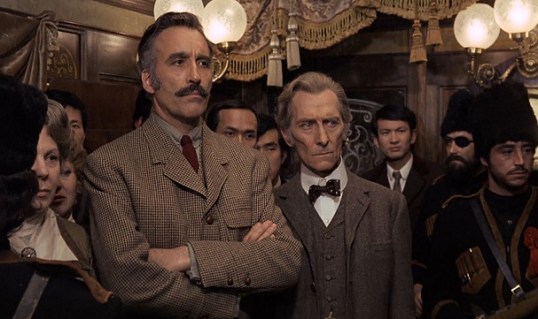
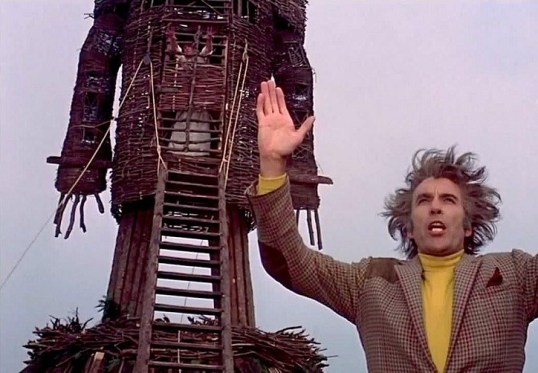
Today, in honor of Edgar Allan Poe’s legacy, TSL presents 4 shots from 4 films that were inspired by the work of Edgar Allan Poe!

4 Shots From 4 Films

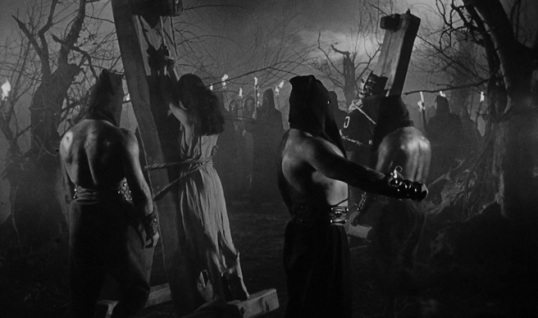
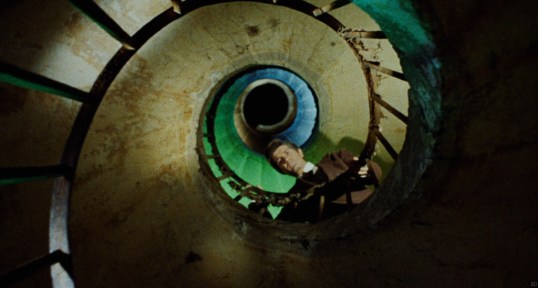
House of Usher (1960, dir by Roger Corman, DP: Floyd Crosby)

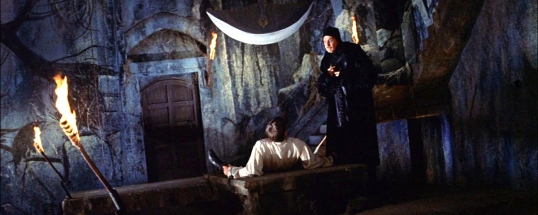
The Pit and the Pendulum (1961, dir by Roger Corman, DP: Floyd Crosby)

The Raven (1963, dir by Roger Corman, DP: Floyd Crosby)

The Masque of the Red Death (1964, dir by Roger Corman, DP: Nicolas Roeg)

8 Shots From 8 Films: Special John Boorman Edition


4 (or more) Shots From 4 (or more) Films is just what it says it is, 4 (or more) shots from 4 (or more) of our favorite films. As opposed to the reviews and recaps that we usually post, 4 (or more) Shots From 4 (or more) Films lets the visuals do the talking.

Today, the Shattered Lens wishes a happy 88th birthday to British director John Boorman.

Boorman is one of those great director who sometimes doesn’t seem to get as much credit as he deserves.  An undeniably idiosyncratic director, Boorman easily moved from genre to genre and who brought his own individual style to each of his films.  Sometimes, critics and audiences responded to that vision and sometimes, they didn’t.  And yet even Boorman’s so-called failures have come to be appreciated over the years.  Zardoz is a cult classic.  Even The Exorcist II: The Heretic is not quite the disaster that some insist.  If nothing else, it’s one of the strangest studio productions to ever be released.

At his best, Boorman is one of the most influential directors of all time.  How many neo-noirs have ripped off the look and the feel of Point Blank?  The ending of Deliverance has been imitated by a countless number of horror films and, indeed, every backwoods thriller owes a debt to Boorman’s film about four businessmen spending a weekend canoeing.  Excalibur is one of the most elegiac of all the Arthurian films while Hope and Glory retains its power to make audiences both laugh and cry with its portrayal of life on the British homefront during World War II.  Meanwhile, films like The General and The Emerald Forest gave underrated characters actors like Powers Boothe and Brendan Gleeson a chance to shine.

So today, in honor of the career and the legacy of John Boorman, here are….

8 Shots from 8 John Boorman Films

Point Blank (1967, dir by John Boorman, DP: Philip H. Lathrop)

Deliverance (1972,dir by John Boorman, DP: Vilmos Zsigmond)

Zardoz (1974, dir by John Boorman, DP: Geoffrey Unsworth)

The Exorcist II: The Heretic (1977, dir by John Boorman, DP: William A. Fraker)

Excalibur (1981, dir by John Boorman, DP: Alex Thomson)

The Emerald Forest (1985, dir by John Boorman. DP: Philippe Rousselot)

Hope and Glory (1987, dir by John Boorman, DP: Philippe Rousselot)

The General (1998, dir by John Boorman, DP: Seamus Deasy)


18 Shots From 18 John Carpenter Films


4 Shots From 4 Films is just what it says it is, 4 shots from 4 of our favorite films. As opposed to the reviews and recaps that we usually post, 4 Shots From 4 Films lets the visuals do the talking.

Today, Through the Shattered Lens wishes a happy 72nd birthday to one of the patron saints of the movies, John Carpenter!  Though often criminally underrated, John Carpenter is one of the most important filmmakers in modern film.

Every sci-fi spoof that you’ve seen owes a debt to Dark Star.  For that matter, so do quite a few serious sci-fi films, like Alien.

Every horror film owes a debt to Carpenter’s direction of Halloween.

How many apocalyptic, dystopian films have been influenced by Escape From New York?  While today it’s somewhat of a cliché for people to say that they have to escape from New York, John Carpenter imagined it long before Bill De Blasio made it into a reality.

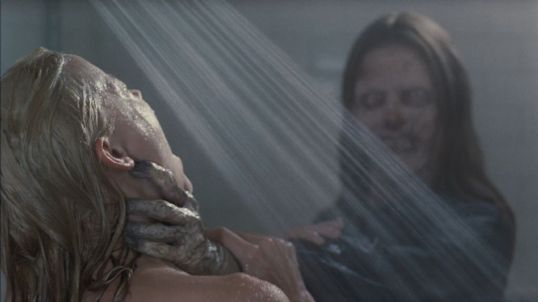
Prince of Darkness and In The Mouth of Madness are two of the only films to capture the feelings of existential dread and the ominous atmosphere of H.P. Lovecraft’s most effective stories.

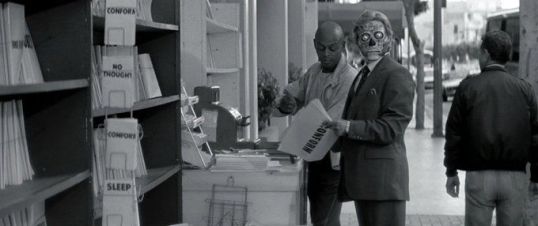
They Live may have been critically dismissed when it was released but today, many see it as being a work of prophecy.

“I wanted a vanilla twist.”  With Assault on Precinct 13, John Carpenter taught viewers that sometimes, it’s better to just take whatever ice cream you can get.

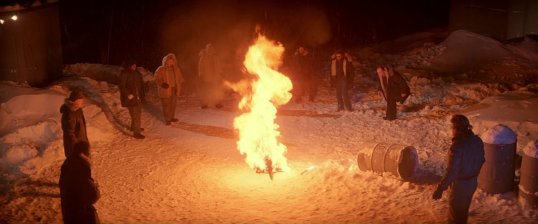
Meanwhile, films like The Thing, Big Trouble In Little China, The Fog, and others continue to find new fans every day.

Christopher Nolan may have Hans Zimmer but John Carpenter needs only himself to create a memorable musical score!

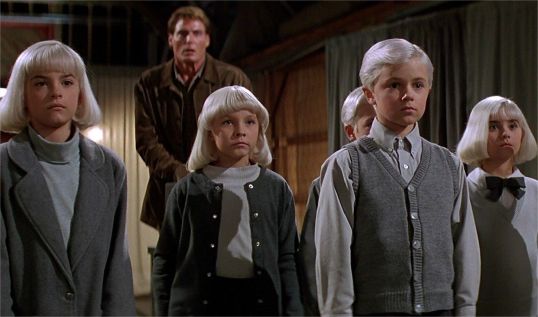
Even a film like Carpenter’s remake of Village of the Damned has a few undeniably effective moments!

Our point is that John Carpenter is one of the best around and, today, on his birthday, we’re going to honor him.  It’s not just 4 shots from 4 films for John Carpenter!  Instead, it’s time for….

18 Shots From 18 John Carpenter Films

Dark Star (1974, dir by John Carpenter, DP: Douglas Knapp)

Assault on Precinct 13 (1976, dir by John Carpenter. DP: Douglas Knapp)

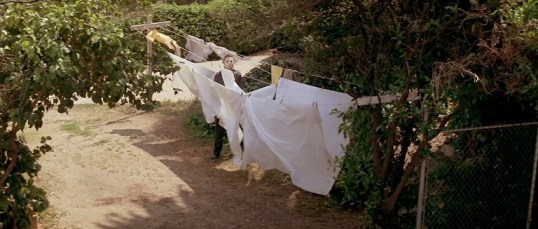
Halloween (1978, dir by John Carpenter, DP: Dean Cundey)

The Fog (1980, dir by John Carpenter, DP: Dean Cundey)

Escape From New York (1981, directed by John Carpenter, DP: Dean Cundey)

The Thing (1982, dir by John Carpenter, DP: Dean Cundey)

Christine (1983, dir. John Carpenter, DP: Donald M. Morgan)

Starman (1984, dir by John Carpenter. DP: Donald M. Morgan)
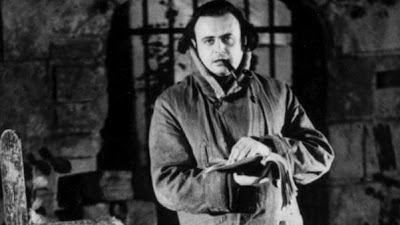
Big Trouble in Little China (1986, dir by John Carpenter, DP: Dean Cundey)
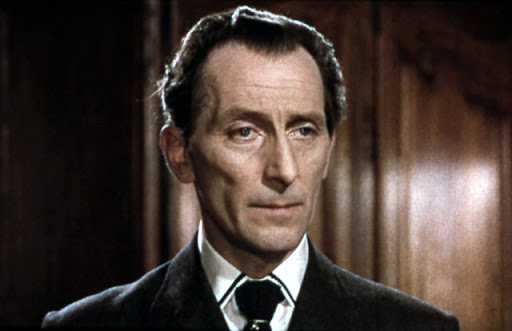
Prince of Darkness (1987, dir by John Carpenter, DP: Gary B. Kibbe)

They Live (1988, dir by John Carpenter, DP: Gary B. Kibbe)

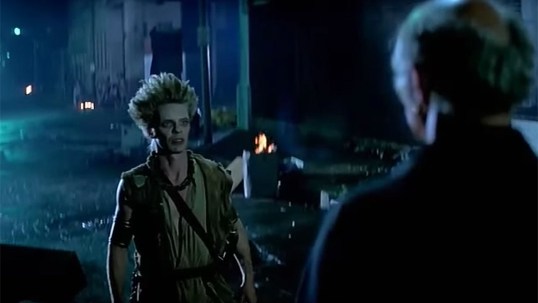
Memoirs of an Invisible Man (1992, dir by John Carpenter, DP: William A. Fraker)

In The Mouth of Madness (1994, dir by John Carpenter, DP: Gary B. Kibbe)

Village of the Damned (1995, dir by John Carpenter, DP: Gary B. Kibbe)

Escape From L.A. (1996, dir by John Carpenter, DP: Gary B. Kibbe)

Vampires (1998, dir by John Carpenter, DP: Gary B. Kibbe)

Ghosts of Mars (2001, dir by John Carpenter, DP: Gary B. Kibbe)

The Ward (2010, dir by John Carpetner, DP: Yaron Orbach)

4 Shots From 4 Films In Honor Of Sergio Leone’s Birthday


Sergio Leone (1929 — 1989)

4 Shots From 4 Films is just what it says it is, 4 shots from 4 of our favorite films. As opposed to the reviews and recaps that we usually post, 4 Shots From 4 Films lets the visuals do the talking.

91 years ago today, Sergio Leone was born in Rome.  He went to school with future composer and collaborator, Ennio Morricone.  He saw, first hand, the horrors of living under an authoritarian regime and, though it wasn’t always appreciated at the time, all of his film had an anti-fascist political subtext that was informed by growing up under Mussolini.  He went to college to be a lawyer but quickly dropped out and instead, at the age of 18, started a long apprenticeship in the Italian film industry.  He started his career by working as an assistant to Vittorio De Sica on Bicycle Thieves, which is a pretty good way to start things.  Eventually, he went on to become one of the most influential directors of all time.

Taking into mind just how influential his work would be, it’s can be easy to forget that Leone is only credited with having directed 7 films and the majority of those films were not immediately embraced.  (Though it’s generally agreed that Leone was, for all intents and purposes, the co-director of My Name Is Nobody, he was only officially credited with coming up with the film’s story.)  In the 60s, highbrow critics turned their noses up at his spaghetti westerns, even while audiences ate them up and made Clint Eastwood into a film star.  (Eastwood would later dedicate his Oscar-winning Unforgiven to Sergio Leone and Don Siegel.)  The Good, The Bad, and the Ugly and Once Upon A Time In The West are now recognized as two of the greatest westerns ever made but, at the time they were released, they were criticized for being too long and (oddly enough) thematically shallow.  Leone even had to suffer that indignity of having his final (and, in my opinion, best) film, Once Upon A Time In America, edited down by a studio that cared little about the intricate structure that Leone had crafted for his tale of greed, crime, and redemption in America.

Leone died when he was only 60, felled by a heart attack.  However, his legacy remains alive, as his films continue to inspire directors and writers and other film lovers to this day.  His two greatest films — Once Upon A Time In The West and Once Upon A Time In America — have been rediscovered and rescued from the studio hacs who previously served him so badly.  Just last year, Quentin Tarantino paid tribute to Leone with the title of his best film-to-date, Once Upon A Time In Hollywood.

On this day, we honor the legacy of a cinematic great.

4 Shots From 4 Sergio Leone Films

A Fistful of Dollar (1964, dir by Sergio Leone, DP: Massimo Dallamano)

The Good, The Bad, and the Ugly (1966, dir by Sergio Leone, DP; Tonino Delli Colli)

Once Upon A Time In The West (1968, dir by Sergio Leone, DP: Tonino Delli Colli)

Once Upon A Time In America (1984, dir by Serigo Leone, DP: Tonino Delli Colli)