Brad reviews DIGGSTOWN (1992), starring James Woods, Lou Gossett Jr. and Bruce Dern!


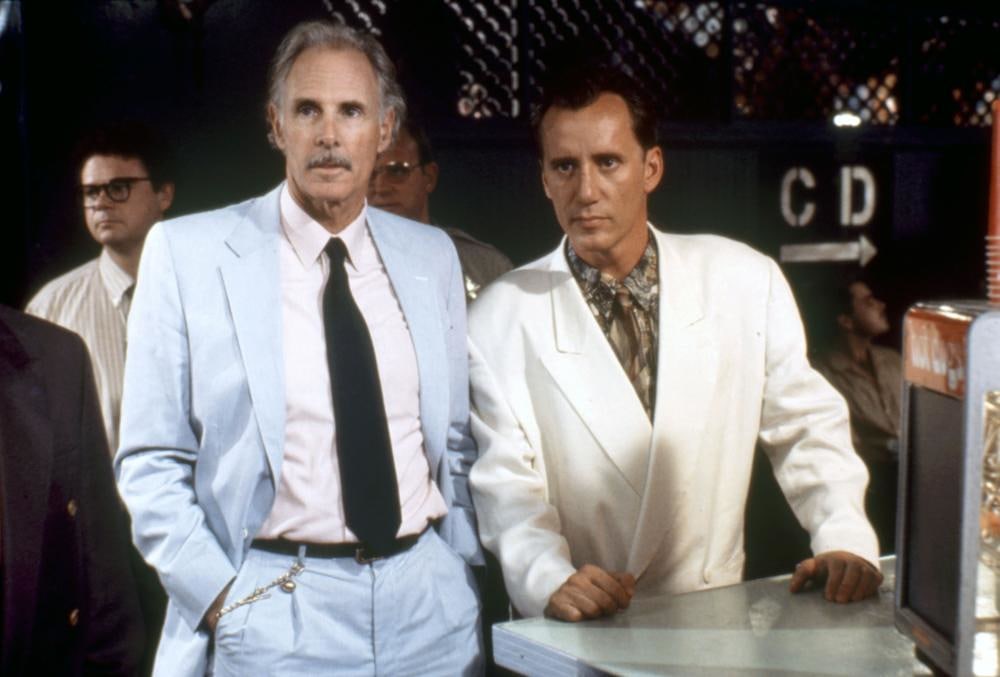
Gabriel Caine (James Woods) is a fast-talking con man fresh out of prison who’s already set up his next big scam. Along with his partner Fitz (Oliver Platt), Caine is targeting Diggstown, a small, boxing-obsessed community ruled over by the corrupt John Gillon (Bruce Dern). Gillon controls the town because he rigged a fight that left local boxing legend Charles Macum Diggs (Wilhelm von Homburg) completely brain-damaged. The scam involves getting Gillon to take a $100,000 bet that 48 year old “Honey” Roy Palmer (Louis Gossett Jr.) can defeat any ten Diggstown fighters in one 24-hour period. Once the fights start, you can bet that both sides will have lots of surprises up their sleeves, but the question is who will be standing when the final bell rings?!! 

Since today is Bruce Dern’s 89th birthday, I decided to watch DIGGSTOWN, one of my favorite movies featuring the birthday boy. A box office flop when it was released in 1992, making less than $5 million at the box office, the reputation for the film seems to have gotten stronger over the years. The film has an excellent cast! James Woods exudes cockiness and intelligence as conman, Gabriel Caine. He somehow pulls off the feat of being both sleazy and very likable, which is a testament to Woods’ skills as an actor. Louis Gossett Jr. is great as “Honey” Roy Palmer. I remember when I first saw the trailer for DIGGSTOWN, I thought he was too old for the role. After watching it though, he’s able to make the boxing scenes work, especially when you consider some of the help he’s given as part of the con. With the huge personalities of Woods and Bruce Dern surrounding him, Gossett’s more grounded performance anchors the film. Bruce Dern is perfectly cast as the villainous scuzzbucket, Gillon. He’s the type of guy you really want to see get his comeuppance at the end. Now that I think about it, Gillon is such an A-hole, Caine can’t help but seem likable in comparison! Finally, I did want to give a shout out to Oliver Platt, who’s extremely funny in his role as Caine’s partner in con. It’s one of the first movies I remember seeing Platt in, and he’s great!

For DIGGSTOWN to really work though, the boxing scenes need to work and the con needs to be smart. Director Michael Ritchie (THE BAD NEWS BEARS) does a good job setting up both. The boxing sequences are well choreographed by Benny “The Jet” Urquidez, and you can’t help but root for the old guy as his opponents keep on coming. Of the 10 fights, some are funny, some are quick, and some are very intense depending on the situation. Ritchie is able to keep the stakes high enough during the boxing scenes to make sure we remain invested in the story. It’s a nice balancing act as the con plays out in the background of each fight. And what a con it is! I won’t spoil it for you, but it’s a stroke of genius that resulted in a massive amount of satisfaction for this audience member! 

Overall, DIGGSTOWN is one of those movies I’m sure to watch every few years. With its great cast, punchy sense of humor, and genius triple-twist of an ending, I can’t imagine anyone leaving disappointed. I highly recommend it! 

The trailer is included below:
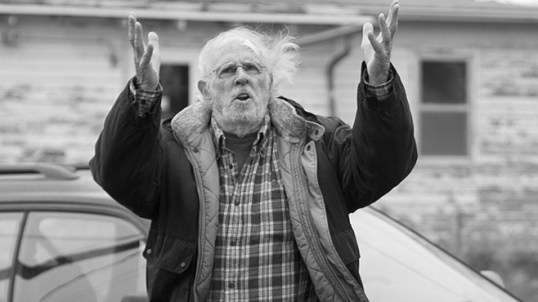
Lisa Marie Reviews An Oscar Nominee: Nebraska (dir by Alexander Payne)


As Brad mentioned earlier, today is Bruce Dern’s birthday!

Bruce Dern is a favorite actor of mine.  He’s one of those performers who, over the course of his very long career, has appeared in all sorts of different and occasionally odd films, sometimes as a lead but most often as a character actor.  He appeared in biker films, westerns, literary adaptations, and Oscar-winners.  He killed John Wayne in The Cowboys.  He introduced Peter Fonda to acid in The Trip (Dern, for his part, has said that he the only person on the set of that film who has never done acid.)  He captured the trauma of Vietnam in Coming Home.  He played one of the great hyperactive cops in The Driver.  He came close to playing Tom Hagen in The Godfather and was the original choice for the attorney who was eventually played by Jack Nicholson in Easy Rider.

In 2013’s Nebraska, he broke my heart.

In Nebraska, Dern plays Woody Grant, an elderly man who is convinced that he’s won a million-dollar sweepstakes.  Everyone around him, including his wife (June Squibb) and his oldest son (Bob Odenkirk), realizes that the sweepstakes is a scam and that Woody has actually won nothing.  But Woody is convinced that a million dollars is waiting for him.  All he has to do is somehow make it from Montana to Nebraska.  At first, Woody attempts to walk along the interstate.  When that doesn’t work and the police end up arresting him and sending him home, his youngest son, David (Will Forte), agrees to drive Woody down to Lincoln, Nebraska.  David knows that there’s not any money waiting for Woody but, unlike his mother and his older brother, David hasn’t given up on the idea of connecting with his father.

Nebraska is a road movie, with the majority of the film following David and Woody as the drive through rural and smalltown America.  They stop off in Woody’s former hometown, where they meet Woody’s brother (Rance Howard) and also Woody’s former business partner, a bully named Ed (Stacy Keach).  Ed is convinced that Woody stole money from him.  Woody blames Ed for the loss of his air compressor.  Their anger has simmered for years and, at first, it’s tempting to assume that it’s simply one of those grudge matches that old men seem to have a weakness for.  But Ed turns out to truly be a rotten human being and Woody …. well, Woody his own problems but at least he’s not as bad as Ed.

Before I say anything else, I want to praise the entire cast.  June Squibb, Bob Odernkirk, Stacy Keach, Rance Howard, Melinda Simonsen (who has a small role as a receptionist in Lincoln), they all bring their characters to memorable life.  Will Forte is the heart of the film, trying to keep his family together and standing up for his father when it matters.  If you only know Will Forte as MacGruber, you need to see Nebraska.  That said, this film is dominated by Bruce Dern’s poignant, sad, and often very funny performance as Woody Grant.  Woody is a flawed character and Dern wisely doesn’t try to sentimentalize or downplay any of those flaws.  He drinks too much, he neglected his family when he was younger, he holds a grudge, and he’s incredibly stubborn.  But, as played by Dern, you just can’t help but like Woody and hope that he finds some sort of happiness.  Even though the viewer, like everyone else in Woody’s life, knows that the sweepstakes is a scam, it’s still hard not to spend the film hoping that Woody will prove everyone wrong when he makes it to Nebraska.

Nebraska was nominated for Best Picture while both Bruce Dern and June Squibb picked up acting nominations.  That year, the Best Picture race was dominated by 12 Years A Slave.  Matthew McConaughey won Best Actor for Dallas Buyers Club while Lupita Nyong’o won Best Supporting Actress for 12 Years A Slave.  Alexander Payne lost Best Director to Gravity’s Alfonso Cuaron.  Gravity also won the Oscar for Best Cinematography, defeating Nebraska’s gorgeous black-and-white imagery.

Oscars or not, Nebraska is a wonderful, late career showcase for the great Bruce Dern.

Billy The Kid Trapped (1942, directed by Sam Newfield)


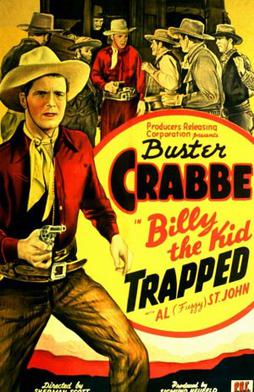
Billy “The Kid” Bonney (Buster Crabbe) and his two buddies Fuzzy (Al St. John) and Jeff (Bud McTaggart) are just trying to mind their own business and make a living in the old west but they keep getting accused of every crime that happens.  This time, they’re sentenced to hang for a crime they didn’t commit.  Luckily, a group of strangers break Billy and his friends out of jail and send them on their way to the next town.  However, the men who broke them out of jail are soon committing crimes while disguised as Billy, Fuzzy, and Jeff!  Billy teams up with Sherriff Masters (Ted Adams) to stop the imposters, who are working for Boss Jim Stanton (Glenn Strange).

One of the joys of Poverty Row westers like this one is that they always featured the same stock company.  Al St. John was everyone’s sidekick.  Ted Adams was often a sheriff.  Glenn Strange was always the criminal mastermind pulling the strings.  Milton Kibbee was always a corrupt judge or ranch owner.  George Cheseboro, Horace B. Carpenter, Jack Curtis, and Budd Buster are amongst the very familiar faces in Billy The Kid Trapped.  It gives each film a homey feel that will be appreciated by fans of the genre.  The hero of the films often changed but the stock company always remained the same.

I like the idea behind Billy The Kid Trapped but the film still feels repetitive, even though it’s less than an hour long.  After Billy captures the men who are imitating him and his friends, a crooked judge sets the men free and the immediately go back to imitating Billy.  Billy has to capture them all over again.  No wonder Billy aged so quickly!  (Buster Crabbe was in his mid-thirties when he was playing The Kid.)  The movie does have all the usual gunfights and horse chases that people watch these movies for.  It’s comforting that, no matter what, the villain is always going to turn out to be Glenn Strange.

Billy The Kid’s Smoking Guns (1942, directed by Sam Newfield)


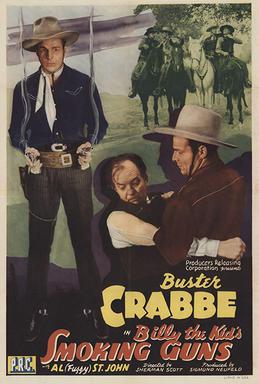
It’s a tale as old as time.  During the days when the west was wild, the U.S. Army is planning on setting up a new outpost near a town so the bad guys want to run all the ranchers off of their land so that they can be the ones to sell it.  Sheriff Carson (Ted Adams) is corrupt and working for the bad guys so the ranchers have to turn to Billy the Kid (Buster Crabbe) and his sidekicks, Jeff (Dave O’Brien) and Fuzzy (Al St. John) for help.  When Jeff is wounded in a fight, Fuzzy takes him to Doc Hagen (Milton Kibbee), little suspecting the doctor is actually the leader of the bad guys and using his medical practice to kill anyone who won’t give up their land!

Coming to us straight from Poverty Row, this B-western is interesting in that it seems to take a very cynical view of law enforcement.  Sheriff Carson is corrupt and Billy and his friends are running from the law themselves.  Buster Crabbe’s Billy the Kid films always kept it unclear why Billy was in trouble with the authorities.  Crabbe’s Billy the Kid always seemed to be the nicest guy in the west.  (Of course, Crabbe was also 33 and no longer seemed like he should have been known as “the Kid.”)  Eventually, the series was retconned and Buster Crabbe was no longer playing Billy the Kid but instead he was playing an upstanding citizen named Billy Carson.

Crabbe may not be a convincing outlaw but he is a convincing hero, which is all these films really required.  Billy the Kid’s Smoking Guns is a little bit interesting because of the character of Doc Hagen, whose occupation makes him a little more memorable than typical B-western bad guy.  The film is also interesting in that, for once, there’s no love interest.  Instead, it’s just men in hats shooting at each other.  That probably made the film’s youthful target audience happy.

The real-life Billy The Kid was killed when he was only 21 and after he had been an outlaw for only three years.  Buster Crabbe would g0 on to play Billy (or o some variation of Billy) until he was closing in on 40.


The Killer Inside Me (1976, directed by Burt Kennedy)


Today is Stacy Keach’s 84th birthday.

Stacy Keach has always been an underappreciated actor.  Despite his obvious talent and his ability to play both heroes and villains, he’s never really gotten the film roles that he’s deserved and he’s mostly made his mark on stage and on television.  There have been a few good films that made use of Keach’s talents.  I’ve always appreciated his performance as Frank James in Walter Hill’s The Long Riders.  He was a morally ambiguous Doc Holliday in Doc.  He played a boxer in John Huston’s Fat City.  Horror fans will always remember him for Road Games. The Ninth Configuration featured a rare starring role for Keach but it was treated poorly by its studio.  He was chilling as a white supremacist in American History X.  For the most part, though, Keach’s film career has been made up of stuff like Class of 1999.  For all of his talent, he seems destined to be remembered mostly for playing Mike Hammer in a television series and a few made-for-TV movies.  It’s too bad because Keach had the talent to bring certain character to life in a way that few other actors can.

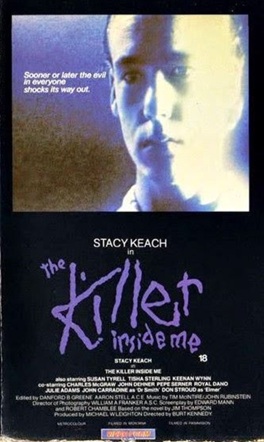
The Killer Inside Me features one of Keach’s best performances.  Based on a pulp novel by Jim Thompson, The Killer Inside Me stars Stacy Keach as Lou Ford.  Lou is a small town deputy.  Everyone thinks that he’s a good, decent man.  He’s dating the local school teacher (Tisha Sterling).  The sheriff (John Dehner) trusts him.  Lou seems to be an expert at settling conflicts between neighbors.  What everyone doesn’t know is that Lou is actually a psycho killer who is having a sado-masochistic affair with a local prostitute (Susan Tyrrell) and who has zero qualms about punching the life out of someone.  When Lou finds out that Tyrrell is also involved with the son of a local businessman, it sets Lou on a crime and killing spree.  Lou thinks he’s a genius but his main strength is that no one can imagine Lou Ford doing the terrible things that he does.

Burt Kennedy was an outstanding director of westerns and straight-forward action movies but he appears to have struggled with The Killer Inside Me’s morally ambiguous tone.  The end result is not a great film but it does feature a great performance from Stacy Keach.  In both his performance and his narration, Keach captures both the arrogance and the detachment from normal society that defines Lou Ford’s character.  He also shows how Ford coolly manipulates the people around him.  Keach is believable and compelling whether he’s playing the fool or if he’s committing cold-blooded murder and he also subtly shows that Lou is not as smart as he thinks he is.  Though Keach dominates the film, The Killer Inside Me also features good performances from a gallery of 70s character actors, including John Carradine, Keenan Wynn, Don Stroud, Charles McGraw, and Royal Dano.

This version of The Killer Inside Me didn’t do much at the box office.  The movie was remade in 2010, with Casey Affleck miscast as Lou Ford.  That version didn’t do much at the box office either.  The secret to recreating the book’s mix of social satire and pulp action has proven elusive to filmmakers but at least we’ve got Stacy Keach’s performance as Lou Ford to appreciate.

Invictus (2009, directed by Clint Eastwood)


Just when I thought I was through with Clint Eastwood, they pull me back in!

Actually, Clint Eastwood may have directed Invictus but that’s not why I’m writing about it today.  I’m writing about it because today is Morgan Freeman’s 88th birthday.  Everyone knows Morgan Freeman, of course,  He’s the man with the amazing voice.  If you ever want to hear someone narrate your life, you want that narrator to Morgan Freeman.  Freeman is also one of our greatest actors and, for my money, Invictus is his best and more important performance.

Morgan Freeman plays the role of Nelson Mandela in Invictus.  Taking place in 1994 and 1995, Invictus centers around the early days of the former political prisoner’s presidency of South Africa and how he used the 1995 Rugy World Cup to bring the tension-filled country together.  While Afrikaner Francois Pinneaur (Matt Damon) unexpectedly leads South Africa to the finals of the World Cup, Mandela tries to guide South Africa into the post-Apartheid era.

Playing a role like Nelson Mandela would have to intimidate even the most confident of actors but Freeman gives a warm, humorous, and believable performance of a man who became a living icon.  Freeman captures both Mandela’s humanity and his canny political instincts and he never allow the performance to become a caricature.  Freeman projects the wisdom that comes from a lifetime of refusing to be broken or defeated, despite the best efforts of both the Apartheid regime and the activists who think that, as president, Mandela is too much of a moderate and too quick to forgive.  Freeman (and Matt Damon) give performances that help the film get over a few spots where it falls into the typical clichés  of the sports genre.  Invictus is a good tribute to both Mandela and the way competition can bring people together.

One final note: Invictus was filmed on location in South Africa.  When Matt Damon’s character is shown the cell were Mandela spent 27 years of his life, Eastwood shows us the actual cell and it’s a reminder of the strength of Mandela that he not only survived but that he went on to lead his country.

Richard Jewell (2019, directed by Clint Eastwood)


In 1996, a security guard named Richard Jewell should have been proclaimed a hero.  He spotted an abandoned backpack in Centennial Park during the Atlanta Summer Olympics.  Thinking that it could be a bomb, Jewell, insisting the proper security protocols be followed even though there was a concert going on, moved as many people as he could away from the backpack before it exploded.  Two people died as a result of the explosion and 111 were injured.  The number would have been much more catastrophic if not for Jewell’s actions.

Jewell saved lives but he soon found himself the number one suspect.  Overweight, a little bit nerdy, Southern accented and possessing a spotty work history, Richard Jewell did not fit the popular conception of a hero.  After the FBI leaked that Jewell was their number one suspect, the press literally reported as if Jewell’s arrest was imminent.  I’m old enough to remember the way that, for a month, the nightly news seemed like the counting the days until Jewell was charged.  Jewell, however, was never arrested and eventually, he sued several media outlets for libel.  After anti-abortion fanatic Eric Rudolph emerged as the number one suspect in the bombing, the three FBI agents who attempted to railroad Jewell were disciplined.  One was suspended for five days without pay, which seems a light punishment for ruining a man’s life.

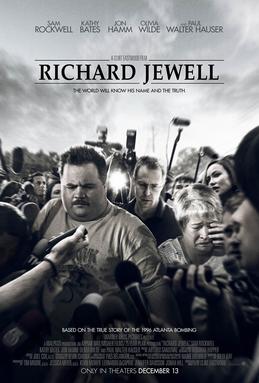
Clint Eastwood’s Richard Jewell was about the persecution of the title character, with Paul Walter Hauser playing Jewell, Kathy Bates playing his mother, Jon Hamm playing the arrogant FBI agent, Olivia Wilde playing the unethical journalist who first reported that Jewell was a suspect, and Sam Rockwell playing Jewell’s attorney.  When Richard Jewell was released in 2019, there was a lot of debate about the way it presented both the media and the FBI.  This was during the first Trump presidency and many critics felt that it was not the right time for a film about an irresponsible reporter and a corrupt FBI agent.  But Eastwood’s film isn’t about the reporter or the FBI.  Instead, like many of his films, it’s about a loner who does the right thing, refuses to compromise, and suffers for it.  If the FBI and the media didn’t want to be presented as being villains in a movie about Richard Jewell, they should have thought twice before announcing to the the world that they thought he was a murderer.

Because of the controversy, Richard Jewell is one of Eastwood’s unfairly overlooked films.  Along with directing in his usual straightforward manner, Eastwood gets a great performance out of Paul Walter Hauser and reminds us that not every hero looks like the Man With No Name.  Even more importantly, Eastwood pays tribute to a man who deserved better than he was given by the world.  Richard Jewell died 12 years before the film that was named after him was released.  A lot of people wanted to sweep what happened to Richard Jewell under the rug.  Eastwood, in one of the best of his later films, refused to let that happen.

Paul Walter Hauser and Clint Eastwood

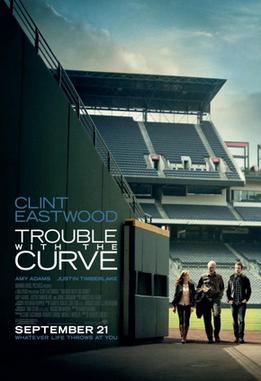
I Watched Trouble With The Curve (2012, Dir. by Robert Lorenz)


I love baseball  and all of its traditions.

I love the idea that a pitcher has a mental connection with his catcher.  I love the stories of the minor leaguers who get their chance in the majors and who stun the world by coming out of nowhere to hit a home run on their first at bat.  I love all the stories about which batters corked their bats and which pitchers could still manage to get away with throwing a spitball.  I love baseball because watching it is a relaxing way to spend an afternoon but at the same time, the game is unpredictable.  Just one hit can change the momentum of an entire game and, until that final out, the game could be won by anyone.  I especially have a place in my heart for the legendary baseball scouts, the grouchy old men who would drive out to the middle of nowhere to watch a game and search for the next great homerun hitter.

That’s one reason why I hated Moneyball.  I thought Brad Pitt, Philip Seymour Hoffman, Chris Pratt, and Jonah Hill all did a good job and I loved Brent Jennings’s performance as Ron Washington but I hated the idea that the scouts and their instincts weren’t necessary because everything could just be determined by sabermetrics.  The idea that an algorithm could tell you everything you needed to know about how to put a team together felt like a crime against everything that makes baseball special and it deeply offended me as a fan.  Moneyball may feature a baseball team but it’s a movie about business, not the game.

That’s why I’m thankful for Trouble With The Curve.

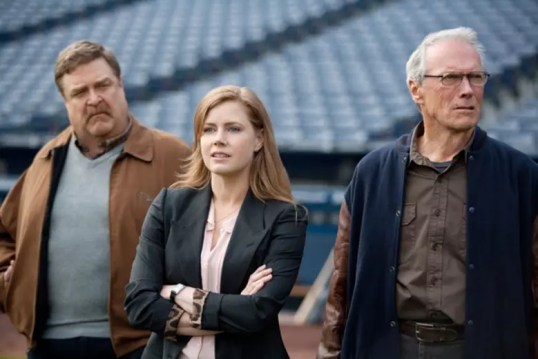
Clint Eastwood stars as Gus Lobel, one of those plain-spoken, no-BS scouts that I love so much.  All of the team owners might be into sabermetrics but Gus knows that the best way to scout a player is to actually hit the road and see him play.  For Gus, scouting is all about instincts and his own gut feeling.  Gus is everything that I love about baseball.  He’s knows the game, he knows the players, and he doesn’t need an algorithm to tell him whether or not someone should be on the field.

The movie is about Gus scouting a player who has trouble hitting the curve.  That’s something that Gus notices but the algorithm overlooks.  Accompanying Gus is his daughter, Mickey (Amy Adams), who is proud to have grown up surrounded by plain-spoken, unpretentious baseball scouts like her father and who doesn’t understand why Gus never took her on the road when she was younger.  Mickey falls for a younger scout named Johnny (Justin Timberlake), their love based on their shared knowledge of baseball.  I liked Mickey and Johnny as a couple and I appreciated the scenes where Mickey and Gus worked on their strained relationship but the best thing about this movie is that  Gus gets to prove that he knows more about baseball than all the young whipper-snappers who think they understand the game.

Trouble With The Curve is a tribute to everything that baseball is truly about.  It’s a movie that loves the game as much as I do.  Clint Eastwood and Amy Adams are a perfect father/daughter duo.  Who needs an algorithm when you’ve got Clint and Amy?

I Watched The Bridges of Madison County (1995, Dir. by Clint Eastwood)


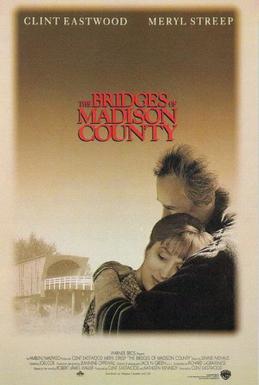
The Bridges of Madison County starts with a mystery.  A sister and her brother try to find out why their mother requested that she be cremated and her ashes scattered from a bridge rather than be buried next to her late husband.  Going through their mother’s things, they learn about four-day affair that she had with a photographer who was just passing through town and taking pictures of covered bridges.

Meryl Streep plays their mother, an Italian war bride named Francesca.  Clint Eastwood plays the photographer, Robert Kincaid.  The movie shows how Francesca, trapped in a loveless marriage, rediscovered her passion for life and love during her four-day affair with Robert.  Robert rediscovered his love for photography.  (I like to take pictures so I was happy for him.)  With her family due home after a trip to the Iowa State Fair, Francesca had to decide whether to abandon them to pursue her affair with Robert.  Since this is the first that her children have ever heard about the affair, it’s easy to guess what she decided to do.

My aunt loved this film and I like it too.  It’s the most tasteful film about a woman being tempted to abandon her family that I’ve ever seen.  It’s a film about adultery that the entire family can enjoy!  The film looks beautiful and Meryl and Clint … wow!  Let’s just say that they seemed to be really into each other.  The two leads give such heartfelt performances that every moment felt authentic and by the end of the movie, I very much wanted to see Francesca’s ashes dumped over the side of that bridge.  Whenever anyone says that Clint Eastwood could only play cops and cowboys, tell them to watch Bridges of Madison County.

Film Review: City Heat (dir by Richard Benjamin)


In 1984’s City Heat, Clint Eastwood plays Lt. Speer, a tough and taciturn policeman who carries a big gun, throws a mean punch, and only speaks when he absolutely has to.

Burt Reynolds plays Mike Murphy, a private investigator who has a mustache, a wealthy girlfriend (Madeleine Kahn), and a habit of turning everything into a joke.

Together, they solve crimes!

I’m not being sarcastic here.  The two of them actually do team up to solve a crime, despite having a not quite friendly relationship.  (Speer has never forgiven Murphy for quitting the force and Murphy has never forgiven Speer for being better at everything than Murphy is.)  That said, I would be hard-pressed to give you the exact details of the crime.  City Heat has a plot that can be difficult to follow, not because it’s complicated but because the film itself is so poorly paced and edited that the viewer’s mind tends to wander.  The main impression that I came away with is that Speer and Murphy like to beat people up.  In theory, there’s nothing wrong with that.  Eastwood is legendary tough guy.  Most people who watch an Eastwood film do so because they’re looking forward to him putting the bad guys in their place, whether it’s with a gun, his fists, or a devastating one-liner.  Reynolds also played a lot of tough characters, though they tended to be more verbose than Eastwood’s.

That said, the violence in City Heat really does get repetitive.  There’s only so many times you can watch Clint punching Burt while various extras get gunned down in the background before it starts to feel a little bit boring.  The fact that the film tries to sell itself as a comedy while gleefully mowing down the majority of the supporting cast doesn’t help.  Eastwood snarls like a pro and Reynolds flashes his devil-may-care smile but, meanwhile, Richard Roundtree is getting tossed out a window, Irene Cara is getting hit by a car, and both Kahn and Jane Alexander are being taken hostage.  Tonally, the film is all over the place.  Director Richard Benjamin was a last-minute replacement for Blake Edwards and he directs without any sort of clear vision of just what exactly this film is supposed to be.

On the plus side, City Heat takes place in Kansas City in 1933 and the production design and the majority of the costumes are gorgeous.  (Unfortunately, the film itself is often so underlit that you may have to strain your eyes to really appreciate it.)  And the film also features two fine character actors, Rip Torn and Tony Lo Bianco, are the main villains.  For that matter, Robert Davi shows up as a low-level gangster and he brings an actual sense of menace to his character.  There are some good things about City Heat but overall, the film is just too messy and the script is a bit too glib for its own good.

Burt Reynolds and Clint Eastwood had apparently been friends since the early days of their careers.  This was the only film that they made together.  Interestingly enough, Reynolds gets the majority of the screentime.  Eastwood may be top-billed but his role really is a supporting one.  Unfortunately, Reynolds seems to be kind of bored with the whole thing.  As for Clint, he snarls with the best of them but the film really doesn’t give him much to do.

A disappointing film, City Heat.  Watching a film like this, it’s easy to see why Eastwood ended up directing himself in the majority of his films.