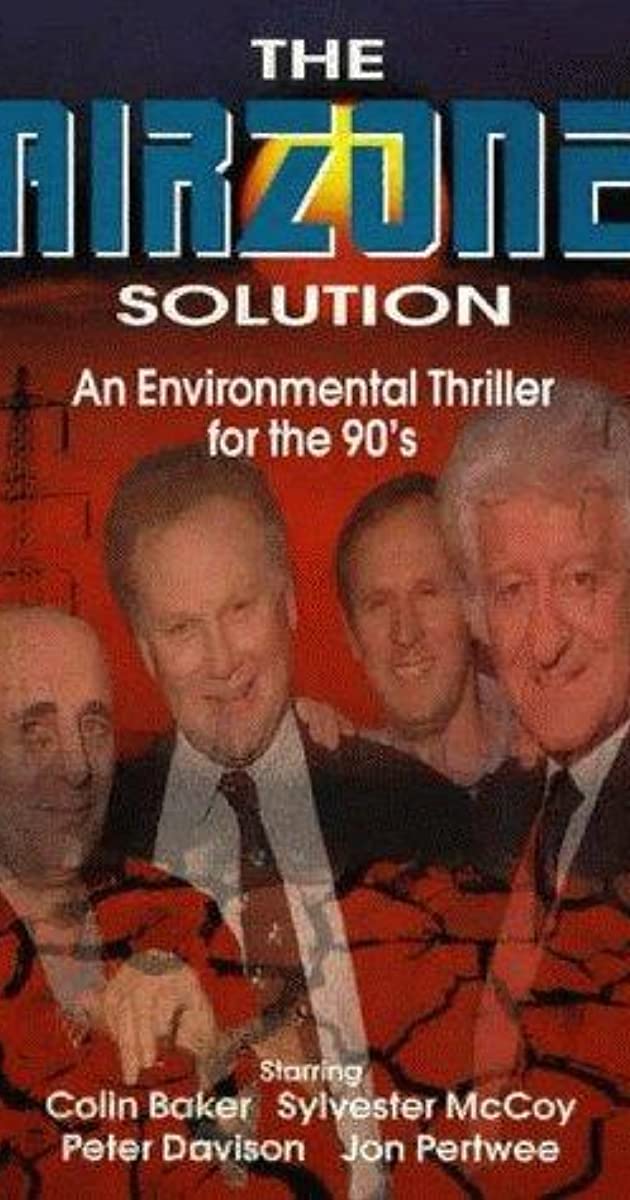
The Airzone Solution? (1993, directed by Bill Baggs)


In the near future, the UK has become so polluted that people have to wear masks when they go outside.  (Save your COVID-19 jokes, the villain here is pollution not a pandemic.)  A mysterious corporation called Airzone claims that they have a solution but some are skeptical.  Journalist Al Dunbar (Peter Davison) and environmentalist Anthony Stanwick (Sylvester McCoy) are determined to investigate on their own and discover what’s actually going on at Airzone.  Unfortunately, Al discovers a bit too much and is murdered by the corporation.

However, Al is not prepared to let something like death get in the way of exposing Airzone.  His ghost appears to both his mentor, Prof. Oliver Threthaway (Jon Pertwee), and to local weatherman Arnie Davis (Colin Baker).  Freaked out by Al’s ghost, Arnie and his girlfriend, Ellie Brown (Nicola Bryant), launch their own investigation into the corporation and they discover that Airzone’s solution comes at a terrible cost.

This low-budget, straight-to-video production is best-known for featuring four actors who starred as the Doctor during the original run of Doctor Who.  In fact, when this film was first made, it featured every living Doctor with the exception of Tom Baker.  (Jon Pertwee would die just three years after the film’s release.)  Nicola Bryant, who played Colin Baker’s companion on Doctor Who, plays his girlfriend here while Michael Wisher, who played Davros, shows up as a duplicitous politician.  Even Alan Cumming, who was frequently mentioned as a possible Doctor should the series ever be renewed, has a small role.  If you’re a fan of Doctor Who, you almost have to watch this movie for the cast along.

But is the movie itself any good?  The special effects are cheap, the story is full of plot holes, and there’s a lot of dodgy acting from the supporting cast.  The movie never explains why Al Dunbar’s spirit appears to Arnie Davis instead of someone who could actually do something to stop Airzone.  Jon Pertwee’s role was reportedly added at the last moment and his appearances feel random.  In fact, the film is flawed in much the same way that Doctor Who was often flawed.  And like Doctor Who, it’s often fun despite those flaws.  It’s fast-paced and, despite its weighty environmental theme, it doesn’t take itself too seriously.

All of the former Doctors acquit themselves well in their roles.  Peter Davison and Sylvester McCoy, who were probably the best actors among the original Doctors, are the cast stand-outs but Colin Baker is far more sympathetic and likable here than he ever was on Doctor Who.  I’ve always felt that Colin Baker had the potential to be a good Doctor but he was sabotaged by some of the worst scripts and production decisions in the history of the series and The Airzone Solution? shows what Baker could have done with the role if he’d been given the opportunity.  Jon Pertwee was obviously not in good health when he appeared in The Airzone Solution? but he still hams it up with an entertaining gusto.

The Airzone Solution? will be best appreciated by fans of the original Doctor Who.  It’s not great but it’s worth it just to see everyone gathered together.
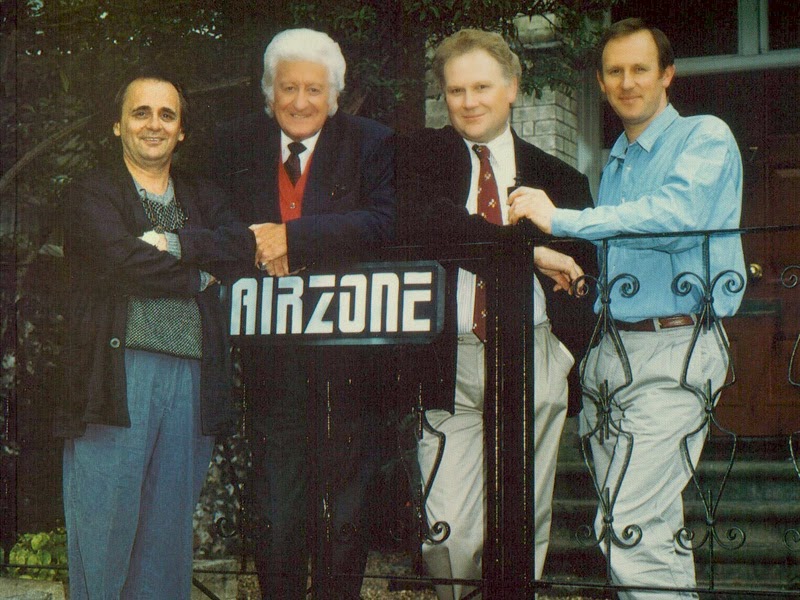
Cotter (1973, directed by Paul D. Stanley)


Cotter (Don Murray) is an alcoholic Native American who works as a rodeo clown.  One day, when he’s too drunk to do his job, a bull rider is killed as a result.  All of the other bull riders track Cotter down in his trailer and tell him that his days of being a clown are over.  They tell him that if they ever see him anywhere near another rodeo, they’ll kill him.  It’s a dramatic scene that would probably be more powerful if Cotter wasn’t wearing a clown make-up while rolling around on the floor in a drunken stupor.

With nowhere else to go, Cotter returns to his hometown and tries to surprise his old friend Roy (Rip Torn) by jumping through Roy’s front door while wearing his clown make-up.  However, when Cotter jumps into the living room, the only person he meets is Roy’s half-naked wife, Leah (Carol Lynley) and she promptly fire two barrels worth of buckshot at him.  Showing the reflexes that would have saved that bull rider’s life if only Cotter had been sober, he manages to duck out of the way.

When Roy comes home, he’s at first excited to see his old friend.  He even invites Cotter to stay with them.  Leah slowly warms up to Cotter.  However, the other townsfolk are suspicious of Cotter because of his heritage and his reputation for being a hard drinker.  When a local rancher turns up dead, almost everyone immediately assumes that Cotter must be responsible.  Not even Roy is willing to stand up for his friend.

Made for a low-budget, Cotter is a well-intentioned film that doesn’t work.  A large part of the problem is that, while Don Murray and Rip Torn were both good actors, they both overact in Cotter.  For some reason, both of them yell the majority of their lines.  Torn was a good bellower but Don Murray, who was usually a far more low-key actor, seems uncomfortable in his role.  While it is true that Don Murray first found stardom playing a headstrong cowboy in Bus Stop, it’s also that, from the 60s onward, Murray was always best cast as men of authority and it’s hard to buy him as an irresponsible character like Cotter.  Maybe the film would have worked better if Torn and Murray had switched roles.  Carol Lynley seems more comfortable with her role than either one of the two male leads, though she doesn’t get to do much beyond suffer at the hands of Roy and eventually fall in love with Cotter.  Also giving a good performance is Sherry Jackson, cast as a sympathetic barmaid, though she’s also not given much to do beyond reacting to Cotter and Roy.

Cotter doesn’t have a bad message and it at least acknowledges that Cotter’s alcoholism is largely his way of dealing with the prejudice that he’s suffered his entire life, though Cotter’s monologue on the subject would have probably been more effective if it had been delivered by an actual Native American actor instead of the very white Don Murray.  Unfortunately, good intentions aside, Cotter just never really comes together as a movie.

The Hanged Man (1974, directed by Michael Caffey)


In this made-for-TV western, Steve Forrest stars as James Devlin.  A hired killer and a notorious outlaw, Devlin has finally been captured and is sent to the gallows.  At first, it seems as if the hanging’s been a success and Devlin’s life has been extinguished at the end of the rope.  But then, while his body is at the funeral home and is being prepared for burial, Devlin suddenly opens his eyes and reveals that he’s alive.

No one can figure out how Devlin manage to survive being hung, especially not Devlin.  However, Devlin is now alive and free to leave town.  Has Devlin been sent back to Earth to serve God or did he just get lucky?  Devlin may not be sure himself but he is determined to turn around his old ways.  That starts with protecting a widow (Sharon Acker) and her son (Bobby Eilbacher) from Lew Halleck (Cameron Mitchell), a greedy businessman who wants their land and is prepared to go to any lengths to get it.  Devlin is not only still as good with a gun as he was before his execution but, having survived his hanging, he can now read minds!

The Hanged Man was designed to be a pilot for a weekly TV series and watching it, it’s easy to imagine how the show would have developed.  Devlin would have traveled around the old west, helping out a new guest star every episode and presumably trying to discover why he had been returned to life.  It’s not a bad idea for a show, though the pilot film doesn’t do enough with it.  Despite the fact that Devlin might be undead and that he now has the power to read minds, it really is just a conventional western, featuring the saintly widow and the evil land baron and all of the other familiar tropes of the genre.  It may begin with Devlin coming back to life but it ends with a shoot-out that could have been lifted from any number of old TV shows.

Still, as far as made-for-TV westerns are concerned, this one is entertaining enough.  Steve Forrest is a good hero and, as always, Cameron Mitchell is a good villain.  I wish they had done more with the supernatural aspects of the story but The Hanged Man is good enough for undemanding fans of the genre.

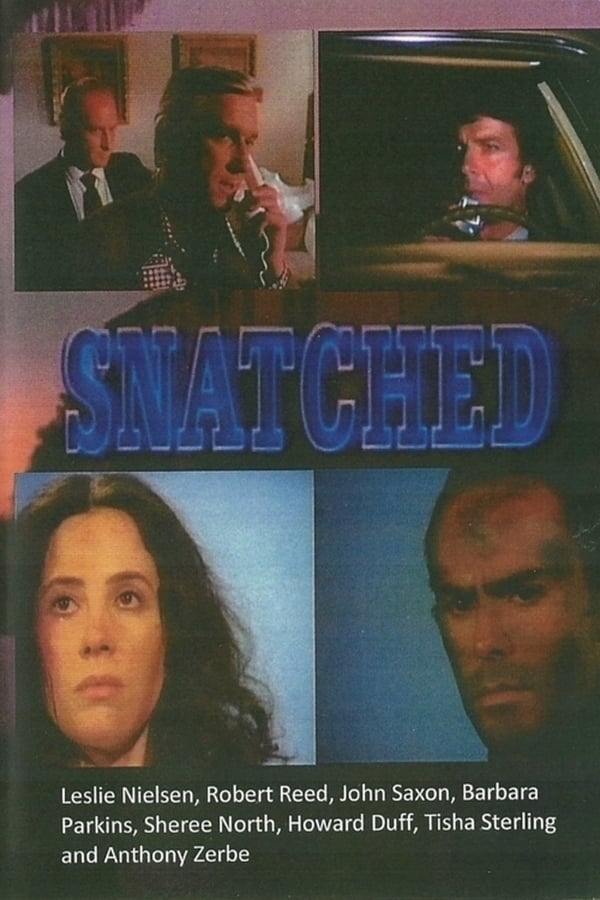
Snatched (1973, directed by Sutton Roley)


Three women have been kidnapped and are being held prisoner in a lighthouse.  Robin Wood (Tisha Sterling), Kim Sutter (Sheree North), and Barbara Maxvill (Barbara Parkins) are married to three wealthy men and the kidnappers (one of whom is played by the great Anthony Zerbe) assume that the husband will be willing to pay whatever is necessary to get back their wives.  Paul Maxvill (John Saxon) and Bill Sutter (Leslie Nielsen!) are willing to put up the money but Duncan Wood (Howard Duff) scoffs at the idea of paying a million dollars just to see his adulterous wife again!

It sounds like the set-up for a Ransom of Red Chief-type of comedy but Snatched is actually a very serious and intelligent thriller, one that will definitely keep you on your toes as you try to keep up with who is working for who.  Kim is diabetic and is growing weaker every minute that she’s being held in the lighthouse.  Paul, Bill, and police detective Frank McCloy (Robert Reed) try to get Duncan to pay his share of the ransom but Duncan is convinced that his wife has been cheating on him and he refuses to pay for her.  On top of that, it turns out that one of the wives might be in on the scheme.  When she tells the kidnappers that she’s actually the one who came up with the plan, is she just trying to protect the other wives or is she telling the truth?  It leads to betrayal and a surprisingly downbeat ending.

Snatched is a well-produced made-for-TV movie.  The mystery will keep you guessing and the cast is made up of a collection of old pros.  Leslie Nielsen, cast here long before he reinvented himself as a comedic actor, is especially good as Bill Sutter and John Saxon gives one of his better performances as Paul.  Even Robert Reed gives a good performance.  Snatched is a classic made-for-TV mystery.

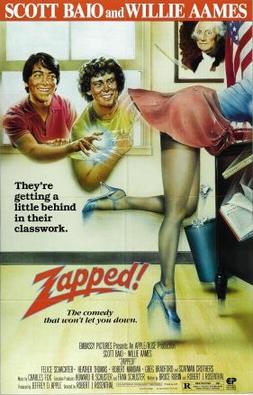
Zapped! (1982, directed by Robert J. Rosenthal)


In this painfully dumb high school comedy, Scott Baio is Barney, a teen scientist who experiments on lab mice and grows specially modified orchids for his high school’s principal, Walter Coolidge (Robert Mandan, who played a lot of high school principals back in the day).  When there’s an accident in the lab, Barney develops telekinetic powers.  Barney then falls in love with the class president, Bernadette (Felice Schachter), while his best friend Peyton (Willie Aames) pursues the beautiful but vain Jane (Heather Thomas).  Barney uses his powers to make a ventriloquist act as if it’s possessed and to help Peyton rig a casino-themed frat party.  Meanwhile, Scatman Crothers plays the school’s baseball coach and has a long scene where he gets high and imagines that he’s riding a bicycle with Albert Einstein.  That’s actually kind of cool.

Zapped! is a movie where Scott Baio magically gains the power to move things with his mind and yet the most implausible part of the movie is the idea of Willie Aames being the most popular student at the high school.  Heather Thomas is believable as a cheerleader and Felice Schachter is perfectly cast as the brainy class president.  Even Scott Baio is not terrible as Barney.  But then Willie Aames shows up and we find out that he’s supposed to be a chick magnet and it becomes impossible for those watching to continue to suspend their disbelief.

Not much really happens in Zapped!  Even after he gets his powers, Barney is frustratingly passive character who just does whatever Peyton tells him to do.  Barney uses his powers to help Peyton show up Jane’s college boyfriend and he uses his powers to help Peyton win games at the school carnival and then Barney uses his powers to help out Peyton when Jane’s boyfriend tries to beat him up.  Maybe Barney needs to get new friends.  The only time Barney uses his powers for himself is when he’s playing baseball and he makes the ball stop in mid-air so that he can hit it.  Somehow, no one watching the game seems to find it strange that the baseball stops in mid-air.  The movie ends with a take on Carrie.  Barney uses his powers to blow off everyone’s clothes at prom.  It’s all to help Peyton, of course.

Zapped! supposedly has a cult following, probably composed of people who were 13 when they first saw it and who only remember the sweater scene with Heather Thomas and the final prom scene.  (Or they’re remembering the famous poster, which is a lot more fun than anything that actually happens in the movie.)  Other than that, this is one of the most boring films ever made.  Perhaps the only interesting thing about the movie is that Heather Thomas sued the production when they failed to acknowledge that a body double was used for Jane’s nude scenes.

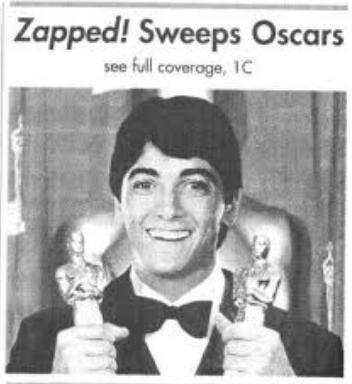
On a positive note, Zapped! did give us this classic Onion headline:


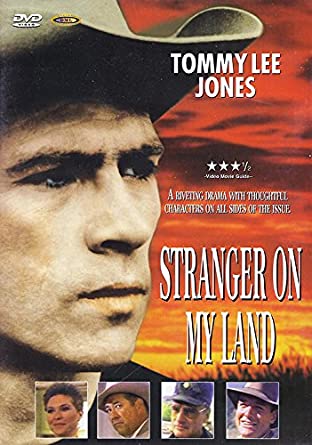
Stranger On My Land (1988, directed by Larry Elikann)


The Air Force wants to build a new air base in Utah but the Whitman family refuses to sell their ranch.  Bud Whitman (Tommy Lee Jones) served in Vietnam and he disapproved just as much of forcing Vietnamese villagers to move as he now disapproves of the idea of allowing the government to force American citizens to move.  When a judge rules that the Air Force can force the Whitmans to vacate their property under the rule of eminent domain, Bud announces that he still will not be moving.  With several of Bud’s old combat buddies showing up to support Bud, the villainous county surveyor, Connie Priest (Terry O’Quinn), prepares to take matters in his own hands.

Tommy Lee Jones vs. Terry O’Quinn?  That sounds like it should have the makings of a classic but Stranger On My Land is a largely forgettable made-for-TV movie.  A huge part of the problem is that O’Quinn’s character doesn’t have any real motivation beyond just being a prick and that seems like a waste when you consider the number of interesting villains that Terry O’Quinn has played over the years.  This is the actor who, in The Stepfather, actually made a multiple murderer seem a little bit likable.  Connie Priest seems like a villain that O’Quinn could have done a lot with if only the film’s script hadn’t been so simplistic.  Tommy Lee Jones is always well-cast as a modern day western hero but again, the script doesn’t do much with his character.  He’s just Tommy Lee Jones yelling at people to get off his property.  You could probably go to Tommy Lee Jones’s own ranch and have the exact same experience without having to sit through the rest of this movie.  Even Bud’s ethical objections to the Vietnam War feel like something that was just tossed in to assure the people watching at home that he’s not meant to be some sort of gun-toting militiaman.  The best performance in the movie comes from Ben Johnson, who is plays Tommy Lee Jones’s father.  That’s prefect casting.  If Ben Johnson wasn’t actually Tommy Lee Jones’s father, he probably should have been.

The main problem with Stranger On My Land is that it was made for television and it had to operate within the limits of what was acceptable for television in 1988.  The entire movie seems to be building up to a fierce battle between Bud and law enforcement but instead, it settles for a personal fight between Bud and Connie.  The film’s sudden ending doesn’t feel authentic but it does feel like what you’d expect to find on ABC in the late 80s.

Lifetime Film Review: Adopted in Danger (dir by Craig Goldstein)


DNA tests are tempting, aren’t they?

I mean, I’ve often been tempted to get one, even though I pretty much know all about my family history.  My maternal grandmother was born in Spain while my grandfather’s parents came to this country from Italy.  On my father’s side of the family, everyone is pretty much Irish with a little bit of German and French mixed in.  Despite the fact that I know all of this, it’s still tempting to do the whole DNA thing because then I’d have percentages to go along with my family history.  Percentages make every story better, or so I’ve heard.

Of course, there’s a lot of other people who get DNA tests because they’re hoping that they’ll turn out to have a really badass ancestor or that they’ll find some evidence that they’re actually more interesting than they appear to be.  Remember when Elizabeth Warren got that DNA test that proved she had less Native American ancestry than the average American?  That’s not a story that you’ll see repeated in a 23andMe commercial but it’s one that I found fascinating as an example of the importance that people put on having interesting ancestors.  I mean, technically, what’s wrong with saying, “Yes, my family’s boring but I’m not?”  Instead, we all want to say, “I’m interesting and so is everyone who has ever shared my DNA!”

That said, I’ll still probably never get a DNA test.  People always assume that DNA tests and ancestry research are going to bring them good news (“and then I discovered that I’m descended from the first person to ever open up a fast food restaurant in the state of Wyoming and it just changed everything….”) but it seems to me like they’re just asking for trouble.  Sure, you might be descended from a great and respected historical figure.  Then again, you also might discover that the people you thought were your parents stole you from the hospital.  You might discover that your father was actually the Goatman or something.  (It could happen.)  I mean, seriously, why take the risk when you can just take your grandmother’s word that, just because some your ancestors fought with Franco in the Spanish Civil War, that doesn’t mean that they necessarily agreed with him about everything.

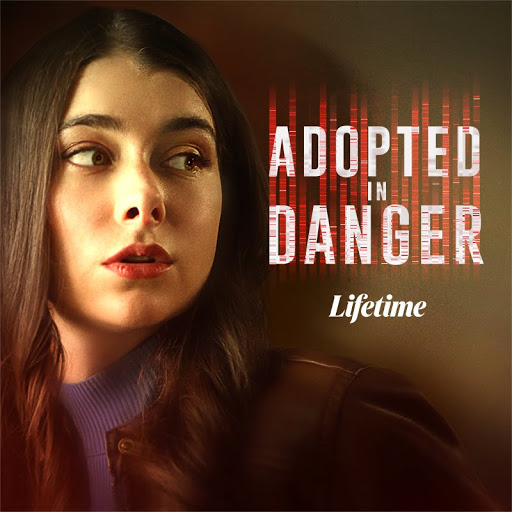
In Adopted in Danger, Candace (Allison Paige) actually does have a fairly good reason for wanting to get a DNA test.  She’s adopted and she has no idea who her birth parents are.  At the very least, she would like to know where she came from just so she can have a complete medical history before she and her husband try to start a family.  That certainly seems reasonable but, unfortunately, it turns out to be a lot more trouble than its worth.  Candace’s DNA indicates that she’s the daughter of real estate developer Tom Mason (Jason Brooks).  However, when Candace goes to see Tom and tells her that he’s her father, Tom refuses to consider the idea.  Tom, in fact, accuses her of just being after money and kicks her out of his office.

Why is Tom so adamant that he’s not Candace’s father?  That’s something that Candace and her friends investigate, in between drinking a lot of wine.  And I do mean a lot of wine.  I think this film may have set a record as far as scenes involving friends drinking wine and discussing DNA might be concerned.  However, all of that wine cannot stop the murderous schemes of a powerful family with a secret to hold and soon, Candace finds herself and everyone she knows being targeted.

The main problem with Adopted in Danger is that it’s fairly predictable.  I kept waiting for a big twist that would reveal that there had been a mix-up with the DNA or that Tom Mason was some sort of imposter or something that would have taken me by surprise but nope.  There’s no mix-up with the DNA.  Tom Mason is Tom Mason.  It’s just he comes from a terrible family and they don’t want anyone to know that Candace is his daughter.  Everything plays out the way you would expect it to play out.

That said, if you’re going to solve a mystery, you might as well do it while hanging out with your two BFFs.  DNA, in Adopted in Danger, may show where you’re from but but your friendships and your lovers show who you are and that’s not a bad message at all.

Cinemax Friday: Die Watching (1993, directed by Charles Davis)


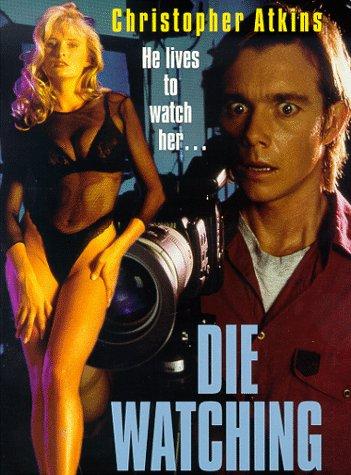
Mentally scarred by the night that his mother murdered his father, Michael Terrence (Christopher Atkins) is a video editor who makes his living filming naked models and who deals with his mental issues by then asphyxiating those same models.  Michael’s main kink is that he ties his victims up in front of a monitor and then films them as they die, basically forcing them to witness their own murders.  In other words, Michael is one sick puppy who has perhaps seen Michael Powell’s Peeping Tom a few too many times.

Despite the fact that dead actresses and models are turning up all over Los Angeles, Detectives Lewis (Tim Thomerson) and Barry (Carlos Palomino) have no idea that Michael is responsible.  In fact, no one suspects Michael.  His neighbor, an aspiring artist named Nola (Vali Ashton), even hires Michael to help her promote her artwork.  Despite the fact that Nola already has a boyfriend, she and Michael fall in love.  Falling in love causes Michael to lose his urge to kill but it may already be too late as a video of one of his murders has fallen into the wrong hands.

For some reason, Christopher Atkins was a direct-to-video and Cinemax mainstay in the 90s.  I’ve never understood why because he was a terrible actor with absolutely no screen presence.  Unlike C. Thomas Howell, who was bland in mainstream films but usually surprisingly good when he did direct-to-video work, Atkins was always forgettable regardless of whether he was appearing in a major studio production or something like Die Watching.  For a film like this to work, the film has to convince you that there’s at least a chance the murderer could have been a decent human being if not for his tragic past.  Atkins just comes across like a natural born weirdo.  Atkins gives a sweaty and nervous performance but he makes Michael so obviously disturbed that it’s impossible to buy that Nola would dump her boyfriend for him.  Judd Nelson or, again, C. Thomas Howell probably could have pulled off the role.  Christopher Atkins just feels wrong.

Of course, the target audience for this film doesn’t care about the acting or the plot or anything else.  They care about the women and those who watch a film like this solely for the nudity won’t be disappointed.  Vali Ashton is actually really likable as Nola, though the film is stolen by Erika Nann, who plays Nola’s sex-obsessed roommate and who gets the best lines.  (Of course, there’s a difference between getting the best lines in Die Watching and getting the best lines in something like Hamlet.)  It’s also good to see Tim Thomerson in practically anything, even when it’s something as dumb as Die Watching.  

Die Watching is pretty dire but it does predict the rise of a very specific type of internet culture.  When Michael accidentally sends one of his murder tapes to a producer instead of one of his sex tapes, the producer is not disturbed but instead, he’s intrigued by the commercial possibilities.  Even Michael knows that’s messed up!  If Die Watching were made today, of course, that producer would probably own an adult website and he would be talking about selling the murder videos on the dark web.  It just goes to show that the more things chance, the more they remain the same.


The Things You Find On Netflix: Tread (dir by Paul Solet)


On June 4th, 2004, the small town of Granby, Colorado was briefly the center of the nation’s attention.

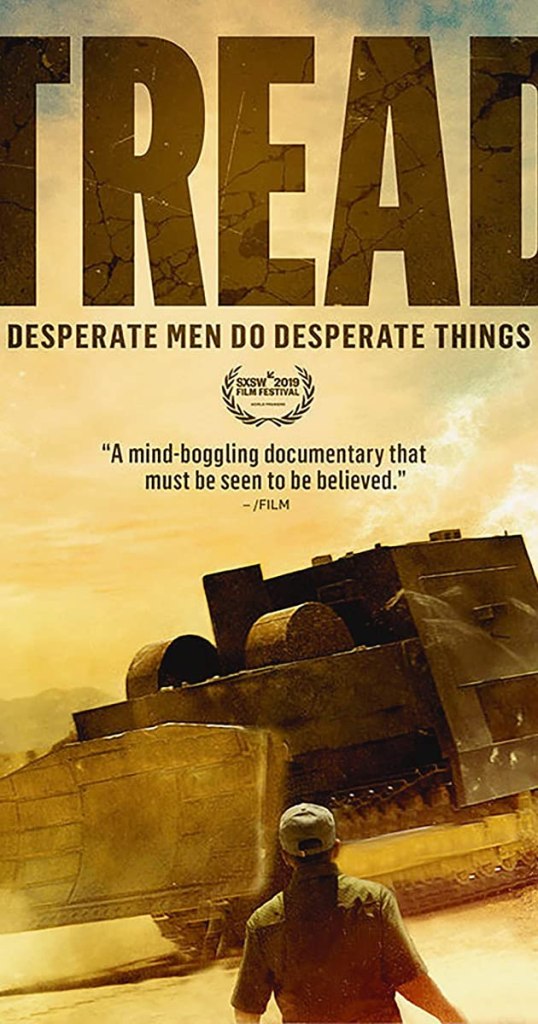
On that day, an armor-plated bulldozer rumbled down the streets of Granby.  The driver of the bulldozer was a local business owner named Marvin Heemeyer.  Heemeyer, who had previously been at the center of a zoning controversy, spent two hours driving the bulldozer through various buildings in Granby.  He destroyed the muffler shop that he had once owned.  He destroyed a nearby concrete plant.  He drove through the Granby City Hall.  He smashed the bulldozer through the offices of the local newspaper.  He demolished the home of a family who he felt had conspired against him.  He took out a hardware store.  For two hours, the police chased him, firing their weapons at the bulldozer and discovering that nothing could slow him down.  In fact, it wasn’t until one of the bulldozers’ treads dropped into the hardware store’s basement that the rampage stopped,  Unable to free the tread, Marvin Heemeyer committed suicide by shooting himself in the head.

Before he went on his rampage, Heemeyer recorded himself talking about why he was going to do what he did.  He mailed those tapes to his brother in South Dakota a few hours before getting in the bulldozer.  His brother later turned those tapes over to the FBI.  In the tapes, Heemeyer discussed what he felt was years of harassment by the Granby town council and the zoning board.  He described himself as being an “American patriot” and he even went so far as to say that he felt his rampage was predestined.  He also went on to express amazement that he was able to spend two years openly modifying the bulldozer and turning it into a tank without anyone asking him what was going on.  He also made clear that when he entered the bulldozer for the last time, he knew that he was never going to leave it.  He truly was going on a suicide mission.

Those tapes are at the center of Tread, a documentary about Marvin Heemeyer and his 2004 rampage.  The film alternates between people discussing their memories of Marvin and that day and the taped voice of Marvin himself attempting to explain his motivations.  Almost everyone who is interviewed talks about what a friendly and genuinely nice person Marvin seemed to be.  Even though Marvin spent two years planning his rampage, no one — not even his girlfriend — appeared to suspect a thing.  Even in the weeks directly before his rampage, Marvin was making plans for the summer.  One friend of Marvin’s does speculate that Marvin spent “too much time alone.”

As many people interviewed point out, Marvin was, by most measures, a successful businessman.  He had a reputation for being the best welder in the county and he opened up a muffler shop in a building that he bought for $44,000.  He later sold that building for $400,000.  However, as the tapes reveal, Marvin didn’t view selling his shop for a profit as being a success.  Instead, he viewed as something that he was forced to do by the town council and their refusal to side with him in a zoning dispute that he had with the manufacturers of a concrete plant.  Marvin felt that the town was ruled by one family and that family was conspiring against him and singling him out for harassment.

I’m about as anti-government as they come so my natural instinct, when Tread began, was to be sympathetic to Marvin’s anger, if not his solution.  And, having now watched the documentary, I still have no doubt that Marvin probably was, to an extent, targeted by the zoning board and the town council.  The fact of the matter is that it’s rare that people don’t let the least amount of power go to their head.  That’s especially true when it comes to small towns.  There seems to be a natural pettiness that comes along with having power.  That’s true regardless of whether you’re the mayor of a small town in Colorado or the governor of a state like …. oh, I don’t know, let’s just say Michigan and New Jersey.  At the same time, when you listen to Marvin’s voice on tapes, it’s obvious that there was more going on in Marvin’s head than just anger over the zoning dispute.  When Marvin talks about how God obviously wanted him to modify the bulldozer and use it to destroy the town, you realize that, if it hadn’t been the zoning dispute, it probably would have been something else.  Marvin comes across as time bomb while the town leaders come across as being the people who unknowingly lit the fuse.

I have to admit that, until I watched this documentary, I had never heard of him but a simple Google search revealed that, in the years following his death, Marvin Heemeyer has gone on to become a hero to certain anti-government activists.  Though it’s been 16 years since he unleashed his bulldozer on the town of Granby, his story still feels relevant today.  There’s still a lot of angry people out there and, if anything, the people in power have gotten even more heavy-handed and arbitrary in their behavior today than they were in 2004.  That said, if you’re looking for a film that either vilifies or blindly celebrates Marvin Heemeyer, Tread is not that film.  Overall, Tread portrays Marvin Heemeyer as being a complicated man who, in the town of Granby, found the perfect reason (or, depending on how much sympathy you may or may not have for him, excuse) to strike out.

It’s currently available on Netflix.

Film Review: The Comic (dir by Carl Reiner)


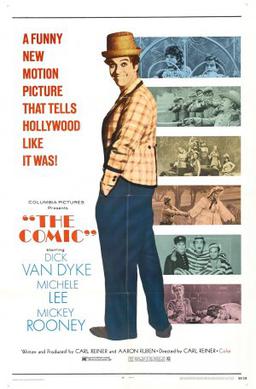
The 1969 film, The Comic, details the long and not particularly happy life of silent screen star Billy Bright (played by Dick Van Dyke).  Billy Bright tells us his story from beyond the grave.  The film opens with his funeral, which is sparsely attended and features the type of self-consciously mawkish eulogies that are usually trotted out whenever a generally unlikable person dies.  The only sign of life at the funeral comes when Billy’s oldest friend, Cockeye (Mickey Rooney), throws a pie at one of the speakers.  The speaker says that the pie was Billy’s final joke.

Billy Bright was a funny performer but a miserable man.  That’s pretty much the entire plot of The Comic.  We see the young Billy, performing in silent films and winning laughs through the seemingly impossible contortions through which he puts his body and his face.  Off-screen, Billy marries one of his co-stars (Michele Lee) and starts a production company.  When she discovers that he’s been cheating on her, their divorce is a major Hollywood scandal.

Even before the coming of the talkies, Billy struggles with alcohol.  Once the talkies do come, his career is pretty much over.  Billy became a star in silent films and he stubbornly wants to continue to make silent films, despite the fact that there’s no longer an audience for them.  Billy quickly goes from being a star to being forgotten.  He’s reduced to walking down Hollywood Boulevard with Cockeye and looking at the names under his feet.  When he reaches his name, he discovers that someone has dropped their gum on it.

Billy finally does get his comeback in the late 60s but it’s not much of a comeback.  He appears on a talk show and it’s hard not to cringe a little as the clearly infirm Billy duplicates some of his silent era pratfalls.  He’s reduced to appearing in a rather awkward commercial for a laundry detergent called, I kid you not, White-ee.  “That’s White-ee, baby!” his commercial co-star says after a freshly cleaned Billy emerges from a washing machine.

The idea that most funny performers are actually rather serious and depressing off-stage is certainly nothing new.  Judd Apatow has basically built an entire career out of making films about how funny people are actually carrying around tons of emotional baggage.  The thing distinguishes The Comic from so many other films about angsty comedians is that Billy Bright himself never seems to have a single moment of self-awareness.  Usually, films about miserable celebrities will at least have one scene where the main character realizes that his misery is all his fault.  Billy Bright is pretty much a jerk from the minute we meet him and he’s still a jerk when the film ends.  He’s the type of guy who makes a big deal about picking up his son from school but who still manages to grab the wrong kid because it’s been so long since he’s spent any time with his family that he’s really not sure what his son looks like.  Towards the end of the film, we see him watching one of his old films and what we notice is that he doesn’t seem amused at all.  Is he thinking about how he lost it all or is it possible that this man who made millions laugh never really had much of sense of humor himself?  The film leaves it to you to decide.

The Comic was written and directed by Carl Reiner, who undoubtedly knew quite a few Billy Brights in his life.  As such, the film feels authentic in a way that a lot of other films about creative people do not.  The Comic is a well-made film.  It’s hard not to appreciate the film’s obviously affection for Old Hollywood.  That said, Billy Bright is such an unpleasant character that I found the film difficult to enjoy.  Van Dyke is genuinely funny whenever he’s doing Billy’s silent film shtick and he’s genuinely tiresome when Billy’s ego gets out of control.  It’s a good performance as a generally unlikable character.  How you react to The Comic will probably depend on how much sympathy you can summon up for a character who doesn’t really seem to deserve any.