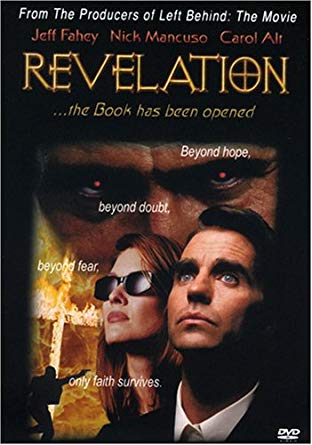
Film Review: Revelation (dir by André van Heerden)


The world which started to end in the 1998 film Apocalypse continues to end in its first sequel, 1999’s Revelation!

Revelation beings three months after the end of Apocalypse.  The people of the world worship the president of the European Union, Franco Macalousso (Nick Mancuso, replacing Sam Bornstein from the first film).   The world is ruled over by O.N.E., which stands for One Nation Earth.  Those who oppose Macalousso’s claim to the messiah are known as “The Haters.”  At the start of the film, a school bus has been bombed and all of the children aboard have been killed.  O.N.E. claims that the Haters bombed the bus but counterterrorist agent Thorold Stone (Jeff Fahey) comes across evidence that it was actually an inside job.  When Macalousso’s second-in-command, Len Parker (David Roddis), attempts to murder Thorold, he’s forced to go on the run.

The Day of Wonders is approaching.  On this day, everyone on Earth is to put on a VR headset.  Macalousso hasn’t made clear what the headset will do but everyone’s planning on doing it because Macalousso has told them to do it and everyone on the planet does what Macalousso says.  Thorold tracks down Willy Spino (Tony Nappa), a wheelchair-bound programmer (in the 90s sense of the term, of course) who is somehow involved with setting up The Day of Wonders.  Willy says that O.N.E. is not the benevolent organization that everyone thinks it is.  You would have thought that Thorald would have figured that out after Parker attempted to kill him but Thorald remains convinced that Maclousso is the messiah and that his wife and daughter previously vanished not because they were Christians but because they were abducted by aliens.

Anyway, long story short, it turns out that Willy’s stepsister is Helen Hannah (Leigh Lewis), the news anchor from the first film.  Helen is now a leader in the Hater underground.  While she tries to convince Thorold that Macalousso is actually the Devil, Willy spends his time flirting with a cynical blind woman named Cindy (Carol Alt).  Both Willy and Cindy find themselves tempted to put on the VR headset, just to see what the Day of Wonders will hold for them….

Revelation is a marked improvement on Apocalypse though, considering how shoddy the production of that first film was, that’s really not saying much.  As opposed to the first film’s stiff performances and reliance on stock footage, Revelation features actual actors, actual sets, and an actual script.  There’s even a few action sequences and some attempts at intentional humor.  That said, if you’re a nonbeliever, Revelation isn’t going to convert you and, about halfway through the film, all of the action stops so that Thorold and Hannah can have a very long discussion about faith and whether or not God should prove his existence by turning over a glass of water.

Like the first film, Revelation actually works better as a political allegory than a religious tract.  Today, it’s kind of easy to laugh at the bulky computers that fill O.N.E.’s headquarters and the scenes where Willy carefully explains what virtual reality and computer viruses are serve as a reminder that, apparently, there was a time when all of this stuff was still viewed as being somehow exotic.  I mean, it’s easy to be snarky about this movie.  But let’s be honest — it’s probably easier today than it was when this film was first released to imagine a world where everyone blindly does whatever the government tells them to do.  And the idea of a group running a false flag operation — like blowing up a school bus and blaming it on unseen enemies — no longer seems quite as outlandish as it perhaps did it 1999.

Revelation was apparently enough of a success that it was followed by yet another sequel.  This one was called Tribulation and I’ll be posting a review of it in about 15 minutes.  Hope to see you then!
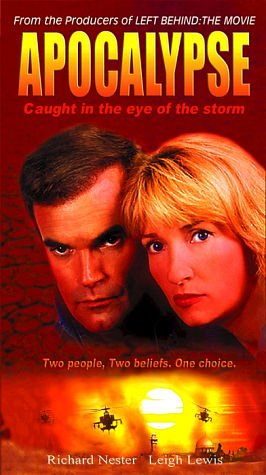
 

Film Review: Apocalypse (dir by Peter Gerretsen)


In the 1998 Biblical prophecy film, Apocalypse, the world ends not with a bang but with stock footage.  Lots and lots of stock footage.

Admittedly, I’m being a bit snarky about Apocalypse‘s reliance on stock footage but it’s actually kind of understandable.  When you’re trying to convincingly end the world on a budget, it just makes sense to borrow someone else’s footage of a plane exploding than going through the trouble (and expense) of buying a plane and blowing it up yourself.  The two main characters in Apocalypse are both anchorpeople for a 24-hours new channel called WNN.  Because they’re constantly reporting on the end of the world, the stock footage is portrayed as being a part of their report.  That’s kind of clever but it’s also really icky.  For instance, there’s a clip of a woman sobbing in front of an angry crowd.  We’re told that the woman is sobbing because her relatives have mysteriously vanished but, because the footage is in focus and the camera is held steady, we know that we’re actually watching stock footage.  Which means that this woman truly was crying about something but we don’t know what.  It’s hard not to feel that the filmmakers essentially took her pain and used it for their own advantage.  By that same token, when we’re shown people rioting in the streets and getting attacked by police, we’re told that it’s because the world is about to end but we know that there was another real reason why those people were rioting and it’s doubtful that any of those rioting people ever thought to themselves, “Hmmm….I wonder if this footage of me getting chased by the police will ever somehow appear in a propaganda film that has nothing to do with what I’m risking injury to protest about?”

The main characters of Apocalypse are Bronson Pearl (Richard Nester) and Helen Hannah (Leigh Lewis).  Bronson Pearl is the most trusted man in the world.  We know this because there’s a shot of a Time Magazine cover declaring that Bronson is the “Man of the Year.”  (It must have been a slow year.)  When the president of the European Union, Franco Macalusso (Sam Bornstein), announces that 1) he has magically vaporized every nuclear missile on the planet mere moments before Earth went up in a nuclear fireball and 2) he’s the true messiah, Bronson is enthusiastic but Helen has her doubts.  Those doubts are caused by the mysterious disappearance of millions of people across the globe.  One minute, they’re there.  The next minute, they’ve vanished and left behind a pile of neatly folded clothes.  Before Helen’s aunt disappeared, she organized a box of VHS tapes for Helen to watch.  The tapes feature footage of televangelists interpreting prophecy, which of course means that it’s time for more stock footage!

Anyway, you can guess where all of this is leading.  Over the course of six days, the world goes from being on the brink of nuclear war to being ruled over by Franco Macalusso.  Everyone sacrifices their individual freedom so that Maclusso can keep them “safe” and Macalusso even takes over WNN and turns the news channel into his own personal propaganda outlet.  In some ways, this film does feel a bit prophetic.  In the years since this film was first released, news channels have become propaganda outlets and people have started to look to their political leaders as being messianic figures.  In fact, I’d argue that Apocalypse works better as a warning against authoritarianism than it does as a biblical tract.

Which isn’t to say that Apocalypse actually works.  This is a low-budget and stiffly acted film and, as I said before, the use of stock footage of real disasters to stand-in for fictional disasters is undeniably icky.  It’s one of those films that was made for an evangelical audience and which seems to be more concerned with taunting nonbelievers than with actually trying to be dramatically convincing.  Still, if your natural instinct is to distrust authority, you’ll probably find a lot to relate to in Apocalypse‘s not-quite paranoid vision of people being brainwashed into accepting dictatorship.

Or you might just view the film as being a tribute to the power and convenience of stock footage.  I guess it all depends on how you look at it.

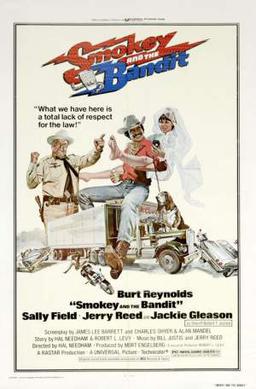
Smokey and the Bandit (1977, directed by Hal Needham)


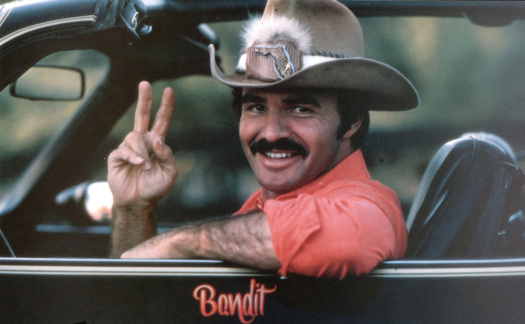
Smokey and the Bandit is a simple film. Burt Reynolds is the Bandit. He’s hired by two bored brothers to smuggle beer from Texas to Georgia. Working with the Snowman (Jerry Reed), Bandit is easily able to pick up the beer but it’s while driving back that the two of them run afoul Smokey, a.k.a. Sheriff Buford T. Justice (Jackie Gleason, who reportedly improvised most of his profane lines). Bandit also picks up a hitchhiker and runaway bride (Sally Field) who he calls Frog.

There’s not much to Smokey and the Bandit. The Bandit has an incredibly cool car and he drives really fast. Snowman is funny and has a dog. Smokey has a dumb son and is constantly threatening to hit people.   It’s a dumb movie but it works.   The cars are fast, the crashes are spectacular, and the entire film is the perfect daydream for when you’re sitting in your office at work and wondering whether there’s something more rewarding you could be doing with your life.

Who hasn’t wanted to the Bandit at some point in their life?

Who hasn’t wanted to get behind the wheel of black trans am and just take off, driving down country roads while giving the slip to old Smoky and joking with Snowman on your CB radio and maybe picking up a young Sally Field while smuggling beer and winning a bet?

(There’s been a lot of terrible moments on The Family Guy but, for me, one of the absolute worst was when Brian Griffin went into the past and asked 70s Burt Reynolds, “So, you’re going to go get some of that hot Sally Field action, huh?” Anyone who has seen Smokey and the Bandit knows that Sally Field was smoking hot back in 1977!)

Smokey and the Bandit comes to us from a different time. No one worries about what speeding halfway across the country in a little over 24 hours is doing to the environment. No one apologizes for who they are or where they’re from. The Bandit lives by a simple rule: Treat him with respect and he’ll treat you with respect. Talk down to him or try to tell him what to do and the Bandit’s just going to jump in his car and leave you standing in a cloud of dust.

During the latter part of his career, Burt Reynolds would often lament that appearing in financially successful but critically lambasted films like Smokey and the Bandit made him a huge star but also kept him from getting the type of roles that he felt he deserved. Reynolds was right but there are worse things than being known as The Bandit.   For many, Burt Reynolds will always be the Bandit because he was so perfectly cast for the role. Not many actors could pull off the scene where, after fooling a cop, the Bandit looks straight at the camera and grins. Burt Reynolds could. Playing the Bandit may have never won Burt Reynolds an Academy Award but it did make him an American icon.

If you’re feeling down, watch Smokey and the Bandit. If you need an escape, watch Smokey and the Bandit. It demands so little and gives so much.

Film Review: A Thief In The Night (dir by Donald W. Thompson)


First released in 1972, A Thief In The Night is one of the most successful independent films ever made.

Shot in Iowa with a largely amateur cast, A Thief In The Night was made for a budget of $68,000.  During the first decade of its release, it made a profit of 4.2 million dollars.  Interestingly enough, the film itself rarely played in theaters and the majority of the money came from donations made by the members of the audience.  Consider that.  Audiences had the opportunity to watch the movie for free and still chose to pay.  People were either extremely generous in the 70s or the film’s target audience really responded to it.

In a 1989 interview, the film’s producer estimated that the film had been seen by 100 million people.  By the time the 2010s rolled around, that number had grown to 300 million.  Though the film never got much attention from the mainstream press, it was a big enough success to spawn three sequels and to also inspire countless other films that dealt with the same themes as this film.

As for what the film’s about, it opens with Patty (played by Patty Dunning) waking up and discovering that her husband has disappeared.  (His razor is sitting in the sink, almost as if he had been holding it before suddenly vanishing into thin air.)  Over the radio, she hears reports that people all over the world have disappeared!  Religious scholars are saying that perhaps the rapture has happened.  Interestingly, those religious scholars have apparently been left behind and …. wait a minute!  Patty’s been left behind too!

The first half of the film is full of flashbacks to Patty’s childhood and how she first met and married Jim Wright (Mike Niday).  Interestingly enough, the flashbacks don’t necessarily play out in chronological order, which gives the entire first half of the film a stream-of-consciousness feel.  We also get a somewhat random scene of Jim getting bitten by what appears to be a cobra.  It feels like one of those things where you simply don’t turn down the chance to put a cobra in your film.  If you’ve got a snake, you use it.  And the first half of the film actually works surprising well.  The low-budget and the random flashbacks and even the rather amateurish acting make the entire film feel like something of a fever dream.

During the second half of the film, the UN takes over the world and everyone is required to get the mark of the beast.  Patty doesn’t want to get the mark but it turns out that those without the mark can’t shop for food or buy the latest fashions.  Eventually, soldiers start to round up the unmarked and, before you know it, Patty is being chased through Des Moines by not only the United Nations but also by all of her friends, who now have the mark.  Eventually, Patty ends up on a bridge with only two possible options.  Either get the mark or jump.  As opposed to the unconventional first half of the film, the second half is basically one long chase scene and it does get a bit repetitive after a while.  That said, it’s kind of interesting to see someone being chased through downtown Des Moines as opposed to downtown New York or Los Angeles.

A Thief In The Night is undeniably crude and it gets a bit heavy on the preaching.  Patty is continually told that it’s not good enough to just be a Christian.  She has to be a super Christian or she’ll get left behind.  I would think that would make anyone either extremely neurotic or extremely cynical.  But if you can overlook the film’s preachiness, it’s a crudely effective in a dream-like way.  You can tell that the filmmakers must have spent some time at the drive-in and that maybe they watched Night of the Living Dead when they weren’t in church because they whole film is full of skewed camera angles and abrupt jump cuts with a good deal of emphasis being put on Patty’s newly isolated status.  In more ways than one, the film was obviously designed to scare the Hell out of its target audience.

A Thief in the Night works best when viewed as being a filmed fever dream.  It’s crude but effective.

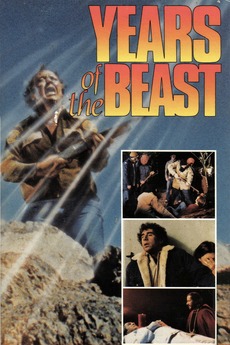
Film Review: Years of the Beast (dir by D. Paul Thomas)


This low-budget 1981 film opens with a professor, Stephen Miles (Gary Bayer), giving his last lecture at Seattle’s University of Washington.  He’s been laid off from his job.  He’s depressed.  The students around him don’t seem to be interested in anything that he has to say.  The world seems to be plunging deeper and deeper into chaos.  Society seems to be collapsing.  Stephen just can’t understand why everything just seems to be getting so bad.

Having taught his last class, Stephen walks across campus and drops in on his friend, Dr. Carl Kilneman (Malcolm McCaimen).  Dr. Kilneman says that things may look bad now but they’re only going to get worse.  He then talks about how his research has led to him discovering that every bad thing in the world was previously predicted by the Bible.  Stephen starts to laugh him off but he’s interrupted by what sounds like an overhead explosion.  Suddenly, Dr. Kilneman has vanished.

Dr. Kilneman is not the only person who has vanished.  In fact, every believer in the world has vanished.  Without any Christians around telling people how to behave, it doesn’t take long for Seattle to descend into chaos.  (Seattle in chaos?  Well, it was bound to happen someday….)  Soon, people are raiding the grocery stores and roving bands of frat boys are flooding the streets, openly drinking beer and smoking weed….

Yes, I know that actually kind of sounds like the sort of stuff that happens everyday and not just in Seattle but you have to remember that this film is from 1981 and, from what I can tell, it was apparently mostly shown to church groups.  So, for the time, maybe it was shocking….

Anyway, Stephen and his wife, June (Alana Rader), decide to go out to June’s father’s farm.  They manage to get out of Seattle and probably not a minute to soon as Seattle itself is soon wiped off the face of the planet by a storm of biblical proportions.  When Stephen and June reach the farm, they discover that her father has vanished.  They also meet up with one of the farmhands, Gary (Jerry Houser) and a young woman named Cindy (Sarah Reed), who needs a place to stay.

Meanwhile, with the world in chaos, an enigmatic man known as the Prime Minister (Michael Amber) takes control and promises to bring peace to the planet but only if people agree to follow him and be branded with a special mark.  At one point, the Prime Minister gets shot in the head and then comes back to life a few days later so …. well, we all know what that means.

Stephen, June, Gary, and Cindy do not want to take the mark so they go running into the wilderness.  Pursuing them is the local sheriff (James Blendick), who is determined to make sure that the law is followed even if the law is being written by Satan.

Years of the Beast is a bit of an oddity.  On the one hand, it’s an extremely low-budget film and the pace is often painfully slow.  One of the reasons why the film’s destruction of Seattle is so much fun to watch is because the special effects are so extremely cheap that they’re almost charming but, at the same time, the film’s narrative momentum dies right after the city.  Unlike a lot of faith-based film, the cast was made up of character actors who actually had a career in mainstream cinema so, on the whole, the performances are better than you might expect to find in a film like this but, at the same time, none of the characters have much depth.  They start out as nonbelievers and then they become believers and that’s pretty much it as far as their characterization tends to go.  I liked the fact that the outwardly friendly Sheriff was actually a fascist but that has more to do with my own natural distrust of authority than anything else.

At the same time, if you’re looking for a time capsule of tacky 80s fashion and interior design, Years of the Beast will deliver.  I especially liked the interior of Stephen and June’s home in Seattle, which was basically so bland that it become oddly fascinating.  Actually, oddly fascinating is a good way to describe the entire film.  It’s hard not to enjoy epic film making at discount prices.  It’s almost like a bit of outsider art.  For all of its flaws, it did get made and it apparently did play in theaters and now, nearly 40 years later, it can still be found on YouTube.  Such is the power of cinema.


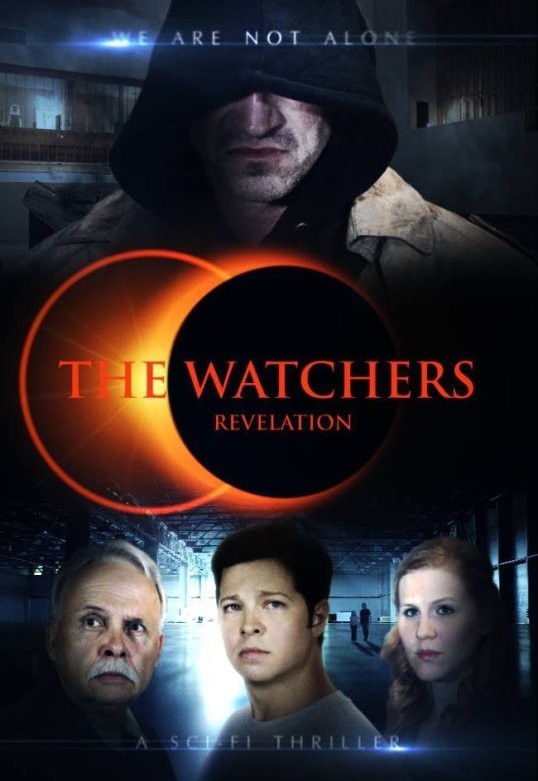
Film Review: The Watchers — Revelation (dir by Tom Dallis)


As I watched the 2013 film, The Watchers: Revelation, three words kept going through my head:

Threat Level Midnight

Yes, I was thinking about Michael Scott’s infamous amateur film from The Office, in which the fact that Michael obviously knew how to move a camera and compose a shot could not cover up a ton of awkward dialogue and a plot that appeared to have been made up on the spot.  Like Threat Level Midnight, The Watchers: Revelation is very ambitious and even features not one but two presidential meetings.  (The film opens in the 50s with someone who I guess is meant to be Dwight Eisenhower and it ends in the near future, with a President named Connolly.)  Like Threat Level Midnight, the film features some rudimentary special effects that are actually kind of impressive when you consider the fact that the film was obviously made for very little money.  And, like Threat Level Midnight, the story is next to impossible to follow.

The film makes the familiar case that, since at least the 1950s, otherworldly beings have been meeting with world leaders and supplying them with weaponry and technological advances.  In this case, there’s two sets of beings.  One group is evil and one group is good and the challenge of the film is to keep track of which is which.  The film also suggests that these beings are not, as many assume, aliens but are actually the Watchers, the angels who were assigned to watch over Earth and who betrayed God’s trust by sleeping with human women and creating the Nephilim.  (It’s in the Books of Enoch, people!  Not to mention Darren Aronofsky’s Noah.)

Anyway, in this one, Ambassador Addon (Eugene Pridgett) leaves Earth in 1955 after warning President Eisenhower that his people are not happy about mankind’s warlike nature and or their ambitions to leave the planet and explore the universe.  Much as in The Day The Earth Stood Still, Addon warns about spreading Earth culture to other planets.  We then jump forward several decades, to the discovery of an ancient tablet that appears to prove that aliens did visit Earth and did share technology with early humans.

Dr. Peter Kenner (Titus Young Wolverton) is a scientist who has no faith in God but does believe in ancient alien visitation.  His uncle, Joshua Sanders (David Gaylor), is a scientist who retains his faith in God and, as a result, he and Peter don’t really have much to do with each other.  However, they are brought together by nine year-old Kara Pennington (Carissa Dallis), who can read ancient Hebrew and who, for some reason, the aliens want to abduct.  Seeking to protect Kara is her mother (Katlin Lory) and a mysterious man named Ethan (Tyler Trent).  It all eventually leads to a battle in a warehouse because these things always do….

To be honest, the plot is pretty much impossible to follow.  There’s a lot of scenes of people chasing each other but you’re never quite sure why.  There’s also some political conspiracy intrigue that never really seems to come together.  At the same time, the film is made with such enthusiasm and is so earnest in its attempts to be a sci-fi epic despite not having an epic budget that, much like Threat Level Midnight, it’s hard not to like it.  Sometimes, you really do have to appreciate the effort.

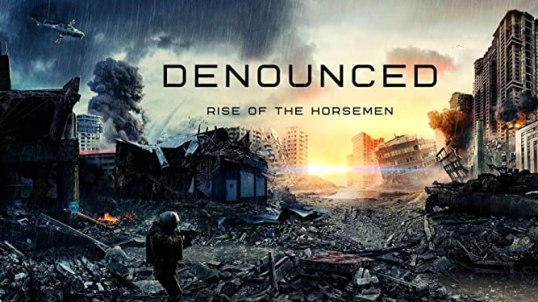
Film Review: Denounced: Rise of the Horsemen (dir by Stephen C. Bortsalas)


The 2017 film, Denounced, opens with a man named Paul (Sean Hart) in the wilderness.

Just one look at Paul is all you need to know that he’s seen some stuff.  He’s tall and physically imposing with a haunted stare and a scarred face.  He’s wearing a dark uniform, one that identifies him as being a member of some sort of paramilitary force.  Because Paul is now alone, it’s easy to guess that he must be a deserter of some sort.  But what did he desert and why?

Paul eventually meets two other people in the wilderness, a man and a woman.  They’re all trying to escape from something.  The man talks about how, on the night of an event that’s referred to as being “the vanishing,” he was on the verge of committing suicide.  The woman talks about how she was a drug addict. And finally, Paul starts to open up about his past life….

And, at this point, you’ve probably already guesses what this movie is about, haven’t you?  Yes, “the vanishing” was the Rapture and yes, Paul was a part of a paramilitary force that was working for the Antichrist.  Motivated by the anger of losing his entire family (they all vanished while he didn’t), Paul joined the Horsemen and spent months killing believers and other dissidents.  After finally coming to realize that he had surrendered himself to his hate, Paul refused to continue killing.  Now, Paul is hiding in the wilderness and obsessing on whether or not someone who has done the evil things that he’s done can ever truly be redeemed.

I know that at least a few of our readers are probably rolling their eyes already but Denounced is actually a surprisingly well-made film.  While the low-budget is evident in nearly every frame, director Stephen C. Bortsalas is still able to create a properly ominous and paranoid atmosphere throughout the film.  He gets a lot of help from Sean Hart, who comes across as being genuinely haunted in the lead role.  Including this film, Hart only has two credits on the imdb so I don’t know if he’s a trained actor or if he’s just a talented amateur but, in the role of Paul, he has the haunted eyes of someone who has lost everything that he once cared about.  He’s sympathetic in the present-day scenes and intimidating in the past scenes and you do hope for the best for his character.

Denounced is also a surprisingly brutal film, though every act of violence is justified by the film’s storyline.  One lengthy scene features more dismemberment than you would probably ever expect to see in a low-budget, faith-based film.  Heads and hands are graphically chopped off and it’s far more effective than I would have expected it to be.  So many films would have just had Paul say that he had done some terrible things and left it that.  This film shows you in details just what exactly those things were but it’s not gratuitous violence.  Instead, it’s very necessary to our understanding of who Paul is and why he’s now so haunted by his actions.

Though I imagine it will be best appreciated by people who already share its world-view, Denounced is a surprisingly effective apocalyptic film.

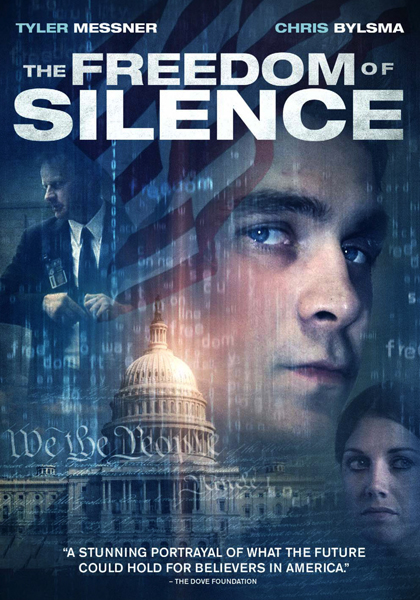
Film Review: The Freedom of Silence (dir by Richard Robertson)


If there’s anything that I’ve learned from watching several politically-themed films over the past few weeks, it’s the easiest way to win an argument is to have the screenwriter on your side.  Seriously, as long as you can control what the opposition says, it’s very easy to stump them with your arguments.

The other thing that I’ve learned is that apparently no one ever disagrees solely because they have a different opinion or way of looking at the world.  Instead, there’s an ulterior motive to every disagreement.  If a businessperson says that we need to keep taxes low, it’s never because they sincerely believes that lower taxes will encourage economic growth.  No, in the movies, it’s always because they’re just greedy and not willing to pay their fair share.  Of course, it’s never really explored as to what exactly “paying your fair share” means but that’s not important.  Not when there’s someone who would rather see people die than pay their taxes.

By that same token, any military leader who argues for more defense spending isn’t doing so because they sincerely believe that a strong defense will keep America safe from its enemies.  Instead, it’s always a case where they just want a war because ….. well, why not?

If the film is religious in nature, you can rest assured that no skeptic will be a skeptic just because they happen to have a different set of beliefs or because they were maybe just raised in a nonreligous environment.  Instead, in the movies, every skeptic is a skeptic because something traumatic happened to them in the past and it led to them getting so angry with God that they renounced their faith.  This, of course, always leads to the question of, “How can you be angry at a God that you don’t believe in?” and a moment of awkward silence as the skeptic realizes that he doesn’t have an answer.

The 2011 film, The Freedom of Silence, is built around scenes of a man named Zack Thompson (Tyler Messner) being tortured by one such skeptic.  The skeptic is Captain Johansen (Jeffrey Staab) and it’s not enough that he’s a fascistic authoritarian who uses his position to legally indulge in his own sadistic impulses.  He also has to be a Hollywood atheist, a man whose disdain of religion is all linked back to a past tragedy in his own life.  To a certain extent, I think he would have been a more believable character if he had just been motivated by his own need to create pain.  There’s been enough real-life examples of sadists-in-power that I think that no one would have doubted that a character like Captain Johansen could exist in the real world.  After all, a world that gave us Klaus Barbie, Lavrentiy Beria, Joseph Mengele, and Pol Pot could certainly give us as a Captain Johansen.  By making him a Hollywood atheist, the film reminds us that Captain Johansen is just a fictional strawman, a character created specifically to be outargued by the story’s hero.  It makes him less effective as a character, despite the fact that Staab does a good job playing the role.

The Freedom of Silence takes place in 2030 and imagines an America where the first amendment has, for all intents and purposes, been outlawed.  Since this is a faith-based film, the film focuses on the idea of Christianity being banned (or, as the government argues, replaced by a new unified, national religion) and bibles being forbidden.  Have other religions also have banned?  Can having a copy of the Koran get you thrown in prison?  The Freedom of Silence doesn’t say but I think it might have been a stronger film if it had.

Anyway, Zack has a plan to broadcast the word of God despite the government’s rules.  He’s going to need the help of Aaron (Chris Bylsma) but Aaron has a new girlfriend named Trisha (Lauren Alfano) and Trisha is secretly working for the government and you can tell where this is going already, can’t you?

And the thing is — I’m a bit of a free speech absolutist and I’m certainly no fan of government regulation and I do believe that free speech is under attack, by both the Left and the Right, in this country.  And yes, I did enjoy the scenes of brainwashed American citizens blandly talking about how they had to follow the law no matter what.  Unfortunately, the film itself has some serious pacing issues and, with the exceptions of Staab and Lauren Alfano, the acting is a bit inconsistent.  I think we’re supposed to excuse the filmmaking deficiencies because of the self-declared righteousness of the film’s message but the film is so disjointed that, at times, it’s nearly impossible to follow the plot.  That’s not something you can just ignore.

This is one of those films where, if you’re on the film’s side, you’ll enjoy it because you know it’s the type of thing that would annoy people who disagree with you.  But if you’re not already predisposed to agree with the film’s point, The Freedom of Silence is not going to convince you to change your mind.  This is a film that solely exists to own the other side.  And sometimes, that’s enough.  Audiences do tend to like films and books and songs and shows that confirm their already held beliefs.  But I don’t know.  Sometimes, when it comes to important issues like free speech, you want and the issue demands something more than jut a heavy hand and strawman arguments.

Anyway, if you just want to own the other side, you might get a kick out of certain parts of The Freedom of Silence.  If you’re looking for more, look elsewhere.

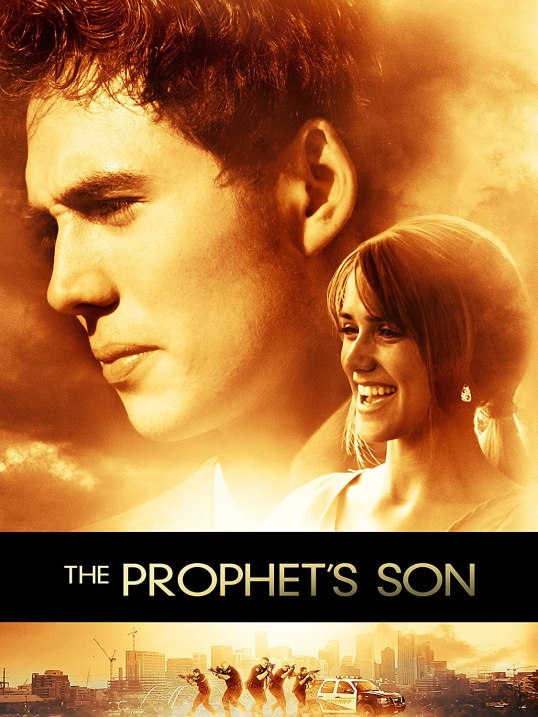
Film Review: The Prophet’s Son (dir by Paul Anthony McClean, Maurice Sparks, and Josiah David Warren)


As I’ve mentioned on this site in the past, I’ve always been fascinated by amateur feature films.  These are films that were made totally outside of the Hollywood system.  For the most part, they’re made by filmmakers with little to no formal training and they feature a cast of nonprofessionals.  Many of these films are passion projects for the people involved.  It’s not uncommon to hear about them being made by an all-volunteer cast and crew.  Sometimes, these films are surprisingly effective and sometimes — well, most times — they’re just really bad.

The 2012 film, The Prophet’s Son, is one of those largely amateur films and sad to say, it’s not a particularly good film.  If Tommy Wiseau decided to follow up The Room with an evangelical film that attempted to deal with almost every single issue facing the world today, the end result might be something like The Prophet’s Son.

It’s an odd film.  I have to admit that one of the main reasons that I watched it was because I had seen the film described as being about the end of the world and I have a weakness for cheaply made apocalypse films.  While The Prophet’s Son does feature a very brief nuclear attack on the city of Denver, it’s not really an apocalypse film because 1) the world doesn’t end, 2) the rapture doesn’t occur, and 3) the Antichrist never makes an appearance.  Instead, the nuclear attack just kind of comes out of nowhere and I will admit that it’s impossible for me not to have just a little admiration for a film that would toss a random nuclear war into an already cluttered storyline.  One minute, writer Juliet Oscar (played by Alexandra Harris) is sitting outside and the next minute, there’s missiles raining down on Denver.  Juliet and her boyfriend, musician and movie star Abel Benjamin (Josiah David Warren), get to safety and pray and the newly elected President of the United States appears on television and announces that America has survived.

Abel, incidentally, is the prophet’s son of the title.  Or, at least, I think he is.  He also has brother named Obadiah (Taurean Cavins-Flores), who I guess could just as easily be the prophet’s son.  Their father is the pastor of a church and he keeps saying that dark times are ahead, which I guess makes him a prophet, though he could just be one of those people who spends too much time on social media.  The film is a bit difficult to follow, to be honest.  At one point, Obadiah foils a robbery at a coffeeshop by telling the thief that he needs to get right with God.  The thief responds by shooting Obadiah in the leg.  Obadiah survives and Abel later learns that the thief loved Abel’s last movie so Abel visits him in jail, forgives him, and then performs an impromptu exorcism on him.  (It’s a super quick exorcism, too.  I’m used to longer exorcisms.)

Meanwhile, Juliet’s brother, Jason (Peter Lugo), says that he’s not going to waste his time with church until he turns 18.  Unfortunately, he then gets caught up in the middle of a surprisingly graphic school shooting rampage.  This leads to Jason’s twin brother, Isaac (Brad Spiotta), running away and getting lost in Denver.  Juliet and Abel search for him with the help of a some gang members.  When Juliet spots Isaac, she runs to him.  Abel, meanwhile, stays behind to give some money to a homeless woman.

Eventually, Abel ends up in Manila, where he witnesses people being kidnapped off the streets.  He tells the maid at his hotel that she needs to pay more.  While this is going on, Juliet is being pursued by Caleb (Jared Haley), who is a loud and proud atheist.  “Get me a beer and hamburger!” he shouts at one point.

What does all of this have to with the nuclear attack on Denver?  It’s hard to say.  The Prophet’s Son covers a lot of ground but the script and the direction are so disjointed that it’s basically impossible to follow the film’s story.  In fact, the film is such a disorganized mess that it becomes oddly fascinating to try to keep track of what’s actually happening.  For whatever reason, it took me forever to figure out that Abel and Obadiah were supposed to be brothers.  When Isaac mentioned that he and Jason were twins, I literally shouted at the TV, “No, you’re not!” because, seriously, there’s nothing about them that would lead you to suspect that they were even related, not to mention twins.  Characters come and go throughout the film.  The school shooters appear out of nowhere.  The coffeeshop bandit disappears after the jailhouse exorcism.  Abel has a manager who appears to be in love with him but who he treat rather coldly.  Despite being the biggest superstar in the world, Abel can wander around Denver without anyone recognizing him.  Denver, itself, is remarkably undamaged after being nuked.  It’s a strange, strange film, even if the world doesn’t actually end.

And you can watch it on Prime if you want!

Flesh and the Spur (1956, directed by Edward L. Cahn)


When farmer Matt Ransom (John Agar) is murdered for his horse and his gun, his twin brother Luke (also John Agar) sets out to get revenge.  He knows that his brother’s murderer was a member of the infamous Checkers Gang.  Because the gun that the killer stole was one of two identical pairs specially made for the twins by their father, Luke knows that all he has to do is find the outlaw who is carrying a gun that looks just like his.  During Luke’s search, he meets several others who have their own reasons for wanting to destroy the Checkers Gang.  Luke teams up with a beautiful Native American woman named Willow (Marla English), a snake oil salesman named Windy (Raymond Hatton), and a mysterious but deadly gunman named Stacy Doggett (Mike “Touch” Connors).

This B-level Western is best known for a scene where a group of rogue Indians tie Willow to an anthill in order to punish her for “traveling” with the white man.  The scene was not originally in the script.  It was added after a poster was designed that featured Willow bound to a stake.  While the scene was undoubtedly enjoyed by the teenage boys who the film was marketed towards, it feels out-of-place in the movie.  Some of the problem is that, while shooting the scene, the ants refused to go anywhere near Marla English and would instead run away whenever they were dropped on English’s feet.  After spending several minutes tied to a stake and having ants poured on her, English said, “Look, you’ve got six ants there.  Isn’t that enough?”  Marla English retired from acting shortly after appearing in this film.

Flesh and the Spur is a B-western through and through but it has a few good moments, like the scene where Luke and Stacy check out a saloon’s gun rack to see if anyone has hung up Matt’s gun.  Touch Connors is convincingly deadly as Stacy and there’s a good twist with his character at the end of the film. Marla English gives such a good performance as Willow that it’s too bad that the ants may have played a part in her early retirement from acting.  Unfortunately, John Agar is just as dull and colourless as always and he was obviously too old to be playing someone like Luke, who is meant to be a naive neophyte.

Flesh and the Spur may not be a classic but there’s enough there to keep western fans entertained.