Lisa Reviews An Oscar Nominee: Three Coins In The Fountain (dir by Jean Negulesco)


The 1954 Best Picture nominee, Three Coins In The Fountain, tells the story of three American women living in Rome. They’re all employed by the same secretarial agency. Maria Williams (Maggie McNamara) is young and hoping that she’ll stay in Rome for at least a year and that she’ll meet her future husband. Anita Hutchins (Jean Peters) is not-so-young and is planning on returning to America so that she can meet her own future husband. Miss Frances (Dorothy McGuire) is middle-aged and has spent the last 15 years working for the man that she wishes could be her future husband.

If you’re getting the feeling that there’s not much to our leads beyond a desire to get married, you’re not wrong. However, Anita swears that it’s impossible to find a husband in Rome because the only Italians who are interested in “secretaries” are too poor to be good husbands which …. well, like I mentioned before, this film is from 1954. Just the fact that the film featured three single women living together in a foreign country was probably considered to be daring back in 1954.

The three women eventually end up at the Trevi Fountain, where Maria and Frances throw in their coins and make their wishes. Anita, however, does not toss in a coin because apparently, she’s not scared of offending God. No sooner have the three women visited the fountain than things begin to happen. Soon, all three of them are in love but each has to deal with a compliction.

Miss Frances may have finally convinced her employer, writer John Frederick Shadwell (Clifton Webb), to marry her but when he discovers that he’s terminally ill, he tries to call off the engagment.

Maria meets Prince Dino di Cessi (Louis Jourdan) but will the Prince still want to be with her after he discovers that she’s been lying about being interested in the same things that he’s interested in?

Anita falls for Giorgio (Rossano Brazzi) but he’s poor! Plus, he also works for the agency and apparently, there’s some sort of weird 1954 rule that forbids the American employees from fraternizing with the Italian employees. Is Anita willing to lose her job just so she can marry someone who doesn’t have any money?

That’s pretty much it. Other than John Shadwell wrestling with his own mortality, there’s really not a whole lot of drama to be found in Three Coins In The Fountain. This is a film about pleasant people doing pleasant things and having pleasant conversations. It’s a rather chaste romance, one of those films where you have no doubt that everyone involved will wait until marriage and that all of the women will quit their jobs and settle down as soon as the right ring gets put on their finger. In other words, this is very much a film of its time and watching it today can be bit of an odd experience. This is ultimately the type of film that works best as a travelogue. Rome looks beautiful. There’s a striking shot of the sunset reflected in the canals of Venice. The Trevi Fountain truly does look like it can grant wishes. (It’s amusing to compare the reverence that the American-made Three Coins In The Fountain shows towards The Trevi Fountain to the way that Rome-native Federico Fellini used the fountain in La Dolce Vita.) One gets the feeling that, even in 1954, people flocked to this film more to see Rome than to really worry about whether or not the Prince would eventually propose.

In fact, one of the main reasons why I watched this film tonight is because I spent one of the greatest summers of my life in Italy. I’ve been to Rome. I’ve thrown coins into the Trevi Fountain and I’ve made wishes. I loved Rome. I loved the people. I loved the culture. I loved the buildings. I loved the feeling of walking through history. I loved looking out at the horizon and feeling as if I was somehow in a living painting. (I actually went into a bit of daze when I was in Florence. Stendhal Syndrome is for real.) If you can’t find romance in Rome then you’re obviously not looking. For me, the main appeal of Three Coins In The Fountain was being able to watch it and say, “I’ve been there!” I imagine for audiences in 1954, the appeal was probably to be able to watch it and say, “I’m going to go there!”

How did this perfectly pleasant but otherwise unmemorable film end up as a best picture nominee? I imagine a lot of it had to do with the fact that the film was a box office success. It’s certainly not because it was a better film than either Rear Window or Sabrina, both of which were not nominated for Best Picture despite being nominated for Best Director. In the end, the 1954 Best Picture Oscar was won by On The Waterfront, a film that appears to be taking place in an entirely different universe than Three Coins In A Fountain.

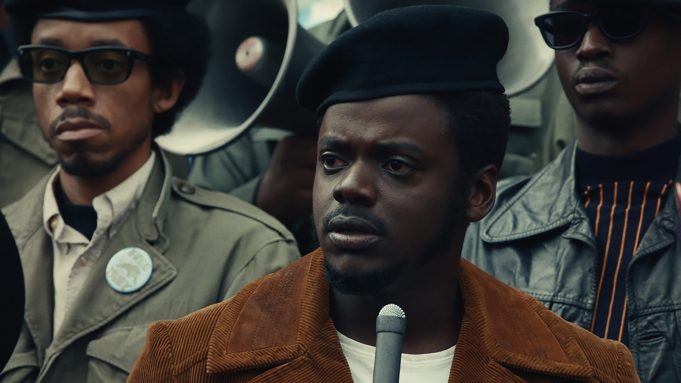
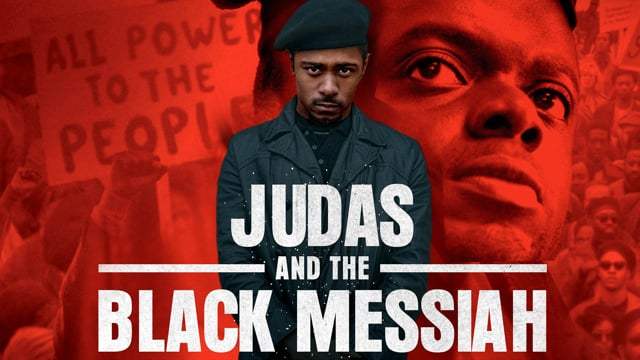
Lisa Reviews An Oscar Nominee: Judas and the Black Messiah (dir by Shaka King)


Judas and the Black Messiah is currently an Oscar nominee for Best Picture, Best Original Screenplay, Best Cinematography, Best Original Song, and Best Supporting Actor. (In a move that left quite a few people feeling confused, the Academy nominated both of the film’s leads — LaKeith Stanfield and Daniel Kaluuya — in the supporting category.) In detailing how, in 1969, Black Panther leader Fred Hampton (played by Kaluuya) was assassinated by the FBI and the Chicago police, it tells a true story that should leave any viewer, regardless of political orientation, shaken.

What’s interesting is that, in several Oscar categories, Judas and the Black Messiah will be competing with another fact-based film about 60s activists, Aaron Sorkin’s The Trial of the Chicago 7. In fact, Hampton briefly appears as a character in The Trial of the Chicago 7 and a key scene involves lawyer William Kunstler and Black Panther Bobby Seale discussing Hampton’s murder. Of course, in Sorkin’s film, the Black Panthers don’t get to say much. They appear in the background of the courtroom a few times and it’s hard not to feel that Sorkin is largely using them as props, as a way to let us know that he and the Chicago 7 are all on “the right side of history.” After the scene in which he learns that Hampton’s been murdered, Bobby Seale basically disappears from the film and the rest of The Trial of the Chicago 7 focuses on seven rich white guys debating whether or not it’s better to be serious while protesting or to try to have fun. I point this out not merely to criticize The Trial of the Chicago 7 but also to illustrate that, though they deal with the same time period and the same themes, Judas and the Black Messiah and The Trial of the Chicago 7 are as different as night and day. Judas and the Black Messiah is an angry and unapologetically political film, one that reveals just how anodyne The Trial of the Chicago 7 actually is. If The Trial of the Chicago 7 is carefully calculated to be a crowd pleaser, Judas and the Black Messiah is about leaving the audience outraged. If The Trial of Chicago 7 is about ultimately assuring the audience that the system works even if it is occasionally corrupted, Judas and the Black Messiah is a call to burn the entire system down.

The film opens with Bill O’Neal (LaKeith Stanfield) getting arrested for both auto theft and impersonation of a federal officer in Chicago. He’s approached by FBI agent Roy Mitchell (Jesse Plemons). Mitchell has an offer for Bill. Mitchell is willing to have the charges dropped if Bill will agree to work undercover for the FBI. Bill accepts Roy’s offer and is assigned to infiltrate the Illinois chapter of the Black Panthers. The chapter is currently led by Fred Hampton, a charismatic revolutionary who has been going around to all of the other activist groups and gangs in Chicago and building a multi-racial coalition, one dedicated to social justice and economic equality. Under the direction of J. Edgar Hoover (Martin Sheen, made up to look as grotesque as possible), the FBI is looking to destroy the Black Panthers from within.

Bill agrees to work for the FBI and infiltrate the Black Panther Party. Soon, he not only wins Hampton’s trust but he also works his way up the ranks until he’s promoted to being head of security. He also grows close to Hampton and starts to respond to Hampton’s message of self-determination. However, Mitchell insists that Bill continue to inform on the Panthers, arguing that the Panthers will kill Bill if they ever discover that he’s working with the FBI and also that Hampton himself is a dangerous radical. (Mitchell brags about how he worked to solve the murder of three civil right workers in Mississippi before then comparing Hampton and the Panthers to the KKK.) With Hampton gathering more followers and Hoover demanding that something be done to “neutralize” him, Bill is ordered to betray the man that many have come to view as being the black messiah.

Daniel Kaluuya gives a mesmerizing performance as Fred Hampton. It’s one thing to play a character who everyone insists is a charismatic leader but it’s another thing to give a performance that convinces the audience that the character is a charismatic leader before anyone else has even said a word about him. Kaluuya strides through the film, playing Hampton as a man who knows that he’s destined to change the world. The scenes where he meets with gang leaders and other activist leaders and recruits them into his Rainbow Coalition could have played like simple agitprop (just imagine if Aaron Sorkin had written or directed them!) but Kaluuya is so convincing that you never have any doubt that people actually would abandon their prejudices and their rivalries to follow him. Unlike the quippy activists at the heart of The Trial of the Chicago 7, Kaluuya-as-Hampton actually discusses what his ideology means and also why the system cannot be depended upon to sort itself out. Kaluuya’s Hamtpon challenges not only the film’s villains but also the complacency of the viewers, something that definitely cannot be said of the characters in Aaron Sorkin’s far more comforting film.

LaKeith Stanfield has a difficult role because Bill is a character who most viewers are going to feel ambiguous about but he does a good job of capturing both Bill’s growing consciousness and his growing desperation as he comes to realize that there’s no way to escape the situation in which he’s found himself. Finally, Jesse Plemons is well-cast as Roy Mitchell, who is alternatively threatening and consoling to Bill. A lesser actor would have played Mitchell as just being a straight-up villain but Plemons plays him as someone who truly does believe that he’s one of the good guys, which makes Mitchell’s actions all the more disturbing.

Judas and the Black Messiah is a powerful and angry film. One need not even agree with every bit of Hampton’s ideology to be outraged by the federal government’s efforts to silence his voice and end his life. Judas and the Black Messiah is not expected to win much on Sunday night and, indeed, by nominated both Kaluuya and Stanfield in the same category, the Academy has created a situation in which the two could potentially split the vote and prevent either one from winning. Still, regardless of what it does or doesn’t win this weekend, Judas and the Black Messiah a film that will probably continue to resonate after many of the other nominees have been forgotten.

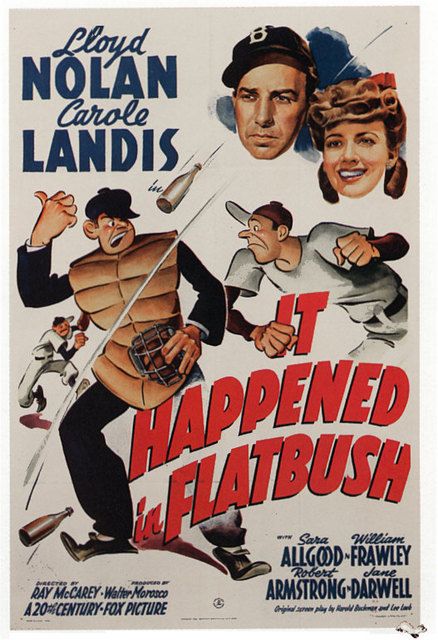
It Happened In Flatbush (1942, dir. by Ray McCarey)


It’s not easy being a Rangers fan.

I start every season feeling so optimistic and hopeful that this will be the season that the team will finally get itself together and return to the World Series. Every season, that feeling lasts for a game or two and then it’s back to just taking my victories where I can get them. This season, we’re already in last place in the AL West and my favorite Ranger, Elvis Andrus, is now playing for Oakland. However, as bad as things are here at the start, we’ve still won more games than the Yankees, The Twins, and the Tigers. That’s my little victory. The great thing about baseball is that if you get enough of those little victories, there’s a chance that they’ll eventually turn into a big victory.

Earlier today, I watched an old, black-and-white movie called It Happened In Flatbush. It’s about a baseball team that no one is giving much of a chance. Even though the team isn’t given a name in the film, the film takes place in Brooklyn and, in the 1942, the Dodgers were Brooklyn’s team. The owner of the team, Mrs. McAcvoy (Sara Allgood), has promised all of the team’s fans that the team is going to reward their loyalty by eventually making it to the World Series. Looking for a new manager, she sets her eyes on Frank Maguire (Lloyd Nolan). Maguire used to play for the team until he committed an error that led to a crucial defeat. Now, Frank is managing a minor league team in Texas and everyone thinks that he’s washed up. Mrs. McAvoy knows that Frank has something to prove and she hires him to be her new manager.

Just like the team, no one gives Frank much of a chance but he proves them wrong. He wins over the people of Brooklyn when he stands up for a fan who lived out every baseball lover’s dream of punching an umpire. When Mrs. McAcoy dies and the team is inherited by her daughter (Carole Landis), Frank teaches her all about baseball and Brooklyn and the two of them fall in love. With his team sometimes grumbling about his tough coaching style, Frank tries to lead both the team and an untried pitcher into the race for the pennant.

It Happened in Flatbush is an old movie but I liked it. Of course, I also love baseball so that probably helped because the move loves baseball too. I especially liked the courtroom scene where Frank stood up for every fan who has ever gone overboard supporting their team. He talks about what the team means to the people of Brooklyn and how a victory for the team is a victory for the entire borough. Even today, any baseball fan will be able to relate to what Frank’s saying. I also liked that the movie included a lot of footage of actual baseball games from the 40s.

Mostly, I appreciated the movie because it was a classic underdog story. No one gives the team much of a chance but they prove them wrong. It reminded me that, in baseball, anything can happen and just because your team is struggling now, that doesn’t mean that they can’t make a comeback. Watching It Happened in Flatbush made me realize that there’s hope for my team yet!

It Happened in Flatbush is a movie for those of us who love baseball. It isn’t available on any streaming services but it does sometimes air on the Fox Movie Channel.

The Annie Awards Honor Soul


I think it’s pretty much a foregone conclusion that Soul is going to win the Oscar for Best Animated Film.  I’m not complaining because I really, really liked Soul.  (I also really liked Farmageddon but, sadly, there can only be one winner.)  That said, if Soul needed a boost, it certainly got one from the Annie Awards last night.

The Annie Awards reward the best in animation.  Here are their 2020 winners:

Best Feature
Onward
Soul
The Croods: A New Age
The Willoughbys
Trolls World Tour

Best Indie Feature
A Shaun the Sheep Movie: Farmageddon
Calamity Jane
On-Gaku: Our Sound
Ride Your Wave
Wolfwalkers

Best FX for Feature
Over the Moon
Soul
The Croods: A New Age
Trolls World Tour
Wolfwalkers

Best Character Animation – Feature
Onward
Soul
The Croods: A New Age
The Willoughbys
Wolfwalkers

Best Character Design – Feature
Soul
The Croods: A New Age
The Willoughbys
Trolls World Tour
Wolfwalkers

Best Direction – Feature
Calamity Jane – Rémi Chayé
Over the Moon – Glen Keane
Ride Your Wave – Masaaki Yuasa
Soul – Pete Docter & Kemp Powers
Wolfwalkers – Tomm Moore & Ross Stewart

Best Music – Feature
Onward
Over the Moon
Soul
The Willoughbys
Wolfwalkers

Best Production Design – Feature
Onward
Soul
The Willoughbys
Trolls World Tour
Wolfwalkers

Best Storyboarding – Feature
Earwig and the Witch
Over the Moon
Soul
The Croods: A New Age
Wolfwalkers

Best Voice Acting – Feature
Earwig and the Witch – Vanessa Marshall (Bella Yaga)
Onward – Tom Holland (Ian Lightfoot)
Over the Moon – Robert G. Chiu (Chin)
The Croods: A New Age, – Nicolas Cage (Grug)
Wolfwalkers – Eva Whittaker (Mebh Óg MacTíre)

Best Writing – Feature
A Shaun the Sheep Movie: Farmageddon – Mark Burton & Jon Brown
Onward – Dan Scanlon, Jason Headley & Keith Bunin
Over the Moon – Audrey Wells
Soul – Pete Docter, Mike Jones & Kemp Powers
Wolfwalkers – Will Collins

Best Editorial – Feature
A Shaun the Sheep Movie: Farmageddon
Calamity Jane
Onward
Soul
The Willoughbys

Lisa Reviews An Oscar Nominee: The Citadel (dir by King Vidor)


The 1938 Best Picture nominee, The Citadel, is about a doctor who briefly loses his way but — don’t worry! — he eventually finds it again.

The film opens with the following title card:

This motion picture is a story of individual characterizations and is in no way intended as a reflection on the great medical profession which has done so much towards beating back those forces of nature that retard the physical progress of the human race.

Having gotten that out of the way, it goes on to tell the story of Dr. Andrew Manson (Robert Donat), an idealistic British doctor who serves his apprenticeship in rural England and who eventually ends up in Wales, trying to figure out why all of the miners seem to developing a mysterious cough. Along the way, he marries the always supportive Christine (Rosalind Russell, doing a lot with an underwritten role). Unfortunately, Dr. Manson discovers that being a doctor is not always an easy life. He’s frequently underpaid and underappreciated. His patients are often suspicious and argumentative and the medical establishment is hesitant to accept change. When the frustrated Dr. Manson returns to London, he discovers that he can make a fortune by working as a doctor for the type of wealthy people who are always willing to spend a little extra money on the latest fad treatment. With the encouragement of the decadent Dr. Lawford (Rex Harrison), Manson abandons his old ways and he’s finally able to make some money off of patients who will basically do anything that he tells them to do. However, a personal tragedy forces Manson to reexamine his life and consider why he became a doctor in the first place.

The Citadel is a coming-of-age film, one the follows Dr. Manson from the time when he’s a young doctor in need of a mentor until he himself is the one who is doing the mentoring. It gets off to a bit of a slow start. To be honest, I found Manson’s early apprenticeship to be almost as tedious as Dr. Manson found it to be. Things pick up a bit once Manson is on his own, fighting for the rights of miners or trying to find some sort of ethical justification for only treating the rich. If Robert Donat seems oddly hesitant during the first half of the film, he’s undeniably compelling during the second half. Though Dr. Manson has many scenes in which he rails against ignorance and injustice, Donat wisely resists the temptation to go overboard while portraying his indignation and, as a result, The Citadel never slips into melodrama. Donat doesn’t play Manson as being a crusader but instead as just being an often frustrated professional who knows that he’s being prevented from doing his best work. Director King Vidor, who made several films about thwartded visionaries, was never a particularly subtle director but Donat’s performance goes a long way towards making Vidor’s messianic tendencies tolerable.

Donat gets good support from the rest of the cast, especially Ralph Richardson in the role of his sometimes mentor. That said, Donat is still definitely the main reason to watch The Citadel, which is an uneven thought ultimately worthwhile film. The Citadel is very much a film of 1938 and it’s slow pace, earnest seriousness, and dialogue-heavy style will undoubtedly be an issue for some people watching the film in 2021. Watching a film like The Citadel today requires a willingness to adjust to the aesthetics of a past age. This is a film that will definitely be best-appreciated by those who aren’t unfamiliar with spending an entire weekend watching TCM. But you know what? It’s good to watch old movies. You can’t understand the present or prepare for the future if you’re not willing to look at the past.

The Academy nominated The Citadel for Best Picture. It was one of the first British films to be so honored (though not the first, that honor went to The Private Life of Henry VIII). However, it lost to Frank Capra’s You Can’t Take It With You. Though Robert Donat lost the Oscar for Best Actor to Spencer Tracy in Boys Town, he would be rewarded the very next year for his performance in Goodbye Mr. Chips. Among those who Donat defeated was Clark Gable, nominated for playing Rhett Butler in Gone With The Wind, a characters that Margaret Mitchell always said she envisioned as being played by Robert Donat.

Film Review: Operation Varsity Blues: The College Admissions Scandal (dir by Chris Smith)


In Operation Varsity Blues, Matthew Modine plays Rick Singer, the real-life “college admissions consultant” who was one of the many people involved in the 2019 College Admissions scandal.

Singer was the former basketball coach who helped the rich and famous get their children into the right Ivy League schools. As the film shows (and as you probably already know), he did this by faking test scores, faking athletic activities, and often arranging for money to exchange hands. The film not only features Modine and others actors acting out the actual conversations that Singer was taped as having with his wealthy clients, it also features interviews with a few of Singer’s acquaintances and with the various journalists who covered the scandal. It’s a documentary with dramatic recreations.

And that’s fine. Modine does a good enough job portraying Rick Singer, playing him as essentially being a sleazy salesman who knew exactly what to say to the parents who were desperate to get their child into a prestigious university. (The film reveals that Singer would often lie to his clients, brainwashing them into believing that there was no way their children would be able to get into USC or Harvard without his help.) Unfortunately, with his gray hair and, his nervous smile, Matthew Modine as Rick Singer bares an odd but definite resemblance to the great Eric Roberts and, as I watched Operation Varsity Blues, I found myself thinking about how great it would be to see a film in which Eric Roberts did play Rick Singer. (I mean, seriously, Singer just seems like a perfect Eric Roberts role.) That may sound like a petty complaint but it does get at a bigger issue. Operation Varsity Blues is 100 minutes long but, despite its slightly different narrative format, it still doesn’t tell us anything that we couldn’t have learned from all of the other documentaries and dramatic adaptations based on the college admissions scandal. Even with the reenactments and the chance to hear Singer’s own words, Operation Varsity Blues still doesn’t tell us anything new about the scandal or why it happened. If nothing else, Eric Roberts and his neurotic screen presence would have put a new spin on a now-familiar story,

To be honest, the hybrid, docudrama format actually works against the film. On the one hand, you’ve got the real people telling their story in talking head interviews. But every time you start to get into their stories, the film cuts away to a reenactment and the film goes from being a documentary to being a low-budget Matthew Modine film. The film would have worked better if it had chosen to be either a documentary or a drama. By trying to be both, the end result is a movie that often seems disjointed and leaves you still feeling as if you haven’t actually gotten the entire story.

Finally, Lori Loughlin and her husband are featured in the documentary, though only in news footage. At one point, it’s revealed that after their daughter was accepted to USC, her high school guidance counselor called the college to tell them that Olivia Jade was never on her school’s rowing team, regardless of what her application said. Apparently, Lori and her husband got very angry about the counselor doing this and you know what? They had every right to be pissed off. Why is a guidance counselor trying to keep one of his students from getting into a good college? I mean, how was it really any of his business to begin with? That’s something that I would have liked to have seen explored in a bit more detail. Instead, the film just hurries along to another reenactment of Rick Singer explaining how to cheat on the ACT. (I’m still amazed that people spent that much money to do something as easy as cheat on a standardized test. I mean, it’s not that difficult.)

Unfortunately, the entire film is like that. It raises some interesting points but it ultimately leaves you frustrated by its refusal to do anything more than scratch the surface.

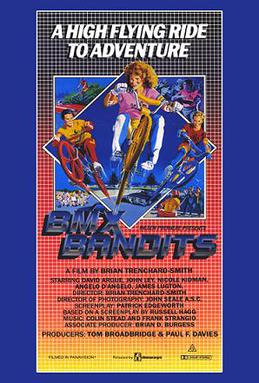
Film Review: BMX Bandits (dir by Brian Trenchard-Smith)


Bicyclists!

Oh, don’t even get me started on people who ride bicycles. Don’t get me wrong. I own a bicycle. I like to ride my bicycle occasionally, though only in the park and never in the street. They’re good exercise. They’re good for the environment, I guess. They don’t kill as many people as cars do, I assume. That said, professional bicyclists — and by that, I mean the ones who don’t even own a car — drive me crazy.

Don’t even pretend that you don’t know what I mean. You’re trying to drive to work or the grocery store or maybe you’re just taking a nice drive to clear your head. You’re tapping on the accelerator. You’re going over 60 mile per hour because there aren’t any cops around. Everything’s just fine and then suddenly …. you get stuck behind some jerk on a bicycle. He’s got his helmet on. He’s got his tight little bicycle shorts and his fluorescent shirt. He’s peddling along, all hunched over and with his ass up in the air, like that doesn’t make him look like a total idiot.

And then, you have to slow down. You’re have to be careful that you don’t accidentally run him over. You have to watch his arms because his stupid little bicycle doesn’t have a goddamn turn signal or a brake light. When you reach a red light, he sits there on his bike with one hand on his hips and the other hand holding up his little water bottle, from which he drinks as if he’s spent the past week in a desert. And you’re left to wonder why this guy is even here, riding his bicycle down a busy street that doesn’t even have a bicycle lane. The worst part of it is the smug look of satisfaction on his face as he looks back at your car and thinks, “I may be inconveniencing everyone but at least I’m making a difference.”

Considering my anti-bicyclist feelings, I may not have been the ideal audience for the 1983 Australian film, BMX Bandits. Fortunately, though, the teenager bikers in this film were all extremely fast and very stunt-orientated. These bikers weren’t interested in using their bikes as a symbol of moral superiority. Instead, they were more about using them to jump over shopping carts and to ride across the beaches of Sydney. One of the bikers was played by a 16 year-old Nicole Kidman and she managed to bring at least a hint of reality to even the most absurd pieces of dialogue.

That’s a good thing because BMX Bandits is, even by the standards of a bicycle film from the early 80s, is a thoroughly absurd film. A group of bank robbers lose a box of walkie talkies. Three BMX bike enthusiasts find the box. This leads to a long chase through Sydney, as well as a sort of bizarre counter attack launched by hundreds of teenage BMX bike owners. The bank robbers don’t stand a chance! That said, I’m not really sure why, since the movie opened with them successfully robbing a bank, they couldn’t have just purchased a new box of walkie talkies. Interestingly enough, the police also spend a lot of time listening to walkie talkies, which can only lead me to believe that walkie talkies were a really huge deal back in 1983. This film is fascinated by them, to the extent that a more appropriate title for the film might have been Law & Order: Walkie Talkie Squad.

Anyway, what can you really say about something like BMX Bandits? It’s such a silly film that it’s almost impossible to review because to take it seriously is to miss the point. The villains are buffoons. The plot makes no sense. Nicole Kidman’s good, though you still only really notice her because you know what audiences in 1983 did not know, that she’s future Oscar winner Nicole Kidman. At the same time, the scenery is lovely and there’s an extended scene that takes place in a cemetery that has some nice atmosphere even if it does go on a bit too long. There’s not really a lot to be said about BMX Bandits but at least it won’t slow down traffic.

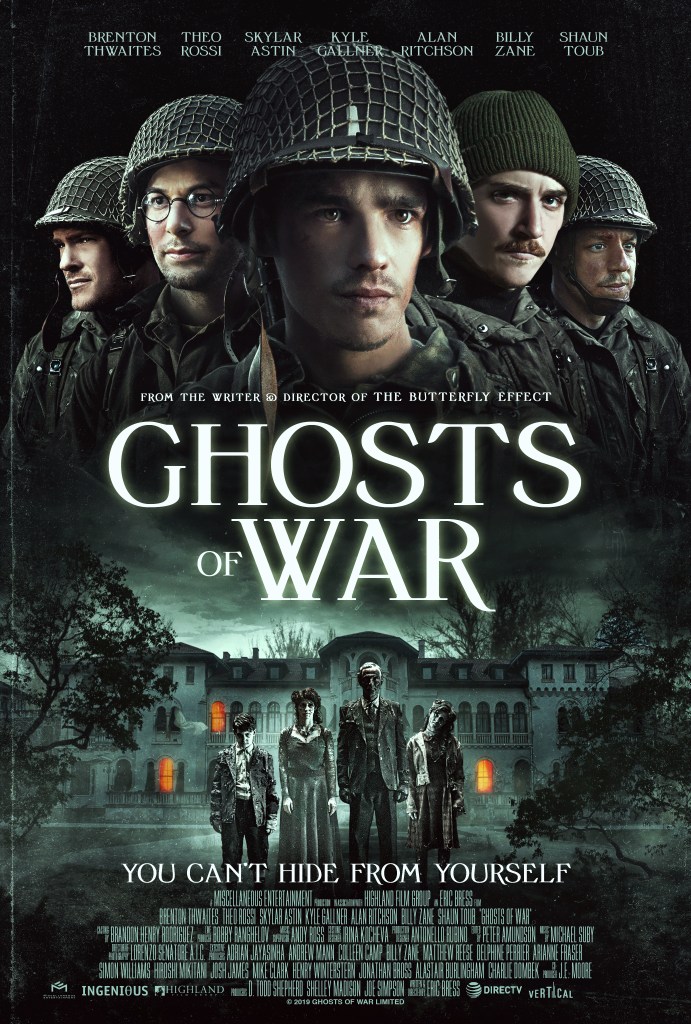
Ghosts of War


(Dir Eric Bress)

Review by Case Wright

What makes you you? Better yet, what’s the meaning of life? Lucky for you, I know the answer to both of these questions. You are your experiences. That’s it. The meaning of life is choice. You are a sum of your experiences and choices. Life is a series of choices from the lowliest earth worm going into soil or the sun to a person deciding to risk their life to save themselves or their own skin. Sorry, the meaning of life isn’t more exciting, but that’s it just the same. Choice after choice after choice is what life is and what makes you you are the results of those choices. You may now go about your business.

Ghosts of War was written and directed by Eric Bress for Netflix. I am very grateful to Eric Bress because without him we wouldn’t have Final Destination 2 or The Final Destination and that is a sad life indeed. FD2 is Super Awesome: there’s people sliced in half and trees that take your head off and death itself is really into Rube Goldberg machinations of killing you. Death is kinda bored and goes a little nutty.

Ghosts of War was a lot of fun. The ending was hard to watch, but not because it was poorly done; it was just pretty realistic. Also, GOW has Billy Zane that alone should make you watch it. I also liked that the film had both Brenton Thwaites and Alan Ritchson of Titans (See it on HBO Max), which is Breaking Bad levels of awesome! Yeah, I said it.

GOW centers around a WWII era platoon assigned to protect a house in France. When they arrive, they realize that the house quite haunted. Bress solves the why not leave the haunted house question by putting them into a loop, wherein, no matter where they travel, they are back at the haunted house.

There are some good scares and not just jump scares. It has the gross stuff that you loved in Final Destination 2, which must be a Bress signature. There’s at least three people who are immolated in this movie. If you miss the gore of Supernatural, this movie is for you!

Brenton and Alan both have some real stand out performances and make me want to re-watch Titans again because of it. Brenton and Alan play frustration, fear, and rage better than anyone I’ve ever seen.

On a personal level, I’m always watching how well people play Soldiers. This movie is VERY realistic. The characters talk like us, think like us, handle stress like us, and move like we really do. I could understand why and what they were doing at all times. It was amazingly accurate. I was very impressed and would recommend the movie just for its realistic portrayal of Soldiers. This movie accurately showed how Soldiers would react to a supernatural enemy. This doesn’t just happen. It was clear to me that the actors and director took care to do this correctly. It is appreciated.

The ending was a good twist and there were clever subtle clues along the way to lead you to solving the mystery. I would highly recommend this movie and hope to see Brenton and Alan work with this director again.

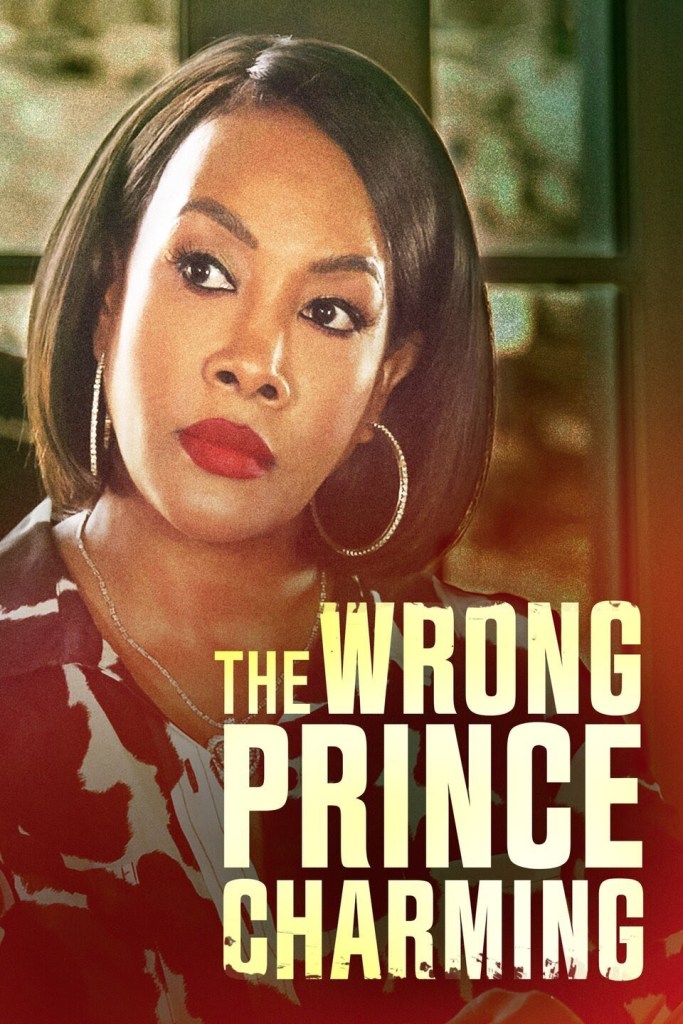
Lifetime Film Review: The Wrong Prince Charming (dir by David DeCoteau)


“It looks like you found the wrong prince charming!” Vivica A. Fox says towards the end of The Wrong Prince Charming.

I’ll admit that I cheered a little when Vivica said the line. If you know anything about Lifetime’s “Wrong” franchise, you know that Vivica A. Fox always plays a sympathetic authority figure who, at some point, says something along the lines of “Looks like he was the Wrong Poolboy” or “He messed with The Wrong Administrative Assistant.” One of the main reasons why people like me look forward to seeing the latest “Wrong” films is to see just how exactly the title is going to be worked into Vivica’s dialogue.

Make no doubt about it, there’s been a lot of “Wrong” films. We’ve had wrong blind dates, wrong tutors, wrong cheerleader coaches, wrong teachers, wrong real estate agents, wrong motel owners, wrong boyfriends, wrong girlfriends, and wrong houseguests. It only makes sense that we would eventually have a wrong Prince Charming.

The title character would be Prince Edward (James Nitti), who claims to be royalty but who, we learn fairly early on, is actually just a con artist who works with his assistant Liam (Jonathan Stoddard) to defraud people and corporations out of their money. Edward may be a charmer but he’s also a charlatan who is not above murdering anyone who he feels might be getting too close to the truth. That’s what greed does to people. That’s bad news for Anna (Cristine Prosperi), who is Edward’s latest target. Anna is an attorney. Among her clients is Bridget (Vivica A. Fox). After watching enough of the “Wrong” films, you really do find yourself wondering if maybe Vivica A. Fox is supposed to be playing the same character in every one of them. Maybe she just changes her name frequently as she travels across Canada and gets involved in thwarting the schemes of the wrong people. It would certainly explain a lot about the Wrong Cinematic Universe.

The thing with Lifetime’s “Wrong” films is that you either get them or you don’t. On the one hand, they’re pure melodrama. On the other hand, they’re also self-aware enough to poke fun at themselves. They’re not meant to be taken seriously, Instead, they’re diverting treats that are designed to keep the audience amused while they wait to hear Vivica pronounce someone to be “the wrong whatever.” They’re designed to be fun and usually, they are. The Wrong Prince Charming, for instance, has fun with the fact that everyone in the audience knows that anyone who claims to be a member of a royal family is probably lying to you. I’ve seen enough emails from enough financially burdened royals to know better than to trust anyone who claims to be a prince. When it comes to The Wrong Prince Charming, a good deal of the fun is to be found in catching all of Edward’s mistakes, all of the little moments when he accidentally lets his cover slip and reveals that he’s just some random commoner with a nice smile.

This is Cristine Prosperi’s 3rd wrong film She was also in The Wrong Cheerleader (“He messed with the wrong cheerleader!”) and The Wrong Neighbor. She’s also appeared in a handful of other recent Lifetime films, including Killer Competition and Murdered At 17. Before that, she played Imogen, the quirky stalker, on the final few seasons of Degrassi. Prosperi always does a good job in these films and the same is true here. She’s a sympathetic lead, even though it’s obvious from the start that she’s picked the wrong prince charming.

The Wrong Prince Charming is silly and fun, the type of movie that’s pretty much made to be watched with a snarky friend. I’m definitely looking forward to the next wrong film!

Lifetime Film Review: The Evil Twin (dir by Max McGuire)


If there’s anything I’ve learned from watching Lifetime films, it’s that anyone can afford a gigantic, three-story house with a basement, an attic, an Olympic-size swimming pool, and a guesthouse. Seriously, I don’t know why everyone always says it’s so difficult to get that first house because there are unemployed people in Lifetime films who live in mansions.

The other thing that I’ve learned from watching Lifetime films is that you’re screwed if you’ve got a twin. Seriously, your twin is always going to be evil. Your twin is always going to pretend to be you so that she can sleep with your boyfriend and murder your coworkers. Your twin is going to use her own DNA to frame you and then, once you’re imprisoned, she’s going to sell your identity to the Russian mob and then you’ll never get it back. Twins are bad news, or at least that’s the way it goes in the Lifetime Cinematic Universe. I’ve lost track of how many psycho twin films I’ve seen on Lifetime.

The most recent psycho twin film is named, appropriately enough, Evil Twin. Emily Piggford plays Emily, who flees from an abusive relationship and returns to her small hometown. She’s staying with her friend Lenah (Cory Lee, who also played Miss Oh on Degrassi) and she’s trying to get her life back together. Unfortunately, this prove difficult because random people keep walking up to Emily and yelling at her before telling her to stay out of their lives. Emily doesn’t know any of these people and is left to wonder why so many strangers suddenly hate her.

Emily also discovers that she has a twin sister named Charlotte! Charlotte, who lives in a beautiful house and who has longer hair than Emily, at first seems to be thrilled to have found her twin. She even asks Emily to turn her head so that Charlotte can see what the back of their earlobes look like. (That may sound like a strange request but I’d probably ask the same thing if I ever met my twin. Ears are fascinating things.) However, it soon turns out that …. well, you can probably guess. I mean, the movie is called Evil Twin, after all. Soon, Charlotte is pretending to be Emily and she’s attacking people left and right. You know how these things go.

Evil Twin is a bit more moody than the average Lifetime film. The fact that Emily is escaping from abuse and still dealing with the emotional trauma of her previous relationship gives the film a few more layers than the average Lifetime film and Emily Piggford does a good job playing both Emily and her twin sister. The film actually does manage to keep you guessing as to which twin is onscreen at any particular moment and, with Charlotte being considerably more clever and ruthless than the average Lifetime villain, the film manages to generate some suspense as Charlotte kills and maims her way through the people in Emily’s life. Evil Twin may not be the first Lifetime psycho twin movie and it definitely won’t be the last but it is one of the better ones.