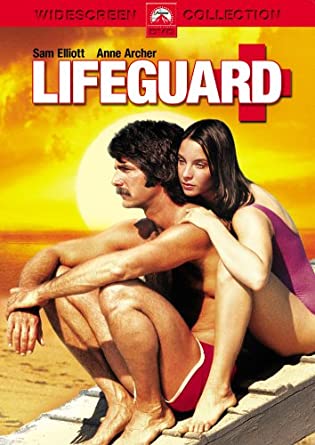
Cleaning Out The DVR: Lifeguard (dir by Daniel Petrie)


I had a long day on Wednesday so I unwound the only way that seemed appropriate.  I watched Road House, the classic film in which Patrick Swayze plays Dalton.  Dalton is the second-greatest bouncer of all time.  Who is the greatest?  None other than Dalton’s mentor, Wade Garrett!

Now, there’s a lot of reasons to love Road House but the performance of Sam Elliott in the role of Wade Garrett is definitely one of them.  If you don’t cry a little when Ben Gazzara’s goons murder old Wade, you just don’t have a heart.  In the end, of course, Wade’s bloody corpse gets left on top of the bar and, honestly, I think that’s the way Wade would want to go.

Anyway, watching Road House reminded me of just how awesome Sam Elliott is so I decided to follow it up by watching another Sam Elliott film, one that I had previously DVR’d off of TMC last week.  Filmed in 1975 and released in ’76, Lifeguard features a youngish Sam Elliott as the title character.  Even though the lifeguard in question might be named Rick Carlson, it’s hard not to think of this film as essentially being Wade Garrett: The Early Years.

When Lifeguardopens, Rick Carlson is 32 years old.  He’s been a lifeguard since he graduated high school.  In his youth, he was a championship-winning surfer.  Now, he’s an aging beach bum who is content to spend both the summer and the winter sitting in his lifeguard tower, watching life on the beach and occasionally saving someone from drowning.  Rick has a small apartment, several girlfriends, and a legion of adoring fans.  Younger lifeguards like Chris (Parker Stevenson, who would later co-star on Baywatch) view him as being a mentor.  Beachgoers view him as being an authority figure, the type that can go to if the surfers are being obnoxious or if some old perv is wandering around exposing himself.  17 year-old Wendy (Kathleen Quinlan) flirts with him and, against his better instincts and common sense, Rick often flirts back.  Despite a bit of gray in his hair and the fact that he gets winded a bit easier, Rick is still living the same life that he was living when he first graduated high school and he’s happy with that.

Or, at least, he is until he gets an invitation to his 15 year high school reunion and he discovers that everyone else is actually living a real life with real responsibilities.  When he discovers that his former girlfriend, Cathy (Anne Archer), is now divorced, Rick starts to think about what could have been.  When another former high school friend, Larry (Stephen Young), offers Rick a high-paying job selling cars, Rick finds himself wondering if it’s time to leave the beach and finally get a “real” job.

Lifeguard is an episodic film, a mix of comedy and drama that has an unexpectedly melancholy feel to it.  For the most part, the film asks us to sympathize with Rick’s desire to spend the rest of his life on the beach but, at the same time, it also doesn’t deny that there are drawbacks to Rick’s lifestyle.  Rick’s living the life he wants but he’s largely doing so alone, unable to build up any sort of personal connection with anyone who isn’t 16 years younger than him.  Interestingly enough, for a film called Lifeguard, we really don’t see Rick rescuing many people or doing anything else that you might expect to see a lifeguard doing.  Modern viewers will probably spend the entire movie waiting for Rick to give a speech about why being a lifeguard is a holy calling but that moment never happens.  Instead, it’s pretty clear that Rick mostly just enjoys hanging out at the beach and being a lifeguard allows him to get paid to do just that.  Watching the film, I could not help but compare Rick’s laid back attitude to the overly earnest lifeguards who populated Baywatch.  Mitch Buchannon would have kicked Rick off the beach for not taking the job seriously enough.  As well, as opposed to the vibrant cinematography that we’ve come to expect from beach movies, the visual style of Lifeguard is often moody and underlit.  At times, the beach itself looks like it’s suffering from an existential crisis.  The sand looks dull.  The skies above the water often appear to be gray and full of clouds.  Rick has apparently decided to spend the rest of his life on the ugliest beach in California.

It’s a flawed film, to be sure.  The attempts to mix drama and comedy often lead to uneven results and Anne Archer, Parker Stevenson, and Stephen Young are stuck with underwritten characters.  (The film’s script especially lets Young down, making Larry such an obnoxious character that it’s hard to believe that he and Rick would have ever been friends in the firs place.)  When the film does work, it’s due to the performances of Kathleen Quinlan and Sam Elliot.  Though her character is a cliché (the rebellious teenager who isn’t as worldly as she thinks she is), Quinlan does a good job of giving the character a personality that makes her more than just a stock temptation.  

The film belongs, of course, to Sam Elliott and he is perfectly cast.  As he would do decades later in The Hero, Elliott does a wonderful job of suggesting the little doubts that lurk underneath the laid back surface of his character.  His strongest moment occurs not on the beach but when Rick goes to his high school reunion and realizes that he no longer fits in with his former classmates, all of whom have careers and families.  Rick goes from being cocky to insecure in a matter of minutes and Elliott captures Rick’s emotions beautifully.  At that moment, it’s hard not to feel sorry for Rick.  One can understand why he’s tempted to leave the beach for the real world but, at the same time, one can also see that Rick understands that it might be too late for him to do so.  He’s spent the last 15 years in a perpetual adolescence and the rest of the world has moved on.  Elliott perfectly captures the moment when Rick realizes that his happiness has come with a price.  Rick is a flawed (if ultimately good) person but Sam Elliott gives a flawless performance in the role.  Just as surely was Wade Garrett rescued Dalton when Wesley’s men tried to stop the beer delivery, Sam Elliott saves Lifeguard.
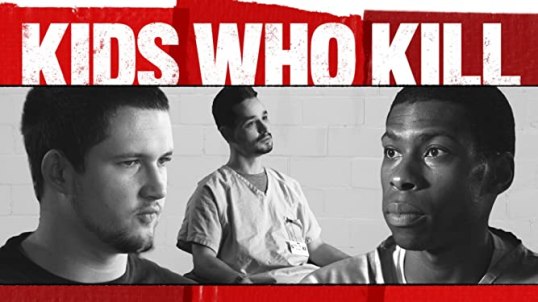
Documentary Review: Kids Who Kill (dir by Andy Genovese)


It’s currently True Crime Week on A&E, with every day being filled with programming about murders, court cases, and unsolved mysteries.  It’s all a bit icky but I do have to admit that I have a weakness for true crime.  That’s why, when A&E aired the 2017 documentary Kids Who Kill yesterday, I ended up watching.

As soon as Kids Who Kill started, I found myself wondering if I had watched it before.  It turned out that I hadn’t.  Instead, my sense of Deja Vu was due to the face that I had seen all of the stories featured in Kids Who Kill on numerous other true crime programs.  One reason why there are so many true crime programs is that they’re cheap and easy to make.  Most of the information is in the public domain and you can always grab footage from the local news broadcasts of the time.  The reporters who covered the murders and the trials are always willing to build their brand by appearing on the program and saying stuff like, “Things like this just didn’t happen in our town.”  If the actual murderer is still alive and willing to be interviewed, chances are that his story will be told on at least a dozen different programs.

That’s certainly the case with Eric Smith, who was 13 years old when he murdered a 4 year-old boy.  Smith has been incarcerated since 1994 and his willingness to be interviewed has led to him being featured on several different programs, including this documentary.  In every interview, Smith says, not surprisingly, that he was an abused and emotionally neglected child who, having been bullied his entire life, lashed out in one terrible moment and that he’s no longer that child and that he deserves to be released from prison.  (You can always tell if the program is sympathetic to Smith by whether or not they include the fact that he sodomized the boy that he killed.  Kids Who Kill leaves out that fact.)  What Smith always seems to miss is that one can very legitimately say, “That sucks you were abused and you never really had a chance but, at the same time, you strangled and beat a four year-old to death so fuck you.”

Kids Who Kill tells several stories about people like Eric Smith, who committed murder when they were just a minor and who were subsequently sent to prison, often for life.  It’s full of contemporary news footage and psychoanalysts offering up theories about why kids kill but it never really digs too deeply into the subject.  There are several prison interviews with the killers.  At least two of them blame “first shooter video games.”  (While I would certainly be concerned about someone who spent 24 hours a day playing a violent video game, it’s also hard to buy that a 16 year-old couldn’t tell the difference between Doom and real life.  If you thought Doom — or Halo, as another shooter claims — was real life then you obviously had issues before you even picked up your first controller.)  Every killer interviewed expresses remorse but, with the exception of Nathan Brazill, who was convicted of shooting a teacher, none of them seem particularly sincere about it.  Then again, one could argue that they seem insincere because a lifetime in prison has conditioned them not to express any emotions that could be mistaken for weakness.  Perhaps I was being too quick to expect tears from men who live in a confined society where tears can lead to being targeted.

It’s a complex subject, kids who kill.  Can we forgive?  Can murderers be rehabilitated?  Can someone mature into becoming a different person than they were when they were 16?  Is it more important to punish or to rehabilitate?  These are important questions and, unfortunately, they’re not the type of questions that are really explored in any sort of depth by most true crime shows and documentaries.  Kids Who Kill offers up some disturbing stories but it never scratches beneath the surface.

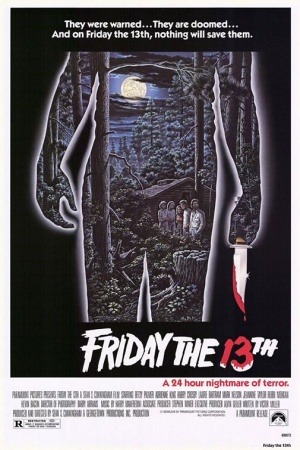
Happy Friday the 13th From The Shattered Lens


Originally, Jeff and I were planning on going up to the lake this weekend.

It’s something that we’ve been wanting to do for a while, just to get away from everything for a day or two. It’s summer in Texas, which means that it’s incredibly hot right now. The lake is awfully inviting in the summer. Originally, we thought we might go last week but I ended up getting sick and spending almost the entire week in bed. So, it made sense to just go this week, right?

Except …. well, did you happen to notice what day it is today?

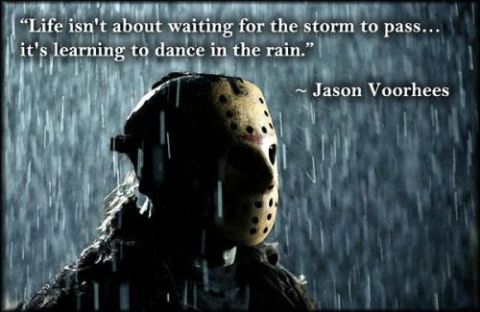
Listen, at heart, I’m a skeptical person. One reason why horror films don’t bother me is because I don’t believe in ghosts or witches or magic or zombies or death curses or any of that other stuff. I don’t even believe in aliens. I’m not a superstitious person and I have to admit that I always find myself a bit confused whenever I talk to anyone who is. And yet, even I know better than to tempt fate by going up to the lake on the weekend of Friday the 13th. That’s the power of the tale of Jason Voorhees, his mother, and a New Jersey camp called Crystal Lake. Even the most skeptical among us know better than to mess around with Jason. There’s a 99.9% chance that Jason doesn’t exist and, even if he did, he would be way up in New Jersey but still, just the fact that there’s a .1% chance that he might be out there somewhere …. that’s enough to keep me home for the weekend!

With that in mind, Happy Friday the 13th! I’m celebrating by watching the original films, the one that were produced by Paramount Pictures in the 80s. By that, I mean the films that came out before Jason Goes To Hell turned everyone’s favorite hockey masked serial killer into a space slug. Say what you will about these films, they are an undeniable part of our culture and they’re amongst the most influential movies ever made. Personally, I prefer the first film, the 2nd film, and the 4th film. I’ll also defend Friday The 13th: A New Beginning because I enjoy being a contrarian. At its best, the franchise was an American tribute to giallo. At its worst …. well, we’ve all seen Part 3, right?

However you celebrate, stay safe! And maybe we’ll see you up at the lake next week!

(And if you need something to do, be sure to check out this article, full of Friday the 13th trivia, that I wrote a few Friday the 13ths ago!)

Film Review: Falling (dir by Viggo Mortensen)


If you’re one of the many people who watched The Father and thought to yourself, “Good movie but I wonder what it would have been like if every character involved had been thoroughly unlikable and one-dimensional,” Falling might be for you.

I almost felt guilty writing that paragraph because Falling is the directorial debut of actor Viggo Mortensen and Mortensen has been very open about how several members of his family have struggled with dementia. He lost both his mother and his father to dementia and he served as his father’s caretaker during the last year of his life. As Falling is film about a man taking care of his father when the latter develops dementia, it’s easy to see that this film is a very personal one for Mortensen. Unfortunately, as both a director and a screenwriter, Mortensen basically leads his story straight into a dead end.

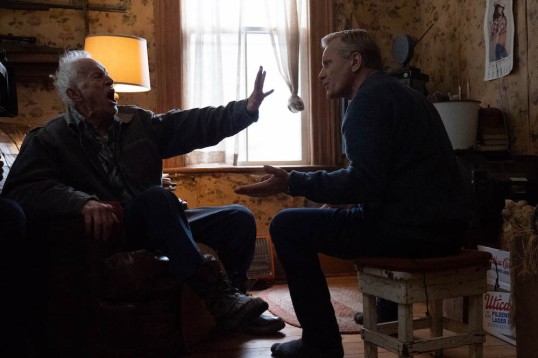
Lance Henriksen plays Willis Peterson, a bigoted and angry old farmer who is being taken care of by his estranged son, John (Viggo Mortensen) and John’s husband, Eric (Terry Chen). John hopes to find Willis a new and nearby place to live so that he and his sister, Sarah (Laura Linney), can check in on him. Willis is occasionally charming in a irascible old man way but, usually, he’s just abrasive, abusive, angry and a bit of a homophobe. He’s also losing his memory, continually forgetting that his wife is dead and talking about all of the ways that John and Sarah disappointed him when they were teenagers.

The film asks whether or not Willis was always an asshole or if he’s just asking like this because he’s suffering from dementia. That would be an interesting question if not for the fact that the film is also full of heavy-handed flashbacks that reveal that, without any doubt, Willis was always an asshole. The problem is that, once you realize that Willis was an unbearable young parent and an unbearable middle-aged crank, it becomes difficult to care much about him once he becomes an unbearable old man. If The Father showed how dementia changes one’s personality and way of looking at the world, the message of Falling seems to be that terrible things also happen to terrible people. And while that’s a certainly true statement, it doesn’t make for a particularly compelling narrative.

One does have to give Mortensen some credit for giving Lance Henriksen a leading role. Henriksen not only looks like he could conceivably by Viggo Mortensen’s father but he does what he can to suggest that, under all of the bluster and the anger and the hateful words, Willis is ultimately a man who is scared because the world is transforming into one that he’s not capable of understanding. That’s a idea that is present in the film almost solely due to Henriksen’s performance and the few scenes that are genuinely interesting to watch are almost all due to his efforts. There’s no winking at the audience during Willis’s many abrasive moments and Henriksen deserves credit for fearlessly and honestly playing a character that most viewers aren’t going to like.

Unfortunately, the rest of the film doesn’t live up to the promise of Henriksen’s performance. The script often feels repetitive and neither Mortensen nor Linney make much of an impression as Henriksen’s children. (Linney, as happens far too often, feels especially wasted, leaving viewers to wonder what happened to the actress who, long ago, gave such a fierce performance in Mystic River.) The scene where Henriksen meets Linney’s children is especially poorly-written and seems to go on forever. It becomes clear that, as a director, Mortensen has a good visual eye but no idea how to build or maintain narrative momentum with a story that centers on characters who are incapable of moving forward.. One watches the film and admires Mortesen’s intentions but emotionally, the whole production feels remote and overly studied. Falling underwhelms.

Scenes That I Love: Billy Jack Learns About The Three Levels In The Trial of Billy Jack


Monday would have been the 90th birthday of Tom Laughlin, the actor who revolutionized independent American cinema through his Billy Jack films.

In four films, Laughlin played Billy Jack, an American Navajo, a former Green Beret, a veteran of the Vietnam War, a hapkido master, and a man who just protects children and other living things.  When he first appeared in 1967’s The Born Losers, he was protecting a woman from bikers.  In 1971’s Billy Jack, he was protecting the Freedom School from ignorant townspeople.  In 1974’s The Trial of Billy Jack, he was …. well, in that film, Billy Jack did a little bit of everything but the National Guard still ended up destroying the Freedom School.  Finally, in 1977’s Billy Jack Goes To Washington, Billy was appointed to the United Stated Senate because what else are you going to do with someone who has killed a tremendous amount of people over the course of three films?

(Of course, in Senator Jack’s defense, they were all bad people.)

Laughlin not only starred as Billy Jack but he also directed all four of the films and, starting with Billy Jack, he also handled the distribution of them.  A huge box office hit, Billy Jack is considered to be a seminal counter culture film.  The other three films are a bit less acclaimed and Trial of Billy Jack is often cited as one of the most pretentious and self-indulgent films ever made.  But, regardless of their individual artistic merits, all of the Billy Jack films share an appealing mix of sincerity and silliness.  Laughlin was a good actor and, visually, he was a stronger director than he was often given credit for. Some of the shots in the original Billy Jack are breath-taking.  At a time when even self-styled progressive films still portrayed women in the most condescending and demeaning way possible (check out Getting Straight or R.P.M., if you dare), the Billy Jack films were as much about Jean (played by Delores Taylor, Laughlin’s wife and creative partner), the founder of the Freedom School, and her beliefs, as they were about Billy Jack and his struggles to accept pacifism.  If nothing else, the Billy Jack films featured actual conversations and debates about actual ideologies and philosophies, as opposed to the usual shallow Hollywood politics.  Unfortunately, Laughlin was also a heavy-handed storyteller and a terrible editor.  The Trial of Billy Jack goes on for three hours.

And yet, of all the Billy Jack films, The Trial of Billy Jack is my favorite.  It’s just so weird that it’s hard not to like it.  It’s a film that doesn’t really work but, at the same time, you can’t help but appreciate all the effort that was put into it.  Whatever else you might be able to say about him and his films, it’s obvious that Tom Laughlin truly did think that the movies could make a difference.  There’s an aching sincerity to Laughlin’s work that pretty much cannot be found in the majority of today’s films.

In honor of Laughlin’s birthday and his legacy, here’s a scene that I love from The Trial of Billy Jack.  In this scene, Billy goes on a vision quest and experiences the Three Levels.  I would be lying if I said I really followed much of the logic in the scene but at least we get to see Billy hit a hippie professor.  Billy also smacks Jesus, which isn’t cool but Jesus shows exactly how to handle that type of belligerence and hopefully, he provides a lesson for us all.

Learn about the Three Levels, with Billy Jack.  And be sure to spare a thought for the hard work of Tom Laughlin.

Film Review: Macho: The Hector Camacho Story (directed by Eric Drath)


It has been nearly ten years since Hector “Macho” Camacho was murdered in Puerto Rico.

He was shot while sitting in a parked car, by several gunmen who fired from a passing SUV.  The driver of the car, Camacho’s childhood friend Adrian Mojica Moreno, was also shot.  Moreno died at the scene.  Camacho died four days later.

Since then, there’s been a lot of speculation about who may have ordered a hit on Camacho.  At one time, Camacho was one of the world’s biggest celebrity athletes, a boxer who was both loved and hated by boxing fans.  He was also well-known for his struggles with addiction and his self-destructive behavior.  After he was shot, nine bags of cocaine were found in his car, leading many to suspect that the hit was the result of drug deal gone wrong.

However,  not even the details surrounding his death could overshadow Camacho’s accomplishments inside the ring.  His flamboyant antics and costumes may have driven purists crazy but Camacho was a fighter who could usually be trusted to back up his bluster once the fight began. From 1980 to 2010, he fought 88 professional fights and compiled a 79-6-3 record.  Along the way he won and lost multiple titles, went from being viewed as a scrappy underdog to a villain, and he fought everyone from Oscar De La Hoya to Julio Cesar Chavez to Sugar Ray Leonard, Roberto Duran, and Vinny Paziena.

The documentary Macho: The Hector Camacho Story takes a look back at Camacho’s career in the ring and his life outside of it.  While it doesn’t shy away from discussing his struggles (and the final thirty minutes are dominated by his murder), the best part of the documentary is the footage of Camacho in his prime, throwing punches and defeating opponent after opponent.  The film shows why Camacho was one of the best boxers of his era while also acknowledging why his success drove so many fight fans crazy.  This is a documentary that will be appreciated by those who remember what the sport of boxing once was, when the fighters could not only play to the stands but could throw a punch as well.  It’s both an exciting boxing film and a study of a fighter who could beat almost any opponent but not his own demons.

Film Review: Friend of the World (dir by Brian Patrick Butler)


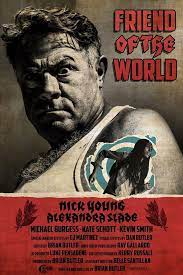
At the start of 2020’s Friend of the World, we know that something bad has happened to the world but we don’t know what. An aspiring filmmaker named Diane (Alexandra Slade) wakes up in what appears to be a room in an underground bunker. Dead bodies surround her. When one turns out to be not quite dead, Diane shoots him in the head. Is it a mercy killing or is it an act of self-defense?

As we soon learn, Diane is not alone in the bunker. There’s a man named Gore (Nick Young), who appears to be some sort of military office and who, on occasion, even sound like he could be a direct descendant of Jack D. Ripper, the paranoid general played by Sterling Hayden in Dr. Strangelove. When we first see Gore, he’s standing directly over Diane, speaking as he shaves. Shaving cream falls from his face, down on Diane. Gore never apologizes, not for that or anything else. And while it quickly become clear that the world is no longer place where apologies and rudeness are anyone’s number one concern, it’s hard not to suspect that Gore probably wasn’t the apologizing type even before the world ended.

Gore leads Diane through the bunker, explaining how and why the world has ended and speaking rather ominously about how it’s going to fall to the survivors to repopulate the world. While Diane worries about the fate of her girlfriend, Gore smokes cigars and randomly fires guns. When they speak to each other, it’s often in somewhat bizarre cadences and phrases, the type that leave us to wonder if they’ve really just met or if we’re watching some sort of ritual develop.

We also discover that the two of them are not alone in the bunker. Others make brief appearances, as the situation grows more claustrophobic and more bizarre. One man bursts out of another, in a scene that will bring to mind the infamous chest bursters from Alien. Another mysterious figure shows up to repair a chair while moving in a herky-jerky fashion that almost suggests he might be an puppet on a string. When a more familiar figure shows up, Diane is forced to not only realize how much the world has changed but also consider her new role within it.

Clocking in at a little under an hour, Friend of the World is a surreal look at the end of the world, one that mixes the body horror of David Cronenberg with the dark humor and circular conversations of Samuel Beckett with just a hint of Kubrickian satire. For all the horror elements that are found in the film (and for all of the memorably gruesome special effects), the ultimate horror of Friend of the World comes from the knowledge that, should you survive the apocalypse, you’ll still have little control over who survives with you.

Director Brian Patrick Butler emphasizes the claustrophobic conditions of the bunker, a version of Hell from which there really is no exit. The scenes in the bunker are shot in harsh black-and-white while Diane’s memories of her girlfriend and a few scenes shot above ground are filmed in almost garish color, a simple technique that pays off surprisingly well. Both Alexandra Slade and Nick Young do a good job of bringing their enigmatic characters to life, with Slade especially capturing Diane’s mix of confusion, fear, and anger. As well, Kathryn Scott makes a strong impression with limited screen time in the small but key role of Diane’s girlfriend.

Friend of the World provides an intriguing look at the end of the world.

Film Review: Override (dir by Richard Colton)


In the middle of the desert, there sits an isolated pink house.

And inside the house, there lives a woman named Ria (Jess Impiazzi), who wakes up every morning to a neon sign that wishes her a good morning. Every morning, she stands in front of a mirror in her underwear and she asks the world what “fun adventures” it has in store for her today. She then carefully selects her outfit and the color of her lipstick. She goes into the bedroom and awakens Jack, who is sometimes her husband and sometimes her best friend but who is always a different person.

During the day, she does “chores” around the house. She is always smiling. She is always positive-minded. Every day, at the exact same time, Ria asks Jack to dance with her. Every night, she talks about how she can’t wait to watch the latest episode of her favorite television program. She has a strange habit of holding up everyday products and announcing how much they cost and whether or not there are any special offers associated with them. She talks frequently about how happy she is to be a housewife, which she believes is the important job that anyone can have. At 9:00, she and Jack retreat in to the bedroom. At 7:00, the next morning, she wakes up and does it all over again with a different Jack.

As you may have guessed, Ria is not quite human. In fact, she’s not human at all. She’s an android, built and programmed to be everyone’s fantasy companion. She’s also the start of her own TV show, “A Day With Ria.” People across the country compete for the chance to be Jack for a day and to spend their time using Ria to fulfill their own fantasies. One of the Jacks (played by Luke Goss) seems to truly care about her. Another Jack viciously abuses her, which Ria accepts without question. Another Jack is just so excited to spend her day with her best friend, Ria! (They have a pillow fight.) Meanwhile, the audience at home votes on what Ria should wear and what meals she should prepare for each Jack. Everyone seems to love watching A Day With Ria, even the vice president of the United States (played by Dean Cain).

Override gets off to a surprisingly good start, doing a good job of bringing us into Ria’s bizarre world. The house in the desert is especially a triumph, a cleverly designed tribute to kitsch that, in all of its pink glory, manages to be both grotesque and inviting, depending on which angle you’re look at it from. Jess Impiazzi does a good job bringing Ria to life and Luke Goss is well-cast as the most sympathetic of Jacks. Director Richard Colton has worked extensively as an editor and there’s a wonderfully composed montage in which Ria goes from one Jack to another. Even the film’s low budget works to its advantage, as most reality shows are produced as cheaply as possible. (Seriously, just watch the Big Brother live feeds sometime.)

Unfortunately, during the second half of the film, things get bogged down with a political conspiracy plot and the attempts to satirize reality TV become increasingly heavy-handed. (One problem with satirizing reality TV is that most reality television show already feel like a parody. No movie or book can make a show like The Bachelorette or, again, Big Brother appear any more ridiculous than an actual episode does.) As strong as the first half of the film was, the second half is a bit of a mess and nowhere near as compelling. A strong beginning leads to a disappointing (and rather drawn out) ending.

While it’s a shame that the movie couldn’t maintain its narrative momentum, Jess Impiazzi’s performance remains strong and both Luke Goss and Dean Cain do the best that they can with their slightly underwritten characters. The film doesn’t really work as a whole but it still has enough good moment to make the watch worthwhile.

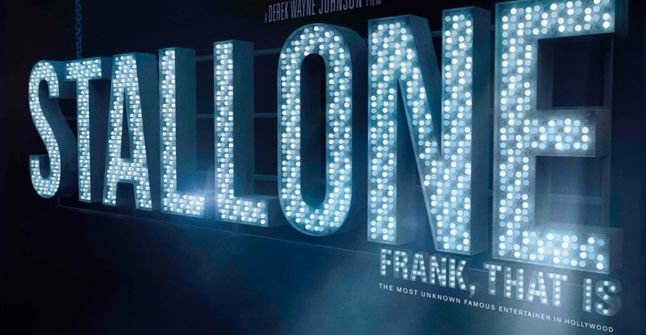
Film Review: Stallone, Frank That Is (dir by Derek Wayne Johnson)


Frank Stallone is a great musician and a talented guy and you should really spend some money to see him perform.

That would seem to be the main message of the new documentary, Stallone: Frank That Is. This documentary, which profiles the brother of Sylvester Stallone, was produced by Frank himself so we perhaps shouldn’t be surprised that it’s full of people attesting to what a great entertainer Frank is. Billy Zane, Billy Dee Williams, Christopher McDonald, Joe Mantegna, Duff McKagen, Richie Sambora, and Frankie Avalon all pop up and assure the viewers that Frank is a talented musician. Arnold Schwarzenegger tells us that Frank deserves to be known as more than just Sylvester Stallone’s younger brother. Sylvester Stallone himself shows up, to tell stories about how he and Frank once lived in a condemned apartment building and how they smashed a hole in the wall so that their two apartments could become one big loft.

What’s interesting is that, despite the fact that the film often seems like it was largely made to provide Frank Stallone with some encouragement and an ego boost, it also convinces us that Frank does deserve to be known for being something more than Sylvester Stallone’s brother. There’s enough performance footage to show that Frank Stallone actually is a pretty decent singer. Though the film is honest about the quality of most of Frank’s filmwork, there’s still enough footage from the 1987 film Barfly to convince us that, when cast in the right role, Frank Stallone is capable of giving a memorable performance. When he’s interviewed on camera, Frank Stallone comes across as being likeable and a good raconteur. He’s someone who you might want to have dinner with, just so you can listen to his stories about being a struggling musician in New Jersey in the late 60s. (Be sure to ask him about the time that he and his band opened for Bruce Springsteen.) Frank is also honest about how much of his career his owes to his brother, even if he never comes across as if he’s really made peace with that fact.

In fact, Frank Stallone is actually pretty forthright when it comes to admitting that being permanently overshadowed by his older brother totally sucks. After spending several years struggling to make it as a musician, Frank wrote a song for Rocky. Sylvester admits that the main reason Frank was asked was because the budget was too tight to hire anyone who wasn’t a relative. Frank and his band appeared in Rocky, as well as the film’s sequels. He went on to record songs for several of Sylvester’s films, most famously for Staying Alive. And while working on Sylvester’s films made Frank known and even helped him achieve a brief stardom when one of his Saying Alive songs reached the top of the charts, Frank also knew that everyone assumed that he only got hired because he was Sylvester’s brother. When Frank would perform at clubs, he would be credited as being “Rocky’s brother, Frank Stallone.” Understandably, Frank was not happy about that. (Sylvester at one point says that Frank was bitter and that “Frank’s still bitter and that’s one reason why I love him, he’s consistent.”) The only people less happy about the situation than Frank were Frank’s bandmates who found themselves overshadowed by the guy who was best known for being overshadowed by his brother. Frank admits that he often struggled to deal with his odd claim to fame and, as a result, his alienated a lot of people around him.

For all of the celebrity testimonials and funny stories, there’s also wistful sadness that runs through this documentary. As positive and upbeat as Frank Stallone tries to present himself, there’s always a feeling that there’s a lot of regret right underneath the surface. Being Sylvester Stallone’s brother comes across as being both a blessing and a curse. On the one hand, it opened doors for Frank that probably would never have been opened, On the other hand, it also ensured that Frank is always going to struggle to get people to take him seriously as anything other than a famous sibling. (Even in this documentary, some of the most memorable moments come from Frank imitating Sylvester’s trademark deep voice.) Stallone: Frank, That Is does a good job of suggesting that Frank deserves to be known for more than just his family while also admitting that it probably won’t ever happen.

Space Jam – A New Legacy (Dir. by Malcolm D. Lee)


Basketball’s not exactly my sport. I’ve always been a fan of Hockey, but I understand that I’m not the target audience for Space Jam – A New Legacy. Watching the movie, I get the feeling that Warner Bros. finally figured out just how large it is. Just as Disney did with Ralph Breaks the Internet, there are tons of references to the WB’s home grown content. Castles from Harry Potter, outfits from The Matrix, Mad Max: Fury Road, Game of Thrones and even Pennywise the Clown make an appearance in the movie. It’s nice to see, but a lot of it pulls away from the story in the same fashion that Ready Player One did. I found I was so busy watching the background that I didn’t care too much about LeBron James and his kid.

Space Jam – A New Legacy does have some new elements. LeBron James (playing himself) is a little at odds with his son, Dom (Cedric Joe). Dom really isn’t into basketball, though he does have a basketball themed video game he’s designing. LeBron would rather he be into the actual sport. When the WB’s AI, known as Al G. Rhythm (Don Cheadle, Avengers: Endgame) makes a failed pitch to LeBron on behalf of the Warner Bros, he decides to get revenge (and recognition) by way of pulling both Dom and LeBron into the Warnerverse for a basketball game to end all games. If LeBron wins, he gets his son back (who happens to be playing against him), and if he loses, he and the entire audience – everyone – will be trapped inside of the Warnerverse, forever.

Just writing that feels a little strange. Stuck in HBO Max because of a bad basketball game?

Either way, he finds Bugs Bunny and together, they form an All Star team based off of the other Looney Tunes. The film does address one thing I liked. Since they had the entire Warnerverse at their disposal, it would be easier to build a team off of superheroes. The story finds a way around this.

Now, let’s not act like the original Space Jam was ever part of the Criterion Collection. It was a fun film with a major star playing among cartoons. There wasn’t a whole lot to expect, though it was enjoyable and I have the soundtrack for it. Michael Jordan had the benefit of Danny DeVito, Wayne Knight and Bill Murray to help him out for comic relief. Here, it’s more or less just LeBron vs the Goon Squad. When it comes to acting, LeBron James is okay. Most of his lines are centered around informing the toons and the audience that he has to get him back.

I do have to say that Don Cheadle does great here, which is expected. The same can be said for Sonequa Martin-Green (Star Trek: Discovery) and Lil Rel Howry (Get Out)There are some moments in A New Legacy that do work (Granny’s scenes in particular are standouts that made me laugh, along with a great Wile E. Coyote Fury Road moment), but that’s only because of the connection between all of the other WB franchises. It’s as if they didn’t feel comfortable enough with the story they had, so they said “Why not just litter the screen with everything we’ve got – King Kong, It, The Matrix, Harry Potter, and see what we get?”

Warner Animation Group does appear to be getting better over their previous attempt in Tom & Jerry. Maybe it’s because it’s easier to interact with cartoon characters that can talk back, but some of the animations (particularly the CGI ones) are good. They’re just incredibly overused. Malcolm D. Lee’s direction is also good, for what he’s given. It’s not Roll Bounce or Undercover Brother, but the flow of the story moves well. Before you know it, you’re in the Big Game.

Space Jam – A New Legacy isn’t the worst thing out there, it’s just stuffed with more content than it needs. It’s not on Tom & Jerry’s level of bad. Besides, it’s for Kids. If you love Basketball, LeBron, Looney Tunes or anything Warner’s Related, you should be good here. Just take it for what it is and enjoy. Thankfully, if you have HBO Max, it’s free to watch for the next 30 days (as of this writing). It just don’t see myself running back to it.