The Films of 2024: Roadkill (dir by Warren Fast)


Below, you’ll find the trailer for a film called Roadkill.  Before watching, please be aware that the trailer pretty much spoils all of the film’s plot twists.

On a humid stretch of road that winds through the Florida bayous, a long-haired man with a beard (played by Ryan Knudson) hitchhikes and deals with traumatic flashbacks to his past.  He’s given a ride by a young woman (Caitlin Carmichael) who is driving a red Nova.  At first, most viewers will probably assume that the Driver is in danger from the Hitchhiker.  However, it soon turns out that the Driver has some issues of her own.

And yes, this is the type of film where the two main characters do not actually have names.

As far as violent, low-budget road movies are concerned, Roadkill is …. well, it’s okay.  It’s a film that wears its influences — films like Freeway, First Blood, and No Country For Old Men — on its sleeve and the plots twists are never quite as surprising as the film seems to think that they are.  At the same time, the film does a good job of capturing the atmosphere of the Florida backroads and both Ryan Knudson and Caitlin Carmichael do a good-enough job of bringing their characters to life.  There’s even a few shots of that red Nova driving down the highway at night that are downright good.  The film’s pace is occasionally a bit too deliberate and there’s a chase scene where it’s obvious that neither one of the cars involved are going above the speed limit.  But the final 30 minutes are nicely executed and the film’s ending does stick with you.  Roadkill is the epitome of the flawed film that doesn’t quite work but which still has enough effective moments to remain watchable.

Horror fans will be happy to see Danielle Harris, even if her role is a small one.  Harris plays Allison, a cheerful waitress at a diner.  (A few years ago, Harris probably would have been playing The Driver.)  Harris is likable, even if the role is a bit of a throw-away part.  At least she gets to wear a cute uniform.  Still, watching the film, you can’t help but wonder how a diner sitting in the most isolated spot of the Florida bayous manages to stay in business or why Allison is still working at the diner even after it becomes obvious that the diner’s owner is no longer going to be able to pay her salary.

I guess the main lesson of Roadkill is that you really shouldn’t hitchhike.  But, to be honest, that’s a lesson that everyone should already know.  You should not need a movie to know better than to accept rides from strangers.  I think the more important lesson is the one that becomes obvious during the final 30 minutes, which is that it’s better to wear shorts than jeans in the bayou.  The bayou can be a dangerous place, though we all know that they worst bayou is bayouself.  Thank you, I’ll be here all week and every week afterwards.

You can view Roadkill on Tubi and YouTube.  To quote the poet Bluto, it don’t cost nothing.
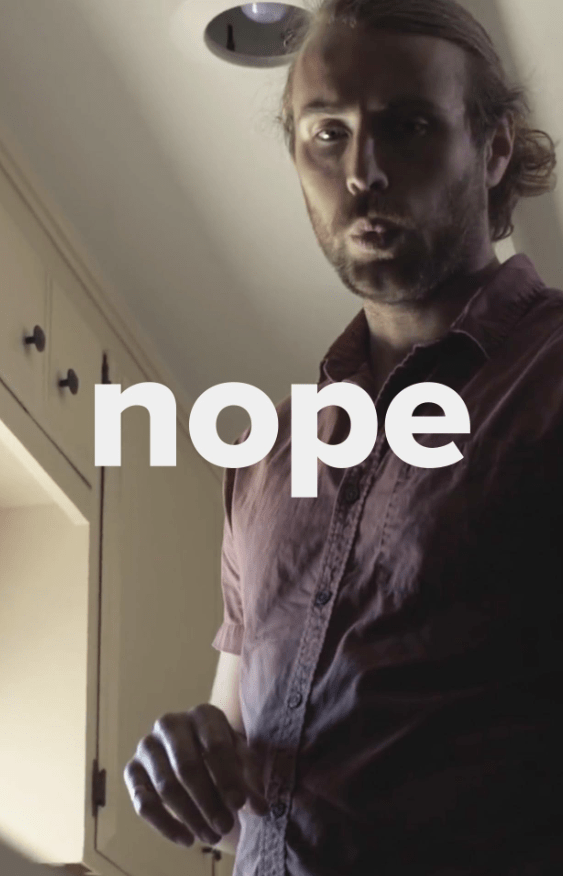
Nope, Short Film Review by Case Wright, Dir. Ryan Godoy


This short film clocks in at 1 minute and 10 seconds- TOTAL! When something is this brief, I have to give it a chance. Today, we are used to the comedy shorts on Youtube, but they’re jokes. They are not stories with a protagonist and a quest. This is not to diminish the talent of Youtubers because I try to do it myself and it is HARD!!! The ones who post a less than one minute joke or jokes that land are today’s Comedic greats – really!

I watched this with an open mind because if you can create a story with a beginning, middle, and end in under two minutes- you are a certified genius. This film was a “could’ve been” because unlike the director’s career, the film did NOT have an ending. This review is difficult for me because Ryan had talent, but couldn’t deliver.

The short had a regular guy who sees a drawer open in his home on its own; so he left the house. He leaves his house and the front door opens on its own power; so, he retreats to his car. In the car, his glovebox opens on its own and the film ends. I laughed a few times, but it is obvious that the film lacked an ending. Typically, this means that the creator was using this short for pitch meetings to get funding for a full-length story. “Nope” is a cautionary tale for creators because what you are proving to a prospective producer is that you likely do NOT have the creative talent to finish a story. Why would anyone want to invest in someone who can’t complete their own story? Why would you risk that the creator would follow through on a bigger budget?

If it is warranted, I relish excoriating a craptastic filmmaker, but I do NOT enjoy watching self-destruction. “Nope” is a great lesson on how not to succeed in film or any other profession.

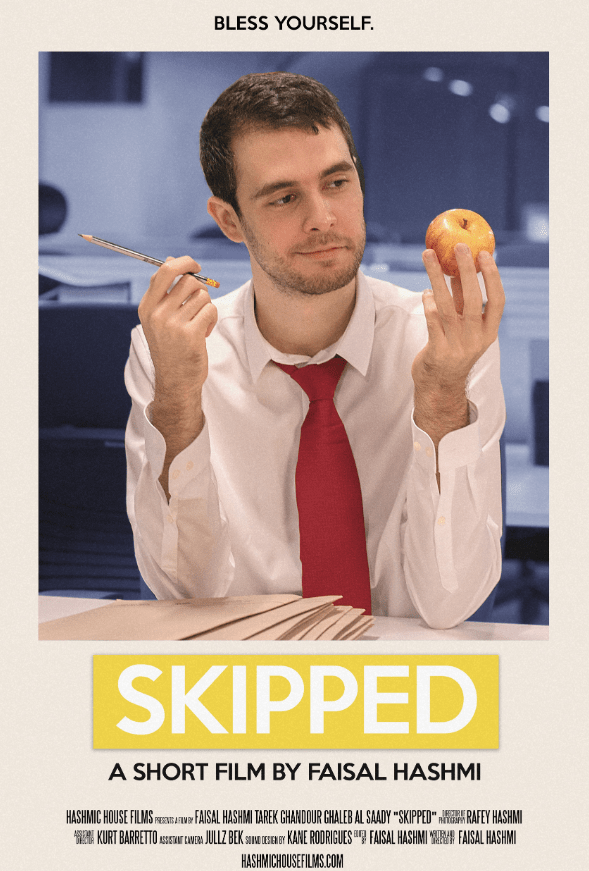
Skipped, Short Film Review by Case Wright, Dir & Written by Faisal Hashmi


Hello Beautiful and Intelligent readers, how do I know you’re so smart and beautiful? You’re reading my stuff!!! You know what’s not good- This short film. Like chlamydia at a Senor Frogs in Cancun, this short will stick with you in the worst way! He writes in his bio that he’s an “award-winning independent filmmaker”, but who is in charge of these awards?! Is it like a certificate of participation? Did they owe Faisal Hashmi money? Did Faisal Hashmi see them commit a brutal crime? Sadly, he kept making “films” after this waste of his iPhone memory, on the bright side, his career didn’t take off because- ya know, he sucks at this!

There are a many ways that this short doesn’t even deserve to be used to clean the bathroom floor at Port Authority on a Friday night, but the two that stick out the most to me are that –

  1. The film makes no sense.
  2. It’s boring!

But Case come on, you always say these sci-fi things don’t make sense, well most of the time I’m right! However, to really pull this piece of trash apart like it deserves, I have to go over the terrible story! It’s like Faisal Hashmi is out to hurt me in every way! Did he give me COVID? Where were you Faisal, December 2020??

The story- an office worker has a boring job, but every time he sneezes he blacks out and all of his work is done; purportedly, he travels in time like my Aunt does after Natural Light and Ambien. This is where the story doesn’t make sense. He doesn’t remember the time he lost. He just moves forward. Let’s just skip over the fact that this sort of time travel is impossible without Ambien. Of course, he abuses this “gift” and eventually becomes old. This is not how special relativity works, but I guess looking things up on Wikipedia is TOO MUNDANE for Faisal!

This brings me to my second issue with this film: it’s boring. I understand that being good at anything is hard, right Faisal? Faisal Hashmi, you’re probably terrible at a lot of things- Film is really just the only one we have a digital record of to prove it. Maybe you also suck at volleyball, buying groceries, or tying your shoes? I can’t speak for those other things, but you’re rebuttably presumed to be awful at those things too, but I’ll just stick to this 4 minute and 26 second slice of hell!

Every plot point was so predictable and obvious, it felt as if a short film became a flip book crap version of “Goodnight, Moon”. I hate you Faisal! You, Marcin Dubinek, and Alex Magana are a cabal of terrible art! You create the unholy trinity of film. I even tagged the horror box for this post because that’s what your film is, but not intentionally! Faisal, stop what you’re doing! Try real estate or work for Ticketmaster!

I did provide a link to this unholy thing, if you feel like slowing your life down and embracing death’s touch.

Something Boring This Way Comes!!!!

You should check out my twitter “x” for my other tweets and work (@casewrites).

Retro Television Review: The Chadwick Family (dir by David Lowell Rich)


Welcome to Retro Television Reviews, a feature where we review some of our favorite and least favorite shows of the past!  On Sundays, I will be reviewing the made-for-television movies that used to be a primetime mainstay.  Today’s film is 1974’s The Chadwick Family!  It  can be viewed on YouTube.

Who are the Chadwicks?

They’re a family living in San Francisco.  They claim to be an average middle class family but, as has apparently been typical of television since its very first broadcast day, they live in a way that can only be explained by having a good deal of wealth.

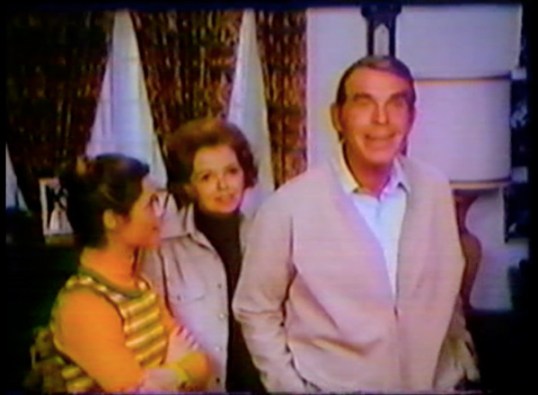
Consider this: Patriarch Ned Chadwick (Fred MacMurray) is a prominent newspaper columnist who writes so well that a mere column from him can settle a potential labor strike.  A national magazine has noticed the power of Ned’s words and they’ve offered him a job.  They want to turn him into a national figure.  The only catch is that he and his wife (Kathleen Maguire) would have to leave their beloved San Francisco and move to Chicago.  There’s no ocean in Chicago, as Ned puts it.  Sure, it would mean more money but who needs money when you’re a fabulously wealthy couple pretending to be middle class?

Moving would also mean leaving behind their children, all of whom have dramas of their own to deal with.  Tim (Stephen Nathan) is a college student, struggling to make the grade.  Lisa (Jane Actman) is engaged to Lee (Frank Michael Liu) and, for some reason, decides that it would be a good idea to tell her future mother-in-law that her desire for a long engagement is “bad chop suey.”  (Lee’s family is Chinese.)  Eileen (Lara Parker) is pregnant and her husband worries this will sabotage their support for “zero population growth.”  And Joan (Darleen Carr) is having to deal with the fact that her charismatic and fun-loving husband, Duffy (a young Barry Bostwick), is seriously ill and might even die before he can finish teaching Ned how to play the bagpipes.  Like all middle class people, Duffy owns his own airplane.

This is one of those movies that was obviously meant to serve as a pilot for a weekly television series and it’s easy to imagine Ned handing out wisdom to his kids on a weekly basis as they tried to navigate their way through the 70s.  Fred MacMurray gives off a nice grandfatherly vibe as Ned, so much so that it’s hard to believe that he’s the same actor who brought to life memorable heels in Double Indemnity, The Caine Mutiny, and The Apartment.  Unfortunately, the rest of the cast is not as memorable as MacMurray, largely because their roles are underwritten and their characters never feel like more than caricatures.  Barry Bostwick acts up a storm as Duffy but the fact that he’s listed as being a “special guest star” in the opening credits pretty much gives away his fate from the start.  As for Lisa, I usually like any character who shares my name but how much sympathy can you have for someone dumb enough to use a phrase like “bad chop suey” while speaking to her Chinese future in-laws.  Indeed, it was kind of weird how everyone in the family seemed to be totally comfortable with making jokes about Lee being Chinese and speaking with an accent.  One has to wonder how Lee felt about that.

Anyway, as far as I know, The Chadwick Family has no further adventures but their sole outing will live forever thanks to YouTube.

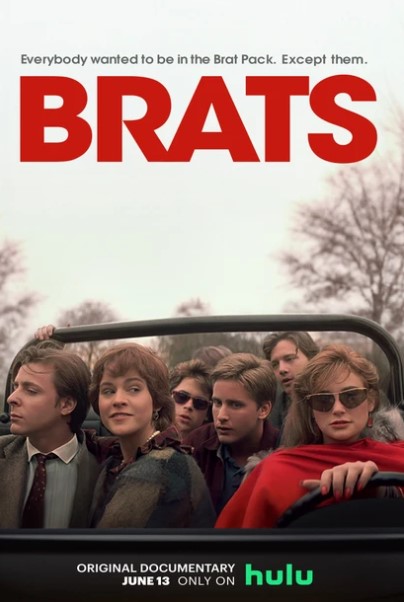
Documentary Review: Brats (dir by Andrew McCarthy)


The documentary Brats opens with actor and travel writer Andrew McCarthy in New York City.

He’s obsessing over his film career, which featured him starring in several classic 80s films, like Pretty In Pink, Class, and Less Than Zero.  If you love those films as much as I do, you’ll be happy to know that, physically, McCarthy has aged well.  If he was adorably cute during his teen idol days, Andrew McCarthy now looks like a distinguished and handsome creative writing teacher.  McCarthy talks about how he was briefly a star and now, he has a busy career as a writer.  To be honest, it seems like everything should be going pretty well for Andrew McCarthy.

The only problem is that Andrew McCarthy has spent the last 30 years obsessed with an article that he feels led to him being labeled as one of the “Brat Pack,” along with Emilio Estevez, Rob Lowe, Judd Nelson, Molly Ringwald, Demi Moore, and Ally Sheedy.  Interestingly enough, McCarthy is only mentioned once in the article, when Nelson dismissively describes him as playing every role “with the same intensity.”  Still, McCarthy feels that the article led to him being unfairly labeled “a brat,” and it also led to his film career fizzling.

Over the course of the documentary, McCarthy travels to California and tracks down some of his co-stars (with both Ringwald and Nelson being notable for their absence) and he also talks to the author of the article.  He talks about what it means to be identified with the Brat Pack and how the label still haunts him.

Seriously, this is one of the most depressing documentaries I’ve ever seen.

It’s not just that McCarthy, who really does seem like he should be enjoying his second act as a successful and respected travel writer, is still obsessed with an article that came out 30 years ago.  It’s also the fact that, judging from the scenes in which he drops in on Estevez, Lowe, Moore, and Sheedy, it doesn’t appear that anyone has wanted to talk to McCarthy since they all did St. Elmo’s Fire.  Emilio Estevez, especially, seems to be uncomfortable with having McCarthy in his kitchen.  As for the others, Ally Sheedy is polite, Demi Moore comes across as if she’s visiting from another planet, and Rob Lowe is once again the most likable and laid back person in the room.  Everyone that McCarthy interviews has dealt with the Brat Pack legacy in their own different way.  The thing they all have in common is that they’ve all dealt with it better than McCarthy.

The saddest part of the film is that Molly Ringwald never returns Andrew McCarthy’s call.  Seriously, the main reason I watched this documentary was because I wanted to see Andie and Blane reunited.  Instead, I had to settle for Blane and Duckie having an awkward conversation.  It’s nice to see that McCarthy and Jon Cryer are apparently now on friendly terms (which apparently they weren’t during the filming of Pretty in Pink), but seriously, Molly is the one that most viewers will probably want to see reunited with Andrew.  That it doesn’t happen is kind of heart-breaking.

I hope someone gives Andrew McCarthy a good hug and tells him that we’re all Team Blane.  He deserves it.

Retro Television Review: If Tomorrow Comes (dir by George McCowan)


Welcome to Retro Television Reviews, a feature where we review some of our favorite and least favorite shows of the past!  On Sundays, I will be reviewing the made-for-television movies that used to be a primetime mainstay.  Today’s film is 1971’s If Tomorrow Comes!  It  can be viewed on YouTube.

If Tomorrow Comes tells the story of a forbidden marriage.

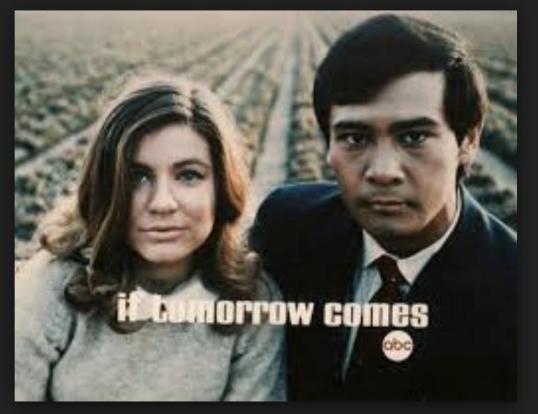
In 1941, Eileen Phillips (Patty Duke) meets David Tayanaka (Frank Liu) and the two of them quickly fall in love.  David asks Eileen to marry him and Eileen says yes, even though they both know that it won’t be easy.  Eileen’s father (James Whitmore) and her brother, Harlan (Michael McGreevey), are both prejudiced against the Japanese and David’s parents (played by Mako and Buelah Quo) would both rather than David marry someone of Japanese descent.  Eileen and David decide to elope first and tell their parents afterwards.

On December 7th, Eileen sneaks out of the house and joins David at his church.  They are married by Father Miller (John McLiam), who agrees to keep their secret.  Eileen and David then drive over to the church attended by Eileen’s family but no sooner have they arrived than the local sheriff (Pat Hingle) pulls up and announces that the Japanese have bombed Pearl Harbor.  The sheriff instructs everyone to return home and to listen to their radios.  David slips his wedding ring off his finger.  Telling the parents will have to wait.

Eileen’s father and brother are convinced that every Japanese person in town, even though the majority of them were born in America and have never even been to Japan, is a subversive.  David and his family are harassed by government agents like the oily Coslow (Bert Remsen).  One morning, they discover that all of their farm animals have been killed and someone has written “REMEMBER PEARL HARBOR” with their blood.  When Franklin D. Roosevelt orders the internment of the Japanese, David’s father is among those taken away.  When Harlan continues to harass David, it eventually leads to not just one but two tragedies.

If Tomorrow Comes is a real tear-jerker, one that features a great performance from Frank Liu and a good one from Patty Duke.  Though it may seem a tad implausible that David and Eileen would get married just an hour before Japan attacked Pearl Harbor (and considering the attack occurred on a Sunday morning, I’m a little curious how they found a priest who was free to secretly marry them), the film does a good job of showing how fear can lead to otherwise good people doing terrible things.  One of the film’s strongest moments comes as David’s father is taken away to an internment camp and the Japanese prisoners try to prove their loyalty by spontaneously singing America, The Beautiful.  It’s a moment that reminds us of the danger of letting our fear destroy our humanity.

It’s a film that still feels relevant today, with its portrayal of heavy-handed government agents searching for subversives and ignoring the Constitution in order to save it.  When David visited his father at the internment camp, I thought about how, at the heigh of the COVID pandemic, it was not unusual to see people demanding that the unmasked and the unvaccinated by interned away from the rest of the world.  If Tomorrow Comes is a love story and a melodrama and tear-jerker but, above all else, it’s a warning about the destructive power of fear and prejudice.

What Lisa Watched Last Night #227: Roommate Regret (dir by Peter Foldy)


On Sunday, I turned the channel to the Lifetime Movie Network and I watched Roommate Regret!

Why Was I Watching It?

Because it was on the Lifetime Move Network!  It’s been a while since I’ve gotten to sit down and watch a Lifetime film and that’s a shame because my Lifetime reviews used to be a staple of this site.  After a rough two weeks, I figured it was time to start once again embracing the melodrama.

What Was It About?

Jessica (Maryana Dvorska) has just purchased her first house in Florida!  To help pay the mortgage, she is planning on renting out the spare bedroom.  A series of odd people come by the house and check out the room.  Jessica wants to rent the room to an eccentric lawyer but her best friend, Louisa (Veronica Long), insists that Jessica take a chance on Alec (Josh Cole), an English music producer who doesn’t have any credit but who swears that he’ll be able to pay her five months rent upfront as soon as his latest deal goes through.  Jessica is reluctant but Alec charms both her and Louisa by claiming to be an associate of rock star Preston Black (Sam Benjamin).

Jessica gives the room to Alec and …. well, not surprisingly, that turns out to be a mistake.  Alec is a terrible tenant who plays loud music and who regularly fights with the mysterious woman who comes to visit him.  Alec is also late with the rent and when he does pay, Jessica ends up getting arrested for passing counterfeit bills!  Jessica wants Alec out but complicating matters is that 1) Alec is now dating Louisa and 2) Alec does not want to leave.

What Worked?

This was actually a lot of fun, with an enjoyably melodramatic plot and a collection of quirky supporting characters.  Jessica was a likable enough character that I was willing to overlook the fact that she made some truly questionable decisions over the course of the film.  (Hey, who hasn’t made a questionable decision or two?)  My favorite character, however, was Louisa, who was just a pure force of nature and chaos.  She was the perfect best friend, the type who would support you while also encouraging you to live a little.

I appreciated the fact that, while Alec was definitely a bad guy, the film didn’t turn him into some sort of diabolic criminal mastermind.  For the most part, he was just a very bad and very sleazy tenant and an all-around dorky guy.  That was all that he really needed to be.  As a veteran Lifetime watcher, I spent the entire film waiting for him to murder someone and it was kind of a nice change-of-pace that he didn’t.

What Did Not Work?

Through no fault of actor Sam Benjamin, Preston Black was perhaps the world’s least convincing rock star.  Maybe if the film had been taking place 20 years in the past, I would have bought the character.

“OH MY GOD!  Just like me!” Moments

Beyond a shared appreciation for generic college sweatshirts and old movies, I can’t say that I had that much in common with Jessica.  She was much more practical-minded than I tend to be.  However, I did totally relate to Jessica’s fun-loving best friend, Louisa.  Even after learning she had been sleeping with a potentially violent criminal, Louisa remained enthusiastic about the prospect of meeting (or at least hearing the voice of) Preston Black.  Like me, Louisa was an optimist!

Lessons Learned

Just because someone has a cute accent, that doesn’t mean you should live with them.

Retro Television Review: The Glass House (dir by Tom Gries)


Welcome to Retro Television Reviews, a feature where we review some of our favorite and least favorite shows of the past!  On Sundays, I will be reviewing the made-for-television movies that used to be a primetime mainstay.  Today’s film is 1972’s The Glass House!  It  can be viewed on YouTube.

The Glass House starts with three men arriving at a location that will define the next few months of their lives.

Brian Courtland (Clu Gulager) is a veteran of the Vietnam War.  He spent part of his service working as a guard in the brig.  Now that he’s back in the United States and in need of a regular paycheck, he has gotten a job working as a prison guard.  Courtland is not naive about where he’s going to be working or who he is going to be working with.  But he is an idealist, one who tries to treat everyone fairly and who hopes that he will be able to do some sort of good in his new position.

Alan (Kristoffer Tabori) is a young man who has been arrested for selling marijuana.  He is quiet and just hoping to serve his time and then get on with his life.  His fellow prisoners have different plans for him.

Finally, Jonathan Paige (Alan Alda) is a liberal professor who, in a moment of rage, accidentally killed a man in a fight.  Convicted of manslaughter, Paige enters the prison in a daze and cannot stop flashing back to the one moment that changed his life forever.  Paige is assigned to work in the pharmacy, where he meets a prisoner-turned-activist named Lennox (Billy Dee Williams).  Paige struggles to retain his humanity despite the harsh conditions.

All three of the men find themselves having to deal with the attentions of Hugo Slocum (Vic Morrow), the predatory “king” of the prison.  Slocum expects Paige to help him run drugs though the the pharmacy.  Slocum preys on Alan and sends his gang to punish him when Alan refuses Slocum’s advances.  And Slocum expects that Courtland will just be another corrupt guard who agrees to look the other way when it comes to Slocum’s activities.  Courtland, however, turns out to have more integrity than anyone was expecting.

The Glass House opens with a title card, informing the viewer that the film was shot at an actual prison and that the majority of the people in the film were actual prisoners.  Not surprisingly, The Glass House does feel authentic in a way that a lot of other films about incarceration does not.  The prison is claustrophobic and dirty, with every crack in the wall reminding the prisoners and the viewer that no one cares about what happens there.  The extras have the blank look of men who understand that showing any emotion will be taken a sign of a weakness.  Made in 1972, at a time when America was still struggling to integrate, The Glass House takes place in an almost totally segregated world.  The black prisoners stick together.  The white prisoners stick together.  Everyone understands that’s the way that it will always be and, as we see by the end of the film, that’s the way the guards and the warden (Dean Jagger) prefer it because that means almost any incident can be written off as a being “a race riot.”

The real actors amongst the population do a good job of blending into the surroundings.  Alda, Williams, and Tabori all give good performance while Vic Morrow is truly menacing in the role of the vicious Slocum.  Slocum may not be particularly bright but, because he has no conscience, he is uniquely suited to thrive in a world with no morality.  The film’s best performance comes from Clu Gulager, who does a great job of portraying Courtland’s growing disgust with how the system works.

Though it’s over 50 years old, The Glass House is a still a powerful look at life on the fringes.  Society, for the most part, doesn’t really care much about what happens to the incarcerated.  This film makes a strong case that we probably should.  One is left with little doubt that, even if relatively harmless prisoners like Paige and Campbell survive being locked up with men like Slocum, they’ll still be incapable of returning to the “real world” afterwards.  The viewer, like Brian Courtland, is left to wonder how much corruption can be tolerated before enough is enough.

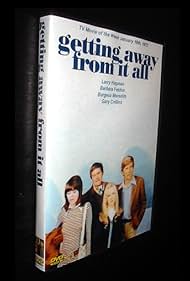
Retro Television Review: Getting Away From It All (dir by Lee Philips)


Welcome to Retro Television Reviews, a feature where we review some of our favorite and least favorite shows of the past!  On Sundays, I will be reviewing the made-for-television movies that used to be a primetime mainstay.  Today’s film is 1972’s Getting Away From It All!  It  can be viewed on YouTube.

For Fred Clark (Larry Hagman) and Mark Selby (Gary Collins), life is New York City just isn’t that much fun anymore.  The weather is terrible.  The traffic cannot be navigated.  The only people ruder than the cabbies are the doormen.  Fred and Mark have come up with the perfect plan.  They’ve decided to move to a small country town and purchase a house on a small island.  In fact, they’re going to buy the entire island!  It’s surprisingly cheap.  Fred and Mark don’t ever really stop to wonder why the island is available for so little money.  Seriously, if you’re buying an island, you should probably ask yourself those questions.

Mark’s wife, Alice (E.J. Peaker), is enthusiastic about the idea.  Less excited is Fred’s wife, Helen (Barbara Feldon).  Helen enjoys living in the city and having a nice job in an office building.  She gets along with her boss (played by Jim Backus, one of many veteran actors to show up in a small role in this film).  Perhaps hoping that Fred will change his mind once he’s confronted with the reality of actually living in the country, Helen finally gives in.

It does turn out that the island is not quite the paradise that Fred and Mark were expecting.  The only way to get out to the island is in a leaky rowboat.  The house is falling apart and, as Helen is disgusted to learn, it also doesn’t have indoor plumbing.  There’s no electricity either but fortunately, the local handyman is working on it.  His name is Herbie and he’s played by a very young and thin Randy Quaid.  If you’ve ever wanted to hear Randy Quaid speak with an exaggerated New England accent, this is the film for you.  There’s nothing convincing about Quaid’s accent but it still seems only fair, considering all of the Yankee actors who have butchered the Southern accent over the years.

Just when it looks like Fred and Mark have managed to make the Island livable, they get a disturbing letter.  As the new owners of the Island, they owe 20 years worth of back taxes.  As Fred puts it, the tax bill is more than either of them can afford.  If they can’t raise the money, the town will take back the Island.   Fred and Mark consider trying to get jobs but it turns out that neither one of them knows much about being fisherman.  They then decide to charm the town into nullifying the tax bill.  That turns out to be more difficult than either man imagines.

Getting Away From It All is a comedy that deals with a universal theme, the desire to escape from the harshness of everyday life and find a perfect place to which to escape.  That said, the film’s main reason for existing is a parade of comedic cameos.  Jim Backus, Vivian Vance, Joe E. Ross, Burgess Meredith, Paul Hartman, and J. Pat O’Malley all appear in small roles, appearing just long enough for 1972 viewers to say, “Hey, I recognize that person!”  The end result is a rather shallow film that has a few chuckle-worthy moments.  (Again, Randy Quaid pretending to be from Maine has to be worth something.)

In the end, for all of the film’s celebration of getting away from it all, it’s hard not to feel that Gary, Mark, Alice, and Helen will all end up back in Manhattan sooner than later.  Some people are just city folks.

The Black Hole, Short-Film Review (Dir. Philip Sansom, Olly Williams)


Gravity …..

No not that gravity. The gravity that makes you feel fat like Your Mom.

Specifically, black holes- A star is big – Really big. So, I’m tryin to get close the center of this star like everyone does with Your Mom. I’m getting closer to this star’s center, but it’s radius is REALLY big so I’m feelin some gravity, but when it collapses on itself and turns into a black hole- there’s serious gravity ahead. Before, the star was 2 million millions wide like Your Mom. Now, this star is just a few miles wide like Your Mom wishes she could be. So now, I can get WAAAAAY closer to the star’s center because the radius is tiny tiny tiny now. Therefore, this black hole will pull me harder than before like way harder just like Your Mom.

Before I was two million miles from the center because stars are what what scientists call BIG. Now, I can get right up on that star’s center like everyone does with Your Mom. As I get closer and closer to the center, I can’t get away because the pull is so strong like Your Mom’s grip. In fact, the light around me is curving and can’t get away. So, I will look like I’m frozen in a photograph like this Pearl Jam song:

This short film – poorly depicts a black hole, but it accurately depicts GREED. A man prints out a hole that is black, but not a Black Hole because we’d all be dead. He uses it to steal from his company by placing a hole that is black over the company’s safe with a tiny bit of tape. He takes out a bunch weird European looking monopoly currency, which checks as legit because Europeans are weird. Wanting to grab as much as he can, like everyone does with Your Mom, he climbs in the safe but the hole that is black falls off the safe, trapping him inside.

I tricked you into learning! HA!