Electric Dreams (1984, directed by Steve Barron)


Electric Dreams is a film about a love triangle between a man, his neighbor, and his personal computer.

Miles (Lenny Von Dohlen) is an architect who wants to develop a special brick that can withstand earthquakes.  One of his colleagues suggests that he buy something called a — let me check my notes to make sure I got it right — com-put-er.  Apparently, computers can do anything!  Miles is skeptical but he decides to give it a try.

(In all fairness, this movie came out at a time when there were no iPhones or even laptops and personal computers were viewed as being strange and exotic. )

Miles get his computer and it’s basically one of those boxy computers that used to populate computer labs in high schools across the country.  As soon as I saw the computer, I wanted to play Oregon Trail.  After the computer overheats and Miles tries to cool it down by pouring champagne on it (!), the computer comes to life.  Now voiced by Burt Cort, the computer develops a crush on Mile’s neighbor, a cellist named Madeleine (Virginia Madsen).  The computer hears Madeleine playing her cello and composes its own music to play with her.  Madeleine hears the music and assumes that Miles must be a great composer.  Soon, Miles and Madeleine are falling in love and the computer is getting jealous.  The computer composes more more music for Miles but grows angry when Miles doesn’t give the computer any credit.  Even though the computer can’t move from the desk and has to be plugged in to work, it still manages to wreck havoc with Miles’s life.  When this movie came out, the idea of someone’s entire life being electronically monitored and recorded probably seemed like an out-there idea.  Today, that’s just a normal Tuesday for most people.

Electric Dreams is a mix of romance, comedy, and science fiction.  The scenes of Miles and Madeleine falling in love are mixed with scenes of the computer basically having a nervous breakdown and conspiring to ruin Miles’s credit and even trap him in his apartment.  Electric Dreams is probably the most good-natured film ever made about a computer run amuck.  The computer doesn’t mean to hurt anyone, it’s just jealous and feeling neglected.  It’s a weird mix but the movie is so dedicated to its premise and Lenny Von Dohlen and Virginia Madsen are so appealing as the romantic leads that it works.  Electric Dreams proves that true love can conquer all, even in the Computer Age.

Love On The Shattered Lens: Charming Sinners (dir by Robert Milton and Dorothy Arzner)


Based on a play by Somerset Maugham, 1929’s Charming Sinners takes place amongst the very rich.

Kathryn Miles (Ruth Chatterton) is married to Robert Miles (Clive Brook).  Robert is wealthy and a respected businessman and, through her marriage, Kathryn is also wealthy and …. well, she’s not quite respected.  The fact of the matter is that everyone is gossiping about the fact that Robert is cheating on Kathryn.  Kathryn denies that Robert is being unfaithful but she knows that he is.  She also knows that Robert is cheating with her best friend, Anne-Marie Whitley (Mary Nolan).  Even when Anne-Marie’s husband, George (Montagu Love), comes to suspect that Anne-Marie is cheating with Robert, Kathryn tells George that it isn’t true and defends her cad of a husband.

Why is Kathryn doing this?  As Kathryn explains it, she doesn’t feel that marriage necessarily means that you have to love someone.  Kathryn married Robert for the money and the status and, as long as she has that, she’s willing to overlook Robert’s dalliances.  Admitting that Robert is cheating would obligate her to go through a divorce and potentially lose everything that she has.  If this film had been released just a few years later than it was, the Production Code would have insisted that Kathryn suffer for her less-than-reverent attitude towards the institution of marriage.  Since this is a pre-code film, Kathryn is portrayed as being strong and determined.  What the Production Code would have deemed a drama, the pre-code era considered to be a comedy.

Still, Kathryn does get revenge on her husband by openly flirting with a former lover, Karl Kraley (William Powell, handsome and suave as ever).  Kathryn also makes some money on her own, proving to her husband that she could be a success even if she hadn’t married him.  Kathryn informs Robert that she is going to be living her own life, even if they are married.  And if Kathryn wants to take a lover, that’s her decision.

And good for Kathryn!  Seriously, Robert is so smug and sure of himself that it’s deeply satisfying to watch as Kathryn reveals that Robert was never as clever as he thought it was.  Though the film does not end with the dramatic divorce that some might expect, it does end with Kathryn taking control of her own life and making her own decisions about how she’s going to live it.  That type of ending is rare enough today.  One can only imagine how audiences in 1929 reacted to it.

But is the film itself any good, you may be asking.  It’s an early sound picture and while the cast all proves their ability to handle dialogue, the largely stationary camera often makes the film feel like a filmed play (which is largely what it was).  Like many pre-code films, the emphasis here is on how the rich have better clothes and better homes than the majority of the people watching the movie.  That’s not a problem for me.  I like looking at nice clothes and wonderfully decorated houses.  Some others may dismiss this film as just being about the problems of the rich but my personal opinion is that everyone has problems.  Wouldn’t you rather have problems as a wealthy person than a poor one?  The most important thing is that the film features two of the best actors of Hollywood’s early Golden Age, Ruth Chatteron and William Powell, and they both give excellent and charming performances.

Charming Sinners is a bit of time capsule and probably not for everyone.  If you’re not interested in the film’s era, it probably won’t hold your attention.  But, to a fashionable history nerd like me, Charming Sinners definitely had its charms.

I Watched Romance On The Ranch (2024, dir. by John Lyde)


In Romance on the Ranch, Suzanna Pereira plays Sara, who gets to live out one of my favorite fantasies.

Sara quits her job, sells her place, gets in a camper with her dog, and drives out west.  She has another job waiting for her, as a doctor at a big-city hospital.  But before she starts her new job, she just wants to see America and capture it with her camera.  I knew exactly how Sara felt.  There have been so many times that I’ve been tempted to just grab my camera, jump in my car, and just take off for parts unknown.  It’s not very practical in the real world but that’s why we have movies like this one!

Sara’s camper breaks down outside of a ranch.  Luckily, the ranchers invite her to stay with them while the camper gets fixed.  Sara volunteers at the local assisted living facility and she rides a horse for the first time in years.  She also meets two handsome brothers and she falls in love with both of them.  Aidan (Chris Reid) is quiet and likes to spend his time working on the ranch and with the land.  Porter (Brando White) is a rebel who gets his work done but at his own pace and who feels like Aidan looks down on him.  Sara wants to stay at the ranch but she doesn’t want to cause trouble between the two brothers.  The brothers, though, have issues to work on that go far beyond of them liking Sara.  Who will Sara choose?  The handsome rebel or the handsome cowboy who has a daughter who needs a stepmother?

I liked this movie, even though I knew everything that was going happen.  It’s basically a Hallmark movie, even if it didn’t air on the network. Everyone in the movie is very pleasant and nice and the ranch was a really pretty location.  I liked that the two brothers were both nice guys and loved each other deep down, no matter how much they fought.  They had different ways of looking at the world but neither was necessarily wrong.  There’s just something incredibly romantic about big strong men working in the Great Outdoors and learning to express their emotions.  Mostly I liked the movie because I could relate to Sara.  I looked at those beautiful mountains surrounding the ranch and I wanted to get out my camera and start snapping pictures too.

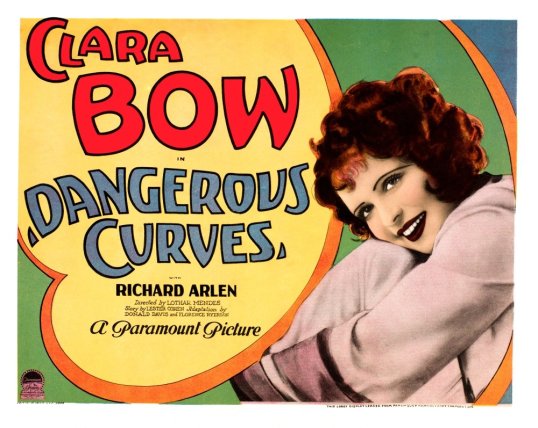
Love On The Shattered Lens: Dangerous Curves (dir by Lothar Mendes)


The 1929 film, Dangerous Curves, takes place at the circus.

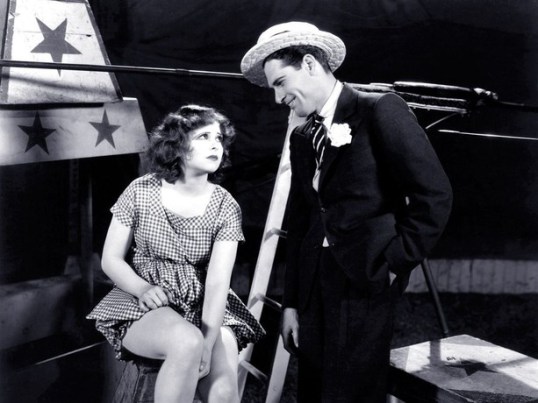
Larry Lee (Richard Arlen) is a tightrope walker and, when we first meet him, he’s a bit of a cad.  He knows he’s the best and he knows that the crowds are specifically showing up to watch him risk his life on a nightly basis.  Every woman at the circus is crushing on him but Larry hardly notices because he’s used to being desired.  He’s in love with his tightrope-walking partner, Zara (Kay Francis).  Everyone can tell that Zara is manipulative and not even loyal to her relationship with Larry.  She wastes his money and Larry sometimes spends so much time thinking about her that it breaks his concentration on the tight rope.

Eventually, Larry discovers that Zara has been cheating on him!  When Larry finds out about Zara and Tony (David Newell), he cannot get the image of them kissing out of his head.  When he tries to walk across the tight rope, he loses his focus and, as the audience gasps, Larry falls to the ground below.  (In an impressively-edited sequence, we see Larry falling from about five different angles before we finally see him hitting the ground.)  Larry recovers but his confidence has been broken.  Instead of returning to the circus, he just wants to drink and obsess on Zara and Tony.

Can bareback rider Patricia Delaney (Clara Bow) convince him to return to the circus?  Can she give him the confidence to once again walk across the tightrope?  Will Larry then teach Pat how do the tightrope act herself?  Will Larry finally realize that Pat loves him and that he loves her?  And how will Pat react when, after all she’s done for Larry, he suddenly decides that he wants to bring Zara back into the act?

Dangerous Curves is a mix of melodrama and romance, all taking place at the circus.  It’s also a pre-code film, which means it’s a bit more honest about the relationships between the characters and Larry’s subsequent drinking problem than it would have been if the film had been made just a few years later.  As a result, this is a melodrama with an edge.  The members of the circus community are living on the fringes of polite society and they’ve built their own community, one that is based on their unique talents.  Larry’s sin isn’t so much that he’s arrogant and tempermental.  It’s that he doesn’t properly respect the community of which he’s a part.  He thinks he’s above the rest of the circus.  His fall from the high wire humbles him.  His relationship with Patricia eventually redeems him.

That said, the main appeal of this film is that it features Clara Bow in one of her early sound-era performances.  Bow became a star during the silent era but, unlike many of her contemporaries, she was able to make the transition to sound.  I absolutely love Clara Bow and this film features one of her best performances.  She’s determined and energetic and she plays the stereotypical “good” girl with just enough of a mischievous glint in her eye to make her compelling.  She may be willing to help Larry get back on the tightrope and then subsequently learn how to walk the tightrope herself but she also shows that she’s not going to put up with him taking her for granted.  As well, both Clara and Kay Francis get to wear a lot of cute outfits, which is always one of the pleasures of a pre-code film.

Dangerous Curves is worth watching for the chance to see Clara Bow at her best.


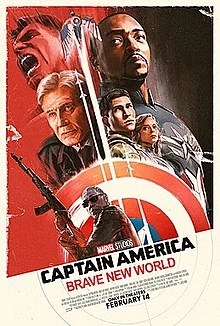
Captain America: Brave New World (dir. by Julius Onah)


Walk into a comic store, and you’ll sometimes find whole collections of comics in one large binder or book. The book that was The Infinity Saga ended with 2019’s Avengers: Endgame and that really should have been the hard stop for Marvel Studios for a while. Still, the Marvel Engine continues to run. Sometimes, we get hits, like 2021’s Shang-Chi and the Legend of the Ten Rings and 2023’s Guardians of the Galaxy, Vol. 3. On occasion, we’ve had that rare film that knocks it out of the park in 2021’s Spider-Man: No Way Home. Mostly, however, we’ve had “okay” stories, like that comic in a pile that you enjoyed reading, but wouldn’t really remember much about it after 15 minutes. These are the ones like Black Widow and Doctor Strange in the Multiverse of Madness (the latter of which I personally hated, despite it being a Raimi film).

I enjoyed Captain America: Brave New World, but the story didn’t feel as expansive as I thought it could be. It still is grounded in the political intrigue of Captain America: The Winter Soldier and Captain America: Civil War, but I felt like it lacked the same kind of weight those previous films did. There are some good fight scenes and even better flight scene thoughout.

Brave New World finds Sam Wilson (Anthony Mackie) doing very well since taking on the mantle of Captain America. Despite not having any powers, he can still handle his own, somewhat. With a suit and new Vibranium wings, compliments of Wakanda, Wilson’s quite a force to be reckoned with, though he still tends to approach certain situations with de-escalation in mind instead of brute force. He also has some help in the form of Joaquin Torres (Danny Ramirez), who has worked with Sam even before using the shield. Mackie carries this easily with the occassional joke or two. It’s also amazing to watch when you know the character isn’t enhanced and is really just one or two good punches away from a broken limb. I see in Sam Wilson a pre-super serum Steve Rogers, fending off enhanced bullies with nothing but a garbage can lid and lots of heart. That’s heroic and perhaps even Worthy, an underdog still fighting the fight (at least to me, anyway). Ramirez’ Torres is the plucky comic relief in all this. Serious when needed, but playful otherwise. His character reminded me a bit of Pablo Schreiber’s one in Michael Bay’s 13 Hours.

The political landscape has also changed since the days of Iron Man 3’s Matthew Ellis (played by William Sadler). General Thaddeus “Thunderbolt” Ross has risen through the ranks to become the President of the United States. Harrison Ford (Clear and Present Danger) takes over the role of Ross from William Hurt (Altered States), who passed away in 2022. At this stage in his career, Ford doesn’t have to do much to be effective in a scene. He’s played political characters in his Tom Clancy / Jack Ryan era, so this isn’t really new to him. His version of Ross still carries the gruff nature that Hurt had, though personally, I don’t feel either performance was as good as Sam Elliot’s in Ang Lee’s Hulk. Ford’s Ross is a man haunted by the disconnection from his family and a reputation he’d rather put behind him. The same can be said for Carl Lumbly’s Isaiah Bradley. As the forgotten Super Soldier, his character is still slowly integrating into public life after a past that left him cautious and weary.

After a successful mission, Wilson, Torres, and Bradley are invited to the White House for a special announcement. The announcement involves the discovery of the “Celestial Island”, the Continent sized remains of Tiamat from The Eternals. Even better, the entire island is made of a material that appears to be stronger than even Vibranium. The metal, dubbed “Adamantium”, causes a race between the Superpowers to acquire it. Thankfully, a treaty formed by Ross helps to keep conflict at bay.

As exciting as it sounds to hear that this particular Universe suddenly (finally!) has Adamantium in it, the announcement is as far as anyone will get to seeing it. Put away any thoughts of seeing Weapon-X plans in Canada. Japan won’t produce a Silver Samurai, and Russia won’t have Omega Red any time soon. That is not this story, and it’s an outright shame that none of that is even hinted to because the only Marvel solid references we have on Mutants to date are from Ms. Marvel at this point. At best, the Adamantium angle serves as a reason to finally include the aftermath of The Eternals into the story and possibly set up something for future films. Why is Marvel so hesitant on touching the X-Men? Ugh, that’s an argument for a different story.

An incident occurs that finds Sam and Joaquin having to exonerate Isaiah Bradley, while at the same time, trying to unravel the mystery involving a terrorist known only as Sidewinder (Giancarlo Esposito, Abigail) that puts both The President and possibly the entire nation in danger. Can Sam and Joaquin take down the Sidewinder and save the day? That is mostly the gist behind Captain America: Brave New World.

Outside of the performances, From a production standpoint, the film had 5 separate screenplay writers and a number of reshoots. It’s not terrible, but the film does feel a little like the writers were unsure of what they wanted to do from scene to scene. There was one shot involving a prison ward that made me wonder why more guards weren’t present. It’s more a nitpick than anything else. I compare it more to Nolan’s editing mistake with The Dark Knight, where the Joker crashes a party, but we never actually see him leave or learn the fates of the people there after Batman saves Rachel. There were also a number of cuts made to the film that removed scenes by actors such as Wrestling’s Seth Rollins and Alita Battle Angel’s Rosa Salazar. You won’t even notice those unless you’re actively expecting to see them in the film (I didn’t know either actor was involved, honestly).

The big showdown that all of the posters couldn’t seem to hide does happen, and the sequence itself is good, given the weaknesses of our heroes and strengths of our villains. It felt a little shorter to me than I expected it to be though it could be on par with the now classic Battle of Harlem in The Incredible Hulk. There was a time where Marvel was able to keep things like this under wraps, but given the state of the MCU and Hollywood in general, I can understand the marketing team’s fight to pull more people into cinemas.

Overall, Captain America: Brave New World is a good popcorn flick. Will you rave about it? Perhaps. Was it fun? Sure. Was it memorable? I’m not totally sure. I enjoyed where the story took me, but my expectations maybe veered to levels that the story couldn’t reach for me. That’s more a “me” problem than a movie problem. Also note that the film does have a Marvel Post-Credit moment. It doesn’t reveal much or anything specific of where the overall arc is reaching. It’s more of a “Captain America Will Return” than anything else, but of course, we all knew that.

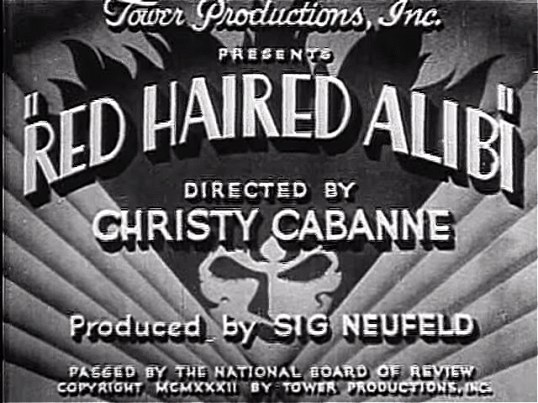
Love On The Shattered Lens: The Red-Haired Alibi (dir by Christy Cabanne)


1932’s The Red-Haired Alibi tells the story of Lynn (Merna Kennedy).

When we first meet Lynn, she is working at a store in Manhattan.  She has red hair.  The film is in black-and-white but we have no doubt that her hair is red because every single character who meets her mentions that she has red hair and she continually reminds people that she has red hair.  Everyone seems to be so stunned to meet a redhead!  And I have to say that this is the most realistic part of this movie.  I have red hair.  I’ve had complete strangers tell me that they like my hair.  I’ve also had complete strangers ask me if I’m a natural redhead (and I am!) and some other things that I’m not going to repeat here.  Personally, I love having red hair.  I’m a member of the proud 2%.  I don’t care if some people claim that people with red hair don’t have souls.  When you’ve got red hair, what else do you need?

As for the movie, Lynn meets a charming man named Trent Travers (Theodore van Enz).  Trent offers to give Lynn a job, away from the drudgery of working in sales.  Trent will pay Lynn to be his companion at night.  And since this is a pre-code film, Red-Haired Alibi is pretty open about what that means.  Lynn agrees.  Trent is handsome and rich and who couldn’t use the money during the Great Depression?  I imagine the film’s audience agreed.  One thing that always comes through in these Depression-era pre-code films is that morals don’t really matter when you’re struggling to pay your rent and not starve to death.

The problem is that Trent is a gangster.  Trent spends his nights committing crimes and then using Lynn as his alibi.  Eventually, Lynn realizes that she’s gotten herself into a dangerous situation.  The police suggest to her that she should get out of town before Trent takes things too far.  (I guess they didn’t have witness protection in 1932.)

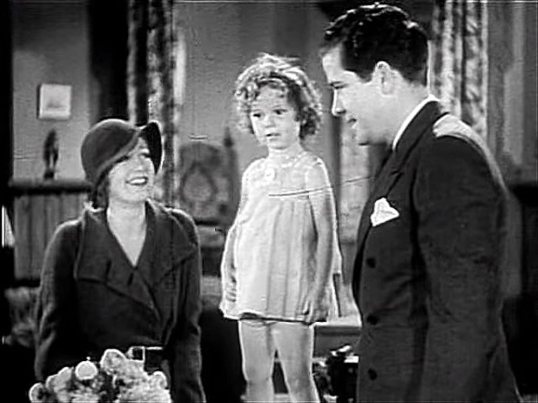
Lynn flees New York and builds a new life for herself in White Plains.  She meets a charming widower named Bob Wilson (Grant Withers).  They marry and settle into a life of domestic bliss.  Lynn becomes the stepmother to Bob’s young daughter (played by Shirley Temple, in what is believed to have been her film debut).  Everything seems to finally be perfect for Lynn.  Or at least it does until Trent shows up….

The Red-Haired Alibi is a generally well-acted but somewhat slow 1930s melodrama.  Comparing this film to some of the other films of the early 30s, it’s a relief to see a cast that knows how to deliver dialogue in the sound era but director Christy Carbanne sometimes struggles to maintain the sort of narrative momentum necessary to make a film like this compelling.  The ending feels a bit silly but, at least during the pre-code era, there wasn’t a need to try to punish Lynn for having a less-than-perfect past.

Dancer and former silent actress Merna Kennedy was best-known for her work with Charlie Chaplin and she gives a likable performance as Lynn.  Two years after making this film, she married Busby Berkley and retired from acting.  Tragically, she died of a heart attack in 1944, when she was only 36 years old.

Love On The Shattered Lens: Frank and Ava (dir by Michael Oblowitz)


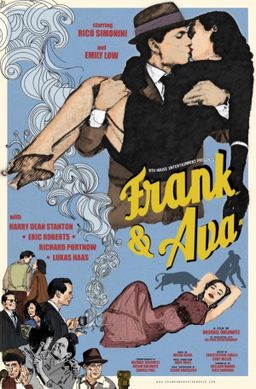
2018’s Frank & Ava tells the story of the tempestuous love affair and marriage of Frank Sinatra (Rico Simonini) and Ava Gardner (Emily Elicia Low).

The film opens with Sinatra at his lowest point.  His records are no longer selling.  His marriage to Nancy is in trouble.  The government is now investigating him for supposed communist sympathies (say it ain’t so, Frank!) and also his connections to the Mafia.  Hedda Hopper (Joanne Baron), Louella Parsons (Joanna Sanchez), and Walter Winchell (Richard Portnow) all pop up throughout the film, breathlessly reading the latest gossip into radio microphones.  Frank’s voice is weakening and it looks like he’s about to lose his fanbase to Eddie Fisher and Perry Como.  As for his acting career, everyone knows that he can’t act.  (At one point, even Frank’s friends laugh at the idea of Siantra ever winning an Oscar.)  Frank knows that he would be perfect for the role of Maggio in From Here To Eternity but the film’s director wants to cast someone like Harvey Lembeck or Eli Wallach.

As for Ava Gardner, she’s just gotten out of a relationship with Howard Hughes.  More famous for her then-scandalous personal life than her film roles, Gardner drinks too much, curses too much, and is too open about her affairs for the sensibilities of much of 1950 America.

When Frank and Ava meet, it’s love at first sight.  They drive around while drinking champagne straight from the bottle.  They crash cars.  When they’re arrested, they charm a local sheriff (Harry Dean Stanton, in his final film role).  They fight.  They make love.  They fight more.  They make love more.  Frank obsesses on the possibility of Ava being unfaithful to him while continually cheating on her with everyone from Lana Turner to Marilyn Maxwell.

The first thing that you notice about Frank & Ava is that it is full of references to real Hollywood gossip.  Names are dropped.  Real celebrities are depicted and the portrayals are not always positive.  The second thing that you notice is that, with the exception of Emily Elicia Low, no one is particularly convincing.  The actress who plays Marilyn Monroe not only looks nothing like Marilyn but her attempt to imitate Marilyn’s trademark voice made me laugh out loud.  Actors appear as Lana Turner, Montgomery Clift, Howard Hughes, and a host of mafiosos and none of them are the least bit convincing.  Much of the film is like attending a costume party where no one could spend more than five bucks on their costume.  Rico Simonini, who was so charming in My Dinner With Eric, is not particularly convincing as Frank Sinatra.  That said, Emily Elicia Low is well-cast as Ava Gardner and Eric Roberts shows up for two scenes as producer Harry Cohn.  In real life, Cohn was a notorious bully.  The old anecdote about everyone showing up at an unpopular man’s funeral to make sure that he’s actually dead is often said to have been inspired by Cohn.  In the film, Roberts plays Cohn as being a surprisingly reasonable guy.  If Fred Zinnemann wants Sinatra, he can have Sinatra.  If he wants Eli Wallach, he can have Eli Wallach.  Just make sure they aren’t communists!

Probably the most interesting thing about this film is its attempt to recreate the 50s without spending a good deal of money.  This is a low-budget movie and there’s an obvious artificiality to many of the sets and costumes that gives the entire film an oddly dream-like feel.  It’s less a recreation of the past and more a look at how the past might look in our fantasies.  All the men wear suits.  Ava dresses and talk as if she just stepped out of a parody of a film noir.  Famous scenes from Goodfellas and La Dolce Vita are awkwardly recreated by Santini and the cast.  The film, which was made by people who obviously loved the legend of Frank and Ava, ultimately transcends the conventional definition of good and bad and instead becomes a work of outsider art, a look into the hazier regions of the American cultural psyche.

Previous Eric Roberts Films That We Have Reviewed:

  1. Star 80 (1983)
  2. Blood Red (1989)
  3. The Ambulance (1990)
  4. The Lost Capone (1990)
  5. Love, Cheat, & Steal (1993)
  6. Voyage (1993)
  7. Love Is A Gun (1994)
  8. Sensation (1994)
  9. Dark Angel (1996)
  10. Doctor Who (1996)
  11. Most Wanted (1997)
  12. Mercy Streets (2000)
  13. Wolves of Wall Street (2002)
  14. Mr. Brightside (2004)
  15. Six: The Mark Unleased (2004)
  16. Hey You (2006)
  17. In The Blink of an Eye (2009)
  18. Enemies Among Us (2010)
  19. The Expendables (2010) 
  20. Sharktopus (2010)
  21. The Dead Want Women (2012)
  22. Deadline (2012)
  23. The Mark (2012)
  24. Miss Atomic Bomb (2012)
  25. Bonnie And Clyde: Justified (2013)
  26. Lovelace (2013)
  27. The Mark: Redemption (2013)
  28. Self-Storage (2013)
  29. This Is Our Time (2013)
  30. Inherent Vice (2014)
  31. Road to the Open (2014)
  32. Rumors of War (2014)
  33. Amityville Death House (2015)
  34. A Fatal Obsession (2015)
  35. Stalked By My Doctor (2015)
  36. Enemy Within (2016)
  37. Joker’s Poltergeist (2016)
  38. Prayer Never Fails (2016)
  39. Stalked By My Doctor: The Return (2016)
  40. The Wrong Roommate (2016)
  41. Dark Image (2017)
  42. Black Wake (2018)
  43. Stalked By My Doctor: Patient’s Revenge (2018)
  44. Clinton Island (2019)
  45. Monster Island (2019)
  46. The Savant (2019)
  47. Seven Deadly Sins (2019)
  48. Stalked By My Doctor: A Sleepwalker’s Nightmare (2019)
  49. The Wrong Mommy (2019)
  50. Exodus of a Prodigal Son (2020)
  51. Free Lunch Express (2020)
  52. Her Deadly Groom (2020)
  53. Top Gunner (2020)
  54. Deadly Nightshade (2021)
  55. The Elevator (2021)
  56. Just What The Doctor Ordered (2021)
  57. Killer Advice (2021)
  58. The Poltergeist Diaries (2021)
  59. The Rebels of PT-218 (2021)
  60. A Town Called Parable (2021)
  61. Bleach (2022)
  62. My Dinner With Eric (2022)
  63. Aftermath (2024)
  64. The Wrong Life Coach (2024)

Love On The Shattered Lens: The Bitch (dir by Gerry O’Hara)


“Joan Collins is THE BITCH” announced the opening credits of the 1979 film, The Bitch.  Seriously, how can you not love a film that opens that way?

Joan Collins returns of Fonatine Khaled, the character that she previously played in The Stud.  Once again based on a novel by Jackie Collins, The Bitch follow Fontaine as she adjusts to life as a freshly divorced woman.  Though she received a good deal of money in the divorce and she has her own personal fortune as well, Fontaine is struggling to maintain her extravagant lifestyle.  A new disco has opened and is taking away the crowds that used to populate her club.  She’s running out of cash and soon, she might not even be able to fly first class!

It’s on an airplane that she meets Nico (Michael Colby, who is not particularly charismatic but still isn’t quite as dull as Oliver Tobias was in The Stud).  In an amusing in-joke, the movie that they watch on the plane is The Stud.  Nico says that he can’t decide if the movie is funnier with the sound or without.  “It’s not meant to by funny,” Fontaine replies.  Nico claims to be a wealthy Italian businessman, which immediately gets Fontaine’s attention.  Of course, Nico’s lying.  He’s actually a con artist and a jewel thief.  Fontaine figures that out when Nico tries to use her to smuggle a diamond through customs.  Fontaine is angered but she’s intrigued.

Nico is in debt to the Mafia.  The head of the British mob is a man named … and I’m not making this up …. Thrush Feathers (Ian Hendry).  Thrush Feathers demands that Nico cause a horse to lose an upcoming race.  The horse belongs to Fontaine’s friends from the first film, Vanessa (Sue Lloyd) and Mark Grant (Mark Burns).  Thrush Feathers also offers to help Fontaine keep her club open but his help comes with a price.  Whatever the price is, could it possibly be worse than being named Thrush Feathers?  Seriously, in what world is someone with that name going to take over a London crime syndicate?  How do you go from the Kray Brothers to Thrush Feathers?

Anyway, the plot really isn’t that important.  There’s a lot of double crosses and manipulation as Fontaine lives up to the title of the film.  The plot is really just an excuse to tease the viewer with visions of the decadent rich.  The clothes are expensive.  The mansions are ornate.  The conversations are always arch and full of double entendres.  This film is less about how the rich live and more about how middle class like to imagine the rich live.  It’s also about sex, though none of it quite reaches the lunatic abandon of The Stud’s swimming pool orgy scene.  The important thing is that whole thing is scored to a disco beat.

As with The Stud, it’s Joan Collins who holds the film together, giving a fierce and uninhibited performance in which she gleefully embraces the melodrama and delivers her lines with just enough attitude to let the viewer know that she’s in on the joke.  “Bitch” may have been meant as an insult but, as played by Joan Collins, Fontaine wears the title as a badge of honor.  She understands what had to be done to survive in a male-dominated world and she makes no apologies for it.  Even more importantly, she knows that once you fly first class, you can never go back.

The Bitch is not necessarily good but it is definitely fun in its sordid way.

Love On The Shattered Lens: The Stud (dir by Quentin Masters)


Oliver Tobias is …. THE STUD!

It is true that Oliver Tobias does play the title character of this 1978 British film, which was itself based on a novel by Jackie Collins.  Tobias is cast as Tony Blake, a youngish Englishman who runs the hottest discotheque in the UK.  He runs it on behalf of its actual owner, the decadent Fontaine Khaled (Joan Collins).  Fontaine is married to the fabulously wealthy Benjamin Khaled (played by Walter Gotell, who also had a recurring role in the James Bond films as the head of the KGB) but she seeks her carnal pleasure elsewhere.  Tony’s job and all the glamour that goes with it is dependent upon being Fontaine’s personal plaything.  If Fontaine wants to do it in the elevator while the security cameras film, that is what’s going to happen.  If Fontaine wants Tony to take part in a swimming pool orgy while she swings back and forth over the festivities, that’s what is going to happen.  Tony Blake is the stud, after all.

Tony, however, tires of all the nonstop decadence.  He’s not as empty-headed as Fontaine assumes him to be.  Tony’s complicated.  Tony has feelings.  At least, that’s what the films wants us to believe.  To be honest, Tony is kind of boring but we’ll get to that later.  Tony allows himself to be used by Fontaine but he finds himself truly falling in love with Fontaine’s stepdaughter, Alexandra (Emma Jacobs).  But does Alexandra feel the same way towards Tony or is she just using Tony to get revenge on her hated stepmother?

Let’s start with something positive about this film.  The Stud is one of the most 70s movies ever made.  Everything from the fashion to the slang to the cinematography to the wah wah soundtrack simply screams 70s.  There’s several scenes that take place in the discotheque.  Very few of them actually move the story forward in any meaningful way but they do give you a chance to look at the clothes and the haircuts and to listen for the sound of people snorting cocaine in the background.  If you’re a student pop culture or if you’re just fascinated by the tacky and the trashy, the film is very enjoyable on that level.  There’s also a lot of sex, all of it filmed in vibrant color and featuring a camera that will not stop moving as The Stud tries to convince us that it’s actually high art.

Unfortunately, the stud of the title is a bit of dud.  (And they say I’m not a poet!)  Oliver Tobias is handsome and has a superficially charming screen presence.  But, whenever he has to deliver dialogue or show any hint of emotion, the film falls flat.  As played by Tobias, Tony just comes across as a bland gigolo, enjoyable to look at but impossible to really care about.  The film is so dominated by Joan Collins’s cheerfully over-the-top performance as Fontaine that Tobias seems to spend a lot of the movie disappearing into the background.  Indeed, Collins’s performance is the best thing about the film.  She fully understand what type of movie she’s appearing in and she fully embraces the melodrama, delivering her arch dialogue with just the right amount of self-awareness to suggest that she’s in on the joke.

The Stud is a love story featuring people who are only capable of loving themselves.  At its worst, it gets bogged down in Tobias’s dull lead performance.  At its best, its trashy fun with a disco beat.  I like trashy fun so I can excuse the boring leading man.  A good beat that you can dance to can make up for a lot.

Top Of the World (1997, directed by Sidney J. Furie)


Ray Mercer (Peter Weller) has just gotten out of prison and already, he and his wife Rebecca (Tia Carrere) are heading to Nevada for a quicky divorce.  However, a stopover in Las Vegas leads to Ray having a run of luck in a casino owned by Charles Atlas (Dennis Hopper).  Ray and Rebecca start to reconsider their divorce but their reconciliation is temporarily put on hold when the casino is robbed by a bunch of thieves led by Martin Kove.  Because of Ray’s criminal history, the police (led by David Alan Grier) consider Ray to be the number one suspect.  Ray and Rebecca try to escape from the casino and clear Ray’s name, leading to a night on nonstop action and an explosive climax at the Hoover dam.

One thing that you can say about Top of the World is that it certainly isn’t boring.  The action starts earlier and lasts nonstop until the end of the movie.  No sooner has Ray escaped from one scrape than he finds himself in another.  Despite the low-budget, the action scenes are often spectacularly staged and exciting to watch.  Another thing that you can say about Top of the World is that, for a B-movie, it certainly has a packed cast.  Along with Weller, Carrere, Hopper, Grier, and Kove, the movie also finds room for Peter Coyote, Joe Pantoliano, Ed Lauter, Gavan O’Herlihy, Eddie Mekka, Cary-Hiroyuki Tagawa, and even Larry Manetti of Magnum P.I. fame.  This movie paid off a lot of mortgages and probably funded more than a few vacations.

One thing you can’t say about Top of the World is that it makes any sense.  It doesn’t.  There are so many holes in the plot that you could fly a helicopter through them and that’s exactly what this film does.  But with the nonstop action and the entertaining cast, most people won’t mind.  I certainly didn’t!