Criswell Predicts From Now To The Year 2000!


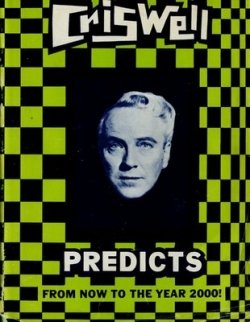
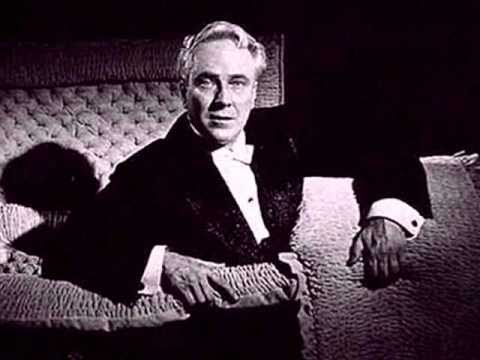
Criswell Predicts_From Now To Year 2000_1968Charles King was born in 1907 in the back of an Indiana mortuary.  He was born long ago in the past and he lived in, what for him, was the present.  But his mind saw only the future.  Charles King would become better known as the Amazing Criswell.  Along with writing a daily column entitled “Criswell Speaks,” Criswell also appeared in such films as Plan 9 From Outer Space and Orgy of the Dead.  Though death came to this great man exactly 32 years ago today, his words and his vision live on.  According to Criswell himself, his predictions were proven to be correct 87% of the time, a little less than always but a lot more than often.

In 1968, Criswell published his first book, Criswell Predicts From Now To The Year 2000!  You can still find copies of it in used bookstores and occasionally, you will find someone selling it on Ebay or Amazon.  For those of us in the year 2015, it makes for an interesting read.  Here are a few of Criswell’s predictions from 1968:

Criswell predicted that, by 1980, we would be able to perform our own home facelifts for just $5.00 a pop.

On page 115 of Criswell Predicts, Criswell wrote, “I predict an outburst of cannibalism that will terrorize the population of one of the industrial cites in the state of Pennsylvania—Pittsburgh. Mass mournings will be held for the victims. A smile will be unknown. The fate of this city of Pittsburgh will never be forgotten… Date: November 28 to December 21, 1980.”

Criswell predicted that, on August 9th, 1970, Fidel Castro would be assassinated by a woman.
curse_of_peladon_7703

On page 57 of Criswell Predicts, Criswell wrote, “Las Vegas, Nevada, March 10, 1990: The very first Interplanetary Convention will be held in the new Convention Center on the famed Strip with colony citizens of Mars, Venus, Neptune and the Moon in full representation; Governor Sawyer will make the opening welcome address.”

Criswell predicted paste-on bikinis for girls and clamp-on bikinis for boys.

On page 79 of Criswell Predicts, Criswell wrote, “London, England, will be the target of this heartless killer from outer space. The meteor will strike in a heavily populated sector of London and will hit with unprecedented force, rocking the earth for hundreds of miles and slightly shifting the position of the earth. Shocks will be felt as far away as Paris, Lisbon, Denmark, Australia, India, China, South Africa, South America, and Washington, D.C. I predict that the once proud city of London will be a tomb of death. Entire slum areas will be completely wiped out. Date: October 18, 1988.”

Criswell predicted that nudism would become more popular in the United States and that, in 1971, the Supreme Court would legalize public nudity.

Dayafter1On page 107 of Criswell Predicts, Criswell wrote, “I predict that on February 11, 1981, there will be an abortive attempt by a foreign power to bomb the United States with atomic missiles. Most of the missiles will be destroyed by anti-missile missiles, but several will be only driven off course and will drop on the helpless state of Vermont. The death toll on that date will exceed 50,000 persons.”

(Lisa Marie asked me to note that this is her personal favorite of Criswell’s many predictions.)

Criswell predicted that the U.S. capital would be moved from Washington, D.C. to Wichita, Kansas.

On page 105 of Criswell Predicts, Criswell wrote, “I predict that South Dakota will become the first state to legalize prostitution and the sale of marijuana. I predict that a group of ruthless men will control the state government of South Dakota in the late 1970s and their open traffic in prostitution and drugs will cause repercussions throughout the country.”

Criswell predicted that the teeming metropolis of Denver, Colorado would be destroyed on June 9th, 1989 by a pressure from outer space that would cause all solids to turn into a jelly-like mass.

Let us take a few moments to pay respect for the dead of Denver.

And lastly, Criswell predicted that the last day of life on Earth would be August 18th, 1999, at which point a black rainbow would stretch across the sky and, through forces that we cannot begin to comprehend, suck away our precious oxygen.  Only 200 American and Russian space colonists will survive the final destruction of Earth.

As Criswell himself might say, “Can you prove it didn’t happen?”

Criswell, R.I.P.
criswell


Book Review: How To Be A Superhero by Mark Edlitz


Who has not wanted to be a super hero?  When I was growing up, I wanted to be an X-Man until I realized that I would rather be the first American to play the Doctor on Doctor Who.  Over the years, many actors and actresses have actually gotten to be super heroes on both the small and big screen.  Some of them, like Hugh Jackman, became stars as a result.  Others, like Adam West and anyone who has ever played Superman, spent the rest of their career dealing with being typecast.  Of course, a few, like George Clooney, were lucky to survive the experience with any sort of career at all.

How To Be A Super HeroIn the new book How To Be A Superhero, Mark Edlitz interviews 30 actors, asking them what it was like to be a hero and how the experience changed (or did not change) their lives and careers.  Edlitz is a good interviewer and all of the conversations are full of interesting tidbits and trivia but what really sets this book apart is the wide variety of people who Edlitz interviews.

While Edlitz interviews everyone who you would expect to be interviewed in a book like this (Adam West, The Adventures of Superman’s Jack Larson, Dean Cain, Clark Gregg, Tom Hiddleston, and others), he also finds the time to speak to and acknowledge some of the lesser known heroes.  John Wesley Shipp and John Haymes Newton (who, in the early 90s, respectively played The Flash and Superboy) both share bittersweet memories of only getting to play their iconic heroes for one season.  Helen Slater reflects on playing the title character in 1984’s Supergirl.  In one of the book’s best interviews, Nicholas Hammond talks about playing Spider-Man on TV in the 1970s and how, as a result of getting into the role, he once tried to foil an actual mugging.  The cast of Roger Corman’s Fantastic Four share their disappointment when they discovered that their movie was never going to be released.  Even Chip Zien, who voiced Howard the Duck, offers up a few less-than-positive memories.

Not everyone that Edlitz interviewd wore a costume.  Leonard Nimoy, in one of his final interviews, assures Edlitz that Spock would win a fight against Kirk.  George Lazenby talks about coming to terms with the experience of briefly being James Bond.  Roger Moore’s memories are much more light-hearted.

Edlitz also speaks with some of the people who worked behind the scenes.  Especially interesting is his interview with screenwriter Tom Mankiewicz, who talks about what it was like to write for both James Bond and Superman.  Among many other stories, Mankiewicz tells how he introduced Sean Connery and Christopher Reeve at a party.  When Reeve asked what he should do if Superman turned out to be a hit, Connery advised him to hire a good lawyer and sue the producers for more money.

Insightful and always enjoyable to read, How To Be A Superhero is a book that belongs in the library of anyone who has ever dreamed of being a hero.

Starlin Trek: WARLOCK BY JIM STARLIN:THE COMPLETE COLLECTION (book review)


warlock1

I usually write about old movies here, but they’re not my only interest. When I was younger, back in the 70s, I collected comic books. I had stacks and stacks of them: Marvel, DC, Charlton, Atlas, undergrounds. Even the oversized Warrens and of course, Mad. Now that I’m slightly older (well, okay maybe more than just slightly), I’ll occasionally pick up a trade paperback that grabs my nostalgic interest. While browsing through the local Barnes & Noble recently, my gaze came upon one that screamed “Buy me now”! That book was WARLOCK BY JIM STARLIN: THE COMPLETE COLLECTION.

Starlin’s cosmic opus starred Adam Warlock, a Christlike space hero, pitted against Thanos of Titan and his quest to posses the Infinity Gems. Adam has the soul gem imbedded in his forehead, an vampiric emerald that steals mortal souls. The story’s themes concern philosophical questions about life and death, chaos and order, gods and madmen. Very heavy stuff. The books weren’t all that popular though, and the series only lasted from 1975 to 1977. Way ahead of its time, Starlin’s Adam Warlock saga has now become considered a classic of the comic world as the years have passed.

warlock3

Jim Starlin is now recognized as one of the giants of the comic industry. Starlin wrote and drew the series with a deft hand, knowing exactly what he wanted to say and how to get there. He was ably assisted by inker/finishers Steve Leialoha and Joe Rubinstein. They make Starlin’s pencils and layouts pop with cosmic wonder. Tom Orzechowski’s lettering aids tremendously in setting the tone and mood for this galactic epic. The book’s loaded with extras, including a “lost” Warlock tale Starlin conjured up as a fill-in issue. The adventure is fanatastic as a whole, but some favorite chapters of mine are the Steve Ditko inspired “1000 Clowns” (Strange Tales #181), the solo interlude starring Warlock’s degenerate friend Pip the Troll (Warlock #12), and the cataclysmic conclusion from Avenger Annual #7 and Marvel Two-in-One Annual #2.

warlock2

Marvel Cinematic Universe fans (of which I’m one) are already aware of the power of the (now renamed) Infinity Stones. We’ve seen Thanos appear in the two AVENGERS flicks and GUARDIANS OF THE GALAXY. And where Thanos treads, can Adam Warlock be that far behind?? One can only dream…

Appreciating Ray Bradbury’s The Martian Chronicles


the-martian-chroniclesFirst published in 1950, Ray Bradbury’s The Martian Chronicles is a collection of 28 short stories about humans exploring and colonizing Mars while those left behind on Earth destroy each other in a never-ending atomic war.  When I first read it back in middle school, it blew my mind.  When I reread it this weekend, I discovered that it still holds up.  65 years after first being published, The Martian Chronicles is still a classic of American literature.

When Ray Bradbury died in 2012, many obituaries called him a “science fiction writer.”  Bradbury always resisted that label, saying in one interview, “First of all, I don’t write science fiction. I’ve only done one science fiction book and that’s Fahrenheit 451, based on reality. It was named so to represent the temperature at which paper ignites. Science fiction is a depiction of the real. Fantasy is a depiction of the unreal. So Martian Chronicles is not science fiction, it’s fantasy. It couldn’t happen, you see? That’s the reason it’s going to be around a long time – because it’s a Greek myth, and myths have staying power.”  There is very little science to be found in The Martian Chronicles.  Humans travel between Earth and Mars via rockets and the trip only takes a matter of days.  Characters frequently ride boats down the water-filled Martian canals.  Humans have little trouble breathing on Mars and only occasionally complain about the thin atmosphere.  Bradbury is not interested in Mars as a real place.  Instead, he uses Mars as a way to explore what humanity would do if given a second chance.

The humans who come to Bradbury’s Mars all have one thing in common.  All of them are fleeing an imperfect Earth.  Some, like the members of the first three expeditions, come to Mars as explorers.  Some, like the troubled Jeff Spender, seek to learn from Martian civilization.  Others, like Sam Parkhill, come to Mars to make money.  Fathers Peregrine and Stone come to Mars in search of a new world in which to spread the word of God.  Mr. Stendahl comes to Mars to escape government oppression.  Others come to escape the wars of Earth.  Throughout The Martian Chronicles, characters deal with issues that are just as relevant today as they were in 1950.  Bradbury’s vision of human society is not a positive one, especially when compared to his Martians.

martianchronicles2All of the short stories are linked by the human characters’ struggle to come to terms with Martian society.  After killing the members of the first three expeditions, the Martian race is wiped out by chicken pox, a disease that did not exist on Mars until the arrival of the humans.  Only a few survive and go into hiding, watching as human move into their old cities and set up their own civilization.  Ghost-like, the Martians and their dead society haunt every story in The Martian Chronicles.

There are a few stories in The Martian Chronicles that have not aged well.   The Silent Towns, in which a man named Walter Gripp is horrified to discover that one of the last women left on Mars is overweight, is a mean-spirited and unpleasant story to read.  But the collection’s best stories — And The Moon Be Still As Bright, The Third Expedition,  Usher II, The Off Season, The Million-Year Picnic, Night Meeting, and especially There Will Come Soft Rains — still hold up as entertaining and thought-provoking works of speculative fiction.

In 1980, The Martian Chronicles was turned into a miniseries.  I will be watching and reviewing it later this week.

Going Crazy With Sam Peckinpah and Max Evans


At the beginning of The Wild Bunch, William Holden says, “If they move, kill them.”  That line became so associated with director Sam Peckinpah and his films that it was even used as the title of his biography.  Sam Peckinpah was known for both the violence of his films and the turmoil of his private life.  He fought studios and film critics and directed six classic films before destroying himself and his talent with drugs and hard living.  When he died in 1984, he was could not get a job in Hollywood but his legacy as a filmmaker has lived on.

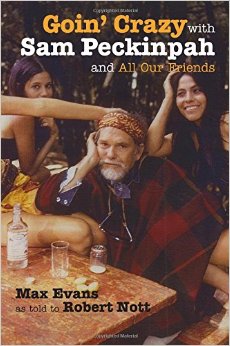
Goin Crazy With Sam Peckinpah And All Our FriendsIn his memoir, Goin’ Crazy With Sam Peckinpah And All Our Friends, novelist Max Evans takes a look back at his long and often contentious friendship with Peckinpah.  When Sam Peckinpah first met Max Evans, it was to buy the rights to Max’s western novel, The Hi-Lo Country.  Though Peckinpah never made the movie, he and Evans remained friends for the rest of Peckinpah’s life.  As Evans puts it, he and actor James Coburn were the only two to stay with Peckinpah until the very end.

When talking about Peckinpah, Evans does not pull any punches.  Much of the book details Peckinpah’s casual cruelty.  When Peckinpah’s son David wrote a script, Sam dismissed it as a “piece of shit.”  Evans interviewed Peckinpah’s girlfriend, Katy Haber, about the time that Peckinpah hit her and how actor Steve McQueen reacted when he found out.  Towards the end of his life, Peckinpah was told that he would die if he did not stop drinking.  Sam gave up liquor and turned to cocaine instead.  At one point, a paranoid Peckinpah even asked Evans for help in hiring a hitman to “take care of” a film producer that Peckinpah disliked.

Evans also talks about the other side of Sam Peckinpah.  According to Evans, the Peckinpah that visited him in New Mexico was a different human being from the Sam who threatened producers and shot guns at actors.  In Hollywood, Peckinpah felt had to prove he was a madman.  With Max, he could just be “Ol’ Sam.”  Max even suggests that Sam may have been a mystic and includes several stories about Sam’s “supernatural” abilities.

Along with writing about Sam Peckinpah, Evans also talks about his colorful encounters with actors like Lee Marvin, Burt Lancaster, L.Q. Jones, Woody Harrelson, and Sean Penn.  Evans is a natural storyteller and Goin’ Crazy With Sam Peckinpah is an engaging and breezy trip through the Hollywood of the 60s and 70s.

2014 In Review: Lisa’s Top 10 Non-fiction Books of 2014


Yesterday_Today_and_Tomorrow_Cover_embed


I should admit that the title of this post is misleading.  While it is true that listed below are 10 of my favorite non-fiction books of 2014, I’ve specifically limited my picks to books that dealt with entertainment, pop culture, and the creative process.  With that in mind, here are my 10 favorite non-fiction books of 2014:

(And yes, you should read everyone of them.)

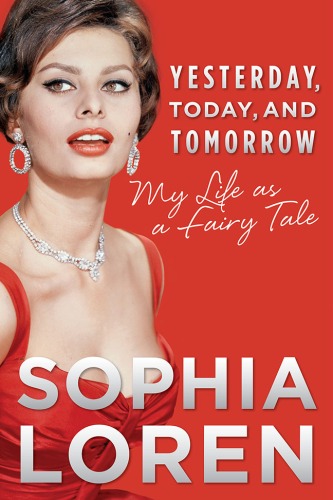
  1. Yesterday, Today, Tomorrow: My Life As A Fairy Tale by Sophia Loren
  2. Five Came Back: A Story of Hollywood and the Second World War by Mark Harris
  3. Life In Motion: An Unlikely Ballerina by Misty Copeland
  4. Werner Herzog: A Guide for the Perplexed by Paul Cronin
  5. My Salinger Year by Joanna Rakoff
  6. The Year of Reading Dangerously by Andy Miller
  7. Tinseltown: Murder, Morphine, and Madness at the Dawn of Hollywood by William J. Mann
  8. Scandals of Classic Hollywood: Sex, Deviance, and Drama From the Golden Age of American Cinema by Anne Helen Petersen
  9. As You Wish by Cary Elwes
  10. Heavy Metal Movies by Mike McPadden

primary_FiveCameBack-678x1024

Tomorrow, I conclude my look back at the previous year with the list that everyone has been waiting for: my 26 top films of 2014!

Previous Entries In TSL’s Look Back At 2014

  1. 2014 In Review: Things Dork Geekus Dug In 2014 Off The Top Of His Head
  2. 2014 In Review: The Best Of Lifetime and SyFy
  3. 2014 In Review: Lisa’s Picks For The 16 Worst Films Of 2014
  4. 2014 In Review: 14 Of Lisa’s Favorite Songs Of 2014
  5. 2014 In Review: Necromoonyeti’s Top 10 Metal Albums of 2014
  6. 2014 In Review: 20 Good Things Lisa Saw On TV In 2014
  7. 2014 In Review: Pantsukudasai56’s Pick For The Best Anime of 2014
  8. 2014 in Reivew: Lisa’s 20 Favorite Novels of 2014

2014 in Review: Lisa’s 20 Favorite Novels of 2014


The Game and the Governess

Continuing our look back at the previous year, here are my 20 favorite novels of 2014!  And yes, you should read every single one of them!

The Summer Job

  1. The Vacationers by Emma Straub
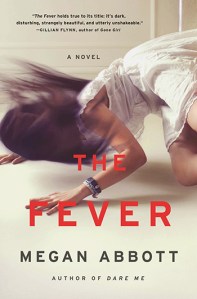
  2. The Fever by Megan Abbott
  3. In the Blood by Lisa Unger
  4. Stone Mattress: Nine Stories by Margaret Atwood
  5. The Blazing World by Siri Hestvedt
  6. The Summer Job by Adam Cesare
  7. The Good Girl by Mary Kubica
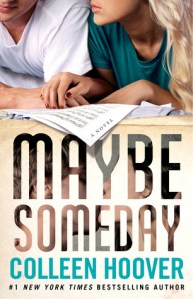
  8. Maybe Someday by Colleen Hoover
  9. All The Light We Cannot See by Anthony Doerr
  10. The Game and the Governess by Kate Noble
  11. China Dolls by Lisa See
  12. Long Man by Amy Greene
  13. The Paying Guests by Sarah Waters
  14. Big Little Lies by Liane Moriarty
  15. Frog Music by Emma Donoghue
  16. The Winter People by Jennifer McMahon
  17. The Three by Sarah Lotz
  18. Long Lost Dog Of It by Michael Kazepis
  19. The Serpent of Venice by Christopher Moore
  20. Thunderstruck & Other Stories by Elizabeth McCracken

The FeverTomorrow, we continue our look book at 2014 with some of my favorite nonfiction books of the year!

Maybe Someday

Previous Entries In TSL’s Look Back At 2014

  1. 2014 In Review: Things Dork Geekus Dug In 2014 Off The Top Of His Head
  2. 2014 In Review: The Best Of Lifetime and SyFy
  3. 2014 In Review: Lisa’s Picks For The 16 Worst Films Of 2014
  4. 2014 In Review: 14 Of Lisa’s Favorite Songs Of 2014
  5. 2014 In Review: Necromoonyeti’s Top 10 Metal Albums of 2014
  6. 2014 In Review: 20 Good Things Lisa Saw On TV In 2014
  7. 2014 In Review: Pantsukudasai56’s Pick For The Best Anime of 2014


Book Review: PreDumb: Before I Came To L.A. by Mark Hayes


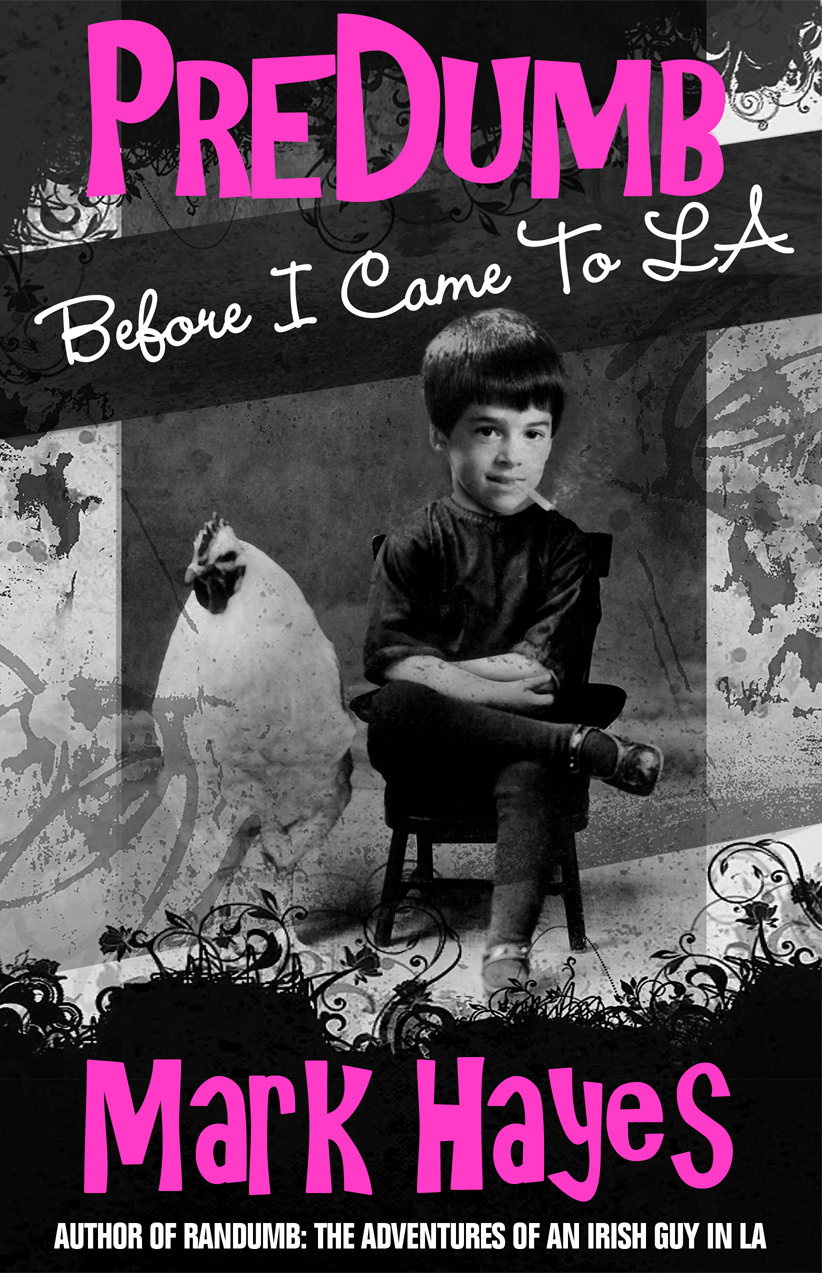
PreDumb by Mark Hayes

So, two years ago, I had the pleasure to read, review, and recommend a book called Randumber by Irish comedian and DJ Mark Hayes.  In Randumber, Mark wrote about the experience of being an Irishman in that most American of cities, Los Angeles.  He brought a biting but never cruel wit to his examination of American culture and, if my previous review didn’t convince you to order that book, you should do so right now.

And while you’re ordering Randumber, why not go ahead and get Mark’s latest book, PreDumb: Before I Came To Los Angeles, as well?

As you might guess from the title, PreDumb serves as a prequel to Mark’s life in Los Angeles.  I’ve just recently finished reading it and, speaking as someone who is endlessly fascinated by her Irish roots, I absolutely loved it and I cannot recommend it highly enough.

Written in an episodic fashion, PreDumb follows Mark’s life from his childhood and adolescence in Ireland to his adventures in Germany and Hong Kong.  Each chapter deals with a different topic, covering everything from Mark’s relationship with his family to his first awkward experiences with the opposite sex to the first time he drank booze.  There’s also a bit of space devoted to soccer because Mark is Irish, after all.

And that’s one of the main reasons why I enjoyed PreDumb.  While the experiences of childhood and adolescence are universal, Mark brings his own uniquely Irish spin to the telling.  As Mark writes at the beginning of one chapter, “Ireland is a great place to go if you ever want to hear some made up facts.  We are masters of myth.”  Myself, I can’t wait until I visit Ireland in person but, having read Predumb, I almost feel as if I’ve already been there.

Mark tells his stories with a gentle humor that’s full of both nostalgia and a very obvious love for the people that he left behind in Ireland when he came out to L.A.  The end result is a very likable book, one that celebrates both family and youth.  On a personal note, when I first started reading PreDumb, I was actually going through one of my dark moods.  Reading the book really helped to lighten my mood, it’s just such a cheerful and heartfelt story that there’s no way that it couldn’t have.

It’s a book that you should read.

You’ll enjoy it, I promise.

And you can order it here!

Lisa Marie’s 12 Favorite Novels of 2013


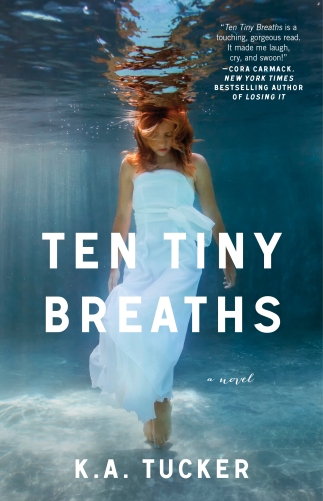
TTB-cover

Continuing TSL’s look back at the year that was, here’s my 12 favorite novels of 2013!

(And yes, you should read them all.)

  1. Ten Tiny Breaths by K.A. Tucker
  2. Z: A Novel of Zelda Fitzgerald by Theresa Ann Fowler
  3. The Flamethrowers by Racel Kushner
  4. The Fate of Mercy Alban by Wendy Webb
  5. Someday, Someday Maybe by Lauren Graham
  6. Reconstructing Amelia by Kimberly McCreight
  7. Red Hill by Jamie McGuire
  8. The Goldfinch by Donna Tartt
  9. Night Film by Marisha Pessl
  10. Just One Day by Gayle Foreman
  11. The Interestings by Meg Wolitzer
  12. NOS4A2 by Joe Hill

z-a-novel-of-zelda-fitzgerald

Tomorrow, my look back at 2013 continues with the list that everyone’s been waiting for — my top 26 films of 2013!

Other Entries In TSL’s Look Back At 2013:

  1. Lisa Marie’s 12 Favorite Non-Fiction Books of 2013
  2. Semtex Skittle’s 2013: The Year in Video Games
  3. 20 Good Things Lisa Marie Saw On Television in 2013
  4. 10 0f Lisa Marie’s Favorite Songs of 2013
  5. Lisa Marie’s 16 Worst Films of 2013
  6. Necromoonyeti’s Top 10 Metal Albums of 2013
  7. Things That Dork Geekus Dug In 2013
  8. Lisa Marie’s Best of 2o13 SyFy

Lisa Marie’s 12 Favorite Non-Fiction Books of 2013


disaster-artist

I should admit that the title of this post is misleading.  While it is true that listed below are 12 of my favorite non-fiction books of 2013, I’ve specifically limited my picks to books that dealt with entertainment, pop culture, and the creative process.  With that in mind, here are my 12 favorite non-fiction books of 2013:

(And yes, you should read everyone of them.)

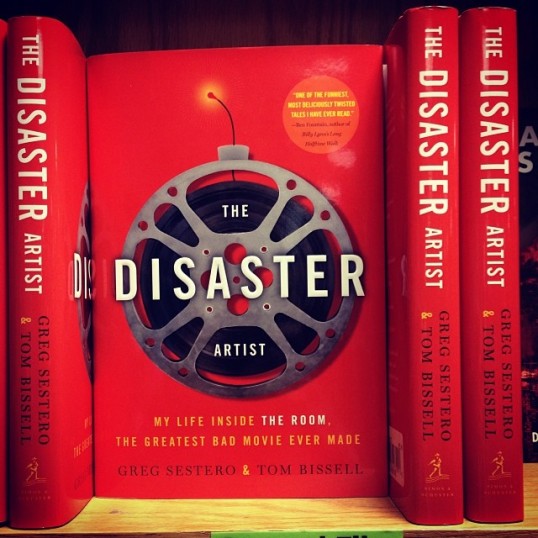
1)  The Disaster Artist by Greg Sestero & Tom Bissell

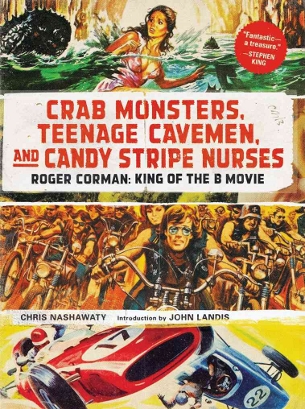
2) Crab Monsters, Teenage Caveman, and Candy Stripe Nurses: Roger Corman: King of the B-Movies by Chris Nashawaty

3) 100 Works of Art That Will Define Our Age by Kelly Grovier

4) The Wes Anderson Collection by Matt Zoller Seitz

5) Odd Type Writers by Celia Blue Johnson

6) Mad Girl’s Love Song: Sylvia Plath and Life Before Ted by Andrew Wilson

7) The Reckoning: Women Artists of the New Millennium by Eleanor Hartney, Helaine Posner, Nancy Princethal, and Sue Scott

8) Difficult Men by Brett Martin

9) A Story Told Lately by Anjelica Huston

10) Slimed: An Oral History of Nickelodeon’s Golden Age by Matthew Klickstein

11) The Secret History of Vladimir Nabakov by Andrea Pitzer

12) Norman Mailer: A Double Life by J. Michael Lennon

crab-monsters_305

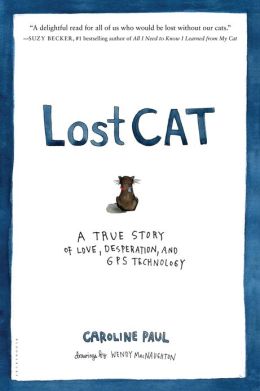
Honorable Mention: Lost Cat by Caroline Paul, my favorite non-entertainment related nonfiction book.

Lost Cat

Tomorrow, my look back at 2013 continue with my 12 favorite novels of 2013.

Other Entries In TSL’s Look Back At 2013:

  1. Semtex Skittle’s 2013: The Year in Video Games
  2. 20 Good Things Lisa Marie Saw On Television in 2013
  3. 10 0f Lisa Marie’s Favorite Songs of 2013
  4. Lisa Marie’s 16 Worst Films of 2013
  5. Necromoonyeti’s Top 10 Metal Albums of 2013
  6. Things That Dork Geekus Dug In 2013
  7. Lisa Marie’s Best of 2o13 SyFy