Pulp Fiction #1: Mickey Spillane’s Mike Hammer


gary loggins's avatarcracked rear viewer

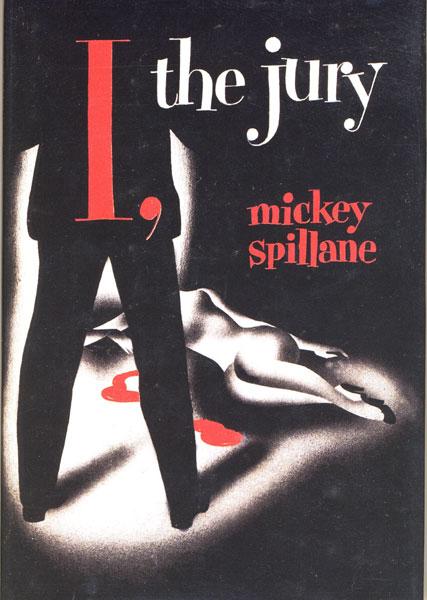
“The roar of the .45 shook the room. Charlotte struggled back a step. Her eyes were a symphony of incredulity, an unbelieving witness to truth. Slowly, she looked down at the ugly swelling in her belly where the bullet went in.

“How c-could you”, she gasped.

I only had a moment before talking to a corpse. I got it in.

“It was easy”, I said. “

– from I, THE JURY by Mickey Spillane, first published in 1947 by EP Dutton

Mickey Spillane’s PI Mike Hammer made his debut in I, THE JURY, and set the shocked literary world on its collective ear with its sex-and-violence laden story. Critics savaged Spillane, but the book buying public ate it up, turning I, THE JURY into a best seller and launching Hammer as a pop culture icon. Hammer’s roots were deeply set in the bloody pulps and another 20th century phenomenon… the four-color comics!

View original post 959 more words

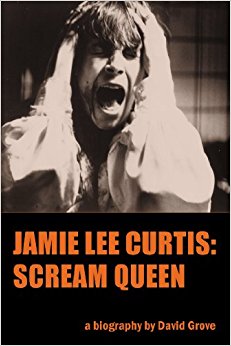
Horror Book Review: Jamie Lee Curtis: Scream Queen by David Grove


I cannot let this Halloween end without recommending Jamie Lee Curtis: Scream Queen, David Grove’s biography of one of horror cinema’s most iconic stars.

As you can probably guess from the title, the focus of this book is on the start of Jamie Lee Curtis’s career, when she was almost exclusively appearing in slasher films.  Beginning with her starring role in Halloween and going all the way through films like Terror Train, Prom Night, Road Games, The Fog, and Halloween 2, the book shows both how Curtis dealt with suddenly being a horror icon and how she eventually left the horror genre behind in an effort to show that she was capable of doing more than just screaming and running.  Eventually, as the book details, she reached a point where she could return to horror with Halloween H20 but, for a while, her horror work was truly a double-edged sword.  It made her famous but it also kept her from being considered for the type of roles that she truly hoped to play.

That said, this book takes refreshingly positive look at her early film career, providing both serious analysis of and fascinating behind-the-scenes details about all of Curtis’s horror films.  Yes, even Prom Night.

In fact, the two chapters devoted to Prom Night were probably my favorite part of the book.  Though Curtis herself was not interviewed, several members of the cast and crew were and their recollections of their work on this not-very-good but oddly watchable film provide an interesting portrait of life during a low-budget movie shoot.  Of course, everyone focuses on how in awe they were of Jamie but, at the same time, they are also open about their own personal feelings and recollections about the shooting of this movie.  Their hopes and dreams, many of them destined to be unfulfilled, come through just as vividly as their memories of watching Jamie Lee Curtis film the famous disco scene.  The passages dealing with Casey Stevens, who played Jamie’s Prom Night boyfriend and subsequently died of AIDS, are especially moving.  In the end, Jamie Lee Curits; Scream Queen is not just a biography of Jamie Lee Curtis.  It’s a tribute to both movies and the people who make them.

If you’re a lover of the horror genre or a student of film history, this is one of those book that you simply must have.  It’s got just about everything that you could possibly want.

Horror Book Review: Ed Wood: Nightmare of Ecstasy (The Life and Art of Edward D. Wood, Jr.) by Rudolph Grey


Beware all who open this book!

Nightmare of Ecstasy is an oral history of the life of Ed Wood, Jr., the man who has unfairly been declared the worst director of all time.  Not only does it include interviews with people who knew and worked with Wood at all the stages of his life and career but it also includes plenty of details about what went on behind the scenes during the making of Wood’s most famous films.

And, make no mistake, a lot of it is fascinating and hilarious.  Wood truly did surround himself with a collection of eccentrics and, fortunately for this book, several of them were very verbose eccentrics.  (Sadly, since this was book was originally published way back in 1992, some of the most notable interviews are with people who have since passed away.)  Wood was a storyteller so it’s perhaps not surprising that he was drawn to other storytellers.

Nightmare of Ecstasy is credited as being the basis for Tim Burton’s film, Ed Wood and it serves as a nice companion piece.  Since Ed Wood was highly fictionalized, Nightmare of Ecstasy is a good resource for setting the record straight.  Some of the more memorable moments in Ed Wood come across as being rather mundane in the book.  Meanwhile, some of the book’s more flamboyant passages did not make it into the film.  For instance, only by reading the book can you discover that one of Ed Wood’s frequent actors, Kenne Duncan, was nicknamed Horsecock.

At the same time, it’s a sad book because it follows Wood all the way to his final days.  Wood is such a legendary figure that I think it’s sometimes forgotten that he was also a human being.  Reading the book, you admire Wood for never giving up but, at the same time, you discover that he wasn’t the eternal optimist that Johnny Depp played in Burton’s film.  At the end of his life, he was a rather sad man, an alcoholic who sometimes pawned his typewriter so he’d have enough money to buy a drink.  He was reduced to working on the fringes of the adult film industry, even trying to convince his Plan 9 From Outer Space co-star, Vampiram to appear in a hardcore film.  At one point, Dudley Manlove (who played Eros in Plan 9) quotes a drunk and angry Wood as using a racial slur to describe his neighbors and it’s a shock because that’s just not the way that most of us like to think about Ed Wood.

Though the book may ultimately be rather sad, it’s also a valuable resource.  At the end of the book is a list of all of the films and TV shows that Wood is believed to have worked on.  (Wood has more credits than you might expect, though sadly some of them appear to be lost.)  Even more importantly, there is a list of every “adult” novel that Wood wrote, along with a plot description and even a few excerpts.  Longtime fans will be happy to learn that, just as in his films, Ed Wood the novelist always took the time to mention angora.

Ed Wood, in his later years.

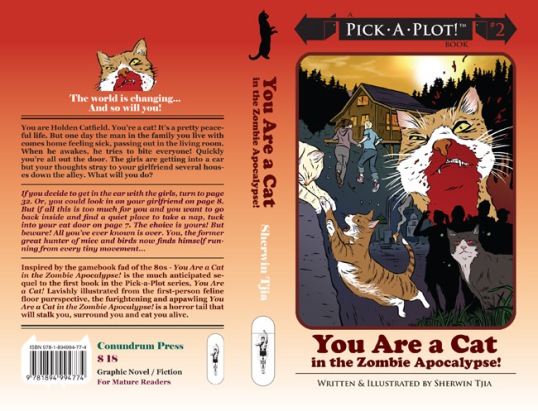
Horror Book Review: You Are A Cat In The Zombie Apocalypse by Sherwin Tija


Have you ever wondered what it’s like to be a cat?

Sure, we all have!

Have you ever wondered what it’s like to be in the middle of a zombie apocalypse?

Who hasn’t?

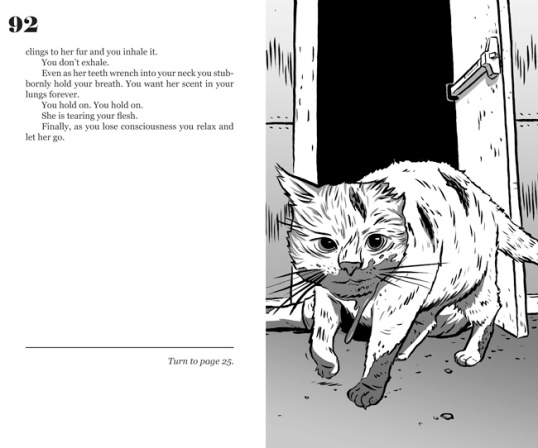
Well, now, you can get the answer to both questions!  First published in 2011, You Are A Cat In The Zombie Apocalypse is a “pick-a-plot” book.  It’s one of those books where, at the end of each page, you’re given a series of options.  For instance, at the bottom of Page 120, we have, “Do you run?  If so, take off to page 169.  If you stay put, turn to page 123.”

In this book, you’re a cat named Holden Catfield.  One day, you’re just waking up from a nap.  You’re minding your own business.  You’re just being a cat, basically.  Suddenly, all the humans are acting strange.  Weird-looking people are wandering the streets and biting each other!  Your owner’s daughter wants you to get in a car with her and a stranger so you can all go somewhere else.  Do you get in the car or do you explore your neighborhood?

That’s the first of many choices that you’ll have to make.  They’re important choices because, if you do happen to find yourself in a situation where you get bitten by a weird human, you’ll turn into a zombie yourself.  And then you’ll  be the one looking for people to bite…

Now, our longtime readers know that I’m both a cat person and a lover of zombie films.  So, needless to say, I totally and completely loved You Are A Cat In The Zombie Apocalypse!  Not only does this book capture what it’s like to be a cat but it also does a pretty good job of capturing what I imagine it’s like to be a zombie.  Don’t worry, though.  Make the right choices and Holden will never turn into a zombie.

You Are A Cat In The Zombie Apocalypse was written and illustrated by Sherwin Tija, who did an excellent job on both counts.  The book ends with a collection of “Catknowldgements” and a page that tells about the “Meowthur” and the “Mewllustrator.”  If you’re a cat person, you’ll love it.

Horror Book Review: Hollywood Hex, edited by Mikita Brottman


Do you believe in curses?

Personally, I could go either way as far as curses are concerned.  I went through a period of time when, though I kinda kept it to myself, I was really into learning about the history of magick and trying to learn how to cast hexes and all the rest of that but then I realized that I could continue to wear black without necessarily having to tap into any supernatural powers.  As well, I’ve never bought into the idea that karma’s going to get anyone.  To me, the universe is a pretty random place.  Not everything happens for a reason.  That said, I would never say that I’m a complete unbeliever.  A rational world is a boring world.  If I had to choose between hanging out with teacher at Hogwarts or Neil DeGrasse Tyson, I’m going with the wizard.

I may not completely believe in curses but I do find them interesting to read about.  That’s why I’ve always enjoyed reading Hollywood Hex,  a copy of which I found at Recycled Books in Denton, Texas.  (This was during the same shopping trip that led to me finding and buying A Taste of Blood and House of Horror.  It was quite a productive trip for this lover of all things horror!)

Hollywood Hex is a tour through the history of morbid Hollywood, providing details on not only the death cults that have sprung up around certain ill-fated actors but also the films that have, for whatever reason, come to be known as cursed.  Many of these films, like Rosemary’s Baby and The Exorcist, were originally sold as being cursed as a publicity stunt before real-life events caused even the most sober of minds to wonder if maybe there really were demonic forces at work.  (The chapter that covers both the production of Rosemary’s Baby and the crimes of Charles Manson is especially creepy.)  Some of the other films — like Twilight Zone — The Movie and The Crow — were cursed by onset negligence.  And, finally, there’s the incredibly tragic stories of the Poltergeist franchise.  If any films could truly claim to be cursed, it would be those films.

Hollywood Hex is fascinating reading for both the morbidly and cinematically-minded.

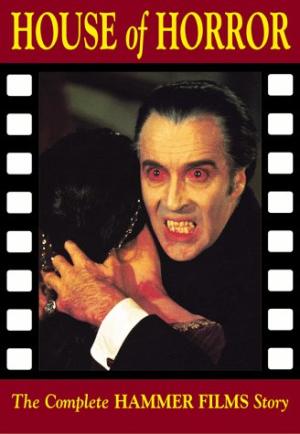
Horror Book Review: House of Horror, edited by Jack Hunter


If you love horror films, you have to love Hammer Films, the British studio that was responsible for some of the best horror films of the 50s, 60s, and 70s.  It was Hammer who brought Dracula, Frankenstein, and the Mummy back to life and who introduced a splash of color to the formerly black and white world of horror.  It was Hammer that first brought horror together with pop art.  And, of course, it was Hammer that made stars out of actors like Christopher Lee and Peter Cushing.

House of Horror was originally published in 1973, as a tribute to Hammer in its waning days.  The copy that I own is a revised edition, one that was published in 2000.  I found it at Recycled Books in Denton, Texas.  (That was quite a shopping trip, by the way.  Not only did I buy House of Horror but I also bought A Taste of Blood: The Films of Herschell Gordon Lewis.)

Anyway, if you’re a fan of Hammer Films, then this is one of those books that you simply have to own.  Not only does it contain interviews with the big four of Hammer (Peter Cushing, Christopher Lee, Terence Fisher, and Michael Carreras) but it also provides a in-depth analysis of Hammer’s Dracula series, its Frankenstein series, and its lesser known science fiction productions.

At the end of the book, there are biographies of some of the members of Hammer’s stock company.  There’s also not only a full list of every film that Hammer ever produced but even a list of Hammer project that never reached the filming stage.  If, as I am, you’re obsessed with film trivia, this book is a must have.

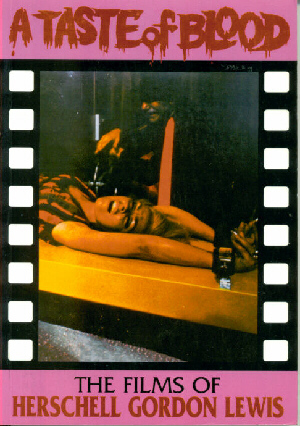
Horror Book Review: A Taste of Blood: The Films of Herschell Gordon Lewis by Christopher Curry


Remember the movie Juno?

I can remember when Juno first came out, a lot of people were shocked when the character of Mark (played by Jason Bateman) suddenly started to come on to Juno (Ellen Page).  (For the record, as a result of that one scene, I’ve always had a hard time watching Jason Bateman in practically anything.)  Myself, I knew Mark no good long before he asked Juno what she thought of him.

Remember the scene where Mark asked Juno who her favorite horror director was?  Juno, being intelligent, replied, “Dario Argento.”  Mark smirked and replied that Herschell Gordon Lewis was better.  As soon as Mark said that, I knew he was no good.

Now, I should make clear that’s nothing against Herschell Gordon Lewis, who was one of the pioneers of independent American cinema.  Though I don’t think that there’s any way you can compare him to Argento, Lewis played an important and often undervalued role in the development of horror as a genre.  Lewis may not be a household name but Blood Feast and 2,000 Maniacs are two of the most influential films ever made.  Something Weird was one of the first films to feature an acid trip and it’s title inspired Something Weird Video.  Speaking of Something Weird Video, the clip that they always play before their films — the one of the bald man shouting that “you’re damaged merchandise and this is a fire sale!” — was taken from Lewis’s Scum of the Earth.  And finally, Lewis’s political satire — The Year of the Yahoo — pretty much predicted the current state of American politics.

If you want to find out more about the life and career of Herschell Gordon Lewis, the 1999 book, A Taste of Blood: The Films of Herschell Gordon Lewis, is a good place to start.  The author, Christopher Curry, admits from the start that he is an unapologetic fan of Mr. Lewis’s.  As such, don’t expect the book to be too critical of any of Lewis’s films.  That said, A Taste of Blood contains not only interviews with the always articulate Lewis and some of his collaborators but it also contains a synopsis of every single Lewis film that had been released up until that point.  As such, the book is not just a tribute to Lewis but also a fascinating record of what it was like to work outside of the mainstream Hollywood establishment in the 1960s.  For that reason alone, it’s a valuable resource.

Now, it should be remembered that A Taste of Blood was written in 1999.  At the time that it was written, Lewis had retired from filmmaking.  Lewis, who passed away in 2016, would return to make three more films after the publication of A Taste of Blood.  As a result, A Taste of Blood is not a complete look at Lewis’s film career.  But it is a good place to start!

Finally, I bought my copy of A Taste For Blood at Recycled Books in Denton, Texas.  As far as I know, it’s out of print but, as always, there are still copies to be found online.

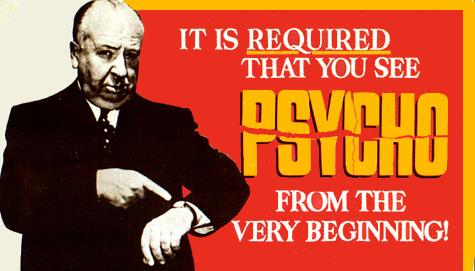
Horror Book Review: Alfred Hitchcock and The Making of Psycho by Stephen Rebello


57 years after it was first released, Alfred Hitchcock’s Psycho remains one of the most influential films ever made.

Certainly, every horror film ever released since 1960 owes a debt to Psycho.  The infamous shower scene has been duplicated so many times that I’ve lost count.  Whenever a big-name actor is unexpectedly killed during the first half of a movie, it’s because of what happened to Janet Leigh in that shower.  If not for Psycho, Drew Barrymore would have survived Scream and that shark would never have eaten Samuel L. Jackson in Deep Blue Sea.  Every giallo film that has ended with someone explaining the overly complex psychological reasons that led to the killer putting on black gloves and picking up a scalpel owes a debt to Simon Oakland’s monologue at the end of Psycho.  Psycho is so influential and popular that, decades later, A&E could broadcast a show called Bates Motel and have an instant hit.

What goes into making a classic?  That is question that is both asked and answered by Stephen Rebello’s Alfred Hitchcock and The Making of Psycho.  Starting with the real-life crimes of Ed Gein, Rebello’s book goes on to examine the writing of Robert Bloch’s famous novel and then the struggle to adapt that novel for the screen.

This book is a dream for trivia lovers.  Ever wanted to know who else was considered for the role of Marion Crane or Sam Loomis or even Norman Bates?  This is the book to look to.  Read this book and then imagine an alternate world where Psycho starred Dean Stockwell, Eva Marie Saint, and Leslie Neilsen?

(That’s right.  Leslie Neilsen was considered for the role of Sam Loomis.)

The book also confronts the controversy over who deserves credit for the shower scene, Alfred Hitchcock or Saul Bass.  And, of course, it also provides all the glorious details of how Hitchcock handled the film’s pre-release publicity.  Ignore the fact that this book was cited as being the inspiration for the rather forgettable Anthony Hopkins/Helen Mirren film, Hitchcock.  This is a fascinating read about a fascinating movie and a fascinating director.

First published in 1990 and still very much in print, Alfred Hitchcock and The Making of Psycho is a must-read for fans of film, horror, true crime, history, Alfred Hitchcock, Anthony Perkins, Janet Leigh, and Psycho.

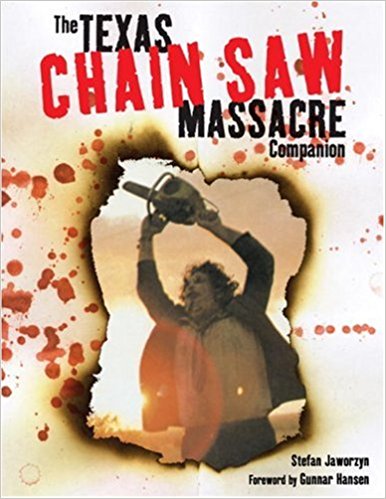
Horror Book Review: The Texas Chainsaw Massacre Companion by Stefan Jaworzyn


Originally released way back in 1974, The Texas Chainsaw Massacre continues to be one of the most iconic and influential horror films of all time.

Not only did the film terrify generations of filmgoers, it also undoubtedly inspired many people who lived up north to swear that they would never visit Texas.  (Speaking as a Texan, I appreciate it!)  So powerful was the impact of The Texas Chainsaw Massacre that it is regularly cited as being one of the first “gore” films, despite the fact that barely a drop of blood is seen throughout the entire film.  Instead, what is seen is Sally (played by Marilyn Burns) screaming while running and Leatherface (Gunnar Hansen) dancing with that chainsaw.

So, how did a group of hippies in Austin come to make one of the most famous movies of all time?  That is the question that is answered in the 2004 book, The Texas Chainsaw Massacre Companion.  Written by Stefan Jaworzyn and featuring a foreword by Gunnar Hansen, this breezy and entertaining book contains almost everything you could possibly want to know about this film.  The book is largely an oral history, featuring lengthy quotes from the film’s cast and crew.  (For the most part, Jaworzyn allows the interviews speak for themselves and only occasionally interjects any editorial commentary.)  Along with detailing the film’s infamously difficult production (with Marilyn Burns nearly being driven to the point of an actual breakdown and Hansen, an otherwise sensitive poet, coming close to being possessed by his murderous character at one point), the companion also deals with crimes of Ed Gein and Tobe Hooper’s career both before and after his best known film.

Most interesting, to me, were the sections that dealt with how the head of the Texas Film Commission helped to secure The Texas Chainsaw Massacre a national distribution deal.  Considering that The Texas Chainsaw Massacre basically portrayed Texas as being a place where you could get killed if you made a wrong turn, the involvement of the Texas Film Commission may seem strange at first.  Some of the interviews in the book seem to suggest that the head of the Commission had a crush on Marilyn Burns.

It’s an entertaining book, even if I don’t agree with everything that Jaworzyn says.  (He calls Psycho overrated at one point.)  With the recent deaths of Marilyn Burns, Gunnar Hansen, and Tobe Hooper, The Texas Chainsaw Massacre Companion now serves as something of a tribute to these three artists and the film that, to the surprise of everyone, changed cinema forever.

Horror Book Review: Hollywood Monster: A Walk Down Elm Street With The Man Of Your Dreams by Robert Englund and Alan Goldsher


What type of actor does it take to bring to life one of the scariest monsters in horror film history?

A damn good one!

Seriously, Robert Englund is a truly underrated actor.  Of course, we all know him best as the original Freddy Krueger.  Whenever I watch the original Nightmare on Elm Street, I’m always surprised by just how scary Englund actually was in that role.  Some of the sequels got a bit too gimmicky and Freddy sometimes seemed to spend more time coming up with one-liners than actually killing people but, in the original Nightmare on Elm Street, Freddy is truly terrifying.  Wes Craven deserves a lot of credit for that, of course.  But Robert Englund truly throws himself into that dark role, bringing Freddy to nightmarish life.  Reportedly, Craven’s original choice for Freddy was the British actor David Warner.  It’s nothing against Warner (who is a very fine actor who has played many memorable villains) or, for that matter, Jackie Earle Haley (who took over the role in the 2010 reboot) to say that, after watching the original A Nightmare on Elm Street, it’s impossible to imagine anyone other than Robert Englund in the role.

What is often forgotten is that Robert Englund was a fairly successful character actor before finding fame as Freddy.  It’s not an uncommon occurrence that I’ll be watching an older movie from the 70s and suddenly, out of nowhere, Robert Englund will pop up in a small role.  Interestingly enough, pre-Nightmare Englund seemed to specialize in playing nice guys.  Sure, he played an occasional creep but, usually, it was far more likely that Englund would be cast as the hero’s best friend or sidekick.

Add to that, I have never heard anyone say a word against Robert Englund.  I have never once heard about him being a jerk to his fans.  I’ve never heard any stories about his being difficult on a set.  Every story that I’ve heard about Robert Englund describes him as being friendly, gracious, and easy-going, almost the exact opposite of Freddy Krueger.

That’s certainly the impression that I got from reading Englund’s autobiography.  Published in 2009, Hollywood Monster is quite literally one of the most likable Hollywood memoirs that I’ve ever read.  This memoir is full of stories about both Englund’s early career and his time as a horror movie icon and yet, never does Englund seem to have a bad word to say about … well, anything.  Instead, he writes about encouraging his friend Mark Hamill to audition for Luke Skywalker in Star Wars or how his co-stars all dealt with being victims in the latest Nightmare on Elm Street film.  The book’s tone is cheerful even when talking about what it’s like to be typecast as everyone’s favorite dream killer.  For a Hollywood monster, Robert Englund comes across as being disarmingly likable.

If this memoir was by any other actor, I would complain about the lack of cynicism and bitterness.  But, in Englund’s case, it’s actually kind of sweet.  It’s also rather impressive.  Who would have guessed that such a nice guy could give everyone nightmares?  That’s the power of good acting.

Anyway, Hollywood Monster is an entertaining and often very funny Hollywood memoir.  It’s a fun read and one that I suggest for horror fans everywhere.