5 Artists/Bands I Fell In Love w/ in 2009


While I’m not as well-versed with all sorts of music genres like some friends of mine I do have a well-rounded taste when it comes to music. Growing up during the 80’s it was hard not to get into the hair-metal which dominated the scene. Yes, I fully admit to being a Motley Crue fan and even listened to the random Poison track here and there. In addition to hair-metal I also got into rap and hip-hop during the 80’s and early 90’s which I still consider the Golden Age of the genre.

Young people nowadays can have their Lil’ Wayne or Soulja Boy (but why would they want to) and the Dirty South crew and all that. I say I’ll take giants of the genre like Eric B. and Rakim, EPMD, Wu-Tang Clan, Afrika Bambaataa, Paris, N.W.A, Ice-T and Ice Cube over these new youngbloods any day of the week and Sundays included. While rap and hip-hop have become too much about commercialization I do like current acts like Mos Def and Talib Kweli of Black Star, Common, OutKast, Mobb Deep and Goodie Mobb.

As I’ve gotten older I’ve branched out from those two genres and embraced all types of music (though folk music still escapes me most of the time). It doesn’t matter now whether the artist/band plays some subgenre of metal like Norwegian Black, Viking, Pagan or combinations in-between. Or if they’re more classical genres like baroque, chamber and symphony. If they sounded good and I got into them I couldn’t care less what sort of genre they went under.

2009 was a good year for me in terms of discovering some new bands and artists. These were not new in the way that they’ve just been making music recently. All five I’m about to mention have been making music for at least a decade or decades for a couple.

1. Altan Urag

Altan Urag is a folk-rock band from Mongolia who have combined traditional Mongolian folk music, Western rock stylings and traditional Tuvan/Mongolian “karkhiraa” throat singing. It’s just very difficult to try and explain Altan Urag who has never heard of throat singers and folk music from the region. I’ve pretty much scoured every music store in my area, the net and other shadowy options to find their music. To say that I fell in love with this band would be one of the major understatement of the year.

2. Bathory

Bathory is one band I’ve heard of in the past but never really bothered to try. I was still very leery of the subgenres of metal that went by labels such as Norwegian Black, Pagan, Viking, etc. I was very much still a child of the NWOBHM movement of the lat 70’s and early 80’s and the rise of trash/speed metal of the 80’s. But the last two years I’ve branched out to try more types of metal and in 2009 I finally gave Bathory a chance and was instantly hooked. I’ve wondered since why I never gave them a chance. My favorite track of theirs has to be “Hammerheart” from their “Twilight of the Gods” album. It’s a much more subdued Bathory, but every time I listen to it I feel like I should be at a pub or some Viking hall downing a few pints of ale or horns of mead with my buddies before going off to battle. I definitely feel like Odin is watching over me when I listen to Bathory.

3. Blind Guardian

What is there to say about Blind Guardian that its most ardent fans haven’t already said ad infinitum about this greatest of all power metal bands. Power metal have been a genre I’ve dabbled in here and there in years past but never really paid them much attention as they truly deserve. Blind Guardian changed all that for me in 2009 and I now count Power Metal as one of my favorite type of music. Blind Guardian’s epic and quite operatic 2002 album, “A Night at the Opera”, was my first introduction to this power metal band of all power metal. While I’ve come to love all the other albums of their pre- and post-Opera I found this album of theirs the most accomplished and musically complete. Even people who are not typically fans of metal would find this album as something they would enjoy listening to. My favorite track is also the longest and most complex in the album, “…And Then There Was Silence.” It is an epic 14-minute track that tells the story of the Trojan War. If there’s a song more epic than this one I haven’t heard it.

4. Boris

Whenever I used to think of Japanese popular music and rock I always thought of J-Pop and it’s rock equivalent. I’m not wrong in that assumption as those type of music coming out of Japan have become quite popular due to the rise in the popularity of anime in the West. So, color me surprised when the same friend who introduced me to Blind Guardian and Altan Urag told me to check out Boris. The band is the power trio of Atsuo (vocals/drums), Wata (lead guitar) and Takeshi (bass guitar/vocals) out of Tokyo who simply cannot be hobbled by any particular genre of rock. One album may be stoner rock while the next all about doom and drudge metal. They’ve even released ambient rock and noise rock albums where one would think the music was just amps feedbacking back on themselves. I’ve come to call Boris the mad scientists of rock and their albums attest to that. My favorite track of theirs come from their 2003 album, “Akuma no Uta.” The song in question is called “Naki Kyoku” and one just has to listen to this song just what sort of musical geniuses the trio of Boris really are.

5. Tom Waits

Tom Waits. There’s just nothing much I can say about my love for Tom Waits other than people who have never heard him should just listen to “Pasties and a G-String” and be amazed. To try and describe Tom Waits would be an exercise in failure. One either loves The Waits or just don’t get him. There’s no middle-ground when it comes to The Waits.

So that makes the 5 bands and artists I fell in love with in 2009. Honorable mentions must go to these others: Mastodon, Turisas, Isis, Otis Taylor, Mantic Ritual, The Black Keys, Mirrorthrone and Nightwish just to name a few.

Past Review: The Prestige (dir. by Christopher Nolan)


2006 has been a quiet year for event films. The predicted blockbusters this past summer pretty much underperformed despite some being exactly as good as I thought they’d be. Other than Johnny Depp and the gang’s Pirates of the Caribbean: Dead Man’s Chest, every blockbuster didn’t blow the industry out of the water. It’s a very good thing that I had smaller films to tide me over. This year has been a very good ones for some independent-minded and smaller films which came out during the slow first couple months of the year and during the graveyard release months between the end of summer and the start of the late year holidays. I’ve already had the chance to see such very good films like Running Scared from Wayne Kramer and Hard Candy from David Slade to The Proposition from John Hillcoat. I am glad to say that Christopher Nolan’s film adaptation of Christopher Priest’s novel, The Prestige is another non-blockbuster that excites, entertains and, in the end, keeps the audience mystified but not confused.

I’ve read Christopher Priest’s novel about dueling late 19th-century London magicians. It’s a novel written in epistolary format with each chapter and section written as entries into the journal of one of the main characters in the story. The novel itself is pretty straightforward as it tells the story in near chronological order. I was hesistant to embrace this film adaptation when I first heard about it since alot of the mystery of of the story wouldn’t translate so well in film if they followed the strict order of how the story was told in the novel. For Christopher Nolan and his brother, Jonathan, to just adapt the novel straight-out would’ve made for a dull and boring mystery-thriller. I was glad that the Nolan brothers were inventive enough to borrow abit from Christopher Nolan’s first feature film, Memento. Their film adaptation of The Prestige doesn’t go backwards in its narrative, but it does mixes up the chronological order of the story somewhat, but not to the point that Tarantino does in Pulp Fiction and Kill Bill. The two Nolans fudges abit with the timeline to add some backstory filler to help give the characters that Christian Bale and Hugh Jackman portrays with the reason for their pathological obsession with each other.

Christopher and Jonathan Nolan’s screenplay for The Prestige was able to keep the mystery of the story intact, but it also keeps the amount of red herrings in such films to a minimum. Michael Caine’s character, Harry Cutter, opens up the film explaining just exactly what constitutes a magic trick on stage. How it’s divided into three parts. First, there’s “The Pledge” wherein the magician shows the audience something ordinary he or she will use in the trick. Soon, the magician will follow this up with “The Turn” where the abovementioned ordinary object does something extraordinary in front of the audience. The pay-off of the magician’s trick is “The Prestige” where the audience’s astonishment occurs as they fail to deconstruct and figure out the means of the trick. That’s pretty much the film in a nutshell. It’s one big magic trick. The clues are there for the audience to see, gather and extrapolate their answer to the mystery that is the story. The screenplay doesn’t treat the audience as if they need to be hand-held throughout the film. In fact, anyone who pays attention will be able to solve one-half of the mystery by the first hour. I won’t say exactly whose half of the mystery it will be but people will be kicking themselves afterwards if they don’t figure it out right away.

This magic trick of a film does have its many underlying layers of themes to add some complexity, drama and tension to the characters of Alfred Borden (Christian Bale) and Rupert Angier (Hugh Jackman). I’ve already mentioned that throughout the film their mutual obsession about each other is due to a backstory detailing their past. A past where they were initially friends — rivals even — and apprentices to the magician Milton (played by Ricky Jay) and Harry Cutter (excellently played by Michael Caine as the only voice of reason throughout the film) who creates and maintains the devices used in all the stage tricks. Borden and Angier’s obsession is not just in ruining and sabotaging each other’s magic tricks and lives, but also trying to find out each other’s secrets as they both learn magic tricks which amaze and thrill the gentry of London’s stage. From the beginning of the film these two characters begin a journey towards a path of destructive behavior which puts not just each other’s lives at risk, but those who they care about. All of it in the name of humiliating and upstaging the other due to a tragic incident early in their mutual careers. These two individuals were not sympathetic characters and I applaud Christopher Nolan and his brother for not softening up their hard edges.

Most adaptors will try to make a story’s characters more sympathetic and likable. They went the opposite in The Prestige. But even these two dark characters continue to exude the charisma and strong personalities that the audience will root for one or the other. Should they root for the charismatic and born shownman that Hugh Jackman’s Angier character plays or go for the perfectionist Borden character Christian Bale plays. A perfectionist whose technical skills surpasses that of Angier’s but whose introverted and brooding personality makes him little or no stage presence.

Both Jackman and Bale play their characters well. The film wouldn’t be so good if it wasn’t for the work of these two actors. It helps that they’re surrounded by quality supporting character like Michael Caine as the seasoned, veteran mentor to the dueling magicians. Even Scarlett Johansson does very well with the part she’s given. It’s a part that many sees as more of a throwaway character. A piece of very good-looking distraction for both the story and the audience. But she gamely plays the role of pawn for both Angier and Borden. Unlike Michael Caine’s character who remains the singular voice of sanity in the film, even Johansson’s character of Olivia gets pulled into the obsessions and betrayals that’s plagued both Angier and Borden. But in the end, she’s just part of the process of “The Turn” and if people have been watching the film closely right from the beginning then she’s also a clue as to the secret of one of the amazing magic tricks shown by the two magicians.

The Prestige also has a distinct look about it. The 19th-century London just before the start of the new millenium gives it a certain sense of Victorian-era familiarity. Production designer Nathan Crowley shows a London at the height of its Gilded Age, but soon gives way to a certain steampunk look as inventor Nikola Tesla makes an appearance during an integral part of the story. David Bowie portrays Tesla as an eccentric genius whose search for the secrets of the universe will lead to the discovery of what many of that era would consider magic. It’s the ingenius looking technology created for the Tesla sequence which finally gives The Prestige it’s root in fantasy and science-fiction. The film doesn’t dwell on this new development but from that part of the story and until the end, the film takes on a look and feel of a steampunk mystery-thriller. There’s not enough films that tries to mine this new subgenre and I, for one, am glad that Christopher Nolan added this new dimension to the film’s overall look.

In the end, The Prestige really needs to be seen to be appreciated and for people to make up their minds about the film. Some will see it as a thriller with twists and turns that doesn’t insult the intelligence of its audience. Some may see the film as just one large gimmick from start to end. Those people will probably be correct as well. The film at its most basic level is one long magic trick with all three acts. It has “The Pledge” which is then followed up by “The Turn” and then ends with “The Prestige”. It will be up to each individual who sees the film to make the final decision as to whether they’ve bought into all three acts of the magic trick that is The Prestige, or come away having felt like they’ve wasted their time. I’ve not come across many who felt like the latter, even those whose own feelings about the film don’t reach the same level of praise as I have for Christopher Nolan’s latest offering. All I know is that this is a film that delivers on its premise to confound and amaze. It also continues to validate my views that Bruce Wayne and Batman are in very good hands with Christopher Nolan at the wheel. The Prestige was easily one of the best film of 2006.

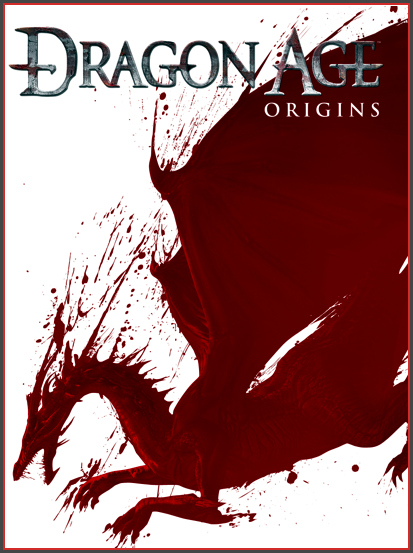
Review: Dragon Age: Origins


Before BioWare became famous for its console rpgs set in scifi settings (Mass Effect and Star Wars: Knights of the Old Republic), they were a company already well-known and well-loved by PC gamers for their excellent Baldur’s Gate and Neverwinter Nights fantasy-based rpgs. The company was able to take the rich and complex setting of AD&D’s Forgotten Realms universe and actually succeed in making it accessible to old and new fans alike. While they made one fantasy-based console rpg in the last couple years (the very underrated Jade Empire for the original Xbox), BioWare seem to have stuck mainly in making scifi rpgs. It was a nice surprise when just a couple years ago the company announced that in addition to developing Mass Effect for the Xbox 360 the company was also in the midst of creating a new and original fantasy-based rpg for the next-gen consoles (Xbox 360/PS3) and the PC. This game was to be called Dragon Age and was to be their latest rpg franchise. A fantasy one to bookend the scifi franchise they had established with Mass Effect. It took them a couple years, but the renamed Dragon Age: Origins was finally released in early November 2009 to some considerable fanfare. This was a game fans of the company’s earlier fantasy rpgs on the PC have been waiting for. Did fans of the Baldur’s Gate Series get what they’ve been wishing for or did BioWare misstep with their return to fantasy rpg in Dragon Age: Origins. I’m happy to say that BioWare more than lived up to their own hype of their latest fantasy offering.

Dragon Age: Origins is a a fantasy rpg based on a world wholly-created and owned by BioWare. Like it’s scifi sibling in Mass Effect, this game is an amalgamation of ideas from well-established franchises (Forgotten Realms, Lord of the Rings, Warhammer Fantasy) but with a rich history and background created from the ground up by the creative forces within BioWare. This world that DA:O inhabits is called Thedas with the realm of Ferelden being the main setting for this introductory game to what looks to be an on-going franchise. It is populated by the usual fantasy races such as elfs, dwarfs and imperial humans. The world has its own version of the usual orcs, goblins and other so-called evil races of fantasy. These races are generally called “darkspawn” and it is this danger which forms the main conflict the player must fight and defeat throughout most of the game’s playthrough. BioWare has also introduced a very complex political and intrigue element to the game in the form of a civil war brewing within the human faction in the game not to mention a conflict of succession on the dwarf side of the equation. The elf race (divided in two separate and distinct groups – city elf and Dalish elf aka wood elf) also get it’s own brand of subplot in the form of racial discrimination and a genocidal battle with a primal race. One common thread binds all these different races and the many classes one could choose from and that’s they all become Grey Wardens and the main hero of the game.

Such rich additions to an rpg are usually simple and minor in even some of the best rpgs of the past both western and Japanese. BioWare’s decision to make these sorts of storytelling additions very complex and rich makes for a more immersive gameplay. There are literally volumes of history and information to find and sort through in the game and from the impression I was able to glean from books and stories found throughout it barely scratches the surface of the history and background of Thedas and Ferelden. The world-building BioWare has done with DA:O was as deep and complex as Tolkien’s fantasy world and those created by the legion of writers who worked on AD&D’s Forgotten Realms. DA:O just doesn’t introduce you to the game and it’s world but immerses you in its details. These were details ranging from those needed to get through the game to the minutiae which doesn’t do much in terms of gameplay but does help make the world seem more real.

The gameplay begins with an introductory chapter which works as both introducing the origins of the player’s chosen race and class, but also as a way for new players to get an on-the-field tutorial on the game’s combat and inventory mechanics. Combat both melee and spellcasting has less to do with button-mashing once a target has been highlighted but instead similar to BioWare’s combat system in their KOTOR games. A player selects the appropriate special attacks and buffs using a radial menu (attacks and buffs used often can be hotkeyed to the appropriate button on the Xbox 360 controller for instant access). Other characters in the player’s combat party could either be left to attack, defend and support the player using preset commands similar to Square-Enix’s “Gambit System” in Final Fantasy XII or the player could pause the game to switch to those characters individually and set a particular command manually before unpausing the game to continue the fight. The combat in DA:O is more about managing how the party fights and making sure the right combinations of attacks and spells are chosen. In the beginning of the game the simplest commands should suffice to beat most enemies in small or large numbers, but as the game progresses deeper into the story both main and sidequests the need to make use of every type of attacks and spells became more important. Bulldozing one’s way through most of the game only works in the beginning and would only get a player and his party killed once they enter Chapter 2.

This type of gameplay mechanic might turn-off some players who prefer a more active-style of combat which BioWare implemented in Jade Empire. At times I still found myself button-mashng a particular hotkeyed attack even though I knew that pressing that attack nonstop didn’t make me attack faster (each use of an ability came with a cooldown time which last just mere seconds to minutes depending on their level and potency). It is definitely a combat mechanic that took some getting used to and at time it does make the player less an active participant in the game and more an observer. I’m still on the fence as to whether I like this micromanaging-style of combat. While it does add some complexity and strategy to how a player fights the multitudes of battles in the game it also makes some of the larger boss fights (especially the final boss fight) very long with a wrong choice of commands ending a fight as quickly as it started.

The graphics for DA:O on the Xbox 360 is pretty crisp and keeps a steady frame-rate throughout the  game and it’s many cutscenes. I’ve heard comparisons about the look of the game on the 360 to the PS3 version with the latter having a more vibrant color palette but some slowdowns in the framerate when there’s many things going on in the screen. Until I actually get a chance to play the PS3 version I will say that the 360’s look and stability of its graphics I’d prefer than slowdowns which considering the type of combat mechanic it uses could really become detrimental to gameplay. It’s not the prettiest Xbox 360 game out there but this game makes’ ample use of the 360’s power to make gameplay as smooth as possible.

Now one can’t talk about the graphics without pointing out the pros and cons of the audio in the game. I’d say that it’s in this aspect of DA:O that BioWare had better success. Each weapon strike whether they be sword, staff or bow/crossbow has a very distinct sound to them. The sounds of the world around the player adds to the experience. Even when a player is not in battle and just stands around to admire the view the game still bombards them with sounds both ambient and natural depending on the area they’re currently at. One aspect of the sound design that would probably put a smile on many gamers would be the varying sounds of weapons and spells hitting flesh in the game. BioWare sure delivered on making a very violent world come to life with their sound design. I’d also like to make special mention to the soundtrack by longtime collaborator Inon Zur. His orchestral work in the game is a great mixture of Medieval Europe and Middle Eastern musical influences.

The voiceover work by the large cast in Dragon Age: Origins gives life to the dialogue both in and out of camp. I would say that pretty much 60 percent of all the dialogue in the game was spoken and done well. While it’s not on the same level as Mass Effect‘s voice work for an rpg it was a lot and helps distinguish it from it’s Japanese rpg counterparts where most dialogue outside of cutscenes are silent and read-only affairs. Some players might even recognize some of the voices in the game. Two who stood out where Claudia Black (of Farscape and Stargate SG-1 fame) as the witch Morrigan and Kate Mulgrew (Star Trek Voyager’s Capt. Janeway) as Morrigan’s mother, Flemeth. All the actors on in the game give off dramatic readings instead of flat, directionless reads which could break a player out of the moment. I think Black’s work as Morrigan was some of the best voiceover work in video game history and really fleshesh out her character. I knew that I kept her around through pretty much most of the game’s playthrough just to hear her speak.

Overall, Dragon Age: Origins was a great introduction to BioWare’s newest rpg franchise. It’s definitely the spiritual successor to their acclaimed Baldur’s Gate rpg series on the PC. As with most introductory games in a franchise it does have some flaws that could’ve been fixed prior to the game’s release, but these flaws were not enough to take away from the game’s enjoyment (on the Xbox 360 at least which I played it on). The rich and complex world-building BioWare’s creative magicians were able to inject into their own brand of rpg gameplay makes for a very immersive videogaming experience. Thedas and Ferelden come to life as do the Grey Wardens and it’s other inhabitants both good and evil. BioWare has already announced a new expansion to extend the game past it’s final boss fight. Here’s to hoping that they continue to support the game while they begin work on the sequel.

Dragon Age: Origins – Morrigan Profile

Dragon Age: Origins – Leilana Profile

Dragon Age: Origins – Zevran Profile

Dragon Age: Origins – Wynne Profile

Dragon Age: Origins – Oghren Profile

Dragon Age: Origins – Sten Profile

Dragon Age: Origins – Alistair Profile

Dragon Age: Origins – Shale Profile

Mass Effect 2 aka The Galactic Dirty Dozen


BioWare has long been a favorite game developer of mine. This love for their games goes back to their classic Baldur’s Gate series on the PC and then their KOTOR games for the Xbox 360 (still waiting for the third game in this series…still waiting). I’ve always enjoyed how conversations were not just affairs where as a player I just had to watch the dialogue unfold. BioWare has pretty much made it their own to have dialogue which branched out into different results and consequences depending on how the player responded.

In 2007, they released what I thought was one of the best games, if not the game of the year, in Mass Effect. It was an action-rpg clothed in space opera clothing which brought to mind the early Star Wars films (prequels don’t exist in my world) and some of the best supplemental novels based on Lucas’ scifi universe (the Zahn novels being the best of the bunch). While the game itself had its flaws they were never glaring enough to ruin the game and the story.

2010 is just days away and the release of the sequel to Mass Effect is just weeks away. In what could be one of the games to vie for 2010 Game of the Year, Mass Effect 2 returns to address some of the game mechanic flaws from the first game and expand on the galactic-wide story and history which unfolded before. This game looks to find the protagonist in the initial game (whether John Shepard or a customized player) out to save the galaxy once again, but this time around needing the help of one of the villains in the first game: Cerberus. In order to save the galaxy and the human race it looks like the player must go through what I could only call as “The Dirty Dozen” but in space.

The Dirty Dozen Trailer

Mass Effect 2 – Samara Profile

Mass Effect 2 – Tali’Zorah nar Rayya Profile

Mass Effect 2 – Subject Zero Profile

Mass Effect 2 – Thane Profile

Mass Effect 2 – Grunt Profile


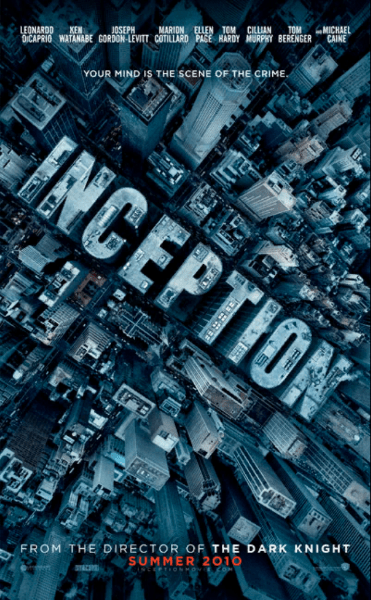
Inception 2nd Teaser Trailer


I still have no clear idea what Christopher Nolan’s follow-up film to The Dark Knight is all about. Inception seems to be about the power of the mind to alter things. From this latest trailer there a sense of Proyas’ Dark City in the some of the visuals and more than just a passing influence from the Wachowski Brothers’ Matrix Trilogy. But this being Nolan whatever influences we may see will probably be supplanted by his own take on the nature of reality, memory and dreams.

If rumors are true about the supposed budget for this film (some saying it’s 200million or more) then Nolan is really inching towards Cameron territory when it comes to acquiring the sort of budget to make his ideas come to life. I’m interested in knowing if Nolan will be shooting some of this film on IMAX like how he did some of the more expansive sequences in The Dark Knight. From the look of some of the scenes in this trailer I wouldn’t be shocked if he did.

ThinkHero: http://www.thinkhero.com/2009/12/28/inception-teaser-trailer-2-video/

HD ver. @Quicktime: http://www.apple.com/trailers/wb/inception/

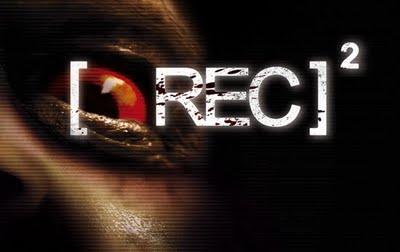
[REC]2 Teaser Trailer


I wasn’t that too big a fan of the first film ([REC]) and definitely not a huge fan of the American remake which got renamed, Quarantine. The “in-the-moment” video footage made popular by films such as The Blair Witch Project and Cloverfield really stretched the need to suspend one’s disbelief while watching the original Spanish-language film and it’s American remake. But then again I seem to be in the minority when it comes to not liking those two films.

With the popularity of both films having made its studios profits it didn’t come as a surprise to see a sequel greenlit by the original Spanish studio with the original filmmakers, Jaume Balaguero and Paco Plaza, returning. The sequel is to take place immediately after the events of the first film. From the trailer that has been released of the film the same camera-style as the first film remains, but (if I’m to go by how the trailer was put together) this sequel may actually capture my interest. There’s a sense of this sequel looking like a live-action survival-horror FPS game. I’m sure the sequel won’t just be trying to be like a video game, but the trailer sure makes the sequel seem more interesting and just a bit more energetic.

International Trailer

U.S. Trailer

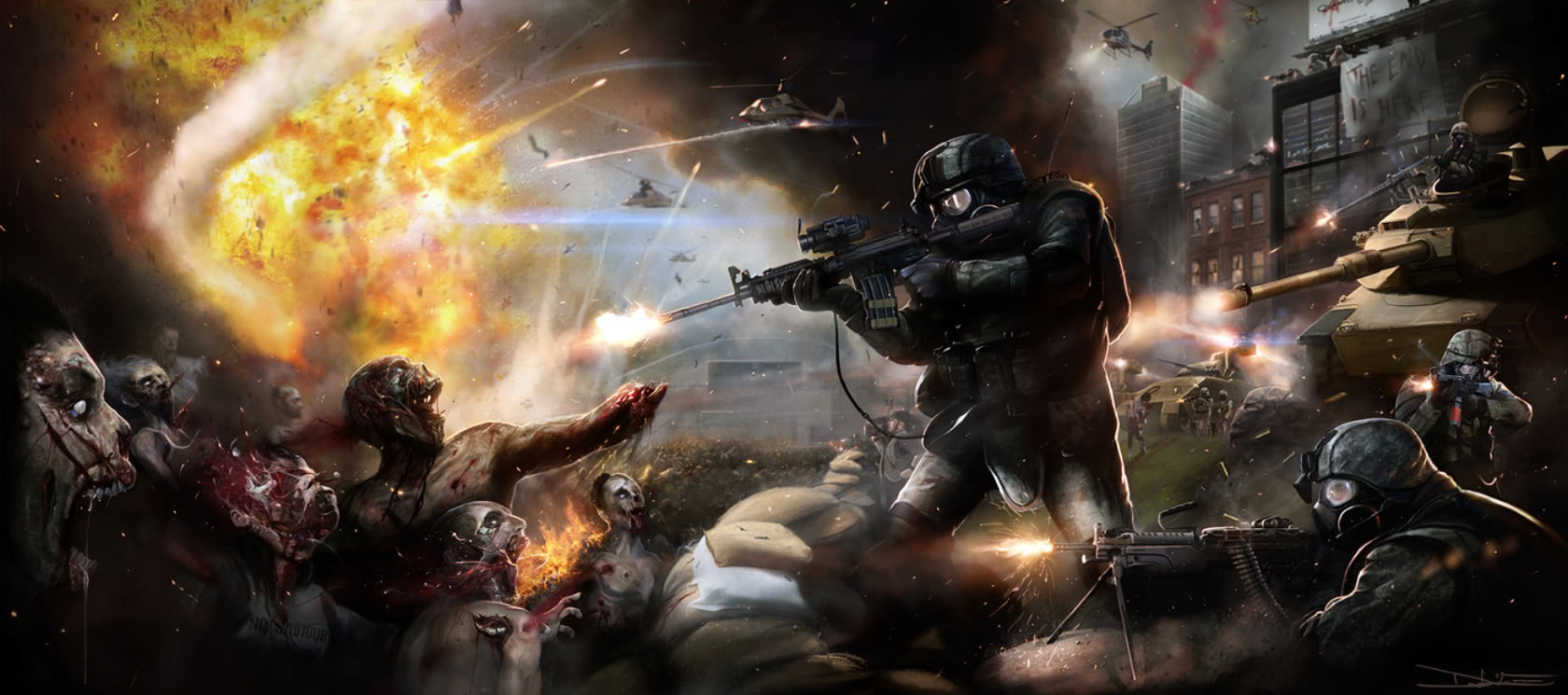
Review: World War Z (written by Max Brooks)


I was one of many who heard about Max Brooks’ satirical guide book The Zombie Survival Guide: Complete Protection from the Living Dead. Being a huge fan of George A. Romero’s Dead series of films and just the zombie subgenre in general, I was intrigued by the release of this guidebook. From the first page to the last I was impressed, entertained, and hooked on Brooks’ serio-comic take on how to survive a zombie outbreak. One section of the book which really caught my interest and has remained a favorite to reread over and over was the final one which details the so-called “historical” instances of past zombie outbreaks throughout history. From as far back as Ancient Egypt and Rome up to the late 1990’s. My only gripe about that section of the book was that it was all-too-brief. I felt that it could’ve been made longer and even would’ve made for a fine book on its own. Maybe I wasn’t the only one to have wished for such a thing to happen for it seems that Brooks himself might have thought the same thing. His latest book in his trip through the zombie genre is titled World War Z: An Oral History of the Zombie War and it takes the final chapter of his previous book and expands on it. But instead of using past “historical events” to tell his story Brooks goes into the near future to describe what would happen if the zombies ever did bring the human race to the brink of extinction and how humans finally learned how to fight back and take back the world.

World War Z is a fictional account of a worldwide outbreak of the living dead in the near future and judging from some of the descriptions of places and events in the beginning of the book it won’t be too far in the future. WWZ is done in an interview-style format with each chapter consisting of first-person interviews of individuals who lived through the Zombie War from its initial outbreak to it’s final battles and mop-up operations. The sampling of survivors interviewed range from soldiers who fought the losing battles in the early going of the war when lack of information, outdated tactics, and illogical reactions to the zombie outbreak contributed to humanity almost losing the war. These soldier survivors explain how humanity became its own worst enemy when it came to protecting its own and combating the growing ranks of the zombies. Some of the mistakes were unavailable as information on how to combat the zombies were far and few and even then most were unreliable. Some mistakes on the other hand many today would consider as unconscionable as war-profiteers and those willing to keep a hold on their own power and who would sacrifice their own people to keep it so.

There’s also the regular people who survived the war and who made great contributions during the dark days when humanity were pushed into isolated and fortified pockets of resistance as everywhere around them the zombie army grew exponentially. Some of these people were just children when the outbreak first began as rumors and unsubstantiated news reports. It’s the words of those children now adults that show how war and conflict really takes the biggest toll on the smallest and helpless. One could substitute the wars in Iraq, Afghanistan, The Balkans and even Africa in lieu of Brooks zombie war and this book would still resonate. There’s a particular entry of how children left to their own devices to try and survive alone in the wild with zombies all around have turned feral to the point that their capacity to learn and develop into adulthood has become stunted or even halted permanently.

World War Z: Battle of Yonkers

Battle of Yonkers

Brooks’ novel also puts in little veiled references to the events occurring now in the real world. There’s mention of the unpopular war in the Persian Gulf as having a detrimental effect on the morale of troops once they returned home and how this helped make the initial fight to stem the tide of the zombies a losing proposition from the outset. There’s also mention of Iran as having acquired a nuclear arsenal and how this leads to an incident early in the Great Panic of the zombie outbreak that speaks volume of what could happen if unstable states acquire weapons of mass destruction. Brooks’ also gives a prescient look into a near future where the US and Europe stop being the economic superpowers of the world and step aside for the economic juggernaut that is China and India. All these inferences of today’s geopolitical and economical events mirrors what might just come into fruition.

The interview format really gives the book a sense of realism despite the outrageous and fantastical nature of the book. As I read the book I was reminded of Stephen A. Ambrose’s books on the men and women who fought during World War 2. Ambrose also used interviews and personal accounts to make up the bulk of his books like in Citizen Soldiers and Band of Brothers. Having a personal take on the events gave his books more emotional impact and really brought the emotions of the conflict to those who never experienced it. The same could be said about Max Brooks’ World War Z. Even though the novel was speculative fiction from beginning to end it still made the reader think of how such an event, if it ever came to pass, could be so tragic, disheartening but in the end uplifting as it once again shows that humanity could still pull itself together through all its petty misunderstandings to survive. On a more stylistic point, Brooks’ novel shares some similarities to Theodore Judson’s sci-fi epic Fitzpatrick’s War. Judson’s book also tries to chronicle a future war which was shaped by religious and ideological forces. Where Judson goes way into the future of an alternate Earth, Brooks smartly stays to a more foreseeable future that readers of his book would most likely see happen; hopefully a much brighter and less-zombified one.

Brooks’ decision to forgo the usual linear and narrative style for this book also allowed him a certain bit of freedom to introduce one-shot characters in addition to those who appear regularly. In a more traditional novel such one-shot characters would seem useless and even unnecessary, but in this interview format it makes more sense since it’s really just a collection of personalities trying to describe their own take of the Zombie War they lived through. Some people I know who have read the novel have said that there’s little or no talk of love and relationships in World War Z. I, for one, was glad that Brooks didn’t try to force certain “interviews” where it talks of survivors finding love and relationships during the outbreak, through the war and all the way to the mop-up. This book chronicles tales of survival and horror. As much as a tale of love would’ve been a change of pace to all the death and horror in the interviews it would’ve been too drastic a change of pace. I would think that the last thing that most people would have in their minds when trying to survive day-to-day, if not hour-to-hour would be to stop for a moment and have sex, cuddle or other less-than survival behaviors.

All in all, Max Brooks’ World War Z: An Oral History of the Zombie War takes a serious look at a fictional and fantastical premise and event with a serious eye. The book manages to be tragic and terrifyingly spot-on about how the world governments today could fail when confronted by such a horror of tremendous proportions. Unlike his more satirical first book on the zombie subject, World War Z shows the flaws and failings of humanity and how it almost led to its extinction, but it also shows humanity’s stubbornness in the face of total annihilation and how it could come together in cooperation to not just survive but take back the world. In times of extreme adversity man can be brought to his knees but also show his resilience. A great novel and one that deserves reading from not just fans of the horror and zombie subgenre, but those who enjoy taking a peek into what could be, no matter how outrageous.

Treevenge aka When Christmas Trees Go Wrong!


When Tarantino and Rodriguez first created their ode to all things grindhouse with Planet Terror and Death Proof they also put out a word to their directing buddies who enjoyed the same things to make fake trailers to begin and break between the two films. They also created a contest where fans could create their own fake grindhouse trailer and the winner gets added to the dvd release. The winner of this contest was one aptly titled, Hobo With A Shotgun. While the trailer was ok it did introduce me to filmmaker Jason Eisener.

He has know followed up Hobo With A Shotgun with a horror shortfilm that has become the darling of the film festival circuit. His 16-minute short film is titled Treevenge and I will say that it’s one of the most original and inventive piece of storytelling and filmmaking of the year. This little shortfilm is why horror has its place in the filmmaking community as a way for aspiring filmmakers to get their creative juices flowing. This little gem of a film is also why I also love film in general. Little jewels like this make going through the awful films worthwhile.

For the complete uninterrupted short film click: Treevenge

…or watch it’s YouTube two-parter.

20 Best Science-Fiction Films of the Decade


I consider these the best and greatest science-fiction films of this closing decade. Some of the films in the list could be labeled as being hard scifi while some definitely have their roots in the pulp storytelling traditions of the 1950’s scifi publications and novels. Some could be considered horror while others more action or comedy. In the end, they all have a basis in the traditions of science-fiction as their common denominator.  They will not be in any particular order since I couldn’t truly determine which one deserved to be top on the list or which was just 20th. In my eyes they are all equally great in their own way.

Do you agree with the choices? Do you think another film belongs on the list and, if so, which one? I’m interested to know what your favorite sci-fi films of the last 10 years happen to be.

1. District 9

2. Children of Men

3. Iron Man

4. Primer

5. Sleep Dealer

6. Pitch Black

7. Minority Report

8. Moon

9. Los Cronocrimenes

10. Eternal Sunshine of the Spotless Mind

11. The Fountain

12. 28 Days Later

13. The Prestige

14. Wall-E

15. Star Trek

16. Idiocracy

17. Avatar

18. Sunshine

19. War of the Worlds

20. Serenity

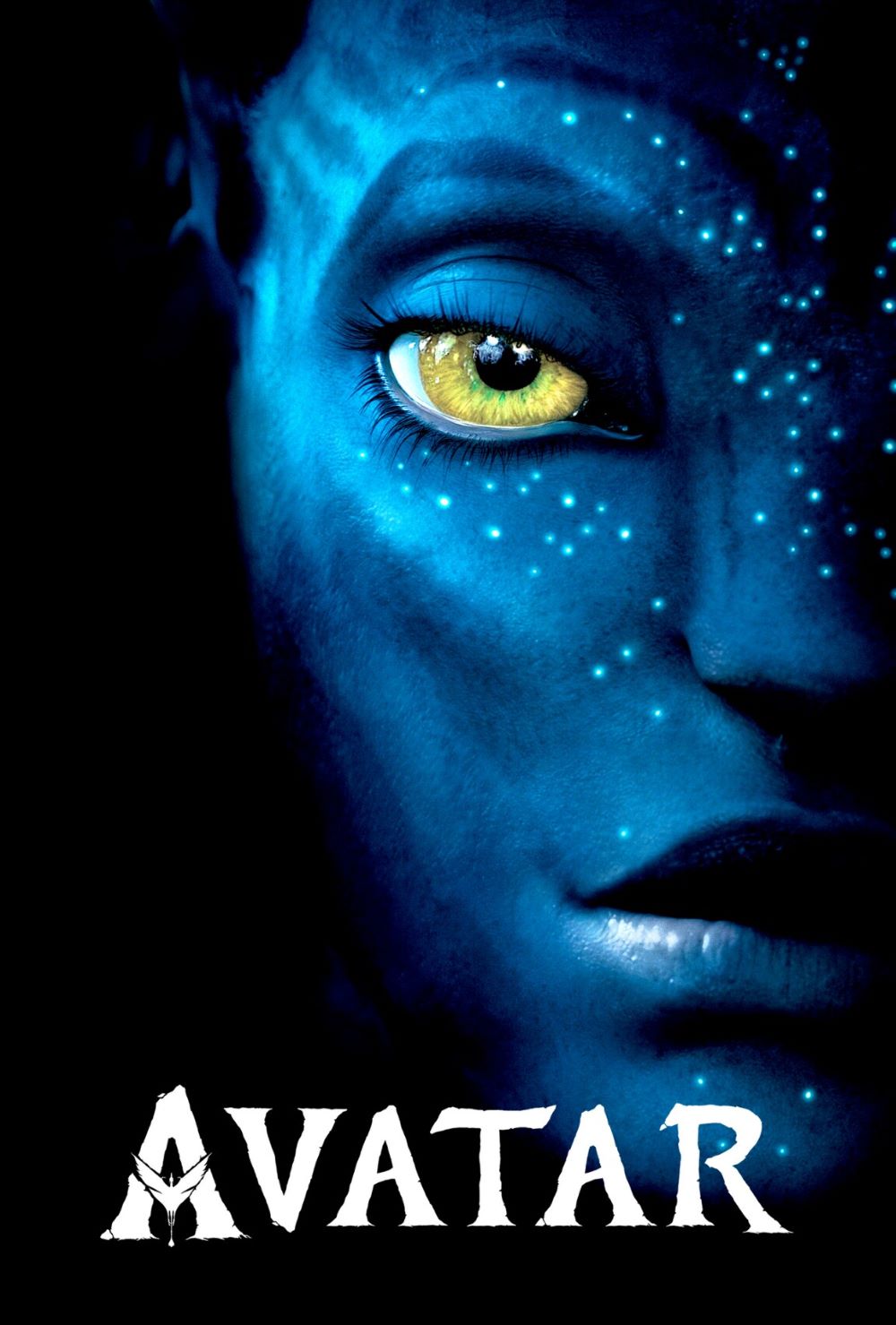
Film Review: Avatar (directed by James Cameron)


“Everything is backwards now, like out there is the true world, and in here is the dream.” — Jake Sully

When was the last time a film became an experience for you—not just a story that made you think, but one that swept you up and immersed you completely? The most hyped film of 2009, and likely of this decade, was such an experience for me. James Cameron’s Avatar, a project over fifteen years in the making, more than lived up to the hype that followed it from the earliest production leaks.

Avatar is not the greatest film ever made, nor does it revolutionize filmmaking the way Technicolor did in the late 1950s and early 1960s. What Cameron has accomplished is providing a blueprint for how filmmakers can bring audiences closer to the stories they tell. Stories and ideas once considered unfilmable due to technological limitations are now within reach. Avatar is an experience that should be seen, regardless of whether one embraces its story. The narrative is not original—some may be reminded of an Oscar-winning film directed by Kevin Costner or an animated feature with “Gully” in the title. While the lack of originality is noticeable, the story works within the context of Cameron’s vision. Clichéd and hackneyed dialogue aside, it serves the film well. Cameron’s writing may not rival that of Kaufman or Mamet, but he knows how to tell a simple story and keep the audience engaged.

With that flaw acknowledged, I haven’t felt this way about a film—nor even the best I’ve seen this year—since the first time I watched The Fellowship of the Ring or, before that, Spielberg’s Jurassic Park. Only a few films truly sweep me into their world and hold me there. It didn’t matter that Avatar wasn’t the second coming of Rashomon or this generation’s Citizen Kane. What I watched, I fully bought into. The world of Pandora, imagined by Cameron and brought to life by WETA Digital and ILM, felt real. The detail, clarity, and dedication in its creation gave me hope that creative boundaries once thought uncrossable are now being stepped over.

While the film is also available in 2D for theaters without 3D capabilities, it must be seen in 3D, ideally in IMAX 3D. Cameron’s use of the new “emotion capture” cameras he helped develop achieves a level of CGI photorealism that avoids the “Uncanny Valley” effect seen in films like The Polar ExpressBeowulf, and A Christmas Carol. The groundbreaking “mo-cap” technique, refined by WETA Digital for The Lord of the Rings trilogy, convinced Cameron it was time to make Avatar as he envisioned. The Na’vi are now the most realistic CGI characters ever put on screen, surpassing even Gollum. Cameron demonstrates that the limit of CGI use is not quantity, but how it is implemented. Lucas, Bay, and others who have misused CGI have much to learn from Cameron’s achievement.

It took a few minutes to adjust to the 3D effect, but once my eyes adapted, the film’s magic took hold. The distinction between CGI and live-action scenes blurred and eventually disappeared. Even the best CGI-heavy films sometimes break immersion, but Avatar never did. This total immersion helped me overlook the story’s familiarity and, for some, its ordinariness.

Despite the material, the performances ranged from good to excellent. The villains, while written one-dimensionally, were played with enough conviction to be believable. Giovanni Ribisi’s corporate weasel, a clear echo of Burke from Aliens, was cartoonish in motivation, but Cameron is not known for deep, well-rounded characters. The standout was Stephen Lang as Colonel Miles Quaritch. His scenery-chewing performance was riveting, stealing the film from Sam Worthington’s “hero on a journey.” While Lang’s performance may not win awards, it stands as one of the year’s most memorable, joining the ranks of characters audiences love to hate.

Some may think I’ve joined the Cameron fan club, but I can’t explain why I love this film despite its flaws: the familiar story, clichéd dialogue, and one-dimensional characters. Is Avatar just a technical and visual marvel? Yes, and more. Does the CGI and bombastic climax overshadow the storytelling? No, it actually propels the story forward, much like Jake Sully’s own fragile legs.

In the end, my love for Avatar comes down to the experience it provided—a rare occurrence in modern cinema. Cameron didn’t make a perfect film, nor one better than sliced bread. But he created a filmgoing experience that will be remembered decades from now, much like the first time audiences saw Star Wars and believed in Jedi and space battles, or Superman and believed a man could fly. Cameron’s Avatar made me believe in Pandora, a place I hope to visit, or at least experience through his eyes. I’m eager to see what he—and other filmmakers inspired by his work—will create next.