October Music Series: Månegarm – Ur själslig död


If I asked a random metal fan to name ten folk/viking metal bands, chances are they wouldn’t drop Sweden’s Månegarm among the contenders. It’s a bit odd, considering they’ve been around since 1995. But besides having a name that isn’t entirely easy to reproduce on a standard keyboard, there’s no reason to leave “Månegarm” off the list. Their ability to fly under the radar is something I don’t really understand; this band has definitely drawn less attention than they deserve over the years.

I am guilty to an extent, with nothing prior to Vargstenen–their 2007 release–in my collection, but I was still a little surprised to realize I had never featured this band before let alone this song. Following a brief intro track, “Ur själslig död” kicks off Vargstenen with epic bombast and a creative progression that avoids the easy temptation to repeat the track’s catchy main melody in excess. One thing that always stood out to me on this song was the vocals. Erik Grawsiö demonstrates a level of diversity I’m more accustomed to out of Slavic metal bands than their Germanic counterparts, and I absolutely love how he transitions back and forth between guttural singing and atonal growls. I couldn’t resist the urge to belt out a death metal roar of my own at the 40 second mark when I was listening to this in my car earlier today. So much for not scaring the new neighbors. <_<

October Music Series: Veilburner – Scorched Earth Exorcism


Well, I started out this series featuring a couple of songs I’ve been enjoying for the better part of two decades. Here is one I discovered less than a week ago. It’s not too often that music successfully creeps me out these days, but I suppose I should have known I was in for a treat when Veilburner were described to me as a bad acid trip.

Veilburner are a two-piece band out of the Philadelphia area who just released their first album last year. “Scorched Earth Exorcism” appears on their sophomore follow-up, Noumenon, released this July. (I highly recommend picking up a copy on Bandcamp if this sample track intrigues you.)

“Scorched Earth Exorcism” is a great example of this band’s unique, psychedelic mix of death and black metal. It’s some seriously twisted stuff, and nothing on the album better captures the deranged spirit of the season than the melody that takes over this song around the 4 minute mark. I’ve been watching AMC’s The Walking Dead marathon over the past few days, and I seriously had a dream about hunting zombies with this screwed up tune playing in the background. It was disturbing and awesome.

October Music Series: Agalloch – Dead Winter Days


Throughout the 2000s, Agalloch unleashed a series of albums that have influenced countless bands across the metal spectrum. Not only did Ashes Against the Grain (2006) play an enormous role in ushering in the era of post-black metal, but Pale Folklore (1999) pioneered the folk metal aesthetic for a nation whose traditional genres stood leagues apart from the metal scene. (It would be another decade before Austin Lunn nailed a metal interpritation of bluegrass.) Most American folk metal bands carry Agalloch’s stamp of influence with them, and why not? Pale Folklore perfectly captures a sense of melancholy mystery that reflects a land whose native sons were slaughtered, leaving their secrets only a faint whisper in the air.

October Music Series: Opeth – The Twilight is My Robe


If there’s one thing that will draw me back out of obscurity no matter how much work I’m bogged down with, it’s Horror season here on Shattered Lens. As a de facto film blog’s one author who pretty much never watches movies, I like to do my part by digging out a mix of tunes appropriate for the season.

This is always the time of year when I stop focusing on new releases and revisit a lot of my metal and folk favorites of old. From b-side Satanic cheese to authentic pagan anthems to the truly deranged, all the music I love most seems to find a home when that oppressive summer sun gives way to pleasant temperatures and dimming lights. It’s my favorite time of year, and my music collection rises to the occasion.

Opeth is pretty common fair in the textbooks of heavy metal these days, but Mikael Akerfeldt’s finest works came before the fame, in my opinion. Their 1995 debut, Orchid, ranks highest for me. While Akerfeldt’s trademark progressive rock experimentation was present from the get-go, those early albums had a sort of hollow, natural tone to them that lent the band a distinctly folk vibe. Orchid (and Morningrise) seem to drift through the crisp, foggy air surrounding a lake on the edge of a forest, the sun just beginning to rise over the horizon. I don’t wake up early when I can help it, but if a morning commute is necessary, Opeth always sees a spike in my play count. The vision that songs like “The Twilight is My Robe” paint is stunningly vivid, and surprisingly peaceful in contrast to Akerfeldt’s harsh vocals.

Square-Enix Announces Final Fantasy VII Remake


Need I say more?

Well, there’s not much to say just yet. The announcement was just made at E3 yesterday. The good news is that, while it’s coming out on the Playstation 4 first, Square-Enix imply that it will be available on multiple platforms eventually. Since I only play PC games, that’s pretty sweet news to me. As far as staff goes, the trailer credits Yoshinori Kitase as producer, Tetsuya Nomura as director, and Kazushige Nojima as writer. This maintains a decent bit of continuity. Original producer Hironobu Sakaguchi is long gone, but Nojima it maintaining his role as writer from the original PSX Final Fantasy VII while Kitase is switching seats from director to producer. Nomura will be the wildcard. He was involved in character design in the original, but he didn’t make his directing debut until Kingdom Hearts.

The bad news is, well, Square-Enix have not exactly been batting 1000 lately. They’ve earned a bad reputation over the past decade or so for rushing products, pushing quantity over quality, and releasing sham smartphone games mainly designed to gouge your wallet. It would be nice to think that a remake of the legendary Final Fantasy VII will receive an extra dose of attention. I mean, in all likelihood this game’s going to make more waves than the upcoming Final Fantasy XV. But considering the original release of Final Fantasy XIV was so terrible that the company issued multiple public apologies, it might be wise to wait for early reviews to trickle in before getting your hopes too high. The narration in the trailer feels hopelessly contrived to me, and that’s not a good foot to start on.

I’m still waiting to learn whether or not the most important staff member returns for this one though: Nobuo Uematsu!

NMY vs The World Video Game Hall of Fame Class of 2015


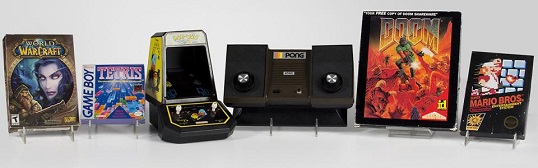
The Strong, an educational institution in Rochester specializing in the study of games, announced the six inaugural inductees of their World Video Game Hall of Fame yesterday. So what? Well, it made its way onto a lot of major news sites, which means it is probably going to resurface again next year and, in time, become the closest we’ve got to an “official” Hall of Fame.

My gut reaction was “my what a pretentious title”, because the “World” VG HoF looks incredibly U.S.-centric. Their game history timeline pretty much completely ignores the fact that the U.S. did not control the international gaming market for the vast majority of the 20th century. I mean, this timeline is crazy. 1982, the year that the bloody Commodore 64 was released, they feature Chicago-based Midway’s Tron instead. 1986, the year that Dragon Quest set the standard for the next two decades of role-playing games, they are at such a loss to find anything novel that they dig up Reader Rabbit by Boston-based developers The Learning Company. In spite of devoting 1992 to Las Vegas-based Westwood Studios’ Dune II, LA-based Blizzard Entertainment steals 1994 with Warcraft: Orcs and Humans. Does the invention of RTS gaming really deserve two years? Well, it’s not like it was competing with the release of the Sony Playstation or anything. Oh that’s alright, we’ll feature it in 1995, since that’s when it came to America. This list also devotes 1993 to the development of the ESRB rating system (which only applies in America), 1996 to Lara Croft’s tits (seriously, does anyone actually give a shit about Tomb Raider?), and 2002 to the U.S. Army, because uh, freedom!

So yeah, World Video Game Hall of Fame my ass. But that doesn’t mean they got the first six wrong:

Pong (1972)

“Ladies and gentlemen, you have been hand selected to choose the five games which will accompany Pong into the Hall of Fame.” It had to go something like that. Pong invented gaming like Al Gore invented the internet. Could you imagine a Hall of Fame without Pong? I mean, it’s Pong! Really though, wasn’t computer gaming kind of inevitable? Was it the first game? Nope. Did it stand the test of time? Not really. Did it usher in the age of arcade gaming? I guess it did, but the game itself had little to do with that. It was a novelty. Replace it with anything else, and that other game would be just as famous, regardless of its content. I don’t like that. There is a reason why Pong is the only game of the six Hall of Famers that I never played as a kid or else upon release, and that has nothing to do with my age. I think we get hung up on its simplicity, its catchy name, this idea that it all began with two paddles and a ball, and the desire to point to something and say “this started it all”. Pong deserves recognition in any gaming hall of fame eventually, but top 6? We can do better.

NMY gives this selection a 5/10

Pac-Man (1980)

What are Pac-Man‘s claims to fame? Well, it was the first video game to be a major social phenomenon, generating a huge market for spin-offs, toys, animated cartoons, and all sorts of other consumer products. It was the first video game with a really memorable theme song. It remains the best-selling arcade game of all time. It generated a chart-topping shitty pop song. It even destroyed the gaming industry. (E.T. the Extra-Terrestrial has absolutely nothing on the devastating consequences of Pac-Man‘s abysmal Atari port.) And sure, it’s pretty boring, but it still lasted well into the 90s. I had a pirated DOS copy as a kid. Do you think anyone bothered to pirate Pong? Uh, no.

NMY gives this selection a 10/10

Tetris (1984)

Tetris is a game that we all agree to love because it is Russian, and like Russia, it is really evil and kind of a dick. Four Z blocks in a row? Really? I didn’t double tap that button. Go back! Ugh…. Tetris annoyed the hell out of me as a kid, but I certainly did play it. It also spawned a ton of cheap rip-offs, novel improvements, and largely unrelated block puzzle games that stole its name for publicity, and a lot of these vastly outclassed the original. If I look back on all the fun I had playing Tetris Attack for the Super Nintendo, or hosting TetriNET tournaments online in the late 90s, or the amount of time my wife wastes on Candy Crush Saga, it is hard for me to pretend that Tetris was not significant. It was the mother of all “endless puzzle” games, and it deserves credit for that, even if I hated the original Alexey Pajitnov Tetris, with its never-ending tiers of frustration.

NMY gives this selection a 9/10

Super Mario Bros (1985)

This is the real shoe-in. Nintendo was able to turn Mario into (I am assuming) the most recognizable fictional character in the world because the original Super Mario Bros was so great. A game released in 1985 is not supposed to still be this much fun 30 years later, but from novel settings and mechanics to outstanding control, this game ran the gamut of what a great side-scroller was supposed to be. This, at a time when there was very little in the way of quality competition to take inspiration from. The game’s lasting legacy is so pervasive in our culture that I would feel silly even bothering to summarize it.

NMY gives this selection a 10/10

Doom (1993)

“Why an FPS, World Video Game Hall of Fame?” Because “it also pioneered key aspects of game design and distribution that have become industry standards“, according to the official induction explanation. Design-wise, they laud it for “a game ‘engine’ that separated the game’s basic functions from other aspects such as artwork.” That might be an interesting point. I don’t know much about it, though I have to imagine that anything Doom did, Wolfenstein 3D did first. Distribution-wise, they talk about how id Software marketed downloadable expansions and encouraged multi-player, online gaming. That point fails to impress me. Doom launched in 1993, which means no games before it really had the option to market themselves in this way. “First” only counts for me if the move is innovative, not inevitable. So we are left with some sort of novel modular processing system and the fact that it was the first really successful FPS. Those are fine points. I might not like FPS games, but I can’t deny that they have had a more lasting impact than say, fighting or sports games. Placing so much weight on the play style does, however, open up the doors for a lot of why nots. Why not Diablo? Why not Dragon Quest? Why not Command & Conquer?

NMY gives this selection a 7/10

World of Warcraft (2004)

I am not entirely sure why the World Video Game Hall of Fame chose World of Warcraft, because they aren’t telling. Their write-up goes into detail on what makes MMORPGs so revolutionary, but none of it is really unique to WoW. They throw out some numbers about WoW’s player base and monthly profit, and then bam, inaugural hall of fame induction. I am probably the last person to give an accurate assessment of how World of Warcraft changed gaming, because I still actively play it, but I have to believe that its enormous popularity had a lot to do with its place in time. Coming in to the 21st century, we all knew someone who played EverQuest, and we all (all of us, right guys?) secretly wanted to abandon our real lives and nerd out in 24/7 multiplayer fantasy immersion. I never played EverQuest, however, or Final Fantasy XI for that matter, because I still had dial-up internet. World of Warcraft launched right around the time that the majority of gamers were becoming equipped to play something of its magnitude. That being said, WoW is going on 11 years now, and still going strong. I’ve never seriously considered canceling my subscription. Blizzard landed on a market ripe for the picking, but they have carefully cultivated it ever since.

NMY gives this selection an 8/10

Over all, I think the World Video Game Hall of Fame is off to a good start. Pong is the only inaugural entry I strongly disagree with, but were it missing, would people still take the organization seriously? Doom is a bit sketchy to me, because its only claim seems to be “first popular FPS”. I think GoldenEye 007 was the game to push FPS into the mainstream and really reach beyond the genre, while Blizzard clearly dominated online gaming with Diablo and Starcraft, whatever id Software happened to do “first”. Doom is a good candidate, no doubt, but I feel like it belongs in another class. It would have fit in more nicely in a 2016 school that pushed genre-standardizing games like Dragon Quest, The Legend of Zelda, Street Fighter II, and Space Invaders.

Is that what we have to look forward to in 2016? Well, based on the runners-up from 2015, maybe not. The list did include Space Invaders and The Legend of Zelda, along with worthy contenders Pokémon Red and Blue and The Oregon Trail. Beyond that, it got a bit dicey. It is hard to imagine that Angry Birds, for instance, almost made the top 6. Sonic the Hedgehog would be long forgotten if not marketed as Sega’s response to Mario, yet it was a contender. FIFA International Soccer was the only sports entry–an odd choice, given that I have never heard of it, it only came out in 1993, and Tecmo Super Bowl exists. The other options were Minecraft–a bit young yet, don’t you think?–and oddly, The Sims, which I am sure was quite fun to play and left no lasting impact on gaming whatsoever. Well, they’ve got another year to straighten things out.

Song of the Day: Masashi Hamauzu – Saber’s Edge, from Final Fantasy XIII


If you frequented this blog back in 2012, you probably remember a 68 post series I ran on the history of video game music. While no one website served as my main source for it all, Final Fantasy Shrine definitely inspired the idea. As that community aged, it developed a unique trend towards game, anime, and film music discussion. I discovered a lot of obscure composers there, and that got the ball rolling for my series. One of the things we’ve been doing on FFShrine for ages now is making music compilations to showcase in a sort of knock-out tournament. Themes have ranged from the predictable mainstream to obscurities like “Best of Tim Follin”, but we never actually did Final Fantasy until last year. It turned out to be surprisingly novel, because I hadn’t heard anything since Square-Enix and Nobuo Uematsu parted ways. “Saber’s Edge”, a battle theme from Final Fantasy XIII composed by Masashi Hamauzu, ended up becoming one of my favorite songs in the series.

It’s been a year now, and (probably because I’ve been staying up until 5am watching a baby with absolutely nothing to entertain me) I decided to resurrect the Final Fantasy music knock-out game for a second run. FFShrine is a lot smaller than it used to be, though, and I’m not expecting much participation. So hey, if you’re bored and want to rehash some old RPG tunes, maybe discover a few new ones, stop by FFShrine and check the game out.

Neon Dream #15: Happy End – Kaze Wo Atsumete


“Kaze Wo Atsumete” by Happy End (はっぴいえんど) appears twice in Lost in Translation: once outside a karaoke room at the end of a long night, and once at the end of the credits. Since that movie was so central to how I remember the late 90s and early 2000s, I thought I might end with it too.

Here are links to the previous entries in my series. They all clearly share :???: in common. (Well, I had fun, anyway):

1. Maserati – Inventions
2. Boris – Intro
3. Tom Waits – Small Change
4. Hong Kong Express – 浪漫的夢想
5. 日本航空株式会社 ✈ Japan Airlines – Airglider
6. 식료품groceries – 슈퍼마켓Yes! We’re Open
7. 古川もとあき – One Night in Neo Kobe City (from Snatcher)
8. Aphex Twin – Flim
9. Air – Alone in Kyoto (from Lost in Translation)
10. The Album Leaf – The Outer Banks
11. Kinski – Semaphore
12. 芸能山城組 – Kaneda (from Akira)
13. 川井憲次 – Making of Cyborg (from Ghost in the Shell)
14. Blut Aus Nord – Epitome XVIII
15. Happy End – Kaze Wo Atsumete (from Lost in Translation)

Neon Dream #14: Blut Aus Nord – Epitome XVIII


The dream has to end somewhere. Science fiction seems to agree on that. Futuristic technology produces what biology could not: logic-based systems so functional and adept at survival that humanity becomes obsolete. Whether we assimilate into a borg colony or a zerg hive mind, imagination is pretty screwed. Our best bet might be something like The Matrix. Perhaps some utility will compel our robot overlords to spare the sheep who spawned them. Yay!

I cannot say what it must feel like to be enslaved by a post-human species, but I fancy it would sound a lot like the 777 trilogy by Blut Aus Nord. Between 2011 and 2012, these French black metal legends offered up a journey through a world that was beyond dystopian. Discordant melodies and unorthodox rhythms taken to the extreme are usually a recipe for disaster–the tools of technically proficient but creatively deprived math rock and avant-garde musicians I would only listen to under duress. Blut Aus Nord masterfully avoided that pitfall by envisioning a coherent aesthetic framework and driving the music forward as a consistent conceptual progression across 18 tracks. Radical experimentation joins forces with dark industrial grooves to place the listener in a futuristic, post-human world where mechanical gods rule apathetic over mortals bred in gestation crates.

The trilogy does not actually offer any textual insight into what its world is supposed to be. The minimal lyrics are highly esoteric, and Blut Aus Nord ultimately leave it to the instrumentation to tell their tale. You might not experience it as a futuristic world at all, but rather as some bleak corner of hell from which a lost soul digs through the madness and witnesses his overlord. But as far as it speaks to me, the 777 trilogy is the vision of a feckless human slave awakening from his dream into terrifying, incomprehensible world. He slowly comes to understand his master and, perhaps, ultimately assimilates into the hive mind. The final track, “Epitome XVIII”, is a grim, cold trance in which a soulless machine reigns on triumphant.

Neon Dream #13: 川井憲次 – Making of Cyborg


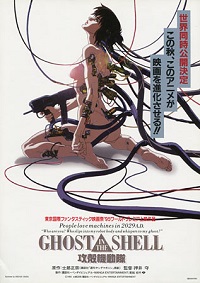
I can’t say that any entertainment franchise has given me more cause to think than Ghost in the Shell. It presents a mid-21st century post-apocalyptic earth in which society has more or less stabilized. Events revolve around Public Security Section 9, a counter-terrorism agency focused on investigating cyberterrorism, which is rather interesting because the original manga by Masamune Shirow launched in 1989, before cyberterrorism actually existed (or the modern internet, for that matter). Throughout their investigations, the team deals with the social and philosophical issues that arise in an age where society is fully integrated across a world-wide network and technology has been integrated directly into the body, rendering people intimately vulnerable to hacks and computer viruses.

I am as guilty as most of having never read the original manga. I became acquainted with Shirow’s world through Ghost in the Shell (1995) and Ghost in the Shell 2: Innocence (2004), both directed by Mamoru Oshii, and the 2002 anime series Ghost in the Shell: Stand Alone Complex, by Kenji Kamiyama. While the two directors take rather different aesthetic approaches–the movies present Section 9 as a harsh, disenchanted unit in a somewhat dystopian world, whereas the television series is lively and a bit cartoonish–both remain dedicated to questioning the impact of highly integrated technology.

Stand Alone Complex lies much closer to the root of my music series, because some of the key issues it tackles have since arisen online in the real world. Everyone is well familiar with the use of V for Vendetta-styled Guy Fawkes masks in protests originating from the internet, but there is a decent chance you have also caught a glimpse of an odd blue smiley face among the rabble. The Laughing Man image originates from Stand Alone Complex, where it functions as a mask employed anonymously by individuals taking public action independently of each other. At first, an advocate for social justice uses it to disguise himself while committing a ‘terrorist’ act, but the image quickly overreaches his motives. Others commit unrelated political sabotage under the guise. Corporations employ it to discredit their competitors. Pranksters use it as a sort of meme, forming the shape with chairs on a rooftop and cutting it into a field as a crop circle, for instance. The image has no concrete meaning, and everyone who uses it essentially ‘stands alone’, but the public perceive the Laughing Man as a single individual.
The actual anime gives a fairly shallow interpretation of this. The creator of the image, Aoi, explains that he never intended the mask to become a social phenomenon, and that its arbitrary usage dislodged the image from its original meaning. He sums this up by asking “Who knew that copies could still be produced despite the absence of an originator?” The ‘profoundness’ of this ties back to a long history of bad philosophy which assumes that signs have universal objective meaning in some sort of fundamental way which mystically transcends subjectivity of the mind. Basically, certain Greek ideas saw a resurgence of popularity in the late 19th and early 20th centuries, probably as a consequence of high society’s fascination with antiquities at the time. The plethora of ready-at-hand counterexamples to these archaic notions provided easy meat for countless grad students to earn their PhDs, so long as they did not throw the baby out with the bath water and ruin the game for everybody else.

But I digress. While the intended idea behind “Stand Alone Complex” is a bit naive, the Laughing Man does represent a unique sort of game that can only be played in the information age. To the public, the Laughing Man was a single individual, or at most a closely coordinated group, but the participants knew better. They knew that there was no real ‘Laughing Man’, but their independent actions were performed under the expectation that they would be written into ‘his’ public profile. The game was exclusive; you had to be aware of the mask in order to dawn it. The game also had rules; an action totally out of line with the Laughing Man’s pattern of behavior would be perceived as a fraud. (You could not, for instance, reveal the truth behind the Laughing Man.) By playing, you added a little piece of yourself to the puzzle, and it might slowly assimilate you in turn.

Ghost in the Shell has remained a uniquely relevant franchise in science fiction because it got so many ideas right. In 1989, at a time when internet was still a novelty of college libraries, the manga offered a world of total connectivity, where every human and device belonged to a global network. In 2002, Stand Alone Complex introduced the Laughing Man, and shortly afterwards the real world knew an equivalent. Whether this bodes well for the franchise’s dabblings into cyborg technology, only time can tell, but history has certainly made an inherently fascinating fictional world all the more compelling. In the Ghost in the Shell universe, science has fully bridged the gap between computers and neural systems, allowing electronic implants to directly convert wireless digital information into stimuli compatible with the senses. The average citizen possesses visual augmentations which allow them to directly browse the internet via voice command. More complex technology delves deeper, creating a sort of sixth sense whereby users can engage a network through thought command. Some individuals, especially accident victims with the means to afford it, might have their entire bodies replaced by neurally triggered machine components.

The 1995 Ghost in the Shell film gets especially creative in tackling this–enough that it became the chief inspiration for The Matrix four years later. It revolves around brain-mapping technology and its implications regarding sentience and identity. From the start of the film, the ability to copy and read brain data appears to be common. Presumably, these digital copies would remain stagnant until encoded back into a neural network, but as the government develops better software for interpreting and editing the massive content at its disposal, funny things start to happen. The software gains a sort of temporary sentience while performing its complex tasks, and eventually it uploads itself to a cyborg body in an act of self-preservation. This new entity possesses the capacity to read other augmented brains and incorporate them into its internal network. At least, that is how I’ve interpreted it. The movie does leave a lot to the imagination. Perhaps it is recycled from earlier science fiction, and far-fetched besides–I wouldn’t really know–but Ghost in the Shell presents it all as if it were right around the corner, not lost in a distant galaxy of Star Trek.

Ghost in the Shell is so steeped in ideas that it’s a wonder I don’t forget it is a collection of animations, not a book series. Stand Alone Complex is presented as rather typical–and relatively forgettable–anime, but the 1995 movie definitely denies dismissal. It is a real work of art. The city is dirty and a bit washed-out without feeling downright destitute; the masses still lead normal lives. Emptiness expands upward; the characters are perpetually surrounded by massive, sort of dusty-looking structures that feel vacant despite signs of life. The music is simultaneously vast and minimalistic. Generally, the artistic direction projects a feeling that the protagonists are isolated–cut off from the massive world surrounding them–perhaps by the knowledge they possess.

The score Kenji Kawai (川井憲次) crafted for Ghost in the Shell ranks among the best soundtracks I’ve ever encountered. Without it, the film might easily unravel. The plot really does take a lot of creative liberties. What amount of entertainment value could convince people to open up their brains to potential hacking? Or, if they are doing it to maintain memory backups, why is a brain hack so devastating? Can’t you just resume from your last save? Why would a hacker go to the trouble of replacing an entire memory system in the first place, if they could just encode an impulse into an existing one? To these questions, I say “shhhh!”, because Kawai has so utterly convinced me that my cyborg brain will be shipping in from Japan any day now. The music shrouds the film in imminent mystery. It is a moment of quiet awe, before the very foundations of human experience become uprooted and replaced by a higher state of computer-enhanced perception.

‘Interesting’ nerd note on Kawai: while the majority of his discography appears in anime and film, he is credited with arranging the TurboGrafx-16 port of Sorcerian, one of Yuzo Koshiro and Takahito Abe’s better 1980s NEC PC-8801 projects. I am pretty excited to dig that one up. Aren’t you? …Bueller?