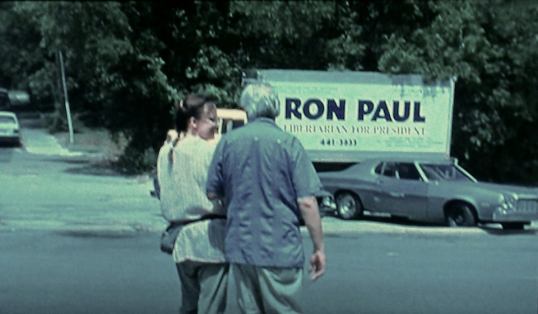
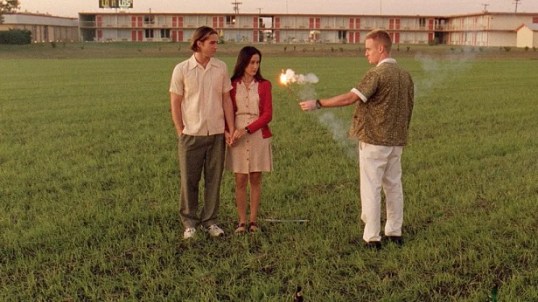
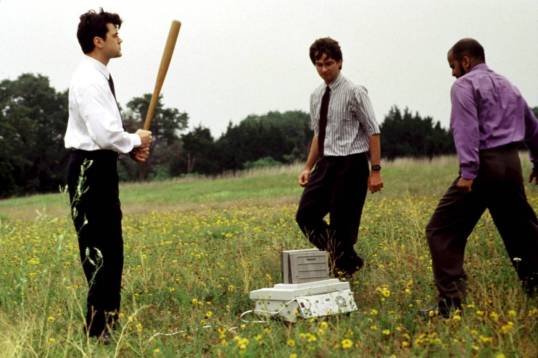
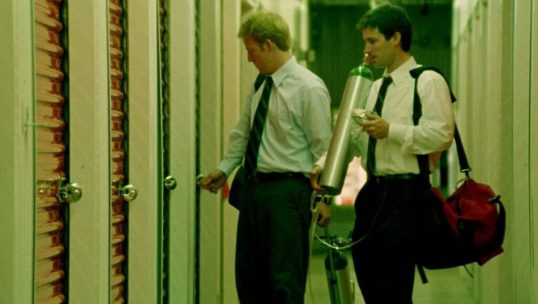
4 Shots From 4 Films is just what it says it is, 4 shots from 4 of our favorite films. As opposed to the reviews and recaps that we usually post, 4 Shots From 4 Films lets the visuals do the talking!
Today, the Shattered Lens wishes a happy birthday to Iggy Pop. Today’s song of the day was performed by Iggy and co-written by him and David Bowie. Here is the anthemic Lust For Life.
Here comes Johnny Yen again With the liquor and drugs And a flesh machine He’s gonna do another strip tease
Hey man, where’d y’get that lotion? I’ve been hurting since I’m up again About something called love Yeah, something called love Well, that’s like hypnotizing chickens
Well, I’m just a modern guy Of course, I’ve had it in the ear before And I’ve a lust for life ‘Cause I’ve a lust for life
I’m worth a million in prizes With my torture film Drive a GTO Wear a uniform All on a government loan
I’m worth a million in prizes Yeah, I’m through with sleeping on the sidewalk No more beating my brains No more beating my brains With liquor and drugs With liquor and drugs
Well, I’m just a modern guy Of course, I’ve had it in the ear before Well, I’ve a lust for life (lust for life) ‘Cause of a lust for life
I got a lust for life Got a lust for life Oh, a lust for life Oh, a lust for life
A lust for life I got a lust for life
Got a lust for life
Well, I’m just a modern guy Of course, I’ve had it in my ear before Well, I’ve a lust for life ‘Cause I’ve a lust for life
Well, here comes Johnny Yen again With the liquor and drugs And a flesh machine I know he’s gonna do another strip tease
Hey man, where’d y’get that lotion? Your skin starts itching once you buy the gimmick About something called love Love, love, love Well, that’s like hypnotizing chickens
Well, I’m just a modern guy Of course, I’ve had it in the ear before And I’ve a lust for life (lust for life) ‘Cause I’ve a lust for life (lust for life)
Got a lust for life Yeah, a lust for life I got a lust for life A lust for life
Got a lust for life Yeah, a lust for life I got a lust for life
Lust for life Lust for life Lust for life Lust for life Lust for life
Songwriters: Iggy Pop / David Bowie / David Robert Jones
As some of our regular readers undoubtedly know, I am involved in hosting a few weekly live tweets on twitter and occasion ally Mastodon. I host #FridayNightFlix every Friday, I co-host #ScarySocial on Saturday, and I am one of the five hosts of Mastodon’s #MondayActionMovie! Every week, we get together. We watch a movie. We snark our way through it.
Tonight, for #MondayActionMovie, the film will be 1995’s The Final Cut!
It should make for a night of fun viewing and I invite all of you to join in. If you want to join the live tweets, just hop onto Mastodon, pull up The Final Cut on YouTube, start the movie at 8 pm et, and use the #MondayActionMovie hashtag!
2001’s Strange Frequency is an anthology film. Usually, I hate anthology films because it always seems like the viewer ends up with one good story and three mediocre ones. As well, the anthology format is one that sometimes seems to be specifically designed to bring out the worst tendencies in otherwise talented directors. Often times, they seem to treat the anthology format as a lark, an excuse to show off their technical mastery without really paying much attention to anything else. The results often feel thematically shallow.
Well, guess what? I liked Strange Frequency. It was a lot of fun. Each of the four stories mixed horror with music. The first story features two heavy metal fans (Erik Palladino and Danny Masterson) who, after a car accident, find themselves in a club where disco is played nonstop. For them, it’s Hell. For me, it sounds like a fun afterlife. (Yes, it’s not easy to watch Danny Masterson nowadays but he does suffer in this story.) The second story is about a middle-aged serial killer (Eric Roberts) who targets younger hitchhikers, specifically because he dislikes their taste in music. However, when he picks up a young grunge fan (Christopher Kennedy Masterson), he suddenly finds himself being targeted. It turns out that this hitchhiker targets old people who won’t shut up about Woodstock. They then meet an older man who has never forgiven the baby boomers for rejecting big band music. In the third story, a rock star (John Taylor) who enjoys destroying hotel rooms is confronted by a maid (Holland Taylor) who can literally clean up any mess. (“I want my headlines!” the rock star shouts as he realizes he’s never going to get credit for destroying his current room.) Finally, the fourth story stars Judd Nelson as an A&R man who has the ability to find up-and-coming stars but whose discoveries inevitably end up dying.
All three of the stories were well-done and genuinely clever. My favorite was the second story, which featured Eric Roberts giving an enjoyably unhinged performance as the Woodstock refugee with a hatred for Lollapalooza. The story was both clever and suspenseful and it actually had something to say about the cultural differences between the generations. As you get older, you really do come to hate whatever music came after the artists you grew up listening to. Eventually, all the Swifties will be in their 40s and 50s, wondering why the younger generation doesn’t appreciate good music about feelings.
Strange Frequency was a pilot for a series that aired on VH-1 in 2001. How come I don’t remember this show? The pilot was actually really good! Thank you to Australia’s own Mark V for telling me about this pilot and letting me know that it was on YouTube! Check it out if you get a chance.
Previous Eric Roberts Films That We Have Reviewed:
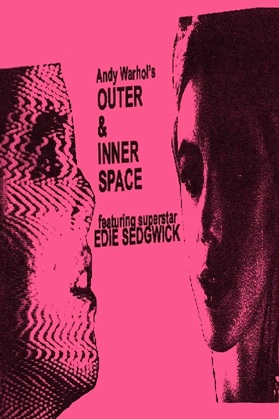
In this 33-minute short film, we watch as Edie Sedgwick appears to have a conversation with herself. She’s not, of course. Instead, she’s sitting next to a television monitor that is showing a video of Edie having a conversation with an off-screen someone who was to the right of her. Meanwhile, the “live” Edie is having a conversation with an unseen person who is sitting to the left of her. This creates the illusion of the two Edies having a disjointed conversation with each other whereas, in reality, we’re really not sure who either Edie is talking to or what they’re even talking about. As was typical with Andy Warhol’s Factory films, the soundtrack is notably muddy. As well, the video below is actually a film of the film, which I think Warhol perhaps would have appreciated as long as he got paid.
Okay, it’s not for everyone. Obviously, if you’re not a fan of Warhol’s films, this experimental piece is not going to change your mind. In fact, it’ll probably make you a little bit angry. But, for me, it’s a fascinating time capsule, a true product of the era from which it came. Warhol’s experiments might not seem spectacular today but that’s because we’ve grown use to experimentation. Experimentation has become a mainstream concept. Warhol, on the other hand, was making his underground films at a time when the term “underground” actually meant something.
As well, this film features Edie at the height of her fame. It’s a bit sad to watch now, knowing how fleeting her obvious happiness would be. Warhol’s films always framed Edie as being just slightly out of reach, from both the viewers and the filmmaker. With the muddy soundtrack, one watches the multiple Edies in this film and wonders what is going through their mind, This is a film that embraces the enigma of existence and image.
Today’s song of the day comes from Lou Reed. Andy Warhol reportedly asked Lou Reed to write a song about how Edie Sedgwick was a femme fatale. It’s a song that captures the fascination that Edie inspired amongst artists in the 60s and beyond. It may not be the most positive portrait of Edie as a person but at least it’s not quite as bitter as Bob Dylan’s Like A Rolling Stone.
Here she comes, You’d better watch your step, She’s going to break your heart in two, It’s true.
It’s not hard to realize, Just look into her false colored eyes, She’ll build you up to just put you down, What a clown.
‘Cause everybody knows She’s a femme fatale The things she does to please She’s a femme fatale She’s just a little tease She’s a femme fatale See the way she walks Hear the way she talks.
You’re written in her book, You’re number thirty-seven, have a look. She’s going to smile to make you frown, What a clown.
Little boy, she’s from the street. Before you start you’re already beat. She’s going to play you for a fool, Yes, it’s true.
‘Cause everybody knows She’s a femme fatale The things she does to please She’s a femme fatale She’s just a little tease She’s a femme fatale See the way she walks, Hear the way she talks.
‘Cause everybody knows She’s a femme fatale The things she does to please She’s a femme fatale She’s just a little tease She’s a femme fatale Oh, oh, oh, oh, oh She’s a femme fatale Oh, oh, oh, oh, oh She’s a femme fatale Oh, oh, oh, oh, oh She’s a femme fatale
Today’s scene that I love comes to use from an underground 1965 film called Vinyl! This film, believe it or not, was actually an adaptation of the novel A Clockwork Orange, one that was filmed six years before the better-known Stanley Kubrick version.
In this scene below, Gerard Malanga and Edie Sedgwick dance to Nowhere to Run by Martha and The Vandellas. Malanga is playing the role that would later be made famous by Malcom McDowell. Edie is playing …. well, Edie is basically playing herself. No one smoked a cigarette with as much style as Edie Sedgwick.
Watching her in this scene, it’s sad to think that, in just six years (and at the same time that Stanley Kubrick was releasing his version of A Clockwork Orange), Edie Sedgwick would die at the age of 28. Like all of us, she deserved much better than what the world was willing to give her.
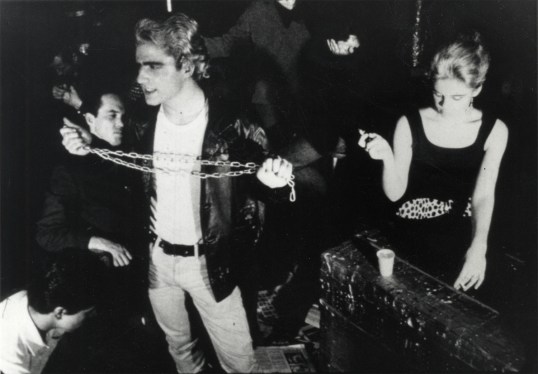
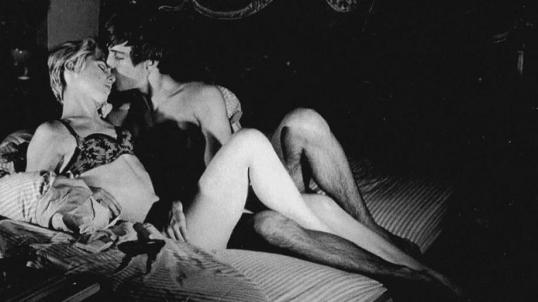
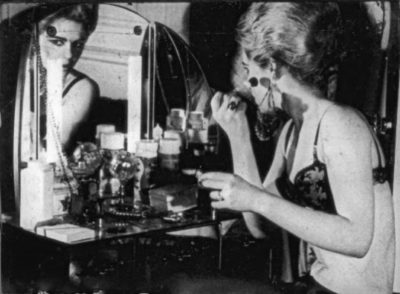
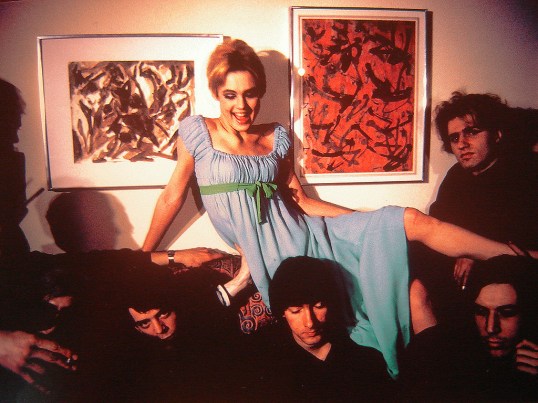
4 Shots From 4 Films is just what it says it is, 4 shots from 4 of our favorite films. As opposed to the reviews and recaps that we usually post, 4 Shots From 4 Films lets the visuals do the talking!
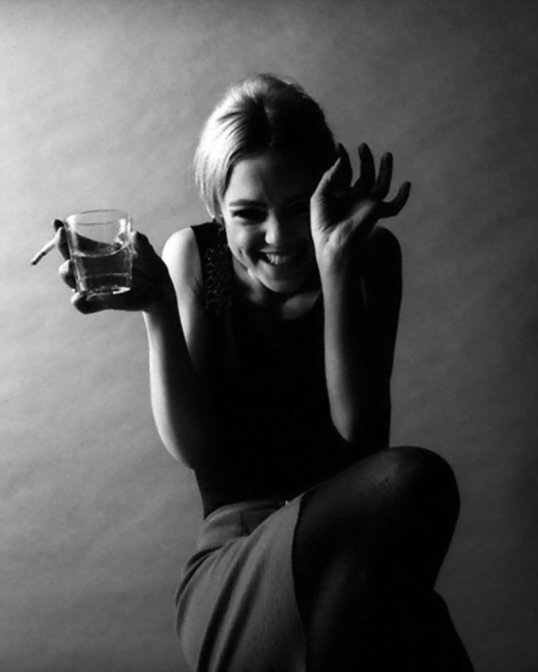
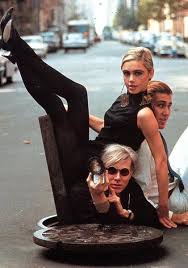
Today would have been Edie Sedgwick’s 82bd birthday. Unfortunately, she died under tragic circumstances in 1971, after having briefly found fame as a model, a “youthquaker” (as some in the media called her), an actress, and Andy Warhol’s muse. Her tragic life is often held up as a cautionary tale and perhaps it is. For all of her talent and her appeal (not to mention that sharp wit that made her an outsider in the 60 but which would have made her a fascinating interview subject in 2025), Edie was far too often exploited by those who should have been protecting her. She was too beautiful not to be famous but, at the same time, too sensitive not be hurt by the experience. She’s truly a tragic figure but, because she also epitomizes everything that the New York underground art scene in the 60s represents in the popular imagination, she’s also an inspiring one. Edie lives forever as a symbol and a muse. Personally, I’ve been fascinated by her life for as long as I can remember.
 Through the Shattered Lens