The Naked Gun 2 1/2: The Smell Fear (1991, directed by David Zucker)


Frank Drebin is back!

Now separated from Jane (Priscilla Presley) and working in Washington D.C., Frank (Leslie Nielsen) finds himself investigating a bombing at the offices of Dr. Albert S. Meinheimer (Richard Griffiths), an advocate of renewable energy who has just been put in charge of America’s energy policies by President George H.W. Bush (John Roarke, who was better-known for playing Ronald Reagan on Friday’s).  With the help of Captain Ed Hocken (George Kennedy) and Officer Nordberg (O.J. Simpson), Drebin’s investigation leads him to Quentin Haspburg (Robert Goulet), an oilman who is plotting on replacing Dr. Meinheimer with a double.  It also leads him back to Jane, who is now working as an assistant to Meinheimer and being wooed by Hapsburg.

The Naked Gun 2 1/2 is a worthy sequel to the first Naked Gun.  It’s more plot-heavy than the first film and some of the jokes feel a little bit too familiar but it’s still a very funny film.  That’s largely due to Neilsen, Kennedy, and Presley, all of whom really commit to playing their absurd characters.  (Robert Goulet gives a game performance but he really can’t match Ricardo Montalban’s villainous turn in the first movie.)  Nielsen was probably the only actor alive who could keep a straight face even while hitting Barbara Bush in the face while opening a door and then struggling to eat lobster at a state dinner.  As was often the case with the ZAZ films (even though Jim Abrahams and Jerry Zucker didn’t have anything to do with the screenplay of the sequel), the funniest moments are also the most random and the stupidest.  I laughed a lot harder than I should have at Leslie Neilsen struggling with a very small towel that had been thrown against his face.  And don’t worry, O.J. Simpson fans.  Nordberg gets injured in this movie too.

Leslie Nielsen was one of those actors who could make anything funny.  Whether he was delivering his hard-boiled dialogue or doing absurd physical comedy with an absolutely straight face, it was impossible not to laugh when Leslie Nielsen was onscreen.  He was a true cinematic treasure.


The Cheyenne Tornado (1935, directed by William A. O’Connor)


“You see, stranger, I am a sheep man.” — James Farley (Ed Porter)

On the frontier, a range war has broken out between the cattlemen and the sheepherders.  When rancher Seth Darnell is murdered, the blame is put on the sheepherders.  When the Cheyenne Kid (Reb Russell) rides up on the small camp of the sheepherders and hears their problems, he decides to investigate on his own by getting a job at the Darnell ranch.  Soon, Cheyenne is discovering the truth and also being pursued by both Darnell’s daughter (Victoria Vinton) and the daughter (Tina Menard) of the leader of the sheepherders.

Reb Russell was a former college football star who had a minor B-western career in the 30s.  Supposedly, he didn’t really much care for Hollywood and he retired from acting in 1935, the same year that The Cheyenne Tornado came out.  Russell went on to find a lot of success as a rancher himself.

The Cheyenne Tornado is a typical B-western.  It’s short.  There’s a lot shots of men riding on horses.  There’s a little gunplay and a mystery that anyone should be able to solve.  The acting is bad all the way around with even star Reb Russell failing to make much of an impression.  It probably did not matter to the film’s target audience in 1935.  They were there for the old west action and the movie does deliver that.


The Naked Gun: From the Files of Police Squad! (1988, directed by David Zucker)


Let’s take a moment to appreciate Frank Drebin (Leslie Nielsen), a true American hero.

Even though Frank is just a Los Angeles cop, he still goes to the Middle East and disrupts a conference of America’s greatest enemies.  He beats up Fidel Castro.  He knocks out Gadafi and Yasser Arafat.  He cleans Gorbachev’s head.  (“I knew it!” he says as the birthmark disappears.)  He takes out Idi Amin and he sends the Ayatollah Khomeini through a window.  Thirty-seven years ago, this scene opened The Naked Gun and, after all that time, it is still funny because Leslie Nielsen plays it all with a straight face, delivering his silly lines without flinching.  It’s also interesting that none of the leaders taken down by Frank Drebin are around anymore.  Khomeini died just a few months after this film came out.  Gorbachev was the last to go, in 2022, by which time he was no longer an enemy.  Consider it the Frank Drebin Effect.  He’s making the world safe for democracy.

When Drebin returns to Los Angeles, he’s informed by Captain Ed Hocken (George Kennedy) that Police Squad has been put in charge of security for a visit from Queen Elizabeth (Jeanette Charles) and that Officer Nordberg (O.J. Simpson) is in the hospital and suspected of being a dirty cop.  The Mayor (Nancy Marchand) doesn’t want Los Angeles to be embarrassed by a police scandal before the Queen arrives so Drebin has 24 hours to exonerate Nordberg.  Drebin’s attempt to clear Nordberg’s name leads him to a shipping magnate (Ricardo Montalban) who has come up with a diabolical scheme to assassinate the Queen at a baseball game.  It also leads to love between Drebin and Jane Spencer (Priscilla Presley).

Though Liam Neeson did a fine job in the recent reboot, there really is only one Frank Drebin and his name is Leslie Nielsen.  The original Naked Gun is nearly 40 years old and, even if some of the jokes are dated, it’s still laugh out loud funny.  Most of the credit has to go to Leslie Nielsen and ability to deliver even the most bizarre bits of dialogue with natural authority, gravitas and a straight face.  Whether he’s mumbling his way through the National Anthem, paying an informer for information, or hamming it up as an umpire, Nielsen is never less than hilarious.  By the end of the movie, it’s impossible to look at Nielsen without laughing.  Kennedy, Presely, and Montalban also generate their share of laughs.  John Houseman has a great cameo as an unflappable driving instructor.  (“Now, extend your middle finger.”)  As for OJ Simpson, he doesn’t seem to be in on the joke like the rest of the cast but he does frequently get injured and re-injured throughout the movie and there’s definitely some pleasure to be found in that.

(When Simpson died, director David Zucker said, “His acting was a lot like his murdering: He got away with it, but no one believed him.”  That sounds about right.)

Liam Neeson made for a fine Frank Drebin, Jr.  I hope he has many more adventures.  But the greatest Frank Drebin will always be Leslie Nielsen and the original Naked Gun will always be one of my favorite comedies.  Sometimes, it’s good just to laugh.

Thank you, David Zuker.

Thank you, Jerry Zucker.

Thank you, Jim Abrahams.

And most of all, thank you, Leslie Nielsen.

The Apache Kid’s Escape (1930, directed by Robert J. Horner)


In the old west, the Apache Kid (Jack Perrin) has decided to go straight because his own mother refuses to accept the stolen money that he sends home.  Unfortunately, other outlaws, like Buck Harris (Bud Osborne), continue to break the law while wearing the Apache Kid’s trademark checkered scarf so the Apache Kid still has a posse after him.

Using the alias Jim, the Kid gets a job working at a local ranch.  Ranch hand Ted Conway (Fred Church) is looking forward to marrying Jane Wilson (Josephine Hill), the daughter of the ranch’s owner.  Ted’s father, Frank (Henry Roquemore), wants Jane for himself so he reveals that Ted is actually adopted and no one knows who his real parents are.  Jane’s father (Horace B. Carpenter) announces that the wedding is canceled.  So, Ted decides to take on the identity of the Apache Kid and rob a stagecoach.  After Ted is arrested, Jim has to return to his old ways to help Ted get out of jail.

The Apache Kid’s Escape is a 47-minute poverty row western that is remembered for being one of the first westerns to feature recorded sound.  Unfortunately, the movie sounds terrible, with a steady hum in the background and all of the actors speaking slowly, loudly, and very precisely while awkwardly trying not to look straight at the camera.  Everyone noticeably hesitates before speaking, as if waiting for the director to give them the signal to go.  With all of the humans struggling to speak, the film’s best performance comes from Starlight the Horse, who is a natural star.  Jack Perrin went on to have an active career in B-westerns so maybe he learned how to handle acting with sound.

This was the only film to feature Perrin as the Apache Kid and it’s easy to see why.  The plot doesn’t even try to make sense.  If Jim wants to escape being the Apache Kid, he should be happy that so many other people are willing to take over the role for him.  Perrin is also stuck wearing a really big hat, which makes him look more like a Blazing Saddles extra than a cowboy star.

There were a lot of bad westerns made during the early days of the sound era.  The Apache Kid’s Escape might be the worst.

4 Shots From 4 Films: Special Leon Isaac Kennedy Edition


4 Shots From 4 Films is just what it says it is, 4 shots from 4 of our favorite films. As opposed to the reviews and recaps that we usually post, 4 Shots From 4 Films lets the visuals do the talking.

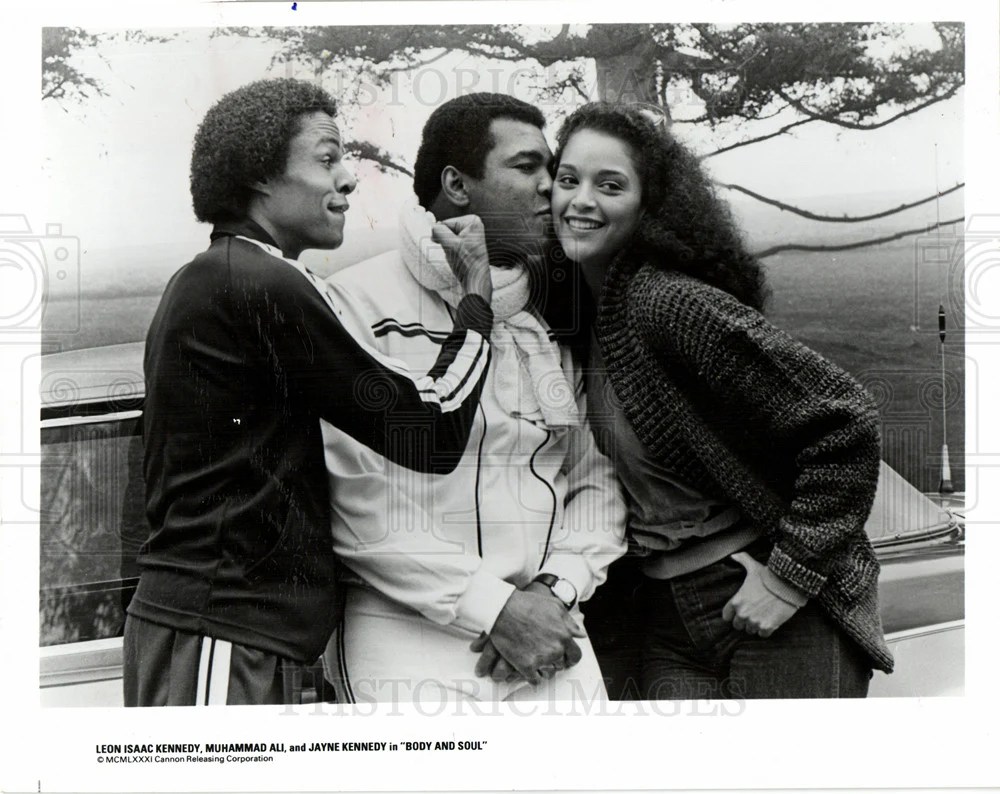
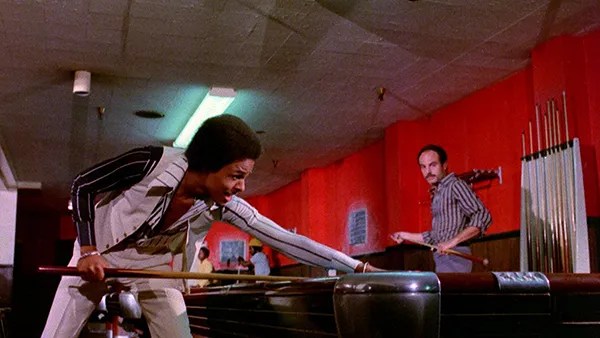
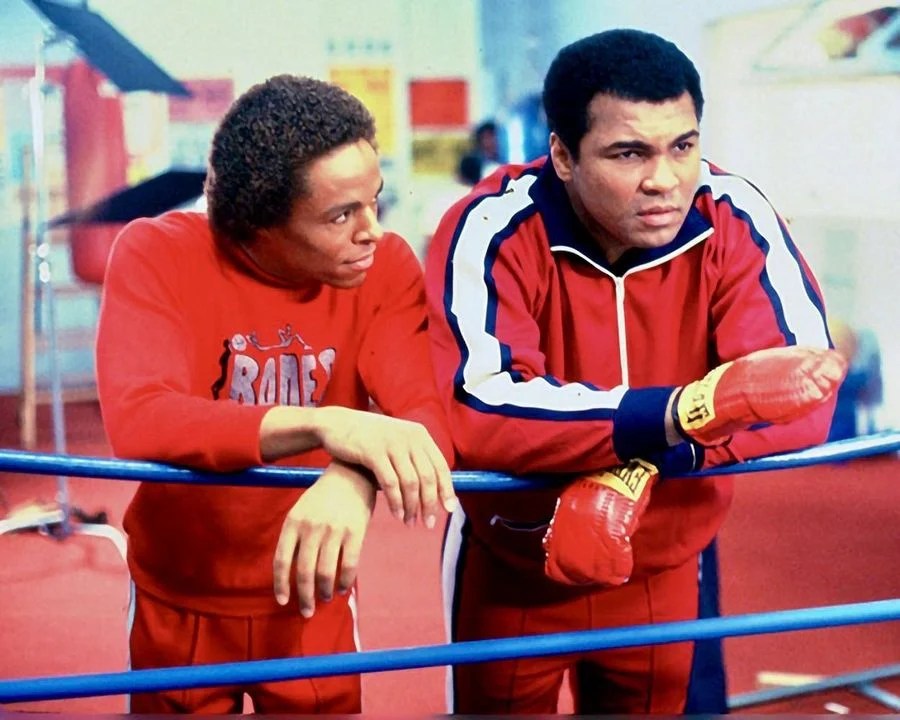
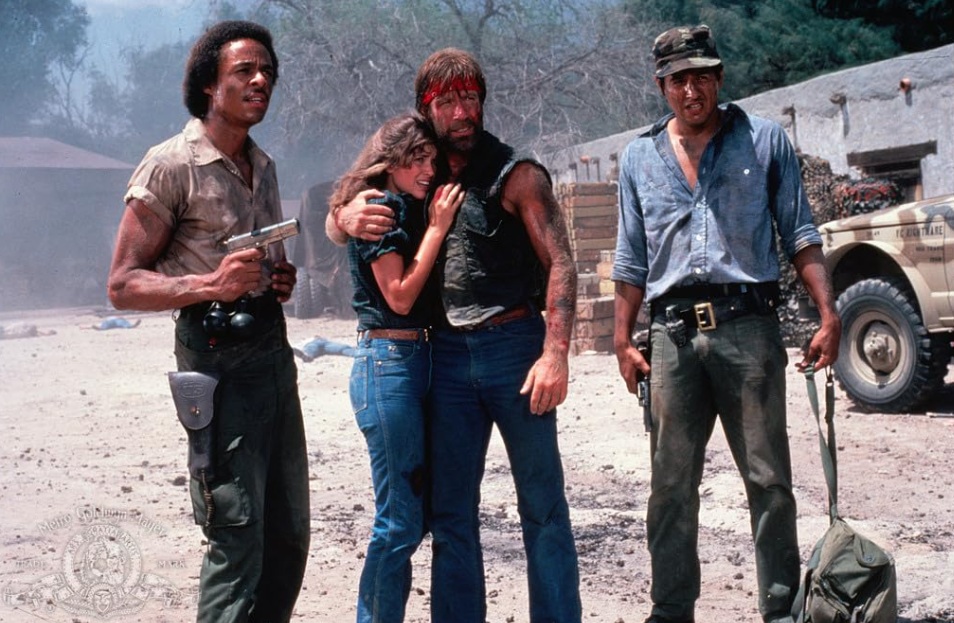
With today’s edition of 4 Shots From 4 Films, we wish a very happy birthday to the one and only Leon Isaac Kennedy!  Born in 1949, Leon Isaac Kennedy was working as a successful disc jockey by the time he turned 17.  (He was known as Leon the Lover.)  Kennedy went on to achieve cult fame by starring as prison boxer Too Sweet in the Penitentiary films, along with appearing opposite Muhammad Ali in Body and Soul and Chuck Norris in Lone Wolf McQuade.  Kennedy, who turns 77 today, has retired from acting and became an evangelist in the 90s.

4 Shots From 4 Leon Isaac Kennedy Films:

Death Force (1978, directed by Cirio H. Santiago)

Body and Soul (1981, directed by George Bowers)

Lone Wolf McQuade (1983, directed by Steve Carver)

Penitentary III (1987, directed by Jamaa Fanaka)

Music Video of the Day: The Heart of Rock & Roll by Huey Lewis and the News (1983, directed by Edd Griles)


Huey Lewis and the News don’t get the respect they deserve and no, that Patrick Bateman monologue doesn’t count.

The Heart of Rock & Roll was inspired by a gig that the band played in Cleveland.  Before the performance, Lewis felt that the band’s hometown of San Francisco had the world’s best rock music fans but, after being greeted by an enthusiastic crowd in Cleveland, he realized that there were true rock and roll fans all over America.  “The heart of rock and roll is in Cleveland,” Huey said but when it came time to write the song, it was decided that “still beating” sounded better.

(The band actually directed several regional versions of the song.  If you heard the song on the radio in Maryland, Huey included a shout-out to Baltimore.  If you were in Texas, he would mention Dallas and Houston.  In Canada, he gave credit to Toronto.)

The music video was directed by Edd Griles.  Shooting occurred in several different locations while the band was touring.  The New York shoot was the most difficult as it lasted for 13 hours and in freezing weather.  Amongst the rock and roll greats included in the video: Elvis Presley, Buddy Holly, Bill Haley, Roy Orbison, Little Richard, and Chuck Berry.

Enjoy!

Music Video of the Day: Any Way You Want It by Journey (1980, directed by ????)


To me, there is no better way to close out the year than with this classic song from Journey!  Have a happy and safe New Year’s Eve!

Ever since I first saw Caddyshack (not to mention the episode of The Simpsons were Rodney Dangerfield played Mr. Burns’ son), Any Way You Want It has always been my favorite Journey song.  The video is also Journey at its best, simple, without pretension, and rocking!

Music Video Of The Day: Ball of Confusion, covered by Love and Rockets (1985, directed by ????)


Made up of 3 former members of Bauhaus and named after the comic book series by the Hernandez Brothers, Love and Rockets had their first minor hit with this cover of Motown’s Ball of Confusion.

Ball of Confusion was one of the many songs that Norman Whitefield and Barrett Strong wrote for The Temptations during their “psychedelic soul” period of the late 60s and the early 70s.  (Another one was War, which became a much bigger hit when it was covered by Edwin Starr.)  When Ball of Confusion was first released, the lyrics dealt directly with the Vietnam War, the Nixon administration, and drug abuse, making it one of Motown’s more directly political songs.  However, the song’s power and message has remained timeless and it was subsequently covered by everyone from Tina Turner to Anthrax to, of course, Love and Rockets.  The Love and Rockets cover was released shortly before their first album, Seventh Dream of Teenage Heaven.  Despite being the band’s first hit, the song was not included on the album until it was eventually reissued in 2000.

And the band played on.

Music Video of the Day: Always On My Mind, performed by Pet Shop Boys (1988, directed by Jack Bond)


In 1987, ITV commemorated the 10-year anniversary of the death of Elvis Presley by airing Love Me Tender, a special that featured popular British acts covering songs that were originally made famous by Elvis.  Pet Shop Boys’s synth-pop version of Always on My Mind proved to be the unexpected hit of the program and the band released the song as a single.  It went on to become the UK’s Christmas number one single for the year.

It was also featured in It Couldn’t Happen Here, a surreal film that starred Pet Shop Boys and which was directed by documentarian Jack Bond, who had started his career with a ground-breaking film about Salvador Dali and who later became famous for his work with The South Bank Show.  The subsequent music video was lifted from the film.  In the movie and the video, Chris Lowe and Neil Tennant are driving a taxi cab.  They stop to pick up a passenger, an older man played by Joss Ackland.  (In the movie, there’s an earlier scene in which Lowe and Tennant hear a news report about an escaped killed who matches their new passenger’s description.)  While their passenger rambles on, Lowe and Tennant turn on the radio and listen to the song, which leads to several other clips from the film.  And while the critics may not have cared much for It Couldn’t Happen Here, the band’s version of Always On My Mind remains a popular classic.

Enjoy!

Music Video of The Day: Don’t Stop Believin’ by Journey (1981, directed by ????)


Don’t Stop Believin’ is now probably destined to be forever associated with The Sopranos but the song itself had established itself as a classic long before it was used in the finale of HBO’s famous show about the New Jersey mafia.

In fact, the song means so much to Journey’s Steve Perry that he was hesitant to give HBO permission to use the song until it was explained to him exactly how the song was going to be used and he was assured that it wouldn’t be played over any type of violence.  Other than the members of the cast and the production crew, Steve Perry was one of the few people to know, in advance, how The Sopranos was going to end.

While Perry has said that the majority of the lyrics were inspired by his own early struggles to find success in the music industry, keyboardist Jonathan Cain says that the name was inspired by something that his father told him when Cain was thinking about leaving Hollywood and returning to Chicago.  Cain’s father told him, ‘No, son. Stay the course. We have a vision. It’s gonna happen. Don’t stop believin’.”

As for the video, it was filmed in Houston and features Journey performing the song as a part of their Escape tour.  With the exception of the infamous video for Separate Ways, Journey was known for keeping things simple and straight-forward when it came to their music videos.  This one is no exception.