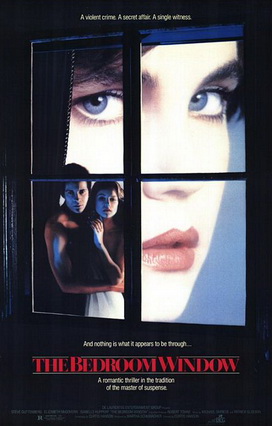
 The Bedroom Window opens with quite a quandary. Sylvia (Isabelle Huppert) has just witnessed a woman named Denise (Elizabeth McGovern) being attacked by a serial rapist/killer named Carl (Brad Greenquist). The problem is that the window that Sylvia’s standing at is located in the bedroom of Terry Lambert (Steve Guttenberg). Sylvia is having an extramarital affair with Terry and she knows that there’s no way to tell the police what she saw without also exposing the affair. Terry decides that he’ll go to the police and tell them what Sylvia witnessed but he will claim to have seen it himself.
Terry does well enough with the police that Carl gets arrested but, at Carl’s trial, Terry’s testimony falls apart when he is revealed to be so near-sighted that there was no way he could have seen what happened from his bedroom window. Carl is not only acquitted but has now figured out that Sylvia was the one who witnessed him attacking Denise. When the killings start up again, Terry becomes the number one suspect.
An underrated and overlooked thriller, The Bedroom Window was directed by the late and missed Curtis Hanson. It’s not a perfect film. Terry does an excessive amount of stupid things over the course of the movie. But Hanson did a good job creating suspense and he got good performances from his entire cast. Steve Guttenberg may seem like a strange choice to play the lead in a Hitchcockian thriller but he actually gives a credible performance and the fact that he is not a traditional hero creates some suspense. Brad Greenquist is chilling as the killer and keep an eye out for the great Wallace Shawn in the role of Carl’s weaselly attorney.
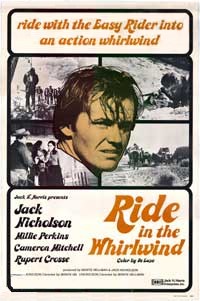 Three cowboys — Vern (Cameron Mitchell), Wes (Jack Nicholson), and Otis (Tom Filer) — are riding their horses across the old west when they come upon a cabin that is inhabited by one-eyed Blind Dick (Harry Dean Stanton) and his friends. Though they suspect that Dick may be an outlaw, the cowboys accept his offer to stay the night. The next morning, they wake up to discover that they are surrounded by a posse. Mistaken for members of Dick’s gang, Vern and Wes go on the run. Eventually, they find themselves hiding out at the home of Evan (George Mitchell), Catherine (Katherine Squire), and their daughter, Abigail (Millie Perkins). While Wes and Vern wait for their chance to escape, the posse grows closer and closer.
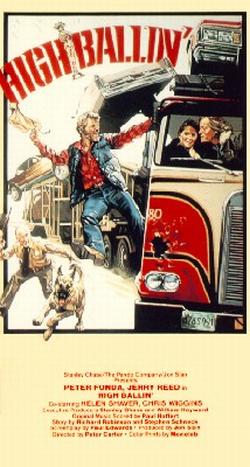 Hey, good buddy, remember the Snowman?
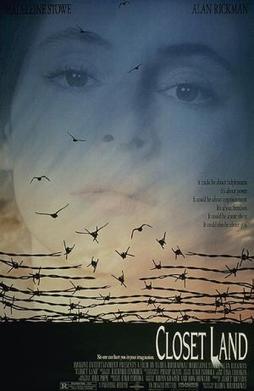 It has been nearly two years since the death of Alan Rickman and it is a loss that film lovers are still feeling today. When Rickman was with us, it was easy to take him for granted. It was only after his death that many started to look at the films he made, both the good ones and the bad ones, and realizing just how much Rickman brought to every role he played.
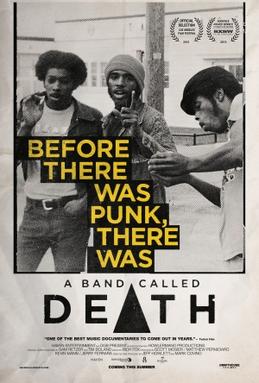 A band called Death was one of the best bands that most people have never heard of. Formed in the early 70s by three brothers in Detroit, Death produced some of the most incendiary music ever recorded. They played fast and they played loud. They were punk before punk even existed. At a time when most black musicians were defined by the smooth Motown style, Death created their own unique sound. Led by a visionary named David Hackney, Death were trailblazers and, as so often happens with trailblazers, they would not receive the recognition that they deserved until several years after Death performed for the last time.
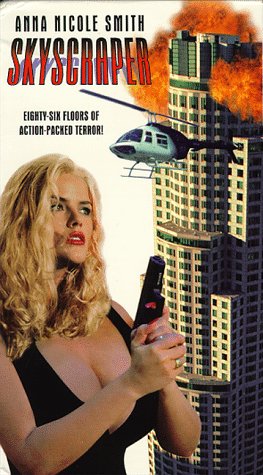 If you want to see a movie about somone trapped in a skyscraper and battling terrorists, the obvious solution is to watch Die Hard. After all, it’s always a good time to watch Die Hard.
 Someone is murdering models and trying to frame Larry Roberts (Albert Finney), a plastic surgeon. Larry suspects that the actual murderer is somehow involved with the Digital Matrix research firm, a shadowy organization that is headed by James Coburn and Leigh Taylor Young. Digital Matrix has developed a new technique where they digitally scan a model’s body and then generate a 3-D duplicate that can be used in commercials and on film. The real-life models stand to make a fortune from the royalties, assuming that they are physically perfect and they do not end up getting murdered immediately after being scanned. Larry’s girlfriend, Cindy (Susan Dey), is just the latest model to have been scanned and now Larry suspects that she might be targeted for death as well.
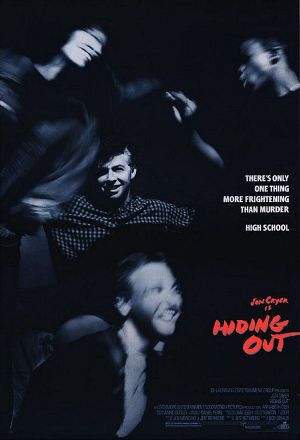 Andrew Morenski (Jon Cryer) is a stockbroker in the 1980s. What could be better than handling large amount of money during the decade of excess, right? The only problem is that Andrew and two of his colleagues have gotten involved with Mafia. And now, the Mafia wants them all dead. On the run from both the FBI and the Mob, Andrew tries to change his appearance. He shaves off his beard. He gives himself a bad dye job. No sooner has Andrew traded clothes with a homeless person than he is mistaken for a high school student.
 Through the Shattered Lens