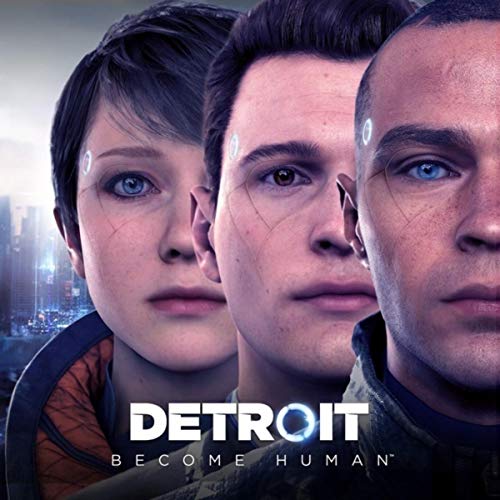
Game Review: Detroit: Become Human (2018, Quantic Dream)


Detroit: Become Human takes place in a Detroit of the near future.

Androids, built, programmed, and sold by CyberLife, have become so common place that almost everyone seems to own one.  The androids do everything from domestic work to hard labor to even dangerous security work.  Because they are viewed as just being machines, they have no rights in American society and they are often blamed for stealing jobs from hardworking humans.  Androids have become a luxury that few humans can do without.  Some try to treat their android laborers with respect while other humans are abusively cruel, secure in the knowledge that a damaged android can easily be replaced with a newer model.

Detroit: Become Human is game about three androids, all of whom the player will control at different points in the game.  Two of the androids, Markus and Kara, turn deviant and develop their own free will.  Markus ends up discovering the android community of Jericho and, depending on decisions made by the player, can end up leading either a peaceful or violent revolution against the human race.  Kara is an abused housekeeper android who, after escaping her owner, runs away with a young girl named Alice and attempts to reach Canada, where there are no laws limiting the rights of androids.  On her journey, Kara discovers a mad scientist who tortures androids, a deserted amusement park that is populated exclusively by androids waiting for their humans to return, and eventually the future’s version of the Underground Railroad.

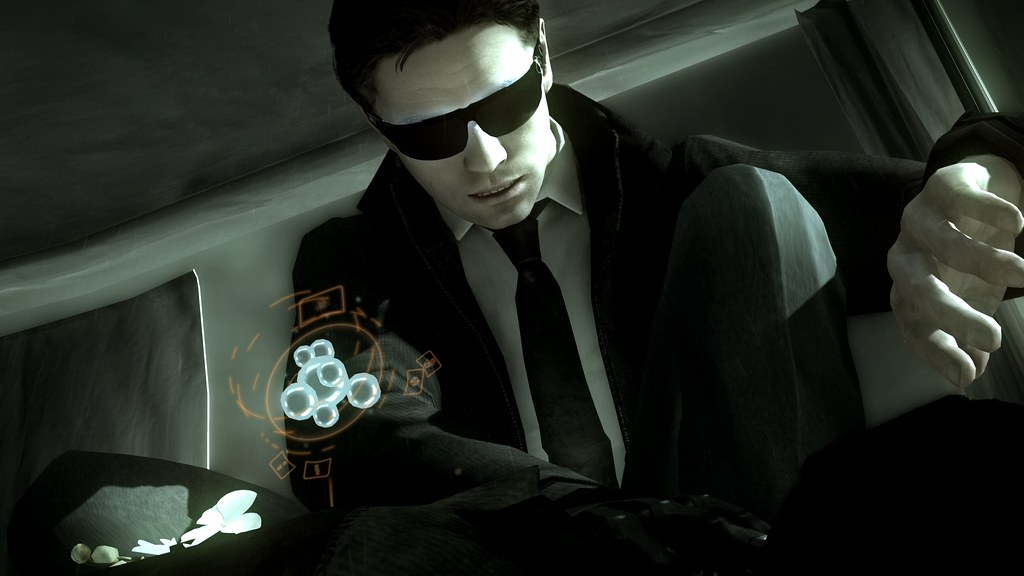
Lastly, Connor is an android who has been designed by CyberLife to track down and destroy deviants.  Connor is assigned to work with police Lt. Hank Anderson to discover why so many androids have been turning on their owners.  Much like Heavy Rain‘s Norman Jayden, Connor is an outsider who has been assigned to aide the establishment.  Just as Norman sought refuge in a VR world, Connor finds himself summoned to an ever-changing zen garden where he is asked questions by his superior and it is up to the player to decide if Connor should tell the truth or lie.  Like Norman, Connor eventually has to decide which side he is on.  How Connor’s story progresses depends on the decisions made by the player.  Choose one path and Connor and Hank can become unlikely allies and Connor might even end up going deviant himself.  Choose another path and Connor might remain a loyal servant of CyberLife to the very end.  It may sound like an easy choice to make but nothing concerning Connor is ever that simple.
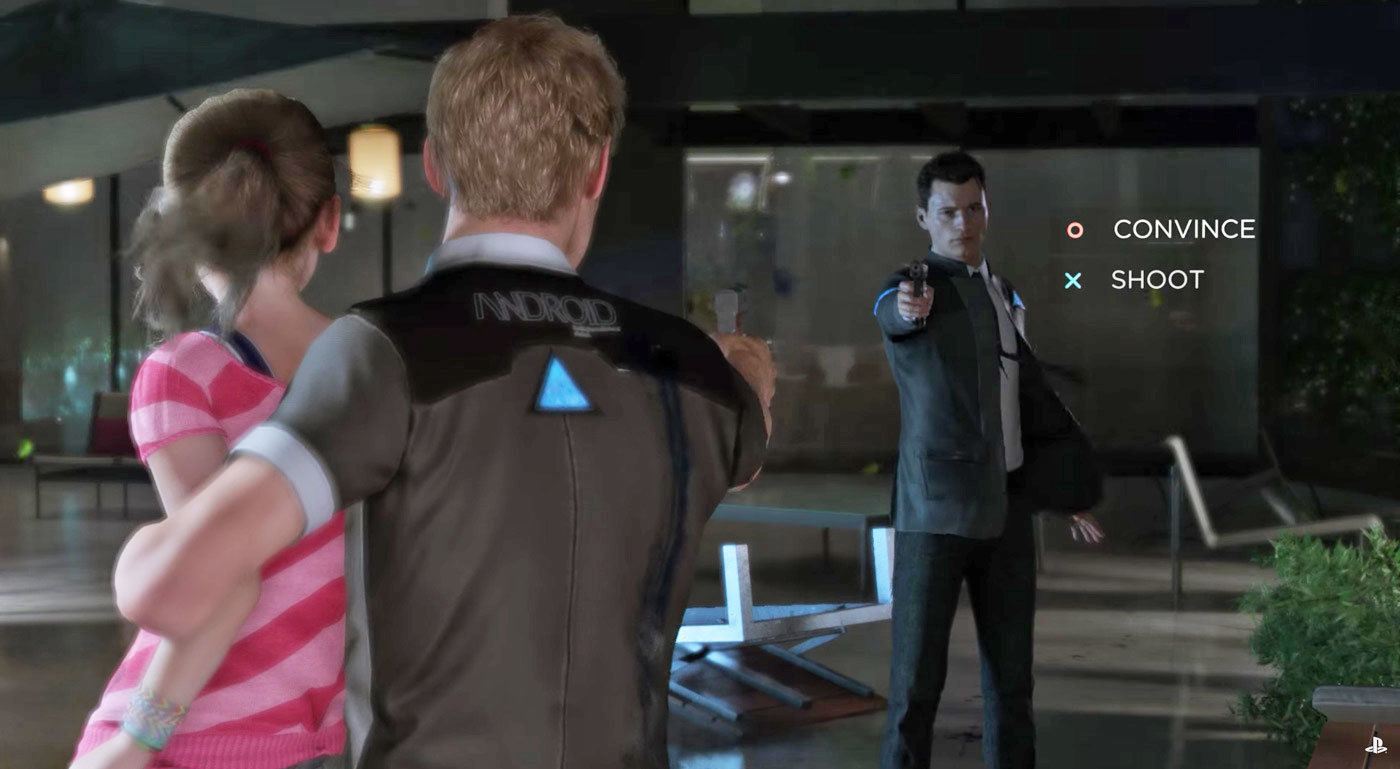
Of all the games that I’ve recently played, Detroit: Become Human is tied with Spider-Man for my favorite.  Like Quantic Dream’s previous games, Heavy Rain and Beyond: Two Souls, Detroit: Become Human tells a sprawling story where nearly every single decision that you make effects what happens in the game.  Like those previous two games, there are no do-overs.  If Markus or Kara dies during one of their chapters, the game continues without them.  (Connor, on the other hand, is just rebuilt by CyberLife and sent back into the field.)  Because the game follows three distinct (but connected) storylines, it is estimated to have over 40 possible endings, which makes it a game that very much rewards being replayed and experimented with.

Detroit: Become Human takes the storytelling and the gameplay concepts introduced in Heavy Rain and Beyond: Two Souls and it improves on both of them.  Unlike the uncertain voice acting of Heavy Rain, Detroit: Become Human features characters played by actors like Clancy Brown, Lance Henriksen, Minka Kelly, and Jesse Williams, all of whom do an excellent job of bringing their characters to life.  The game’s recreation of Detroit and the surrounding area is visually rich and detailed and, unlike Beyond: Two Souls, Detroit: Become Human does not get bogged down in quick time events.  Detroit: Big Human is a game that rewards observant and intelligent players who want to do more than just push buttons while they’re playing a game.
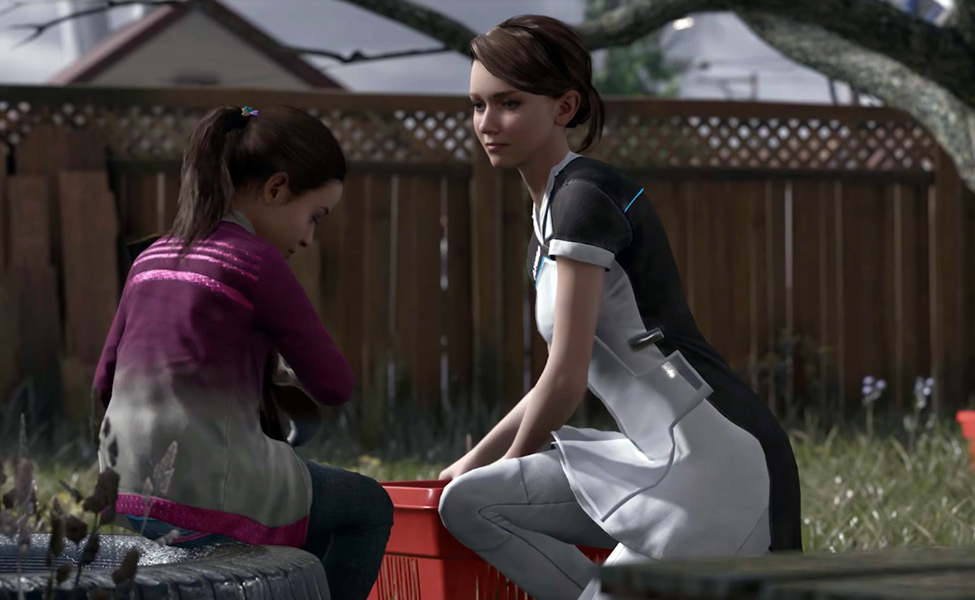
Of course, this is a Quantic Dream game so don’t expect any of Detroit: Become Human‘s political subtext to be subtle.  When t comes to dealing with issues, this game is even more heavy-handed than Beyond: Two Souls.  There’s barely a good human to be found in this game’s version of Detroit.  The best of them is Clancy Brown’s Hank who manages to hate everyone, human and android, equally.  (Of course, who Hank or anyone else in the film ultimately turns out to be, depends on the choices that you make during the game.)  The most interesting of the human characters, though, is Carl Manfred, the artist played Lance Henriksen.  Carl tries to teach Markus how to be human and it’s a confrontation between Carl and his real son (who is jealous of Carl’s relationship with Markus) that leads to Markus setting off on his own.  If Carl dies during the confrontation, he remains an inspiration to Markus and his revolution.  If Carl survives, his later reaction to Markus will depend on what the player has chosen to have Markus do over the course of the game.  Is Carl as benevolent as he seems or was his earlier kindness to Markus just his way of assuaging his own guilt over essentially being a slave owner?  The answer depends on how you play the game.
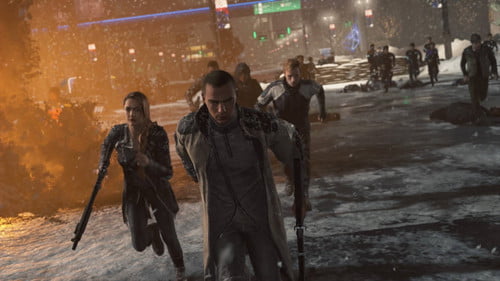
In the end, it’s the sheer number of possible endings that truly sets this game apart.  This is especially true of Kara.  I haven’t discovered all of the endings yet but, from those that I have reached, Kara’s story always seems to get either the best or the darkest possible conclusion.  Markus, meanwhile, can either be an android of peace or an android of war.  After everything that he is forced to endure over the course of the game, it’s difficult not to go for war every time.  As for Connor, it’s all up to you.  Ultimately, everything is up to you.

I look forward to replaying Detroit: Become Human and seeing what other endings this game has to offer.  And I look forward to seeing what will come next from Quantic Dream.

Great Moments In Television History: Ghostwatch Traumatizes The UK


On this date, twenty-seven years ago, children across the UK were scarred for life.

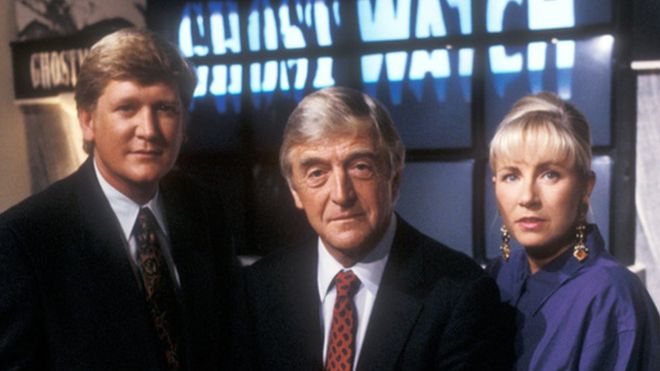
It was on Halloween night that the BBC aired a live call-in discussion show called Ghostwatch.  Recognizable BBC reporters like Craig Charles and Sarah Greene were seen investigating a reputedly haunted house and playing Halloween pranks on each other.  In the studio, host Michael Parkinson interviewed an expert on the paranormal and invited viewers to call in tell their own stories of the supernatural.  Many people called throughout the show, telling stories about how they had been haunted by a malevolent spirit called Pipes.  Even as Parkinson laughed off the stories, strange things started to happen in the house and the studio.  A mirror fell off the wall and landed on a member of the crew.  The calls into the show started to get increasingly desperate as the callers said that they were being attacked by Pipes at that very moment!  The show’s paranormal expert said that the show was acting as a “national seance” and soon poltergeists would be attacking ever home in the UK!  Suddenly, viewers saw something inside the haunted house grab Sarah Greene and drag her off camera!  Inside the studio, the lights exploded and everyone fled, except for Michael Parkinson.  After saying he wasn’t sure if anyone was still out there who could hear him, Parkinson suddenly started to recite a nonsense rhyme.  But his voice was different and viewers realized that Parkinson had been possessed by Pipes!  “Fee fi fo fum!” Parkinson threateningly intoned before the picture finally went dead.

Ghostwatch, of course, was an enormous prank.  Though it was presented as being a live broadcast, the whole thing had actually been filmed a few weeks before.  Even though Michael Parkinson gave out the BBC’s actual number when he asked viewers to call in with their ghost stories, viewers who called during the airing of Ghostwatch heard a message telling them that the show was fictional.  (Unfortunately, so many people tried to call during the show that most callers got a busy signal instead.)  Michael Parkinson, Craig Charles, and Sarah Greene were all recognizable, real-life BBC news personalities but none of them were actually attacked by ghosts or possessed on Halloween night.

Just try telling that to the children who watched Ghostwatch.  Some were reportedly so traumatized by the show that they were still having nightmares weeks after it aired.  Despite the fact that Ghostwatch had aired as a part of Screen One, many were convinced that they had just seen Sarah Greene killed by a ghost and Michael Parkinson possessed by Pipes.  Even though Sarah Greene made an appearance on Children’s BBC to assure young viewers that she had not been killed (despite that ghost dragging her under the cupboard while the entire nation watched), many were not convinced.  What if Sarah Greene had become possessed just like Michael Parkinson?

Always eager for a chance to condemn the BBC, the British press had a field day condemning Ghostwatch.  The BBC responded by placing a 10-year ban on the show.  Ghostwatch would not be released on video until 2002 and it has never again aired on the BBC.  You can watch it on Shudder, though … if you dare!

Previous Great Moments In Television History:

  1. Planet of the Apes The TV Series
  2. Lonely Water

Great Moments In Comic Book History: Spider-Man Meets The Monster Maker


With the Marvel Cinematic Universe about to enter it’s fourth phase and having said goodbye the majority of the Avengers, it’s time to really go through the Marvel vaults and give some consideration to some characters who may not be as well-known as Iron Man or Captain America but who still deserve their own shot at cinematic immortality.

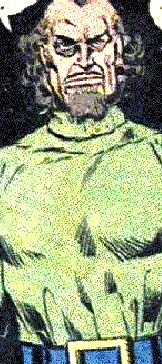
Consider, for instance, Baron Ludwig von Shtupf, the Monster Maker!

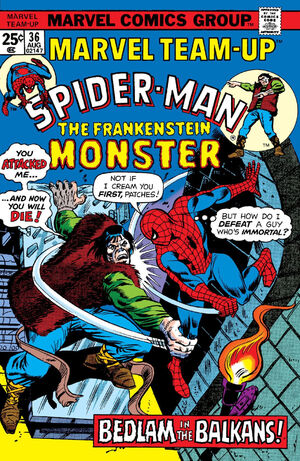
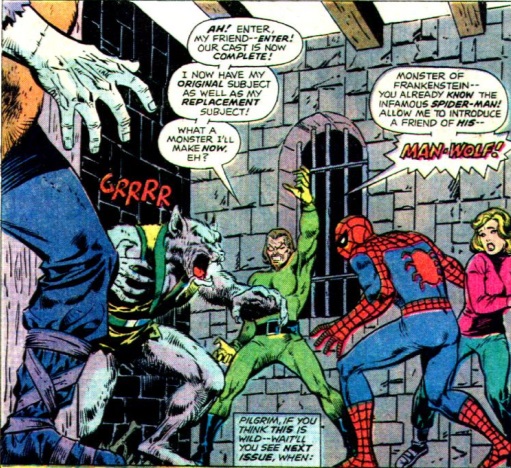
Baron Ludwig von Shutpf made his first (and, to date, only) appearances in two issues of Marvel Team-Up.  In Marvel Team-Up #36, he kidnapped Spider-Man from New York and Frankenstein’s Monster from the antarctic.  In Marvel Team-Up #37, he summoned Man-Wolf to join them all in his castle.  Baron von Shtupf was the latest in a long line of mad scientists and he had come up with the perfect plan for world domination.  Why not take three great monsters and combine them into one big monster?  It seemed like a good plan but Spider-Man, Man-Wolf, Frankenstein’s Monster, and an Agent of SHIELD named Judith Klemmer stopped him and left him tied up in his study.

The Baron would never appear again in the pages of Marvel Comics, which is amazing when you consider that even a character like the Living Eraser made a handful of appearances over the years before being permanently erased.  Was it because Baron von Shtupf’s name sounded suspiciously like a certain Yiddish vulgarity?  Perhaps.  Not bringing back Baron von Shtupf is a waste of a perfect good character so how about, Disney?  How about a little love for the Monster Maker?  Just imagine what Christoph Waltz could do with the role.


The main reason that I remember the Monster Maker is because, when I was seven years old, I found a copy of Marvel Team-Up #36 at a garage sale and I got excited because The Frankenstein Monster was on the cover.  My mom bought it for me.  When I got home, I read the comic and I was stunned to discover that it ended with a “to be continued” right after Spider-Man and the Monster discovered the Man-Wolf waiting for them in the Baron’s laboratory.  (This was when I was still too young to understand that all comic books ended with a “to be continued” because that was the easiest way to get kids like me to spend my allowance on them.)

I spent years searching for a copy of Marvel Team-Up #37 so I could find out how the story ended.  It was not until twelve years later, when I came across it on Ebay, that I was finally able to get a copy of the second part of the Monster Maker saga!  For that reason, I have never forgotten Baron von Shtupf and I guess I never will.


Marvels Team-Up #36 (August, 1975) and Marvel Team-Up #37 (September 1975)

“Once Upon A Time In A Castle” and “Snow Death”

  • Writer — Gerry Conway
  • Penciler — Sal Buscema
  • Inker — Vince Colletta
  • Colourist — Al Wenzel (#36) and Phil Rache (#37)
  • Letterist — Charlotte Jetter (#36) and Karen Mantio (#37)
  • Editor — Len Wein (#36) and Marv Wolfman (#37)

Previous Great Moments In Comic Book History:

  1. Winchester Before Winchester: Swamp Thing Vol. 2 #45 “Ghost Dance” 
  2. The Avengers Appear on David Letterman
  3. Crisis on Campus
  4. “Even in Death”
  5. The Debut of Man-Wolf in Amazing Spider-Man

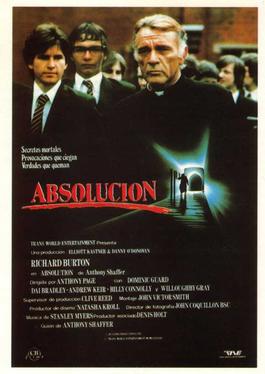
Mortal Sins: Absolution (1978, directed by Anthony Page)


Father Goddard (Richard Burton) is a stern and repressed teacher at a Catholic boys school.  Goddard is strangely obsessed with two of his students.  The intelligent and athletic Arthur Dyson (Dai Bradley) is a favorite of Goddard’s.  However, Goddard cannot stand Arthur’s best friend, Benji (Dominic Guard).  Benji wears a leg brace and takes a sarcastic attitude towards Goddard and the Catholic Church in general.  When Goddard finds out that Benji has been hanging out with a drifter named Blakely (Billy Connolly) and that Blakely is camping near the church, Goddard calls the police.  After the Blakely’s camp is destroyed and the drifter mysteriously vanishes, one of the boys goes to confession and tells the priest that he has murdered Blakely and hidden the body.  Is the boy telling the truth or is Goddard the victim of an increasingly complicated prank?

Written by Anthony Shaffer (who also wrote the classic The Wicker Man), Absolution is an extremely complicated mystery that sometimes seems like it’s trying to do too much at one time.  It starts out as a character study of an out-of-touch priest and then it becomes a coming of age story about Benji and his friendship with the free-thinking Blakely.  Then it turns into a murder mystery and a horror movie before finally settling on being an anti-Catholic tract.  The story does hold your interest because of the actors but that does not mean that it always makes sense.  The film’s central conspiracy is clever and complicated but also thoroughly implausible.

The man reason to watch the film is that Richard Burton gives one of his best performances as the self-loathing Father Goddard.  Burton had a famously mixed-record as a screen actor but Absolution makes good use of his tendency to ham it up.  Much of what motivates Goddard is left unclear in the movie, though it is subject of much speculation among his students.  Burton fills in the screenplay’s blanks with an intense performance as a man who has convinced himself that he has complete control when he actually has none at all.

Retro Game Review: Beyond: Two Souls (2013, Quantic Dream)


In between replaying Heavy Rain and Detroit: Become Human, I decided to go ahead and also replay Qunatic Dream’s Beyond: Two Souls.

In Beyond: Two Souls you play two characters who are linked together.  Jodie (Ellen Page) is a troubled young woman who, after being rejected by her family while still a child, is raised by paranormal researcher, Nathan Dawkins (Willem DaFoe).  You are also Aiden, a mysterious psychic force that Jodie can use to read minds and move objects.  Because of Jodie’s powers, the CIA wants them to work for her.  Because Jodie does not want to assassinate progressive world leaders just because the CIA wants them dead (remember, this is a French game), Jodie goes on the run.  The game itself is told out of chronological order, with the player going back and forth from Jodie’s childhood and Jodie’s present as a fugitive.  Like Heavy Rain and Detroit: Become Human, Beyond: Two Souls has multiple endings depending on what you do during the game.

Beyond: Two Souls is a weaker game than both Heavy Rain and Detroit: Become Human but, when I replayed it, I discovered that it was not as bad as I remembered.  Willem DaFoe and especially Ellen Page are amazing in the roles of Jodie and Nathan and the parts of the game that took place during Jodie’s childhood actually improved on a second playing.  (There’s nothing more fun than burning down the bully’s house.)  The nonlinear storytelling was still needlessly confusing.  Fortunately, there is an option to play the game’s chapters in chronological order.

The game’s flaws were still there, though.  The CIA stuff was heavy-handed but that is to be expected from Quantic Dream.  The main problem I had with the game is that the constant switching back and forth between Jodie and Aiden felt awkward.  You can switch between the two throughout the game and I kept pushing the wrong button and I would suddenly find myself stuck in Aiden form, even when there wasn’t anything for Aiden to do.  The game’s heavy reliance on quick time events also made me feel as if I didn’t have as much control over the narrative as I did in Heavy Rain and Detroit: Become Human.

Quantic Dream is one of my favorite video game developers because they are willing to experiment and take risks.  Sometimes, those risks pay off and sometimes they lead to an interesting failure, like Beyond: Two Souls.  Tomorrow, I’ll look at one of their experiment’s that worked.

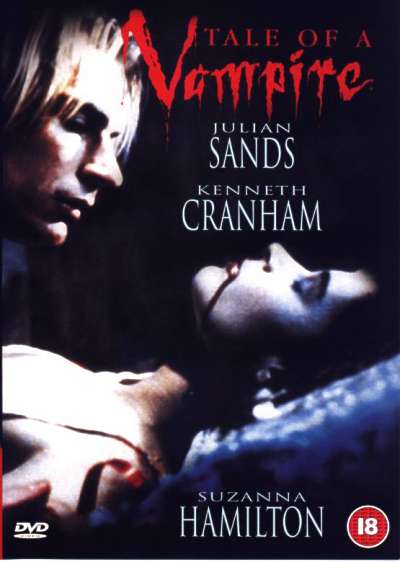
Bloody Art: Tale of the Vampire (1992, directed by Shimako Sato)


When Anne (Suzanna Hamilton) gets a job at the library, she is immediately attracted to the quiet and studious Alex (Julian Sands) and he to her.  Alex claims to be a scholar who is at the library to do research on “religious martyrs” but Anne cannot escape the feeling that she has known him before.  What Anne does not immediately realize is that Alex is a vampire and that she was set up with a job at the library through the machination of Edgar (Kenneth Cranham), another vampire who claims to be a doctor.  Once, Edgar and Alex were both in love with the same woman, the beautiful Virginia.  After circumstances led to Virginia being taken away from both men, Edgar dedicated the rest of his vampiric existence to making Alex miserable.  Anne, who looks exactly like Virginia and may even be the reincarnated version of her, is a pawn in Edgar’s latest scheme.  When Alex and Anne start to fall in love with each other, Edgar’s plan leads to tragedy.

Tale of the Vampire is an unjustly obscure vampire film from the early 90s.  It used to play frequently on late night Cinemax, where it was advertised as just being another sex-fueled horror film but actually, Tale of the Vampire is a moody and contemplative art film.  The focus is on Alex’s feelings of guilt and his fear of hurting Anne in the same way that Virginia was hurt while Anne has to decide how far she is willing to go to be with Alex.  All three of the main actors give good performances, with Cranham nearly stealing the show as someone whose actual identity will become obvious after repeat viewings.  Tale of the Vampire has never gotten the attention that it deserves and it’s not an easy film to find but I recommend it.

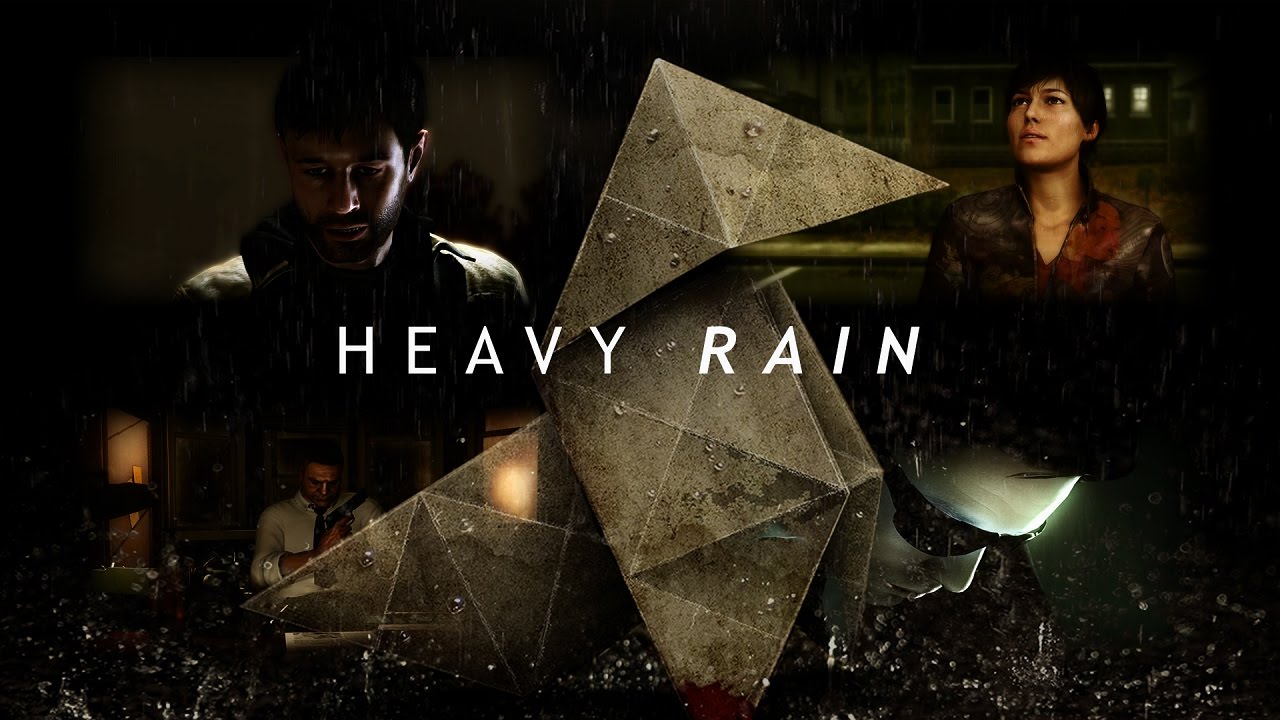
Retro Game Review: Heavy Rain (2010, Quantic Dream)


When it comes to Heavy Rain, it seems that there are two schools of thought.

Some people consider it to be one of the most important and ground-breaking games ever developed, a challenging mystery where nearly every decision that you make will effect what happens next in the game.  Unlike other games, there’s no easy do-overs in Heavy Rain.  If you get one of the four playable characters killed, the game will continue without them.  At a time when people had just started to get bored with games that featured a handful of endings, Heavy Rain revolutionized the entire concept with not just a good and a bad ending but instead with over 20 possible endings.  Your goal is to both discover the identity of the Origami Killer and also to save the life of little Shaun Mars before he drowns in a cage.  Fail and the chances are that the last thing the game will show you is an image of the flooded cage with Shaun nowhere to be seen.

Other people consider Heavy Rain to be a game where the main goal is to get Madison Paige naked as many times as possible.

Madison

Madison

Madison is the photojournalist who, suffering from insomnia, checks into a cheap motel and happens to meet Shaun’s father, Ethan.  Madison seems to spend the entire game either undressing or getting threatened by men who want her to undress.  If the player chooses, Madison and Ethan can make love in his hotel room.  The bra removal mini-game is actually one of the more challenging parts of Heavy Rain.  For the record, it is possible to play the game without Madison taking a shower, stripping for a club owner, having sex with Ethan, or even getting attacked by the crazy doctor who repeatedly tries to stab her in the crotch with a surgical tool.  It’s possible but I doubt many players have done so.

Ethan


How does Heavy Rain hold up after 9 years?  Surprisingly well.  The game has its flaws.  There’s the infamous and much parodied scene where Ethan searches for his son in a mall while calling out his name in a flat monotone.  Quantic Dream is a French company and, when you play the game, it is obvious that some of the voice actors were more comfortable with the English language than others.  But the the game’s rain-soaked and doom-heavy imagery all hold up well and the multiple endings make this a game that’s worthy of multiple replays.

Norman

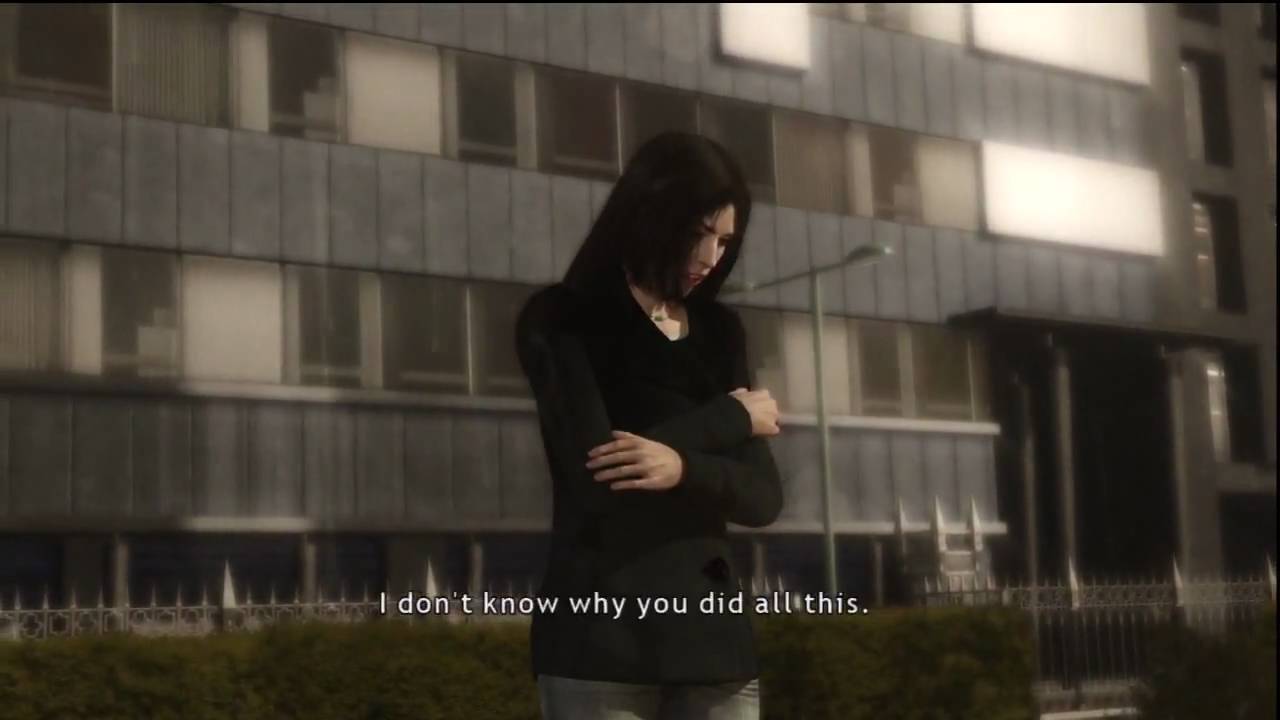
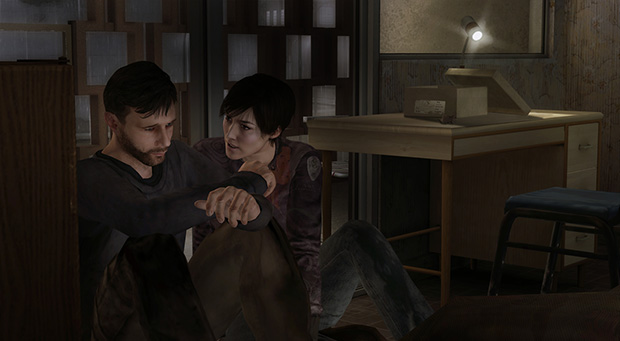
All four of the main characters are intriguing, even the much-criticized Madison Paige.  The best of them is Norman Jayden, the drug-addicted FBI agent who uses VR technology to solve his cases.  Unfortunately, the game also seems to be determined to kill Norman.  If you can make it to the end without Norman either dying or abandoning the case, you will have truly triumphed at Heavy Rain.  My only complaint is that Lauren Winter, the prostitute who joins forces with private eye Scott Shelby, wasn’t a playable character because she had one of the most interesting storylines.  If Lauren and Scott both somehow survive the game, you’ll get one of the best endings that Heavy Rain has to offer.

Lauren

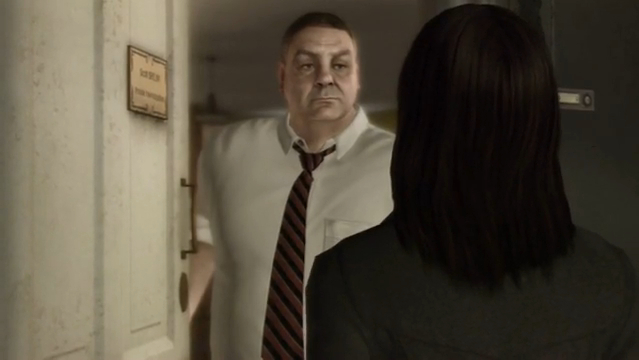
Scott Shelby, the private investigator, gets some of the game’s best scenes.  He is big and slow and he always seems to need to use his inhaler but he can still handle himself in a fight.  He gets the game’s big action set piece, where he takes out an entire army of armed guards in just a matter of minutes.  At the end of the scene, he also gets to make one of the game’s biggest decisions.  Do you do the “honorable” thing or do you leave a bad man to die?  Whichever decision you make, it is one of Heavy Rain‘s most satisfying moments.

Scott Shelby

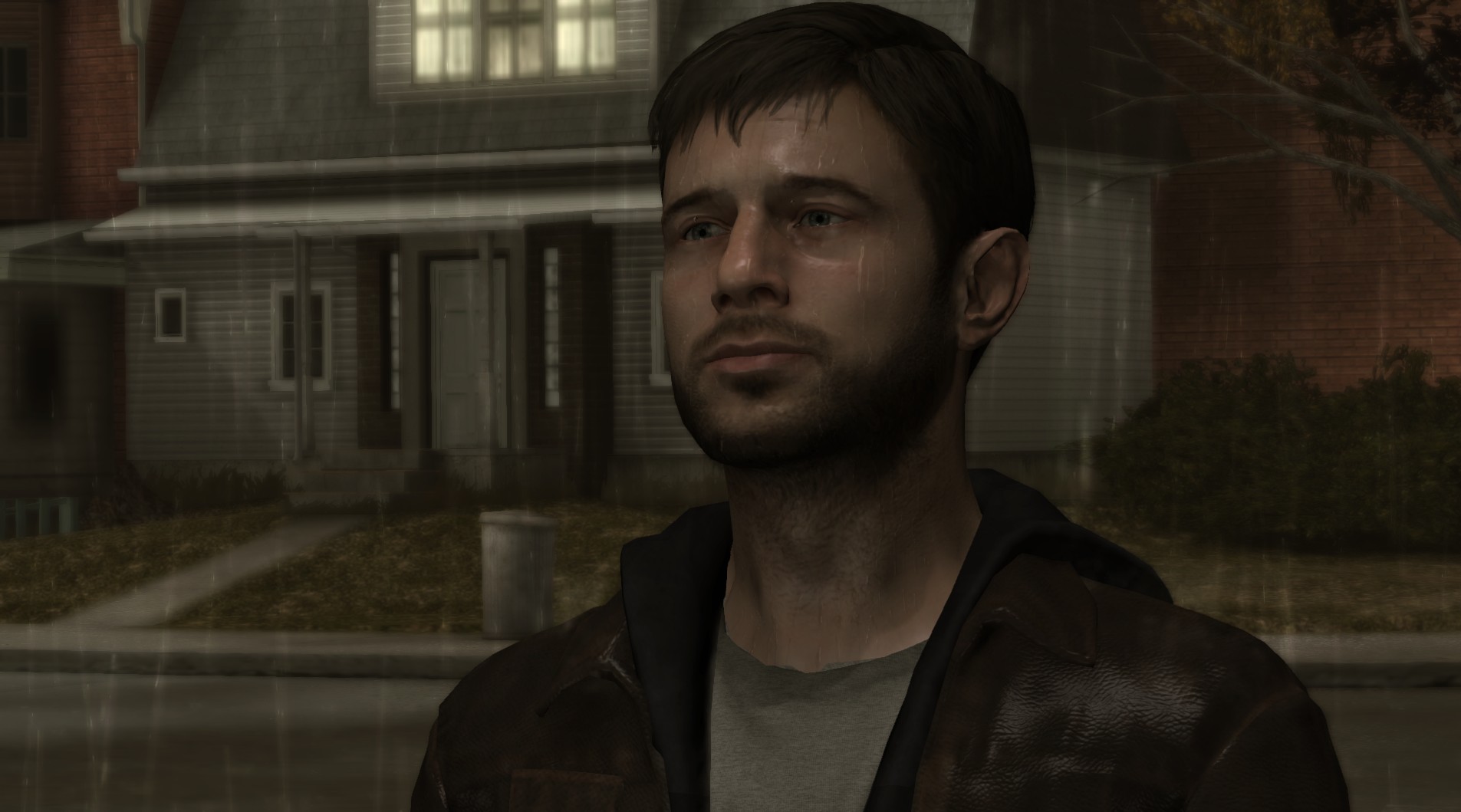
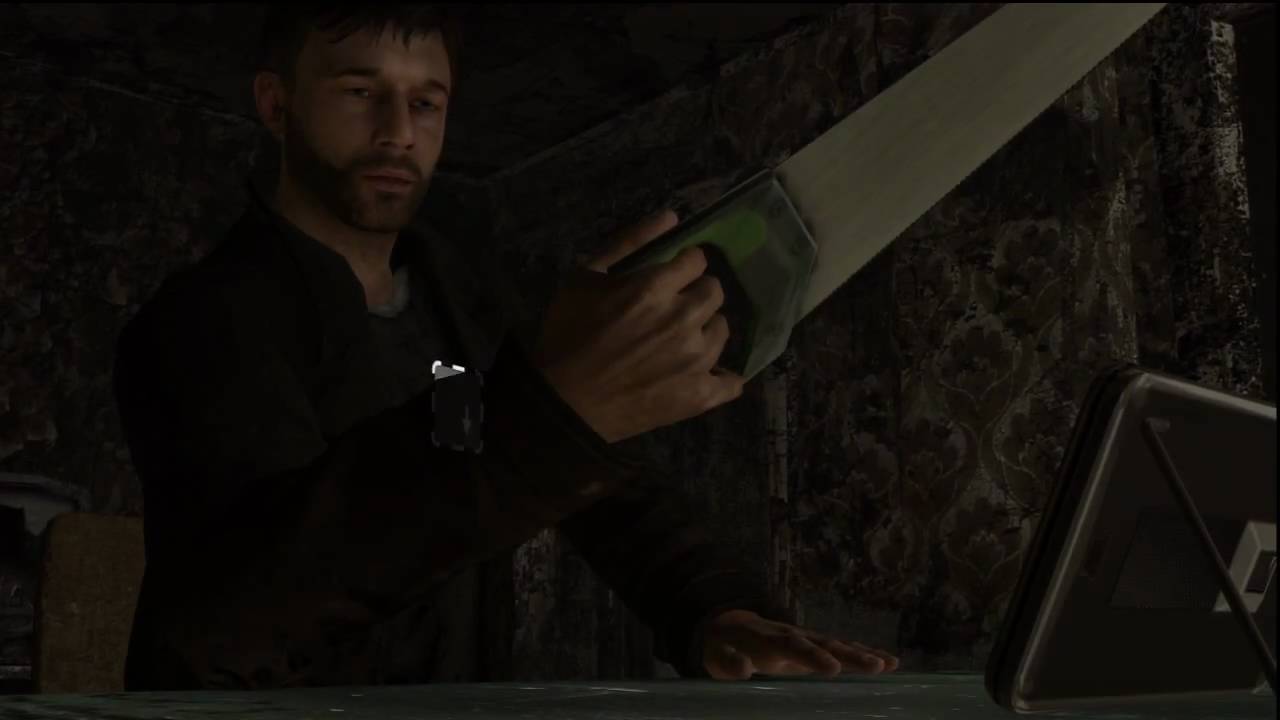
The majority of the game centers on Ethan, the father who has has to avoid the police while trying to save his son.  He is given a set of challenges by the Origami Killer, all designed to prove whether he’s worthy of being a father.  The bra-removal mini-game may be the most challenging part of Heavy Rain but the sawing off your own finger mini-game may be a close second.  A close third would have to be the diaper-changing mini-game.  It’s amazing how many different things you end up doing while trying to keep a little boy from drowning.  At the same time, I was as proud of myself for changing that diaper as I was for unsnapping that bra.  I was less proud about sawing off Ethan’s finger but it had to be done.

Ethan and saw

9 years after it was first released, Heavy Rain holds up better than I was expecting.  It’s flaws are still there and the plot holes become even more obvious with each time that you play it.  A frequent complaint that I’ve read about the game is that, in order for the mystery’s solution to make any sense, you have to be willing to accept that the Origami Killer would not only lie to other people but would also lie to himself.  The challenges that Ethan are put through are sometimes too reminiscent of Saw and even the rightly celebrated atmosphere sometimes leans too heavily on the obvious influence of Davids Fincher and Lynch.  (That Norman Jayden is based on Twin Peaks‘s Dale Cooper should be obvious to the most casual of viewers.)

Norman and Mad Jack

But, flaws and all, it’s impossible not to like this game or to appreciate the influence that it’s had on many of the games that have followed it.  Even it’s cheesiest moments are fun.  With the way the storyline branches out and changes depending on almost every decision that you make, this is a game that rewards frequent replays.  Each decision you make, you find yourself thinking, “What would have happened if I had done something else?”  Fortunately, with this game, you’ve got a chance to find out.  For that reason, Heavy Rain remains one of my favorites and a game that I’m looking forward to replaying soon.

Ethan, moping. Madison, helping.


Great Moments In Television History: Lonely Water (1973, directed by Jeff Grant)


From the end of World War II to 2007, the UK’s Central Office of Information used to produced Public Information Films (known as PIFs), which would often air on television during children’s programming.  These were the British equivalent of the “More You Know” PSAs that appear on American television.  A typical PIF would deal with a safety issue, warning children to be careful crossing the street or while visiting a farm or when thinking of sticking a fork into an electrical socket.

One of the most notorious PIFs was first broadcast in 1973 and aired for several years after that.  Lonely Water warned children about the danger of foolish behavior and risk-taking at lakes, ponds, and other pools of standing water.  Aimed at the 7-to-12 year-old age bracket, Lonely Water was narrated by Donald Pleasence and featured a black-clad figure watching as children foolishly dived into danger.  Even though the children ultimately do the right thing, it only leads to Pleasence declaring, “I’LL BE BACK!”

Lonely Water reportedly scarred a generation for life and led to several traumatized British children deciding to never learn how to swim at all.  In 2006, it was voted as the UK’s 4th-favorite PIF of all time.

Previous Great Moments In Television History

  1. Planet of the Apes The TV Series

See You Next Thursday: Bloody Wednesday (1987, directed by Mark G. Gilhuis)


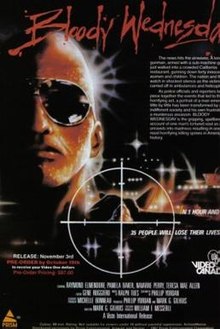
Harry (Raymond Elmendorf) is an auto mechanic with a problem.  He has lost his mind.  When he’s found staring at an engine that he’s taken apart and saying that he can’t put it all back together, he’s fired.  When he shows up in church naked, he’s institutionalized.  When his brother arranges for him to live in an abandoned and condemned Hollywood hotel (because that would be the perfect place for a man with deep mental issues to live), Harry loses it completely.  After playing Russian roulette with a street gang and interacting with a hotel staff that only exists in his mind, Harry goes crazy on one bloody Wednesday.

Bloody Wednesday is a prototypical mediocre white man with a gun movie.  Think of Taxi Driver, The Shining, The Joker, or even The King of Comedy, if all four of those films were terribly written, acted, and directed.  It starts out strong, with Elmendorf doing a convincing job of portraying Harry’s growing psychosis, but goes downhill once Harry moves into the hotel and starts to interact with the people in his head.  When he gets into argument and even fights with them, it doesn’t matter because we know that they don’t really exist outside of Harry’s imagination.  Even worse is the street gang that actually does exist but which decides that they’re going to spare Harry’s life because he challenges them to a game of Russian Roulette.  The gang leader, who looks like he’s trying to be Rambo for Halloween, is impressed by Harry’s self-destructive tendencies.  The film’s final scenes, with Harry going on a shooting rampage, are disturbing not because of anything that’s happened in the film leading up to that moment but instead, because it feels like even more of a reflection of America today than it probably did in 1987.

Interestingly, this film was written by Philip Yordan, who began his career as a writer in 1942, won multiple Oscars, and who was later revealed to have worked as a front for blacklisted screenwriters at the height of the McCarthy era.

Game Review: Night Trap (1992, Sega)


Moral panics about video games are nothing new.

Long before people were worrying about the violence in Grand Theft Auto or the nudity in Heavy Rain, they were holding Congressional hearings about a game called Night Trap. 

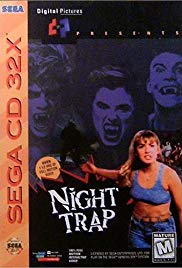
Night Trap was an interactive movie video game, one that was presented through full motion video at a time when that was still a big deal.  The player was a member of S.C.A.T., the Special Control Attack Team.  For 25 minutes, your job was to watch as blood-sucking creatures known as Augers attempted to launch a sneak attack on five girls at a slumber party.  Whenever an Auger approached a trap, the player had to click a button to capture the Auger.

It sounds pretty simple and it was.

It also sounds pretty stupid and again, it was.

Night Trap initially received some attention because it featured former Diff’rent Strokes star Dana Plato as one of the girls.  Plato played Kelly, who was actually an undercover member of S.C.A.T. and who searched for clues while you were busy trapping Augers.  Plato gave such an annoying performance that many gamers probably purposefully let a few Augers escape just so they could get the “bad” ending, with Kelly plunging into Hell.


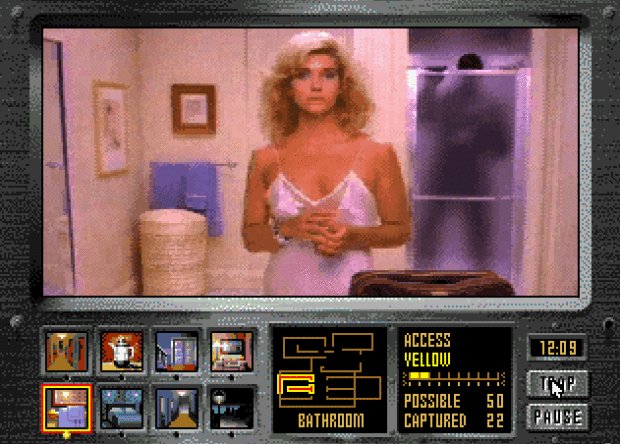
However, even more than Dana Plato running around in a sports bra, it was a scene of one of the girls being stalked while wearing a nightgown that truly worried the moral guardians of 1993.  At the Congressional hearings, Senators Joseph Lieberman and Herb Kohl spent hours reviewing this scene and demanding to know whether it had any socially redeeming qualities.  The hearings also focused on Mortal Kombat and the senators seemed to be far more offended by an actress in a nightgown than they were about Kano ripping his opponent’s still-beating heart out of his chest.

Night Trap seems tame today but, of course, it was also tame back in 1993.  One reason why the “nightgown scene” got so much attention at the hearings is because it was the only scene in the entire game that could be considered the least bit racy.  There’s no sex or nudity in Night Trap.  For the most part, there’s also not any violence.  Whatever actual blood sucking that happens in Night Trap happens off-camera.  Probably the most intense scenes in the game involved Dana Plato scolding you if you let too many of the girls get captured.  Since the only thing the player could do during the game was activate a trap by pushing a button at a certain moment, this game required not so much skill as just being able to keep track of time.  Now, If you enjoyed just pushing a button over and over again, Night Trap might have some appeal but otherwise, this is a dull and poorly acted game.  Not even as formidable a thespian as Dana Plato could liven things up.

Ironically, those Congressional hearings made Night Trap.  If people still remember the game today, it’s because of those hearings.  If you want to know how a boring game like Night Trap could get a special 25th anniversary edition, it was because of those hearings.  There’s nothing like a moral panic to boot sales.