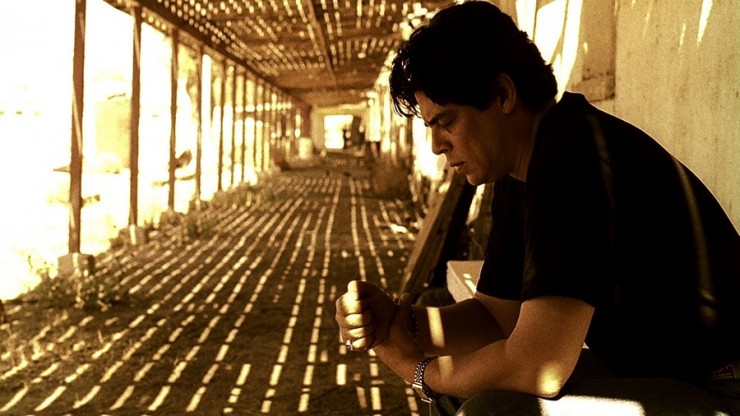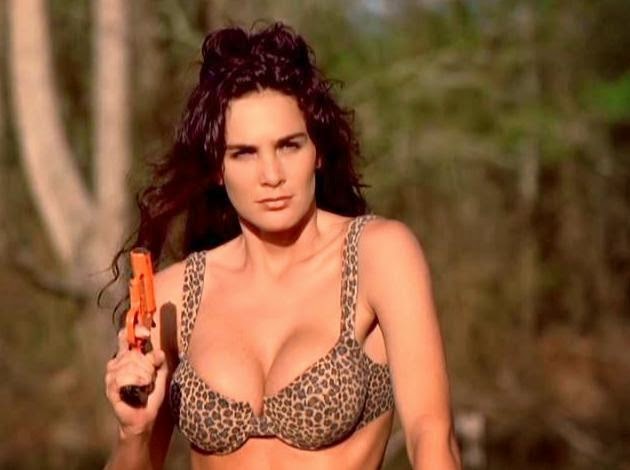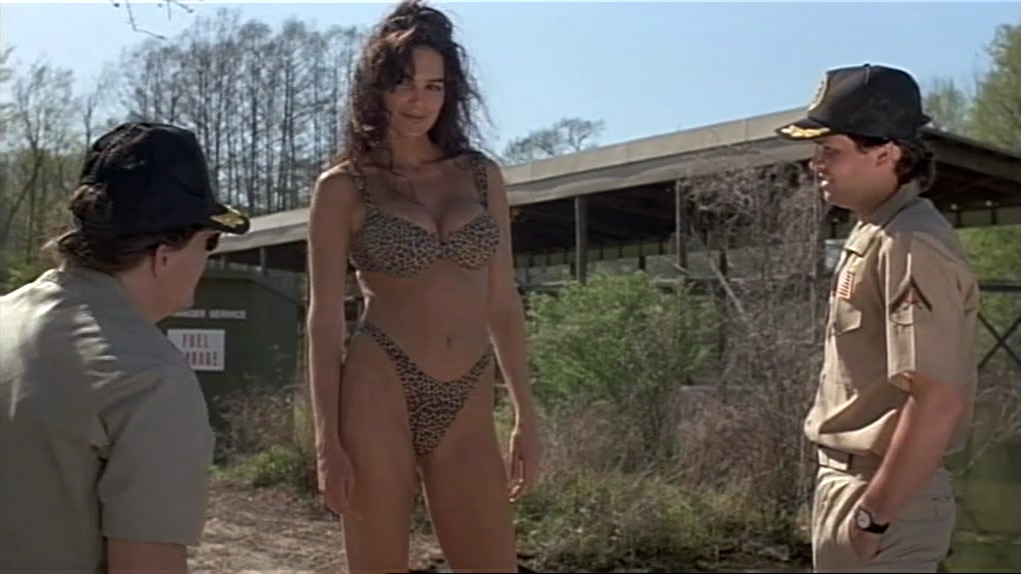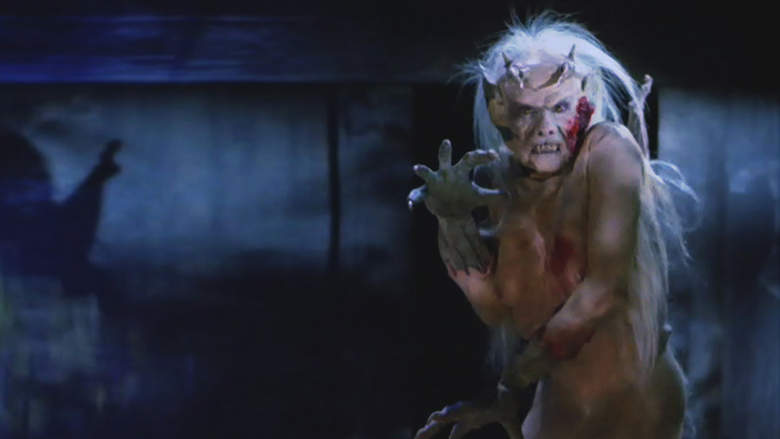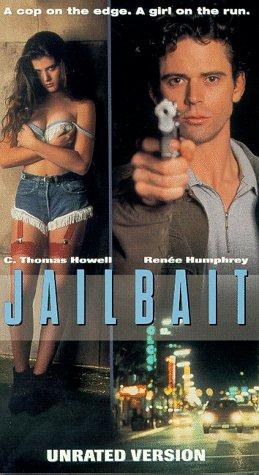
Cinemax Friday: Jailbait (1993, directed by Rafal Zielinski)


Jailbait takes place in Hollywood, the city of dreams.  It opens with one of those long treks down Hollywood Boulevard that should be familiar to anyone who has seen a direct-to-video 90s film.  Street performers try to cheat tourists out of their cash.  Hookers look for customers.  Pimps look for new girls.  Vice cops look over the scene and say, “I’m too old for shit.”  A Greyhound bus pulls into the station and the city’s newest inhabitant, 17 year-old Kyle Bradley (Renee Humphrey), steps off.

Kyle’s from Nebraska and she’s come to Los Angeles because she wants to be a professional dancer.  By the standards of Nebraska, Kyle may be streetwise but she soon discovers that nothing is easy in Hollywood.  She wants to find her half-sister, Merci (Krista Errickson) but Merci is nowhere to be found.  Soon, Kyle is living on the streets, stealing food to survive and faking a heroin addiction to get a bed at the local rehab center.

What Kyle doesn’t know is that Merci is a high-class hooker.  After one of her clients is murdered, Merci is framed for the crime.  Merci’s on the run, though she still finds time to sing in a band.  Heading up the investigation into the crime is Sergeant Lee Teffler (C. Thomas Howell).  Teffler thinks that Merci’s innocent and believes that the murder is connected to a human trafficking ring that is run by his childhood friend, Roman (David Laboisa).  When he meets Kyle, he takes her back to his apartment to keep her safe. Teffler swears that nothing can happen between them because she’s only seventeen.  Kyle says that age shouldn’t matter and, because this is a 90s Cinemax film, he decides that she has a point.

In the late 80s and 90s, there were a countless number of films about innocent girls getting corrupted as soon as they got off the bus in Hollywood and Jailbait is certainly one of them.  Jailbait, however, is one of the better examples of the genre because, from the start, Kyle is tougher than the naive, aspiring starlets who usually populated these films.  Though Hollywood turns out to be an even harsher place than she was expecting, Kyle still comes across like she can take care of herself.  That she’s not portrayed as being a wide-eyed or easily manipulated innocent makes Kyle’s relationship with Teffler feel less problematic than it would be otherwise.  All of the characters, not just Kyle, are written and performed with more depth than you would normally expect to find in a film like this.  Teffler is not just a renegade cop and Roman is not just an evil pimp.  Because of their former friendship, they are portrayed as being two sides of the same coin.

It also helps that Jailbait is better acted than the standard straight-to-video film, with Renee Humphrey and Krista Errickson bringing a lot of depth to their roles.  Even C. Thomas Howell, who often seemed to be sleep walking in his 90s films, is effective as the conflicted Teffler.  Visually, Jailbait does a good job of capturing the glitzy grime of Hollywood.  Though it may not be as well-know, Jailbait is a worthy companion to films such as Angel and Vice Squad.
4 Shots From 4 Films: Happy Birthday, Donald Cammell!


4 Shots From 4 Films is just what it says it is, 4 shots from 4 of our favorite films. As opposed to the reviews and recaps that we usually post, 4 Shots From 4 Films lets the visuals do the talking!

86 years ago, Donald Cammell was born in Edinburgh, Scotland.  The son of a friend and biographer of the infamous Aleister Crowley, Cammell grew up surrounded by bohemians, artists, and magicians.  After getting his start as a painter and establishing himself as a mainstay of “swinging London,” Cammell pursued a career as a screenwriter and director.

Cammell only completed a total of four films, all of which walked the very thin line between brilliance and pretension.  All four of them have since developed strong cult following but were considered to be financial and critical disappointments when first released.  As a result, Cammell had a difficult time getting anyone to back the majority of his projects.  Cammell also had the misfortune to get involved with Marlon Brando during the latter’s mercurial period.  Brando commissioned Cammell to write and direct at least two films for him before losing interest just before shooting was set to begin.  Frustrated with both his life and his career, Cammell shot himself in 1996.  He reportedly survived for 45-minutes after shooting himself and he spent that time recording his thoughts on life and dying.  Though Cammell died in relative obscurity, his films have since been rediscovered and reevaluated.  His legacy lives on.

4 Shots From 4 Films

Performance (1970, directed by Donald Cammell and Nicolas Roeg)

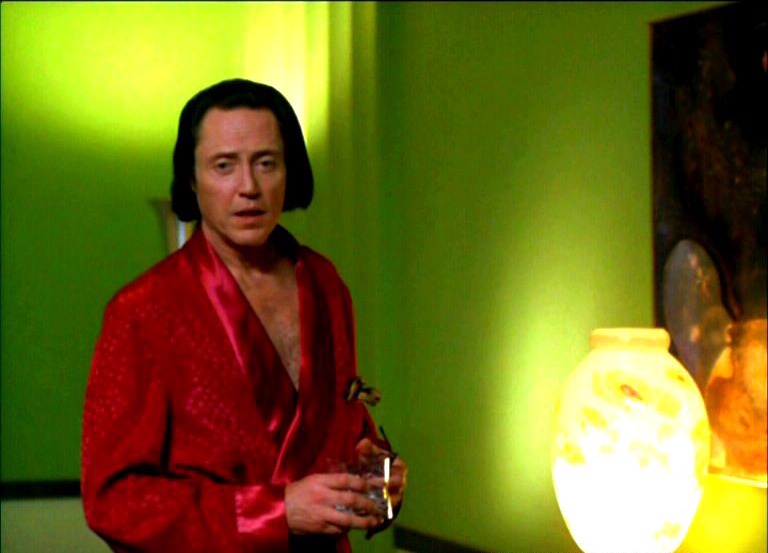
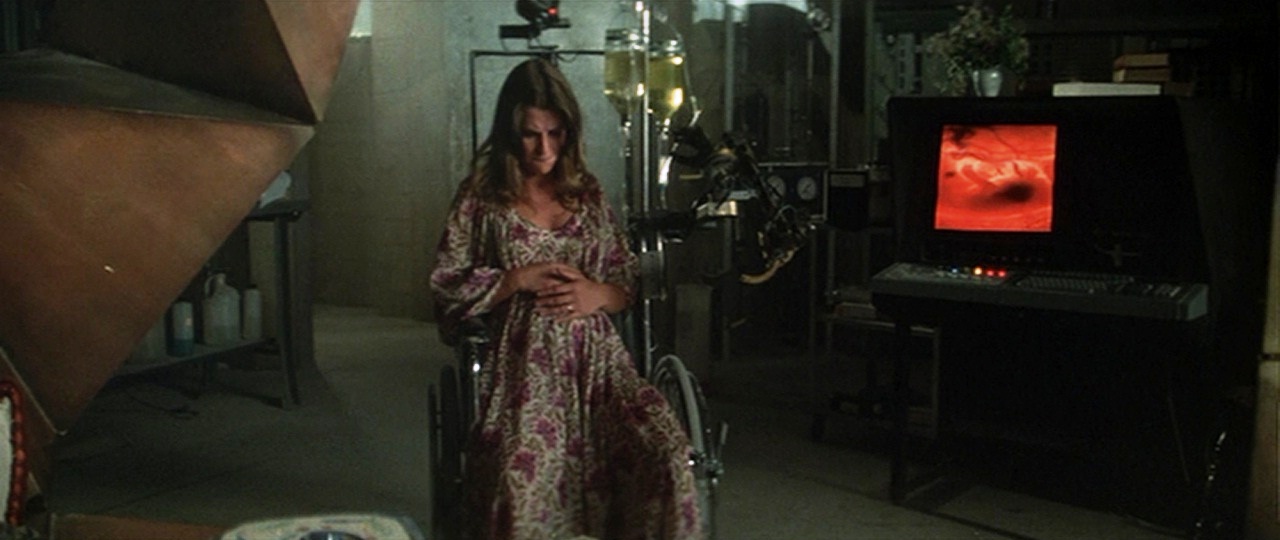
Demon Seed (1977, directed by Donald Cammell)

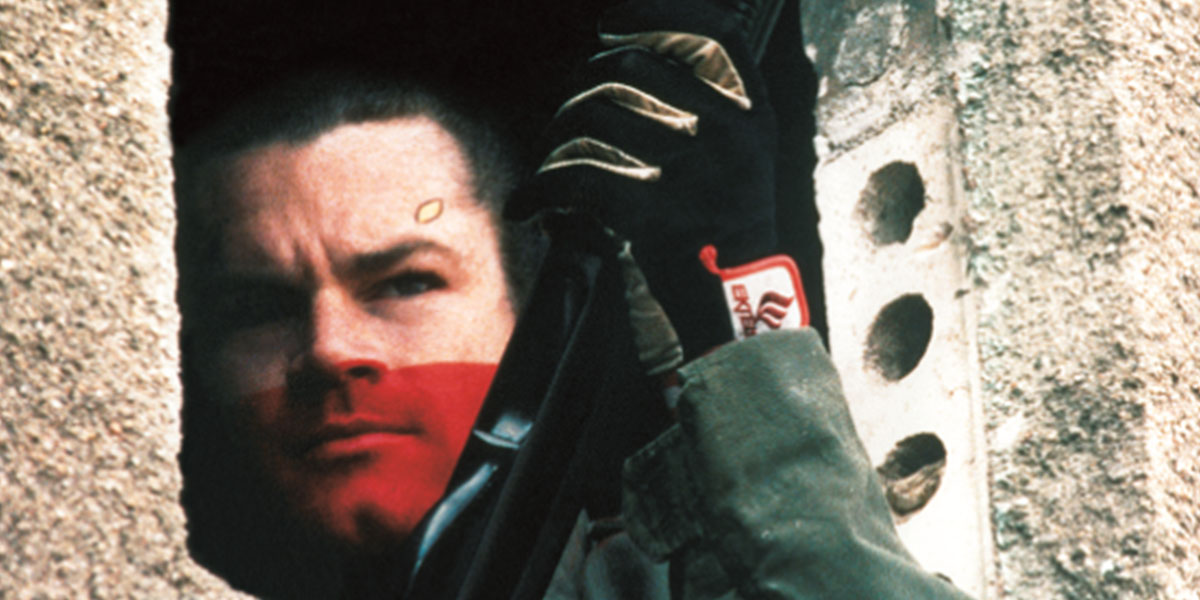
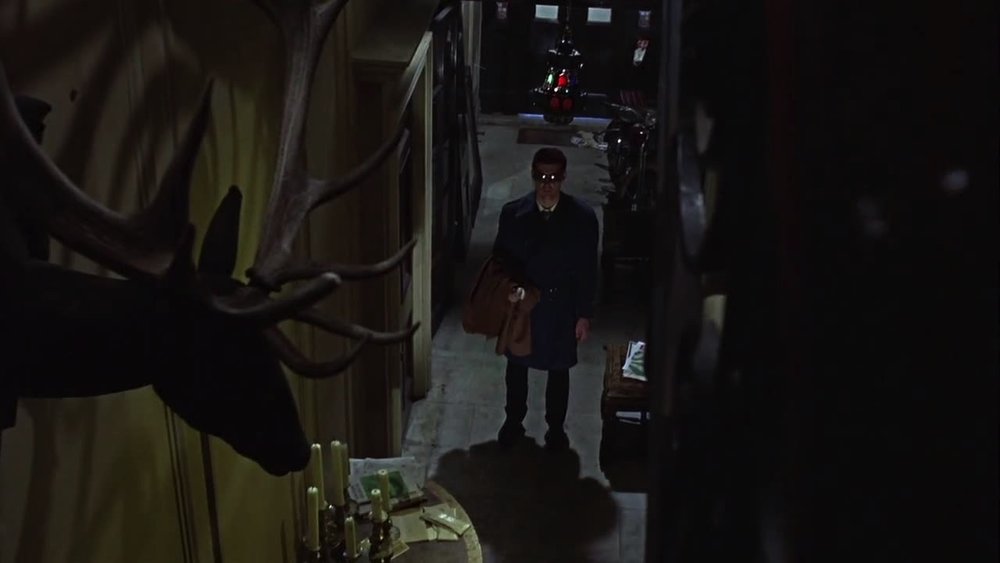
White of the Eye (1987, directed by Donald Cammell)

Wild Side (1995, directed by Donald Cammell)


Music Video of the Day: Man on the Moon by R.E.M. (1992, directed by Peter Care)


71 years ago today, Andy Kaufman was born in New York City.

The self-described “song and dance man” often expressed his displeasure at being called a “comic,” but it can not be denied that he changed the face of American comedy.  As Kaufman once put it, “I am not a comic, I have never told a joke. … The comedian’s promise is that he will go out there and make you laugh with him… My only promise is that I will try to entertain you as best I can.”  Kaufman’s brand of performance art was featured on both Saturday Night Live and Taxi.  When Kaufman died of lung cancer at the young age of 35, many refused to believe that he had died and instead said that, like Kaufman’s wrestling career and his Tony Clifford persona, it was just another elaborate hoax.  To this day, there are Kaufman truthers out there who are waiting for Andy to come out of hiding.

R.E.M.’s Michael Stipe was one of those who spent his teenage years watching Andy Kaufman on Saturday Night LiveMan on the Moon was Stipe’s tribute to Andy Kaufman and the song is full of references to Kaufman’s life.  Kaufman was famed for Elvis impersonations and Stipe even attempts to imitate the King himself when sings, “Hey, baby, are we losing touch?”  Stipe has also said that the song was meant to be a tribute to Kurt Cobain and that the refrain of “yeah yeah yeah” was Stipe’s way of paying homage to Cobain’s frequent use of the word in his lyrics.

The video was directed over three days in Antelope Valley in California.  The video opens with Stipe in the desert, catching a ride from Bill Berry and eventually reaching a truck stop where he and the other customers watch Andy Kaufman perform on TV.

Happy birthday, Andy, wherever you are!

Escape From New York (1981, directed by John Carpenter)


What’s your favorite John Carpenter film?

Halloween is an obvious choice.  It’s probably the film that John Carpenter is best-known for.  The Thing and Assault on Precinct 13 are two other popular choices.  Libertarians and anarchists have embraced They Live as a sacred text.  In The Mouth of Madness is one of the few films to capture the feel of a classic H.P. Lovecraft story.  Christine is one of the best of the Stephen King adaptations.  My techphobic father recently purchased a Blu-ray player just so he could watch Big Trouble In Little China whenever he felt like it.

For me, though, my favorite will always be Escape From New York.

Everything about this movie, from the premise to the execution to the darkly funny ending, is pure brilliance.  For those who have been living off the grid for the last 40 years, Escape From New York takes place in what was, at the time of the film’s initial release, the near future.  Due to a 400% increase in crime, Manhattan has been turned into a floating prison.  A wall has been built around the island.  The bridges are covered in mines.  All of the residents are prisoners who have been sentenced to a life term and the Chock Full O’Nuts is now literally full of nuts.

There’s a new resident of New York City.  He’s the President (Donald Pleasence!) and he was supposed to soon deliver a classified cassette tape to the Soviets.  Instead, with the world on the verge of war, Air Force One has crashed in Manhattan and the Duke of New York (Isaac Hayes!!) is holding him hostage.  Bob Hauk (Lee Van Cleef!!!) recruits notorious criminal Snake Plisskin (Kurt Russell!!!!) to sneak into the prison and retrieve the cassette and save the President, by any means necessary.  If Snake succeeds, he’ll get a pardon.  If Snake fails, he’ll die due to the microexplosives that have been injected into his system.

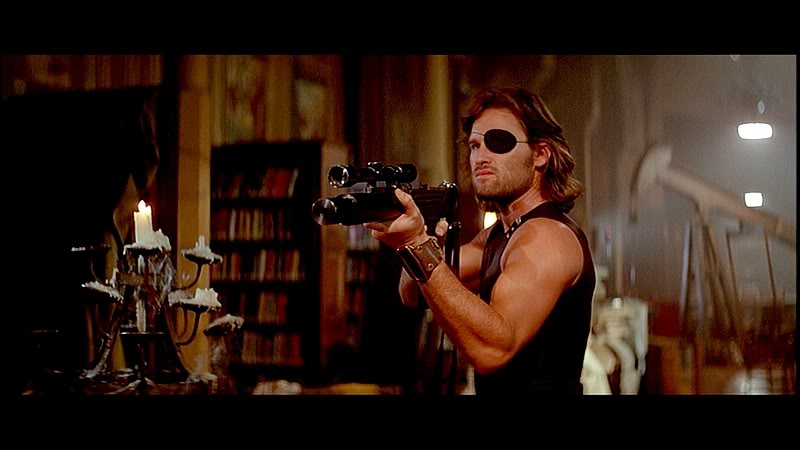
How unbelievably cool is Kurt Russell as Snake Plisskin?  Before fanfic was even known by that name, people were writing stories about Snake Plisskin’s past and how he lost his eye.  Delivering his lines in a Clint Eastwood-style rasp, Kurt Russell gives one of the best action hero performances of all time.  (Snake was the role that transformed Russell from being a clean-cut former Disney child star to being a cult film icon.)  Everything that Snake says is quotable and, even with tiny explosives circulating through his blood, Snake never loses his cool.  Sometimes, it doesn’t seem like Snake cares whether he lives or dies and that’s what makes Snake such a strong hero.  He’s wiling to take the risks that no one else would.  If he saves the President and the world, cool.  If he doesn’t, neither was probably worth saving anyways.  At the end of the film, Snake reveals that there are things that he does care about.  If you don’t appreciate the people who sacrificed their lives for you, don’t expect Snake to do you any favors.

Snake gets some help from a rogue’s gallery of familiar faces, all of whom have their own reasons for trying to save the President from the Duke.  Harry Dean Stanton is Brain while Adrienne Barbeau is Maggie.  Brain is the smartest man in Manhattan and Maggie’s good with a gun and it’s too bad that we never got a prequel about how they met.  My favorite of Escape from New York‘s supporting cast is Ernest Borgnine as Cabbie, who is the perfect New York taxi driver and whose taste in music plays off in an unexpectedly satisfying way.

Escape From New York is John Carpenter at his best, an exciting race against time full of memorable characters and thrilling action.  Whenever I go to New York and I cross over a bridge into Manhattan, I think about Snake, Cabbie, and the gang driving through a minefield.  Everyone who meets Snake says “I thought you were dead,” but we know better.  Snake Plisskin will never die and neither will my love for Escape From New York.

The Biggest Bundle Of Them All (1968, directed by Ken Annakin)


Harry Price (Robert Wagner) is a small-time tough guy with big plans.  He and his gang of accomplices fly over to Italy and plot to kidnap Cesare Celli (Vittorio De Sica), a retired mafia don who is reputed to be worth millions.  However, after snatching Celli from a wedding, Harry discovers that Celli is actually flat broke.  Trying to be helpful, Celli suggests that Harry call up the local gangsters and demand that they pay a ransom for Celli’s release.  When everyone refuses to pay, Celli comes up with another plan.  Celli takes over Harry’s gang and, with the help of Celli’s old friend, Prof. Samuels (Edward G. Robinson), plots to steal $5,000,000 worth of platinum ingots from a train.

Complicating matters is that Harry and his gang are not exactly master criminals.  Benny (Godfrey Cambridge) is a violinist who has moral objections to carrying a gun and who also refuses to cross a picket line, even in the course of a robbery.  (“I’m a union man!”)  Tozzi (Francesco Mule) is more interested in having a good dinner than pulling off the perfect heist.  Davey (Davy Kaye) is short, which is apparently a problem for some reason.  Finally, Harry’s girlfriend, Juliana (Raquel Welch), is more interested in dancing than in committing crimes.  Still, Celli is determined to use them to pull off the heist of the century and, even more importantly, to help prove that this old criminal has still got what it takes.

The Biggest Bundle of Them All was an attempt at a wacky heist film.  Unfortunately, at the time that the film was made, Robert Wagner and “wacky” didn’t belong anywhere near each other.  Wagner stiffly delivers lines like, “I’ve had it, baby.  Can you dig it?” and looks thoroughly out-of-place.  Godfrey Cambridge and Edward G. Robinson have a few funny scenes but both Kaye and Mule are wasted in one-note role while De Sica looks like he’s trying to figure out how he went from Bicycle Thieves to this.  Everyone in the movie just goes through the motions.  Even while they’re robbing the train, the cast seems to be indifferent.

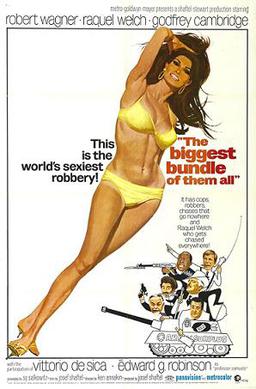
It almost doesn’t matter, though, because this is a Raquel Welch film.  Welch doesn’t have much of a character to play but she looks amazing while doing it and that really is the appeal of any film that Welch made in the late 60s and early 70s.  Welch spends a good deal of the film in a bikini and is undeniably sexy, particularly in the scene where Wagner sends her to seduce De Sica.  She also gets to share a dance with Edward G. Robinson, which is such a goofy and fun scene that it’s almost worth the price of admission.  (Regardless of what fun they may have been having on-screen, Robert Wagner later wrote in his autobiography that, off-screen, Robinson grew so annoyed with Welch’s chronic lateness on the set that he yelled at her until she was in tears.)

Even Raquel Welch in a bikini can only carry a film so far and The Biggest Bundle of Them All is ultimately too disjointed to work.  Director Ken Annakin tries to recreate the same sort of frantic comedy that was at the heart of his previous film, Those Magnificent Men in Their Flying Machines, but the end result falls flatter than 5 million dollars worth of platinum ingots sliding out of an airplane.

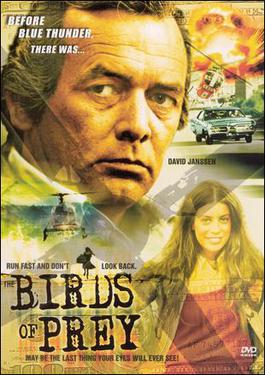
Birds of Prey (1973, directed by William A. Graham)


When three disgruntled Vietnam vets rob Zion’s Bank in downtown Salt Lake City and take a bank teller (Elayne Heilveil) hostage, they’re spotted by traffic reporter Harry Walker (David Janssen).  A World War II vet who is going through a mid-life crisis and who feels unappreciated by the country that he risked his life to defend, Harry chases after the robbers in his helicopter.  With Harry’s help, the police corner the robbers on the roof of a parking garage.

That’s when they discover that the robbers have a helicopter of their own!  After abandoning their car, the robbers and their hostage take off in their helicopter, heading into the Oquirrh Mountains.  Though he’s running low on fuel and has been ordered to back off by Police Captain Jim McAndrew (Ralph Meeker), Harry continues to pursue the other helicopter into the wilderness.

A made-for-TV movie from 1973, Birds of Prey is a chase movie, with the usual cars replaced by helicopters.  What makes this movie so exciting is that it was directed in the days before CGI so, when you watch the two helicopters dangerously pursuing each other over Salt Lake City and taking daredevil risk over the mountains of Utah, you’re watching the real thing.  David Janssen was a trained pilot who actually was flying the helicopter and doing his own stunts for the majority of the film.  When the two helicopters nearly collide, you’re aware that you’re seeing a real near-miss, one that could have gone tragically wrong if not for the talents of the men piloting those helicopters.

Despite all of the action in the air, the film does occasionally touch ground.  Harry and McAndrew talk about why some vets can move on and others can’t.  Harry briefly lands on the freeway and gets some help from a passing motorist.  Finally, Harry gets to know the kidnapped teller, who has never been outside of Salt Lake City and who shares Harry’s love of old movies.  David Janssen was the go-to guy for gruff and grizzled heroes in 1970s made-for-TV movies and he’s pretty good as Harry.  But the real stars of the film are the helicopters and the still-impressive aerial footage of them chasing each other above Utah.

Unfortunately, I have never seen a good print of Birds of Prey.  Even the version on Amazon Prime is grainy, scratchy, and sometimes washed-out.  (It also features a promo for a television station in Phoenix, suggesting that it was transferred straight from a VHS tape.)  I hope that, at some point in the near future, someone will restore this minor chase classic.

4 Shots From 4 Films: Happy Birthday, Steven Soderbergh!


4 Shots From 4 Films is just what it says it is, 4 shots from 4 of our favorite films. As opposed to the reviews and recaps that we usually post, 4 Shots From 4 Films lets the visuals do the talking.

Today, we wish a happy birthday to one the early pioneers of independent film, Steven Soderbergh.  Soderbergh was 26 years old in 1989, when he became the youngest director to ever win the Palme d’Or at Cannes.  Soderbergh went on to become one of the busiest and most interesting director in Hollywood, working in all genres and inspiring filmmakers the world over.

4 Shots From 4 Films

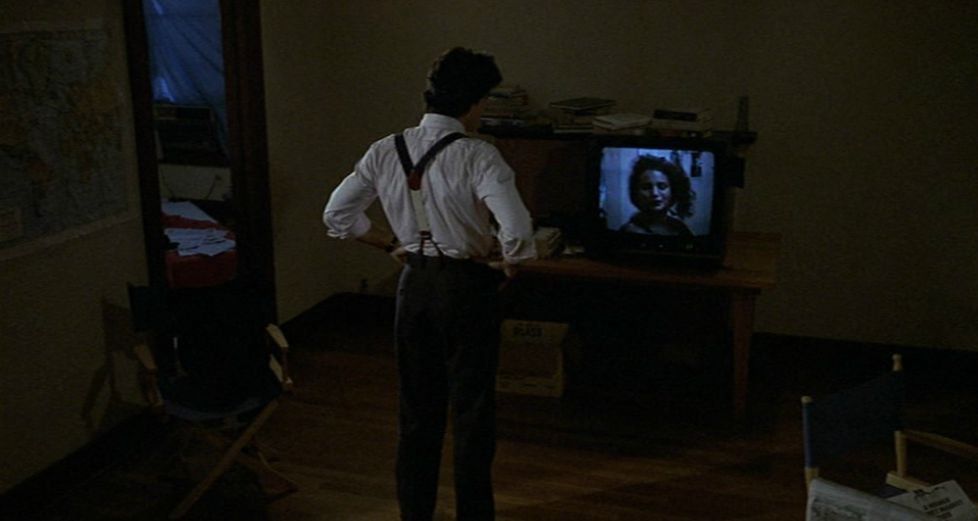
sex, lies, and videotape (1989, directed by Steven Soderbergh)

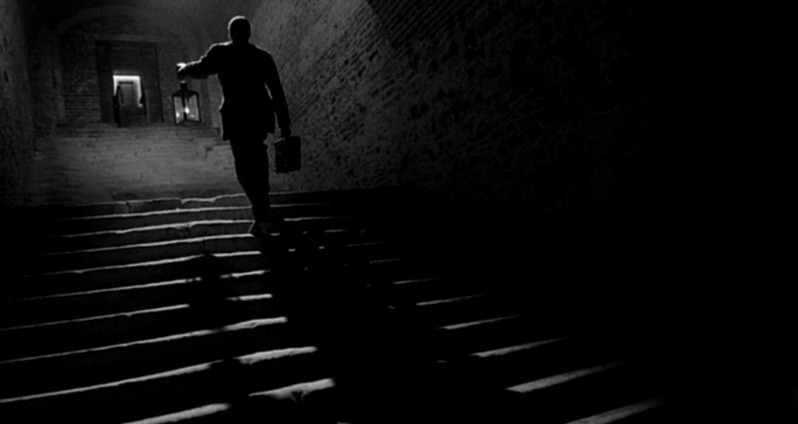
Kafka (1991, directed by Steven Soderbergh)

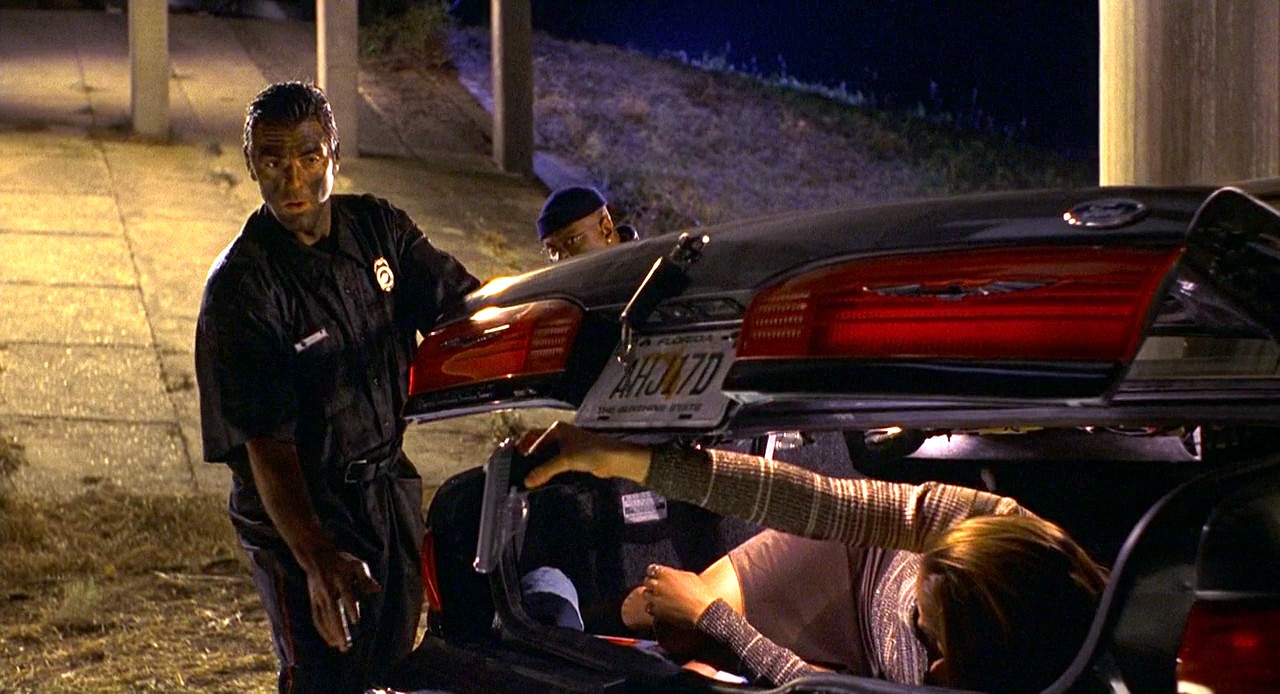
Out of Sight (1998, directed by Steven Soderbergh)

Traffic (2000, directed by Steven Soderbergh)


Music Video Of The Day: First We Take Manhattan by Leonard Cohen (1988, directed by Dominique Isserman)


“I felt for sometime that the motivating energy, or the captivating energy, or the engrossing energy available to us today is the energy coming from the extremes. That’s why we have Malcolm X. And somehow it’s only these extremist positions that can compel our attention. And I find in my own mind that I have to resist these extremist positions when I find myself drifting into a mystical fascism in regards to myself.

So this song, ‘First We Take Manhattan,’ what is it? Is he serious? And who is we? And what is this constituency that he’s addressing? Well, it’s that constituency that shares this sense of titillation with extremist positions. I’d rather do that with an appetite for extremism than blow up a bus full of schoolchildren.”

— Leonard Cohen, on the meaning of First We Take Manhattan

Well, that clears everything right up, doesn’t it?

Because his music was embraced by the counterculture and the folksies, Leonard Cohen has often be mischaracterized as some sort of hippie troubadour.  In reality, his lyrics were frequently dark and threatening, which is one reason that a whole generation of listeners first discovered Cohen as a result of several of his song being included on the Natural Born Killers soundtrack.  In First We Take Manhattan, he sings from the point of view of someone who is ready to give up music and love and go to war.  “First we take Manhattan, then we take Berlin.”

Though Cohen wrote this song, it was first recorded by Jennifer Warnes in 1986.  Cohen would not release his own version until two years later, when it was the first track on his album, I’m Your Man.  The music video for Cohen’s version was directed by French photographer Dominique Isserman, who was in a romantic relationship with Cohen at the time.  The video features Cohen on the beach, with the ocean standing in the way of his promise to take Manhattan and then Berlin.

In 2009, Cohen’s version of the song later played over the end credits of Watchmen.

Enjoy!

4 Shots From 4 Films: Rest In Peace, Julie Strain


I just saw that it’s been announced that Julie Strain died yesterday.  She was only 57 years old but had been in poor health for a while.

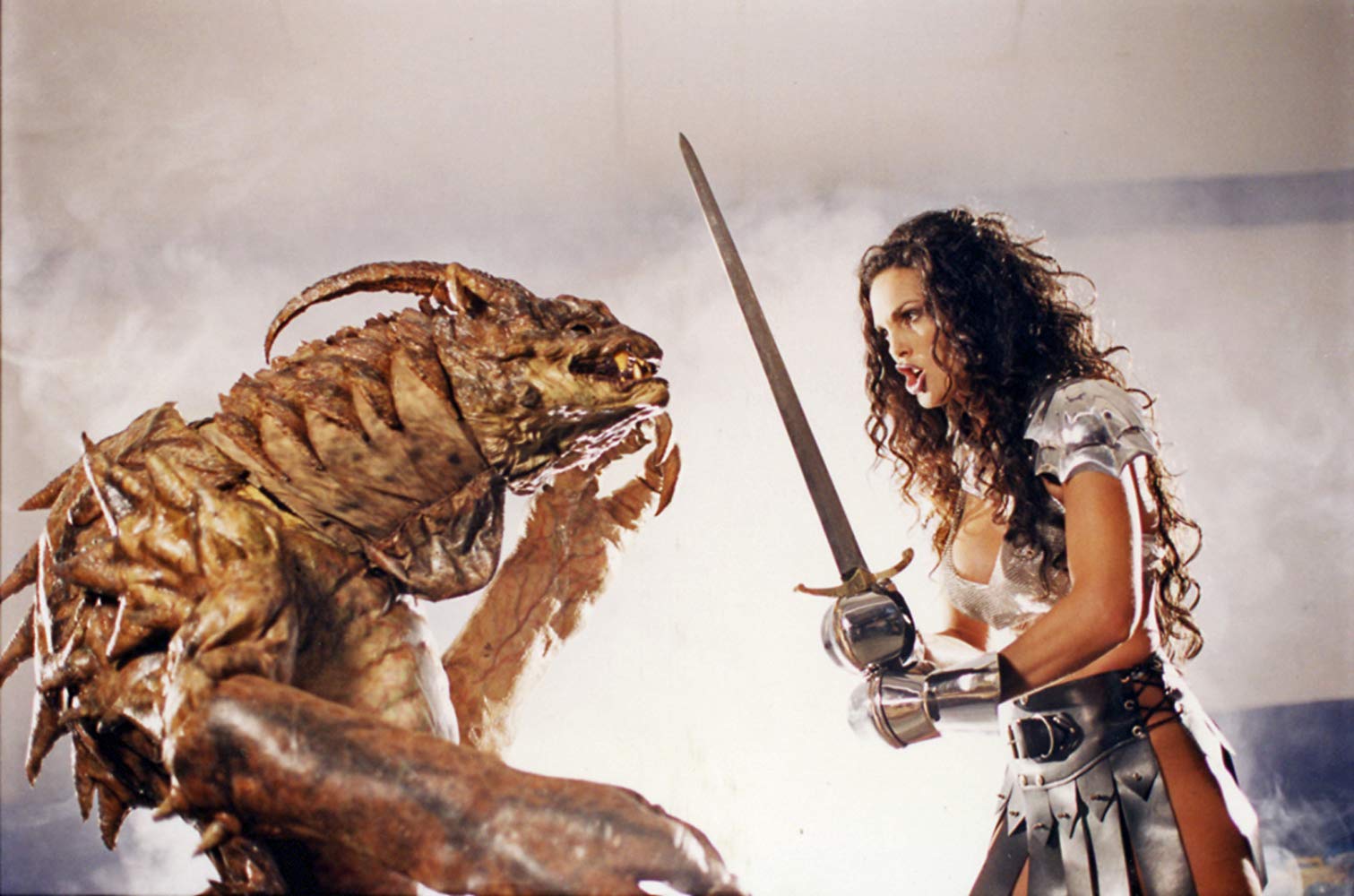
Julie Strain was known as the Queen of the B-Movies and anyone who grew up watching late night Cinemax in the 90s knows that she deserved the title.  She was 6’1 and her natural athleticism made her a natural for playing strong women who knew how to throw a punch, swing a sword, or shoot a gun.  She always seemed to be having as much fun appearing in the movies as we were having watching them.  It was said that Ginger Rogers could do everything that Fred Astaire did while wearing heels.  Julie Strain could do everything Steven Seagal did while wearing a bikini and she could actually act as well!

Rest in peace, Julie Strain.  Thank you for being good even when the movies were sometimes bad.

4 Shots From 4 Films

Enemy Gold (1993, directed by Andy Sidaris)

The Unnamable II: The Statement of Randolph Carter (1993, directed by Jean-Paul Ouellette)

Bikini Hotel (1997, directed by Jeff Frey)

Guns of El Chupacabra (1997, directed by Donald G. Jackson)


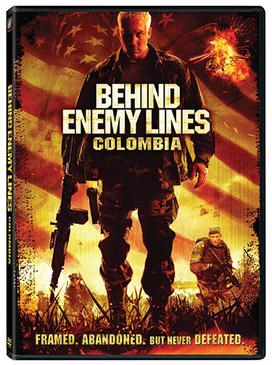
Behind Enemy Lines: Colombia (2009, directed by Tim Matheson)


After 40 years of war, the Colombian military and FARC, the cocaine-funded guerrilla insurgency, are finally meeting to discuss peace.  A group of Navy SEALS, led by Lt. Macklin (Joe Manganiello), have been sent into the Colombian jungle to secretly keep an eye on the peace talks and make sure that things don’t get out of hand.  However, as soon as they arrive, the conference is attacked by yet another group of terrorists.  Led by Alvaro Cardona (Yancy Arias), this third group kills the leaders of the Colombian military and FARC and attempts to frame the entire attack on the SEALS!  Now, Macklin and Carter Holt (WWE superstar Mr. Kennedy) are trapped behind enemy lines.  With the Colombian military, FARC, and Cardona after them and the CIA disavowing any knowledge of their existence, the two SEALS have to rescue a captured comrade and prove their innocence before all of South America plunges into war.

This film, which features Keith David recreating his commanding officer role from Behind Enemy Lines II: Axis of Evil, is a standard action movie.  Some of the action scenes are exciting but all too often, BEL: Colombia is done in by its own low budget.  This is especially obvious when the SEALS are parachuting into the jungle and the cheap green screen effects make the movie look like an old 80s tv show, with the SEALS clumsily superimposed over a picture of the sky.  Watching that scene, I wouldn’t have been surprised if the original Magnum P.I. or Simon and Simon suddenly appeared as a member of the team.  Even Jessica Fletcher wouldn’t have been out of place.

On the plus side, the acting actually isn’t bad and Cardona has a little more depth than the usual action movie villain. This is really not the type of film that you would expect to be directed by Otter from Animal House but Tim Matheson doesn’t do a bad job.  Again, the low budget hurts but he gets some decent performances and he shows that he can adequately handle an action scene.   BEL: Colombia isn’t terrible but it’s still not hard to feel that it would have been better if it had been made in 1988 by Chuck Norris and Menahem Golan.