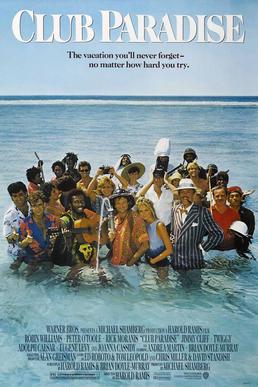
Club Paradise (1986, directed by Harold Ramis)


I think I was nine or ten years old when I first saw Club Paradise on HBO.  I remember thinking it was pretty funny.

I recently rewatched Club Paradise and I discovered that ten year old me had terrible taste in movies.

Robin Williams plays Jack Moniker, a Chicago fireman who gets blown out of a building while rescuing a dog.  Living off of his disability payments, he retires to the island of St. Nicholas, which is basically Jamaica but with less weed.  Jack and reggae musician Ernest Reed (Jimmy Cliff) open up their own Club Med-style resort, Club Paradise.  Jack doesn’t know much about the resort business but he does know how to put together a good brochure.  Almost the entire cast of SCTV shows up at Club Paradise, looking for a tropical vacation.  Things quickly go wrong because Jack doesn’t know how to run a resort and there’s also an evil developer (played by Brian Doyle-Murray) who wants Club Paradise to fail so that he can get the land.

Club Paradise has got a huge and impressive cast, the majority of whom probably signed on because they were looking forward to a paid Caribbean vacation.  Peter O’Toole plays the British-appointed governor of St. Nicholas.  Twiggy plays Jack’s girlfriend.  Joanna Cassidy plays a reporter and Adolph Caesar is cast in the role of St. Nicolas’s corrupt prime minister.  Because the film was directed by Harold Ramis, it is full of Ramis’s co-stars from SCTV.  Andrea Martin tries to get her husband to enjoy the islands as much as she’s enjoying them.  Joe Flaherty is the crazed pilot who flies people to the resort.  Rick Moranis and Eugene Levy play two nerdy friends who are both named Barry and who are only interested in scoring weed, getting laid, and working on their tan.  Rick Moranis and Eugene Levy playing nerds?  It’s a shock, I know.

There’s enough funny people in Club Paradise to ensure that there are a few isolated laughs.  Not surprisingly, the movie comes to life whenever Moranis and Levy are onscreen.  (If I had to guess, I imagine they were the reason why ten year-old me liked this movie so much.)  Needless to say, Jimmy Cliff also provides a killer soundtrack.  But Club Paradise ultimately doesn’t work because the script is too disjointed and it feels more like an uneven collection of skits than an actual film.  It’s impossible to tell whether we’re supposed to think of Club Paradise as being the worst resort ever or if we’re supposed to be worried that the bad guys will shut it down.  For a movie like this, you need a strong central presence to hold things together.  Unfortunately, Robin Williams’s style of comedy is too aggressive for the role of Jack.  The role was originally written for Bill Murray and it shows.  Most of Jack’s lines sound like things you would expect Bill Murray to say in his trademark laid back fashion and it is easy to imagine Murray redeeming some of Club Paradise‘s weaker scenes simply by attitude alone.  Instead, Robin Williams is so frantic that you never buy he could be happy living a laid back life on a Caribbean island.  As played by Williams, Jack often comes across as being unreasonably angry at everyone staying at Club Paradise and it’s hard to care whether or not he manages to save his resort or not.

Club Paradise was a bomb at the box office.  Harry Shearer, who was originally credited with working on the screenplay, hated the movie so much that he requested his name be removed from the credits.  (Instead, credit is given to Edward Roboto.)  As a result of the film’s failure, it would be 7 years before Harold Ramis would get to direct another movie.  Fortunately, that movie was Groundhog Day and this time, Ramis was able to get Bill Murray.
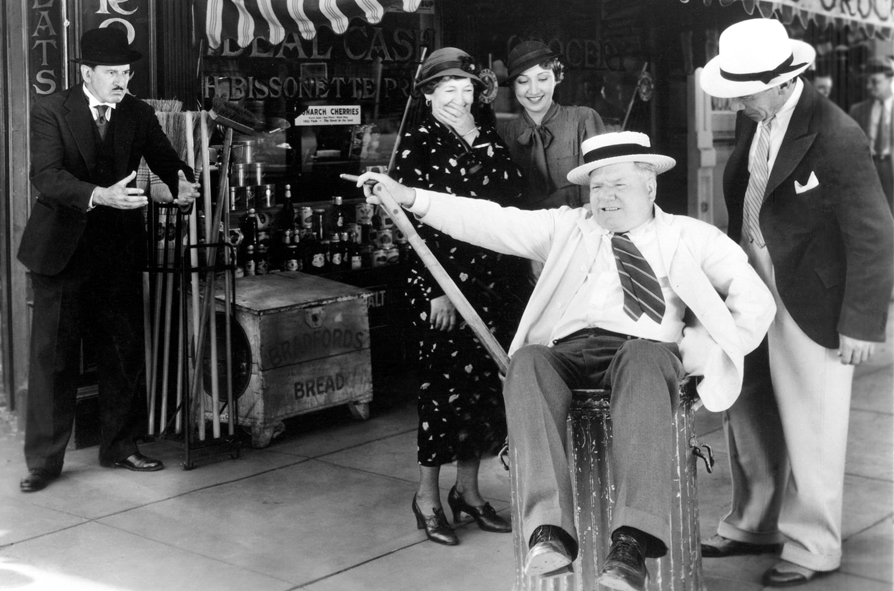
4 Shots From 4 Films: Special W.C. Fields Edition!


4 Shots From 4 Films is just what it says it is, 4 shots from 4 of our favorite films. As opposed to the reviews and recaps that we usually post, 4 Shots From 4 Films lets the visuals do the talking!

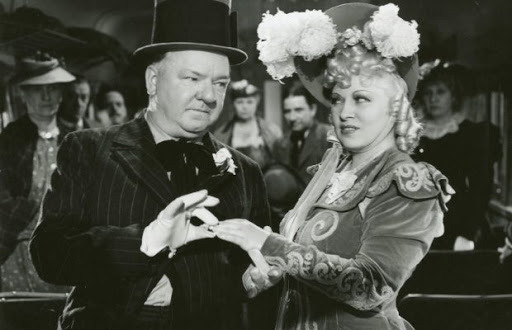
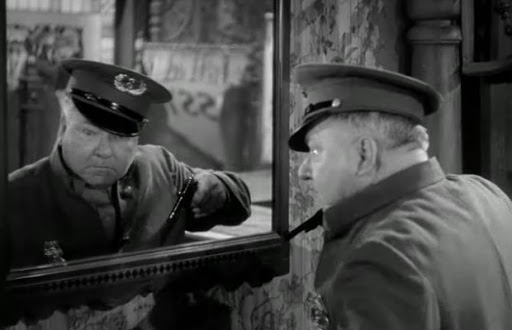
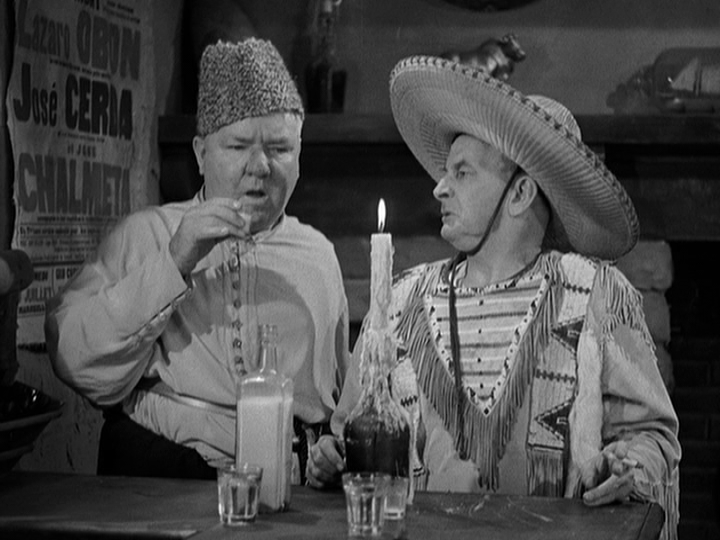
It was 140 years ago today that the greatest curmudgeon of them all, W.C. Fields, was born in Darby, Pennsylvania.  The world would never be the same.

In honor of a man who knew how to enjoy a stiff drink and who made a good living pretending to not like dogs and children, here are

4 Shots From 4 Films

It’s A Gift (1934, directed by Norman McCleod)

My Little Chickadee (1940, directed by Edward Cline)

The Bank Dick (1940, directed by Edward Cline)

Never Give A Sucker An Even Break (1941, directed by Edward Cline)

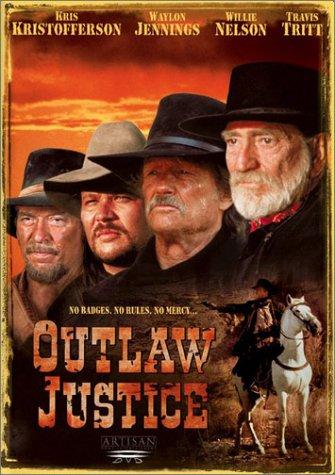
Outlaw Justice (1999, directed by Bill Corcoran)


During the closing days of the old west, the evil Holden (Sancho Garcia) guns down retired outlaw, Tobey Naylor (Waylon Jennings).  Tobey’s son, Bryce (Chad Willett), is determined to get revenge so he teams up with three members of Tobey’s old gang, Lee Walker (Willie Nelson), Jesse Ray Torrance (Kris Kristofferson), and Sheriff Dalton (Travis Tritt).  They ride into Mexico, searching for one final shootout.  Along the way, they befriend the locals, find time to rebuild a burned-out church, and bicker like aging gunslingers in a Larry McMurtry novel.  Chad Willett and Willie Nelson also find time to fall in love with local women because, obviously, the entire film can’t just be gunfights and church-building.

Outlaw Justice is a standard western, which is distinguished only by the casting of the pioneers of outlaw country music as actual outlaws.  Since this was made during the Lonesome Dove-Unforgiven era of westerns, there’s some talk about how Lee and Jesse Ray are past their prime but otherwise, it’s an angle that largely left unexplored.  Of the singers, Kris Kristoffeson and Travis Tritt are probably the best actors but Willie Nelson seems to be having the most fun.  (Nelson has enough natural charisma that he can get away with a lot.)  If you’re a fan of westerns who doesn’t demand too much from the movie you’re watching, Outlaw Justice will probably be entertaining enough.  Otherwise, it’s pretty forgettable.

Rambo: Last Blood (2019, directed by Adrian Grunberg)


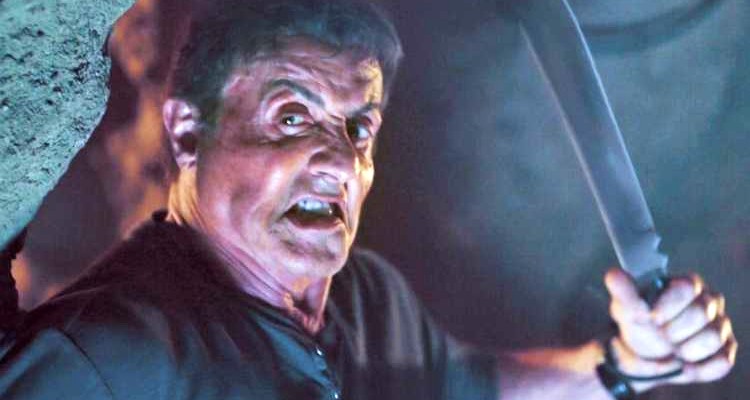
John Rambo (Sylvester Stallone, of course) is back!

He’s in his 70s now.  He talks a little slower.  He moves a little stiffly.  He wakes up every morning and takes a hundred different pills.  He says that he has finally given up his anger but, deep down, he’s still the same Rambo who blew up the town of Hope, Washington before becoming an international problem solver.  He still likes to dig underground tunnels and make weapons.  When he’s not doing that, he and Maria Beltran (Adriana Barraza) run his father’s old horse ranch in Arizona.

When Maria’s granddaughter, Gabriela (Yvette Monreal), sneaks down into Mexico to search for her biological father, Rambo goes after her.  When he discovers that Gabriela has been kidnapped and drugged by a Mexican cartel, Rambo announces that he’s going to rescue her and get revenge, even if it means blowing up the entire southwest to do it.

There’s a scene in Last Blood where Rambo literally rips a man’s heart out of his chest and holds it in front of his face while he dies.  That’s pretty cool and doubly impressive when you consider that Rambo’s not that young anymore.  I’m 40 years younger than Rambo and I can’t do that.  Other than that, though, Last Blood is a disappointment.  The cartel makes for a forgettable group of villains and too much of the plot depends on otherwise intelligent people suddenly doing something stupid.  The Rambo films have never been known for their carefully constructed storylines but, even by the standards of the previous films in the series, Last Blood feels as if it was hastily slapped together.

The main problem, though, is that John Rambo doesn’t feel like Rambo.  There are references to the time that Rambo spent in Vietnam and Rambo does use several VC-style booby traps to take out most of his enemies but otherwise, Sylvester Stallone might as well have just been playing John Smith.  I spent the whole movie waiting for Rambo to at least say something along the lines of, “A friend of mine from Nam — his name was Sam Trautman — taught me this,” but instead, the previous Rambo films go largely unacknowledged until the end credits, during which we see some scenes from our hero’s past adventures.  If you’re going to make a Rambo film, it should feature a story that could only happen to Rambo and a problem that only he can solve.  Last Blood felt like it had more in common with Taken than Rambo.

Rambo’s had a good run but, on the basis of Last Blood, I think it may be time to let the character enjoy his retirement in peace.  He’s earned it.


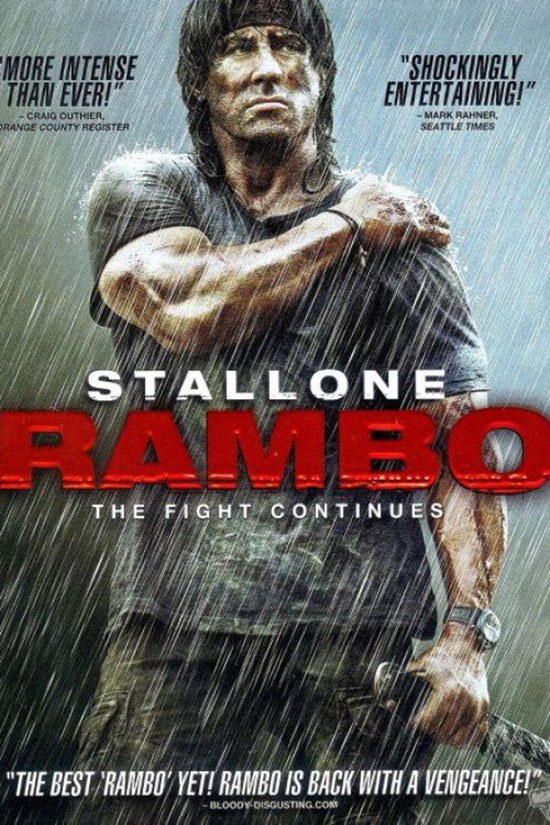
Rambo (2008, directed by Sylvester Stallone)


When a group of Christian missionaries needs someone to guide them into Burma so that they can provide medical supply to the oppressed Karen people, they approach John Rambo (Sylvester Stallone).  The missionaries think that Rambo is just an American living in Thailand who makes a meager living as a snake catcher and a boat guide.  Because we’ve seen the previous Rambo films, we know that John Rambo is actually a Vietnam vet who, after destroying the town of Hope, Washington, was recruited by the government to rescue POWs in Vietnam and fight the Russians in Afghanistan.

At first, Rambo tells the missionaries that it’s foolish for them to go anywhere near Burma and that he wants nothing to do with them.  It’s only when Sarah Miller (Julie Benz) asks him personally that Rambo agrees to ferry the missionaries up the Salween River.  Rambo isn’t doing it for the missionaries.  He’s doing it to protect Sarah.

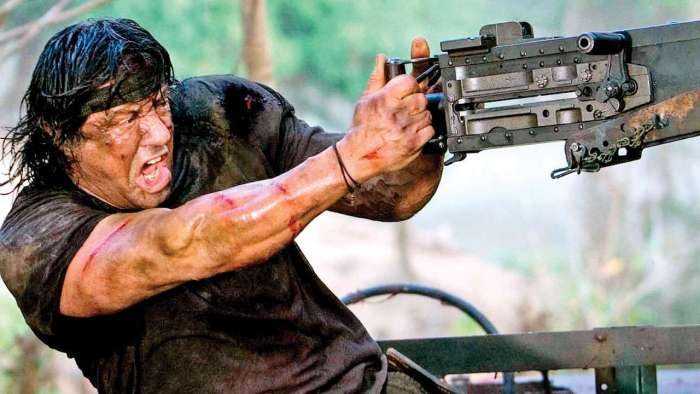
Unfortunately, on the way to the village, Rambo is forced to kill a group of pirates and he is rejected by the pacifist missionaries and, after he drops them off at the village, they order him to leave.  However, after the village is attacked and Sarah is taken prisoner by the Burmese military, Rambo returns.  This time, he’s with a group of younger mercenaries who, like the missionaries before them, don’t know what Rambo is capable of doing.  Rambo soon proves that he might not be as young as used to be but he’s still just as deadly.

During the final 11 minutes of this movie, Rambo kills over a hundred people but fortunately, they’re all bad.  It’s excessively violent and gory and it’s also totally awesome.  When you go to see a Rambo movie, you’re not expecting to see Shakespeare.  You’re expecting to see Rambo blow away the bad guys and, on that front, this film definitely delivers.  Even more than the previous films in the series, Rambo is up front about what happens when someone gets shot by a machine gun or blown up by a bomb.  It’s not pretty picture.  The violence is so gruesome that Rambo could almost pass for an antiwar film if the people that Rambo blows up weren’t all portrayed as being almost cartoonishly evil.

Rambo is also upfront about what that type of violence would do to a man’s psyche.  This film features one of Stallone’s best performances.  Eschewing the comic book heroism of the 2nd and 3rd films in the franchise, Rambo reminds us that, when first introduced in First Blood, John Rambo was portrayed as being a seriously damaged and bitter man, someone who hated what the war had done to him and who felt that he no longer had a home in the normal world.  Stallone was 62 when he starred in Rambo and he surrendered enough of his vanity to actually allow himself to look and sometimes act his age.  In this film, Rambo may start out as bitter but he finally accepts that his pain doesn’t have to define his life.  “Live for nothing or die for something,” Rambo says, a line that has subsequently been picked up by the real life Karen National Liberation Army in Burma.

Of the four sequels to the original First Blood, Rambo is the best.  It has the biggest action sequences, the best Stallone performance, and it alerted people to very real atrocities being carried out against the Karen people.  Coming out shortly after Rocky Balboa, Rambo was one of the films that reminded audiences that Sylvester Stallone still had it.  Rambo was a box office success and, 11 years after its release, it was followed by Last Blood.  I’ll be reviewing that one tomorrow.

Music Video of the Day: What You Need by INXS (1985, directed by Richard Lowenstein and Lynn-Maree Milburn)


Today is Australia Day and today’s music video of the day comes from one of the biggest Australian bands of the last century, INXS.

What You Need was the leadoff track from their 1985 album, Listen Like Thieves.  It was the first single off the album in Australia and New Zealand while, in the US, it was released after This Time.  It also went on to become the band’s first top ten hit in the United States.  That shouldn’t be a surprise as the song was recorded after the album’s producer expressed concern that Listen Like Thieves was good but didn’t have a “hit.”  The band wrote and recorded the song in one day.

The song’s popularity was undoubtedly helped by this music video, which came out at a time when rotoscope was still a fairly exotic animation technique.  The video was named Best Video at the 1985 Countdown and Music Video Awards.

Enjoy!

Backstreet Justice (1994, directed by Chris McIntyre)


“These straight-to-video, schlocky films I was getting were giving me an ulcer, basically because I was the only one on the set that cared about anything… Between that and my biological clock, I decided to give it all away.”

— Linda Kozlowksi, on why she retired from acting

When Linda Kozlowski talked about the “shlocky films” that soured her on acting, Backstreet Justice was probably high on the list.  Kozlowski may have found fame co-starring with her then-husband Paul Hogan in the Crocodile Dundee films but, in Backstreet Justice, there’s neither an Australian nor a sense of humor to be found.

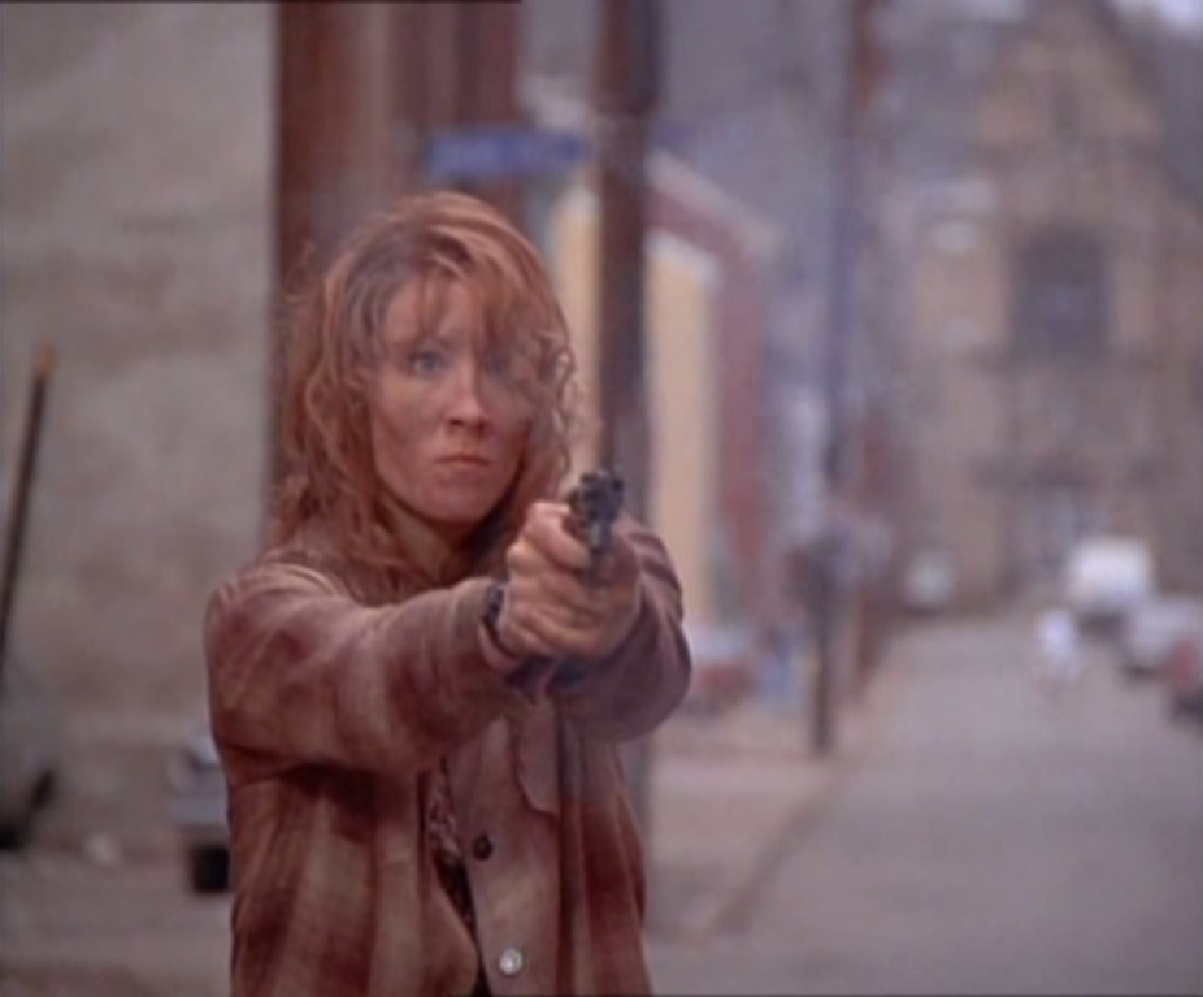
Kozlowski plays Keri Finnegan, a tough and streetwise private investigator in Philadelphia.  Her late father was a policeman who was accused of corruption while her mentor (Hector Elizondo) is the district attorney.  Most of the cops hate Keri, especially Captain Giarusso (Paul Sorvino).  The one exception is her lover, Nick Donovan (John Shea).

The residents of Philadelphia’s worst neighborhood have hired Keri to protect them.  For the past two years, a murderer has lurked among them.  With the police showing no interest in solving the crimes, the neighborhood turns to Keri.  Keri’s investigation leads her to believe that the murders are being carried out be corrupt cops but Keri isn’t prepared for just how far up the corruption goes.

For a straight-to-video film, Backstreet Justice has a surprisingly good cast, with Paul Sorvino, Hector Elizondo, John Shea, Tammy Grimes, and Viveca Lindfors all appearing in supporting roles.  Linda Kozlowski holds her own opposite her better-known co-stars and is believable in the film’s many action scenes.  The movie has a good sense of urban squalor and captures the desperation of people living in a dying neighborhood.  The main problem with the film is that the central mystery is never that interesting and the solution is one that most people will see coming from miles away.  For all the violence and scenes of people chasing each other, Backstreet Justice is still a boring movie.

With the exception of one surprisingly explicit sex scene, Backstreet Justice could easily pass for a made-for-TV film or a pilot for a Keri Finnegan television series.  Instead, it was just another straight-to-video thriller and another reason for the talented Linda Kozlowski to leave acting behind.  Her final film appearance was in 2001’s Crocodile Dundee in Los Angeles.

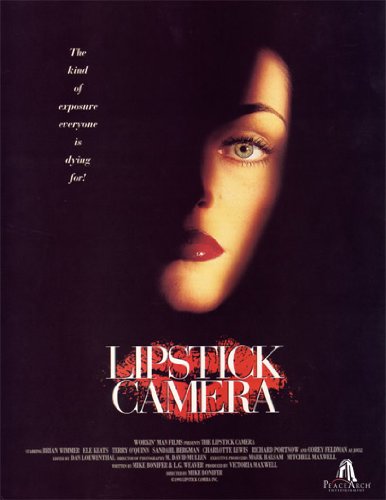
Cinemax Friday: Lipstick Camera (1994, directed by Mike Bonifer)


Omy Clark (Ele Keats) is an aspiring journalist who wants to work with the world famous videographer, Flynn Dailey (Brian Wimmer).  When she shows up at Flynn’s studio and marvels at how much power the filmed image can wield, Flynn blows her off.  While Flynn is busy ignoring Omy, Lily Miller (Sandahl Bergman) drops by and tries to hire Flynn to film her and her husband, Raymond (Terry O’Quinn), making love.  When Flynn heads out to the Miller residence, Omy tags along as an uninvited guest.  She happens to have a tiny camera that she stole from her best friend, Joule (Corey Feldman, sporting a beard and a beret).  Omy plants the camera in Lily’s bedroom.  Later, when Flynn, Omy, and Joule all return to the Miller house to retrieve the tiny camera, they discover that Lily has been murdered and that Raymond is a communist war criminal who fled East Germany following the collapse of the Berlin Wall.

Lipstick Camera has an intriguing premise and, even in 1994, it was trying to say something about media manipulation and what is today referred to as being “fake news.”  You could say that it was a film that was ahead of its time.  You could also say that it’s a complete mess or that it’s an erotic thriller that is neither erotic nor thrilling and you would be just as correct.  The main problem with the film is that almost every plot development is set in motion by Omy being either extremely self-absorbed or extremely stupid.  When she’s not manipulating Joule (who is not too secretly in love with her), she’s stalking Flynn and carelessly losing an expensive camera that didn’t even belong to her in the first place.  And she, of course, is meant to be our hero!

In the 90s, former teen idol Corey Feldman was one of the mainstays of late night Cinemax.  Even during his Cinemax years, Feldman would occasionally give a good performance.  Lipstick Camera was not one of those occasions.  In Lipstick Camera, Feldman wears a beard and a beret and spends a lot of time in a room that’s full of computer monitors and TV screens and that’s the extent of his characterization.  He does get a dramatic death scene, in which Joule appears to be determined to stave off the grim reaper by giving a monologue of Shakespearean proportions but otherwise, this is Corey Feldman at his worst.  Faring slightly better is Terry O’Quinn, who, at least, gets to deliver his lines in a light German accent.

With its focus on the media and communist war criminals, Lipstick Camera is an example of a direct-to-video film that tried to be about something more than just sex and murder.  (Though, this being a DTV film, there is one brief sex scene that takes place in front of a TV that’s showing a video of a fireplace.)  Unfortunately, nobody involved seems to know what that something was supposed to be.

Music Video of the Day: Sure Shot by The Beastie Boys (1994, directed by Spike Jonze)


First things first, Lisa has asked me to apologize to everyone.  She’s currently under the weather and has been ordered to get a lot of rest, which is why she didn’t post anything yesterday.  She will be back and regularly posting soon.

As for today’s music video of the day, what can you say about Sure Shot and the Beastie Boys?  This is the song and the video that I think made everyone want to be the fourth beastie boy.  If I remember correctly, it came out directly after Sabotage and it provides quite a contrast to that earlier video.  Interestingly enough, both videos were directed by Spike Jonze.

This is the rare rap song to feature a flute.  The flute was sampled from the 1970 song, Howling For Judy, by Jeremy Steig.  Steig, who has released twenty albums, has said that he made more money off the royalties to that sample than he has from all of his previous work.

Enjoy!

Gunshy (1998, directed by Jeff Celentano)


Burned-out writer Jake Bridges (William L. Petersen, a year or two before CSI) comes home one day to discover his wife in bed with another man.  Jake, who is already suffering from an epic case of writer’s block, goes to Atlantic City and tries to drink his troubles away.  When the bitter Jake gets into a bar fight, he’s saved by Frankie (Michael Wincott).  Frankie takes Jake back to his house, where Jake meets Frankie’s girlfriend, Melissa (Diane Lane).  Jake also discovers that Frankie works as a debt collector for a local mob boss, Lange (Michael Byrne).

Frankie and Jake strike up an unexpected friendship.  Jake wants to experience what it’s like to be a real tough guy.  Frankie wants to improve his vocabulary.  Frankie agrees to take Jake with him when he makes his collections on the condition that Jake recommend a book to him.  Soon, Jake is pretending to be a gangster and Frankie is reading Moby Dick.  Frankie shows Jake how to be intimidating.  Jake explains the symbolism of Ahab’s quest to Frankie.  They become good friends, with the only possible complication being that Jake is falling in love with Melissa.

For a low-budget neonoir that, as far as I know, never even got a theatrical release before being released to video, Gunshy is surprisingly good.  The plot may sometimes be predictable but Petersen and especially Wincott give good performances and they both play off of each other well.  Diane Lane is undeniably sexy but also bring a fierce intelligence and a sense of wounded dignity to the role of Melissa.  This is a love triangle where you want things to work out for all three of the people involved.  The rest of the cast is full of familiar faces.  Keep an eye out for everyone from R. Lee Ermey to Meat Loaf.  Director Jeff Celantano keeps the story moving and proves himself to be adept at balancing scenes of violence with scenes where Frankie and Jake simply discuss their differing views of the world.

An unjustly obscure film, Gunshy is a 90s film that deserves to be rediscovered.