Music Video Of The Day: TV Crimes by Black Sabbath (1992, directed by Nigel Dick)


Today, this video seems dated.  That’s to be expected from any video that was released nearly 20 years ago.  Today, it’s hard to imagine anyone going through that much trouble to steal a TV as small as the one that is at the center of this video.  In 1992, the idea of a wireless TV that didn’t need an antenna seemed like science fiction.  Today, though, it’s pretty much a part of everyday life.

TV Crimes was the first single to be released off of Black Sabbath’s 1992 album, DehumanizerDehumanizer would be the last Black Sabbath album to feature Ronnie James Dio until 2006, when Dio returned for a greatest hits album, Black Sabbath: The Dio Years.  Dio subsequently appeared on a 2008 studio album, The Devil You Know (a.k.a. Heaven & Hell).  The Devil You Know would prove to be Dio’s final studio appearance before his death in 2010.

This video was directed by Nigel Dick, who is one of the strongest and most prolific music video directors around.  He started in 1983 and has directed videos for basically everyone.  If you were a successful rock band in the 80s or 90s, Nigel Dick directed at least one video for you.  He continued directing into the 21st century and he’s still going at it.  Duran Duran, Oasis, Guns ‘n’ Roses, Brooke Hogan (?), Def Leppard, Madness, they’ve all had videos directed by Nigel Dick.  Dick also directed some videos for Nickelback but we won’t hold that against him.

Enjoy!

Music Video of the Day: View From A Bridge by Kim Wilde (1982, directed by Brian Grant)


Not to be confused with the Arthur Miller play of almost the same name, View From A Bridge was the second single to be released from Kim Wilde’s second album, Select.  The song tells the story of a girl who discovers that her boyfriend is cheating on her so she goes to a bridge and considers jumping off.  Though it’s open to interpretation, the song suggests that she ultimately does just that.  This song is a good example of a song about something that no one should do in real life.  No one is worth jumping off a bridge for so if you’re thinking about doing it, don’t.

When it was released in 1982, it became on Wilde’s biggest hits in Europe and Australia.  It was especially popular in France.  If it was released today, at a time when we are all very aware of teen mental health and the dangers of suicidal ideation, this is one of those songs that would probably be very controversial.  I know that when I was growing up, there was tendency to laugh off threats of suicide as just teenagers being dramatic or looking for attention.  Luckily, that’s no longer the case today.

The video, fortunately, does not feature Kim on a bridge.  Instead, it features her and the band performing in a pink-tinted room.  This was a popular look for music videos in the 80s and the pinkness of it all helped to keep people from noticing how depressing the lyrics were.

The video was directed by Brian Grant, who was one of the go-to video directors in the 1980s.  He did videos for everyone from The Human League to XTC to Peter Gabriel and Duran Duran.  According to Wikipedia, he directed a total of 225 music videos during the 80s.  He has also directed several shows for British television, including the episodes of the Doctor Who reboot.

Enjoy!

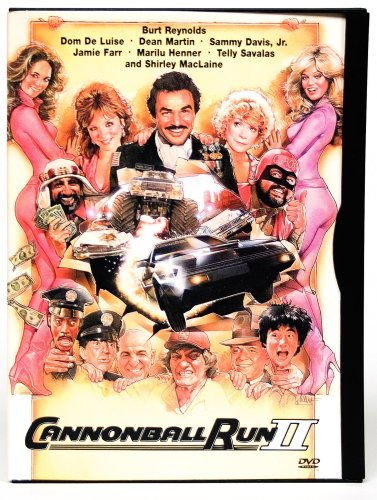
Cannonball Run II (1984, directed by Hal Needham)


In 1981, director Hal Needham and star Burt Reynolds had a surprise hit with The Cannonball Run.  Critics hated the film about a race from one end of America to the other but audiences flocked to watch Burt and a group of familiar faces ham it up while cars crashed all around them.  The original Cannonball Run is a goofy and gloriously stupid movie and it can still be fun to watch.  The sequel, on the other hand…

When the sequel begins, the Cannonball Run has been discontinued.  The film never explains why the race is no longer being run but then again, there’s a lot that the sequel doesn’t explain.  King Abdul ben Falafel (Ricardo Montalban, following up The Wrath of Khan with this) wants his son, The Sheik (Jamie Farr, returning from the first film) to win the Cannonball so he puts up a million dollars and announces that the race is back on.  Problem solved.

With the notable exceptions of Farrah Fawcett, Roger Moore, and Adrienne Barbeau, almost everyone from the first film returns to take another shot at the race.  Burt Reynolds and Dom DeLuise are back.  Jack Elam returns as the crazy doctor, though he’s riding with the Sheik this time.  Jackie Chan returns, riding with Richard “Jaws” Kiel.  Dean Martin and Sammy Davis, Jr. return, playing barely disguised versions of themselves.  They’re joined by the surviving members of the Rat Pack.  Yes, Frank Sinatra is in this thing.  He plays himself and, from the way his scenes are shot, it’s obvious they were all filmed in a day and all the shots of people reacting to his presence were shot on another day.  Shirley MacClaine also shows up, fresh from having won an Oscar.  She plays a fake nun who rides with Burt and Dom.  Burt, of course, had a previous chance to co-star with Shirley but he turned down Terms of Endearment so he could star in Stroker AceCannonball Run II finally gave the two a chance to act opposite each other, though no one would be winning any Oscars for appearing in this film.

Say what you will about Hal Needham as a director, he was obviously someone who cultivated a lot of friendships in Hollywood because this film is jam-packed with people who I guess didn’t have anything better to do that weekend.  Telly Savalas, Michael V. Gazzo, Henry Silva, Abe Vigoda, and Henry Silva all play gangsters.  Jim Nabors plays Homer Lyle, a country-fried soldier who is still only a private despite being in his 50s.  Catherine Bach and Susan Anton replace Adrienne Barbeau and Tara Buckman as the two racers who break traffic laws and hearts with impunity.  Tim Conway, Don Knotts, Foster Brooks, Sid Caesar, Arte Johnson, Mel Tillis, Doug McClure, George “Goober” Lindsey, and more; Needham found room for all of them in this movie.  He even found roles for Tony Danza and an orangutan.  (Marilu Henner is also in the movie so I guess Needham was watching both Taxi and Every Which Way But Loose while casting the film.)  Needham also came up with a role for Charles Nelson Reilly, who is cast as a mafia don in Cannonball Run II.  His name is also Don so everyone refers to him as being “Don Don.”  That’s just a typical example of the humor that runs throughout Cannonball Run II.  If you thought the humor of It’s A Mad, Mad, Mad, Mad World was too subtle and cerebral, Cannonball Run II might be right up your alley.

The main problem with Cannonball Run II is that there’s not much time spent on the race, which is strange because that’s the main reason why anyone would want to watch this movie.  The race itself doesn’t start until 45 minutes into this 108 minute film and all the racers are quickly distracted by a subplot about the Mafia trying to kidnap the Sheik.  Everyone stops racing so that Dean Martin and Sammy Davis, Jr. can disguise themselves as belly dancers to help rescue the Sheik.  By the time that’s all been taken care of, there’s only 10 minutes left for everyone to race across the country.  After a montage of driving scenes and a cartoon of an arrow stretching across the nation (the cartoon was animated by Ralph Bakshi!), we discover who won the Cannonball and then it’s time for a montage of Burt and Dom blowing their lines and giggling.  Needham always ended his films with a montage of everyone screwing up a take and it’s probably one of his most lasting cinematic contributions.  Every blooper reel that’s ever been included as a DVD or Blu-ray extra owes a debt of gratitude to Hal Needham.  Watching people blow their lines can be fun if you’ve just watched a fun movie but watching Burt and Dom amuse themselves after sitting through Cannonball Run II is just adding insult to injury.  It feels less like they’re laughing at themselves and more like they’re laughing at you for being stupid enough to sit through a movie featuring Tony Danza and an orangutan.

The dumb charm of the first Cannonball Run is nowhere to be found in this sequel and, though the film made a profit, the box office numbers were still considered to be a disappointment when compared to the other films that Reynolds and Needham collaborated on.  Along with Stroker Ace, this is considered to be one of the films that ended Reynolds’s reign as a top box office attraction.  Cannonball Run II was also the final feature film to feature Dean Martin and Frank Sinatra.  This could be considered the final Rat Pack film, though I wouldn’t say that too loudly.

Cannonball Run II is a disappointment on so many levels.  It’s hard to believe that the same director who did Smokey and the Bandit and Hooper could be responsible for the anemic stunts and chases found in this movie.  The cast may have had a good time but the audience is left bored.  Stick with the first Cannonball Run.


Music Video of the Day: Clowny Clown Clown by Crispin Hellion Glover (1989, directed by Crispin Glover)


Let’s start 2021 with Crispin Glover.

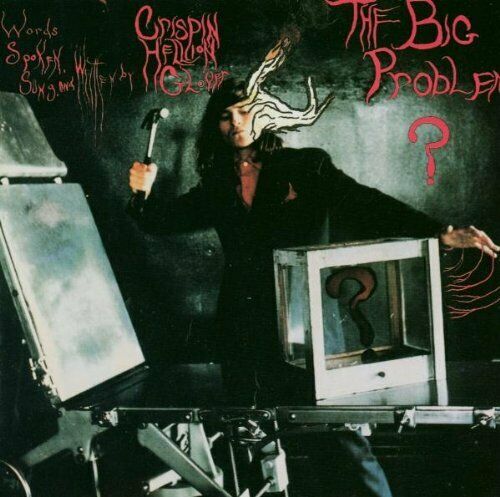
The song Clowny Clown Clown comes from Glover’s first album, The Big Problem ≠ The Solution. The Solution = Let It Be.  The album, which also featured Glover covering songs like These Boots Are Made For Walking and The Daring Young an On The Flying Trapeze, was released in 1989 and the liner notes invited anyone who could figure out what the “Big Problem” was to give Glover a call.  The liner notes included a phone number that you could call, which was apparently Crispin’s phone number at the time.  The number has since been disconnected so don’t waste your time trying to give Crispin a call.

Before making this video, Glover was best-known for playing George McFly in Back to the Future and for nearly kicking David Letterman in the head during an interview in 1987.  Much like Joaquin Phoenix’s infamous later appearance on Letterman, it is believed that Glover was attempting an Andy Kaufmanesque stunt during his first appearance, as well as trying to promote an upcoming film.  (The film was Rubin and Ed, which was filmed in ’87 but wouldn’t be released until 1991.)  On March 28th, 1990, Glover returned to Letterman’s show, where he discussed his music and where a clip from the Clowny Clown Clown video was shown.

Below is Glover’s first appearance on Letterman:

Here is Glover’s subsequent performance, in which he attempts to explain himself and shows a clip of this video:

While I think it’s clear the Glover was playing a role in both of his appearances, I’m not sure if Letterman was in on the joke as he seems to be genuinely annoyed during both interviews.  Of course, back then, genuinely annoyed was Letterman’s default interview style.

Back to Glover’s album, if anyone knows the Big Problem or its solution, let us know in the comments and we’ll try to get word to Crispin.

Enjoy!

Music Video of the Day: You Can’t Change That by Raydio (1979, directed by ????)


Happy New Year’s Eve!

Today’s music video of the day is for Raydio’s You Can’t Change That.  Raydio is an American funk band that was founded by Ray Parker. Jr.  Though they had a handful of hits, including You Can’t Change That, Parker is still probably best known for performing the Ghostbusters theme song.

Like many of the music videos that were made in the days before MTV, this is a performance clip and it keeps thing simple.  This was before videos’ came to be seen a mini-movies and before every music video director was looking to move up to feature films. You Can’t Change That keeps things simple and it’s just right for the song.

Enjoy!

Music Video of the Day: Am I Demon by Danzig (1988, directed by ????)


Whenever I watched any video from Danzig, I’m reminded of what Butthead (of Beavis and Butthead fame) had to say about Danzig’s video for Mother.  “That little dance isn’t very cool.”  I thought about that line as I watched the video for Am I Demon.  Glenn Danzig looks intimidating and scary as hell and it’s easy to imagine that Tipper Gore and all the other Karens of the 80s were freaked out by not only his lyrics but also his sideburns.  The music always rocks but once Danzig starts doing his little hip-shaking dance, it’s sometimes hard to take him seriously.

I would never say that Danzig’s face, though.  Danzig looks like he could easily break anyone in half if they said the wrong thing.  You do not want to get on Danzig’s bad side.

Back in the day, Glenn Danzig was one of the candidates to play Wolverine in one of the early and ultimately unsuccessful attempts to make an X-Men movie.  It wouldn’t have been bad casting.  Danzig had the right look and, even more importantly, Wolverine didn’t dance.

Enjoy!

Music Video of the Day: Martin Scorsese by King Missile (1993, directed by George Seminara)


Before there was Film Twitter, there was this song by King Missile.

Are the song and the music video celebrating Scorsese or are they parodying his out-of-control fans?  It’s probably doing both.  This video was made in 1993, back when Scorsese was still best-known as a director of violent, profane gangster films.  While Scorsese is still known for those films, he has also directed movies like Kundun, The Aviator, Hugo, and Silence.  Of course, all of those movies came out after this song.  Instead, this video ends with a flash of The Age of Innocence, a hint that Scorsese was interested in more than just being defined as a director of kinetic mafia movies.

If this song was written today, its subject would probably be Tarantino instead of Scorsese.  Even though lead singer John S. Hall is supposed to be dressed up like a Scorsese gangster, he actually looks more like someone paying homage to the reservoir dogs.

When watching this video, be sure to keep an eye on the band in the background.

If I was Martin Scorsese, I probably would have gotten a restraining order after this song came out.

Enjoy!

Music Video of the Day: Dead Arms & Dead Legs by Eliot Sumner (2015, directed by ????)


Eliot Sumner is the child of Gordon Sumner, better known as Sting.  Dead Arms & Dead Legs was the first single off of Sumner’s 2nd album, Information.  According to Sumner, the song was inspired by walking around Stonehenge and thinking about what it all meant.  I have been to Stonehenge and I can verify that, if you can actually get away from all the tourists, walking around the centuries-old monument will make you question your place in the universe.  It will also remind you to buy a new calendar.

Of course, if you know your British sci-fi, it might also make you think of the fate of Prof. Quatermass.

Enjoy!


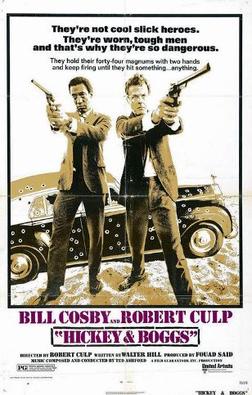
Hickey & Boggs (1972, directed by Robert Culp)


Frank Boggs (Robert Culp) and Al Hickey (Bill Cosby) are two private investigators who are constantly in danger of losing their licenses and going out of business.  Hickey is the responsible one.  Boggs is the seedy alcoholic.  When Hickey and Boggs are hired to track down a missing woman, their investigation lands them in the middle of a war between the mob and a group of political activists who are fighting over who is going to get the loot from a recent robbery.  Hickey and Boggs are targeted by the mob and soon, everyone is dying around them.

With its cynical themes and downbeat ending, Hickey & Boggs is very much a 70s film.  The script was written by future director Walter Hill and when it was eventually offered to Bill Cosby, Cosby agreed to star on the condition that his I Spy co-star, Robert Culp, be hired to direct.  Producer John Calley hired Culp but after Calley refused to provide the budget that Culp requested, Culp bought the script and raised the money himself.

There are a few problems with Hickey & Boggs, the main one being that the plot is next to impossible to follow.  As a director, Robert Culp apparently didn’t believe in either filming coverage or providing establishment shots so, especially early on, it is often impossible to tell how one scene is connected to another or even how much time has passed between scenes.  I don’t know if this was an intentional aesthetic decision or if the production just ran out of money before everything could be shot but it makes it difficult to get into the film’s already complicated story.  On a positive note, Culp did have a flair for staging action scenes.  The film ends with a shoot out on the beach that’s is handled with such skill that it almost makes up for what came before it.  Also, like many actors-turned-director, Culp proved himself capable of spotting talent.  Along with giving early roles to Vincent Gardenia, James Woods and Michael Moriarty, Culp also took the chance of casting sitcom mainstay Robert Mandan as a villain.  It was a risk but it worked as Mandan convincingly portrays the banality of evil.

Of course, the biggest problem with Hickey & Boggs is that it stars Bill Cosby as a straight-laced hero and that’s no longer a role that anyone’s willing to believe him in.  Cosby actually does give a convincing dramatic performance in Hickey & Boggs.  Just look at the final scene on the beach where Hickey has his “what have we done” moment and shows the type of regret that Cosby has never shown in real life.  The problem is that to really appreciate Cosby’s performance, you have to find a way to overlook the fact that he’s Bill Cosby and that something that I found impossible to do while watching Hickey & Boggs.  When you should be getting into the movie, you’re thinking about how many decades Bill Cosby was able to get away with drugging and assaulting women.  If not for a comment from Hannibal Buress that led to a social media uproar, Cosby would probably still be getting away with it.  If Buress’s anti-Cosby comments hadn’t been recorded and hadn’t gone viral, Bill Cosby would still be free and the media would probably still be holding him up as some sort of role model.

At the time Hickey & Boggs was made, both Bill Cosby and Robert Culp were at a career crossroads.  Cosby was hoping to transform himself into a film star.  Culp was hoping to become a director.  Hickey & Boggs, however, was disliked by critics and flopped at the box office.  Culp never directed another film and we all know what happened with Bill Cosby.  (Of course, it wasn’t just the box office failure of Hickey & Boggs that kept Cosby from becoming a movie star.  Say what you will about Robert Culp as a director, he had nothing to do with Leonard Part 6.)  Hickey  & Boggs is too disjointed to really work but Robert Culp and Bill Cosby were convincing action stars and the film’s downbeat style and cynical worldview is sometimes interesting.

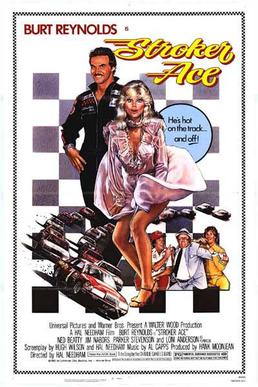
Stroker Ace (1983, directed by Hal Needham)


In 1983, Burt Reynolds had the choice of appearing in two films.

He was offered the role of former astronaut Garrett Breedlove in Terms of Endearment, a role that director/screenwriter James L. Brooks wrote specifically with Reynolds in mind.  The role was designed to play to all of Reynolds’s strengths and none of his weaknesses.  It was also a key supporting role in a film that was widely expected to be an Oscar contender.

Or, Reynolds could star in Stroker Ace, another car chase film that was going to be directed by his old friend, Hal Needham.  No one was expecting Stroker Ace to be an Oscar contender but Needham and Reynolds had made three similar films together and all of them had been hits at the box office.

Reynolds decided to star in Stroker Ace.  Jack Nicholson received the role of Garrett Breedlove and went on to win his second Oscar.  As for Burt, he later called Stroker Ace “the beginning of the end.”

The title character of Stroker Ace is a good old boy race car driver.  He’s a typical Reynolds character.  He grew up in the South and learned how to race cars by watching moonshiners outrun the police.  Now, he’s a star on the NASCAR circuit but he’s also arrogant and needlessly self-destructive.  Because this is a Hal Needham car chase movie, those are portrayed as being good traits.  When Stroker loses his former sponsor after pouring wet concrete on him, he’s forced to accept sponsorship from a crooked chicken mogul (played by Ned Beatty, who deserved better).  When Stroker’s not driving his car while dressed as a chicken, he’s romancing the prudish Pembrook Feeney (Loni Anderson).

It’s hard to describe the plot of Stroker Ace because it really doesn’t have a plot.  There’s a few scenes where Burt looks directly at the camera and smirks.  It’s supposed to remind us of Smoky and the Bandit but Stroker Ace doesn’t have the spectacular stunts that the first film had nor does it have the comedic energy of Jackie Gleason.  Instead, it’s got Jim Nabors as a mechanic named Lugs.  The former star of Gomer Pyle does say “Golly” but he doesn’t sing.

The main problem with Stroker Ace is that there’s no reason to root for Stroker Ace.  The Bandit was good at his job and cared about his car.  The same thing is true about the stuntman that Burt played in Hooper.  Stroker is a racer who would rather destroy his car than come in second and who loses his sponsorships because of his own stupid behavior.  Stroker Ace doesn’t care about anything so it’s difficult to get outraged over him having to wear a chicken suit while racing.

Reynolds later described turning down Terms of Endearment for Stoker Ace as being one of the biggest mistakes of his career.  When he talked about how the Terms of Endearment role won Nicholson an Oscar, Reynolds added that he didn’t win anything for Stroker Ace because “they don’t give awards for being stupid.”  It was a missed opportunity for sure and Reynolds would have to wait another fourteen years before Boogie Nights finally proved that he could do more than drive cars and smirk at the camera.

Despite the failure of Stroker Ace, Reynolds and Needham remained friends and even made two more film together (Cannonball Run II and Hostage Hotel).  Their friendship later served as the basis for the relationship between the characters played by Leonardo DiCaprio and Brad Pitt in Quentin Tarantino’s Once Upon A Time In Hollywood.