This scene is from The Strike episode of Seinfeld. Believe it or not, it is based on a true story. Scriptwriter Dan O’Keefe, who wrote this episode, grew up celebrating Festivus, a holiday that was created by his father. In the real Festivus, the aluminum pole was replaced by a clock that O’Keefe’s father would put in a bag and nail to a wall. To quote O’Keefe:
“The real symbol of the holiday was a clock that my dad put in a bag and nailed to the wall every year…I don’t know why, I don’t know what it means, he would never tell me. He would always say, ‘That’s not for you to know.'”
4 Shots From 4 Films is just what it says it is, 4 shots from 4 of our favorite films. As opposed to the reviews and recaps that we usually post, 4 Shots From 4 Films is all about letting the visuals do the talking.
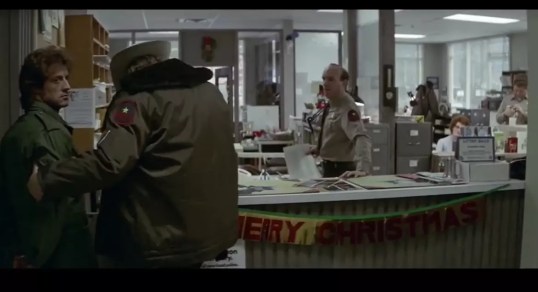
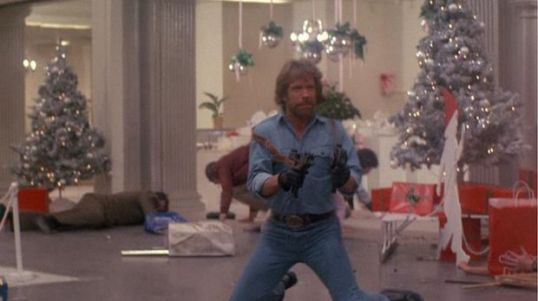
4 Shots From 4 Holiday Films
Three Days of the Condor (1975, dir by Sydney Pollack)
Some years go heavier than others. Per last.fm, I listened to more music in 2025 than any prior year of my adult life, but much of that is due to my inevitable spring vgm binge extending well into the fall. In terms of new releases, I don’t think I kept up less than usual, but I maybe never keep up quite as much as I let on and just landed on fewer gold mines than usual throughout the process? Then about a month ago some friends took me to task to listen to their collective ~40 favorite new releases, none of which were metal besides that uh new Deafheaven album that left a lot to be desired for me personally. So I ended up with a list that’s a fair bit less metal-heavy than usual. That’s fine and the trend might continue because a lot of the things they led me to are fantastic. Unique 2025 full album play through count was 125 releases and I probably sampled 100 other things that didn’t interest me enough to pick up.
I did a lot of write-ups for albums I ended up cutting and I’m going to say I cut this one too because 25 is a nice number, but I enjoyed its unique weirdness enough that I didn’t want to actually remove it. Piano and chiptune and some guy whispering about his nightmares trim a black metal package with dissonant passages you probably won’t expect but shouldn’t struggle to associate with the theme.
25. Ancient Mastery – Chapter Three: The Forgotten Realm of Xul’Gothar
If Chapter Two hadn’t missed my radar until January it would have had a strong case for my 2022 AOTY, and Erech Leleth’s other project Narzissus did claim the title last year. Suffice to say I greatly enjoy what this guy does… ok his excessively 80s heavy metal project leaves a lot to be desired, but Ancient Mastery is great and this album is pretty decent. As an entry in a high fantasy world concept, it presents a darker, less earthy vision than Chapter Two. It’s a fair bit less original for that, but the songs are catchy and tickle a bit of my love for later era Falkenbach. Not my favorite Erech release but I have consistently enjoyed revisiting it throughout the year. I’d say it’s… really quite basic if I think about it? Not in a negative way, but I could see myself blowing it off if it was my first encounter with him. It definitely helps that I’m already a bit invested in his project as a whole, but whatever the case it’s here because I enjoyed it more than most.
I cannot listen to this album at work because it overwhelms my cell’s cheap headphone jack and I just get a downtuned dial-up connection. Arkhaaik have shipped one of the biggest sounds I have ever heard. Sick viking metal anthems and grinding grooves keep the novelty from wearing out on me, but this production is so higher level that I recommend checking it out a bit to test the quality of your speakers even if the style isn’t really your thing. It’s a good idea trust
Frequently throughout the year I will scan through lists of other people’s favorite metal and new releases on bandcamp and sample dozens of things and throw the five or six that strike me the most in the cart. More often than not, these don’t disappoint but don’t leave a lasting impression either. This was one of those pick-ups, and it stuck around as the rest of its class drifted away. Dissonant experimental atmospheric black metal that reminds me a bit of Veilburner’s sound before they were trending, when I still really liked their music lol. A bit more walled off than that. The experimentation is less in my face more draped in black metal noise, but it might be better off that way. The encompassing harshness makes it more accessible for me? Instead of getting pummeled into irritation by overmixed drums and guitar crunches it just all kinda melds together and I can enjoy their eclectic intensity from my comfy spot.
I am a long established sucker for everything Ayloss does. This album was an instantly satisfying background piece for me that I kept putting on over and over again while telling myself I should check out something new instead, and it amassed 10 plays through as of writing this despite it only dropping in mid-November. In the grand scheme of his music I don’t think it’s his most innovative or melodically compelling work, but that did not prevent me from enjoying it more than most. It still has that ancient feeling core to his sound–that sense of listening from the threshold of a vast stone temple of a bygone age. It’s aesthetically sublime, as always.
Very fun and seemingly underappreciated debut album from a band that claims they formed in 2004 ???. Tech death metal with hints of a mellowed out Archspire and classic melodeath more focused on playful prog than grinding my ears into the pavement? I have no idea what that means but yeah. Whenever I’ve put this on it’s been kind of a hype me up experience with no thinking involved, but reflecting on it now I feel like the prog influence is maybe even on equal footing with the death metal, not really in what they’re doing but in the attitude they’re doing it with. There’s something clean to it, not in a bad way, just puts on all the focus on the rhythmic and melodic silliness. And that’s fine because they’re pretty good at it.
Grima continuing to write incredibly satisfying black metal that trades off the genre’s raw origins for a clean, refined sound. Unmistakably wintry vibes paint an idealized landscape I fell in love with on Frostbitten and feel even more viscerally here. Love the accordion in place of traditional synth to really bring the scenes to life.
Probably my favorite no frills straight forward death metal album since Immolation’s Acts of God in 2022. I spun the hell out of it all year and am still not remotely tired. It just does everything right–memorable tracks that crunch between my eardrums with such a satisfying tone. Everything blends nicely to let me enjoy it, nothing overbearing, no single element overreaching the others.
Seriously well conceived comfy synth album that ditches the genre’s inclinations to pick an aesthetic vibe and roll, instead crafting a variety of distinct scenes and settings to bring the gnomeverse to life through creative song-writing. Best experienced as a complete album, if you have any love for classic 90s RPG music or diy D&D campaign compositions, this is a playful reminder that the scene is still alive and well.
Nu metal was not a mistake because it gave us Deftones. I adore the encompassing aura of this album. It wraps me up and lifts me into its moody heavens, bleak perhaps but never lonely. The guitar tones are so lush and satisfying. When “Milk of the Madonna” gets rolling the energy is so gripping I’m approaching classic Billy Corgan tier fulfillment. Ohms completely slipped off my radar, so this is my first run in with Deftones since Gore nearly a decade ago. Nothing went stale with age, that’s for sure. They’ve continued to perfect their sound, and this has been a joy to listen to every time.
While it is rare for a single dungeon synth album to rise through the ranks of my absolute favorites, I listen to a hell of a lot of dungeon synth. It’s just a thing to be enjoyed in bulk, all queued together without rhyme or reason, a little bit of hobbitcore here, a little bit of mermaid synth there. This is, however, extraordinarily and exceptionally good in my opinion, and I know it must be true because it has the most boring album cover in the entire record label. Highly recommended for anyone who enjoys music in the 10-15 bpm range.
It’s post-black with an often Krallician infinite tremolo inclination except there’s a bunch of Brazilian folk music in the mix too. If that is not sufficient to intrigue you I dunno get good.
This was a late discovery for my primary music recommendations hub and unfortunately appears to be our best kept secret because no one else is listening to it. Beautiful, moody, delicate, subtle, really brilliant hybrid of classical arrangements and Latin American folk that kinda knocked me off my feet on first encounter and might be riding a liiiiiiittle bit of recency bias but I think probably isn’t because these aren’t sounds I traditionally gravitate towards. Maybe it’s just that good.
Start with a satisfying holistic sound that makes me want to keep listening for the black metal mood, but actually write songs that convey a progression of emotional experiences with memorable melodies and unexpected but fluid transitions. This is such a well-conceived album. Their commitment to an overarching atmospheric bm sound unlocks a world of potential to inject creative passages without sounding disjointed or overproduced, or particularly chaotic either despite a demonstrable capacity for the eclectic. I find so much experimental black metal to take a blunt approach that demands I focus on what it’s doing. This, on the other hand, I can enjoy without effort. All of the interesting things they’re doing come as a bonus to be discovered after I’m already content with my experience.
It’s not often a country album pulls off this level of consistency. Winged Victory holds together from its most serious to its most whimsical moments without a downer to speak of. Even my least favorite track has sufficiently strong vocals to carry, and every song offers a distinct experience. Willi’s voice is outstandingly refined. His lyrics are competent at their weakest and often brilliant. His arrangements span the full country spectrum from traditional oldtime to just shy of contemporary, but they never collapse over into the pit of modern mediocrity. Winged Victory isn’t my first encounter with Willi Carlisle. I missed out on his 2024 album but had pretty high regards for Peculiar, Missouri, and I feel I can confidently say Winged Victory surpasses it.
I haven’t gushed over every album Blut Aus Nord has ever released, but it happens a lot more often than not. These guys have been killing it since the mid-90s and are continuing to ramp up what could be considered their third great era. This is their third album in four years, and each one has been better than the last if you ask me. This is just sublime from start to finish, and if I’ve been saying that for a couple of releases now, I mean it more each time. Undreamable Abysses was a wonderful experience but the tracks didn’t forge their way into my memory uniquely. On Nahab they started to grow, but two years removed I can’t honestly say I remember them. Whether I’ll be saying the same about Ethereal Horizons eventually, they’re really resonating and stick around in my head right now. Never mind that with Blut Aus Nord that’s really just a bonus, because it’s the encompassing feeling of their songs that always captivates me. It’s been out less than a month, but I’ve been spinning it regularly since the day it dropped and it’s sometimes hard to even want to listen to anything else.
I first encountered Mechina through Empyrean in 2013, and they’ve released nine albums since. Outside of two specific songs, I don’t remember any of them, but that was never an issue. They scratched my scifi itch with a high fantasy worldcrafting that both guaranteed continuity and generated an immersiveness beyond the scope of the sound. How much I got into any given album–and it has varied a lot–was never a concrete definable thing. It was a matter of whether the music sucked me in and took me to the world they’ve developed or just left me superficially going “yeah cool glad they’re still doing their thing”. I have never tried or focused. I let it do what it wants to me. And from that perspective, Bellum Interruptum is easily their best release since Siege and maybe their best to date. I’ve been absolutely hooked on this one.
While everyone else was jumping on the new Harakiri For The Sky album early in the year this became my personal go to for highly melodic and emotionally-driven plodding black metal. It’s big and beautiful and instrumentally keen and the vocal style fits tightly. Just all around really well written and executed post-black metal album that hasn’t been getting half the love it deserves. I dunno like, this style has grown stale on me over the years but Besna are taking me back hard to when it was my favorite sound on earth.
Imagine peak Peste Noire album intro and hold that thought for about four minutes, then replace Famine’s sardonic French croaking for slightly seductive slightly sinister clean female vocals that keep it tastefully non-theatrical without holding back a shred of intensity. Now maintain that raw power for forty minutes with no deviation from a full heavy metal trajectory and if you are satisfied with the outcome you might be a metalhead at heart. It doesn’t pursue a subgenre or try to do anything but write kick ass songs end to end and succeeds phenomenally.
5. Lorien Testard, Alice Duport-Percier – Clair Obscur: Expedition 33
Despite being the thing I actually listen to the most, game soundtracks rarely make my year-end list. I suspect it’s in large part because I don’t really play games much. I tend to encounter new soundtracks after they’ve made waves, not when they first drop. Expedition 33 happened to come early in the year with enough instant renown that I did not miss out. And in a year where I spent more time listening to game soundtracks than ever before and had to really struggle to make myself want to hear other things, this cemented an obvious spot the moment I scanned my folders and realized it was a valid option. It’s an 8 hour collection of music, so if you want to dive in for the full journey be prepared to set aside a full work shift for it.
4. Hesse Kassel – La Brea
Isaac Wood learns Spanish and forms a bcnr splinter cell but this one kid likes post-hardcore and eventually everybody fucking dies
This is a labrador song, spinning around the orbit of my mind. Max and Ruby; one yellow, one black. If either one barks, the whole world is blown off its axis and several thousand centuries pass by in seconds. And that is all you need to know.
I do not have a well informed perspective on electronic music. See: tagging this electronic music instead of some microgenre with three adjectives. Pretty confident I don’t need one to recognize how great this is. Easily the most fun album I encountered this year, I can bop it all night every night and not get bored.
1. Ciśnienie – [angry noises]
in my head these are zeuhl doom bands but it’s probably just tagged post-rock
The new Neptunian Maximalism album this year didn’t leave much of an impression on me, so these lads stepped up to fill all of my live instrumental zeuhl-adjacent Efrim-reverent droning avantgarde doom jazz needs for the season. I like that the cover looks the same with and without my glasses. I was asked to not listen to it so someone can win my next music discovery game. I respect that. Now that I’m over 40 I can’t remember anything anyway though so why not both.
“The fire came from the mountain… Eywa did not come. So I went to the fire, and I learned its way” – Varang
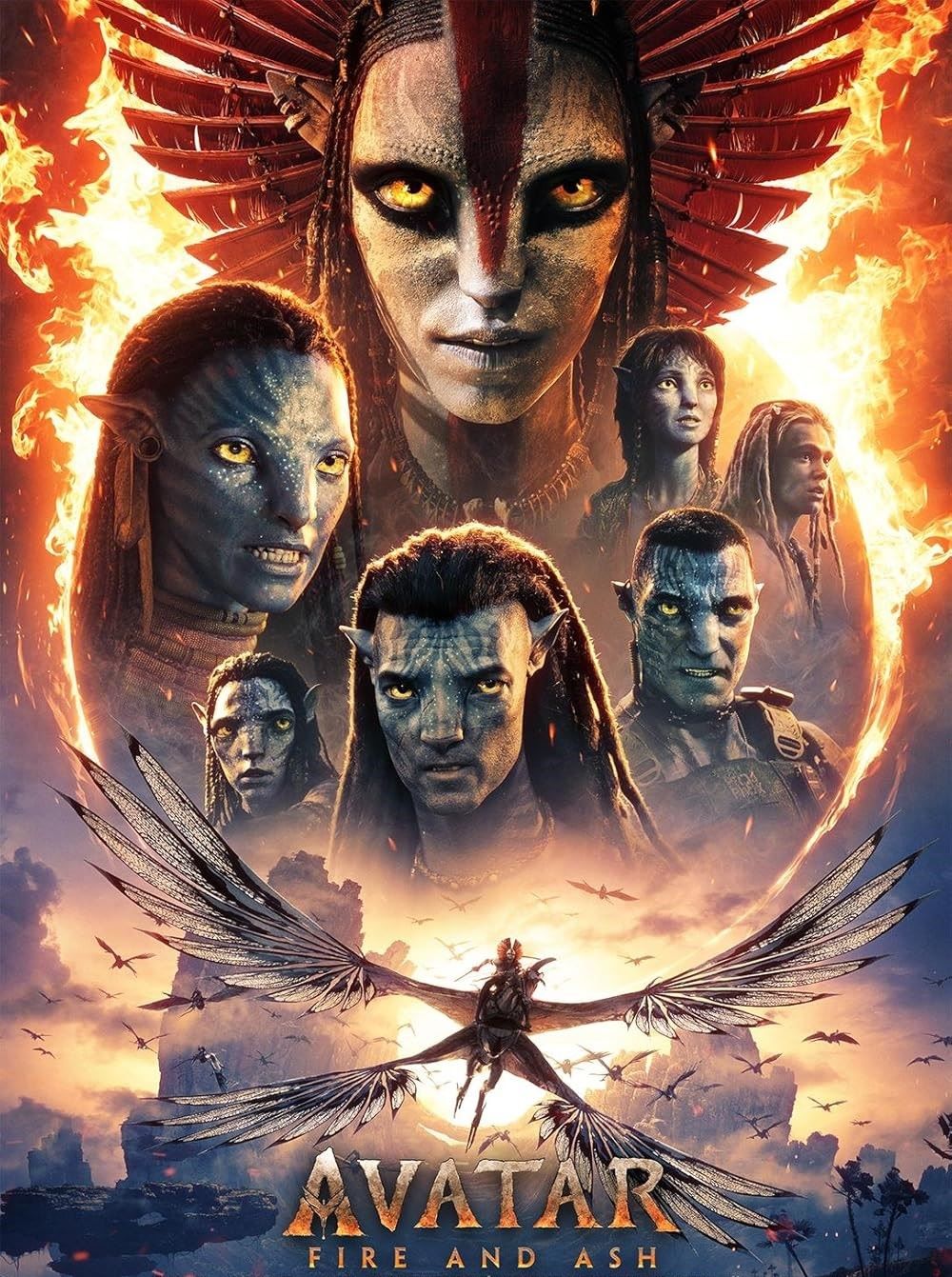
Avatar: Fire and Ash plays like a massive, molten crescendo for Cameron’s Pandora saga—visually overwhelming, emotionally heavier than the last two entries, but also very familiar in ways that will either feel comfortingly mythic or a little déjà vu, depending on your tolerance for repetition. The ash-choked skies, lava rivers, and volcanic Na’vi clans are often more compelling than some of the story beats, and the final stretch delivers the kind of operatic, war-movie scale that makes the three-plus-hour runtime go down easier than it should, even though the film clearly didn’t need to run this long.
This time around, the series leaves behind the cool blues and oceanic calm of the previous chapter for a harsher, volcanic corner of Pandora that feels like a nature documentary shot in a furnace. Jagged black rock, roiling lava, and smoke-stained skies dominate the frame, with creatures and plant life that look as if they evolved to survive heat and ash rather than coral reefs and open water, giving the movie an immediately distinct visual identity even when the story rhythms feel familiar.
At the center of this environment are the Ash People, or Mangkwan clan, a Na’vi group shaped by relentless scarcity and violence. They ride creatures adapted to fire and ash instead of waves, cover themselves in soot-black markings, and fight using a deliberate blend of traditional Na’vi weaponry and repurposed human tech, putting them ideologically at odds not just with the human invaders, but with other Na’vi clans who still cling to older, more spiritual ways of living with Eywa.
The story picks up with Jake and Neytiri’s family still reeling from Neteyam’s death, and the film leans hard into unresolved grief as its emotional baseline. Jake doubles down on his protector persona, treating every decision as a matter of survival, while Neytiri’s pain expresses itself as barely controlled rage, and that emotional weather trickles down to their children, who are increasingly frustrated at being treated like liabilities. The problem is that a lot of this family dysfunction was already unpacked in the second film, so instead of evolving those arcs, the script often feels like it is rehashing earlier conflicts.
The dynamic between Jake and Lo’ak is the clearest example of this repetition. Jake’s exasperation with Lo’ak’s impulsive, run-toward-the-bullets mentality resurfaces again and again, echoing arguments audiences have already seen: the father insisting his son isn’t ready, the son bristling at never being trusted. These moments still have emotional sting, but they circle the same drain so often that entire conversations could have been trimmed or removed without sacrificing character depth, and tightening that thread alone would have shaved a noticeable chunk off the runtime.
Where the film becomes more thematically interesting is in how it reframes Pandora’s conflict. Instead of a simple “Na’vi versus humans” setup, it pits the more traditional Na’vi clans—those still committed to a symbiotic relationship with Eywa—against the Ash People, whose warlike nature and embrace of human weaponry make them ideological outliers. That split plays as a pointed echo of historical events in the Americas, where European colonial powers armed and favored specific Indigenous nations to fight their neighbors, turning native communities into proxies in conflicts that ultimately benefitted outsiders more than the people doing the actual bleeding.
The analogy becomes sharper in how human forces hang back and quietly exploit these new divisions. By giving the Ash People access to superior firepower and nudging them toward confrontation, the outsiders effectively inflame existing grievances and reshape local power dynamics, much like colonial regimes once did by supplying guns and promises to one group while framing another as the enemy. The result is a Pandora that feels more fractured and politically complex, where internal Na’vi conflict is as dangerous as external invasion.
Varang, the leader of the Ash People, is one of the film’s strongest assets. She’s portrayed as a true believer who has taken real suffering and twisted it into a doctrine of purifying destruction, convinced that burning the world is the only way to save it. The character blends zealotry and charisma in a way that makes her both frightening and compelling, and she wields faith, desire, and fear as weapons with unnerving ease, giving the movie a volatile energy whenever she’s on-screen.
Her alliance with Quaritch pushes the story into darker, more uncomfortable territory. What begins as a pragmatic arrangement—a trade of firepower and influence for help tracking Jake—evolves into a twisted, intimate partnership that underlines just how far both are willing to go to achieve their goals. Their connection is meant to feel toxic and predatory, and it succeeds on that front, though some viewers may find the intensity of those scenes off-putting compared with the relatively straightforward romance and family dynamics of earlier entries.
On a craft level, the film is almost absurdly polished. Even if it no longer feels like a quantum leap in visual effects, the execution is meticulous: volcanic vistas glow with molten light, ash storms swirl with tactile grit, and the interplay of fire, smoke, and bioluminescence gives many shots a painterly quality. The action sequences rely on clear geography and patient staging, so even when the screen is full of creatures, machines, and chaos, it remains surprisingly easy to track who is where and what’s at stake.
The final act is where the movie unleashes everything it has: parallel battles on land, in the air, and over volatile seas, stitched together into a long, escalating crescendo. Familiar James Cameron signatures return—heroic last-second saves, nature itself intervening, climaxes that mirror earlier films—but the pacing of these sequences is handled with enough control that they rarely collapse into pure noise. Still, you can’t help but feel that with a leaner, more disciplined buildup, that climax would have hit even harder.
Structurally, the story leans heavily on patterns that loyal viewers will recognize. There is yet another relocation to a new culture, another period of uneasy assimilation, another slow slide into open warfare, and another sacrificial, emotionally charged finale. Whether that comes across as mythic repetition or simple recycling depends on how patient you are with Cameron’s tendency to “rhyme” his narratives rather than reinvent them.
Most of the main character arcs feel like refinements rather than reinventions. Jake remains the guilt-ridden warrior father terrified of losing his children; Lo’ak edges closer to full-on protagonist status as the reckless but big-hearted son; Kiri’s mystical bond with Eywa deepens while remaining intentionally enigmatic; and Quaritch once again fills the role of relentless, personal antagonist. With the same father–son friction repeatedly dragged back into the spotlight, the emotional landscape can feel stuck in place, and a stricter editorial hand might have refocused attention on the fresher elements—like Varang and the Ash People’s worldview.
Tonally, the film pushes into darker territory while still staying within a mainstream rating. The battles feel more brutal, with a greater emphasis on the physical cost of arrows, explosions, and close-quarters fighting, and there’s a persistent sense that no one is truly safe. That harshness extends to the emotional side as well, as the Sully family finds itself cornered into choices where every option exacts a price, reinforcing the idea that survival in this version of Pandora demands constant compromise.
Thematically, Avatar: Fire and Ash weaves together ideas about faith, extremism, and the way trauma can be weaponized. The Ash People act as a distorted mirror of earlier Na’vi cultures: a society that has taken genuine pain and turned it into an excuse for cruelty, abandoning balance in favor of cleansing violence. Layered on top of that is the divide-and-rule dynamic, where more technologically advanced outsiders stoke internal conflicts for their own advantage, mirroring how colonial powers in the Americas encouraged Indigenous groups to fight one another while expanding their control and extracting resources.
Despite all the digital wizardry, the performances still manage to cut through. Jake and Neytiri’s scenes carry the weight of years of loss and sacrifice, and there’s a believable exhaustion in the way they argue and compromise. The younger characters, especially Lo’ak and Kiri, feel more rooted and central than they did before, which helps sell the gradual shift toward a new generation, even if the script keeps dragging them back through conflicts that feel like reruns instead of genuine evolution.
At the same time, the movie sometimes undercuts its best character work in its rush to reach the next big set piece. Quieter moments that might have deepened side characters or given the Ash People’s beliefs more nuance are often compressed or sidelined, while scenes rehashing Jake and Lo’ak’s issues are allowed to run long. If the film had trusted audiences to remember the family dysfunction carried over from the second installment and cut down on repeated arguments, those smaller, richer beats could have had more space—and the whole piece would likely feel tighter and more focused.
For viewers already invested in Pandora, Avatar: Fire and Ash is clearly built for the biggest screen available: the volcanic vistas, layered sound design, and carefully staged action set pieces are all engineered to overwhelm in the best way. It delivers a darker chapter without abandoning the earnest, sometimes corny sincerity that has always defined this series, and as a conclusion to this phase of the story, it feels emotionally full even as it insists on revisiting familiar territory and stretching its narrative longer than necessary.
For more casual viewers or anyone who found the earlier films predictable, this is unlikely to be the conversion point. The structure is recognizable, the dialogue is often workmanlike rather than sharp, and the movie leans so hard into repeating certain family conflicts that it can feel like the story is padding itself instead of evolving. But if you can live with those flaws—the repetition, the length, the occasional heavy hand—the combination of technical craftsmanship, volcanic imagery, heavy emotional stakes, and that quietly pointed commentary on colonial-era divide-and-rule tactics makes Avatar: Fire and Ash a fiery, flawed, but undeniably impressive ride.
Here are the 2025 nominations of the Alliance of Women Film Journalists!
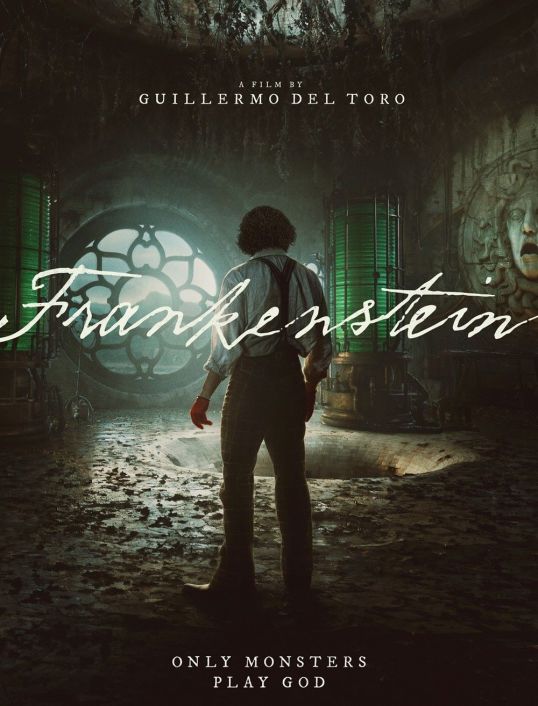
BEST FILM FRANKENSTEIN HAMNET IT WAS JUST AN ACCIDENT ONE BATTLE AFTER ANOTHER THE SECRET AGENT SENTIMENTAL VALUE SINNERS TRAIN DREAMS
BEST DIRECTOR Paul Thomas Anderson – ONE BATTLE AFTER ANOTHER Ryan Coogler – SINNERS Jafar Panahi – IT WAS JUST AN ACCIDENT Joachim Trier – SENTIMENTAL VALUE Chloe Zhao – HAMNET
BEST SCREENPLAY, ORIGINAL IT WAS JUST AN ACCIDENT – Jafar Panahi JAY KELLY – Noah Baumbach SENTIMENTAL VALUE – Joachim Trier SINNERS – Ryan Coogler SORRY, BABY – Eva Victor
BEST SCREENPLAY, ADAPTED BUGONIA – Will Tracy FRANKENSTEIN – Guillermo del Toro HAMNET – Maggie O’Farrell & Chloe Zhao ONE BATTLE AFTER ANOTHER – Paul Thomas Anderson TRAIN DREAMS – Clint Bentley & Greg Kwedar
DOCUMENTARY COME SEE ME IN THE GOOD LIGHT – Ryan White MY MOM JAYNE – Mariska Hargitay ORWELL 2+2=5 – Raoul Peck THE LIBRARIANS – Kim A. Snyder THE PERFECT NEIGHBOR – Geeta Gandbhir
ANIMATED FEATURE ARCO – Ugo Bienvenu & Giles Cazaux IN YOUR DREAMS – Erik Benson & Alexander Woo KPOP DEMON HUNTERS – Chris Applehaus & Maggie Kang LITTLE AMELIE OR THE CHARACTER OF RAIN – Liane-Cho Jin Kuang & Mailys Vallade ZOOTOPIA 2 – Jared Bush & Simon Howard
BEST ACTRESS Jessie Buckley – HAMNET Rose Byrne – IF I HAD LEGS I’D KICK YOU Renate Reinsve – SENTIMENTAL VALUE Emma Stone – BUGONIA Tessa Thompson – HEDDA
BEST ACTRESS, SUPPORTING Nina Hoss – HEDDA Inga Ibsdotter Lilleaas – SENTIMENTAL VALUE Amy Madigan – WEAPONS Teyana Taylor – ONE BATTLE AFTER ANOTHER Wunmi Mosaku – SINNERS
BEST ACTOR Leonardo DiCaprio – ONE BATTLE AFTER ANOTHER Joel Edgerton – TRAIN DREAMS Ethan Hawke – BLUE MOON Michael B. Jordan – SINNERS Wagner Moura – THE SECRET AGENT
BEST ACTOR, SUPPORTING Benicio Del Toro – ONE BATTLE AFTER ANOTHER Jacob Elordi – FRANKENSTEIN Paul Mescal – HAMNET Sean Penn – ONE BATTLE AFTER ANOTHER Stellan Skarsgård – SENTIMENTAL VALUE
BEST ENSEMBLE CAST & CASTING DIRECTOR HAMNET – Nina Gold & Lucy Amos MARTY SUPREME – Jennifer Venditti NOUVELLE VAGUE – Stéphane Batut ONE BATTLE AFTER ANOTHER – Cassandra Kulukundis SINNERS – Francine Maisler
BEST CINEMATOGRAPHY FRANKENSTEIN – Dan Laustsen HAMNET – Łukasz Żal ONE BATTLE AFTER ANOTHER – Michael Bauman SINNERS – Autumn Durald Arkapaw TRAIN DREAMS – Adolpho Veloso
BEST EDITING F1: THE MOVIE – Stephen Mirrione & Patrick J. Smith HAMNET – Affonso Gonçalves & Chloe Zhao MARTY SUPREME – Ronald Bronstein & Josh Safdie ONE BATTLE AFTER ANOTHER – Andy Jurgensen SINNERS – Michael P. Shawver
BEST INTERNATIONAL FEATURE IT WAS JUST AN ACCIDENT – Jafar Panahi NO OTHER CHOICE – Park Chan-wook SENTIMENTAL VALUE – Joachim Trier SIRÂT – Oliver Laxe THE SECRET AGENT – Kleber Mendonça Filho
FEMALE FOCUS AWARDS Presented Only to Women
FEMALE FOCUS: BEST FEMALE DIRECTOR Kathryn Bigelow – A HOUSE OF DYNAMITE Mary Bronstein – IF I HAD LEGS I’D KICK YOU Mona Fastvold – THE TESTAMENT OF ANN LEE Eva Victor – SORRY, BABY Chloe Zhao – HAMNET
FEMALE FOCUS: BEST FEMALE WRITER Mary Bronstein – IF I HAD LEGS I’D KICK YOU Nia DaCosta – HEDDA Hikari & Stephen Blahut – RENTAL FAMILY Eva Victor – SORRY, BABY Chloe Zhao & Maggie O’Farrell – HAMNET
FEMALE FOCUS: BEST VOICED PERFORMANCE IN ANIMATED FILM Ginnifer Goodwin – ZOOTOPIA 2 Loïse Charpentier – LITTLE AMELIE OR THE CHARACTER OF RAIN Arden Cho – KPOP DEMON HUNTERS Fortune Feimster – ZOOTOPIA 2 Zoë Saldaña – ELIO
FEMALE FOCUS: BEST BREAKTHROUGH PERFORMANCE Odessa A’Zion – MARTY SUPREME Chase Infiniti – ONE BATTLE AFTER ANOTHER Teyana Taylor – ONE BATTLE AFTER ANOTHER Wunmi Mosaku – SINNERS Eva Victor – SORRY, BABY
FEMALE FOCUS: BEST STUNTS PERFORMANCE Ana de Armas – BALLERINA Hayley Atwell – MISSION: IMPOSSIBLE – THE FINAL RECKONING Chase Infiniti – ONE BATTLE AFTER ANOTHER Teyana Taylor – ONE BATTLE AFTER ANOTHER Pom Klementieff – MISSION: IMPOSSIBLE – THE FINAL RECKONING
Here are the nominations of the North Texas Film Critics Association.
BEST PICTURE Hamnet Marty Supreme One Battle After Another Sentimental Value Sinners
BEST ACTOR Timothée Chalamet – Marty Supreme Leonardo DiCaprio – One Battle After Another Dwayne Johnson – The Smashing Machine Michael Jordan – Sinners Ethan Hawke – Blue Moon
BEST ACTRESS Rose Byrne – If I Had Legs I’d Kick You Jessie Buckley – Hamnet Cynthia Erivo – Wicked: For Good Chase Infiniti – One Battle After Another Renate Reinsve – Sentimental Value Emma Stone – Bugonia
BEST SUPPORTING ACTOR Jacob Elordi – Frankenstein Delroy Lindo – Sinners Paul Mescal – Hamnet Sean Penn – One Battle After Another Stellan Skarsgård – Sentimental Value Benicio del Toro – One Battle After Another
BEST SUPPORTING ACTRESS Elle Fanning – Sentimental Value Ariana Grande – Wicked: For Good Inga Ibsdotter Lilleaas – Sentimental Value Amy Madigan – Weapons Wunmi Mosaku – Sinners Teyana Taylor – One Battle After Another
BEST DIRECTOR Ryan Coogler – Sinners Paul Thomas Anderson – One Battle After Another Josh Safdie – Marty Supreme Joachim Trier – Sentimental Value Chloé Zhao – Hamnet
BEST FOREIGN LANGUAGE FILM It Was Just an Accident (France) No Other Choice (South Korea) Sentimental Value (Norway) Sirāt (Spain) The Secret Agent (Brazil)
BEST DOCUMENTARY 2000 Meters to Andriivka Deaf President Now Orwell: 2+2=5 The Alabama Solution The Perfect Neighbor
BEST ANIMATED FILM Arco KPop Demon Hunters Little Amélie or the Character of Rain Ne Zha 2 Zootopia 2
BEST CINEMATOGRAPHY Michael Bauman – One Battle After Another Autumn Durald Arkapaw – Sinners Dan Laustsen – Frankenstein Adolpho Veloso – Train Dreams Łukasz Żal – Hamnet
BEST NEWCOMER Miles Caton – Sinners Chase Infiniti – One Battle After Another Jacobi Jupe – Hamnet Inga Ibsdotter Lilleaas – Sentimental Value Alfie Williams – 28 Years Later
BEST SCREENPLAY Paul Thomas Anderson & Thomas Pynchon – One Battle After Another Ryan Coogler – Sinners Zach Cregger – Weapons Jafar Panahi – It Was Just an Accident Josh Safdie & Ronald Bronstein – Marty Supreme Will Tracy – Bugonia Chloé Zhao & Maggie O’Farrell – Hamnet
GARY MURRAY AWARD (BEST ENSEMBLE) Hamnet One Battle After Another Sinners Wake Up Dead Man: A Knives Out Mystery Weapons










 Through the Shattered Lens