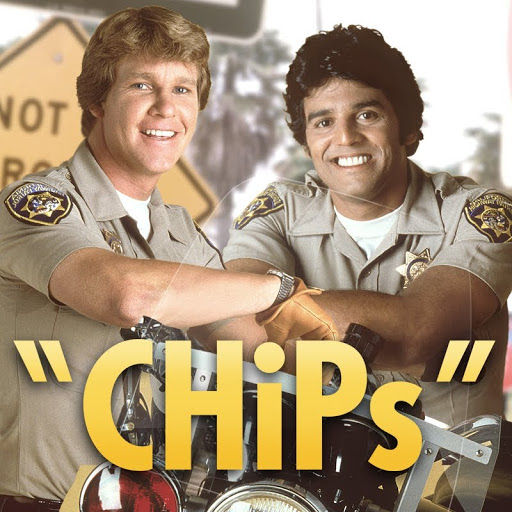
Welcome to Late Night Retro Television Reviews, a feature where we review some of our favorite and least favorite shows of the past! On Mondays, I will be reviewing CHiPs, which ran on NBC from 1977 to 1983. The entire show is currently streaming on Prime!
This week, the fifth season begins.
Episode 5.1 “Suicide Stunt”
(Dir by Michael Caffey, originally aired on October 4th, 1981)
The fifth season opens with the Highway Patrol pursuing a gang of thieves and also keeping an eye on Janos Szabo (Les Lannom), a motorcycle daredevil from Hungary who has come to Los Angeles to take part in charity show for “Highway Patrol Widows and Orphans.”
Since Hungary was controlled by the evil communists (hisssss!) when this episode originally aired, I assumed the episode would be about Janos trying to defect so that he could start a new life in the greatest country on Earth, the USA (yay!). Instead, it turned out that Janos was more concerned with spending time with an ex-girlfriend named Maria (Anita Jodelsohn) who had defected (Good for you, Maria!) and was now working for the Highway Patrol. The entire episode was pretty much scene after scene of Janos sneaking away from his handlers, stealing a vehicle, and then trying to kidnap Maria. Maria found it to be amusing. The members of the Highway Patrol were amused. Even Janos’s handlers seemed to be secretly amused. Still, when Janos set a fire outside of the CHP headquarters to distract everyone so that he could steal another car (this one with Maria in it), Ponch had no choice other than to arrest him.
“I am glad it is you who arrest me,” Janos says to Ponch, smiling like an idiot.
With Janos arrested, it falls on Jon Baker to perfect the stunts while riding Janos’s motorcycle. And Baker is able to do it easily, even the one that involves bursting through a ring of fire. So, I guess they didn’t need Janos to begin with. They should have just had Baker do it and they could have saved a lot of money. Way to waste the taxpayer’s cash, Jerry Brown!
(He was governor at the time. Then, like 30 years later, he was governor again.)
Odd episode, this one. Most season premieres try to go big but this was pretty much just another episode of CHiPs. The California scenery was nice. I always appreciate that this show was largely shot on location and, as a result, even the worst episodes have some value as a time capsule. That said, Janos was an incredibly annoying character. The fact that the show meant for us to laugh at his antics made him even more annoying. There’s only so many times you can watch one jackass try to abduct one woman before you say, “Enough already!”
Welcome to Retro Television Reviews, a feature where we review some of our favorite and least favorite shows of the past! On Mondays, I will be reviewing Miami Vice, which ran on NBC from 1984 to 1989. The entire show can be purchased on Prime!
There’s another serial killer haunting the streets of Miami. We all know what that means. It’s time to put either Trudy or Gina in harm’s way again.
Episode 5.7 “Asian Cut”
(Dir by James Contner, originally aired on January 13th, 1989)
Someone is murdering prostitutes and carving symbols into their skin. The seemingly friendly Prof. Halliwell (David Schramm) confirms that the symbols are Asian in origin. Crockett and Castillo suspect that the murderer might be a knife-obsessed Japanese gangster named Tegoro (Cary-Hiroyui Tagawa) but it turns out that they’re wrong. Gina and Trudy work undercover as escort and Trudy meets Carlos (Alfredo Alvarez Calderon), a man with a kink for being beaten. Carlos wants to introduce Trudy to a friend of his, someone who is something of an expert on torture and who learned the majority of his techniques while he was serving in the CIA during the Vietnam War….
Yep, the murderer is Prof. Halliwell!
This episode was thoroughly unpleasant. That’s not necessarily a bad thing when it comes to episodes about serial killers and David Schramm did a good job of switching from being goofy to deadly. However, in this case, it was hard not to think about the fact that, in five seasons, Gina and Trudy haven’t really gotten to do much other than pretend to be escorts and get threatened by serial killers. For once, Gina was the one providing support while Trudy was the one put in jeopardy but it still otherwise felt very, very familiar. Even the twist that the killer was a former CIA agent who specialized in torturing enemy combatants felt just a bit too predictable. (On Miami Vice, anyone who is former CIA and not named Castillo always turns out to be a murderer.) The torture scenes were so drawn out that they ultimately felt a bit gratuitous.
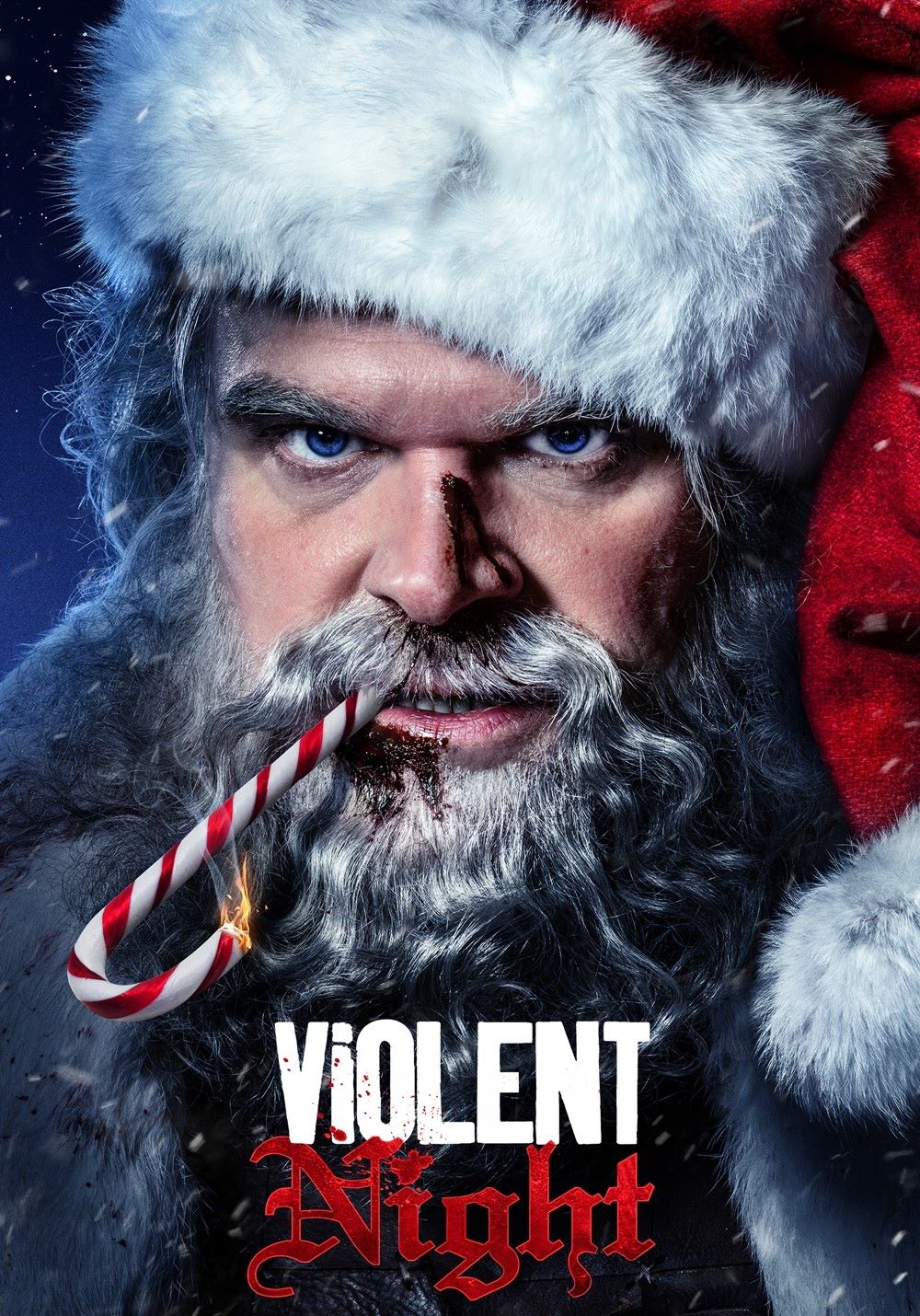
Violent Night (2022), directed by Tommy Wirkola, is a wild ride that shakes up the traditional Christmas movie formula by turning Santa Claus into a battle-hardened warrior. David Harbour stars as this unconventional Santa, who is far from jolly; he’s a grizzled, somewhat cranky, and disillusioned figure with a Viking warrior past. The movie sets itself apart with a premise that throws a group of ruthless mercenaries into a wealthy family’s Christmas Eve gathering, only to discover Santa isn’t the harmless old man they expected. Instead, he’s a fierce protector who fights back with brutal efficiency.
The story unfolds at the mansion of the affluent Lightstone family during their holiday reunion. The family is full of tension, with secrets and resentments bubbling just beneath the surface. When a gang of mercenaries led by the villainous Scrooge (John Leguizamo) invades the house to steal a fortune rumored to be stashed there, the family members become hostages. Among them is Trudy, a young girl who still believes in Santa and becomes an emotional anchor for the story. What follows is a chaotic clash as Santa unleashes his warrior skills in a bloody and often darkly humorous fight to protect Trudy and take down the intruders.
One of the strongest aspects of Violent Night is David Harbour’s performance. His Santa is not the usual cheerful holiday icon but a rough-around-the-edges hero with a quick wit and a fierce sense of duty. Harbour brings a compelling mix of grit and warmth, making Santa both intimidating and surprisingly endearing. His fight scenes are impressively choreographed, with inventive use of Christmas-themed props that add a unique flavor to the action. The humor, often delivered through clever one-liners and absurd situations, enhances the movie without overloading it, striking a balance between dark comedy and action thriller.
The action sequences are a highlight, filled with creative and over-the-top violence that turns traditional Christmas decorations into lethal weapons. From candy canes to Christmas lights, the film embraces its outrageous concept fully, often with a smirk and knowing wink to the audience. This approach to action and humor makes it feel like a holiday-themed grindhouse film, which will certainly appeal to viewers looking for something different from typical festive fare.
However, the film is not without flaws. The storyline sometimes leans too heavily on clichés and predictable twists, particularly around family drama and criminal motives. While the Lightstone family members are meant to add complexity to the narrative, many come across as caricatures, which lessens emotional impact. The pacing occasionally suffers as well, with some scenes dragging or feeling repetitive amid the barrage of action. Furthermore, the movie’s tone can be uneven—certain moments of humor or sentimentality clash with brutal violence, which might alienate viewers who prefer more consistent storytelling.
The supporting cast delivers performances that range from serviceable to over-the-top, fitting the film’s campy and exaggerated style. John Leguizamo’s Scrooge is a memorable villain with a sneer and attitude that fits the tone, while Beverly D’Angelo adds a touch of dark humor as the wealthy matriarch. The character of Trudy serves as the emotional heart of the film, grounding the chaos with a child’s innocent belief in magic and goodness. Yet, some secondary characters feel underdeveloped, existing mostly to provide fodder for the violence or comedic moments.
Visually, Violent Night embraces the glitz and cold grandeur of a wealthy family’s mansion, contrasted sharply by the gritty and bloody action that unfolds. The cinematography and production design showcase the holiday setting effectively, using wintery landscapes and elaborate Christmas decor as backdrops that add to both the festive and lethal atmosphere. The film keeps a brisk pace, aided by energetic direction, though it sometimes prioritizes style over substance.
In terms of themes, Violent Night plays with the clash between holiday cheer and harsh realities, exploring ideas about family, belief, and redemption through its unusual take on Santa Claus. It taps into a more cynical view of Christmas but ultimately doesn’t abandon the underlying message of hope and protection. This mixture, however, occasionally feels forced, as the violent antics often overshadow character development and emotional depth.
Overall, Violent Night is an entertaining and unconventional holiday film that is best enjoyed with an appetite for absurdity and dark humor. It stands out for pushing boundaries with its brutal action scenes and a refreshingly gruff Santa, offering a festive movie experience that fits more in the niche of chaotic fun rather than heartwarming tradition. While it may not win over purists looking for classic Christmas storytelling, it offers a distinctive alternative for those who want their holiday films with a hard edge and plenty of explosive moments. For viewers who can embrace its mix of camp, carnage, and seasonal spirit, Violent Night delivers a wild, memorable ride that defies expectations.
4 Shots From 4 Films is just what it says it is, 4 shots from 4 of our favorite films. As opposed to the reviews and recaps that we usually post, 4 Shots From 4 Films is all about letting the visuals do the talking.
In memory of Udo Kier, here are…
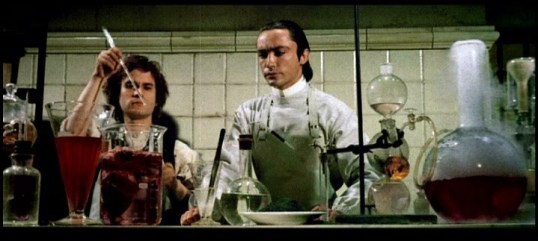
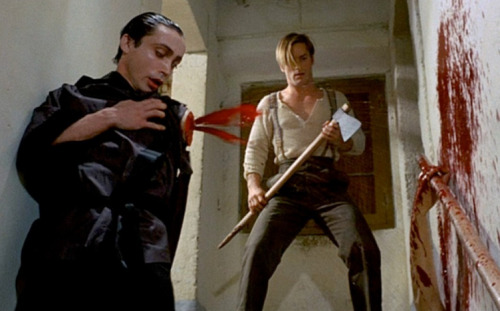
4 Shots From 4 Udo Kier Films
Flesh For Frankenstein (1973, dir by Paul Morrissey, DP: Luigi Kuveiller)
Blood For Dracula (1974, dir by Paul Morrissey, DP:Luigi Kuveiller)
Europa (1991, directed by Lars Von Trier, DP: Henning Bendtsen, Edward Kłosiński, Jean-Paul Meurisse. Released as Zentropa in North America)
Swan Song (2021, dir by Todd Stephens, DP: Jackson Warner Lewis)
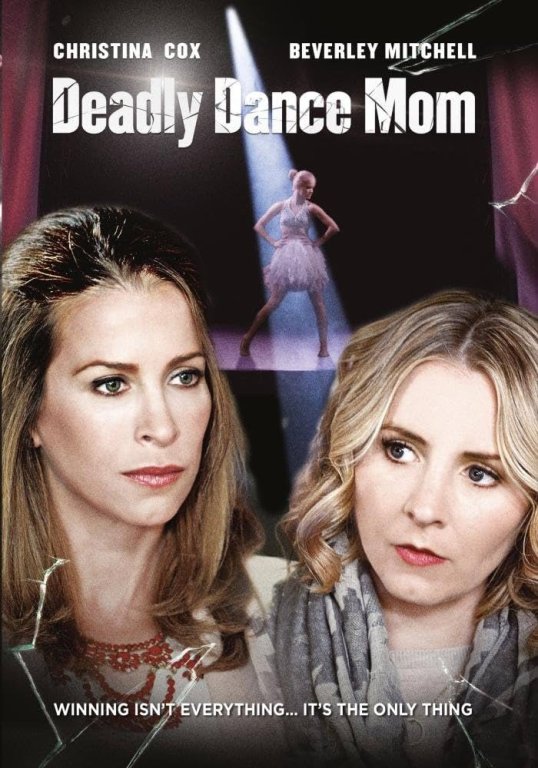
Hi, everyone! Tonight, on twitter, I will be hosting one of my favorite films for #MondayMania! Join us for 2017’s Deadly Dance Mom!
You can find the movie on Prime and then you can join us on twitter at 9 pm central time! (That’s 10 pm for you folks on the East Coast.) See you then!
Today’s song of the day is The Harder They Come, taken from the soundtrack of the 1972 Jamaican film of the same name. This film and Jimmy Cliff’s performance and the soundtrack are all often credited with introducing reggae to the rest of the world.
Well they tell me im a pie up in the sky Waiting for me when i die But between the day your been and when you die They never seem to hear or even cry
So as sure as the sun will shine im going to get my share now of whats mine And then the harder they come the harder they’ll fall One and all Ooh the harder they come the harder they’ll fall One and all
Well the oppressors are trying to keep me down Trying to drive my underground And they think that they have got the battle won I say forgive them lord, they know not what they done
Cause as sure as the sun will shine Im gonna get my share now of whats mine And the harder they come the harder they fall One and all Ooh the harder they come the harder they fall One and all
And i keep on fighting for the things i want Though i know when your dead you cant But id rather be a free man in my grave Than living as a puppet or a slave
So as sure as the sun will shine Im going to get my share now whats mine And then the harder they come the harder they fall One and all Ooh the harder they come the harder they fall One and all
As some of our regular readers undoubtedly know, I am involved in hosting a few weekly live tweets on twitter and occasionally Mastodon. I host #FridayNightFlix every Friday, I co-host #ScarySocial on Saturday, and I am one of the five hosts of Mastodon’s #MondayActionMovie! Every week, we get together. We watch a movie. We snark our way through it.
Tonight, for #MondayActionMovie, the film will be 1990’s Street Asylum!
It should make for a night of fun viewing and I invite all of you to join in. If you want to join the live tweets, just hop onto Mastodon, find the movie on YouTube and hit play at 8 pm et, and use the #MondayActionMovie hashtag! The watch party community is a friendly group and welcoming of newcomers so don’t be shy.
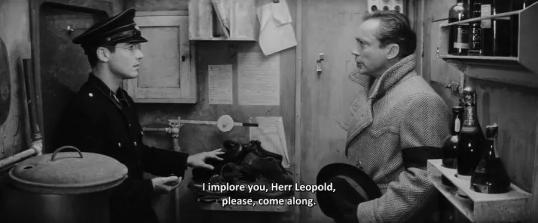
RIP to the great actor, Udo Kier. He died yesterday at the age of 81, in Palm Springs, California.
Today’s scene that I love features Kier in the only version of Suspiriathat matters, the original one directed by Dario Argento. In this scene, Kier discusses witchcraft with Jessica Harper.
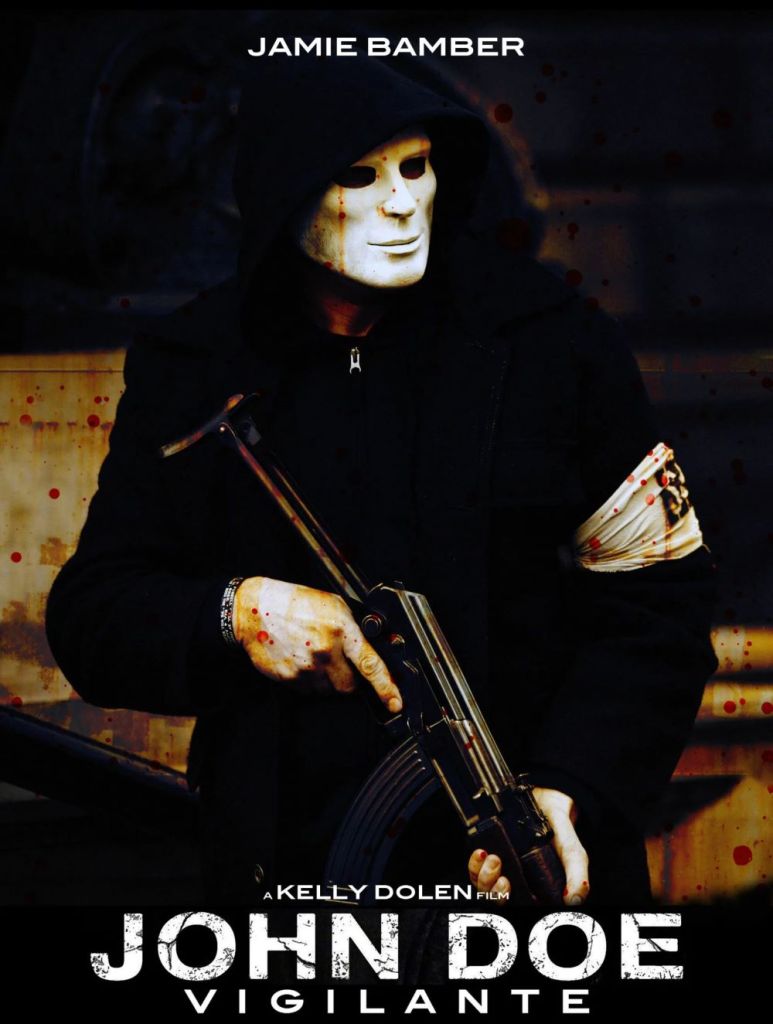
“They failed us… so what choice did I have?” — John Doe
John Doe: Vigilante, directed by Kelly Dolen and released in 2014, is a blunt and provocative take on the vigilante thriller, brimming with social commentary and visual grit. The film revolves around John Doe, played by Jamie Bamber, whose world is shattered by the violent deaths of his family members. Disillusioned by a justice system that barely delivers justice, Doe transforms himself into a vigilante, targeting repeat offenders who continually evade real consequences. The narrative takes a non-linear approach, jumping between timelines using mock interviews, courtroom debates, and TV news segments to piece together Doe’s story and the societal mania swirling around him.
The structure of the film is both one of its most engaging features and a source of occasional frustration. Rapid switches between documentary-style “talking head” interviews, real-time action, and flashbacks keep the viewer on their toes. While this can create some dramatic momentum, it also leads to a sense of disconnect, as the story sometimes trades clarity for style. Still, there’s an undeniable energy to this format. The movie feels urgent and relevant, throwing the audience directly into a conversation about law, order, and the places these systems break down.
A major focus of the film is on the media’s influence over the public’s perception of vigilantism. The mixed portrayal of John Doe as both a monster and a folk hero reflects how quickly public sentiment can tilt depending on who’s doing the telling. There’s an uncomfortable suggestion that cycles of violence and public outrage are not only connected but sometimes dependent on the news cycle to fuel them. The film hammers this point home repeatedly, sometimes at the expense of nuance. It isn’t shy about waving its message in the viewer’s face, with characters often delivering speeches about justice, victimization, and the failings of society.
Despite some heavy-handedness, Jamie Bamber’s performance is the glue holding everything together. He plays Doe with a haunted distance rather than unrestrained rage, showing a character who’s been hollowed out by tragedy and driven by a cold, relentless sense of necessity. He’s not a cartoonish avenger—his actions clearly torment him, and his moments of uncertainty make the character believably conflicted. However, the supporting cast doesn’t fare as well, with most roles feeling thin and underdeveloped. Journalists, detectives, and secondary victims drift in and out, often serving mainly as delivery devices for the film’s ceaseless thesis statements about crime and morality.
The violence in John Doe: Vigilante is unflinching and rarely sensationalized. Confrontations come fast and harsh, depicted with practical effects that drive home the ugliness of the acts themselves. This directness serves to emphasize the horror of violence, whether enacted by criminals or by Doe himself. The film’s refusal to sugarcoat these scenes will appeal to viewers who prefer realism and discomfort to stylized action, but it may push others away due to its unrelenting bleakness.
On the plus side, the movie does succeed in keeping the viewer guessing about its core question: Is Doe’s crusade righteous or an invitation to chaos? His victims are almost unfailingly depicted as monsters, which blunts some of the intended ambiguity, but the reaction from the world around him—copycat crimes, protests, media manipulation—spins the plot in more interesting directions. The broader implication is that once a society loses faith in the courts, retributive justice becomes both appealing and very, very dangerous. While the film mostly sticks to familiar genre beats, it does occasionally land a punch that lingers. Scenes showing a growing vigilante movement in response to Doe’s actions are particularly thought-provoking, inviting viewers to consider how collective anger can quickly spiral out of control.
However, the film repeatedly stumbles over its own desire to make a point. Its depiction of evil is strikingly black-and-white, and the justice system is rendered in frustratingly broad strokes. Very little time is spent on the possibility of innocent people being caught in the crossfire or of criminals ever achieving redemption. All the nuance falls to Bamber’s performance, as the rest of the characters serve mostly as echoes of his trauma or mouthpieces for the script.
Dialogue can also be a weak point. Characters often speak in loaded, over-serious refrains about crime and victimhood. If you’ve seen other media with vigilante themes, especially ones grappling with morality, John Doe: Vigilante might give you déjà vu. It isn’t particularly subtle and tends to repeat itself, particularly in the latter half, as perspective shifts and news segments rehash similar arguments. By the time the final acts come around—with a pivotal, tension-drenched scene of Doe delivering his last “message” to the public—the narrative momentum has already started to lag.
Still, the film isn’t without its bright spots. Its editing, especially the way flashbacks are woven into the present narrative, is creative and keeps certain plot elements hidden until just the right moment. There are a few bold narrative choices—one involving a child’s perspective near the end is a standout—that briefly elevate the film above its otherwise standard revenge-thriller fare. These are the moments that will stick with viewers long after credits roll.
At its core, John Doe: Vigilante is angry and bruising, with its heart firmly pinned to its sleeve. It wants to provoke discomfort and debate, not offer easy answers or escapist fun. The movie wrestles with questions of what justice really means when institutions fail, and whether violent reckoning is ever justifiable—even for the worst of the worst. It doesn’t ultimately land on a satisfying conclusion, but that may be the point.
John Doe: Vigilante stands as a solid and sometimes stirring entry in the vigilante genre, bolstered by a committed lead performance and raw intensity but hampered by heavy-handed dialogue, weak supporting characters, and a lack of moral complexity. For viewers who enjoy gritty crime films and are open to films that raise difficult, unsettling questions, John Doe: Vigilante is worth checking out. Just don’t expect it to pull its punches—or to give you any tidy resolutions.


 Through the Shattered Lens