Another Halloween has come and gone and another Horrorthon has come to a close. We hope you have had a wonderful October and that the Thanksgiving month brings you much to be grateful for!
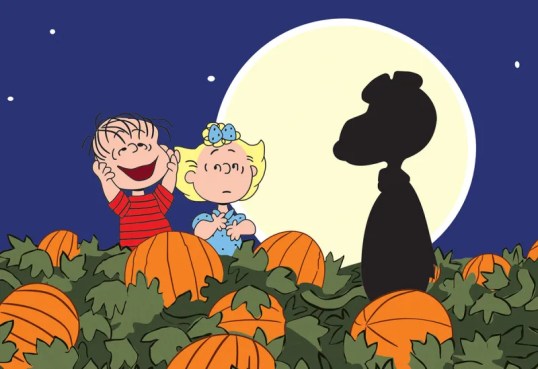
And remember, just because you didn’t see the Great Pumpkin this year, doesn’t mean that he won’t be there for you next October. As always, Linus puts it best:
To all of our readers and from all of your friends at the Shattered Lens, thank you.
2014’s TheSong tells the story of Jed King (Alan Powell).
Jed is a singer-songwriter. He is also the son of David King, a country-western superstar who drank too much, smoked too much, and had an extramarital affair with Jed’s mother. (He initially spotted her while she was bathing in a lake.) After her then-husband killed himself, Jed’s mother married David but their marriage was fraught with difficulty. Jed grew up in a conflicted household. After his father died, Jed found himself expected to carry on in David’s name. Try as he might, he found himself permanent overshadowed by the legacy of David King.
(If all this sounds familiar, that’s because it’s a country-western version of the story of King David, Bathsheba, and Solomon.)
While performing at a wine festival, Jed meets and falls in love with Rose Jordan (Ali Faulkner). They marry and start a family. Jed writes a song about Rose and it becomes his first legitimate hit. Years later, Jed is a superstar, touring while his wife raises their son. It’s an arrangement that seems to work fine until Jed meets his new opening act, fiddler Shelby Bale (Caitlin Nichol-Thomas).
Soon, in the tradition of Johnny Cash, Jed King is drinking too much and popping pills and losing his way on the road. He comes home only briefly and Rose starts to feel as if the only reason he even bothers is so he can have sex. Jed’s life is soon falling apart….
TheSong is based on Song of Songs and the story of King Solomon and, to give credit where credit is due, the film is actually pretty clever in the way it updates the story. If you know the story, it makes sense that David and Jed King would both be musicians. King David spying Bathsheba in her bath becomes David King spying Bathsheba in a lake. Naamah, the only one of Solomon’s wives to be named, becomes Rose Jordan. (Naamah was said to be from what is now Jordan.) The Queen of Sheba, who tempted Solomon into sin and paganism, becomes Shelby Bale. David and Solomon were rules. David King and his son Jed are celebrities and really, there’s not that much difference nowadays. The film’s dialogue and especially Jed’s thoughts (heard in voice over) are largely borrowed from SongofSongs and again, the film actually does a good job of modernizing them without getting away from the main theme. This is one of the rare faith-based films that’s not only willing to frankly discuss sex but which also acknowledges that sexual desire is a normal thing and nothing to be ashamed of. There’s a maturity to this film that you don’t often find in the faith-based genre.
As you can probably guess, I really like TheSong. It’s well-acted, well-directed, and the film looks great. It might some like faint praise to say that TheSong looked like a real movie but, again, that’s an accomplishment for this particular genre. Alan Powell and Ali Faulkner had wonderful romantic chemistry. That said, my favorite performance came from Caitlin Nichol-Thomas, who turned Shelby Bale into a true force of chaos. TheSong remains a favorite of mine.
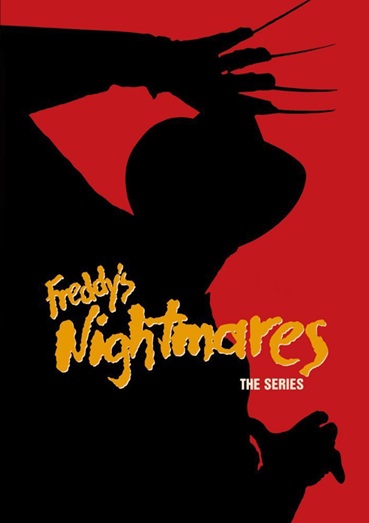
Welcome to Late Night Retro Television Reviews, a feature where we review some of our favorite and least favorite shows of the past! On Fridays, I will be reviewing Freddy’s Nightmares, a horror anthology show which ran in syndication from 1988 to 1990. The entire series can be found on Tubi!
Earlier today, Robert Englund received a star on the Hollywood Walk of Fame! Let’s get this episode of Freddy’s Nightmares out of the way so that we can celebrate!
Episode 1.15 “School Daze”
(Dir by Michael Klein, originally aired on February 12th, 1989)
Stupid episode this week.
Two high school friends worry about their future. One of them hallucinates all of the adult authority figures in his life trying to brainwash him. The other keeps having visions of how much his life is going to suck if he doesn’t get a good score on his SATs. The premise really isn’t that bad but, as so often with Freddy’s Nightmares, it appears that the writers didn’t really dig into it. Instead, they just wrote a very shallow episode in which both stories relied on the same overused twist that seems to show up in every episode. Hey, it was all just a dream! The biggest compliment that I can give this episode is that the second story did manage to capture some of the anxiety that comes along with college testing. Some teachers really do overboard with that whole “This will determine the rest of your life” spiel. Seriously, blow off the tests, go to a party school, and make friends with someone has money. That’s really all you have to do.
Instead of fixating on a bad episode of Freddy’s Nightmares, let’s watch Robert Englund get his star on the Hollywood Walk of Fame. This happened earlier today and, by most accounts, it couldn’t have happened to a nicer guy. Robert Englund is living proof that you don’t have to a bad guy to play a monster. Congratulations, Mr. Englund!
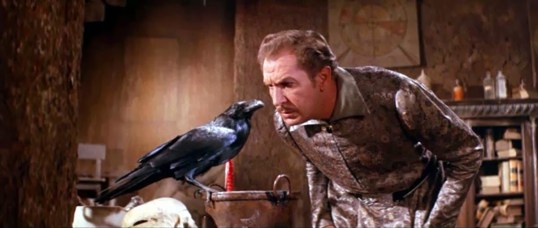
Halloween’s coming to an end. Actually, here in America, it’s come to an end everywhere except on the west coast. What better way to bring our annual Horrorthon to a close than spending a few minutes with Vincent Price and the Raven?
Unfortunately, I don’t know exactly when this was filmed. But no matter! It’s Vincent Price reading Edgar Allen Poe!
My prayer to the Great Pumpkin paid off and the Dodgers just won Game 6 of the World Series, 3-1! The Series is now tied and whoever win tomorrow’s game will win the championship! As much as I don’t like the Blue Jays and even though the Dodgers are not my team, those two teams have really give us a great World Series so far!
It all comes down to Game 7, tomorrow night. GO DODGERS!
On this, the final day of our annual Horrorthon, we offer you a final Horror on TV entry.
In this episode of Highway to Heaven, angel Jonathan Smith (Michael Landon) tries to defeat the devil for the soul of his friend Mark (Victor French). This episode, a true Halloween episode, originally aired on October 30th, 1985, and it features guest turns from Anthony Zerbe and the great Michael Berryman.
We did not get many trick-or-treaters tonight but the ones that did show up were all wearing costumes and were all age-appropriate. When it comes to giving out candy, I follow the rules set out by Larry David on Curb Your Enthusiasm.
Did you know that in 1938, the same year that they horrified America with their production ofThe War Of The Worlds, Orson Welles and the Mercury Theater did a radio version of Dracula?
Check out this amazing cast list:
Orson Welles – Dracula/Dr. Arthur Seward
George Coulouris- Jonathan Harker
Ray Collins – Russian Captain
Karl Swenson – The Mate
Elizabeth Fuller – Lucy Westenra
Martin Gabel – Professor Van Helsing
Agnes Moorehead – Mina Harker
Coulouris, Collins, and Moorehead would, of course, all go one to appear with Orson Welles in Citizen Kane.
And now, we are proud to present, for your listening pleasure …. DRACULA!
“In this Walk, it’s not about winning. It’s about refusing to be forgotten while the world watches us fade away.” — Peter McVries
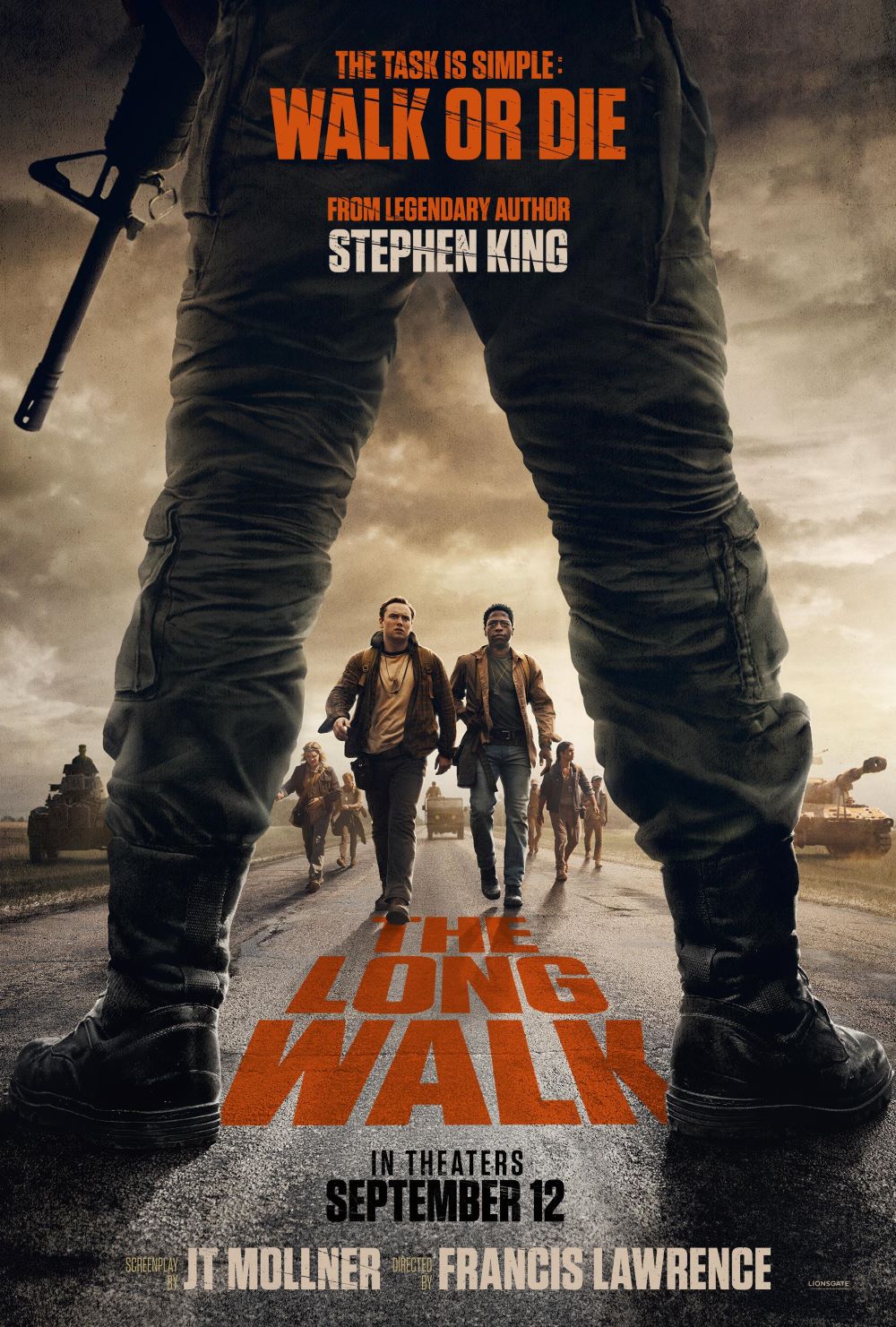
Francis Lawrence’s The Long Walk (2025) delivers a relentlessly brutal and unyielding vision of dystopian horror that explores survival, authoritarian control, and the devastating loss of innocence. The film immerses viewers in a grim spectacle: fifty teenage boys forced to participate in an annual, televised event known as the Long Walk. To survive, each participant must maintain a constant pace, never falling below a minimum speed, or else face immediate execution.
At the heart of this bleak narrative is Raymond Garraty, played with earnest vulnerability by Cooper Hoffman. Garraty’s backstory, marked by the tragic execution of his father for political dissent, sets a somber tone from the outset. As the Walk drags on, Garraty forges fragile bonds with fellow contestants, particularly Peter McVries (David Jonsson), whose camaraderie and quiet resilience inject moments of hope and humanity into the harrowing journey. These relationships become the emotional core, grounding the film’s relentless physical and psychological torment in deeply human experiences.
The setting enhances this oppressive atmosphere. The time and place remain deliberately ambiguous, with evident signs that the United States has recently suffered a second Civil War. The aftermath is a landscape ruled by a harsh, authoritarian military regime overseeing a nation economically and politically in decline. Though visual cues evoke a retro, 1970s aesthetic—reflected in military hardware and daily life—the film resists pinning itself to an exact year. This timelessness amplifies its allegorical power, emphasizing ongoing societal collapse and authoritarianism without tying the story to one era specifically. The dystopian backdrop is populated by broken communities and a pervasive sense of hopelessness that mirrors the characters’ internal struggles.
Visually, The Long Walk employs stark, gritty cinematography that traps viewers in the monotonous expanse of endless roads and bleak environments. Lawrence’s direction is unflinching and unrelenting, echoing the merciless march to death and the broader commentary on institutionalized brutality. The atmospheric score complements this oppressive tone, underscoring the emotional and physical exhaustion pacing the narrative.
Performances elevate the film’s emotional stakes significantly. Hoffman’s portrayal of Garraty captures the youth’s evolving vulnerability and determination, while Jonsson’s McVries adds a poignant emotional depth with his steady, hopeful presence. Supporting actors such as Garrett Wareing’s enigmatic Billy Stebbins and Charlie Plummer’s self-destructive Barkovitch bring vital complexity and urgency. Stebbins remains a figure whose allegiance is ambiguous, adding layered mystery to the group dynamics. Judy Greer’s limited screentime as Ginny Garraty, Ray’s mother, stands out powerfully despite its brevity. Each of her appearances is heartbreaking, bringing a wrenching emotional weight to the film. Her panicked, anguished attempts to hold onto her son before he embarks on the deadly Walk amplify the human cost of the dystopian spectacle, leaving a lasting impression of maternal agony amid the surrounding brutality.
Mark Hamill’s role as The Major is a significant supporting presence, embodying the authoritarian face of the regime. The Major oversees the brutal enforcement of the Walk’s rules, commanding lethal squads who execute those who falter. Hamill brings a grim and chilling force to the character, whose cold charisma and unwavering commitment to the ruthless system make him a menacing figure. Despite relatively limited screen time compared to the young participants, The Major’s presence looms large over the story, symbolizing the chilling machinery of power and control that governs the dystopian world.
Yet, the film is stark in its depiction of violence. The executions and suffering are raw and often grotesquely explicit, serving as a damning critique of authoritarian cruelty and the voyeuristic nature of state violence televised as entertainment. This unfiltered brutality can, however, become numbing and exhausting as it piles on relentlessly, occasionally undercutting emotional resonance. The narrative embraces nihilism fully, underscoring the dehumanization and futility within the dystopian world it portrays.
The film’s overall pacing and structure reflect this bleakness but at times suffer from monotony. The heavy focus on walking and survival mechanics leads to a lack of narrative variation, testing the audience’s endurance much like the characters’. There is likewise a noticeable stretch of physical realism—the contestants endure near-impossible physical feats without adequate signs of weariness or injury, which can strain believability.
Character development is another area where the film falters slightly. While Garraty and McVries are well-drawn and immunize emotional investment, other characters tend toward archetypical roles—bullies, outsiders, or generic competitors—diminishing the impact of many deaths or interactions. Similarly, the repetitiveness of the setting and cinematography, relying mostly on basic shots following the walkers, misses opportunities for more creative visual storytelling that might heighten tension or spotlight key emotional beats.
The film’s conclusion, stark and abrupt, offers no real catharsis or closure, reinforcing the overarching theme of unyielding despair. While this resonates with the film’s nihilistic motif, it may alienate those seeking narrative resolution or hope. The visceral shock and bleak tone permeate to the end, leaving the viewer with a lasting impression of relentless suffering and sacrifice.
This demanding yet visually striking and emotionally intense film challenges viewers with its unrelenting bleakness and brutal thematic content. It critiques societal violence, media spectacle, and authoritarianism through starkly powerful performances and an oppressive, immersive atmosphere. Though it excels in evoking emotional rawness in key moments and maintaining thematic consistency, it struggles with pacing, character depth beyond the leads, and occasional narrative monotony. Its ambiguous setting in a post-second Civil War America ruled by a declining authoritarian regime adds a timeless, allegorical layer to its exploration of human endurance and societal collapse.
Ultimately, this film is best suited for viewers prepared for an uncompromising, intense vision of dystopia. It stands as a compelling, if bleak, meditation on youth, survival, and the human spirit under extreme duress, showcasing Francis Lawrence’s aptitude for crafting thought-provoking, provocative horror.



 Through the Shattered Lens