I may write mostly about the film exploits of actors like Charles Bronson, Rutger Hauer, James Woods, Clint Eastwood, and Chow Yun-Fat, but there’s no doubt that I’m a sucker for a good romance. And my very favorite romantic films are based on the works of Jane Austen. I’ve watched the 1995 TV mini-series version of PRIDE AND PREJUDICE starring Colin Firth and Jennifer Ehle at least ten times in my life. It’s just so good. My favorite Austen “book-turned-film” just may be the 1995 version of PERSUASION starring Amanda Root and Ciaran Hinds. I’ve probably watched it at least twenty times in my life. I love to watch these movies when I need a pick me up, or when I need to relax. They have hard won “happy endings” and they always leave me with a tear in my eye.
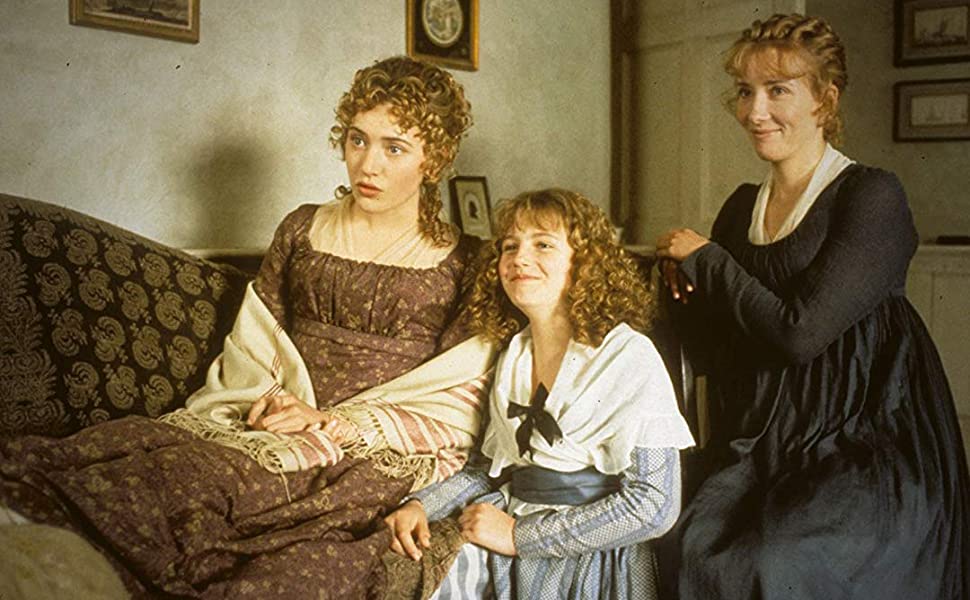
Well, it’s obvious that 1995 was an amazing year for Jane Austen adaptations, because the year also featured the release of Ang Lee’s SENSE AND SENSIBILITY starring an incredible cast that included Emma Thompson, Kate Winslet, Hugh Grant and Alan Rickman. Emma Thompson would even win an Oscar for the screenplay that she adapted for the screen. If it was up to me, she would have also won an Oscar for her performance in this scene alone, and I still get happy tears every time I watch it. *(SPOILER ALERT)* If you’ve never seen the film, and you don’t want to see how it ends, do not watch this clip. However, if you love the movie, and the scene, as much as I do, enjoy. Happy Valentine’s Day, my friends!
Electric Dreams is a film about a love triangle between a man, his neighbor, and his personal computer.
Miles (Lenny Von Dohlen) is an architect who wants to develop a special brick that can withstand earthquakes. One of his colleagues suggests that he buy something called a — let me check my notes to make sure I got it right — com-put-er. Apparently, computers can do anything! Miles is skeptical but he decides to give it a try.
(In all fairness, this movie came out at a time when there were no iPhones or even laptops and personal computers were viewed as being strange and exotic. )
Miles get his computer and it’s basically one of those boxy computers that used to populate computer labs in high schools across the country. As soon as I saw the computer, I wanted to play Oregon Trail. After the computer overheats and Miles tries to cool it down by pouring champagne on it (!), the computer comes to life. Now voiced by Burt Cort, the computer develops a crush on Mile’s neighbor, a cellist named Madeleine (Virginia Madsen). The computer hears Madeleine playing her cello and composes its own music to play with her. Madeleine hears the music and assumes that Miles must be a great composer. Soon, Miles and Madeleine are falling in love and the computer is getting jealous. The computer composes more more music for Miles but grows angry when Miles doesn’t give the computer any credit. Even though the computer can’t move from the desk and has to be plugged in to work, it still manages to wreck havoc with Miles’s life. When this movie came out, the idea of someone’s entire life being electronically monitored and recorded probably seemed like an out-there idea. Today, that’s just a normal Tuesday for most people.
Electric Dreams is a mix of romance, comedy, and science fiction. The scenes of Miles and Madeleine falling in love are mixed with scenes of the computer basically having a nervous breakdown and conspiring to ruin Miles’s credit and even trap him in his apartment. Electric Dreams is probably the most good-natured film ever made about a computer run amuck. The computer doesn’t mean to hurt anyone, it’s just jealous and feeling neglected. It’s a weird mix but the movie is so dedicated to its premise and Lenny Von Dohlen and Virginia Madsen are so appealing as the romantic leads that it works. Electric Dreams proves that true love can conquer all, even in the Computer Age.
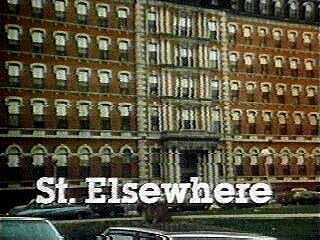
Welcome to Retro Television Reviews, a feature where we review some of our favorite and least favorite shows of the past! On Fridays, I will be reviewing St. Elsewhere, a medical show which ran on NBC from 1982 to 1988. The show can be found on Hulu and, for purchase, on Prime!
This week, things get dark.
Episode 1.12 “Release”
(Dir by Victor Lobl, originally aired on February 1st, 1983)
The gunshot victim (Tom Hulce) who was saved by Samuels last week has woken up but he has no idea who he is. He is labeled John Doe #12, meaning there’s at least eleven other people at St. Eligius who are suffering from amnesia! That’s a scary thought. There’s a lot of things that I don’t want to suffer from and amnesia is high on the list. I can’t imagine how frightening that would be, not having any idea who you are or where you belong.
Dr. Chandler tries to help John Doe #12 get his memory back but, in this episode at least, neither has any luck. Even an attempt at hypnosis reveals that John can’t remember anything before being rolled into the ER. At one point, an older couple step into the room to discover if John is their son, who has been missing for two years. He’s not, which leaves the couple in tears.
As serious and as heart-breaking as this all is (and both Washington and Hulce give outstanding performances in this episode), there is one moment where Dr. Westphall makes a reference to a “Lt. Gerard,” who is searching for John’s parents. It seems like a throw-away reference, unless you’re familiar with either the 1950s television show The Fugitive or the subsequent 1993 film adaptation. Lt. Gerard was the name of the detective who was hunting for that show’s main character, Dr. Richard Kimble. Ed Flanders delivers the line solemnly and it occurs at a serious moment. There’s no winking at the audience. Instead, it’s simply a reward for the pop culture-literate who might be watching the episode.
For the most part, this was a grim episode. After losing a patient to cancer, Dr. Peter White was ordered to talk his family into signing a release for an autopsy. The autopsy was largely to protect the hospital from getting sued. The family didn’t want an autopsy. Peter didn’t feel the autopsy was necessary. But, having been bullied by his superiors, Peter proceeded to bully and manipulate the dead man’s son into signing the release. In the end, it turned out that Peter was correct. The man did die of cancer. The autopsy was not necessary. Upset over the whole process, Peter said that he felt like he had “raped” a mourning family. The doctor who ordered Peter to get the release merely smiled and said he would see Peter at rounds the next day.
Meanwhile, Dr. Craig was shocked and angered when he discovered that his old friend (played by Andy Romano) had checked into the hospital for gender-affirming surgery. This led to the episode final scene, in which Craig talked about not liking the way the world had changed since he was a young man. The scene was well-acted by William Daniels, who was one of the best when it comes to giving a monologue of frustration.
And finally, Dr. Samuels and Dr. Paxson disagreed on how to treat a patient and this storyline would have been interesting if either Samuels or Paxson had been an interesting character. But they’re not. I don’t care about them. I don’t care about their boring relationship. And, knowing that neither is going to be around once this season ends, I really didn’t care that much about their storyline. With all of the interesting stuff that happened in this episode, I groaned whenever I realized I was going to waste a few minutes watching Samuels and Paxson argue.
This episode left me feeling pretty depressed. Between Peter bullying that family and John Doe searching for his identity, there wasn’t much hope to be found. Still, I have faith that John Doe will find his identity and maybe Peter will even become a better doctor. (He certainly can’t get much worse.) If Lt. Gerard could find Richard Kimble, then anything’s possible!
Based on a play by Somerset Maugham, 1929’s Charming Sinners takes place amongst the very rich.
Kathryn Miles (Ruth Chatterton) is married to Robert Miles (Clive Brook). Robert is wealthy and a respected businessman and, through her marriage, Kathryn is also wealthy and …. well, she’s not quite respected. The fact of the matter is that everyone is gossiping about the fact that Robert is cheating on Kathryn. Kathryn denies that Robert is being unfaithful but she knows that he is. She also knows that Robert is cheating with her best friend, Anne-Marie Whitley (Mary Nolan). Even when Anne-Marie’s husband, George (Montagu Love), comes to suspect that Anne-Marie is cheating with Robert, Kathryn tells George that it isn’t true and defends her cad of a husband.
Why is Kathryn doing this? As Kathryn explains it, she doesn’t feel that marriage necessarily means that you have to love someone. Kathryn married Robert for the money and the status and, as long as she has that, she’s willing to overlook Robert’s dalliances. Admitting that Robert is cheating would obligate her to go through a divorce and potentially lose everything that she has. If this film had been released just a few years later than it was, the Production Code would have insisted that Kathryn suffer for her less-than-reverent attitude towards the institution of marriage. Since this is a pre-code film, Kathryn is portrayed as being strong and determined. What the Production Code would have deemed a drama, the pre-code era considered to be a comedy.
Still, Kathryn does get revenge on her husband by openly flirting with a former lover, Karl Kraley (William Powell, handsome and suave as ever). Kathryn also makes some money on her own, proving to her husband that she could be a success even if she hadn’t married him. Kathryn informs Robert that she is going to be living her own life, even if they are married. And if Kathryn wants to take a lover, that’s her decision.
And good for Kathryn! Seriously, Robert is so smug and sure of himself that it’s deeply satisfying to watch as Kathryn reveals that Robert was never as clever as he thought it was. Though the film does not end with the dramatic divorce that some might expect, it does end with Kathryn taking control of her own life and making her own decisions about how she’s going to live it. That type of ending is rare enough today. One can only imagine how audiences in 1929 reacted to it.
But is the film itself any good, you may be asking. It’s an early sound picture and while the cast all proves their ability to handle dialogue, the largely stationary camera often makes the film feel like a filmed play (which is largely what it was). Like many pre-code films, the emphasis here is on how the rich have better clothes and better homes than the majority of the people watching the movie. That’s not a problem for me. I like looking at nice clothes and wonderfully decorated houses. Some others may dismiss this film as just being about the problems of the rich but my personal opinion is that everyone has problems. Wouldn’t you rather have problems as a wealthy person than a poor one? The most important thing is that the film features two of the best actors of Hollywood’s early Golden Age, Ruth Chatteron and William Powell, and they both give excellent and charming performances.
Charming Sinners is a bit of time capsule and probably not for everyone. If you’re not interested in the film’s era, it probably won’t hold your attention. But, to a fashionable history nerd like me, Charming Sinners definitely had its charms.
I love Richard Donner’s Ladyhawke . In the following scene, our hero Navarre (Rutger Hauer) has stormed a church, looking to reach the wicked Bishop (played by Wargames‘ John Wood). It’s in an effort to force the Bishop to break the curse that turns Navarre into a wolf by night and his love, Isabeau (Michelle Pfeiffer) into a Hawk by day. He’s reached the Bishop, but believes that Isabeau is surely gone, having asked a old friend to take her life should Navarre fail. I chose this part partially because I love the look on Navarre’s face on hearing Isabeau’s voice. He looks at her almost as if he’s seen her for the first time. He’s just so entranced, but then he quickly remembers what he needs to do, and his voice booms through the church. I wish this video wasn’t cut as short as it is.
In Romance on the Ranch, Suzanna Pereira plays Sara, who gets to live out one of my favorite fantasies.
Sara quits her job, sells her place, gets in a camper with her dog, and drives out west. She has another job waiting for her, as a doctor at a big-city hospital. But before she starts her new job, she just wants to see America and capture it with her camera. I knew exactly how Sara felt. There have been so many times that I’ve been tempted to just grab my camera, jump in my car, and just take off for parts unknown. It’s not very practical in the real world but that’s why we have movies like this one!
Sara’s camper breaks down outside of a ranch. Luckily, the ranchers invite her to stay with them while the camper gets fixed. Sara volunteers at the local assisted living facility and she rides a horse for the first time in years. She also meets two handsome brothers and she falls in love with both of them. Aidan (Chris Reid) is quiet and likes to spend his time working on the ranch and with the land. Porter (Brando White) is a rebel who gets his work done but at his own pace and who feels like Aidan looks down on him. Sara wants to stay at the ranch but she doesn’t want to cause trouble between the two brothers. The brothers, though, have issues to work on that go far beyond of them liking Sara. Who will Sara choose? The handsome rebel or the handsome cowboy who has a daughter who needs a stepmother?
I liked this movie, even though I knew everything that was going happen. It’s basically a Hallmark movie, even if it didn’t air on the network. Everyone in the movie is very pleasant and nice and the ranch was a really pretty location. I liked that the two brothers were both nice guys and loved each other deep down, no matter how much they fought. They had different ways of looking at the world but neither was necessarily wrong. There’s just something incredibly romantic about big strong men working in the Great Outdoors and learning to express their emotions. Mostly I liked the movie because I could relate to Sara. I looked at those beautiful mountains surrounding the ranch and I wanted to get out my camera and start snapping pictures too.
Today’s Valentine’s Day song of the day is my favorite song of all time, performed by the wonderful Yvonne Elliman.
I don’t know why I’m surviving every lonely day When there’s got to be no chance for me My life would end, and it doesn’t matter how I cry My tears of love are a waste of time
If I turn away, am I strong enough to see it through? Go crazy is what I will do
If I can’t have you, I don’t want nobody, baby If I can’t have you, ah-ah-ah, oh If I can’t have you, I don’t want nobody, baby If I can’t have you, ah-ah-ah
Can’t let go, and it doesn’t matter how I try I gave it all so easily to you, my love To dreams that never will come true Am I strong enough to see it through? Go crazy is what I will do
If I can’t have you, I don’t want nobody, baby If I can’t have you, ah-ah-ah, oh If I can’t have you, I don’t want nobody, baby If I can’t have you, ah-ah-ah, oh
If I can’t have you, I don’t want nobody, baby If I can’t have you, ah-ah-ah, oh If I can’t have you, I don’t want nobody, baby If I can’t have you, ah-ah-ah (I’m in love with nobody)
If I can’t have you, I don’t want nobody, baby If I can’t have you, ah-ah-ah, oh If I can’t have you, I don’t want nobody, baby If I can’t have you, ah-ah-ah, no
(Lyrics by Maurice Ernest Gibb / Robin Hugh Gibb / Barry Alan Gibb)
Today is the day that we celebrate love and romance and everything that goes with it!
Love isn’t always easy and some people have a hard time around Valentine’s Day. If you’re single, do not despair. The path to true love is never an easy one to travel but the destination makes the trip worth it. Even in the 1950s and the 1960s and the 1970s, Valentine’s Day wasn’t an easy day for everyone. Love can hurt. Love can bring tears to your eyes.
As difficult and as frustrating as it can be to find true love, we will never stop searching because finding it makes it all worth it.
So. if you’re alone or if you’re a part of a couple, if you’re single or married, in love or simply enjoying life, happy February 14th! May it be a good day, no matter what it means to you.
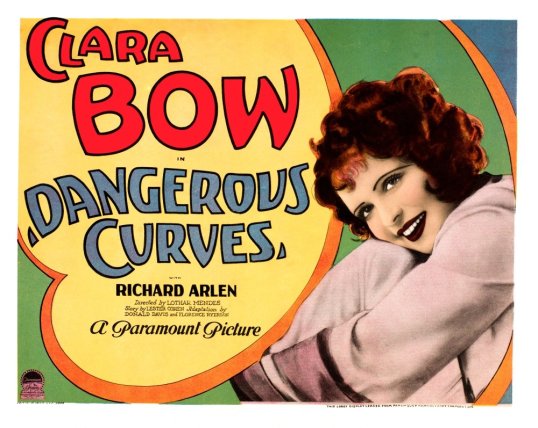
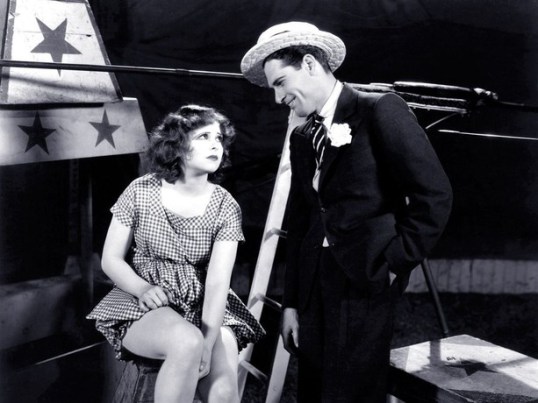
The 1929 film, Dangerous Curves, takes place at the circus.
Larry Lee (Richard Arlen) is a tightrope walker and, when we first meet him, he’s a bit of a cad. He knows he’s the best and he knows that the crowds are specifically showing up to watch him risk his life on a nightly basis. Every woman at the circus is crushing on him but Larry hardly notices because he’s used to being desired. He’s in love with his tightrope-walking partner, Zara (Kay Francis). Everyone can tell that Zara is manipulative and not even loyal to her relationship with Larry. She wastes his money and Larry sometimes spends so much time thinking about her that it breaks his concentration on the tight rope.
Eventually, Larry discovers that Zara has been cheating on him! When Larry finds out about Zara and Tony (David Newell), he cannot get the image of them kissing out of his head. When he tries to walk across the tight rope, he loses his focus and, as the audience gasps, Larry falls to the ground below. (In an impressively-edited sequence, we see Larry falling from about five different angles before we finally see him hitting the ground.) Larry recovers but his confidence has been broken. Instead of returning to the circus, he just wants to drink and obsess on Zara and Tony.
Can bareback rider Patricia Delaney (Clara Bow) convince him to return to the circus? Can she give him the confidence to once again walk across the tightrope? Will Larry then teach Pat how do the tightrope act herself? Will Larry finally realize that Pat loves him and that he loves her? And how will Pat react when, after all she’s done for Larry, he suddenly decides that he wants to bring Zara back into the act?
Dangerous Curves is a mix of melodrama and romance, all taking place at the circus. It’s also a pre-code film, which means it’s a bit more honest about the relationships between the characters and Larry’s subsequent drinking problem than it would have been if the film had been made just a few years later. As a result, this is a melodrama with an edge. The members of the circus community are living on the fringes of polite society and they’ve built their own community, one that is based on their unique talents. Larry’s sin isn’t so much that he’s arrogant and tempermental. It’s that he doesn’t properly respect the community of which he’s a part. He thinks he’s above the rest of the circus. His fall from the high wire humbles him. His relationship with Patricia eventually redeems him.
That said, the main appeal of this film is that it features Clara Bow in one of her early sound-era performances. Bow became a star during the silent era but, unlike many of her contemporaries, she was able to make the transition to sound. I absolutely love Clara Bow and this film features one of her best performances. She’s determined and energetic and she plays the stereotypical “good” girl with just enough of a mischievous glint in her eye to make her compelling. She may be willing to help Larry get back on the tightrope and then subsequently learn how to walk the tightrope herself but she also shows that she’s not going to put up with him taking her for granted. As well, both Clara and Kay Francis get to wear a lot of cute outfits, which is always one of the pleasures of a pre-code film.
Dangerous Curves is worth watching for the chance to see Clara Bow at her best.
As some of our regular readers undoubtedly know, I am involved in a few weekly live tweets on Twitter and Mastodon. I host #FridayNightFlix every Friday, I co-host #ScarySocial on Saturday, and I am one of the five hosts of #MondayActionMovie! Every week, we get together. We watch a movie. We tweet our way through it.
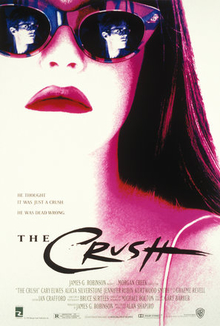
Tonight, at 10 pm et, #FridayNightFlix presents 1993’s The Crush!
If you want to join us this Friday, just hop onto twitter, start the movie at 10 pm et, and use the #FridayNightFlix hashtag! It’s a friendly group and welcoming of newcomers so don’t be shy.
The Crush is available on Prime and Tubi! See you there!





 Through the Shattered Lens