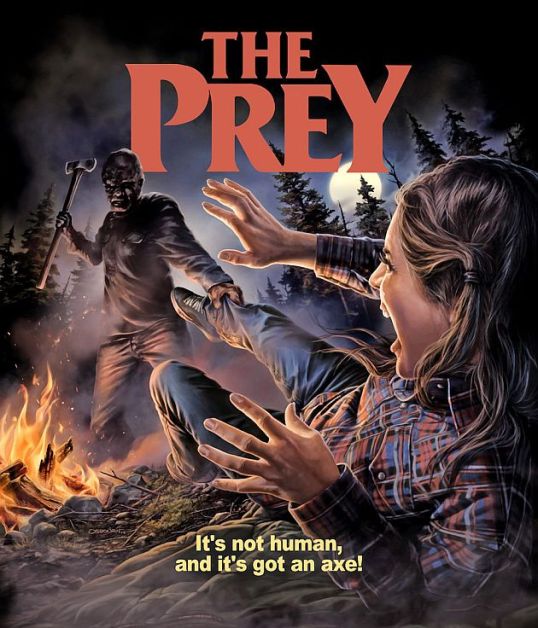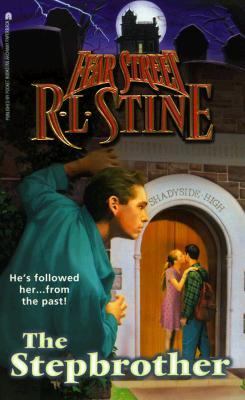
Horror Novel Review: The Stepbrother by R.L. Stine


The 1998 novel, The Stepbrother, tells the story of Sondra.

Sondra is a teenager living in Shadyside.  Like many of the town’s teenagers she comes from a broken home but she also has a cute boyfriend named Zach and three close girlfriends, the main one of whom is named Mallory and who somehow is an expert in hypnotism.  Seriously, how does one become an expert in hypnotism before even graduating from high school?  I would think that hypnotism would be one of those things where you would have to spend years in training before you were allowed to even try it out on anyone.  But Mallory is just casually hypnotizing everyone!  I wouldn’t even know where to begin when it comes to hypnotizing people, though I’ve been told that I do know how to cast a spell whenever I enter a room.  I said that with a wink and a smile, by the way.

Sondra also has a new stepfather and a stepbrother named Eric.  Zach is totally jealous of Eric and everyone does keep commenting on the fact that Sondra and Eric do kind of look like they belong together.  Seriously, it’s not like they’re blood-related so why not?  I mean, he is right there!  (I never had a stepbrother in high school but if I did, I can only imagine what would have happened.)  Still, Zach shouldn’t worry because Sondra is too busy freaking out over the possibility of dying in a fire to seriously consider cheating on him.  Sondra keeps having feelings of deja vu.  Mallory suggests that maybe Sondra is the reincarnation of a girl who died in a fire back in the 50s.  And maybe Eric is the reincarnation of the person who was responsible for the fire!

Yeah, okay.  Whatever.  If I’m not very enthusiastic about this book, it’s because I don’t believe in reincarnation and I always find reincarnation stories to be pretty boring.  This one features Sondra flashing back-and-forth from the 80 to the 50s and trying to avoid dying in a second fire but it all felt way too predictable to be effective.  If you’ve seen one movie or read one book about reincarnation, you’ve pretty much seen and read them all.

(That said, if I did believe in reincarnation, I would assume that I was probably Edie Sedgwick in a past life.  Or maybe Alice Roosevelt.  Or perhaps Victoria Woodhull or Evelyn Nesbit.  I once had a dream where I was Mary Kelly, Jack the Ripper’s final victim, in a past life.  One thing I find interesting about reincarnation is that everyone’s past life was always so exciting and melodramatic.  Nobody was ever just some slop in a past life.  Instead, they were a wealthy celebrity who died under the most tragic of circumstances.)

Finally, the whole hypnotism subplot was silly even by the standards of R.L. Stine.  Of course, I have to admit that I’m also not a big believer in hypnotism.  I went to a hypnotism demonstration in college and I’m proud to say that I could not be hypnotized, largely because my ADD and my own stubbornness made it impossible for me to clear my mind.  Everyone else at the demonstration was rather easily hypnotized but not me!  I’ve always taken a good deal of pride in that.
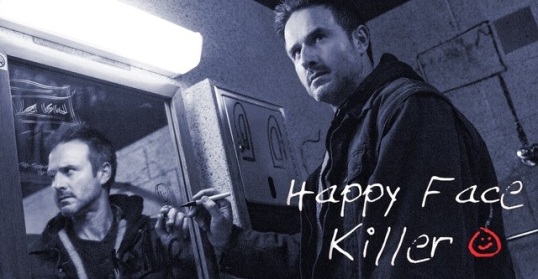
October True Crime: Happy Face Killer (dir by Rick Bota)


2014’s Happy Face Killer is loosely-based on the real-life crimes of Keith Hunter Jesperson.

Jesperson was a truck driver who, in the early 90s, murdered at least eight women in six different states.  (Jesperson later claimed that he murdered over 160 but no one knows if that’s true or not.  For his part, Jesperson has a habit of retracting his confessions shortly after giving them.)  The product of an abusive childhood, Jesperson’s trademark was drawing a smiley face on either the bodies of his victim or on the locations where he dumped them.  A good deal of Jesperson’s crime spree was inspired by anger that someone else had falsely confessed to one of his murders.  Jesperson left graffiti in truck stops all over Oregon, letting people know that the “Happy Face Killer” was still out there.

In The Happy Face Killer, Jesperson is played by David Arquette.  The film makes good use of Arquette’s naturally goofy screen persona, showing how a serial killer like Jesperson could convince someone to climb into his truck in the first place.  Arquette plays Jesperson as someone who comes across as being maybe a little bit nerdy and little but off-center but who still manages to present himself as being a likable guy.  It’s only once he has his victim alone in his truck that Jesperson allows the mask to slip and reveals his true self.  Whether making overly glib videos in which he brags about being a murderer or considering whether he should let one potential victim live because she has a baby, Arquette portrays Jesperson as being an all-too plausible and familiar monster.  The film’s best moments are the ones where Jesperson is struggling to hold up his façade of normality.  It’s those scenes that make the viewers realize that we’ve all probably known a Keith Jesperson or two.  Indeed, I think one reason why serial killers have such a hold on the culture right now is because it’s totally possible that anyone of us might know one.  Who knows what their neighbors or their co-workers are really doing behind closed doors?

Where the film falters is in its portrayal of the investigation that led to Jesperson’s eventual capture.  In real life, Jesperson panicked after the police questioned him about reports that he had been seen with some of the Happy Face Killer’s victims.  Afraid that he was going to be arrested, Jesperson twice attempted (and failed) to commit suicide before eventually turning himself in and confessing to the crimes in hopes of getting a lenient sentence.  In the film, the investigation is headed up by a tough-as-nails FBI agent (played by Gloria Ruben), who is haunted by the murder of her sister and who spends a lot of time apologizing to dead bodies and fighting the forces of the patriarchy.  The scenes with Ruben feel a bit too derivative of every other serial killer film that has ever been made and Ruben’s flat performance fails to bring much depth to her one-note character.  The scenes of Ruben snapping at the condescending men who think that a woman can’t catch a serial killer feel less like empowerment and more like pandering.

The Happy Face Killer is at its most effective when it focuses on the loneliness of the late night truck stop and the danger hiding behind the smiling face of the seemingly friendly man offering you a ride.  David Arquette gives a frightening performance as the soulless Jespersen.  In real life, Keith Jespersen is currently serving four life sentences and will hopefully never see the outside of a prison again.

4 Shots From 4 Films: Special Lamberto Bava Edition


4 Shots From 4 Films is just what it says it is, 4 shots from 4 of our favorite films. As opposed to the reviews and recaps that we usually post, 4 Shots From 4 Films is all about letting the visuals do the talking.

This October, I am going to be using our 4 Shots From 4 Films feature to pay tribute to some of my favorite horror directors, in alphabetical order!  That’s right, we’re going from Argento to Zombie in one month!

Today’s director in Lamberto Bava, one of the most underrated directors in the history of Italian horror cinema.

4 Shots From 4 Lamberto Bava Films

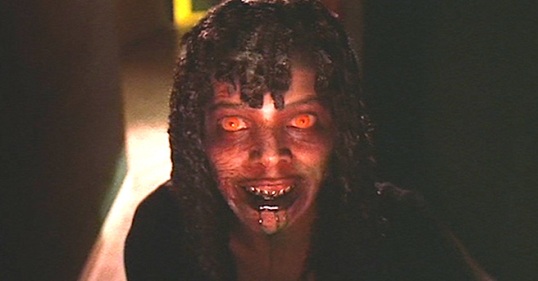
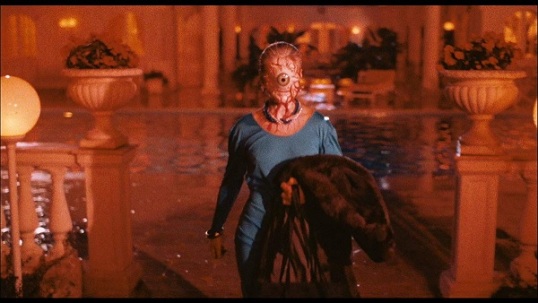
A Blade In The Dark (1983, dir by Lamberto Bava, DP: Gianlorenzo Battaglia)

Demons (1985, dir by Lamberto Bava, DP: Gianlorenzo Battaglia)

Midnight Killer (1986, dir by Lamberto Bava, DP: Gianlorenzo Battaglia)

Delirium (1987, dir by Lamberto Bava, DP: Gianlorenzo Battaglia)

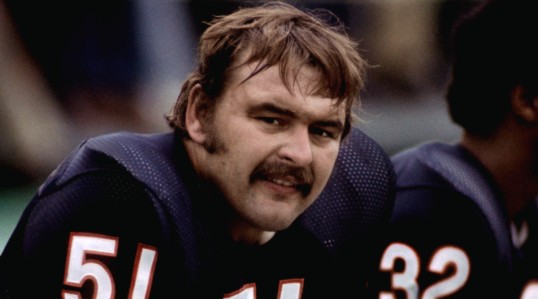
Rest in Peace, Dick Butkus


The Shattered Lens extends its condolences to the friends, family, and fans of football player-turned-actor Dick Butkus.  Butkus starred in two shows that we recently featured on retro television reviews, Hang Time and Half Nelson.  Whether he was coaching basketball in Indiana or helping Joe Pesci solve a case in Beverly Hills, he definitely had his own unique style and likably gruff screen presence.  RIP.

Horror Film Review: Black Friday (dir by Arthur Lubin)


The 1940 film, Black Friday, opens with Dr. Ernest Sovac (Boris Karloff), a once-respected scientist, being led out of his cell on Death Row and being taken to the electric chair.  As he enters the death chamber, he hands one of the gathered reporters his journal.  Dr. Sovac says that he wants the reporter to know the true story of how he came to be on Death Row.  While the police strap Dr. Sovac into the electric chair, the reporter reads the journal.

It’s flashback time!

Months earlier, Dr. Sovac’s best friend, an befuddled English professor named George Kingsley (Stanley Ridges), is nearly fatally injured when he has the misfortune to get caught in the middle of an attempt to assassinate a gangster.  In order to save George’s life, Sovac performs a brain transplant, giving George part of the gangster’s brain.  George does recover but now he’s got the gangster inside of his head, trying to take control.  Much like Dr. Jekyll, George continually switches identities and becomes a viscous hoodlum who is looking for revenge against those who betrayed him, including gang boss Eric Marnay (Bela Lugosi).

Dr. Sovac, however, is more concerned with the fact that, before he died, the gangster apparently hid a good deal of money somewhere.  Sovac wants that money for himself so that he can build his own laboratory and hopefully help other people with otherwise incurable brain conditions.  Sovac tells himself that, once he gets his hands on the money, he can find a way to rid George of his evil alternative personality.  But until George finds the money, Sovac is content to allow George to continue turning into a murderous gangster.  Things, however, come to a head when George starts to threaten Sovac’s daughter (Anne Gwynne).

Black Friday is yet another Universal Horror Film featuring Boris Karloff was a mad scientist.  What makes Dr. Sovac a compelling character is that he starts out with the best of intentions.  He just wants to save the life of his best friend and Sovac’s desperation is increased by the fact that George himself was just an innocent bystander when he was injured.  Later, when Sovac starts searching for the gangster’s money, his intentions are again not necessarily bad.  He sincerely wants to do some good with that money and he uses those good intentions to justify allowing George to do some very bad things.  In the end, Sovac becomes so obsessed with being able to fund his laboratory that he loses sight of the price that both he and George are having to pay.  Karloff does a great job of playing Sovac, showing how a kind man manages to lose track of his morals until it is too late.  Stanley Ridges is also well-cast as George and does an excellent job of switching back and forth from being a befuddled professor to a ruthless gangster.  There’s an excellent scene in which George, attempting to teach his class, suddenly hallucinates that all of his students have become gangsters.  Ridges does a great job playing it.

Reportedly, the film was originally conceived with Karloff playing George and Bela Lugosi playing the role of Dr. Savoc.  However, Karloff said that he would rather play Savoc and, as such, Lugosi lost a role for which he probably would have been very well-cast.  Since Lugosi was a bit too naturally sinister for the role of George, he instead had to settle for a small role as a gang leader.  Lugosi, it should be said, is a convincing gangster but it’s still hard not to be disappointed that, in this film, he and Karloff don’t share any scenes together.

Previous Universal Horror Reviews:

  1. Dracula (1931)
  2. Dracula (Spanish Language Version) (1931)
  3. Frankenstein (1931)
  4. Island of Lost Souls (1932)
  5. The Mummy (1932)
  6. The Invisible Man (1933)
  7. The Bride of Frankenstein (1935)
  8. Dracula’s Daughter (1936)
  9. Son of Frankenstein (1939)
  10. The Invisible Man Returns (1940)
  11. The Wolf Man (1941)
  12. Ghost of Frankenstein (1942)
  13. Invisible Agent (1942)
  14. Frankenstein Meets The Wolf Man (1943)
  15. Son of Dracula (1943)
  16. House of Frankenstein (1944)
  17. The Invisible Man’s Revenge (1944)
  18. House of Dracula (1945) 
  19. Creature From The Black Lagoon (1954)

Live Tweet Alert: Join #FridayNightFlix For A Force of One!


As some of our regular readers undoubtedly know, I am involved in a few weekly live tweets on Twitter and Mastodon.  I host #FridayNightFlix every Friday, I co-host #ScarySocial on Saturday, and I am one of the five hosts of #MondayActionMovie!  Every week, we get together.  We watch a movie.  We tweet our way through it.

Tonight, at 10 pm et, #FridayNightFlix has got 1979’s A Force of One, starring the one and only Chuck Norris!

If you want to join us this Friday, just hop onto twitter, start the movie at 10 pm et, and use the #FridayNightFlix hashtag!  It’s a friendly group and welcoming of newcomers so don’t be shy.

A Force of One is available on Prime!  See you there!

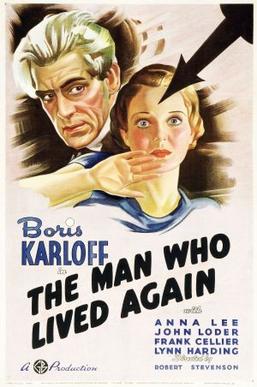
Horror On The Lens: The Man Who Changed His Mind (dir by Robert Stevenson)


In this film from 1936, Anna Lee plays Dr. Clare Wyatt, who leaves behind her reporter boyfriend (John Loder) so that she can accept a job working with the eccentric scientist, Dr. Laurience (Boris Karloff).  Dr. Laurience lives in a spooky mansion with a sarcastic, wheelchair-bound assistant (Donald Calthorp).  It turns out that Dr. Laurience believes that he has discovered how people can switch minds and bodies.  The scientific community ridicules Dr. Laurience but soon, Laurience is putting his theories to the test.  Dr. Laurience finds himself falling in love with Clare but he knows that she’s in love with her suspicious boyfriend.  What if Dr. Laurience changed his mind?

This is an entertaining British production, featuring almost the entire cast playing more than one role as various minds are moved into different bodies.  That said, the film is dominated by the great Boris Karloff, who gives one of his most enjoyable performances as the mad Dr. Laurience.  Though Karloff became a star playing the Monster, he always seemed happier whenever he got to play the mad scientist.

Music Video of the Day: The Earth Dies Screaming by UB40 (1980, directed by ????)


Though the song’s title was taken from a 1964 B-science fiction film, the song itself was about the very real fear of nuclear war.  To understand this song, it is important to remember that, in the 1980s, nuclear war was viewed as something that was destined to happen eventually.  Teachers and school counselors were even specifically trained on how to talk to children who woke up one morning, saw the wrong story on the morning news, and came to school terrified that the bombs were going to drop at any moment.  I guess the nearest equivalent of that today would be the fear that we only have ten years left due to climate change.

Luckily, after the collapse of the Soviet Union, it looked like nuclear war had been avoided.  Over the past few years, though, I’ve seen a return of those earlier fears as more and more nations brag about developing their nuclear capabilities.  As a results, songs like this will always feel more relevant than we may want them to.