Horror Scenes That I Love: Van Helsing and Dracula Meet in Dracula A.D. 1972


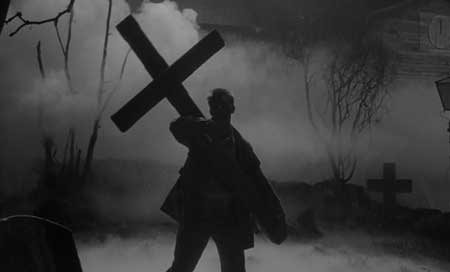
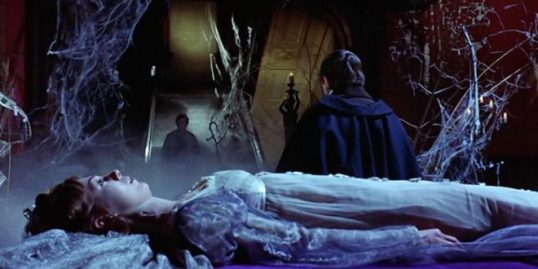
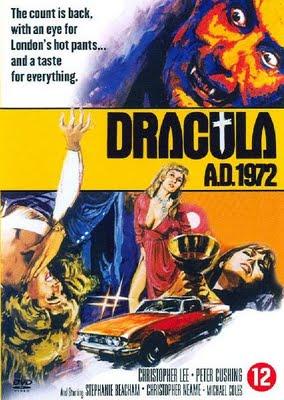
Even in the year 1972, Count Dracula (Christopher Lee) could not escape Prof. Van Helsing (Peter Cushing).  Of course, the Van Helsing here was a descendant of the Van Helsing who gave Dracula such a hard time in the 19th century but still, Dracula was not thrilled to see him.

This scene is from Hammer’s Dracula A.D. 1972.  It’s not generally considered to be one of the better Dracula films but I enjoy any chance to see Peter Cushing and Christopher Lee (who were the closest of friends off-screen) acting opposite each other.

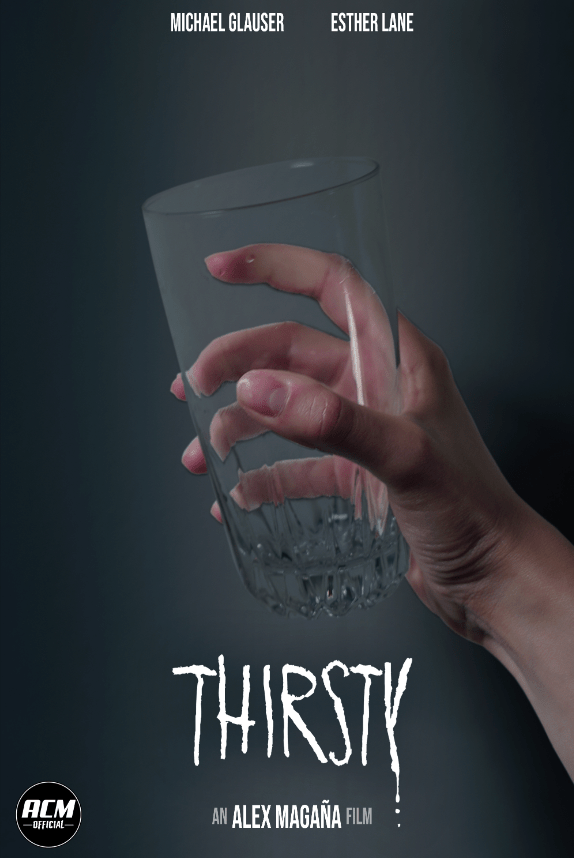
Thirsty, Review by Case Wright


Huh? Ok, this was….terrible. I can’t put my finger on what part of this was more terrible: the acting, story, or visuals? Well, it’s all craptastic. Why don’t they think of me before they film something so stupid? He must know that someone will have to review this garbage trash and it will probably be me.

Alex Magana is a hit or miss filmmaker and WOW does he use the shotgun over pistol technique. It’s like a firehose of content spraying all over your face- sometimes the water gets into your mouth, refreshing your artistic interest, but other times, it powerfully shoots out an eyeball and you hope for death. His films are like that.

Luckily, Magana’s films are rarely over four-minutes; so, your misery is brief like when a dentist has a good grip with her pliers and yanks out that infected tooth of yours. Yeah, there’s pus and a brackish fluid flowing from your gum socket that used to house your back molar and you can’t help but taste the brackish fluid and later when they debride the rotten gum tissue and there’s a smell of rotting bacon, you know that it’s over. Magana’s films are like that: sometimes it’s like getting a cleaning from the flirty hygienist and other times, it’s all about the rotting bacon gums.

Thirsty was a rotting bacon gums experience, but if you’re into that- Watch below.

Missing, Review By Case Wright


I wanted to include some picture or poster for this, but I can’t because nothing exists. Leave it to me to enjoy something that no one else does. I thoroughly enjoyed this film. Apparently, it came out in 2020 and no one liked it. Well, that all changed today because I liked it and that’s what matters!

A woman finds out that she’s missing. This film is two minutes of your life and it’s a fun two minutes. I recommend you take a pause and enjoy it!

International Horror Review: The City of the Dead (dir by John Llewellyn Moxey)


The City of the Dead, a 1960 British horror film that is also known as Horror Hotel, takes place in the town of Whitewood, Massachusetts.  (Though it takes place in America, this is a very British film, from the cast to the sensibility.)

Like most small New England towns (or, at the very least, the type of small New England towns that show up in movies like this), Whitewood has been around forever. And it apparently has quite a history, especially where witches and devil worshipers are concerned! In the 17th century, a witch was burned at the stake. Rumor has it that, before she died, she sold her soul to the devil. As long as she arranges for two virgin sacrifices a year, the spirit of the witch can torment Whitewood for as long as she likes.

Fortunately, a virgin has just arrived in town! Nan Barlow (Venetia Stevenson) is doing a term paper on the history of witchcraft and her very helpful professor, Alan Driscoll (played by the man himself, Christopher Lee), suggested that maybe Nan should visit town and stay at the Raven’s Inn.

As soon as Nan arrives, it becomes obvious to her that there’s something strange about Whitewood. All of the people are so strange and secretive and the streets always seem to be covered in fog. As Nan starts to do her research, she discovers that it will soon be time for the first annual sacrifice. The sacrifice is meant to happen at “The Hour of 13.” What does that mean? Why not go into the basement of the inn and search for some clues….

When Nan never returns from Whitewood, her brother, Dick (Denis Lotis), teams up with her fiance, Bill (Tom Naylor), and they head up to town to investigate. Once Dick arrives in town, he meets Whitewood’s only seemingly normal inhabitant, Pat (Bella St. John). Pat, who had previously befriended Nan and is the daughter of the local (and apparently quite ineffectual) reverend, agrees to help them in their search. Of course, Pat is also apparently the only virgin left in Massachusetts and the time for the second sacrifice is approaching….

Though set in America, The City of the Dead was produced in the UK and features British actors, all of whom do a fairly good job of sounding like natives of New England.  (Much like would happen later with the Italian zombie and cannibal films, this very British film was still made with the a focus on appealing to an American audience.) This deliberately paced film is a masterpiece of mood and menace. Director John Llewellyn Moxey emphasizes atmosphere over jump-scares and the black-and-white cinematography gives the entire film a gothic, dream-like feel. Though he’s not in the film as much as you might expect, Christopher Lee still makes the most of his scenes as Prof. Driscoll and the film’s fiery finale definitely makes an impression.

The City of the Dead is one of those films that, because it has fallen into the public domain, is very easy to find. (It seems to get included in every “50-DVD” box set released by Mill Creek.) It also plays frequently on TCM so keep an eye out for it!

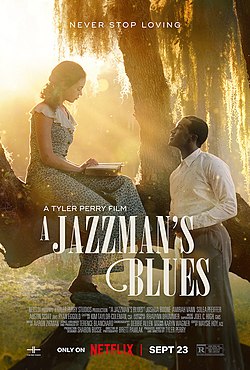
Film Review: A Jazzman’s Blues (dir by Tyler Perry)


In 1987, a wealthy white attorney is running for Congress in Georgia.  After watching an interview in which he attacks affirmative action programs, an elderly black woman named Hattie Mae (Amirah Vann) collects a stack of old letters and drops them off at the attorney’s office.  As the attorney reads the letters, he learns the truth about his past.

That’s the opening of Tyler Perry’s latest Netflix film, A Jazzman’s Blues.  The rest of the film is largely set in Georgia in the 30s and the 40s.  Hattie Mae is the mother of two sons, Bayou (Joshua Boone) and Willie Earl (Austin Scott).  Bayou is shy, innocent, and naïve.  He has a wonderful singing voice but no one takes him seriously.  Willie Earl is egotistical and temperamental.  Because he can play the trumpet, Willie Earl is his father’s favorite.  When Willie Earl and his father leave to seek fame in Chicago, Bayou remains in Georgia with his mother.

He also falls in love with Leanne (Solea Pfeiffer), who everyone calls “Bucket” because her mother abandoned her in a used bucket.  Leanne teaches Bayou to read.  Bayou tries to protect Leanne from he abusive grandfather.  Eventually, though, Leanne leaves Georgia.  Years later, she returns as the wife of the local sheriff’s political ambitious brother.  Leanne is now passing as white but Bayou still loves her.  Leanne’s mother, who is now back in the picture, lies to the sheriff and says that Bayou whistled at Leanne.  Bayou is forced to flee Georgia.  He ends up in Chicago, performing with Wille Earl, who is now junkie.

In Chicago, Bayou becomes a star while Wille Earl plays in his brother’s band.  Willie Earl grows jealous of his brother’s success.  When Bayou learns that Leanne has had a son and that he’s probably the father, Bayou makes plans to return to Georgia for a one-night performance.  Tragically, this provides Willie Earl with his opportunity to seek revenge….

Based on the first script that Tyler Perry ever wrote, A Jazzman’s Blues looks and feels like a real movie.  Netflix actually invested some money in this film and that alone represents a step up from Perry’s previous Netflix film.  Visually, the film does a good job contrasting the lushness of rural Georgia with the harshness of Chicago and the scenes in which Bayou performs in Capital Royale club are particularly well-shot.  Joshua Boone may not be the most expressive actor in the world but he’s got a great voice.  That said, this is still a Tyler Perry film and the story is still both melodramatic and predictable.  The framing device of the attorney reading the letters is rather clumsily handled and you’ll be able to guess the identity of the attorney long before the end credits roll.

The main problem with the film, to be honest, is that Willie Earl is a far more intriguing character than Bayou.  Willie Earl’s story is the interesting one and, as the film comes to a close, you find yourself wondering what Willie Earl did with the rest of his life.  Unfortunately, Perry doesn’t tell you or provide any hints.  His script uses Willie Earl as a dramatic device (and as an excuse to indulge in a bit of biblical allegory) but Austin Scott gives such a strong performance in the role that he takes over any scene in which he appears.  Can there be redemption for Willie Earl or is he doomed to spend the rest of his life in denial?  Does he regret his actions or is he so blinded by jealousy and hatred that he can justify the worst possible betrayal?  It’s the most interesting question that the film leaves us with but Perry doesn’t seem to realize that.

In the end, A Jazzman’s Blues indicates that, with the right resources, Tyler Perry can direct a real film.  But perhaps he should collaborate with another screenwriter.  A Jazzman’s Blues is not a bad film but it’s hard not to feel that Perry missed an opportunity to make it even better.

6 Horrific Trailers For October 9th, 2022


It’s Sunday and it’s October and that means that it’s time for another edition of Lisa Marie’s Favorite Grindhouse trailers!  For today, we have six trailers from the early 70s.  This was the era when horror started to truly get …. well, horrific!

  1. The Bird With The Crystal Plumage (1970)

First off, we have the blood and scream-filled trailer for Dario Argento’s The Bird With The Crystal Plumage.  This Italian thriller made quite a splash when it was released in America.  Indeed, for many Americans, this was their first exposure to the giallo genre.  This would go on to become Argento’s first (and, so far, only) film to be nominated for a Golden Globe.  (Read my review here!)

2. House of Dark Shadows (1970)

Speaking of blood and screaming, 1970 also saw the release of House of Dark Shadows.  Personally, I think this is one of the best vampire films ever.  The trailer is heavy on atmosphere.

3. The Devils (1971)

In 1971, British director Ken Russell scandalized audiences with The Devils, a film so shocking that it will probably never been in its full, uncut form.

4. Tombs of the Blind Dead (1972)

Italy was not the only country sending horror films over to the United States.  From Spain came the Tombs of the Blind Dead.

5. The Last House on the Left (1972)

Speaking of controversy, Wes Craven made his directorial debut with the infamous The Last House On The Left.  The trailer featured one of the greatest and most-repeated horror tag lines of all time.

6. Dracula A.D. 1972 (1972)

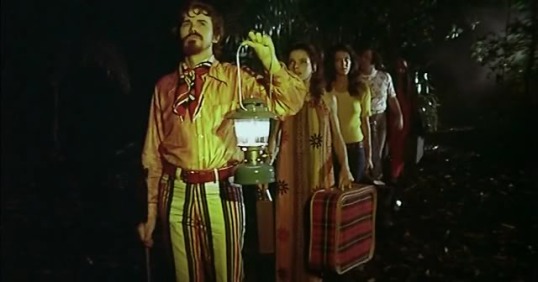
Finally, even as horror cinema changed and became more extreme, Hammer Studios continued to tell the long and twisted story of Count Dracula.  They brought him into the present age and dropped him in the middle of hippie-infested London.  No matter how much the rest of the world changed, Dracula remained Dracula.

8 Shots From 8 Horror Films: The Early 70s


4 Or More Shots From 4 Or More Films is just what it says it is, 4 shots from 4 of our favorite films. As opposed to the reviews and recaps that we usually post, 4 Shots From 4 Films lets the visuals do the talking!

This October, I’m going to be doing something a little bit different with my contribution to 4 (or more) Shots From 4 (or more) Films.  I’m going to be taking a little chronological tour of the history of horror cinema, moving from decade to decade.

Today, we take a look at the early 70s!

8 Shots From 8 Horror Films: The Early 70s

The Bird With The Crystal Plumage (1970, dir by Dario Argento, DP: Vittorio Storaro)

House of Dark Shadows (1970, dir by Dan Curtis, DP: Arthur Ornitz)

Hatchet For The Honeymoon (1970, dir by Mario Bava, DP: Mario Bava)

The Devils (1971, directed by Ken Russell, DP: David Watkin)

Tombs of the Blind Dead (1971, dir by Amando de Ossorio, DP: Pablo Ripoll)

Children Shouldn’t Play With Dead Things (1972, dir by Bob Clark, DP: Jack McGowan)

Last House on the Left (1972, dir by Wes Craven, DP: Victor Hurwitz)

Dracula A.D. 1972 (1972, dir by Alan Gibson, DP: Dick Bush)

Horror Film Review: Audrey Rose (dir by Robert Wise)


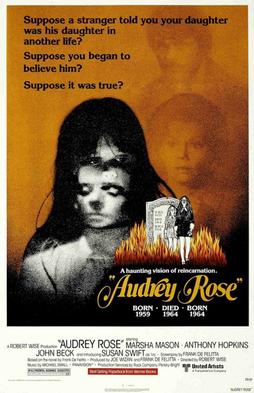
The 1977 film, Audrey Rose, tells the story of an annoying little girl named Ivy (Susan Swift), who is the daughter of annoying Janice (Marsha Mason) and annoying Bill (John Beck).  Everything seems to be perfectly normal in an annoying way until, one day, they notice that they’re being followed around by an annoying man named Elliott (Anthony Hopkins).  Elliott explains that Ivy is the reincarnation of his daughter, Audrey Rose, who was herself kind of annoying.  Whenever Elliott says, “Audrey Rose,” Ivy going into a trance and starts screaming, which gets a bit annoying after a while.  Elliott explains this is because Audrey died in a fiery car crash and was apparently reincarnated too soon after her death.  Therefore, anytime Elliott shows us, Ivy relives the crash and tries to burn herself.  Annoying!

To me, it seems like there’s a simple solution to all of this.  Elliott could just go away or, at the very least, stop saying, “Audrey Rose” every ten seconds.  Anyway, at one point, Ivy starts screaming so Elliott rushes into the apartment and makes her stop.  However, Elliott is accused of attempting to abduct Ivy, arrested, and put on trial.

Elliott’s defense is that he couldn’t abduct his own daughter so therefore, if Ivy is the reincarnation of Audrey Rose, then he’s innocent.  Somehow, this leads to the trial becoming about proving reincarnation.  Hindu holy men are called to the stand.  Elliott smirks and tells his lawyer to call Janice to the stand because he’s figured out that Janice believes him.  Meanwhile, Ivy finds herself drawn towards every fire that she sees…

Audrey Rose was directed by a legitimately great director, Robert Wise.  Unfortunately, Wise takes the material way too seriously.  Just when you think the film is going to be an over the top possessed child flick, it suddenly turns into a turgid and serious debate about reincarnation.  The movie is so busy trying to be realistic that it forgets to be fun.

There’s also a lot of yelling in Audrey Rose.  In between Ivy screaming and Elliott continually calling his dead daughter’s name and Bill arguing with Janice and random characters screaming whenever Ivy gets to close to a fire, it’s easy to get a headache while watching this film.

Mason and Beck are pretty lousy in the roles of Janice and Bill.  Hopkins brings an occasionally neurotic edge to the role of Elliott.  You never quite trust him, even though the movie wants you to.  The best performances in the film come from the performers in the minor roles, character actors like Norman Lloyd, Robert Walden, and John Hillerman.  None of them are required to pretend like they’re taking their dialogue seriously and, as such, they’re a lot more fun to watch.

All in all, Audrey Rose is a fairly silly movie.  For some reason (probably the presence of Hopkins), it does seem to show up on TCM fairly regularly but I wouldn’t recommend watching.  If you want to see a good Robert Wise horror movie, check out The Haunting.
Horror On The Lens: The Cloning of Clifford Swimmer (dir by Lela Swift)


Today’s horror on the lens is 1974’s The Cloning of Clifford Swimmer.

This short but entertaining sci-fi film may be a bit obscure but it’s a personal favorite of mine.  Check out my review here and then be sure to enjoy the show!