Oscar Counter-Programming: Llamageddon (dir by Howie Dewin)


On a distant planet, the Llamas march through the desert, their eyes glowing red and their hearts full of murder.  One of the Llamas (played, according to the credits, by Louie the Llama) ends up in a trailer that turns out to be a spaceship.  And when that trailer gets off course and crashes onto Earth, it’s time for a Llamageddon!

A nice couple in the country spot the Llama standing on the edge of their property.  It must belong to the neighbors, they say.  They consider chasing the Llama back to its home but they decided not to.  After all, it’s about rain and who wants to chase a wet Llama in the rain?  Not me!

Later that night, the Llama claims its first two victims.

Well, you can see where this is going, right?

After the funeral of that nice couple, their children decide to throw a party at the house.  They call their friends and their friends bring beer, weed, and a lot of attitude.  However, the Llama brings the horror.  It turns out that the Llama can not only stomp you to death but it can also shoot red laser beams out of its eyes.  Soon, the party is in chaos as person after person falls victim to the Llamageddon….

(And one poor soul actually turns into Llama which is horrific in theory but kind of cute to watch.)

Llamageddon is a film from 2015 and it has a running time of 69 minutes.  (“Nice,” someone out there is saying.)  Considering that the end credits are padded with a rap and also a fast-forwarded presentation of the film that the viewer has just watched, I’m going to guess that running time was deliberate.  And actually, I respect that.  Llamageddon is a film that knows exactly what it is and it has a sense of humor about its very existence.  It’s a film that fully embraces the silliness of it all.

So, look …. I could sit here and I could go on and on about the acting and deliberately cheap special effects and the way that the film hints that even the cutest of animals can actually be deadly and dangerous but here is what you need to know.

It’s about a Llama from space and the Llama has the power to blow people up.

In other words, this is a film that was made for a very select audience of people who are amused by the idea of killer space llamas.  I happen to be one of those people so I enjoyed the film.  I respected the fact that the filmmakers stuck with their silly idea and they didn’t try to fool the viewers into thinking that the film was meant to be anything more than what it was.

Will you enjoy Llamageddon?  Well, like I said, it’s only 69 minutes and it’s specifically made for people who laugh out loud at the term “space llama.”  If, like me, you’re one of those people, check it out.  It’s on Prime and Tubi and if you’re currently watching the Oscars but you’re desperate for some counter-programming, you can watch it right now with the knowledge that the movie will end before the Academy Awards.

6 Times The Academy Got It Right: 2010s


Ah, the 2010s. Social media made anxiety the norm and Americans became obsessed with “red states” and “blue states.” Americans fetishized politicians and the Academy decided that it would be cool to do away with the idea of having a set number of best picture winners. One bright spot, for me at least: Arleigh invited me to write for this site! And the rest, as they say, is history!

I have to admit that I don’t agree with any of the Academy’s choices for Best Picture during this decade but I do appreciate a good deal of their nominations.

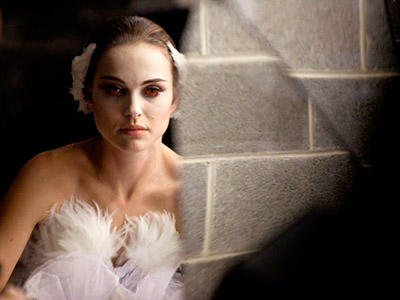
  1. The Academy Nominates Black Swan For Best Picture

This is still one of my favorite nominations and again, this is one of those films that probably never would have been nominated during the previous century.  In 2010, it not only picked up a Best Picture nomination but it also won Natalie Portman the Oscar for Best Actress.

2. The Academy Nominates Mad Max: Fury Road

Again, this is another film that probably wouldn’t have been nominated during the previous century, just because of its genre and its status as being a sequel.  However, it full deserved to be nominated and it was nice to see the Academy embrace it.  Remember when, at the start of the ceremony, it won all of those technical awards and it looked like Mad Max: Fury Road might actually go all the way?  We were so excited!  Of course, then Spotlight won.

3. The Academy Nominates Boyhood and Richard Linklater

It took the Academy long enough to show some respect to one of the most important indie filmmakers of the past few decades!  Unfortunately, neither Linklater nor his film won.  How Birdman was selected over Boyhood, I’ll never know.  But, at least it was nominated.

4. The Academy Nominates Michael Keaton For Best Actor

I may not have liked Birdman overall but I do think that Michael Keaton gave a wonderful performance and, by nominating him, the Academy reminded people of just how good (and underrated) an actor Keaton truly was.  Now, Keaton is one of our busiest character actors and I don’t think anyone would have expected that, pre-Birdman and the Academy.

5. The Academy Nominates Bruce Dern For Best Actor

Like Michael Keaton, Bruce Dern is a good but underrated actor.  The Academy nominating him for Nebraska reminded people of that.  It’s just a shame he didn’t win because, if anyone was going to give a memorable acceptance speech, it would have been Bruce Dern.

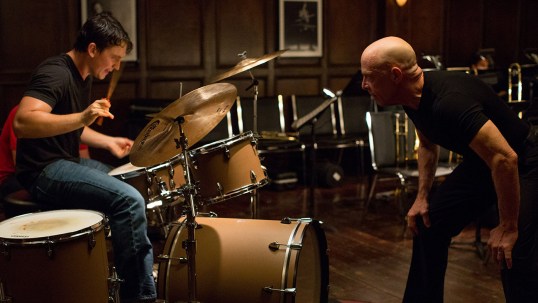
6. J.K. Simmons Wins Best Supporting Actor For Whiplash

“Not my tempo.”  Agck!  That line still gives me nightmares.  Still, this was one of the most deserved Oscars of the 2010s and J.K. Simmons gave a wonderfully sincere acceptance speech.  I always love seeing a good character actor get some recognition.

Well, that’s it.  Will the Academy get six things correct tonight?  They’ve already gotten 8 incorrect as a result of moving those 8 categories off of the live show.  Still, even when they screw up, I always have hope that the Academy will learn from their mistakes.  I’m an optimist.

We’ll see what happens!  Enjoy the show!

6 Times The Academy Got It Right: The 2000s


Ah, the aughts. The new century started out with the terror of 9-11 and it ended with the collapse of the world’s economy. In between, a lot of films were released. Some of them were really good. A few of them were nominated for Best Picture. Most of them were not.

Still, let’s not focus on the negative.  Instead, here are 6 times that the Academy got it right in the aughts!

  1. Lord of the Rings: The Return of the King Wins Best Picture in 2003

A fantasy film winning best picture!?  Before this decade, that would have been unthinkable.  The Academy might be willing to nominate the occasional fantasy or sci-fi film but it would have been nearly impossible to imagine that they would actually honor one of them.  The entire Lord of the Rings trilogy, however, changed that.

Now, of course, the legacy of LOTR has been damaged by far too many imitations and also by the lukewarm response to The Hobbit.  People tend to roll their eyes whenever they hear that a movie is going to be split into multiple parts.  That said, Peter Jackson’s original epic still holds up marvelously well.

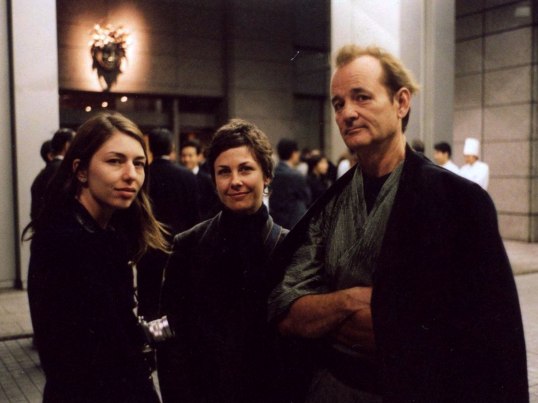
2. Bill Murray Is Nominated For Best Actor

Murray received his first, long overdue Oscar nomination for his performance in 2003’s Lost in Translation.  Personally, I wish he had won.  But, even though he didn’t win, the nomination still transformed the way that people viewed Bill Murray and help him go from being a somewhat erratic comedic actor to being one of our best interpreters of 21st century ennui.

3. Martin Scorsese Finally Wins Best Director

Though it’s really not even his best film, The Departed is the film for which Martin Scorsese finally won the directing Oscar that he should have previously won for Goodfellas.  No longer would cinema lovers have live in a world where Sam Mendes had an Oscar but Martin Scorsese did not.  And, of course, Scorsese being presented his award by his three biggest friend in the industry — Spielberg, Lucas, and Coppola — only made the moment all the more special.

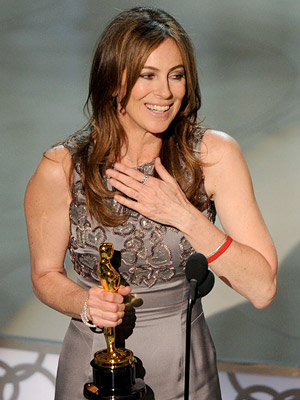
4. Kathryn Bigelow Wins Best Director….

….and makes history as the first woman to ever win the Oscar for Best Director!  Even though I wasn’t a particularly huge fan of The Hurt Locker (my favorite films that year were An Education and A Serious Man), I cheered out loud when Bigelow’s name was called.  That her main competitor was her ex-husband made her victory all the more satisfying.

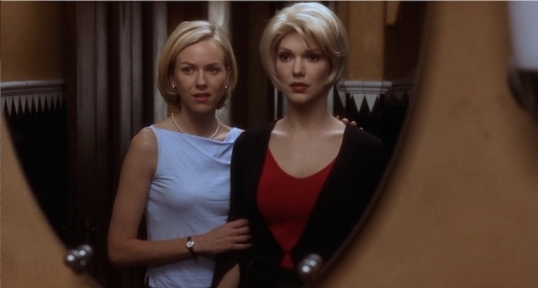
Mulholland Drive (2001, dir by David Lynch, DP: Peter Deming)

5. David Lynch is Nominated For Best Director

It will always be interesting to me that one of the most acclaimed films of this century, Mulholland Drive, was originally meant to be a pilot for a television show.  Only David Lynch could direct an Oscar-worthy pilot.  The Academy, to their credit, acknowledged that with a deserved Best Director nomination in 2001.

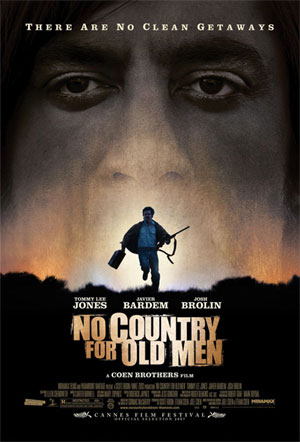
6. No Country For Old Men Wins Best Picture

Based on a novel by Cormac McCarthy and directed by the Coen Brother, 2007’s No Country For Old Man was a masterpiece.  It had some fierce competition and there’s still some debate today as to whether or not it should have defeated There Will Be Blood.  Personally, I think that Paul Thomas Anderson is one of our greatest living directors but I also think that, in this case, the Academy made the right choice.  Plus, the Coens finally won the Oscar that they should have won for Fargo!

Up next: the 2010s!

6 Times The Academy Got It Right: The 1990s


Ah, the 90s.

Some would say that this was the last good decade that the world would ever experience. It was certainly a good decade for films!  Though I don’t agree with the majority of the Academy’s winners from this decade, I do agree with most of their nominations.  Here are 6 things that Academy got right in the 90s!

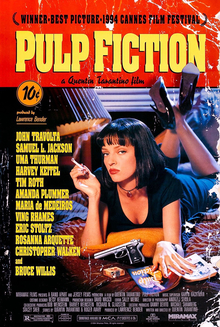
  1. Nominating Pulp Fiction and Quentin Tarantino

Way back in 1994, it actually probably took more than a little bit of courage to not only nominate a film like Pulp Fiction for Best Picture but to also honor its director as well.  Still, by doing so and also giving Quentin Tarantino and Roger Avary an Oscar for their screenplay, the Academy not only announced that Tarantino had arrived but they also embraced an entirely new, pop culture-driven sensibility.  Of course, this led to a number of very bad films that were directed by people hoping to be the next Tarantino but it led to some pretty good films as well.  It is certainly cemented Tarantino’s place in the culture.

2. Nominating The Thin Red Line and Terrence Malick

The 90s may have begun with Tarantino and the combination of Reservoir Dogs and Pulp Fiction but it ended with the return of Terrence Malick and his own idiosyncratic but unforgettable aesthetic.  Though 1997’s The Thin Red Line may not have won best picture and Malick did not win Best Director, the Academy still deserves some credit for nominating both of them.

3. Nominating Fargo and the Coens

Like Pulp Fiction and The Thin Red Line, Fargo didn’t win Best Picture.  However, by nominating the film, the Academy was announcing that times had changed.  Directors like the Coen Brothers were no longer destined to be on the outside looking in.  Much like Pulp Fiction and Thin Red Line, Fargo has gone to be much more influential than the film to which it lost.

4. Steven Spielberg Winning Best Director for 1993’s Schindler’s List

It took Spielberg a while to win his first Oscar.  When he finally did when, it was for one of his best and most important films.

5. Clint Eastwood Winning Best Director For 1992’s Unforgiven

The 90s were about two things: independent films and unexpected comebacks.  After years of being dismissed as just an action star who rarely spoke, Eastwood made a critical comeback and proved that he was a masterful director with Unforgiven.  He also proved that, as an actor, he was capable of more than just snarling.  Unforgiven remains one of the most powerful explorations of violence ever put on film.

6. The Silence of the Lambs Wins Best Picture

The Silence of the Lambs is often described as being the first horror movie to win Best Picture.  I consider it to be more of a thriller than a horror film but still, one cannot deny it’s influence.  The character of the erudite and manipulative serial killer has become such a trope that it can be surprising to go back and rediscover just how Anthony Hopkins was in this film.

Up next: the 2000s!

6 Times The Academy Got It Right: The 1980s


The Elephant Man (1980, directed by David Lynch)

Ah, the 80s!

Ronald Reagan was president. America was strong. Russia was weak. The economy was booming. The music was wonderful. Many great movies were released, though most of them were not nominated for any Oscars. This is the decade that tends to drive most Oscar fanatics batty.  But you know what?  The Academy didn’t always get it wrong in the 80s.  Here are six times the Academy got it right:

  1. Opening The 1989 Ceremony With Rob Lowe and Snow White Singing

Sure, people make fun of this moment but you know what?  33 years later, people are still watching this opening on YouTube and asking themselves, “What the heck was that?”  That’s the power of a good opening and I imagine it will be more memorable than anything we see tonight.

2. Nominating The Elephant Man and David Lynch in 1980

By nominating both The Elephant Man and David Lynch in 1980, the Academy also welcome our greatest surrealist to the mainstream.  Though both the film and Lynch lost to Robert Redford’s Ordinary People, The Elephant Man is still one of my favorite Best Picture nominees.  (I also like both Ordinary People and Raging Bull.  1980 was a good year.)  The Academy also got it right when they nominated Lynch in 1986 for directing Blue Velvet.  The idea of the Academy or any part of mainstream Hollywood honoring a director like Lynch would have been unthinkable in the 50s and the 60s.

3. Robert Duvall Winning Best Actor For 1983’s Tender Mercies

Robert Duvall is one of our finest actors and Tender Mercies is one of his best films.  For someone who was born in California, raised in Maryland, and spent the early part of his career in New York, Duvall is one of the most convincing Texans that I’ve ever seen.

4. Amadeus Wins Best Picture

My personal pick for the best film of 1984 is Sergio Leone’s Once Upon A Time In America but, of the films that were nominated, Amadeus was clearly the best.  If nothing else, it’s victory finally brought Salieri the fame that he is rumored to have felt was stolen from him by Mozart.

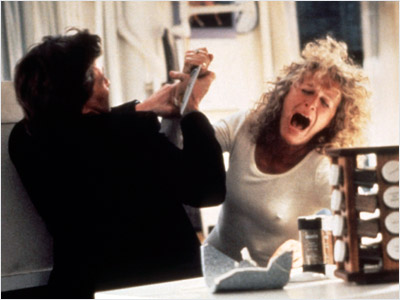
5. Fatal Attraction Is Nominated For Best Picture

Fatal Attraction is actually a terrible movie but, by nominating it, the Academy guaranteed a decades worth of enjoyably bad rip-offs.  Every Lifetime film ever made owes a debt to Fatal Attraction.

6. Henry Fonda and Katharine Hepburn Won Best Actor and Best Actress For On Golden Pond

On Golden Pond isn’t even that good of a film and Katharine Hepburn’s performance is one of her least interesting but, if you’re a fan of TCM, you have to love the idea of Fonda and Hepburn picking up two final Oscars in the twilight of their career.  This was only Fonda’s 2nd nomination and his only win.  The fact that he was competing with another underrated veteran actor, Burt Lancaster, makes his win all the more special.  There were definitely better performances that year but sometimes, it’s good to go for the sentimental choice.

Up next: The 90s!

6 Times The Academy Got It Right: The 1970s


The 1970s!  Where to even being?

The 1970s began with Hollywood embracing the daring and the artistic and it ended with Hollywood moving towards the type of big budget blockbusters that have come to define the industry.  The 1970s saw the birth of modern Hollywood.  Along the way, many great films were released and, for once, many of them were honored by the Academy.

For this decade, the problem isn’t going to be finding 6 things that the Academy got right.  The problem is going to be narrowing the list down to only six.

  1. The Godfather and The Godfather Part II win Best Picture in 1972 and 1974

Never has the Academy been more correct than when they named The Godfather and The Godfather Part II as being the best films of their respective years.  For that matter, 1972 and 1974 were both great cinematic years and the Academy deserves a lot of credit for truly nominating the best films of those years.  Some, I know, will point out that The Towering Inferno was nominated in 1974 but you know what?  Even The Towering Inferno is kind of fun.

(Now, of course, if The Towering Inferno had won, they’d have a point….)

2. The 1971 Best Picture lineup

With the exception of Nicholas and Alexandra, the 1971 Best Picture lineup was one of the best that the Academy ever put together.  A Clockwork Orange, Fiddler on the Roof, The French Connection, The Last Picture Show …. just replace Nicholas and Alexandra with Dirty Harry and it would be perfect!

3. The Exorcist And Jaws Are Nominated For Best Picture

Often ignored in the past, the horror genre was finally acknowledged in the 70s.  Of course, both The Exorcist and Jaws had to make a huge amount of money in order to be accepted but no matter.  I still love that they were nominated.

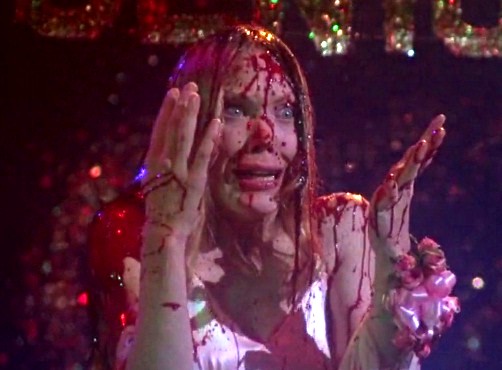
4. Sissy Spacek Is Nominated For Best Actress For 1976’s Carrie

Speaking of the horror genre, Sissy Spacek not only deserved to be nominated but, along with Piper Laurie, she probably should have won.  Spacek’s performance remains powerful to this day.  I’ve always felt that the film version of Carrie was far superior to Stephen King’s novel and that’s because Spacek plays the role with an empathy that’s missing from the book.  Carrie White is both frightening and sympathetic and for that, Spacek deserved the Oscar.

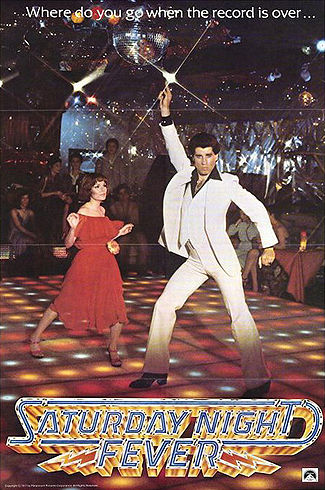
5. John Travolta Is Nominated For Best Actor For 1977’s Saturday Night Fever

Somehow, he lost to Richard Dreyfuss’s manic turn in The Goodbye Girl but just the fact that Travolta was nominated is still one of the Academy’s best decisions.  It’s just unfortunate that the Academy’s music branch didn’t show the same respect for the movie’s soundtrack.

6. Christopher Walken Wins Best Supporting Actor For 1978’s The Deer Hunter

I’m a bit biased because I just watched this film a few nights ago but no matter.  If you’re ever tempted to dismiss Walken as being more of an eccentric personality than an actor, I suggest you watch The Deer Hunter.  His performance is as brilliant as it is heart-breaking.

Next up: the 80s!

6 Times The Academy Got It Right: The 1960s


The 1960s were a time of turmoil for both America and the Academy.  The decade started with optimism and it ended with chaos.  In order to keep up with the films coming in from Europe, Hollywood finally abandoned the Production Code but Hollywood also tried to keep alive the old fashioned spectacle that proved profitable in the 40s and the 50s.  The Academy often found itself torn between honoring the new wave of filmmakers and acknowledging some of the most overdone productions to ever come out of the major studios.

It was a crazy decade and it’s one that continues to fascinate cultural historians.  Here are 6 things that Hollywood got right in the 60s.

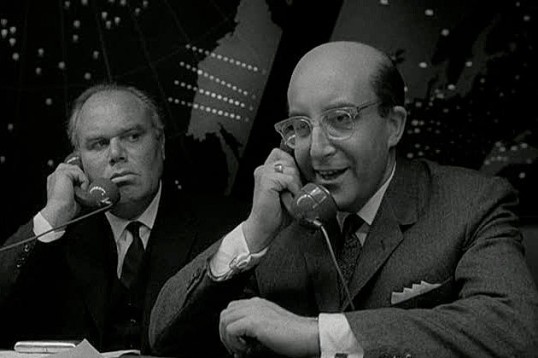
  1. Dr. Strangelove: Or How I Learned To Stop Worrying And Love The Bomb is nominated for Best Picture

In the 40s and the 50s, it would have been unthinkable to nominate a film like Dr. Strangelove.  And, even in 1964, it was a controversial nomination.  That said, Dr. Strangelove had held up in a way that many other films released that year have not.  It’s the dark satire by which all other dark satires are judged.  That it lost to My Fair Lady is a disappointing fact but that it was nominated at all is a bit of a miracle.

2. Mike Nichols wins Best Director for 1967’s The Graduate

It’s kind of amazing to think that The Graduate competed for Best Picture with Dr. Doolittle.  Of course, they both lost to the well-intentioned In The Heat of the Night.  Still, Mike Nichols changed the face of American cinema with his direction of The Graduate.  The Academy made the right decision when they honored him.

3. Julie Christie wins Best Actress for 1965’s Darling

For many, the 1960s were defined by the British invasion and that was true when it came to the movies as well.  Julie Christie was the forefront of that invasion and she certainly deserved her Oscar for her amazing lead performance in Darling.  In Darling, Christie was everything that was chic about Britain during the first half of the 60s.  Reportedly, Christie was also considered for a role in Thunderball, which was itself a part of the British invasion.  When she either turned down or was turned down for the latest Bond film (the specifics depend on who you ask), she did Darling and won her Oscar.

4. Michael Caine Is Nominated For Best Actor For 1966’s Alfie

While Julie Christie represented everything chic about the UK, Caine represented the working class.  He became a star with Alfie and he also earned the first of his many Oscar nominations for his performance in that film.  His nominated heralded the arrival of a new type of star.

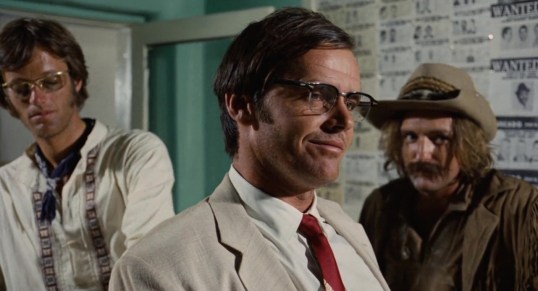
5. Jack Nicholson Is Nominated For Best Supporting Actor in 1969’s Easy Rider

After spending a decade toiling in Hollywood and getting nowhere, Nicholson was on the verge of retiring from acting when agreed, at the last minute, to replace Rip Torn in Easy Rider.  Nicholson not only became a star but he also received his first Oscar nomination.  Much as with Caine, Nicholson’s nomination heralded the arrival of a new cinematic age.

6. Midnight Cowboy Wins Best Picture Of 1969

You can debate whether or not Midnight Cowboy was truly the best film of the year but, by honoring it, the Academy finally choose a side in the culture war that it had spent a decade trying to avoid.

Up Next: The 70s!

Midnight Cowboy (1969; D; John Schlesinger)

6 Times The Academy Got It Right: 1950s


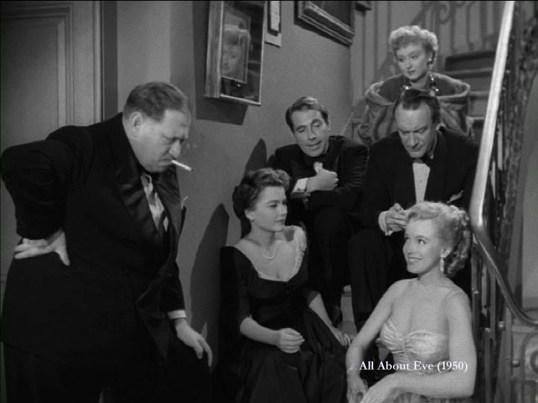
My favorite scene from All About Eve

The 1950s don’t get much respect from film historians.  The decade is often written off as being an age of conformity, when Hollywood reacted to the treat of television by producing empty spectacle.  In some instance, that may have been the case but I think it can also be argued that the 50s saw its share of good films and good performances and some of them were even honored by the Academy.

Here are six times that the Academy got it right in the 50s.

  1. All About Eve and Sunset Boulevard are nominated for Best Picture of 1950

The decade got off to a good start with the Academy two of the best films ever for Best Picture.  Personally, I think All About Eve was the correct winner but I don’t think anyone, even all these years later, would have complained if the Oscar had gone to Sunset Boulevard instead.  Somehow, neither Bette Davis nor Gloria Swanson won Best Actress that year.

2. Gloria Grahame wins Best Supporting Actress For The Bad and the Beautiful

Grahame’s role was a small one and she didn’t even appear in the film until it was close to over but she more than deserved to win her Oscar for 1952’s The Bad and The Beautiful.  The often-underrated Grahame gave a wonderful performance as the writer’s wife, who is tragically seduced by Hollywood.  Along with her nominated performance in Crossfire and her unnominated work in It’s A Wonderful Life, The Bad and the Beautiful features the underrated Grahame at her best.

Oscar, in happier times

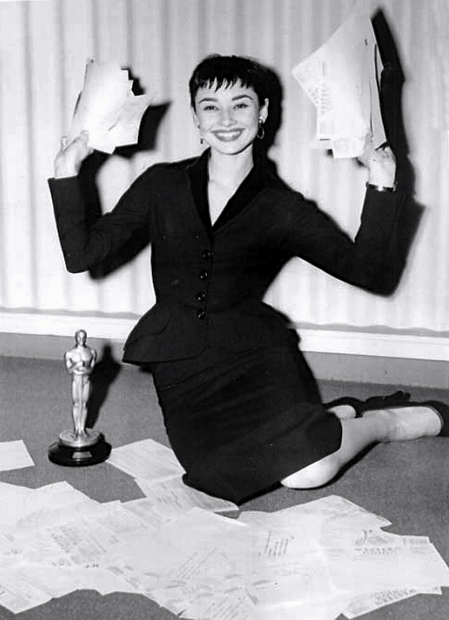
3. Audrey Hepburn wins Best Actress for Roman Holiday

The great Audrey Hepburn’s performance in 1953’s Roman Holiday is one of my favorite Oscar-winning performances of all time.

4. James Dean Is Nominated For East of Eden and Giant

It’s tempting to speculate about what type of career James Dean would have had if not for his tragic and early death.  Would he have gone on to become a Brando-style eccentric or would he have become a more conventional leading man?  Would he still be as powerful an actor once he was no longer a young rebel but instead a middle-aged suburbanite?  One likes to think that Dean would have continued to be an icon but it’s easy to imagine him getting lost in the Hollywood counter culture like Dennis Hopper did for most of the 60s.

All that’s just speculation though.  What we do know is that James Dean received two posthumous Oscar nominations after his death, one for 1955’s East of Eden and one for 1956’s Giant.  The Academy, long-derided as being out of touch, obviously understood that Dean was a phenomena.

5. Peyton Place Is Nominated For Best Picture of 1957

Yes, it’s incredibly trashy and a little dumb but I don’t care.  I love it.  It’s exactly the type of overproduced, overheated, but fun film that deserves to be nominated but which doesn’t necessarily deserve to win.

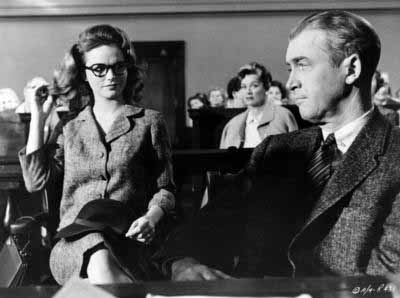
6. The Academy Nominates 1959’s Anatomy of a Murder

Personally, I wish it had won but you know what?  I’ll be happy with the nomination.  Jimmy Stewart received his final Oscar nomination for his role in Anatomy of a Murder.  Again, I wish he had won but, at the same time, I’m also happy that it at least got a nomination.

Up next: The 60s!

6 Times The Academy Got In Right: 1940s Edition


The 1940s began with America going to war and it ended with the world entering the Atomic age.  It was an interesting decade for the movies, as visions of optimistic patriotism and downbeat noir often went head to head at the box office and at the Oscars.

Here are 6 times that the Academy got it right in the 1940s!

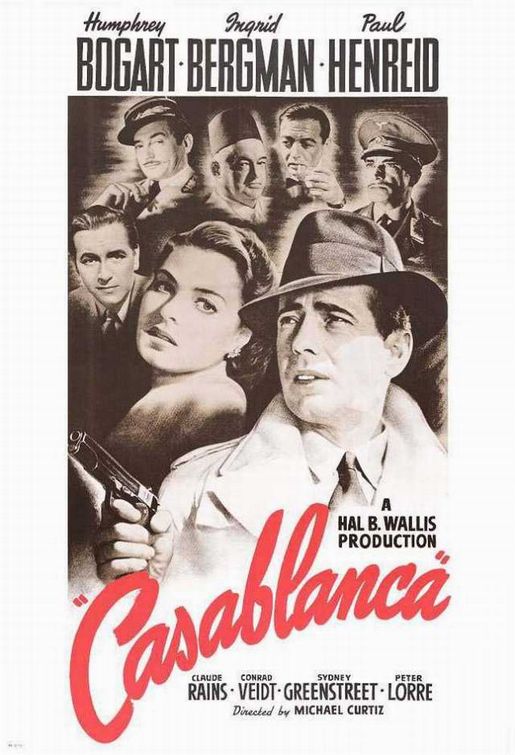
  1. Casablanca Wins Best Picture

You knew that this was going to be the first thing that I was going to list.  In 1943, Casablanca won the Academy Award for Best Picture.  Though the film’s victory obviously had a lot to do with its anti-Nazi theme, it’s also one of the best acted and most quotable films ever made.  Humphrey Bogart and Ingrid Bergman were never better.  Claude Rains was never more charming.  And Conrad Veidt perfectly embodied everything that the Allies were fighting against in Europe.  This one of the rare Oscar victories that no one can complain about.

2. James Stewart wins Best Actor For The Philadelphia Story

He deserved it for the scene where he sings Somewhere Over The Rainbow.  This is award is usually cited as the first instance of the Academy giving someone an award to make up for an earlier snub, in this case Stewart not winning for Mr. Smith Goes To Washington.  That’s probably true but still, it’s a charming performance and how can you not be happy about Jimmy Stewart receiving an Oscar?

3. Edmund Gwenn wins Best Supporting Actor For 1947’s Miracle on 34th Street

He is Santa Claus!

4. Orson Welles Wins Best Original Screenplay for Citizen Kane

Yes, I realize he had to share it with Herman Mankiewicz and I realize that there’s a lot of people who think that they’re an expert on what happened because they sat through Mank.  The fact of the matter is that Citizen Kane is an Orson Welles film.  To give all of the credit to Mankiewicz is to ignore all of the talent and vision that Welles brought to shaping the film.  Even if we accept Mank‘s dubious claim that the majority of the script was Mankiewicz’s, Welles was the one who made the film into a portrait of America at its best and worst as opposed to just the bitter ramblings of an old alcoholic.  Citizen Kane and Welles deserved more than one Oscar but considering just how many powerful people in Hollywood tried to stop Citizen Kane, I’m a little amazed that the Academy even gave Welles one Oscar.

5. Crossfire Is Nominated For Best Picture

Even though 1947’s Crossfire lost the award to Gentleman’s Agreement, it still made history as the first “B” movie to receive a nomination for Best Picture.  Crossfire holds up quite well today as a portrait of the evil that comes with prejudice.

6. The Best Years of Our Lives and It’s A Wonderful Life Are Nominated For Best Picture

In 1946, two of the best films made about postwar America were nominated for Best Picture.  The Best Years Of Our Lives won, while It’s A Wonderful Life went on to become a holiday perennial and a cultural touchdown.  Both of them are powerful portraits of Americans trying to find themselves in the years directly after the end of World War II.  Both deserved their nominations.  It’s a shame that both couldn’t win.

Up next: The 1950s!

6 Times The Academy Got It Right: 1930s Edition


During the 1930s, American suffered through the Great Depression and the rest of the world first tried to prevent and then fearfully prepared for another world war.  It was a dark time and it’s not surprising that movies became an escape for many.  With so many people going the movies, it’s also not a surprise that the Oscars themselves became a far bigger deal than anyone had initially expected.  Today, it can be easy to forget that the awards were almost an afterthought, something that was added to the Academy’s original charter at the last minute.  In the 1930s, they went from being a quiet industry dinner to being a major cultural event.

Here are 6 times the Academy got it right in the 1930s.

  1. 1939

1939 was one of the first truly great years in American cinema and, for once, the Academy honored that greatness.  The slate of nominated films, which included everything from Gone With The Wind to Mr. Smith Goes to Washington to The Wizard of Oz to Stagecoach, and performances was the best that Academy had presented so far.  All of the nominees were impressive and deserved to be there.  One can perhaps disagree with some of the eventual winners but 1939 was one of the few years when no one can disagree with who and what the Academy chose to nominate.

2. It Happened One Night Win Best Picture

In 1934, the Academy honored It Happened One Night with the award for Best Picture.  Not only was it entirely deserved but it was also the first comedy to win the big prize.

3. The Thin Man Is Nominated For Best Picture

The same year that It’s Happened One Night won Best Picture, The Thin Man was nominated.  1934 was a great year for comedy.

4. Grand Illusion is Nominated For Best Picture

Jean Renior’s anti-war classic was nominated for Best Picture in 1937.  Not only was the nomination deserved but it also became the first film in a language other than English to receive a best picture nomination.

5. Fredric March Wins Best Actor for Dr. Jekyll and Mr. Hyde

At the 5th Academy Awards ceremony, March became the first actor to win an Oscar for a horror role and Dr. Jekyll and Mr. Hyde became the first horror film to win anything.  Of course, Wallace Beery also won Best Actor for The Champ.  This was one of the few years in which there was a tie.

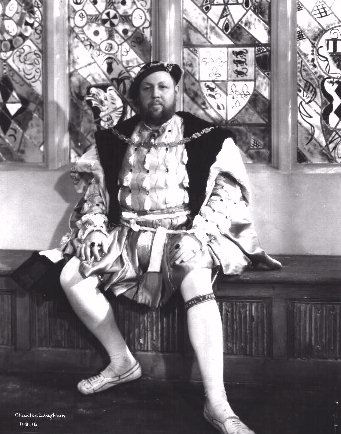
6. Charles Laughton Wins Best Actor For The Private Life of Henry VIII

At the 6th Academy Awards ceremony, Laughton won an award for his lusty performance as Henry VIII.  While one could argue that Paul Muni technically gave a better performance in I Am A Fugitive From A Chain Gang, no one can deny that Laughton’s lusty and comedic performance set the template by which all future Henry VIII’s would be judged.  Add to that, Laughton became the first of many actors to win for their performance in a British-made film.

Up next: the 1940s!