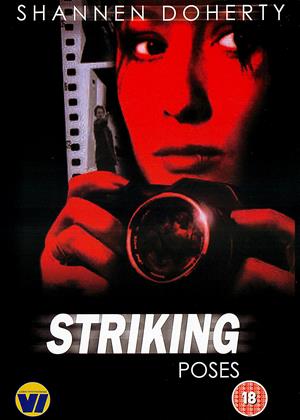
Gage Sullivan (Shannen Doherty) is a freelance photographer who makes most of her money as a member of the paparazzi and who hates what her life has become. When she realizes that she and her assistant, Casey (Tamara Gorski), are being stalked by someone whose trademark is leaving behind wads of chewed bubble gum (?), she calls in a security professional named Nick Angel (Joseph Griffin). When it appears that not even Nick can protect her from the stalker, Gage turns to a former associate of Nick’s, a hitman named Gadger (Aidan Devne).
This direct-to-video film is pretty dumb, Once Gage meets up with Gadger, the film goes off the rails as everyone reveals that they’re not who they say they are and multiple double crosses are revealed, each leaving behind plot holes so big that a convoy of trucks could probably roar through them without even having to slow down. I don’t have much experience with professional con artists but it seems like the really successful ones would know better than to come up with a con that’s as pointlessly complicated as the one in this movie. Even the fake gambling parlor in The Sting wasn’t as needlessly complex as what happens in Striking Poses.
Striking Poses is a let-down and, for an R-rated direct-to-video film, it’s also extremely tame. I’m not really sure where that R rating comes from because there’s no nudity, very little violence, and I don’t think I even heard much profanity. Maybe someone slipped the ratings board some money to avoid getting slapped with a dreaded PG. This is a movie about a con that feels like a big con itself.
This 1948 film stars William Holden, Lee J. Cobb, Nina Foch and Lois Maxwell. William Holden is Al Walker, an escaped convict and a ruthless murderer. Nina Foch is Betty, Walker’s devoted girlfriend and partner in crime. Lee J. Cobb is Dr. Andrew Collins. Lois Maxwell, years before she would be cast as Miss Moneypenny in the first Bond films, plays Ruth Collins, Andrew’s wife. When Walker, Betty, and the gang break into the Collins home, they hold he doctor and his family hostage.
That may sound like a similar set-up to Desperate Hours and hundreds of other low-budget crime movies. And, indeed, it is. What sets The Dark Past apart from those other films is that Dr. Collins is a psychiatrist and his response is not to try to defeat or trick Walker but instead to understand him. Even after Walker kills a friend of the family’s, Collins remains convinced that he can get to the heart of Walker’s anger and help the criminal start the process of reform.
When the nervous and violent Walker threatens the family, Collins calmly offers to teach him how to play chess. When it looks like Collins might have a chance to escape, he instead stays in the house and continues to talk to Walker. Eventually, he finds out about a recurring dream that Walker has been having, one that involves Walker standing in the rain under an umbrella that has a hole in it. Collins links the dream to Walker’s traumatic childhood and he shows Walker why he feels the need to be violent and destructive. But will it make a difference when the cops show up?
The Dark Past is an interesting relic. Watching it today, it can seem a bit strange to see just how unquestioning the film is of the benefits of analysis and dream interpretation. Nowadays, of course, we know that dream symbolism is often just random and that it’s impossible for a psychiatrist to “cure” a patient after only talking to them for an hour or two. However, The Dark Past was made at a time when psychiatry was viewed as being the new science, the thing that that no one dared to question. This was the time of The Snake Pit and Spellbound. The Dark Past suggests that all any criminal needs is just a night spent talking to someone who had studied Jung and Freud. Today, the film seems a bit naive but it’s still an interesting time capsule.
William Holden is great as Al Walker. That, in itself, isn’t a surprise because William Holden was almost always great. Still, Holden does an outstanding job of making Walker and his neurosis feel real and, like the best on-screen criminals, he brings a charge of real danger to his performance. Lee J. Cobb has the less showy role but he also does great work with it. It takes a truly great actor to make the act of listening compelling but Cobb manages to do it.
The Dark Past may not be as well-known as some film noirs but it’s an interesting and occasionally even compelling film. Keep an eye out, eh?
I promised Lisa that I would post at least one video from Spice Girls this week and I picked this one because, when it first came out, we used to drive our mom crazy by trying to duplicate all of the flying jump kicks at the start of the video.
I guess the idea behind this video is that the members of the Spice Girls are a bunch of international assassins who hang out in the Mojave Desert and tie up men. The man in the video is played by Tony Ward. The idea behind the video was Geri Halliwell’s. At the end of the video, the girls kidnap an ice cream man. Ice cream!
This video was directed by Vaughn Arnell and it was nominated for the Viewer’s Choice Award at the MTV Music Awards but it wasn’t nominated for anything else because MTV sucks and they couldn’t handle the Spice of it all.
Johnny Bannion (Stanley Baker) is a career criminal, one who divides his time between long stretches in prison and short visits to the real world. He’s handsome, he’s charming, he’s clever, and he’s totally trapped. Baker moves through the film like a natural-born predator, waiting for the moment to strike. When he’s in prison, he’s as defiant as a caged tiger. When he’s out of prison, he’s always stalking the next prize.
Johnny has a hard time staying out of prison. When we first meet him, he’s in prison and it quickly becomes clear that he’s quite a respected figure behind bars. When he gets out, the first thing that he does is team up with his old associate, Mike Carter (Sam Wanamaker), and make plans to rob a racetrack. Mike and Johnny have an interesting relationship. On the one hand, Mike kept Johnny’s apartment for him while he was locked away and Johnny obviously has enough faith in Mike to work him. On the other hand, neither man seems to truly trust the other. That’s the world of criminals, I suppose. Never trust anyone.
Of course, it quickly turns out that there’s actually a good reason to never trust anyone when you’re living a life of crime. As soon as Johnny, Mike, and the gang pull of the racetrack robbery, Johnny’s betrayed. Johnny ends up locked away once again, all thanks to Mike. However, it turns out that Mike may have acted too soon because Johnny hid all the money before he was sent back to prison. Now, Mike has to figure out a way to pressure Johnny into revealing where the money’s buried while Johnny has to try to survive in a world of ruthless prisoners and guards who are ineffectual at best and crooked at worst. Mike’s not the only one who is interested in where Johnny put all that cash….
I have to admit that I’m probably a bit biased when it come to The Criminal because it’s a British crime film that I actually saw while in the UK. It’s one thing to watch a tough British crime film from the safety of Texas. It’s another thing to watch it at 2 in the morning while in a hotel room with a nice view of the Thames. As opposed to the watered down British-American co-productions that we tend to get used to here in the United States, The Criminal was British through-and-through, from the tough working class accents to the harsh urban landscape to the stylish suits that were worn even inside the prison.
It’s a dense movie. Though Stanley Baker is undoubtedly the star, director Joseph Losey is just as interested in the other people who come within Johnny’s orbit and, as a result, we get to know not just Mike but also the guards and the other prisoners. Partrick Magee, who was a favorite of Kubrick’s, makes a strong impression as Barrows, the prison guard who may be a manipulative sadist or who may just be a man who is doing what he has to do to maintain some sort of order in the prison. The film’s portrayal of Barrows is ambiguous but the same can be said for almost everyone in the movie. In classic noir fashion, there are no traditional heroes. Johnny’s bad but he’s a little bit less bad than the men who betrayed him and who are willing to go to extreme lengths to discover where Johnny hid that money.
Directed by Joseph Losey, The Criminal alternates between scenes of hard-edged reality and scenes that feel as if they could have been lifted from some sort of Boschian nightmare. The scenes outside the prison are harshly realistic while the inside of the prison feels almost like some sort of surrealistic dreamscape where demons take human form. The Criminal is an effective and violent British noir, one that will encourage you to keep your eyes on the shadows.
The senior class of Angel Beach High finally graduate in Porky’s Revenge, the last official Porky’s film. It’s a good thing, too. Most of the members of the Porky’s cast were already in their late 20s when they were cast in the first Porky’s. By the time Porky’s Revenge was made, most of them looked more like they should be planning for their retirement than for college.
Director Bob Clark did not return for Porky’s Revenge and it really shows. The third film doesn’t have any messages about tolerance or fighting bigotry. Instead, it’s just a typical teen sex comedy with a subplot about Brian Schwartz (Scott Colomby) trying to help Coach Goodenough (Bill Hindman) pay back his gambling debt to Porky (Chuck Mitchell). Otherwise, the gang plays basketball, tries to arrange an orgy with the cheerleaders, and even helps Ms. Balbircker (Ellen Parsons) find love. I guess everyone forgot about Ms. Balbricker allying herself with the Klan during the previous film.
Porky’s Revenge doesn’t really have enough ambition to be terrible though. It’s just bland. Just as it doesn’t have the social conscience of the first two film, it’s also not as raunchy. There’s considerably less nudity and the occasionally rough edges of the first two films have been removed. That makes Porky’s Revenge less problematic but it also makes it less interesting. The first two films may have been imperfect but they did capture the feel of high school. This one doesn’t do that because the actors are too old and suddenly their characters are too nice. If not for the title, you would think this was just another dumb comedy that played for a week at the drive-in as opposed to being the second sequel to the most commercially-successful Canadian film of the 80s.
I did laugh when the gang went to the ruins of Porky’s to make sure that it hadn’t been rebuilt, just to discover that Porky now owned his own steamboat. I’m also glad that everyone finally graduated and gave the Porky’s saga a fitting close.
There was a direct-to-video sequel to Porky’s Revenge. It came out in 2009 and was called Porky’s Pimpin’ Pee Wee. I think I can live without watching it.
Flipping to the other metaphorical side of the equally metaphorical coin we again metaphorically tossed into the air with our last review here, we land (last metaphor, I promise) on Brian Canini’s Two More Stories (published, as ever, under his own Drunkent Cat Comics imprint) — and if Three Stories represented everything that’s wrong with his career-spanning “throw some ideas at the wall and see which of ’em sticks” approach to cartooning, this superb mini represents everything that’s right with just following your muse wherever it leads you, come hell or high water. It’s an inherently high-risk/high-reward way of making comics, and this one falls squarely into the “reward” column.
Canini’s titular two stories function as both mirror images to, and thematic extensions of, one another, with the first, “Empty Rivers,” telling the tale of a “prodigal son” type who returns home for his mother’s funeral and is then forced…
Here at Four Color Apocalypse HQ (it sounds more impressive than it is, trust me — and it doesn’t even sound impressive), we’re always happy to get the latest from Columbus-based cartoonist Brian Canini. He’s one of the more versatile talents around these days, and someone who’s not afraid to try his hand on a little bit of everything, from gag strips to autobio to long-form crime stories to funny animals to science fiction — and everything in between. Lately, he’s been delving into the venerable single-creator anthology format with a series of minis, and while the results have been a mixed bag, there’s no harm in that — anthologies almost always are, and I’d rather see a cartoonist push themselves out of their comfort zones a bit and not be afraid to fail rather than going the safe and easy “give the fans what they want” route. Canini has…
In this video, a man cheats on his girlfriend after he meets another girl at the club. He gives his girlfriend a call where he lies about why he’s going to be late getting home. Each Backstreet Boy takes a turn playing the cheater.
What the Hell, Backstreet Boys? You’re all cheating on the same girl? That’s not cool!
Check out that phone that AJ’s using at the start of the video. Feel old, yet? According to AJ, it was during the filming of this video that he tried cocaine for the first time. Don’t worry, though, AJ’s been sober for a year now.
 Gage Sullivan (Shannen Doherty) is a freelance photographer who makes most of her money as a member of the paparazzi and who hates what her life has become. When she realizes that she and her assistant, Casey (Tamara Gorski), are being stalked by someone whose trademark is leaving behind wads of chewed bubble gum (?), she calls in a security professional named Nick Angel (Joseph Griffin). When it appears that not even Nick can protect her from the stalker, Gage turns to a former associate of Nick’s, a hitman named Gadger (Aidan Devne).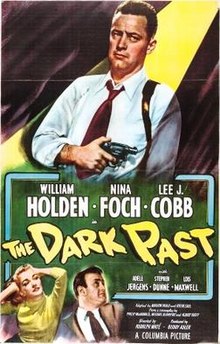






 Through the Shattered Lens