Filling In The Blanks Of Sean Christensen’s “Performance Video”


Ryan C. (fourcolorapocalypse)'s avatarRyan C.'s Four Color Apocalypse

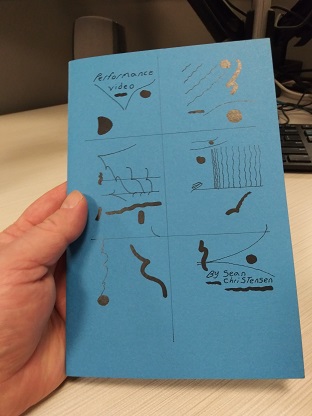
As far as thought-provoking and challenging exercises in formalism and sub-minimalism go, they don’t come much more formalist or sub-minimalist than prolific cartoonist Sean Christensen’s 2019 self-published mini Performance Video, an admittedly curious contemporary artifact that’s as notable for what it does as what it is — although by the end, whether or not there’s any distinction between the two is very much an open question.

And, in fairness, open questions are rather at the core of what Christensen is getting at in this work, for which the antiquated term “avant-garde” is woefully inadequate. Christensen starts and ends with the most basic of basic linework that wordlessly refers either forward and backward to the text, respectively — but that text is the backbone of the project, blue-rendered hand lettering split, like the art, into six-panel grids on each page, with four lines of wording per panel being the standard…

View original post 546 more words

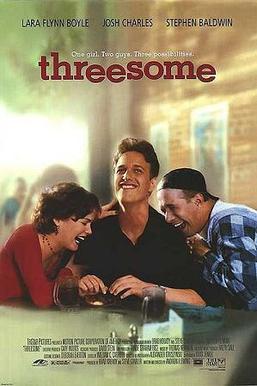
Threesome (1994, directed by Andrew Fleming)


Due to the type of administrative mix-up that always happens in the movie but rarely in real life, a college has assigned female student Alex (Lara Flynn Boyle) to share a dorm room with two males, Eddy (Josh Charles) and Stuart (Stephen Baldwin).  Stuart is an outwardly obnoxious jock while Eddy is a sensitive and gay film student who is obsessed with Jules and Jim.  It does’t take long for Alex to fall in love with Eddy but Eddy is in love with Stuart while Stuart is in love with Alex.  See where this is leading?  The three of them become close friends, to the extent that they actively drive away anyone else who shows any romantic or sexual interest in either one of them.

The title is not a lie.  There is an eventual threesome, though it’s a very tastefully shot threesome and it only happens once.  After all, this was a studio film, not a late night, direct-to-video Cinemax offering.  Unfortunately, things fall apart for the roommates after their threesome, as they are forced to reconsider all of their previous feelings towards each other and one of them is driven to a melodramatic breakdown.  The film’s story would work better if we cared about the characters but they’re all so shallowly written (and Eddy’s overwrought narration doesn’t work) that it’s hard to care about them.  They just come across as being three snobs.  Eddy may be obsessed with Jules and Jim but he doesn’t seem to have learned much from watching the movie.  As for the cast, Josh Charles and Lara Flynn Boyle are both likable but too bland to really hold your attention.  (There’s a reason why both of these actors found more success on television than on the big screen.)  Stephen Baldwin actually brings some depth to his character though I doubt he spends much time bragging about starring in a film called Threesome nowadays.

Threesome is a film that seems to think that it has much to say but it’s impossible for me to think about it without being reminded of the Menage a Trois episode of Seinfeld and Jerry’s plaintive declaration of, “I’m not an orgy guy!”  With those five words, Seinfeld said more about the reality of threesomes than Threesome does in its entire 93 minute running time.


Music Video of the Day: Counting Blue Cars by Dishwalla (1996, directed by Chris Applebaum)


“It was a conversation between myself and the child within myself, but it was sparked by having a conversation with someone who was really young and around that time thought about God and those kinds of things, and just being really curious about it but hadn’t been taught to think a specific way. I just loved the innocence and honesty of having that conversation with someone who didn’t care either way how you would describe this or that – they were just curious.”

— Dishwalla’s JR Richards on Counting Blue Cars

If you were, for some reason, challenged to come up with the epitome of a generic 90s alternative band, that band would probably look a lot like Dishwalla and the song that they sang would probably sound a lot like Counting Blue Cars.  That doesn’t mean that it’s necessarily bad song.  It just means that both the band and the song definitely belong to a very specific era.

Counting Blue Cars may have been their only big hit but, for a period of time, it was inescapable.  You could not turn on the radio without hearing that familiar chorus of Tell Me All Your Thoughts On God.  The song also received attention because it described God as being female.  According to Wikipedia and Songfacts, that made the song controversial.  I can’t remember any controversy about it at all.

The video also feels like the epitome of a generic 90s alternative video.  You would think that the video would at least feature a child asking questions or maybe a blue car but instead, it’s the band playing in some sort of new age trailer park.  New age trailer parks were very popular in the 90s music videos.

What kind of weird child asks for all your thoughts on God?

Enjoy!

Lisa’s Week In Review: 6/1/20 — 6/7/20


It’s been a long week.  I’m currently limping because I sprained my big toe and it’s also summer in Texas, which means that the 100 degree day has arrived!  Oh well.  The first week of June is always unbearable, to be honest.  When you go from reasonably temperate weather to walking into a wall of heat every time you step out your front door, it tends to lead to a certain amount of creative lethargy.

Here’s what little I did this week:

Films I Watched:

  1. 12 Angry Men (1957)
  2. All Is Lost (2013)
  3. Anatomy of a Murder (1959)
  4. Blood Freak (1972)
  5. Bloodlust (1961)
  6. Cocktail (1988)
  7. The Gang Who Couldn’t Shoot Straight (1971)
  8. The Happening (1967)
  9. The Public Enemy (1931)
  10. The Purple Gang (1960)
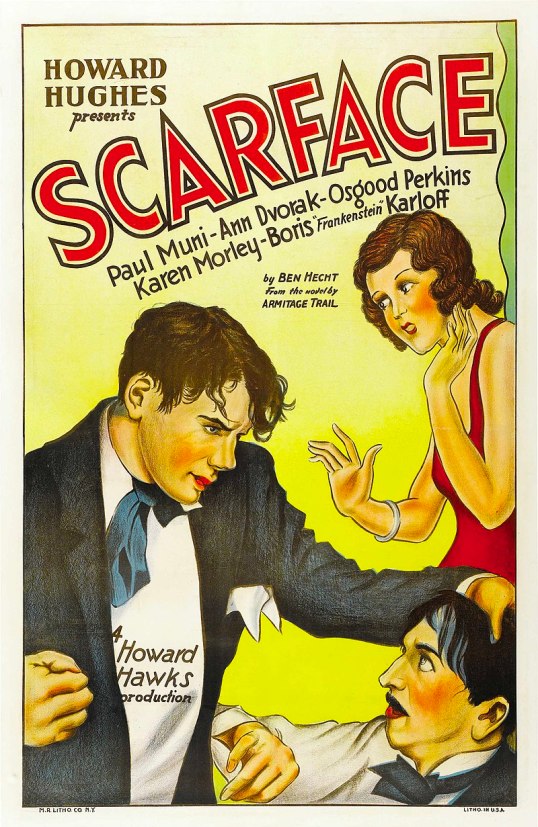
  11. Scarface (1932)

Television Shows I Watched:

  1. Bar Rescue
  2. The Brady Bunch
  3. Ghost Whisperer
  4. Gordon Ramsay’s 24 Hours To Hell And Back
  5. Happy Days
  6. It’s Always Sunny in Philadelphia
  7. Laverne and Shirley
  8. The Love Boat
  9. Night Gallery
  10. Parking Wars
  11. Saved By The Bell
  12. South Park

Books I Read:

  1. Naked Came The Stranger (1969) by Penelope Ash

Music To Which I Listened:

  1. Big Data
  2. Blanck Mass
  3. Britney Spears
  4. The Chemical Brothers
  5. Dillon Francis
  6. Ekkah
  7. Garbage
  8. Goblin
  9. Gwen Stefani
  10. John Carpenter
  11. Lindsay Lohan
  12. Muse
  13. Olivia Krash
  14. Saint Motel
  15. Tove Lo
  16. The Vernoicas

Links From The Site:

  1. I shared music videos from Three Days Grace, Olivia Krash, Grimes, Simple Plan, Gwen Stefani, John Carpenter, and Ekkah!  I observed the birthdays of Marilyn Monroe and Morgan Freeman!  I reviewed an episode of Night Gallery and I started a new series of mob film reviews by taking a look at The Public Enemy, Scarface, The Purple Gang, The Gang Who Couldn’t Shoot Straight, The Happening, and King of the Roaring 20s!
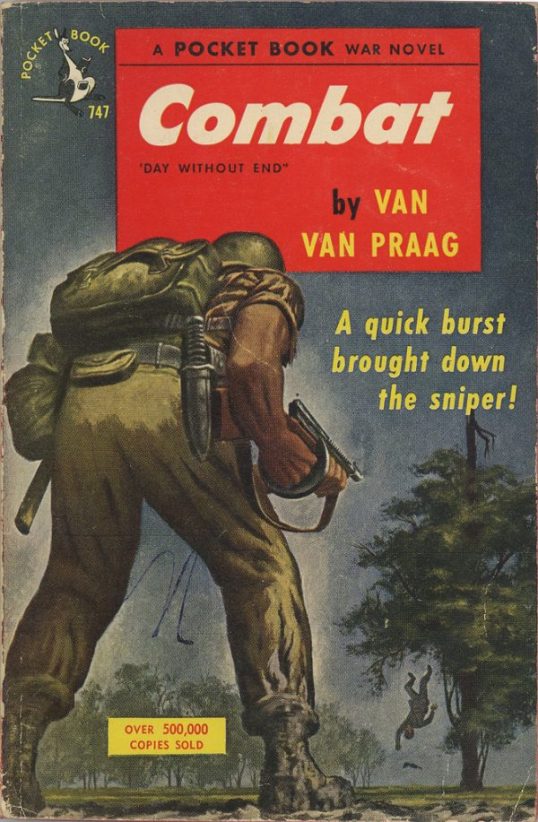
  2. Erin shared the Three Covers of Dreamworld Magazine and images of D-Day!  She also shared: Cottonwood Creek, Pagan Lover, Three Gorgeous Hussies, Sleep With The Devil, Love Hungry Woman, Combat, and Miami Murder-Go-Round!
  3. Jeff reviewed Gang-Related, Panic In The Streets, and Maximum Force!
  4. Ryan reviewed High +Shy and Long Gone!

More From Us:

  1. Ryan has a patreon!  You should consider subscribing!
  2. On her photography site, Erin shared the following: A Rabbit Stopped By, The Day Continues, A Home, No Peace, Shopping Cart in Black-and-White, Fountain in Plano, and Summer!

Want to see what happened last week?  Click here!

An Offer You Can’t Refuse #6: King of the Roaring 20s: The Story of Arnold Rothstein (dir by Joseph M. Newman)


The 1961 gangster biopic, King of the Roaring ’20s: The Story of Arnold Rothstein, tells the story of two men.

David Janssen is Arnold Rothstein, the gambler-turned-millionaire crime lord who, in the early years of the 20th Century, was one of the dominant figures in American organized crime.  Though he may be best-remembered for his alleged role in fixing the 1918 World Series, Rothstein also served as a mentor to men like Lucky Luciano, Meyer Lansky, and Bugsy Siegel.  Rothstein was perhaps the first gangster to to treat crime like a business.

Mickey Rooney is Johnny Burke, Arnold’s best friend from childhood who grows up to be a low-level hood and notoriously unsuccessful gambler.  Whereas Arnold is intelligent, cunning, and always calm, Johnny always seems to be a desperate.  Whereas Arnold’s success is due to his ability to keep a secret, Johnny simply can’t stop talking.

Together …. THEY SOLVE CRIMES!

No, actually, they don’t.  They both commit crimes, sometimes together and sometimes apart.  Perhaps not surprisingly, Arnold turns out to be a better criminal than Johnny.  In fact, Johnny is always in over his head.  He often has to go to his friend Arnold and beg him for his help.  Johnny does this even though Arnold continually tells him, “I only care about myself and money.”

The friendship between Arnold and Johnny is at the heart of King of the Roaring 20s, though it’s not much of a heart since every conversation they have begins with Johnny begging Arnold for help and ends with Arnold declaring that he only cares about money.  At a certain point, it’s hard not to feel that Johnny is bringing a lot of this trouble on himself by consistently seeking help from someone who brags about not helping anyone.  From the minute that the film begins, Arnold Rothstein’s mantra is that he only cares about money, gambling, and winning a poker game with a royal flush.  Everything else — from his friendship to Johnny to his marriage to former showgirl Carolyn Green (Dianne Foster) to even his violent rivalry with crooked cop Phil Butler (Dan O’Herlihy) — comes second to his own greed.  The film’s portrayal of Rothstein as being a single-minded and heartless sociopath may be a convincing portrait of the type of mindset necessary to be a successful crime lord but it hardly makes for a compelling protagonist.

Oddly enough, the film leaves out a lot of the things that the real-life Arnold Rothstein was best known for.  There’s no real mention of Rothstein fixing the World Series. His mentorship to Luciano, Lansky, and Seigel is not depicted.  The fact that Rothstein was reportedly the first gangster to realize how much money could be made off of bootlegging goes unacknowledged.  By most reports, Arnold Rothstein was a flamboyant figure.  (Meyer Wolfsheim, the uncouth gangster from The Great Gatsby, was reportedly based on him.)   There’s nothing flamboyant about David Janssen’s performance in this film.  He plays Rothstein as being a tightly-wound and rather unemotional businessman.  It’s not a bad performance as much as it just doesn’t feel right for a character who, according to the film’s title, was the King of the Roaring 20s.

That said, there are still enough pleasures to be found in this film to make it worth watching.  As if to make up for Janssen’s subdued performance, everyone else in the cast attacks the scenery with gusto.  Mickey Rooney does a good job acting desperate and Dan O’Herlihy is effectively villainous as the crooked cop.  Jack Carson has a few good scenes as a corrupt political fixer and Dianne Foster does the best that she can with the somewhat thankless role of Rothstein’s wife.  The film moves quickly and, even if it’s not as violent as the typical gangster film, it does make a relevant point about how organized crime became a big business.

It’s not a great gangster film by any stretch of the imagination and the lead role is miscast but there’s still enough about this film that works to make it worth a watch for gangster movie fans.

Previous Offers You Can’t (or Can) Refuse:

  1. The Public Enemy
  2. Scarface
  3. The Purple Gang
  4. The Gang That Could’t Shoot Straight
  5. The Happening

D-Day Images


76 years ago, the real anti-fascists stormed the beaches of Normandy and turned the tide of World War II.  Every year, we celebrate the anniversary of D-Day but hopefully we will never forget what it represents.  Over 4,000 men sacrificed their lives on that day in a battle against the greatest evil the world had ever known.  All of us today owe them  a debt a gratitude.

The pictures below were all taken on D-Day:

by Robert Capa

by Robert Capa

by Robert Capa

by Robert Capa

by Robert Capa

by Robert Capa

by Robert Capa