Cleaning out the DVR: Night Nurse (dir by William A. Wellman)


(Lisa is once again cleaning out her DVR!  She recorded the 1931 film Night Nurse off of TCM on May 3rd.)

Night Nurse follows the sordid nights and quiet days of Lora Hart (Barbara Stanwyck), a high school dropout who dreams of becoming a nurse.  Fortunately, she manages to get hired on as a trainee nurse at a big city hospital.  Along the way, she gets a new BFF (Joan Blondell), a potential new boyfriend named Mortie (Ben Lyon), who is not only handsome and nice but a bootlegger too, and valuable life lessons on how to defend herself against smirky male doctors.  Yay!

Unfortunately, even if you manage to survive the rigorous training program, the life of a night nurse is never easy.  For instance, Lora gets hired to help look after the Ritchie children.  The Ritchies may be rich but they’ve got so much drama going on that maybe it would be better if they were poor.  The kids, for instance, are always sick and their doctor (Ralf Harolde) is apparently hooked on morphine.  The mother (Charlotte Merriam) is always passed out drunk.  Meanwhile, the family’s chauffeur, Nick (Clark Gable!), is a total brute who appears to have dangerous plans of his own.

Made in 1931, Night Nurse is a pre-code film, which is to say that it was made before the production code mandated what was and was not acceptable in the movies.  Occasionally, among film fans like myself, there’s a tendency to assume that any pre-code film is actually going to be some sort of subversive, over-the-top masterpiece.  We always think about the epic orgies that Cecil B. DeMille would slip into his silent films or maybe Douglas Fairbanks playing a constantly sniffing detective named Coke Ennyday in The Mystery of the Leaping Fish or the old stories about anonymous stagehands accidentally getting gunned down during the filming of Little Caesar or The Public Enemy.  However, just as often, the pre-code label just means that a film is going to feature a few winky double entendres, a bootlegger hero, and at last one scene of the film’s heroine getting undressed.  If you want to become an expert on 1930s lingerie, just spend a weekend watching pre-code films.

That’s certainly the case with Night Nurse, which only takes 7 minute to reach its first scene of nurses changing out of street clothes and into uniform.  As for the bootlegger hero, that’s taken care of as soon as Mortie shows up and flashes his charming smile despite having a bullet in his hand.  As played by Ben Lyon, Mortie is not exactly the most convincing gangster to ever show up in a pre-code film but no matter!  He’s got charm and not every gangster can be Edward G. Robinson…

If it sound like I’m being critical of Night Nurse, I’m not.  I watch Night Nurse every time that it shows up on TCM and I actually love the film.  It’s a cheerfully silly melodrama, the type of innocently risqué film that could only be made during the pre-code era.  Stanwyck and Blondell are a perfect team and whenever I listened to them trade sarcastic quips or watched them as they try to get away with breaking curfew, I couldn’t help but think of my own friends.  Seriously, everyone should be as lucky as to have a BFF like Joan Blondell.  And finally, you get Clark Gable as the bad guy.  Gable is really mean and hateful in this movie and it takes a while to get used to seeing him without his mustache.  To be honest, he’s not as handsome without the facial hair.  But still — he’s Clark freaking Gable and, even in this early role, he had so much charisma and screen presence that it’s impossible not to watch him.

I was going to start this review by saying that Night Nurse sounded like a good title for an MCU film.  However, my boyfriend informed me that apparently, there actually was a Marvel comic book called Night Nurse.  Apparently, it had nothing to do with this movie.  That’s a shame but hopefully, someone at Lifetime will read this review and decide to remake Night Nurse with an all Canadian cast.  I’m keeping my fingers crossed on this one!

Anyway, Night Nurse shows up on TCM constantly.  Keep an eye out for it!

Cleaning Out the DVR: Lady In The Lake (dir by Robert Montgomery)


(Lisa is once again in the process of cleaning out her DVR!  She recorded the 1947 film noir Lady In The Lake off of TCM on June 17th!)

You are Raymond Chandler’s world-famous private detective, Phillip Marlowe!

Well, no.  Actually, you aren’t.  Lady in the Lake is best-known for being one of the first (if not the first) film to be shot from the viewpoint of the main character but actually, the film goes out of its way to remind you that you’re seeing the story through Marlowe’s eyes but you’re not Marlowe yourself.  There are three scenes in which Marlowe (played by Robert Montgomery, who also directed the film) is seen sitting behind a desk and directly addressing the audience.  He shows up to fill in a few plot details and to assure the audience that, while the film they’re watching may be experimental, it’s not too experimental.  For his part, Montgomery looks and sounds absolutely miserable whenever he has to speak directly to the audience.  One gets the feeling that these scenes were forced on him by nervous studio execs, who were probably worried that the film would be too weird for mainstream audiences.

However, the rest of the film is seen totally through Marlowe’s eyes.  When Marlowe gets punched, we see the fist flying at him.  When Marlowe smokes a cigarette, we see the smoke float away from him.  When Marlowe leers at every single woman that he meets, the camera leers as well.  When Marlowe looks at himself in a mirror, we see his reflection.  When Marlowe passes out after a beating or a car accident, the image grows blurry before fading to black.  There’s even a rather clever scene when Marlowe leans in for a kiss, just to suddenly change his mind and pull back.

Today, of course, the film’s technique doesn’t seem quite as revolutionary.  We’re used to point of view shots and moving cameras.  Last year, Hardcore Henry told its entire stupid story through a point of view shot and the shaky cam effect actually made me physically ill.  In Lady in the Lake, there is no shaky, hand-held camera work and I was happy about that.  Marlowe may turn his head left and right and he may walk forward but he apparently has nerves of steel because the image stays steady and only shakes when Marlowe’s getting beat up.

As for the film’s plot, it opens with Marlowe explaining that, since he’s not making enough money as a P.I., he’s decided to try his hand at writing for a pulp magazine.  While his stories are not accepted, publishing executive Adrienne Fromsett (Audrey Totter) does hire him to track down the missing wife of her boss, Derace Kingbury (Leon Ames).  As Marlowe quickly figures out, nobody’s motives are exactly pure.  Adrienne wants to marry her boss and get her hands on his money.  The wife’s lover (Richard Simmons) claims that he hasn’t seen her in weeks but still lets slip that she may no longer be alive.  The police (represented by Lloyd Nolan and Tom Tully) are corrupt, rather rude, and may know more than they are letting on.  Even a seemingly innocent landlady (Jayne Meadows) might have a secret or two.

And, of course, there’s the dead woman who is discovered in a nearby lake.  Her identity holds the key to many mysteries…

It’s an intriguing puzzle and it actually helps to see everything through Marlowe’s eyes.  If nothing else, it cuts down on the red herrings.  If Marlowe stops to stare at something, you know exactly what he’s staring at and you can be sure that it will prove to be important at some point in the story.

By the way, did I mention that Lady In The Lake is not just an experimental film noir but a Christmas movie?  Seriously, it opens with holiday music playing in the background and the opening credits are printed on cheery Christmas cards.  It’s only after the credits are over that we see that there’s a gun underneath the cards.  As a director, Montgomery does a great job juxtaposing the cheeriness of Christmas with the sordidness of the people who Marlowe has to associate with on a daily basis.  He may be dealing with a bunch of murderers and greedy con artists but almost everyone has a Christmas tree in their apartment.

In fact, it’s so easy to get so wrapped up in the film’s technique that the viewer runs the risk of not noticing just how dark and cynical Lady in The Lake truly is.  Everyone that Marlowe meets is sleazy.  Marlowe, himself, does not come across as being particularly likable.  Every room that Marlowe enters is underlit.  Interestingly, with the exception of the opening credits and a driving montage, there’s not much music to be heard in the film, a reminder that we’re only hearing what Marlowe hears.  And, in Marlowe’s world, there’s no music playing in the background to provide relief from the tension.  There’s just a mix of lies and threats.

Lady in the Lake is an intriguing film and it shows up on TCM fairly frequently.  Keep an eye out for it.

Music Video of the Day: Get Rhythm by Ry Cooder (1988, dir. David Fincher)


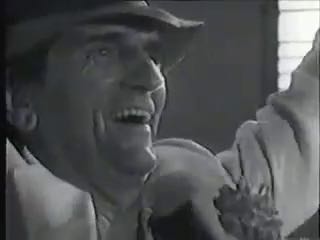
Once again, we have club-owner Stanton, but back in the 1980s before he played a club owner in Stop by Black Rebel Motorcycle Club. This time he is under the direction of none other than David Fincher. I didn’t expect to hit a David Fincher music video while going through ones with Harry Dean Stanton.

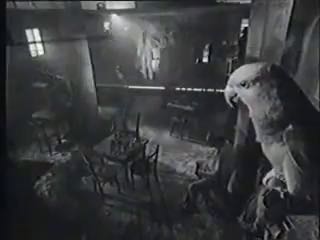
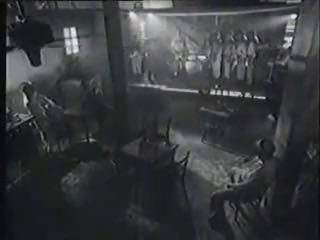
It’s a shame that the version I found has such a low resolution. I mean there isn’t anything particularly interesting about the video. It’s one of those where a band starts playing to a nearly empty place and people keep trickling in until the club is packed because they can’t resist the pull of the song. But still, you can tell that it probably looked really good when it was shown properly.

What happened to the parrot between shots?

Enjoy!

Harry Dean Stanton Retrospective:

  1. Those Memories Of You by Dolly Parton & Linda Ronstadt & Emmylou Harris (1987, dir. White Copeman)
  2. Heart Of Stone by Dwight Yoakam (1996, dir. Dwight Yoakam)
  3. Sorry You Asked? by Dwight Yoakam (1996, dir. Dwight Yoakam)
  4. Nothing To Believe In by Cracker (1996, dir. Samuel Bayer)
  5. Stop by Black Rebel Motorcycle Club (2003, dir. Charles Mehling)
  6. Dreamin’ Of You by Bob Dylan (2008, dir. ???)