Quick Review: Need for Speed (dir. by Scott Waugh)


Need_For_Speed_New_Oficial_Poster_JPostersMy Short Take on Need for Speed –

Reasons to see it:

+ Fast cars doing interesting stunts that don’t feel like a CGI stunt reel. Take the Mustang chase from Drive and stretch it out.

+ It’s a tightly shot film. The chances of saying “Come on, go somewhere.” Are small and the driving camera work does its best to invoke a sense of being in the scene.

+ Imogen Poots steals practically every scene she’s in, and the cast overall seemed to enjoy themselves. Michael Keaton may be the most animated he’s been since Beetlejuice. Aaron Paul sounds like a mix between Charlie Hunnam and Solid Snake.

Reasons to hold off for now:

– It’s not the tightest story in the world. You’ll probably be able to easily call out plot angles as the movie progresses. There is also one scene in the film that never connects to anything after it, leaving something of a hole there. Overall, the film gives you just enough to understand why everyone’s doing what they’re doing, but don’t search for a whole lot of character growth here.

– The Air support moments seem a little implausible, given air traffic rules and what not.

The Long Take: 

Ever since The Fast and The Furious hit the big screen in 2001, you’ve had a number of race related movies. I think the worst I can recall was 2007’s Redline, which tried to throw some wild extortion theme into the mix. The movie adaptation for Need for Speed may actually be a better movie than some of Electronic Arts’ games. It may not be Hamlet, but it handles itself just fine.

The premise for Need for Speed is very simple. A young racer (Aaron Paul, whose voice sounds he’s channelling Sons of Anarchy’s Jax Teller) seeks vengeance against a former business partner (Dominic Cooper, Howard Stark from the Marvel Cinematic Universe) by way of a dangerous high speed race known as the Deleon. He assembles a team of friends, and goes about trying to reach his goal. There you go, all you need. It might sound as bad as this year’s Robocop, but at least the audience laughed along with this one.

Although many know Aaron Paul from his Emmy winning run on Breaking Bad, but he isn’t new to movies. He’s had a great turn in Smashed with Mary Elizabeth Winstead and worked previously with co-star Imogen Poots on The Long Way Down. Here in Need for Speed, I felt he did really well with what was given as racer Tobey Marshall, granted that it wasn’t a whole lot. Still, he sells it as best he can. Poots, on the other hand is as much the bright light in the film as Hayley Atwell was in Captain America: The First Avenger. Overall, the casting was okay here. Dominic Cooper plays the rival role well, though doesn’t come off as sinister in any way and Michael Keaton seems to enjoy himself in this as the host of the Deleon, a high stakes private race. He channels his inner Beetlejuice and is one of the high points of the film. Between he and Scott Mescudi (Kid Cudi to those who know him musically), they have the best scenes apart from the main cast.

The car scenes themselves are okay. You may find yourself leaning back in your seat in some instances, but they don’t quite have the tight feel of say Ronin. Still, you won’t see anything happen in these cars that go beyond the extreme. Truth be told, it’s almost similar to the first Fast and the Furious, save for all the wavy speed lines in the high speed chases. One of the remarkable things about Need for Speed is that it tries its best to avoid throwing too many CGI driving moments. It has a feel that’s similar to Tarantino’s Death Proof or, as the film highlights in the beginning of the movie, Bullitt. This being only his second major film (Act of Valor being the first), Director Scott Waugh gets away with making the racing moments as intense as they can be without getting too crazy…well, almost. It’s cut quick, and there are very few lag scenes as far as I could notice.

If the movie has any bad points, it’s that almost everything happens in a bubble. The plot has someone who is effectively on the run, and yet I would have imagined there’d be more of a police presence, especially given the exposure. Then again, this is Need for Speed, where you only need to avoid the cops or 2 minutes before being given the chance to hide in a cooldown zone (in NFS: Most Wanted, anyway). Fans of the games will see some of those elements in play during the film and they are functional here, if not realistic.

Additionally, there’s one other scene that involves the recruiting of a reluctant team member that goes almost no where. The reason for bringing the person along (having to do with a car issue) never appears to be addressed either visually or verbally. This left me asking, “Well, was it fixed?” and then shaking my head later on. It’s not a terrible mistake to have while munching on popcorn ( you won’t choke for not getting an answer), but someone really could have taken the time to dot that particular “i” on George Gatins’ script.

Overall, Need for Speed is a fun ride. It’s predictable in a lot of ways, and you’ll see some of it coming, but you may also find yourself smiling and swerving in your seats with the traffic.

Film Review: Youngblood (dir by Peter Markle)


As I mentioned in my review of Diary of a Hitman, I’ve been trying to watch as many obscure and forgotten films as possible.  For that reason, earlier tonight, I watched, via Movieplex OnDemand, a 1986 film called Youngblood.

Youngblood is one of those films that is so unbelievably predictable that I’m dreading having to detail the film’s plot because there is seriously no way to make it sound interesting.

Okay, let’s give it a shot.

Dean Youngblood (Rob Lowe) is a 17 year-old farmhand in upstate New York who also happens to be one of the state’s best hockey players.  He’s also lucky enough to have a plot-specific last name.  Just imagine if his name had been Dean Bloodthinner or Dean Oldboy.  You’d have a much different movie.  But anyway — Youngblood dreams of playing in the National Hockey League.  His father tells Youngblood to forget about his dreams.  His brother says, “Go for your dreams!”  Perhaps not surprisingly, Youngblood decides to go for his dreams because, otherwise, there wouldn’t be a movie.

Youngblood ends up playing in the Canadian Junior League.  (I should mention that the only reason I even know that there is a Canadian Junior League is because I watch Degrassi.)  After being taken under the wing of fellow player Derek Sutton (Patrick Swayze), Youngblood becomes one of the best players on the team.  However, he’s not comfortable beating up the opposing players, which leads his coach (Ed Lauter) to wonder if Youngblood lacks the killer instinct needed for professional hockey.  Youngblood also happens to be dating the coach’s daughter (Cynthia Gibb).  Anyway, as you can probably guess, the film concludes with a big game and a lot of shots of people shouting, “GO, YOUNGBLOOD!”

Youngblood is not a very good movie but its memorable for being perhaps the most aggressively male movie ever made.  Youngblood, for instance, has no mother.  He just has an older brother to learn from and a father to impress.  Indeed, to judge from Youngblood, upstate New York is apparently a female-free zone.  As opposed to New York, there are women in Canada and, in the world of this film, they all exist for one and only one reason: to validate the existence of Dean Youngblood.  The coach’s daughter does it by assuring him that he’s worthy of being loved.  All the other female characters — from his landlady to two groupies that he meets in a bar — do so by being sexually available.  When Youngblood has sex with his landlady, they’re watched by two other hockey players (one of whom is played by Keanu Reeves and says, “She do me last year.”).  After Youngblood has sex with the coach’s daughter, the first thing he does is track down Derek so he can tell him all about it.

Make no mistake about it.  Youngblood is a love story but it’s about the love between Youngblood and his teammates.  When Youngblood first makes the team, Derek holds him down and proceeds to shave his testicles with a dull razor.  When Youngblood finally starts fighting on the ice (and, in the process, becomes a man or something), he does it to defend his fellow teammates.  Poor Cynthia Gibb can only watch from the stands and cheer.  She’s finally realized that, by encouraging Youngblood to embrace peace over violence, she was holding him back from embracing his destiny.  Or something.

On a positive note, Rob Lowe looks as good in this film as he did earlier in Class and later in Parks and Recreation.  For that matter, a young and athletic Patrick Swayze looked pretty good in this film too.  However, the characters that they’re playing are so hyper-masculine that they quickly go from being sexy to just being obnoxious.  I’ll admit that, unlike the TSL’s own Leonard Wilson, I do not know much about hockey.  But I do know that if I ever have to suggest a hockey film to a friend, I will always suggest that they see Goon and forget about Youngblood.

Trailer: Devil’s Knot


I think it’s a fair question to ask whether — after four documentaries and countless books — there’s really anything new to be said about the West Memphis Three.  That’s certainly the question that I asked when I heard that Atom Egoyan was making a narrative film about this case.

Having watched the trailer below and speaking as someone who has spent her share of time in Arkansas, I will say that Reese Whitherspoon appears to be perfectly cast while Colin Firth appears to be intriguingly miscast.

Scenes That I Love: The Final Battle From Drumline


First released in 2002, Drumline attempts to do for the marching band what the Bring It On films did for cheerleading.  Nick Cannon plays a cocky teenage drummer who, after graduating from high school in New York, attends Atlanta A&T University, a fictional historically black college in Georgia.  Cannon is attending school on a band scholarship but, despite his obvious talent, he finds himself in conflict with both the band director (Orlando Jones) and the leader of the drumline (played by Leonard Roberts).  All in all, it’s a very predictable but likable film.  Cannon, Jones, and Roberts all give good performances and director Charles Stone keeps things moving at such a fast pace that you don’t have time to think about how familiar it all seems.

As you can probably already guess, Drumline ends with a big band competition where Atlanta A&T faces off against their arch rival, Morris Brown College.  This is definitely the best scene in Drumline.  It’s at this moment that the film manages to transcend both its predictable plot and the fact that I never cared much about the marching band in either college or high school.  (In fact, one of my frenemies in  high school was in the  marching band and oh my God, the way she went on and on about it…but that’s another story.)  I can’t really say whether this is a realistic portrait of a band competition but it’s definitely exciting to watch.

It’s also today’s scene that I love!

6 Trailers Marching Through March


Hi there!  It’s Wednesday (or maybe Thursday — daylight savings time  is so freaking confusing!) and that means that it’s time for yet another somewhat random collection of Lisa Marie’s Favorite Grindhouse and Exploitation Film Trailers!

1) See No Evil (1971)

2) The Other (1972)

3) Hell Drivers (1957)

4) Exposed (1983)

5) The Lickerish Quartet (1970)

6) Reform School Girl (1957)

What do you think, Gamera?

Gamera

Review: Bates Motel 2.2 “Shadow of a Doubt”


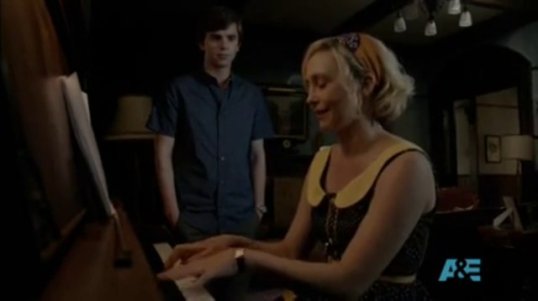
466480041_640

I have to commend Bates Motel for directly referencing Alfred Hitchcock with the title of its latest episode.  Shadow of a Doubt is not only one of Hitchcock’s finest films but it’s also one that shares quite a few themes in common with Bates Motel.  Like Bates Motel, Shadow of a Doubt deals with  the way an outwardly placid surface can hide all sorts of scary and dark secrets.  At this point, it’s a lot easier to imagine Freddie Highmore’s blankly charming Norman growing up to be Joseph Cotten’s friendly murderer Uncle Charlie in Shadow of a Doubt than the twitchy character made famous by Anthony Perkins in Psycho.

Still, it’s hard not to feel that an even better title for last Monday’s episode would have been Norma Bates Sings.

That was pretty much the highlight of last night’s episode and that’s not at all a complaint.  The people behind the show obviously realize just how lucky they are to have Vera Farmiga playing the role of Norma Bates.  The show works best when she’s allowed to take center stage and that’s what literally happens in Shadow of a Doubt.

Norma was singing because she and Norman were both trying out for the town musical.

I loved this subplot on so many levels.

First off, it made perfect sense that Norma, who obviously believes that Norman killed Ms. Watson, would try to find an activity that she and Norman could do together.  This, of course, both allows Norman to be occupied with something other than death and gives Norma an excuse to keep an eye on her possibly dangerous son.

Secondly, and perhaps even more importantly, it seemed exactly like the type of thing that somebody like Norma Bates would get excited about.  Being something of a community theater refugee myself, I couldn’t help but smile when I saw Norman and Norma at the auditions because it felt exactly right.  Everything from Norman’s sullen attitude to Norma’s surprisingly heart-felt (yet endearingly awkward) audition rang true.  During those scenes, Bates Motel went from being that strange little show about a boy who might be murderer to being a very believable and almost touching story about a loving but overdramatic mother and her socially awkward son.

As for the rest of Monday’s episode, I have to say that I was slightly relieved to see Bradley safely get on that bus and head off for a new life.  It’s not so much that I thought Bradley wouldn’t make it as much as I was worried that I’d have to sit through several episodes of Bradley hiding in the basement and Dylan being forced to help search for Gil’s murderer.  Don’t get me wrong.  I think that Nicola Peltz’s performance as Bradley was underrated by a lot of critics and I also think that, as played by Max Thieriot, Dylan is one of the most intriguing characters on the show.  It’s just that I felt that Bradley’s subplot was good for, at most, two episodes.  Bates Motel wrapped it up in two episodes and good for them.

The other big development is that Sheriff Romero arrested a drifter and charged him with Ms. Watson’s murder.  We knew the guy didn’t do it.  The drifter certainly knows he didn’t do it.  And, for that matter, it’s pretty obvious that Romero knows that he’s got the wrong guy too.  However, that is what makes Romero such an interesting character.  He’s less concerned with solving crimes and enforcing order than he is with maintaining balance.  It’s obvious that the entire town of White Pines Bay has found a balance between good and evil, legal and illegal and that balance works for them.  Ms. Watson’s murder threw that balance off and Romero’s actions are more about resetting everything back to normal than anything else.

Otherwise, the townspeople might end up burning somebody alive in the town center again.  (And is anyone ever going to mention that happening ever again or has everyone on the show just blocked it from their mind?)

So, all in all, Shadow of a Doubt was a pretty good episode of Bates Motel and hopefully, it’ll be a sign of things to come for season 2.  My only complaint?  So far, Emma, my favorite character, hasn’t gotten to do anything.

Hopefully, that’ll change in the upcoming episodes.

Personally, I can’t wait to find out!

Documentary Review: Seduced and Abandoned (dir by James Toback)


I recently watched James Toback’s 2013 Seduced and Abandoned on HBO.  This documentary failed to seduce me but it certainly left me feeling abandoned.

Seduced and Abandoned follows James Toback and Alec Baldwin as they wander around the Cannes Film Festival, interviewing filmmakers and attempting to raise money for Toback’s latest film.  That film, incidentally, is a remake of  Last Tango In Paris.  Though neither Toback nor Baldwin goes into too much detail about the film (and I’m not exactly convinced that they’re all that serious about it to begin with), we do learn that this remake would be set in Iraq.  Alec Baldwin would play a right-wing CIA agent while Neve Campbell  would play a leftist journalist.  We watch as Baldwin and Toback pitch this film to a countless number of potential producers and ask for twenty million dollars.  Without fail, every producer replies that he loves Alec Baldwin but he’s not willing to spend that type of money on him because Baldwin is not a bankable star.  As Baldwin and Toback frequently lament, nobody seems to care what the film is about.  Instead, they’re only interested in making money.

And this brings us to this documentary’s main problem.  It would be easier to agree with them about businessmen sacrificing art for greed if not for the fact that the movie that Toback and Baldwin are talking about making sounds like perhaps the worst fucking film ever pitched.  A remake of Last Tango in Paris starring Alec Baldwin, directed by James Toback, and taking place in Iraq?  Are you freaking kidding me?  I would never pay money to see a movie that sounded that pretentious.  I would never ask anyone else to buy me a ticket for this movie.  If I saw this movie on HBO, I would cancel my cable subscription.  Seriously, no way.

And yes, I do understand Baldwin and Toback’s point.  They’re arguing that a politically-themed, Iraq-set remake of Last Tango In Paris could not be made today because the system has been set up to silence the voice of artists. The industry is more concerned with making money than making an artistic statement.  I happen to agree 100% but that still doesn’t change the fact that Toback and Baldwin’s film sounds terrible.

Toback and Baldwin interview everyone from Ryan Gosling to Jessica Chastain to Martin Scorsese to Francis Ford Coppola and the one thing that every interview has in common is the sound of Toback’s braying laughter.  It’s a very forced and calculating laugh, one that seems almost as fake as Toback’s pseudo-intellectual persona.  And that’s the other big problem with Seduced and Abandoned.  Toback and Baldwin never really come across as being the rebels that they obviously believe themselves to be.  Even when Toback is talking to the financiers that he and Baldwin appear to blame for ruining the movies, it’s obvious that Toback wants us to impressed by the fact that he knows so many fabulously wealthy people.  In the end, the film feels self-congratulatory in the most undeserving of ways.

And yet, there are occasional moments where the film, almost despite itself, manages to escape from the suffocating egos of James Toback and Alec Baldwin.  The section of the film that deals with the history of Cannes Film Festival is fascinating and Martin Scorsese is such a lively and sincere artist that it’s impossible not to enjoy his interview.  (In many ways, Scorsese seems to be the anti-Toback.)  For a few seconds, Alec Baldwin stops being insufferable long enough to do a reasonably humorous impersonation of Woody Allen.  If you’re a student of Italian cinema, you’ll be happy to see a brief appearance from Mark Damon, a former actor turned producer who appears in several Italian spaghetti westerns in the late 60s.  Damon is the first producer to have to sit through Toback’s pitch and its fascinating to watch just how indifferent he is to idea of remaking Last Tango In Paris with Alec Baldwin and James Toback.

Mark Damon aside, Seduced and Abandoned is a documentary that fails to do the former and will probably inspire many viewers to do the latter.

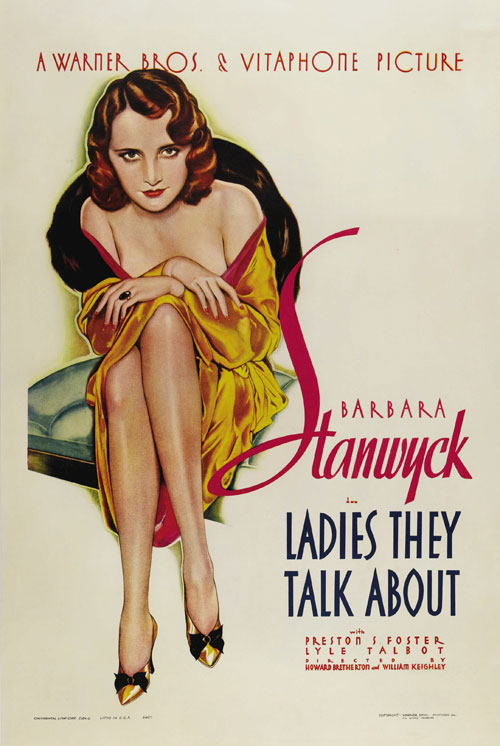
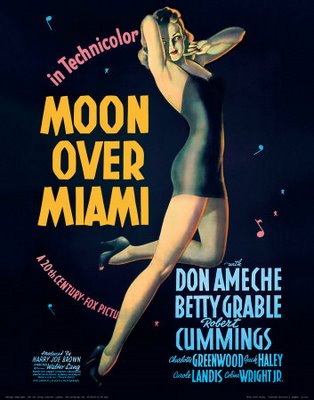
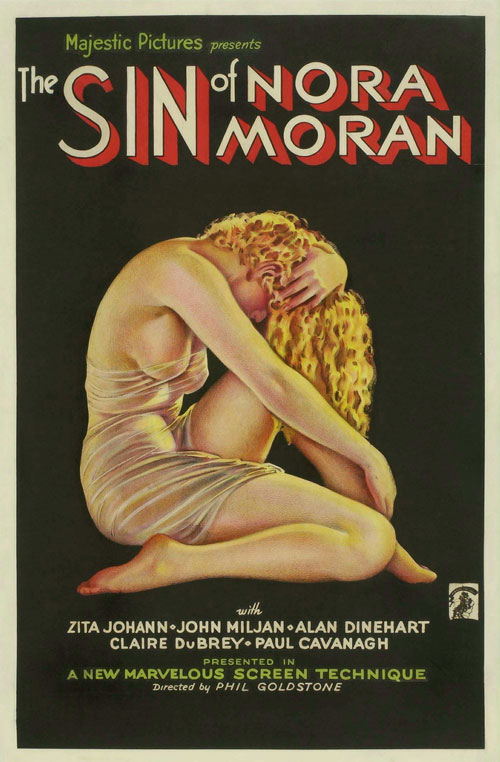
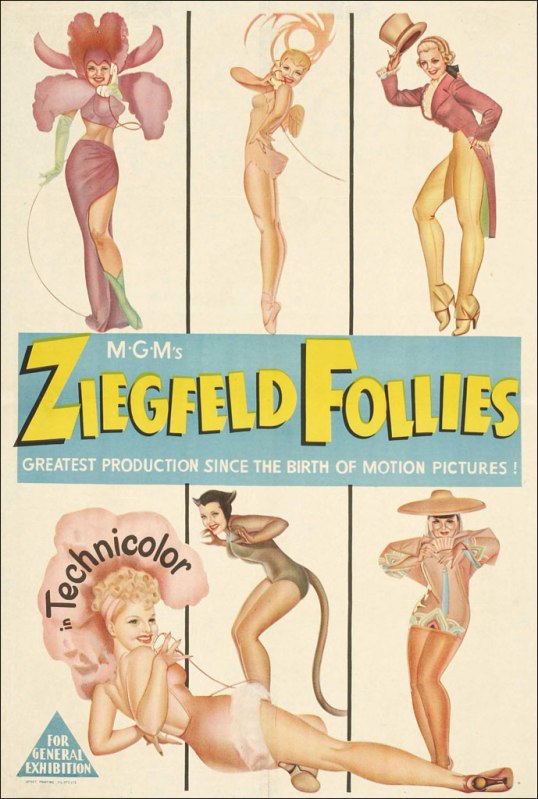
Artist Profile: Alberto Vargas (1896 — 1982)


Alberto Vargas was one of the most famous of the classic pin-up artists.  The son of noted photographer Max Vargas, he was born in Peru and moved to the U.S. in 1916 after studying art in Zurich and Geneva.  His early career included working as an artist for the Ziegfeld Follies and for Paramount Pictures.  His poster for The Sin of Nora Moran is often cited as one of the greatest movie posters ever made.  He became famous in the 1940s when his pin-up work first started to appear in Esquire Magazine.  Many World War II aircrafts flew into battle with a “Vargas Girl” painted on the side.

Much of Vargas’s work is now held at the Spencer Museum at the University of Kansas.  Over 30 years since his death, his paintings are still eagerly sought by collectors.

Black Magic Ladies They Talk About Marilyn Moon Over Miami The Sin of Nora Moran Vargas Vargas1 Vargas2 Vargas3 Vargas4 ziegfeld_follies

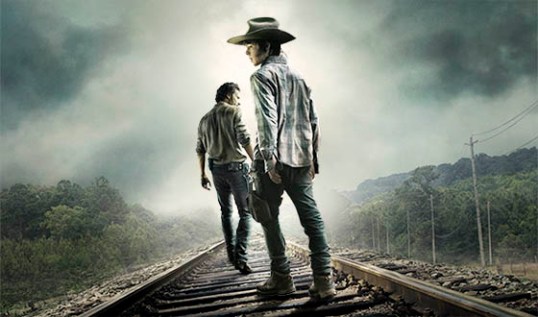
Review: The Walking Dead S4E13 “Alone”


TheWalkingDeadS4M

“Why hurt yourself when you can hurt other people.” — Joe

The Walking Dead has taken on a new narrative path since it’s return after this season’s mid-season break. One of the biggest complaints that some fans and critics have had about the show has been the lack of character development for many of the roles in the show. We’re not talking about people who show up for a scene or an episode or two. It’s for those who have become regulars through the show’s many season.

Well, it looks like from the show’s writers will be trying to rectify that flaw this second half of season 4.

Since the show’s return from it’s mid-season break it’s taken on an almost zealous attempt to show the audience more of who these people truly are. Each new episode in this second half has been more about exploring each surviving character’s backstory either through some sort of flashback (like we saw tonight with the cold opening showing Bob’s lonely existence before being found by Daryl and Glenn pre-prison attack) or some of the quieter moments of exposition between characters (last week’s episode between Daryl and Beth was a prime example of this). We’ve gotten to learn more about our favorite zombie apocalypse survivors. They’ve shown themselves to be more than what the previous seasons have made us to think of them.

Tonight’s episode continued to explore the growing relationship (whether romantic or platonic) between resident badass Daryl Dixon and bright-eyed optimist Beth Greene. We see him trying to teach the younger Greene girl how to become a better with the crossbow and be a better tracker. Throughout their section of tonight’s episoode we see Daryl become more protective of young Beth Greene. The false front he’s put up in the past to avoid getting closer to people has started to come down. In past season fans and writers have looked at Daryl Dixon as someone who probably would be better off being alone instead of trying to deal with a dysfunctional “family” unit of survivors. He’s the only one who seems to be ready-made for this zombie apocalypse.

Yet, as we’ve seen in the second half of this season being alone is something that he doesn’t want to ever return to. He may remain gruff and surly, but his need to be around those who care about him and people who he wants to belong with has made him a more well-rounded badass. The way the Daryl and Beth half of the episode ended it’s going to be interesting if his need to belong with a group will cause him to forget the humanity he has found while being with Rick’s group.

The theme of being alone continues, and actually began, with the Bob, Sasha and Maggie half of tonight’s episode which was aptly titled, “Alone”. Bob’s time being alone in the wilderness was the cold opening for tonight’s episode and revealed much about the enigmatic Bob. This was all done with Bob not speaking a line of dialogue in the first few minutes. He seemed able enough to survive on his own, but the moment Glenn and Daryl arrive and offers him sanctuary back in the prison he accepts with no questions asked.

It’s a theme that runs throughout tonight’s episode. Being alone may make it easier to survive. No one to worry about. Only have to keep one person alive. But for these survivors it’s the comfort of having others looking out for you which makes it all worth the headaches and drama that comes with being involved with other people. These lone wolf survivors may be great at surviving on their own, but they also want to be doing more than just survive. They want to live and being with others. It makes them feel more human and gives them a higher purpose than just trying to survive day to day.

Some fans may not be liking this more introspective turn of The Walking Dead this second half of the season. There’s still some gruesome scees to be had, but there’s also many more quiet scenes of just characters interacting with each other minus the violence and brutality inherent in a show about the zombie apocalypse.

Notes

  • Tonight’s episode was written by Curtis Gwinn and directed by Ernest Dickerson.
  • Some great genuinely scary moments in tonight’s episode: the fog sequence with the zombies involving Bob, Maggie and Sasha was shot and directed well by veteran director Ernest Dickerson (who has directed some of the best episodes in the series). Another was Daryl finding himself stuck in a room filling up with zombies and the only way out was going through them.
  • Tonight’s episode was the strongest of this season’s second half. We just didn’t get to learn about some of the things which motivates Bob, but also what made Sasha and Maggie such good survivors. Larry Gilliard, Jr. hasn’t been given enough chances to stretch his acting skills this season, but tonight he was allowed to do just that and he passed with flying colors.
  • Beth is really thirsting for some of Daryl and was really apparent in tonight’s episode. This should make Daryl/Carol shippers not very happy at all.
  • For Dead Rising fans tonight’s episode should bring a smile to their faces as we see Maggie become an expert in zombie killing just using a street sign pole and it’s very sharp squared steel sign.
  • The episode opened and ended with the song “Blackbird Song” by Lee DeWyze.
  • Jeff Kober returns as the leader of the small band of raiders we saw in the episode “Claimed”. His return may mean he’s the big baddie for this second half as the different groups make their way to Terminus.
  • Talking Dead Guests: Sonequa Martin-Green and Lauren Cohan, Sasha and Maggie of The Walking Dead.

Season 4

A Quickie With Lisa Marie: Gammera The Invincible (dir by Noriaki Yuasu and Sandy Howard)


Late night every Saturday, the Late Night Movie crew and I gather over in the SyFy Designs chat room and we watch an old movie.  Last night, we watched the 1966 killer turtle film, Gammera The Invincible.

Gammera The Invicible began life as Gamera, a Japanese monster film that was made in an attempt to rival the popularity of the Godzilla films.  Gamera is a giant, prehistoric turtle who, after being awakened by an atomic bomb, proceeds to attempt to destroy the world.  (And, when you think about the way the world works, who can really blame him?)  Unlike the small, passive turtles that live in the creek next to my house, Gamera can not only fly but breathe fire as well.  He’s one hell of a turtle.

Anyway, when Gamera was released in the States, it was retitled Gammera The Invincible*.  Director Sandy Howard shot some new scenes (featuring American actors like Albert Dekker) and that footage was crudely mixed with scenes from the original Japanese film.  The Japanese actors were badly dubbed and the end result was disjointed, to say the least.

But, disjointed or not, Gammera The Invincible is a lot of fun.  Why?  Well, first off, Gammera is a lot cuter than Godzilla.  How can you go wrong with a giant turtle?  Secondly, Gammera is that rare Japanese monster film that invites you to dance.  I dare you to listen to the Gammera theme song and not be happy!

For me, everything great about Gammera can be seen in the scene below.  As that nameless actor quite correctly puts it, who cares about monsters when you can dance?

If you have 89 minutes to kill, feel free to enjoy Gammera The Invincible!

—-

* Apparently, the extra M was added to keep people from mispronouncing the turtle’s name.