Yes, this trailer has been out there for a while and quite frankly, I’m not expecting this film to be that good (I get the feeling that the best moments are probably in the trailer) but still, I always smile whenever I see the trailer for Men in Black 3. Why? Well, there’s really only one reason and it’s not Will Smith being all Will Smith-like. And, no, it’s not Tommy Lee Jones because, even in the trailer, Jones looks absolutely miserable and ennui-stricken. And it’s not Jermaine Clement because, while he’s apparently in the film, he’s not in the trailer.
No, for me, this trailer — and probably the entire film — is all about Josh Brolin’s next-to-perfect imitation of Tommy Lee Jones.
“Christ promised a resurrection of the dead. I just thought he had a little something different in mind.” — Hershel Greene
[spoilers within]
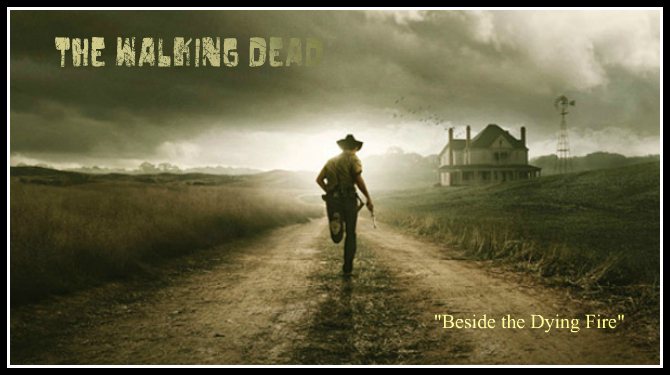
We’ve finally come to the season 2 finale of AMC’s The Walking Dead. The previous episode, “Better Angels”, saw a second integral character die as a set-up to what looks to be pivotal finale.
This season has been plagued from the beginning with infighting between it’s original showrunner in Frank Darabont and it’s network in AMC. Mirroring the very internal struggle between two very powerful characters within the show some worried that this struggle between Darabont and AMC would affect the show’s quality. While the first half showed that Darabont’s slow-burn narrative style was drawing some grumblings from the show’s audience it still didn’t keep it from getting huge ratings numbers with each episode shown.
The second half of the season saw a change in showrunner as Glen Mazzara (veteran writer and tv showrunner) took over the show’s creative reins. From the very episode of the second half we could see a change in the show’s pacing. There was a sense of desperation in the characters as they tried to deal with the death of Sophia during the episode before the mid-season break. With the additional deaths of the show’s two extreme ideologies in Dale and Shane we find the group’s leader in Rick very close to the tipping point.
“Beside the Dying Fire” begins with a flashback cold opening going back to the show’s pilot episode. We see zombies feeding on what looks like the remains of Rick’s horse during his failed attempt to enter Atlanta. As the zombies feed a passing helicopter distracts and gets the attention of the zombies who soon begin following in the same direction it flew on. The opening doesn’t show how much time passed between that flyover Atlanta and the show made by Carl to put down Shane, but it looks like this Atlanta herd is what will be making the assault on the Greene Farm and the rest of the survivors.
The siege that occurs through the first half of this episode should satisfy and put a huge grin on the show’s fans who have been complaining about the lack zombie mayhem during this sophomore season. Sure there were episode that had more than a couple zombies in it, but a huge attack we never saw occur until this season finale. It’s this very attack that reinforces the notion of how much the zombies themselves are like a force of nature. They’re like a hurricane or tornado that destroys everything in their path. There’s no way to stop such a force only attempt to weather the storm and try to come out the other side healthy and whole.
From how the first half of tonight’s episode went down not everyone made it out safe from the herd that took down the barn and the farm. With the important deaths that had preceded tonight’s episode it was a nice release (if you could call killing off two background characters in a most gruesome manner a relief) to see that these deaths were meant more as a way to lessen the number of the cast and nothing else. Having three characters (two in the preceding episodes to tonight’s) die this season who had some connection to the group was already more than what most other shows on tv could manage. Some have called these deaths something akin to the redshirt yeomans on Star Trek always being killed to keep the important characters from dying instead. If that was the case then these redshirters were two episodes too late and Dale and Shane would agree with me.
As action-packed and exciting as the first half of the episode turned out to be the second half slowed things down to let the survivors catch their breath and dwell on their new situation. No more farm to call home. Their delusions of safety from the dangers of this new world totally shattered for good. New revelations about the the zombie apocalypse looking to tear whatever tenuous hold Rick had over the group as a leader. This second half did a great job in answering some of the questions brought up this season and one very important one which ended the first season: What did Jenner whisper to Rick in the CDC’s final moments.
So, the second season of The Walking Dead started slow and got slower, but a second half under a new showrunner with a new vision for how the show should proceed seem to have redeemed the show from what could’ve been some fatal flaws that other shows in the past could never recover from. Like a reverse mirror of how this season unfolded “Beside the Dying Fire” began with a bang and ended quietly with questions answered and new ones brought up. It also introduced in it’s final moments a new character that would become integral to the series.
It’s been a season of two showrunners, Darabont in the beginning and Mazzara in the latter half, that made for an uneven one. Some have protested the firing of Darabont from the show because of his conflict with AMC. Some thought AMC was forcing Darabont to do the show with less money which would’ve cut into his vision of the series. Some have intimated that AMC didn’t like what they saw in the series in those early episodes of the first half and wanted a change. No matter how things truly unfolded behind the scenes it looks like the show might have found the person who knew how to get the show back on track. The Mazzara era of The Walking Dead might have arrived on the expense of Darabont leaving but as I’ve come to realized throughout this second half of the season it was a change that was needed and one that brings a sense of hope to a show that is about having so little of it.
Notes
The cold opening uses another flashback and this time all the way to the pilot episode. I’m not sure if this was the same helicopter Rick saw but if it was then it must’ve circled around the city for the zombies eating poor Mr. Ed to have seen it again and follow it.
I can never say I hate characters in this show, but I do get frustrated by how they behave and most of it not due to their lack of survival instinct. I speak of Lori who seem so preoccupied with everything except her son who she should be watching like a hawk after what had happened with Sophia. Then there’s her reaction to Rick confessing to her that he had murdered Shane. I’d give the writers the benefit of the doubt and say she was in shock that he actually did what she wanted him to do, but didn’t expect to have Carl pulled into it, but her reaction was still more extreme that it should’ve been. They could easily have just left her speechless and in shock at what her machinations had reaped and kept the scene really powerful.
The comic book version of Lori was never a sympathetic character so her tv version falls in line with that character, but she wasn’t stupid when it came to her son like this tv version seem to be. The way Mazzara, Kirkman and the writers seem open to killing off anyone I sure hope they do a better job of rounding out her character and giving her a singular purpose outside of just being the show’s resident shrill.
The zombie herd that finally attack the farm look to be as big, if not bigger, than the herd we saw shambling down the highway which began the show’s long-running arc to find Sophia and then to stay or not stay on the Greene farm.
I really enjoyed this first half of zombie mayhem as we saw zombies take down both Jimmy (Beth’s boyfriend) and Patricia (Otis’ girlfriend) and some of the most gruesome display of zombie feeding frenzy. The scene where Otis and unnamed raider get taken down by zombies were done well but were also shot very darkly. With Jimmy and Patricia it happens with enough lighting that we saw every flesh-ripping and blood spurt. It definitely satisfied my inner-gorehound.
Ernest Dickerson was the director for tonight’s episode and he did a great job with making the utter chaos of the farm attack easy to follow. Every episode he’s done for the show has been very good and I hope he continues to direct future episodes.
Greg Nicotero and his peole at KNB EFX have been treating this show’s audiences with new zombie effects magic each and every episode they appear and tonight all their work this season ended in a crescendo of grand guignol proportions.
T-Dog Watch: He had quite a few lines tonight and we even got a semblance of character development. This cypher of a character began showing signs of frustrations himself in regards to the group he has hooked up with. He looks to have survived season 2 and will be in season 3. The question now is whether the writers will continue to let the character grow or will he be removed early on to make way for another.
Daryl Watch 1: He may have been at his most magnanimous in tonight’s episode. He did more than his usual share to help fend off the attacking herd and did so without his trust automatic and only Dale’s six-shooter. Seeing him riding around on his chopper while killing zombies as calmly as one strolling down a country lane was a nice homage to the scene in the original Dawn of the Deadwhen the bikers who broke into the mall killed zombies like it was second nature.
Daryl Watch 2: Everyone seem to refer to him as a redneck, but I’ve come to see him as one of the most observant and level-headed individuals in the group. Carol’s attempts to make Rick look less in his eyes was quickly shot down. Daryl may be the sort of leader that his fans want to take over the group, but he sees his worth in the group and that’s being it’s protector and Rick’s unofficial right-hand man.
Daryl Watch 3: While everyone seemed to look at Rick’s announcement that he had killed Shane and that it was going to be his way or the highway were of discomfort, shock and worry we have Daryl looking at Rick with no judgment. With Shane gone and Rick’s leadership status having taken a blow by episode’s end it looks like Daryl may just be the one who keeps Rick on the straight and narrow.
The news that everyone is already infected wasn’t a surprise to fans of the comic book, but for those who only watch the show it should answer the questions about the Randall and Shane zombies. It’d be interesting if the show’s writers further explore the idea that even the concept of death has died in this new world.
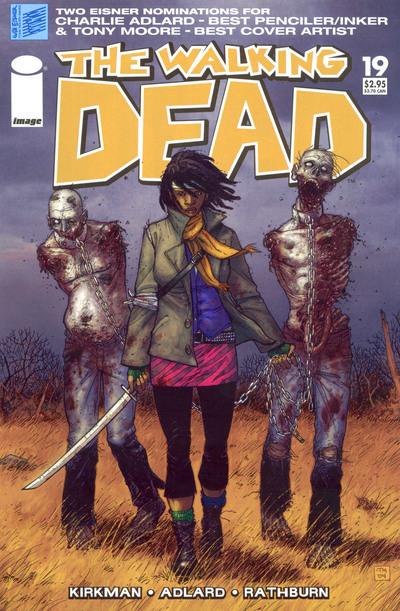
Finally! Michonne has finally made her appearance and exactly on episode 19 of the series just as she appeared on issue 19 of the comic book. We didn’t see beneath the hood of her cape, but reports after the show has confirmed that Danai Gurira will be taking on the role of the most badass character in The Walking Dead. Daryl may just have competition for the title of The Walking Dead BAMF.
I was so relieved to finally see Rick blow up on everyone in the final minutes of the episode as he kept getting hounded and questioned by everyone. This is a man who tried his hardest to keep everyone together and safe. Killed people without pause who he thought endangered his people even if it meant killing his best friend. Now he has to stand around and listen to Carol, Maggie, Glenn and even his wife on his jock about how he’s screwed things up. I wouldn’t have been shocked if he had shot one of them as a warning to anyone else who dare question his authority (Cartman would’ve). The leader everyone wanted Rick to become has finally arrived but it may have brought with it some of the Shane-crazy and mistrust from the very people he’s trying to protect.
Lastly, the moving wide shot of the camera from the group as they sat silently beside the dying fire and to the area just beyond the woods next to them was the final great moment in an episode full of them: a seemingly empty prison. Season 3 cannot arrive fast enough.
Season 2 is now over. What did you people think of tonight’s episode? Do you still plan on staying with the show? What do you want to see from the writers for the upcoming season?
Hi! I hope everyone had a good St. Patrick’s Day because I know that I had a great time honoring the Meehan side of my family. I danced so much that I am quite literally hopping about this morning. It was a lot of fun but now, it’s the day after St. Patrick’s Day. And that can only mean that it’s time for another edition of Lisa Marie’s Favorite Grindhouse and Exploitation Film trailers! Now, admittedly, these trailers might not seem to have much to do with the Irish but look closer and you’ll see that they do have at least one thing in common … they’re all totally awesome in their own unique and special way.
1) Playing For Keeps (1986)
“The new Hotel Majestic … FOR KIDS ONLY!” You can tell this is a good movie just by the way that the title is introduced all Ten Commandments style. Marisa Tomei is in this trailer for a split second. The film itself was directed by future movie moguls Harvey and Bob Weinstein.
2) The Forbidden Dance Is Lambada (1990)
I just like this one because it’s not just about dancing but it’s about a forbidden dance! Passion, by the way, has a rhythm all its own…
3) Lambada (1990)
In fact, the dance was so forbidden that apparently a totally separate movie was made about it at the exact same time as The Forbidden Dance Is Lambada. This one looks a lot less fun, to be honest. “This is the 90s, man, kids got a right to choose…”
4) The Chicken Chronicles (1977)
Judging from the previous trailers and the title of this film, you would be justified in expecting this trailer to be about a bunch of dancing chickens that open up their own hotel. Sadly, this is not the case. However, this trailer does continue the theme of “the right to choose” and a school divided.
5) Coach (1978)
Hmmmm…I wonder how this film ends…
6) TheSister-In-Law (1974)
Like Coach, the Sister-in-Law is available in a few of those cheap-but-oh-so-fun Mill Creek box sets. Unlike Coach, the Sister-in-Law is actually a pretty good film. By the way, I’m built for love and trouble…
Sure, Patrick was a Catholic saint and Ostara, Easter’s namesake, was a pagan goddess, but it’s what you do on a holiday that really marks its significance. So let pious men paint crosses on long-impotent eggs; the damned still have their days. For me, spring begins with a pint of Guinness bright and early on March 17th.
For a few years now I’ve started out Paddy’s Day with the goal in mind of researching and recounting the history of some of my favorite Irish songs, and the spirits of the season have always gotten the better of me. But inebriation brings its own cryptic wisdoms, and this year, as I searched and fumbled through disjointed google results, it was the chronology of the music that really stood out to me. Ireland writes its history in song.
1984: Streams of Whiskey
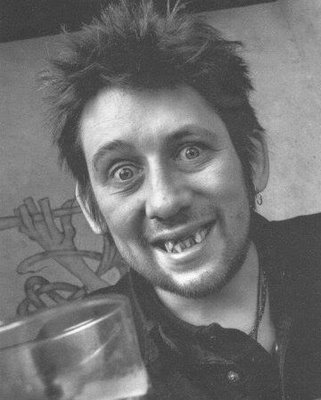
Every song has an author–a source of origin. Though it may evolve into something entirely unrecognizable, it has to start somewhere, and even when its most distinguishable features are additions, someone has to add them. What distinguishes a traditional song from a cover has a lot to do with the mentality of the individuals copying it, which is in turn dictated in part by the DNA of the song itself. Covers acknowledge authorship–both of the original performer and of the artists performing the new rendition. Traditional songs do not. They are for the masses, and belong to everyone equally. Shane MacGowan and The Pogues authored many traditional songs. Streams of Whiskey, off of their 1984 debut album, can be considered one of their first. Its subject, Irish nationalist, poet, and playwright Brendan Behan, died of alcoholism twenty years prior, but the song is by no means “tragic”.
Last night as I slept I dreamt I met with Behan. I shook him by the hand and we passed the time of day. When questioned on his views–on the crux of life’s philosophies–he had but these few clear and simple words to say: I am going, I am going any which way the wind may be blowing. I am going, I am going where streams of whiskey are flowing.
I have cursed, bled, and sworn, jumped bail and landed up in jail. Life has often tried to stretch me, but the rope always was slack. And now that I’ve a pile, I’ll go down to the Chelsea. I’ll walk in on my feet, but I’ll leave there on my back.
Oh the words that he spoke seemed the wisest of philosophies. There’s nothing ever gained by a wet thing called a tear. When the world is too dark, and I need the light inside of me, I’ll go into a bar and drink fifteen pints of beer.
~1960: Come Out Ye Black and Tans
The Behans were themselves a source of Irish tradition. Brendan’s brother, Dominic, composed two particularly lasting staples: Come Out Ye Black and Tans and The Auld Triangle. Black and Tans recounts their father Stephen’s active role in the Irish War of Independence (1919-1921), and as best I can gather was written by Dominic after his own release from prison for political dissent.
I was born on a Dublin street where the Royal drums did beat, and the loving English feet walked all over us. And every single night, when me dad would come home tight, he’d invite the neighbors outside with this chorus: Come out ye Black and Tans, come out and fight me like a man. Show your wife how you won medals down in Flanders. Tell her how the I.R.A. made you run like hell away from the green and lovely lanes in Killeshandra. Come, tell us how you slew those brave Arabs two by two; like the Zulus, they had spears and bows and arrows. How you bravely faced each one with your sixteen pounder gun, and you frightened them poor natives to their marrow.
1919: Foggy Dew
Stephen Behan’s war officially began in 1919–the same year in which Canon Charles O’Neill wrote Foggy Dew. His song was a reflection on the 1916 Easter Uprising, and a sign of future struggles. The Allies of the First World War’s promise of independence to small nations created previously non-existent nationalist identities around the world, but Ireland’s exclusion from the deal reinvigorated sentiments which had existed for generations. Foggy Dew, and the many songs that appeared alongside it, revitalized a lyrical tradition which, while separated by the 19th century’s period of emigration, was never fully forgotten.
As down the glen one Easter morn to a city fair rode I, there armed lines of marching men in squadrons passed me by. No pipe did hum, no battle drum did sound its dread tattoo. But the Angelus bells o’er the Liffey’s swell rang out through the foggy dew.
Right proudly high over Dublin Town they hung out the flag of war. ‘Twas better to die beneath an Irish sky than at Suvla or Sud-El-Bar. And from the plains of Royal Meath strong men came hurrying through, while Britannia’s Huns, with their long range guns, sailed in through the foggy dew.
Oh the bravest fell, and the requiem bell rang mournfully and clear for those who died that Eastertide in the spring time of the year. And the world did gaze, in deep amaze, at those fearless men, but few, who bore the fight, that freedom’s light might shine through the foggy dew.
As back through the glen I rode again, my heart with grief was sore. For I parted then with valiant men whom I never shall see more. But to and fro in my dreams I go and I kneel and pray for you, for slavery fled, o glorious dead, when you fell in the foggy dew.
~1870: Spancil Hill
Michael Considine was an Irish immigrant to Boston, who moved to California in his early 20s and died shortly thereafter. The history of his song is steeped in myth. It supposedly made its way back to Ireland through family connections and came into the possession of Michael’s six year old nephew, John Considine, who kept it safe for 70 years and confirmed its authenticity upon hearing it performed by a stranger in 1953. Whatever its true story, it preserves a memory of departure after the fact, shedding any semblance of optimism about a land of opportunity.
Last night as I lay dreaming of pleasant days gone by, my mind being bent on rambling. To Ireland I did fly. I stepped on board a vision and I followed with the wind, and I shortly came to anchor at the cross of Spancil Hill.
It was on the 23rd of June, the day before the fair, when lreland’s sons and daughters in crowds assembled there, the young and the old, the brave and the bold, their journey to fulfill. There were jovial conversations at the fair of Spancil Hill.
I went to see my neighbors, to hear what they might say. The old ones were all dead and gone, and the young one’s turning grey. I met with the tailor Quigley, he’s a bold as ever still. He used to make my britches when I lived in Spancil Hill.
I paid a flying visit to my first and only love. She’s as white as any lily and as gentle as a dove. She threw her arms around me saying “Johnny I love you still.” She’s Ned the farmer’s daughter and the flower of Spancil Hill.
I dreamt I held and kissed her as in the days of yore. She said, “Johnny you’re only joking like many’s the time before.” The cock he crew in the morning; he crew both loud and shrill. I awoke in California, many miles from Spancil Hill.
~1850-1860: The Rocky Road to Dublin
D. K. Gavan’s mid-19th century depiction of emigration was a bit more optimistic. It remains persistently playful, presenting an Irish youth’s boastful account of his relocation from Galway to Liverpool as an adventure rather than a loss. Perhaps of some significance towards this end is that it was written by an Irishman who does not appear to have ever left for good or entered into the working class.
In the merry month of May, from me home I started. Left the girls of Tuam so nearly broken-hearted. Saluted father dear, kissed me darling mother, drank a pint of beer, me grief and tears to smother. Then off to reap the corn, leave where I was born, cut a stout black thorn to banish ghosts and goblins. Bought a pair of brogues to rattle o’er the bogs and frighten all the dogs on the rocky road to Dublin.
In Mullingar that night I rested limbs so weary. Started by daylight next morning bright and early. Took a drop of pure to keep me heart from sinking. That’s a Paddy’s cure whenever he’s on the drinking. See the lassies smile, laughing all the while at me darling style, ‘twould leave your heart a bubblin’. Asked me was I hired, wages I required, till I almost tired of the rocky road to Dublin.
In Dublin next arrived, I thought it such a pity to be soon deprived a view of that fine city. Then I took a stroll, all among the quality. Me bundle, it was stole, all in a neat locality. Something crossed me mind, when I looked behind. No bundle could I find upon me stick a wobblin’. Inquiring for the rogue, they said me Connaught brogue wasn’t much in vogue on the rocky road to Dublin.
From there I got away, me spirits never falling. Landed on the quay, just as the ship was sailing. Captain at me roared, said that no room had he. When I jumped aboard, a cabin found for Paddy down among the pigs, played some hearty rigs, danced some hearty jigs, the water round me bubbling. Then off Holyhead. I wished meself was dead, or better far instead on the rocky road to Dublin.
The boys of Liverpool, when we safely landed, called meself a fool. I could no longer stand it. Blood began to boil, temper I was losing. Poor old Erin’s Isle they began abusing. “Hurrah me soul” says I, let the Shillelagh I fly, some Galway boys were nigh and saw I was a hobblin’ in. With a load “hurray” joining in the fray, till we cleared the way on the rocky road to Dublin.
~1820: The Wild Rover
The mere existence of The Wild Rover as a drinking song is a testament to Ireland’s independent spirit, and it marks, perhaps, the tail end of another era in nationalist-themed music. It was originally composed as a temperance song, and the lyrics indeed tell of a repentant alcoholic prepared to give up the drink for good. But with a nuance difference. Early printings of the lyrics (at least, one I read dated between 1813 and 1838) have the subject of the song testing the landlady with money to see if she will sell him whiskey and then refusing to actually drink it, extolling the virtues of sobriety. In the popular, surviving version, the wild rover slips into his old ways just one last time.
I’ve been a wild rover for many a year, and I spent all my money on whiskey and beer. Now I’m returning with gold in great store, and I never will play the wild rover no more. And it’s no, nay, never, no nay never no more, will I play the wild rover. No never, no more. I went to an ale-house I used to frequent, and I told the landlady me money was spent. I asked her for credit, she answered me “nay, such a custom as yours I could have any day.” I took from my pocket ten sovereigns bright, and the landlady’s eyes opened wide with delight. She said “I have whiskey and wines of the best, and the words that I told you were only in jest.” I’ll go home to my parents, confess what I’ve done, and I’ll ask them to pardon their prodigal son. And if they forgive me as ofttimes before, I never will play the wild rover no more.
~1800: Johnny I Hardly Knew Ye
My personal favorite Irish traditional song, Johnny I Hardly Knew Ye, is best known in the United States in its bastardized American Civil War form: When Johnny Comes Marching Home Again. The American version welcomes home a brave warrior, who fought with valor and served his cause dutifully. Life was a bit more realistic in Ireland. This song first appeared some time after the 1798 Irish Rebellion–a movement sparked by the recent American and French Revolutions–at a time when the British Empire was shipping Irishmen off to Sri Lanka to fight their senseless colonial wars. It is a brutally honest depiction of the reality of war that surpasses any modern attempt.
While goin’ the road to sweet Athy, hurrah, hurrah
While goin’ the road to sweet Athy, hurrah, hurrah
While goin’ the road to sweet Athy with a stick in me hand and a drop in me eye
Well don’t you laugh now, don’t you cry
Johnny, I hardly knew ye.
With your guns and drums and drums and guns, hurrah, hurrah
With your guns and drums and drums and guns, hurrah, hurrah
With your guns and drums and drums and guns, the enemy nearly slew ye
Why darling dear, you look so queer
Johnny, I hardly knew ye.
Where are the eyes that looked so mild? hurrah, hurrah
Where are the eyes that looked so mild? hurrah, hurrah
Where are the eyes that looked so mild when you at first me heart beguiled?
What have you done to me and the child?
Johnny, I hardly knew ye.
Where are your legs that used to run? hurrah, hurrah
Where are your legs that used to run? hurrah, hurrah
Where are your legs that used to run when first you went to carry a gun?
Indeed you dancing days are done
Johnny, I hardly knew ye.
Well you haven’t an arm and you haven’t a leg, hurrah, hurrah
You haven’t an arm and you haven’t a leg, hurrah, hurrah
You haven’t an arm and you haven’t a leg. You’re an armless, legless, boneless egg.
You ought to ‘ve been born with a bowl to beg
Johnny, I hardly knew ye.
I’m happy for to see you home, hurrah, hurrah
Back from the island of Ceylon, hurrah, hurrah
I’m happy for to see you home, though indeed you cannot see your home.
Why on earth were you inclined to roam?
Johnny, I hardly knew ye.
~1500s: The Parting Glass
There’s something profoundly assertive in the lot of these songs. They aren’t the mindless jingles for which America is only one of many guilty parties. Even the most seemingly mundane, say, The Wild Rover, carries with it a hidden rejection of artificial restrictions on human nature. Perhaps that’s why they bear such a strong cross-cultural appeal. St. Patrick’s Day isn’t a celebration of Irish tradition; it’s a celebration of what Irish tradition understands best–the human experience. One of my favorite lines in any song comes packaged in the oldest Irish song I know. It could be a simple statement of fact, but I fancy it a tongue-in-cheek play on words. Because Irish tradition understands that loss is not a thing experienced prior to the fact. Preemptive expressions of sorrow are bullshit, and our recognition of that fact in the moment is part of the experience. So, since it falls unto my lot that I should rise and you should not, I gently rise and softly call, good night and joy be with you all.
AMC Theatres were cool enough to have Prometheus Director Sir Ridley Scott and Co-Writer Damon Lindelof on hand to discuss some of the ideas behind their film, which opens in June. It looks like the new trailer that comes with it gives away a little more to the overall story, which has easily pushed this into my first pick for that “must see” movie this year. Some of the questions were pretty interesting, some dealing with the possible religious aspects of the story (in terms of the “Big Questions” that are asked), while others asked about connections to the Original Alien. One of the things that Scott pointed out was that he’d been there and done that with the first movie, so he didn’t want this one to be the same as that. One question and answer leaves me with my ears ringing and a cheese like grin stuck on my face:
Attendant: (Paraphrased) “In the original Alien, you had the monster come out of the man’s chest, and the actors didn’t know about it. Should we expect any surprises like that with this film?”
Sir Ridley Scott: “Oooooh yes!” (emphatically nods).
Thanks go out to AMC for making the trailer available on Youtube. Cool stuff. The actual Livestream of the Ridley Scott / Damon Lindelof interview can be found on the Livestream site, which is still repeating the interview that aired earlier this evening.
Having seen the new Spanish-language comedy Casa de mi Padre on Friday, I now know what I want for Christmas. I want a big white tiger that can talk and sit in trees and laugh, just like the big white cat that shows up and serves as spirit guide to Will Ferrell.
Seriously, let’s make it happen!
As for Case de mi Padre, the film is a deliberately absurd homage to both telenovelas and the B-movies of the 70s. Armando Alvarez (played by Will Ferrell) is a stupid but good-hearted Mexican rancher whose drug dealer brother (Diego Luna) is on the verge of marrying the niece (played by Genesis Rodriguez) of another drug dealer (Gael Garcia Bernal). Ferrell, of course, falls in love with Rodriguez and this leads to a deliriously over-the-top wedding party massacre and … well, listen the plot isn’t important. The plot makes no sense. It’s not supposed to make sense. It’s not only a Will Ferrell movie, it’s a Will Ferrell movie based on telenovelas. In short, the film is deliberately designed not to make any sense and, on that count, it succeeds admirably.
Despite a lot of funny moments and Ferrell’s admirable commitment to the film, Casa de mi Padre ultimately works better as a concept than an actual film. In the past, Ferrell’s comedies have worked because they’ve satirized pompous institutions and people who generally take themselves far too seriously, with the obvious example being Anchorman‘s cast of self-important television reporters. However, the majority of telenovelas are already essentially satiric in their intent. Casa de mi Padre finds itself in the odd position of satirizing satire and, as a result, it never feels as outrageous as an actual telenovela. The end result is hardly perfect but it’s silly enough to be consistently amusing.
Casa de mi Padre is a pretty uneven film that’s never as funny as you want it to be but I would be lying if I said I didn’t enjoy watching it. Will Ferrell’s strength as both a comedic and a dramatic actor is his willingness to totally commit to his performance. No matter how ludicrous or silly things get, Ferrell gives 100% and that’s never been more obvious than in his performance here. Not only does he deliver all of his dialogue in Spanish (apparently he learned his lines phonetically) but he also totally throws himself into the melodrama of it all.
A similar commitment can be seen in just about every frame of the film. For me, the film’s best moments come from the small details that the filmmakers take the time to get right. It’s there in every scene from the film’s deliberately tacky sets to the way that the characters randomly break out into overdone laughter to the fact that every female character in the film down to even the maids who work for Ferrell’s father wander around showing off miles of cleavage. Perhaps my favorite scene in the film is when Ferrell and Rodriguez go for a horse ride and it’s obvious from the way the scene is framed that neither one of them is actually sitting on a horse. These are the type of details that will leave boring mainstream audiences scratching their heads but for those of us who speak B-movie, these are the details that make this film worth seeing.
April 1st is just right around the corner and that means the return of 2010’s breakout cable hit, Game of Thrones with a new season. The last couple weeks have seen numerous marketing and ad trailers hyping up this upcoming new season. Their latest trailer used a song that was quite memorable for how it sounded and how it fit in well with the mythology built during the first season.
The latest “Song of the Day” comes courtesy of the band Florence + The Machine and the song picked was from their latest album and is called “Seven Devils.”
I consider this song quite appropriate when it came to Game of Thrones since the song’s title takes a look at the opposite side of the show’s religion called The Seven. The song’s titles doesn’t just intimate that The Seven the people of Westeros worshipped may not be gods after all, but devils who have tempted many who pay lipservice to the faith and instead fall to temptation.
I wasn’t a major fan of Florence + The Machine when I was first introduced to them a couple years ago but time has since shown me the error of my ways.
Seven Devils
Holy water cannot help me A thousand armies couldn’t keep me out I don’t want your money, I don’t want your crown See I have come to burn your kingdom down
Holy water cannot help you now See I’ve got to burn your kingdom down And no rivers and no lakes can put the fire out I’m gonna raise the stakes, I’m gonna smoke you out
Seven devils all around me Seven devils in my house See they were there when I woke up this morning I’ll be dead before the day is done
Seven devils all around you Seven devils in your house See I was dead when I woke up this morning And I’ll be dead before the day is done Before the day is done
And now all your love will be exorcised And we will find you saints to be canonised And it’s an evensong It’s a melody It’s a final cry It’s a symphony
Seven devils all around me Seven devils in my house See they were there when I woke up this morning And I’ll be dead before the day is done
Seven devils all around you Seven devils in your house See I was dead when I woke up this morning And I’ll be dead before the day is done Before the day is done Before the day is done Before the day is done
You can keep me alive Till I tear the walls Till I save your heart And to take your soul What have we done? Can I be undone? In the evil’s heart In the evil’s soul
Seven devils all around you Seven devils in your house See I was dead when I woke up this morning And I’ll be dead before the day is done For the day is done
To say that Mass Effect 3 has been ruling my free time for the last two weeks would be an understatement. During breaks in-between playing the game I’ve been checking out YouTube and I came across a new AMV which somewhat ties in to Mass Effect 3through the piece of music used to launch the game. The latest “AMV of the Day” once again takes us back to the epic anime series One Piece.
This anime music video acts less like your typical music video and more like a trailer to help convince the non-believers why One Piece is an anime series that should be watched by everyone. Creator Schandlover does a great job of using the ban Two Steps From Hell and their song, “Protectors of the Earth”, and creating a trailer that truly shows why Eiichiro Oda’s long-running manga and anime really deserves to be called epic. This is the same song used by BioWare as they also try to point out the epic epicness of Mass Effect 3.
Anime: One Piece
Song: “Protectors of the Earth” by Two Steps From Hell
Here’s the trailer for Tim Burton’s upcoming vampire film, Dark Shadows. A lot of people are excited about this one but the reaction to the trailer on my twitter timeline has been mixed, to say the least.
Personally, I love Johnny Depp but I think this all looks way too silly.
On Monday night, my movie before bedtime was an old one from 1970, John G. Avildsen’s Joe. Though Joe is an occasionally uneven and rather heavy-handed film, it’s also a brutally effective one that I haven’t been able to get out of my mind since watching it.
Joe opens with Melissa Compton (played by Susan Sarandon, in her film debut) and her boyfriend, Frank Russo (Patrick McDermott). It is quickly established that Melissa is a “rich girl” who has dropped out of society while Frank is a drug dealer. Frank, incidentally, is probably one of the least likable characters in the history of cinema. When we first meet Frank, he’s taking a bath but it makes no difference as the character just seems to covered in a permanent layer of grime. Both Frank and Melissa are also drug addicts.
Patrick McDermott (left) and Susan Sarandon
When Melissa has a drug overdose and ends up in the hospital, Frank doesn’t really care but her father, advertising executive Bill Compton (Dennis Patrick) does. He promptly goes over to Frank’s apartment and after Frank taunts him by saying that Melissa “had a real hang-up about you,” Bill beats Frank to death in a fit of rage. Shaken by his actions, Bill goes to a neighborhood bar where he runs into a factory worker named Joe Curran (Peter Boyle). A drunken Joe rants about how much he would like to kill a hippie. Bill replies, “I just did.”
This leads to an odd relationship between the two men. While Bill originally fears that Joe wants to blackmail him, Joe appears to just want to be his friend. Soon, Joe is introducing Bill to his bowling league and Bill introduces Joe to his colleagues at the advertising firm. Bill and his wife even have a memorably awkward dinner with Joe and his wife. Bill’s wife worries that Joe might be dangerous but Bill smugly assures her that he is Joe’s hero.
Meanwhile, Melissa is released from the hospital and moves back in with her parents. One night, she hears them talking about how Bill killed Frank. Melissa flees from the apartment and when Bill chases after her, she shouts at him, “Are you going to kill me too!?” before disappearing into the New York night.
Searching for Melissa, Bill and Joe go to various hippie hangouts in Manhattan. Every hippie they meet tends to be dismissive of the suit-wearing Bill and the uneducated Joe. However, once Bill reveals that his car is full of drugs that he stole from Frank, the hippies are suddenly a lot more friendly. A group of hippies take Joe and Bill back to their apartment. At Bill’s insistence, both of the men smoke weed for the first time and then have sex with two of the hippie girls. While they’re busy doing it, the rest of the hippies steal their money and all of the drugs.
Suddenly, Joe takes charge of the situation, leaving Bill to watch helplessly as Joe repeatedly slaps one of the girls until she tells them where her friends have gone. (I’ve seen a lot of movies and I like to think that there’s little I can’t handle watching but the scene where Joe interrogates the girl was genuinely disturbing and I actually had a hard time watching it. This was largely due to the intensity of Boyle’s performance.) Joe drags Bill to the commune where the hippies live. Standing outside the house, as snow falls around them, Joe gets two hunting rifles out of his car and tosses one to Bill before the film reaches its inetivable conclusion.
Joe With Friend
Like many films released in the early 70s, Joe is distinguished by a continually shifting tone. The film’s opening (which feature Susan Sarandon getting naked and then watching her disturbingly unhygienic boyfriend shooting up) feels almost like it’s composed of outtakes from some lost Andy Warhol Factory film while the scenes immediately following Melissa’s drug overdose feel like a melodramatic Lifetime special. After Bill kills Frank, the film briefly becomes a Hitchcockian thriller just to then segue into heavy-handed social satire as we watch the development of Joe and Bill’s unlikely, hate-fueled friendship. The awkward comedy continues for a while until, somewhat jarringly, Joe suddenly becomes a violent revenge film. While many films have been doomed by the lack of a consistent tone, it actually works here. Joe‘s odd mishmash of comedy, tragedy, and exploitation actually perfectly reflects the uncertain worldview and hidden fears of Bill Compton. Much as the audience is often times left uncertain whether they’re watching a comedy or a tragedy, Bill is a man who is no longer sure how to react to the world around him.
And make no doubt about it, Joe may be the title character but the film is truly about Bill Compton. It’s Bill’s repressed anger (and desire for his own daughter) that fuels the plot. As played by Dennis Patrick, Bill Compton is the type of smugly complacent figure whose outward confidence hides the fact that he’s been rendered impotent by the world changing around him. For the majority of the film, Bill looks down on both sides of the cultural divide, looking down on both his daughter’s hippie friends and his new blue-collar acquaintance Joe. (He assures his wife that Joe would never attempt to blackmail him because Joe “looks up” to him.) It’s only at the film’s conclusion that Bill realizes just how powerless he is to control anything. In those final scenes, Dennis Patrick’s face reveals what the audience has already figured out. By trying to place himself above it all, he’s left himself with nowhere to go.
Dennis Patrick (left) and Peter Boyle
That said, the film truly is dominated by Peter Boyle’s demonic performance as Joe. For much of the movie, Joe is a buffoonish figure (he even gets his own mocking theme song “Hey Joe” which plays as he wanders around his house and scratches his navel) and it’s sometimes hard not to feel like you’re watching a long-lost episode of Everybody Loves Raymond where Frank Barone remembers the time that he killed a lot of hippies. However, once Bill and Joe find themselves searching for Melissa among the hippies, Boyle slowly starts to pull back the layers and a new, far more threatening Joe emerges. By the end of the film, Joe has become a nightmarish figure and we’re forced to reconsider everything that we’ve previously assumed. By the film’s end, Joe almost seems to be a direct personification of Bill’s Id, a man who exists solely to force Bill to do what he’s always secretly wanted to do.*
When Joe was first released back in 1970, it apparently made a lot of money, generated a lot of controversy, and even managed to score an Oscar nomination for best original screenplay. Oscar nomination aside, Joe is the epitome of a well-made and effective exploitation film. While Joe and Bill are basically counter-culture nightmares of a murderous American establishment, the film’s hippies are portrayed as being so smug and so scummy that I’m not surprised to read that apparently audiences cheered once Joe and Bill started gunning them down. (Peter Boyle, however, was apparently so shocked that he swore he would never make another film that “glamorized violence.”) By embracing the best traditions of the grindhouse and attempting to appeal to both sides of the cultural divide in the crudest way possible, the filmmakers ended up making a film that, over 40 years later, somehow feels more honest than most of the other “generation gap” films of the 60s and 70s.
As any film lover knows, any film made between 1966 and 1978 tends to age terribly, to the extent that often times they’re impossible to take seriously when watched today. (And anyone who doubts me on this should track down films like R.P.M, Thank God It’s Friday, Skatetown U.S.A., Getting Straight, and Zabriskie Point.) However, watched today in our present age of Occupiers and Tea Partiers, Joe still feels relevent and, at times, downright prophetic.
—-
* In many ways, Joe Curran is a cruder, balder version of Tyler Durden.


 Through the Shattered Lens