When Terje Bakken, better known as Valfar, passed away in 2004, one of the most significant bands in black metal passed with him. The remaining members of Windir went their separate ways, forming a number of different groups, and Vreid was one of them. As you might have guessed by the title, they’ve now released five studio albums, and they’ve evolved away from the sounds of their predecessor. I can’t say much for their first four albums, though I’ve listened to them, because I never really paid close attention. So I’ll be approaching this one alone, not as a comparison to their earlier stuff. I just thought I should give a brief history of the band first, since they have a legendary if now distant past.
I can’t heap endless praise on this the way I have a bad habit of doing for most albums. I’ve got pretty mixed feelings about it all in all.
Arche
Though classified as black metal, the driving force behind a lot of V is heavy metal–a perhaps generic term, but fitting in this case. The bulk of the album is very riff-driven. You can get a feel for their multi-styled approach from the very beginning. Though the chords build up into a melodic death sound that eventually breaks into black metal, the song is quick to return to the opening riff. You get a lot of repetition, but also a lot of opportunities for some really awesome solos–something that rarely coexists with blast beats and tremolo. The sound Vreid’s created here opens the doors to a lot of metal elements generally absent in specifically black metal, and the way they take advantage of it–the ample guitar solos first and foremost–are the album’s biggest highlights for me. You’ll hear plenty of death metal and (not exactly foreign to the genre) thrash metal as well.
The Blood Eagle
But there are some major detractors. I’m not always convinced that the sounds they put together really work. The Blood Eagle could be a pretty cool if simplistic heavy metal song, but the singer kind of kills it for me. I love his vocal style. I really do. But if perfect for black metal, it just doesn’t always work laid over a song that just as frequently calls to mind Iced Earth. Actually singing could make this song work. Alternatively, I could see them pulling off some deep, guttural death metal vox here. But the contrast between the tameness of the song and the shrill harshness of black metal vocals doesn’t find a rewarding middle ground. A lot of the album’s lyrics are pretty suspect too, especially, again, on this particular song. The opening lines, “Born out of worlds of fire and ice / The nature of spirits embrace our lives / From the underworld to above / We worship the fertile soil“, cease to be plausibly uplifting and just sound kind of sissy when followed up by a chorus of “Carved in the back / Blood-strained wings are dressed / An image of grotesque / The blood eagle of human flesh“. Pagan spirituality and gore-grind guts-fucking just don’t mix.
The Others and the Look
On some tracks, this one a great case in point, all of the elements Vreid employ come together to create diverse and enjoyable songs that never bore. On others I struggle to pay attention at all. Most of them have rewarding bits here and there with a lot of drag in between–repetitive riffs like in Arche and acoustic/keyboard interludes that don’t amount to much. I suppose it doesn’t help that I’m not fond of death metal, which Vreid seem to incorporate a lot of; someone with opposing tastes may well hear this album from a very different perspective and find it quite the success. But given all the other new material out there, it’s pretty unlikely that anything will move me to keep on listening to this one. I think that’s my final verdict on V: not bad, but too frequently boring for its positive features to really shine.
We’re at the final stretch run and for Day 30 of this 33-day Shigematsu Kiyoshi short story marathon we have “Lottery of Life”.
To put it plain and simple it’s that when we as a society begin to divide people into simplified groups like “losers” and “winners” or even “troublemakers” then we’re moving towards the next step of what needs to be done with groups who don’t agree with us. The last decade or so has seen many such changes to how we’ve begun to treat each other. Some of it borne out of fear and some of it from longstanding prejudices cultivated through ignorance and misinformation.
While there’s a need to separate those who can never change for the greater good, the means by which we do so will never be dry and clear-cut. Do we use methods that succeeds in saving lives but at the same just continue to forment the very hatred which separates a people into hating another group? There’s never a straight answer and sometimes the need to step back and reassess the situation the best way, but such things require for people to think with compassion and reason. It’s a shame that the very people we give the power and authority to make such decisions rarely practice one and the other to solve our problems.
Lottery of Life
Having kids is like playing the lottery.
That was how the police commissioner put it, with a grim smile and a sigh. He was the man in charge of domestic security.
“Sometimes you pick a winner, and sometimes you pick a loser.
Life is like that. You can’t control it.”
Kaim responded with a silent nod.
Not that he was convinced that you could divide people into “winners” and “losers.”
But that was how they did it here in this country that was the size of a city. He had no choice but to recognize it as reality because the man who kept the peace here believed it, and this nation was known for having the best public safety of all the countries in the region.
“Every kid in there is a loser,” he spat out, jerking his chin toward the juvenile prison visible from his office window.
Built to hold young criminals, this was the largest – and the most strictly run and most closely guarded – prison to be seen in any of the neighboring countries.
Its treatment of its young inmates was also the harshest.
“You’re a foreigner, Kaim, so you may not approve, but we have our own way of doing things.”
“I see,” Kaim said.
“Losers are losers. There’s nothing you can do to make losers into winners. It’s never going to happen. Far from it. If you coddle losers, they just turn into bigger losers and give the decent people a lot of trouble. See what I mean?”
“That’s one way of looking at things.”
Kaim’s deliberate irony was lost on the police commissioner.
“No. It’s the only way – if you’re going to have a safe, peaceful country,” he declared. “And we’ll expect you to abide by this view, too.”
Kaim had nothing more to say to him.
If he were to insist on confronting the police commissioner, he might be seen as questioning the authorities, which could land him in the adults’ prison. This would be easy enough to bring about for the police commissioner – and indeed for anyone in the city-state who stood on the side of the powers that be.
The commissioner glanced again toward the juvenile prison.
“They built that place eighty years ago,” he said. “Which is to say, the very first building they made when the present political system came into being was a prison to throw young offenders into.”
Kaim knew this.
For Kaim, whose life went on forever, events of eighty years before could well have happened yesterday.
Eighty years earlier, this country had experienced a coup d’etat. The revolutionary government ruled the people under a military dictatorship and jailed every last person suspected of disturbing the peace and order.
The government was especially wary of younger criminals.
“There’s a limit to how serious a kid’s crimes can be.
But let them get away with those, and the next thing you know they’re doing really bad stuff. They might be satisfied with shoplifting at first, but soon they’re into burglary, muggings, they start using weapons, and in the end they think nothing of killing people.
You have to nip them in the bud.”
The kids sent to prison were fed the absolute minimum to keep them alive. No doctor saw them if they fell sick or were injured. Subjected to such harsh imprisonment, they succumbed one after another, and more than a few of them ended up as cold corpses pitched out the back door.
Whenever one did manage to serve out his term and return to the outside world, he found it impossible to erase the brand of “loser.” Children with criminal records were soundly rejected by respectable society. The social system was structured in such a way that nothing worked for them: employment, marriage, even finding a place to live. Expelled by society, these boys and girls returned to crime as a way to stay alive, eventually ending up in adult prison.
With a bitter smile, the police commissioner said to Kaim, “I’m sure this all sounds terrible to an outsider like you.”
Kaim answered with a slight nod.
This only served to increase the bitterness of the commissioner’s smile.
“I know what you’re thinking,” he said.
“And to tell you the truth, I sometimes think the system is a little too harsh on them, too.
But you have to realize that we’re not just punishing bad kids: We’re also holding them up as an example to the good ones. What would they think if they saw the ex-criminals out on the street again walking along like nothing ever happened? They’d just figure that even if they got their hands dirty and spent a few years in jail, they could just go back to their old lives, that society’s punishment is no big deal, that they can get away with murder. We wouldn’t want our kids to be like that, would we? So the only thing is for us grownups to teach them. Look at those guys, we can say. All it takes is one bad deed and your life is over. So you’d better listen to your parents and teachers and be good.”
He definitely had a point.
Kaim was willing to grant him that.
But still, the commissioner must have noticed a hint of shadow crossing Kaim’s face, and he shifted his tone of voice.
With bureaucratic conviction, he declared, “The authorities have received word that there is going to be a coup. Of course the military have everything under control, so there is nothing to worry about. They could suppress it right now if they wanted to. They could easily attack the agitators and capture the ring leaders of the plot. In this case, though, they have decided to let it get started in order to smoke out every last one of the reactionary elements.”
According to the government’s intelligence, the uprising was scheduled to occur that very night.
“We are prepared to just about any eventuality, but there is always the possibility of the unexpected. If there were a riot inside the juvenile prison timed to coincide with the rebellion, that could be a real problem.”
This is why Kaim had been hired as a temporary prison guard – a bodyguard for the state.
“We’re counting on your skills as a seasoned warrior, which is why we’re entrusting you with such a major responsibility. Be sure you live up to our expectations. If you have to resort to violence, we have no problem with that. Whatever you do, it will be for the sake of law and order. It will be in order to protect the happy lives of the decent citizens of our nation. Carry out your duties with complete dedication of body and soul.”
The commissioner handed Kaim a one-page document.
It was, literal, a license to kill.
“And without the slightest restraint. All the prison guards have one of these.”
“But still…”
“If you hesitate to impose the ultimate punishment on a single ‘loser,’ then countless ‘winners’ among the upstanding citizenry must suffer the consequences. You understand, I’m sure. Once a loser, always a loser. Rather than living with such a burden, they themselves might be happier to have you kill them and get it over with.”
Kaim accepted the document from the commissioner without comment.
“that completes our contractual arrangement. Now assume your post.”
With a perfectly straight face, the commissioner cautioned Kaim. “Just make sure you don’t let any foolish compassion get in your way.”
The season was mid-winter, but Kaim found no hint of fire burning in the juvenile prison. In their tiny solitary cells, the young inmates, wrapped in ragged blankets, lay helplessly in the dark. Painful moaning came from one cell, suggesting its inmate might be running a fever. From another cam the unbroken shrill mean laughter that could only mean the person’s mind had snapped.
“What you see is what you get,” said the veteran guard guiding Kaim on his first round of inspection.
“Not one of those faces shows any life. So even if something were to happen, these pitiful creatures couldn’t do a damn thing. They’re ‘losers’ all right. They’re breathing, but that’s about it.”
“Is there really no possibility of them being rehabilitated and becoming winners?”
The other guard gave Kaim a momentary blank stare and then said with a laugh and a wave. “No, no, no, none at all.”
Eighty years since the revolution, and the change of generations had replaced virtually all the people from that time. Since coming of age, this prison guard, who had no memory of life before the revolution, had been implanted with the ideas that people were either “winners” or “losers,” and he surely never doubted it.
“They went out of their way to hire you, so it might be a little strange for me to say this, but I’m sure the kids in here are never going to riot, no matter how wild things get on the outside. Splash a little cold water on them, and they’ll quiet right down. There’s almost none of them you have to worry about.”
“Almost?”
“Well, I can’t claim that about every single one of them. There are even losers among the losers, unfortunately.”
The guard showed Kaim to the end of the hall, and there he opened the lock on a door so thick it could be mistaken for a section of wall.
“Beyond here are the punishment cells. This is where we throw the incorrigible losers- the ones who have caused trouble on work details, the ones who take a defiant attitude, the ones who show no sign of remorse for their crimes.”
Suddenly it was clear to Kaim.
It was clear to him because he had experienced countless battlefields in his life.
The punishment cells were darker and far colder than the regular cells. But from the depths of the darkness – from within each individual cell – there emanated a quiet heat that could not be felt from the regular cells.
The people in here were alive.
They were not simply breathing. They were alive with real passion.
“The crimes that originally got them locked up here were nothing much – a little burglary, some purse-snatching, flashing a knife, stuff like that. If they had just quietly served out their terms, they’d be out now, living obscure lives somewhere.”
Instead, they resisted, and kept resisting.
They called for better treatment of inmates. They appealed for an end to discrimination against former prisoners. The number of their “crimes” multiplied, until it became clear they would never get out of there alive.
“They’ll just go straight from here to the adult prison when they grow up. It’ll be twenty or thirty years before they can breathe the outside air again – if they can live that long, which would be quite an accomplishment.”
The guard concluded with a belly-shaking laugh, which was interrupted by a voice echoing from a dark cell.
“Stop that laughing.”
It was a quiet but commanding voice, though one that retained a hint of boyishness.
A look of fear crossed the guard’s face, though he quickly reverted to a sneer.
“This is the biggest pain we’ve got,” he said.
“His name is Diran. They say he was the leader of a gang of juvenile delinquents on the outside, but here he’s just a noisemaker.”
The guard picked up a bucket of water from the corridor floor with a thin sheet of ice on its surface and heaved the contents into Diran’s cell.
“This is what works best on these kids.”
Behind the bars, the drenched boy had rolled himself into a ball.
“This should be enough for them to freeze to death, but the water itself freezes again in the early morning. So then their hair and eyelashes – and any other hair they’ve god – gets coated in ice. Some of them have lost fingers and toes to frostbite.”
The guard laughed again.
Diran lay there curled up, but his eyes were shining with such intensity, it was as if he were trying to melt the ice with the heat seething in his breast.
Kaim knew those eyes. They were the eyes of a warrior. And not just any warrior, but one on the very front line in a losing battle who watches for a chance to turn the battle in his favor.
And Kaim knew something else – that the system was beginning to unravel. It had kept the people in a state of suppression for eighty long years, ever since the revolution, but the very moment of its undoing had arrived.
The prison fires started that night.
“Kaim! It’s the coup!”
The guard came running to report the situation on the outside. Fires had been set throughout the city, he said.
This was, of course, the uprising that government intelligence had anticipated. Martial law was declared, and the government was mobilizing the entire police force and army. Word had come, too, that the ringleaders were already under arrest.
One element, however, had been wholly unanticipated.
The guard informed him, “The wind is strong tonight.”
Fanned by unseasonable winds, the flames were racing through the city.
“On orders from the commissioner: we are not to fight fires in the juvenile prison, is that clear? Do not engage in firefighting here.”
In other words, no one would be coming to save the inmates.
“It can’t be helped,” said the guard. “The army and the fire department have all they can do to put out fires in the city and evacuate the people. They can’t spare any men to protect this place. And we’ve been ordered to join in the rescue effort in town.”
“I guess that means we let the kids out.”
This was a given, Kaim assumed. Left locked up in their cells, the young inmates would burn to death.
“Don’t be ridiculous,” the guard shot back. “These kids are all losers. We’ve gone to the trouble of locking them in here, and now we’re supposed to let them out?”
“Are you serious?” Kaim replied.
“Are you serious? I can’t believe you’d say anything so stupid. I’m telling you, they’re losers. We don’t have time to save them, and we’re certainly not going to let them run loose. The commissioner would never allow such a thing.”
He obviously meant every word he was saying.
They were planning to let them die.
The flames were spreading quickly, and screams could be heard throughout the prison.
There was no time to appeal directly to the commissioner, and such an appeal would only end in failure, he was sure.
“Give me the cell keys,” Kaim said.
“You’re joking,” the guard laughed.
There was only one thing to do.
Without a word, Kaim landed a punch in the guard’s solar plexus.
The guard went down in a heap, and Kaim tore the clump of keys from his belt.
The first cell he opened was Diran’s.
The boy came out looking confused.
“Are you one of us?” he asked Kaim. “Are you with the coup?”
“Not interested,” he answered.
“So why are you letting us go?” Diran asked.
“Because I don’t like dividing people up into ‘winners’ and ‘losers.'”
“Thanks,” Diran said.
Sporting a big grin, he took the keys from Kaim and turned away to start opening the other cells.
“I want you to come back,” Kaim said to him from behind.
“What’s that?”
“This is an emergency evacuation. When the sun comes up and the fires are out, I want you to come back here. You kids still haven’t finished paying for your crimes.”
“You must be kidding.”
“Not at all,” Kaim said. “If you kids run away, that’ll just prove they’re right – ‘Once a loser, always a loser.’ Is that all right with you? Don’t you want to show the ones who rule this country that they’re wrong – that people can change?”
“But we’ll never get another chance like this!”
“This coup is going to fail. You can run around all you want, but they’re going to catch you in the end. You’ll always be branded ‘losers.’ They might even kill you when they catch you.”
Diran turned to stare at Kaim.
The prison was already surrounded by flames. Against this bright red backdrop, Diran’s eyes still burned with the fighting spirit of a warrior.
“The country’s political system can’t last much longer. The day will come when you kids can leave the prison with your heads held high. I absolutely believe that. And because I believe it, I don’t want to see you die for nothing.”
Kaim turned from Diran to pull the guard up form the floor.
“Come back at sunrise.”
With this final admonition to Diran, Kaim hoisted the guard onto his back and trudged away.
These events occurred fifty years ago.
An air of freedom pervades the country now when Kaim visits fifty years later. True, he does catch glimpses of young toughs and juvenile delinquents where the nightlife thrives, but he feels this is just a sign of the free and easy times.
And old man calls to him, “Are you a traveler?”
When Kaim nods, the man says with a smile, “You’re in luck. We’re having a celebration in Revolution Square today. I hear the grand old man of the revolution is going to attend. It’ll keep going all night long.”
“A celebration?”
“That’s right. I see you’re too young to know what happened here in the old days. We had a coup fifty years ago on this very day. The coup itself was put down in one night, but the rebel troops set fires all through the city, so the rest of us were running around like crazy in all directions.”
Fanned by the wind, the flames quickly enveloped the whole city, and a lot of the city people were stranded on a sandbar downwind.
“I was one of them. I had my pregnant wife and baby daughter with me, so I couldn’t just dive into the river to escape. Before we knew it, sparks were raining down on the sandbar, and I figured we were done for – we’d all burn to death as soon as the dry grass caught fire.”
Just as he was giving up hope, he says, a helping hand was extended to them from the most unlikely source.
“The kids from the juvenile prison came to help us. They were all skin and bones, and their prison uniforms were falling apart. The prison staff hardly fed them a thing, but they pooled what little strength they had. They saved old folks and children from the sandbar, and they struggled to douse the fires that caught in the dry grass. I saw one boy carry a child across the river and collapse and die the second after he reached the other shore, and some of the ones who were fighting grass fires were overcome by the smoke and burned to death. They risked their lives to save us. Their own lives were not worth living, but those ‘losers’ risked their lives to save ‘winners’ like us.”
When the sun came up and they could be sure that the fires were safely out, the young inmates went back to the juvenile prison.
“Yes, it’s true. The place was an absolute hell for them, but they went back inside just the same. Not one of them took advantage of the confusion to run away. They played it strictly by the rules, wouldn’t you say? We were really moved by their behavior, and people started saying that maybe these ‘losers’ had their good points after all. Maybe ‘once a loser, always a loser’ was wrong.”
The whispers spread throughout the country, quietly but surely.
Soon the view emerged that the treatment of juvenile prison inmates should be improved.
Another increasingly widely-held view was that society ought to welcome ex-inmates more warmly once they had paid for their crimes.
Finally, the change in attitude toward ‘loser’ children took the shape of dissatisfaction with the political system that had continued to foster such a dictatorship and, forty years ago, a second coup occurred.
“This next coup took the shape of a citizens’ revolution that involved the masses, and for that reason it succeeded. That’s how the form of government we have today got its start.”
Listening to the old man’s reminiscences, Kaim finds himself smiling and nodding again and again, deeply moved.
The last thing the old man tells him is the name of the hero who led the revolution and became the first president of the new government: Diran.
Tens of thousands of people have gathered in Revolution Square. As fireworks are sent aloft and a brass band plays the rousing national anthem, the grand old man of the revolution takes the stage amid thunderous cheers and applause.
“Diran!”
“Diran!”
“Our Diran!”
Advanced in years now, and having long since removed himself from the center of politics, Diran still has that youthful, firey gleam in his eyes.
There is no way for him to spot Kaim among the assembled throng. And even if he were to notice him, he could never imagine that this young man, unchanged from fifty years ago, was the temporary prison guard on that fateful night.
Still, the old hero proclaims,
“People can change! There are no ‘winners’ or ‘losers!'”
His words are greeted with cheers and fireworks, and the excitement of the celebration reaches its peak. Kaim makes his way to a stand at the far end of the square and buys himself a cup of liquor.
He raises his cup to the hero of the revolution, who, from his distant vantage point, appears to him no larger than a speck.
He downs the drink in a single breath. When the intensely strong liquor has passed his throat, it leaves a sweet and mellow aftertaste.
When I’m Not There was first released in 2007, most critics gave most of their praise and attention to Cate Blanchett’s performance as one of the film’s six different representations of Bob Dylan. In fact, Blanchett was even nominated for Best Supporting Actress for grabbing her crotch and wearing a painfully fake mustache. When I first saw I’m Not There, I thought that Blanchett’s performance was overrated. Having recently rewatched it on DVD, I’ve changed my opinion slightly. I now think that her performance as “Jude Quinn” is probably the worst performance she’s ever given. Once you get over the fact that Cate Blanchett’s playing a man, the quicker it becomes obvious that she’s not a very convincing man.
In fact, on subsequent viewings, I’ve come to realize that the only part of the film that really works for me is the final section. This is the section where an aging Bob Dylan is played by (of all people) Richard Gere. This is the section where Gere is known as Billy the Kid and he ends up wandering through a surrealistic frontier town while searching for his dog. The town is full of people who look like they escape from an especially grim Fellini film and Bruce Greenwood pops up as Pat Garrett. When I first saw I’m Not There, this final sequence seemed drawn out and rather silly. However, on subsequent viewings, I’ve come to appreciate the fact that, with this end sequence, director Todd Haynes is at least finally being honest about being pretentious.
Another point in this sequence’s favor is that it features a haunting performance of Dylan’s Goin’ To Acapulco by Jim James and Calexico. The contrast between the heartfelt delivery of the song, the intellectual pretensions of the entire film, and the inherent Hollywood slickness of Richard Gere all add up to create a scene that I truly love.
“Return of the Native” marks Day 29 of the Shigematsu Kiyoshi marathon of short stories which made up the dream-memories of the immortal Kaim in the rpg title Lost Odyssey. For some this dream-memory may sound familiar in that it has a passing resemblance to the moral story of the “prodigal son”.
Unlike the son in that tale, the one in this dream-memory could never be mistaken for the stubborn, albeit good-natured child from that tale. This son is a bad seed from the very beginning. The dream-memory is not about the son, but of the mother left behind who still loves her wayward son gone from her for most of her life. It shows that a mother’s love has no limit. They will forgive whatever transgressions their child has done just to have them back in their life.
We see examples of these in everyday life. Of mothers sticking and supporting their son accused of crimes both petty and heinous. They cannot defend what their child has done, but they also cannot abandon them when they’re most needed by their offspring. I think this is why as adults we’re always much closer to our mothers. Why mothers are always seen as the nurturer.
Return of the Native
The mother stands by the island pier, waiting for her son.
Her luggage is bigger than she is. Dressed in her finest traveling clothes, she seems hardly able to contain her excitement as she speaks to Kaim, who happens to be waiting for the same boat to arrive.
“I got a letter from him,” she says.
Almost thirty years have passed since her only son left the island of his birth. There was no word from him in all that time until he recently wrote announcing his successes and his plan to bring her to mainland.
“I’ve been alone ever since I lost my husband, so just to think I might be able to spend the rest of my life with my son, his wife and my grandchildren…”
She sold the house she had always lived in and has been waiting for her son to come for her.
The letter arrived over a week ago.
“I wonder why it’s taking him so long. The seas are calm.”
Kaim arrived here on yesterday’s ferry.
“You mean he’s late?” Kaim asks with some surprise.
“Very,” she replies, forcing a smile. “I wonder what’s wrong. Maybe he got busy all of a sudden and can’t pull himself away from his work.”
“He hasn’t written again to explain?”
“He’s never bothered with things like that, not since he was a child,” she says, straining to smile again and glancing toward the horizon.
No bigger than a dot at first, the boat is now big enough for a clear view of the mast in silhouette.
“Anyhow, I’m not worried. I know he’ll be on this boat,” she says, raising herself from the clockside crate on which she is sitting and waving a handkerchief toward the approaching vessel.
Kaim also stares hard at the boat, which gives his eyes a stern expression.
“Young man?”
At the sound of the mother’s voice, Kaim hastens to soften his gaze before turning toward her.
“You are a traveler, aren’t you?”
“That’s right,” he says.
“I saw you arrive on yesterday’s ferry. Are you leaving so soon?”
She is obviously curious about this stranger, but her face shows no wariness toward outsiders.
Relieved to see this, Kaim replies, “I’m doing the same thing you are – waiting for someone to arrive.”
“On this boat?”
“Yes, probably.”
“You haven’t been in touch with this person?”
“No, we haven’t agreed on a time. I might be waiting for nothing, too.”
“Oh, really?”
Kaim evades further questioning with a strained smile.
This is not something he can discuss with just anyone.
He is on a secret mission – one that must not fail.
The woman still wears a look of puzzlement, but their conversation is swallowed up in the general hubbub on shore, accompanying the approach of the boat.
At last the ferry arrives.
One by one passengers alight after their half-day trip from the capital on mainland.
Clutching the handkerchief to her breast, the mother scans each of them.
There are peddlers who travel from island to island hawking their wares, and men who have come to do larger-scale trading; sunburned young men and women who arrive from the mainland in groups to work on the island’s farms, and men coming home to the island after a season of labor on the mainland.
None of the dozens of passengers, however, is the woman’s son.
Once it has disgorged its island-bound passengers, the ferry takes on people crossing to the mainland. Greeters on the pier give way to well-wishers.
The mother turns her back on the pier’s hustle and bustle and plods her way toward the town. She hoists a heavy pack onto her back and lifts a large suitcase in each hand, but she has taken only a few steps when the pack begins to slide off.
Kaim reaches out to keep it from falling.
The woman turns with a look of surprise, and when she realizes that Kaim is alone, she asks,
“So your person didn’t come, either?”
“Looks that way.”
With only one ferry a day from the mainland, all they can do is wait until tomorrow.
“Are you going to stay on the island until your friend comes?”
“I might have to…”
“You could run up quite a hotel bill that way.”
“I’m all right. I’m used to camping out.”
“Camping out?” she exclaims with a look of amazement.
Then she smiles and says,
“Oh, well, you’re young, and in good condition. A few days sleeping outdoors shouldn’t be too hard on you.”
“What are you going to do, Ma’am? Go back home?”
“I wish I could. I sold my house last week. I was so sure my son would come and get me right away.”
A hint of discouragement clouds her face, but she quickly recovers her smile and continues,
“The money I got for the house is a nice little bundle, so I’ve decided to spend freely for a change. See that large hotel over there? I’m staying in their biggest room and taking it easy all day and all night, too. I’m disappointed when he doesn’t show up, of course, but I’ve worked my fingers to the bone all these years. It won’t hurt me to indulge myself just this little bit.”
Though delivered with a smile, her words touched Kaim deeply.
In her case, “Worked my fingers to the bone” is not just a figure of speech, as evidenced by her suntanned face, which is so unsuited to the cosmetics she had applied to greet her son, and especially by her bony fingers, so ill-concealed by the cheap rings she is wearing.
Hard as she undoubtedly worked, life has granted her few rewards. There is nothing expensive about her luggage.
“I’m sure your son will be here tomorrow,” Kaim says.
Her deeply wrinkled face breaks into a joyous smile.
“Yes, of course, tomorrow for sure,” she says with a deep nod.
“I hope the person you are waiting for comes on tomorrow’s boat, too.”
“Thank you very much,” he replies.
“I have an idea,” she says. “You might get sick camping out. If you’d like, why not stay in my hotel? I’m sure we could arrange something for one extra person.”
Kaim senses that she is not suggesting this out of mere politeness, which is precisely why he demurs with a smile and a nod.
“Thanks just the same,” he says, “but don’t worry about me. Just take the rest you deserve after all your long years of hard work.”
“If you say so…” She seems somewhat disappointed but does not press him to accept.
As he watches her trudge off toward her hotel alone, all but hidden from view by her huge bundles, Kaim wonders if, perhaps, she was hoping that his company might ease her concern that her son might not show up after all.
Even so, he decides not to chase after her and retract his refusal. He is the wrong man to spend time with a mother whose only dream is to have a happy old age.
Most likely, when tomorrow’s boat arrives, she will finally be reunited with the son she has longed to see all these years.
The person that Kaim is waiting for will also most certainly cross over to the island tomorrow.
The mother will undoubtedly shed great tears when her reunion takes place.
Kaim, on the other hand, has a bloody job to perform when he encounters the man he’s waiting for.
Kaim has been hunting him. The man is a fugitive, and there is a reward on his head.
He is known as the boss of an underworld gang in the capital, and he has committed crimes without number – robbery, fraud, extortion, assault, and even murder. To cap his life of crime, he double-crossed his own gang and ran off with a great deal of money. Word reached the gang only a few days ago that the man is headed for this island, the place of his birth, and they hired Kaim to take care of him.
The fact that they hired Kaim means they are ready to have him killed on sight.
Kaim and the mother meet at the dock again the next day at the same time.
And again the next day,
and the next,
and the day after that.
The ones they are waiting for never come.
A week goes by.
The mother switches accommodations from her expensive hotel to a cheap inn frequented by traveling peddlers.
“Actually, I’m more comfortable in a cheap place like this,” she tells Kaim with a laugh, but more than likely her money would have run out in the first hotel.
“Your person is very late, too,” she observes.
“True…”
“Who is it?”
He sidesteps the issue with a strained smile.
He cannot answer her question if he is going to carry out his duty.
And besides, he feels a tiny premonition deep inside.
The mother stops questioning him and says, “I hope your person comes soon.”
Another three days go by.
A messenger from the gang, disguised as a peddler, whispers to Kaim as he steps off the ferry,
“We think he’s still hiding in the capital. We’re looking in every rat hole we can find, but there’s no sign of him.”
Kaim nods silently and glances at the boat.
Even after the last passenger alights, the mother stands on the pier, looking up at the boat’s empty deck.
“Let me ask you, young man…” the mother says to Kaim three days later.
“Does the place where you’re camping out have a roof to keep the dew off?”
Kaim has been sleeping in a dilapidated old house he found near the harbor.
“All I need is a place to sleep,” she says. “Would you mind if I joined you there?”
“What’s that?”
“The place I’m staying at now is not much better than a ruin. I’m sure I’d be fine wherever you’re staying. Yes, I’m sure I’d be fine.”
She smiles like a child who has found a new source of mischief.
Kaim does not refuse her.
More precisely, he cannot refuse her.
She has probably run out of money even to stay in her current flophouse.
Kaim has noticed her cheap rings gradually disappearing from her bony fingers.
As they pass the night in the abandoned building, the moon their only source of light, the mother, without prompting from Kaim, spills out her memories of her son.
They are by no means pleasant memories. Known as a roughneck even from his earliest years, the boy was hated by all the neighbors and caused his parents a good deal of shame.
“He would steal our money, stay out all night partying, and before we knew it he was the number one thug on the island. He was always getting into fights and bothering girls. During the island’s annual festival he would go wild and destroy property, so my husband and I would have to go around apologizing to everyone.”
The father, a skilled stonemason, lost his job when the son stole valuables from the boss’s house.
The mother could hardly walk down the street without being subjected to the glares and finger-pointing of the neighbors. Things got especailly bad after her son set fire to the island assembly hall just for fun.
His parents raised him badly, the boy’s misbehavior is the parents’ responsibility, the son has bas became such a thug because his mother spoiled him rotten, it’s the parents’ fault, the father’s fault, the mother’s fault, your fault.
They had heard it all.
“It was so hard for us on a little island like this! There was no place we could hide.”
The boy was eighteen when he finally ran away from home – or rather, left the island when his parents all but disowned him.
The other islanders rejoiced as if a plague had been lifted. One man went so far as to deliberately let the parents overhear him declaring, “I hope that bastard goes to the capital and dies in the gutter.”
The boy’s father died five years ago.
To the very end, he would not forgive his son, and in his final delirium, he was still apologizing to the islanders.
“But still, to a mother, any son is the baby she once carried. I never heard a word from him, but I went on praying that he would stay healthy in the capital, that he wouldn’t catch whatever epidemic was going around, that he wouldn’t get into fights. But that’s just me, I guess.”
She gives Kaim a bitter smile.
“Or maybe it’s just me being a mother,” she adds.
“You have parents too, I suppose? Of course you do! Everyone has parents!
“True.”
“Are your father and mother alive and well?”
Kaim bows his head in silence.
On a journey with no clear beginning and no definable end, Kaim is unable to answer a question like this.
Instead, he asks the woman,
“What is the first thing you’ll say when you finally get to meet your son?”
“Good question,” says the mother. After thinking it over a few moments, she replies, “I won’t actually say anything. I think I’ll just hug him and say nothing at all. I’ll hold him tight and let him know how glad I am he’s alive and well.”
“Just supposing though,” Kaim presses her gently, “if you knew that he had lived a less than exemplary life in the capital, too, would you still give him a hug?”
Her response is instantaneous.
“First I’d hug him, and then I’d give him a good talking to!”
She smiles shyly at Kaim and adds,
“That’s what being a parent is all about.”
The next morning she runs a high fever. She may have survived the dew, but a night in the dilapidated building has taken a toll on the old woman’s health.
Even so, when it is time for the ferry to arrive, she struggles to her feet and heads toward the pier with uncertain steps.
Alarmed, Kaim holds her back.
“You’re in no shape to be going out,” he says.
Despite his attempts to bring down her fever with cool spring water from the forest, it is as high as ever. Her labored breathing has taken on a congested rumbling.
“I have to go,” she insists. “My son is coming for me. I’m going to see him…”
She sweeps away Kaim’s restraining hand, but the effort causes her to lose her balance and sink to her knees.
“If he’s on board, I’ll bring him here,” Kaim assures her. “Tell me how I can recognize him.”
Cradled in Kaim’s arms, half-delirious with fever, the wold woman mutters,
“On his left cheek… before he left the island…he got in a fight…somebody cut him…he has a scar…”
Kaim nods and lowers the old woman to a straw mat spread on the ground.
He fights back with a sigh and closes his eyes momentarily, then he stares hard through a small window at the ferry dock.
His suspicions were right after all, though he was sure of it last night.
Kaim was given a written description of the man when he took on the assignment from the gang.
There could be no doubt: “Scar on left cheek.”
The ferry is approaching the harbor.
The pier is showing signs of activity.
Kaim starts for the door.
Behind him, he hears the woman staying,
“Please…don’t kill him…don’t kill my boy…”
Kaim stops short, but instead of turning around, he bites his lip.
“I don’t know what he did…in the capital…but don’t kill him… please…”
So she knows, too.
She knows everything.
“If you have to kill him…if you absolutely have to…please, before you do it…let me just…”
Kaim leaves the ruin in silence.
His steps are uncertain as he makes his way into the blinding glare of the afternoon sun.
This time the man is there.
Trying to lose himself among the traveling peddlers, the man with a price on his head and the scar on his left cheek steps down to the pier.
He is far more emaciated than Kaim’s written description would have led him to believe. No doubt he is exhausted from his years as a fugitive. Still, he has fulfilled his promise to his mother by coming back to the island of his birth.
His eyes dart fearfully over the pier.
His expression changes from that of a man searching for someone to the panicked look of a child who has become separated from his parent.
Kaim slowly plants himself in front of him.
The man knows nothing of Kaim’s mission, of course, and has never met him before.
But he has the instincts of an inhabitant of the back alleys. His face freezes, and he turns to flee.
Kaim grabs him by the shoulder – but lightly, in a way that would make an onlooker think he was witnessing the joyful reunion of old friends. The man tries to shake off the hand, to no avail.
It would be easy enough for Kaim to kill him on the spot.
His eyes show that he has no strength left to fight. Kaim has far more experience than the man does at surviving potentially fatal encounters.
The man knows this.
“If you’re going to kill me, get it over with,” he snarls.
“But if you’ve got a trace of kindness in you, you’ll give me one last chance to do something good for my mother. It won’t take long. Just let me see her. Once. Then you can do whatever you like with me.”
Kaim lets his hand drop from the man’s shoulder.
He is not going to run away.
“So, I didn’t make it after all…” he says with a forced smile. His face tells Kaim that he has probably resigned himself to this fate. It suggests, too, an air of relief at having finally brought his life as a fugitive to an end.
“How many men have you killed?” he asks Kaim.
“I don’t have to answer that.”
“And I don’t really want you to tell me. It’s just that, well, looking at you, I’d say I’m older than you are, and there are some things a person comes to realize when he’s lived a long time. Think about the guys you’ve killed. Every single one of them had parents. Killing a person means killing somebody’s child. Right? When that finally dawned on me, I left the gang. Gangs don’t pay retirement bonuses, so I sort of ‘borrowed’ a little money from them and thought I’d use it to…well, I’ve given my mother a hard time all these years…”
His voice grows thick and muffled. He shakes off the emotion and proclaims with a laugh,
“Ah, what the hell! That’s a lot of sentimental nonsense. I don’t know how many guys I’ve killed over the years, so I figure I’m getting what I deserve. I can’t hate you for what you’re doing.”
A shout comes from the ferry deck: “We will be departing shortly! All passengers bound for the capital should be boarding now!”
Kaim looks hard at the man and says, “Just tell me one thing.”
The man says nothing in reply, but Kaim continues,
“What’s the first thing you’re going to do when you see your mother?”
“Huh? What are you talking about?”
“Never mind, just answer the question.”
“I’ll say, ‘I’m back.’ No, I won’t say anything. I’ll just take her in my arms. That’s all.”
“Give her a big hug?”
“Sure. That’s what parents and children are all about.”
Kaim relaxes the grim expression on his face and jerks his chin toward the forest beyond the pier.
“There’s an old, broken-down house in the woods. Your mother’s waiting for you there. Go to her.”
“What are you talking about?”
“Don’t ever come back to the capital. And don’t stay on this island. Take another ferry and go far away to some other island. With your mother.”
The man looks stunned. “You…I mean…”
His voice is trembling.
Kaim says nothing more.
He leaves the man behind and strides toward the boat before it can depart.
Mission accomplished.
Kaim does not care if, in return for this deed, he is labeled a traitor to be pursued by the gang. The image of his own parents praying for their son’s welfare has long since faded from his memory.
“Pulling out! Please hurry!” comes the cries of the ferry’s crew.
A big gong is ringing. Startled by the sounds reverberating between the vast stretch of ocean and open sky, brightly-colored birds dart up from the forest. Large birds and small birds – parents and their young? The larger birds seem almost to be shielding the smaller ones beneath their slowly-beating, outstretched wings.
Just after getting Layer Cake out, director Matthew Vaughn decided to work on an adaptation on Neil Gaiman’s Stardust along with Jane Goldman. Of the four movies he’s made so far, Stardust maybe the most low profile Vaughn film, but next to Layer Cake, it actually is one of my favorites. It’s a strange but enjoyable fairy tale that evokes memories of films like It’s a Mad, Mad, Mad, Mad World or Without a Paddle in some ways. What makes it special is that it an idea that only Gaiman could have come up with, really. Understanding the world of Stardust requires a little suspension of belief, which is normal, given that it’s a fantasy film. Gaiman’s story is definitely a strong one, but may not be the easiest to follow.
Like Contagion, Stardust has multiple characters going after a single goal. On his deathbed, the king of a faraway land (played by Peter O’Toole) decides that his seven sons (named Primus through Septimus, respectively) aren’t quite ready to take the throne when he passes. Taking the family jewel around his neck, he gives them a challenge. The first heir to successfully find the stone will be named King. He launches the stone out to the heavens for them to find. The stone hits a star and causes both to fall from the sky.
A trio of witches, lead by Lamia (Michelle Pfeiffer a villain role she plays like she’s enjoying it) witness the falling star and set off to reclaim it, as stars have the ability to regenerate their youth. Our hero, Tristan Thorn (Charlie Cox) also goes after the star to impress the girl of his dreams, Victoria (Sienna Miller) and pull her away from Tristan’s rival, Humphrey (The Tudors’ Henry Cavill).
The race for the Star becomes a little more complex when we find that Stars, which crashing down actually appear to be human. Yvaine (Claire Danes) is simply looking to get to her place in the night sky when the chase begins.
Although many of the roles in Stardust are done well, Mark Strong is easily the standout of this film as Prince Septimus. With this role, it’s easily understandable as to how Vaughn tapped him for Kick-Ass. Though his screen time isn’t as strong as Pfieffer’s, he’s memorable in all of this scenes. Pfeiffer also a number of moments where she appeared to have fun with her role. Stardust also contains a few cameos with Robert DeNiro and Ricky Gervais. Fans of other Vaughn films will find other actors from his movie, such as Jason Flemyng and Dexter Fletcher.
Stardust is a fun film, but being a fantasy one, it has the potential be lost on some viewers. Still, it boasts what feels like a familiar theme wrapped up in new story, which actually serves to be one of Stardust’s stronger traits.
Up until late July, Nekrogoblikon were a nearly forgotten gimmick. Their first and only previous album, Goblin Island, was released in 2006, and that was the last I ever heard of them. Aside from telling the story of an extra-terrestrial goblin invasion of the most heinous sort (they even ruin Christmas), it featured, among other things, sound clips of the band screaming like little girls, an actual stereotypical Christmas song, a cover of In Flames’ Artifacts of the Black Rain with all the lyrics substituted for banter about goblins, and a dance beat chiptune outro. Musically, it was simultaneously a mockery of a lot of the bands that probably influenced them and a pretty decent, enjoyable imitation of them. But it was never funny in say, a GWAR or Alestorm sort of way. It was more like a Weird Al thing–a novelty. You laugh, but you really don’t want your friends to know you listen to it, and you never play through it twice in a row.
Goblin Box
Their new album is a very different beast. Over the past five years they’ve actually matured into really good song-writers. Don’t get me wrong, Goblin Island had some really catchy tracks, but in the music just as in the lyrics there was a sort of audible immaturity, by design of course, that made light of the bands they were imitating. On Stench this notion is more internal. That is, they’re still parodying Children of Bodom, Finntroll, and just about anything in between, but instead of hearing a bunch of kids making a joke you hear a bunch of goblins being goblins. The immaturity is no longer in the execution; it’s encased in really solid music that, given better production value, could rival many of the very same albums it pokes and prods.
Basically, on Stench the line between a musical parody and a successful cross-genre epic metal masterpiece is very grey indeed. Yet the lyrics are just as blatantly whimsical as ever. The result is hard to swallow, because it’s so good and so bad at the same time. I imagine the spoken ending of this song is a rip on Rhapsody of Fire’s infamously lame spoken lines; it goes approximately “The humans had opened the box to torture and maim all kinds of magical creatures, but the goblins were not to be trifled with. No, not to be trifled with at all. And as the humans laid there, a pulsating mound of bone and flesh, dead and mutilated beyond all hope and reason, the goblins feasted upon their rotting corpses, filling the halls with the shrill sound of chilling laughter….. Forever!” And yet when you listen to it, beneath the cheese you get the feeling that it’s a really badass ending.
It took quite a while for me to get sufficiently passed the fact that it’s a parody to enjoy it in its own right. That was Stench’s initial impact: a part of me was left feeling like I’d been cheated out of something awesome on par with Ensiferum and Equilibrium, but the more I listened to it the more I wanted to click repeat, plant my hand firmly in the center of my face, and grin from ear to ear underneath it. At this point I can safely say I love it unconditionally.
Gallows & Graves
There’s something of a third dynamic going on here as well, and it’s what really tips the scale towards greatness. In some odd capacity this really is, well, goblin metal. If we think of them as those short, mischievous little tinkers that are a good bit like gnomes with the added plus of being spawns of Satan, you can actually hear something of this in the music. Goblins ARE both comical and evil, and while Goblin Island was too much of a joke (albeit a good one) to capture this, Stench pulls it off. Trolls and vikings and pirates have all acquired a sort of musical imagery, much of which isn’t meant to be taken entirely seriously. The idea of a goblin is a good deal less serious than all of those to begin with, and if I was going to “seriously” create a metal sound to capture them, well, Stench seems pretty on the mark. The frantic intro/chorus melody of Gallows & Graves and the kind of childish clear vocals really do call to mind some small, obnoxious, vicious little bugger hopping around your feet, and this same musical imagery reoccurs throughout Stench with a consistency that Goblin Island lacked.
A Feast
It’s really hard to talk about what Nekrogoblikon “accomplished” on this album with a straight face, but the fact of the matter is Stench is really damn good. They manage to successfully combine elements of more metal sub-genres than I can count. It’s also got the clever bonus of thematically justifying all of its potential negatives. Goblins are as obnoxious as they are evil, right, so if they’re mocking a bunch of their metal predecessors musically it’s only natural. This is goblin metal.
Day 28’s dream-memory is called “A Chorus of Cicadas”. At first glance the tale being told through Kaim’s remembering this particular memory seem quaint at best and silly for those with cynical hearts. But if one really looked at went deeper into the memory it tells a story about why we sometimes must fight even when peace is what we truly want.
This tale reminds me of the Latin phrase “Si vis pacem, para bellum” which simply translated means “if you want peace, prepare for war”. While war is never something to be undertaken there are times when we must protect that which we hold dear: a bright, peaceful future for our children and their children. It’s the right of every person to defend their hearth and home. To keep their loved ones safe even if defending them involves violence.
Many conflicts, both large and small, always seem to have an element of greed behind it. One side wants what the other side has and willing to fight over it. Which is why it’s much harder to fight for moral ideals and the betterment of future generations than it is for material gain.
A Chorus of Cicadas
This forest is home to a priceless treasure.
A marvelous–and exceedingly rare–creature lives here.
You could search the entire continent and never find another such habitat.
“Of course, the value of our ‘treasure’ is not apparent at first glance.”
The village elder holds a cup of liquor made from fermented berries as he speaks. His ancestors have kept watch over this tiny village for generations.
It is summer, and the massed cries of a million cicadas pour down upon the small fort that guards the entrance to the village. The chorus of insects sounds like a steady rain.
“I wonder if you gentlemen understand what I mean?”
The elder scans the dozen or so powerfully-built men gathered at the fort.
All of them wear a look of puzzlement. All but one, that is.
“You said your name is Kaim?” asks one of the villagers. “You seem to know what he’s talking about.”
Kaim nods and points upward.
“It’s the cicadas,” he says.
A stir goes through the villagers. With a delighted smile, the elder says, “So you know, do you?”
Far from delighted, the men in armor share suspicious glances.
All are mercenaries.
They have been hired by the villagers to protect the forest’s “treasure.”
“Hey, hey, wait just a second there.” rumbles the voice of one soldier, perhaps emboldened by the liquor.
“Are you telling me this ‘treasure’ we’re supposed to protect is just cicadas? What’s so special about them? They’re everywhere.”
“That is true.” says the elder. “Which is why I said the value of our ‘treasure’ is not obvious at first glance.”
“They sound just like any cicadas I’ve ever heard.”
Another of the mercenaries says, with a look of amazements.” Yeah, how is this ‘chorus of cicadas’ different from any other? They sound just like the ones in my hometown.”
The other soldiers laugh in agreement.
“Absolutely,” says one.
“No difference,” says another.
The elder and the villagers, however, are not amused.
They turn to Kaim as the elder asks him, “Will you help us protect our ‘treasure’?”
“That is what I’m here to do,” he replies. “Tell me again, Kiam. Do you really know the meaning of the ‘treasure’ of this forest?”
“I do . . .”
“Then let me ask you this. Do you know when this summer’s battle will bear fruit?”
Kaim takes a sip of his liquor, releases a long, slow breath, and says,
“In 75 years. We’re fighting for the summer 75 years from now. Is that what you mean?”
Another stir goes through the group of villagers.
The elder, with a great look of satisfactions, nods deeply and refills Kaim’s cup.
To the stunned mercenaries, the elder says.
“We have protected our cicada chorus generation after generation.
The ones who made it possible for us to hear this summer’s chorus–listen. It sounds like pouring rain!–are the villagers who were grown-up men 75 years ago when I was just a boy.
The chorus that shook the forest last summer was protected 76 years ago, and next summer the cicadas protected 74 years ago will start singing together. This is how we have prtected the forest of cicadas over the years.
Do you gentlemen now see how much it means to us?”
It is a matter of simple arithmetic.
After the eggs are buried in the ground, the cicadas that live in the forest spend 75 long years in the larval stage. At last, in the summer of their 75th year, they become mature insects, come out of the ground, and sing like mad in the treetops for the short week or two they remain alive.
Just before they die, they come down from the trees, mate, and bury their eggs in the ground. The new crop of eggs then spend another 75 long years in the earth . . . “The fact that we can hear the cicada chorus this summer means only one thing; that the forest was at peace 75 years ago. Similarly, if the forest remains at peace this summer, the villagers will be able to hear the chorus 75 years from now. We have used what little money we have to pay you gentlemen to assemble here for this: to make the forest resound with the cicada chorus in 75 years.”
All the mercenaries but Kaim openly show their disappointment.
“Wait just a second now, grandpa,” says one soldier standing ramrod straight. “You mean to say we’re supposed to risk our lives to protect a bunch of bugs?”
“Exactly.”
“And even supposing we succeed in what we risk our lives for now, the results won’t show up for 75 years?”
“That is precisely what I mean.”
“Come on, old man, you must be kidding. If it were money or valuables, that would be one thing, but we might lose our lives here. And for what? Bugs?”
“Well, you are mercenaries, after all.”
“Okay now, grandpa, I’m going to ask you one last time. I know this village is poor and I know you people have had to scrimp and save to put this money together. There’s no question about that. But whenn you say this is for bugs . . . for 75 years from now, you’re not living in the same world I’m living in. For something like that, you’re willing to spend every last bit of money you’ve got and, in the bargain, get us to gamble our lives?
Are you insane?”
“We want the children 75 years from now to hear the cicada chorus for themselves. What’s so strange about that? Now we are having trouble understanding you.”
“Don’t toy with me, old man! I can’t take a job like that!” the man shouts and storms out of the fort. Some of the other mercenaries call out to him. “Hey, wait for me!” “I’m coming with you!” “Risk our lives for bugs” What a rotten deal that is!” and they hurry after him. One man after another disappears with a parting remark. “I’m keeping my advance, though,” several of them add.
The only fighter left in the fort is Kaim.
The “downpour” of the cicada cries continues unabated.
The whole forest sounds like one gigantic creature.
One young man is working the lookout post at the fort in place of departed mercenaries.
He asks Kaim, “Are you all right with this?”
“I’m fine. I knew what I was getting myself into.”
“I heard after they left . . . those men are a bad bunch.”
“It’s true. They’re really in it for what they can get after the job is done.”
They’re fine until they finish protecting the village from the enemy. Then they start asking for “bonuses.” They grab valuables and harass villagers: “We saved the village for you, right? It wouldn’t hurt you to give us a little extra,” they say. The reason this year’s mercenaries quit is because they realized there was no hope of any bonuses out of this village.
“Why did you stay, Kaim?” the young man asks him. “There must have been a lot of jobs that would have paid you more.”
“I just thought it wouldn’t be a bad idea to risk my life for something 75 years in the future for a change. That’s all.”
The young man nods his head thoughtfully. Then he tells Kaim one of the old stories of the village.
“Long, long ago, way before I was born, when the elder was still a boy, there was a summer when the cicadas didn’t sing at all. Of course, this means that, 75 years before that, there was a battle that ravaged the forest. The elder says that the summer forest without the cicada chorus was so sad and lonely it was horrifying: it actually gave him the chills. The trees themselves were alive, but it felt as if the whole forest had died. Sitting alone in the silent forest, he felt so lonely he wanted to cry. And, worse, he felt intense anger toward our ancestors for not having protected the forest 75 years earlier. The elder tells this story whenever he’s had a little too much to drink.”
Kaim nods in silence.
“I know all about that,” he almost lets himself say, but he swallows his words and smiles instead.
The young man goes on, “So anyhow, when the elder was sitting and crying in the forest, he says a traveler came along. A young man. Big and strong–a man like you, Kaim. And he said to the elder, ‘Don’t ever forget how sad and lonely you are today. When you grow up, make sure you never let the children who will come 75 years after you feel this way.’ The elder says he doesn’t remember the man’s face, but he will never forget his words. He tells this story to the young people of hte village over and over.”
Kaim nods again, saying nothing, but the skin on his back seems to creep beneath his shirt.
“All these years, the elder has kept the promise he made to the traveler. No matter how much the merchants might have pressed him, he has never let them do anything that will ruin the forest. He has kept on good terms with the neighboring villages to avoid making enemies. He has sometimes entered into dealings that were not to our advantage and lost many chances for us to make money. This is why the village is still so poor.”
The young man gives a self-deprecating chuckle. Still, not one person in the village resents the elder for what he has done. The village kids have always gone into the forest to ‘bathe’ themselves in the shower of the cicada chorus. That’s just how we grew up: we took it for granted. We all feel nothing but gratitude toward the elder–and all the ancestors who came before him–who have enabled us to hear the cicada chorus every year.”
Kaim says nothing in reply, but he begins to savor the creeping feeling across his back.
He brings to mind the face of that young boy he met so long ago–more than eighty years ago.
“Why aren’t the cicadas singing?” the boy sobbed. “Why is there not even one cicada this year? Why did our ancestors burn down the forest back then?” But he had a gleam in his eye, and that same gleam, hidden by wrinkles, still resides in the eyes of the elder. Passed down from one generation to the next, it is there in the eyes of the young man guarding the fort with Kaim.
This is the very reason that Kaim is here.
Now the village, which has kept the peace for so many years, is about to be attacked. The neighboring country is expanding its power. It’s army has violated the border and is heading this way.
The prospects for victory are slim.
The elder says, “If you can get us through this summer, that is all we need. All we ask is that you help us prevent them from devastating the forest until the cicadas have planted their eggs.”
The neighboring country is not likely to show much interest in this poor village, which is merely a pathway for the army marching toward the city beyond the forest. If the village can hold out until the end of summer and surrender with the coming of fall, the enemy will probably charge straight through the forest and head for the city.
The elder says, “And when, after a nice little visit, they leave us, we’ll have to offer them a parting gift. They can have this worn-out old head of mine.”
Laughing, he mimes cutting his own head off.
The elder has transcended any unseemly attachment to the world. He has lived a full life. Now all he wants to do with his remaining time is to give the children 75 years in the future the chance to hear the cicadas.
Tell me one thing. Kaim says to the young man bringing his sword closer to hand.
“What’s that?”
“When you’re a grown-up, will you be able to bet your life on a future that is still 75 years away?”
“I will,” he replies without the slightest hesitation. “We can’t see the joyful faces of children 75 years from now, but I do know that the forest has to be filled with the crying of the cicadas every summer, whether now or next year or 75 years from now or even beyond that. That’s what they call the grownups’ responsibility. And I’m not the only one who believes this: all the young people of the village do.”
“The elder has raised some damn good young people, I see.”
“What’s that? Did you say something?”
“No, nothing at all.”
Kaim holds himself in readiness, staring straight ahead.
Dust clouds well up on the horizon. An enemy unit seems to be approaching.
The chicadas cry without ceasing.
The enemy is coming.
“All right. It’s time.”
Kaim heads out to battle.
The cicada chorus reverberates endlessly as if playing the song of life.
The latest “Song of the Day” comes courtesy of the “Man in Black” himself. It’s the main track from his final posthumous-released album, American VI: Ain’t No Grave.
“Ain’t No Grave” gives us Cash in his final days as he continued to make music despite knowing that Death was coming for him and his time was almost up. We can hear the Cash’s voice gravelly as usual but also shows the failing health he was in. Yet, despite that he still gives the Old Testament-like lyrics of “Ain’t No Grave” the gravity and strength of someone who has seen all that life had to offer (both good and bad) and experienced them all.
The minimalist music backing up Cash’s voice as piano, organ and banjo played on the fly gives the song an almost doomsday tone as he sings about death, angels and the Second Coming. Yet, there’s a sense of hope to the lyrics themselves as Cash points out that not even the grave can keep him from reaching the promised land.
It’s final songs like “Ain’t No Grave” which continues to build the legend that is Johnny Cash. He’s gone beyond music superstar and icon to just legendary figure who seems to transcends art and life itself with every gravelly-voiced lyric sung. If there’s anyone who can look the Devil and God in their eye and tell them to stick it then it would be Johnny Cash.
Ain’t No Grave
There ain’t no grave Can hold my body down There ain’t no grave Can hold my body down
When I hear that trumpet sound I’m gonna rise right out of the ground Ain’t no grave Can hold my body down
Well, look way down the river And what do you think I see I see a band of angels And they’re coming after me
Ain’t no grave Can hold my body down There ain’t no grave Can hold my body down
Well, look down yonder, Gabriel Put your feet on the land and sea But Gabriel, don’t you blow your trumpet Until you hear from me
There ain’t no grave Can hold my body down Ain’t no grave Can hold my body down
Well meet me, Jesus, meet me Meet me in the middle of the air And if these wings don’t fail me, I will meet you anywhere
Ain’t no grave Can hold my body down There ain’t no grave Can hold my body down
Well meet me, Mother and Father, Meet me down the river road And Mama, you know that I’ll be there When I check in my load
Ain’t no grave Can hold my body down There ain’t no grave Can hold my body down There ain’t no grave Can hold my body down
I really like the simplicity and hopeful message which Day 27’s dream-memory imparts. This latest remembered memory from Kaim is titled “Beyond the Wall” and is quite timely in our current times of discord and division.
I grew up in the final decade of the Cold War when two sides suddenly began to realize that all the hatred between the two superpowers were only going to lead to the utter annihilation of the human race. The biggest and most prominent symbol of this division was the Berlin Wall which separated Communist Berlin from the Democratic side. This city which once was the seat of a genocidal madman who brought the world to war became a new silent battleground between differing ideologies which came out from the end of that war.
People on both sides were taught from an early age to hate the other side. Other nations began to take sides whether voluntarily or forced into by those who created the division. By the time I was old enough to understand the Cold War was at it’s height, but at the same time began to see a gradual decline until the unthinkable occurred in the early 1990’s: The Berlin Wall came down and the city which had been divided for almost a half-century was whole once again and people on both sides realized they had more in common than they realized. The monsters each side thought they would find never came to being.
While the Cold War is now over there are now new divisions both small and large. Divisions created by religious extremism on all sides. Divisions created by political parties who have forgotten the need for polite discourse and instead opted for demagoguery. Even racial divisions continue to exist despite forward strides to eliminate them.
In the end, “Beyond the Wall” teaches a simple moral. For all the hate people may have for the “other side” the truth of the matter is that most people have never met or ever been harmed by the “other side” but have bought into being told to hate those not “them” or “us”. Once that “wall” dividing people gets pulled down and we really see who the “other side” really are then, and only then, can we begin that long journey to quitting the job humanity has always been best at: WAR.
Beyond the Wall
The Wall is being demolished
Sledgehammers resound on both sides.
The Wall marked the national borders for decades — until yesterday. “Border” might not be the right word, however. Originally, both sides were part of a single nation. The country became divided owing to differences in ideology, and the two sides remained so mutually antagonistic that a high, thick wall had to be built. Those days are gone now.
A year ago, the leaders of the two sides shook hands in a historic reconciliation.
Today, after much preparation and coordination, the wall that symbolized the two sides’ antagonism is being demolished. The sound of hammering signals the end of opposition and extols the beginning of peace.
“C’mon, give me a break!” says Yuguno, spitting on the ground and glaring at the backs of the people swarming at the wall.
“Look at them, smiling like idiots. I can’t believe it!”
He glances at Kaim by his side as if to say: “Right?”
His still-boyish face wears a scowl of disgust.
“Tell me, Kaim, you’ve been to a lot of different countries and seen all kinds of people. Can people just take years of hatred like that and throw it out the window?”
Kaim gives him a sour smile instead of replying.
Yuguno is a young man, the first person that Kaim became friends with shortly after he arrived in this border town. He is pleasant enough except for is stubborn hatred of people from the “other side”
“One lousy handshake and I’m out of a job. I mean really, give me a break.”
Yuguno used to be a border guard – in other words, one of the men assigned to keep watch on the wall. He had volunteered, eager to kill anyone who dared to come over the wall from the other side. If his superiors had permitted it, he would have gladly crossed over and attacked the other side rather than waiting to fend off an invasion.
As a mandatory part of reconciliaton, however, the border guards were disbanded. Unlike his brothers in arms, who quickly started new lives for themselves, Yuguno was left behind by the changing times.
“Tell me, Kaim, can people be allowed to just slough off their resentments so easily? Do they just not give a damn?”
Kaim does not respond to this.
He knows Yuguno is a victim of the age of confrontation.
Still just a young man — a boy, even — Yuguno has been thoroughly conditioned since childhood to view the other side as the enemy.
Watch out — the other side could attack at any time.
Watch out — the other side are all cruel, cold-hearted villains.
Watch out — if the other side ever invaded us and occupied our towns, they’d burn down our houses, steal our property, kill our men, and assault our women.
Watch out — the day is not far off when they will be invading us. It could be three days from now, or it could be tomorrow. They might be climbing the wall today. This very moment.
Watch out — they’ve already sent their spies among us. And you can tell for sure who they are. They’re the ones who extol and sympathize with the other side by word and by deed.
Watch out — they’re probing for the slightest gaps in our psychological armor. Remain alert. Be ready to draw your sword at any moment.
Watch out, watch out, watch out, watch out.
There was much to be found out about the other side in the history books distributed in the schools on this side. The pictures of the people from the other side portrayed them all as ferocious demons.
“I’m not the only one, you know. All of us were taught the same thing. So how come everybody but me is so happy about the wall coming down?” Yuguno asks, looking utterly bewildered by these new developments.
Again and again he repeats his disbelief.
Finally, Kaim cannot help but respond to him.
“You were too pure”, he says.
“What?”
“It’s not your fault, Yuguno. It’s the ones who filled your pure, honest heart with hatred.”
“Wait a second now, Kaim. The animals who live on the other side of the wall are the ones who did that to me, the horrible things they do…”
Kaim cuts him short.
“Have they ever done anything horrible to you?”
“Well sure, no, not really to me, but . . .
Well, you see . . .”
Yuguno is momentarily at a loss for words until all he can do is raise his voice and blurt out.
“It’s true, though. The whole bunch of them are just horrible people!”
He folds his arms in a decided pout.
“How are they horrible? What did you ever see any of them do? When? Where?”
Yuguno stammers and sputters.
“Have you ever even met somebody from ever there?” Kaim demands to know.
Yuguno hangs his head and shakes it from side to side.
With a grim smile, Kaim says: “Well, I have. And they’re not devils or demons or anything of the sort. How could they be? You used to be part of the same country! But that stuff is beside the point anyway — countries and races and tribes. You’re all human beings. You’re all the same.”
Yuguno stays silent, hanging his head.
Cheers erupt at the wall.
The wall that has seperated the two worlds for decades has just now been broken through.
Representatives from his side and the other side walk through the opening, greet each other with smiles and firm handshakes, and embrace.
The cheers grow louder, and people — mostly people of the younger generation — gather in circles here and there, expressing their joy.
Yuguno glares down at his own shadow and asks Kaim.
“So, what should I do now? All I’ve ever done is hate. All I’ve ever known how to do is hate them.”
Kaim gives Yuguno a pat on the shoulder and says:
“It’s not too late to change. You can start now.”
“Can I?”
“You can, I’m sure of it.”
Kaim is sure because he knows what it was like when both sides were a single country. It was a kindly nation. By no means rich. It was yet a happy country of compassionate people.
“I’m telling you, Yuguno, people can change.”
“If you say so . . .”
“Look over there, Yuguno. Look at those people enjoying themselves.”
Hesitantly, Yuguno raises his head. Around the wall a celebration is beginning. Young people are dancing, singing, toasting each other, engaging in conversation and all of them used to be companions of Yuguno’s who received the same education he did. No doubt the young people on the other side were similarly educated to hate.
“What do you see over there? Demons? Devils?”
Yuguno shakes his head and lets the tightness out of his shoulders.
“I’m beginning to wonder, Kaim, why until now I’ve been so . . .”
Kaim pats him on the shoulder again to signal that he understands.
“People can change,” he says, “they can change from hating to loving — and from loving to hating.”
Yes, Kaim knows about that well. He saw how such a wonderfully unified country was divided in two at the end of a violent civil war.
“Don’t change anymore.” Kaim says, not just to Yuguno but to all the smiling young people.
A young girl hesitantly approaches Yuguno.
She is from the other side. She holds a plate full of cookies.
“Have some if you’d like,” she says, “I baked them this morning.”
The cookies are heart-shaped.
Urged on by the smiling Kaim, Yuguno reaches out for a cookie, his face bright red.
“Thanks” he says shyly and takes a bite of his cookie.
“Good?” she asks.
Yuguno turns a deeper shade of red and says: “Delicious!” White bird cut across the blue sky —
from the other side to this side,
from this side to the other.
The white birds sail trough the sky almost joyfully, as if to tell the people below.
Note that this isn’t the only review for Contagion.
Arleigh has an in-depth review of the film, which is also available to see, whereas this is more of a summary. As it’s for the same film, I’ve used the same tags that were in Arleigh’s post.
Before I start, I have to say that I haven’t had a theatre be so quiet during a film since I went to see Mirrors, and that was because there was no one there. My showing for Contagion was packed, but no one made a sound throughout the film. I coughed twice (because I had to), and you wouldn’t believe how many heads turned in my general direction. If nothing else, it shows that the movie had some impact to the audience, and that’s always (okay, usually) interesting to see. By the time the movie is over, you will probably pay attention to how many times you touch your face or the objects around you.
If there’s one thing I can give director Steven Soderbergh, it’s that he has a great ability to work with ensemble casts. He did a great job in getting everyone to work together on the Oceans Eleven remake and sequels. He also walked away with a Best Director Oscar for Traffic. His films have the ability to avoid having his stars chew up enough screen time that they appear to be an actual center character. Catherine Zeta-Jones’ had a character who’s story was just as strong as Benecio Del Toro’s.
On this, Contagion is no different. In essence, it’s almost like watching cameos in a miniseries.
Although the film is peppered with various actors, no one person can be considered the main character of the film. Soderbergh is able to get them all to play their roles well. He and Scott Z. Burns – one of the writers on The Bourne Ultimatum and a collaborator with Soderbergh – give us a number of perspectives for this story and damn, the whole thing is very tight overall. The movie has very little wasted space.
Like the story itself, the movie moves at a great pace, opening with Elizabeth Emhoff (Gwenyth Paltrow) on her second day after exposure to the virus after returning from a trip to Hong Kong. This eventually escalates to other infections reported in other areas around the world. In an effort to contain and understand what they’re dealing with, the Center for Disease Control starts an investigation. Lead by Dr. Ellis Cheever (Lawrence Fishburne), he sends Dr. Erin Mears (Kate Winslet) to Minnesota to determine the scale of the problem.
In addition to the CDC’s efforts, the World Health Organization also gets involved, sending their own field agent to Hong Kong, played by Marion Cotillard. Both doctors come up with information that appear to be helpful for the overall investigation in various ways.
The other two angles in the film are through a conspiracy theory blogger / investigative reporter played by Jude Law and Mitch Emhoff (Matt Damon), who has to deal with the impact of his wife’s sickness. Enrico Colantoni, Brian Cranston, Sanaa Lathan, Elliot Gould and Jennifer Ehle round out the cast. It should be noted that Ehle is the daughter of Kenneth Branaugh’s Hamlet actress Rosemary Harris, who looks remarkably like her mother. That’s just something that caught my eye.
In terms of the Kid Factor, I would be hesitant to take kids to see this unless they had a pretty clear handle on death or getting sick. Teens and adults could probably handle the film, but anyone under than that may freak out a little. Mind you, there’s very little gore in this film. When I think about it, there’s not even a whole lot of blood. There is some violence though as the story escalates and humanity goes wild, but it’s not that far a cry from many zombie movies. It’s up to the parents discretion on whether their kids should see this.
I should also point out that the music in this film is also very good. Cliff Martinez, who also worked on the score for Drive (also out this month) did an impressive job with an electronic score that sits in the background of the film, but also fits the pacing of the film well. It’s worth giving it a listen if at all possible. This quick review was actually written to the Contagion score.
Contagion is definitely worth seeing, easily recommended, but if you happen to be particular about germs, note that this may not be the most comfortable film to watch. Don’t be shocked if you end up hugging yourself while watching this in the theatre. With Soderbergh moving away from film directing to pursue other interests, Contagion is a nice final bow to his career.


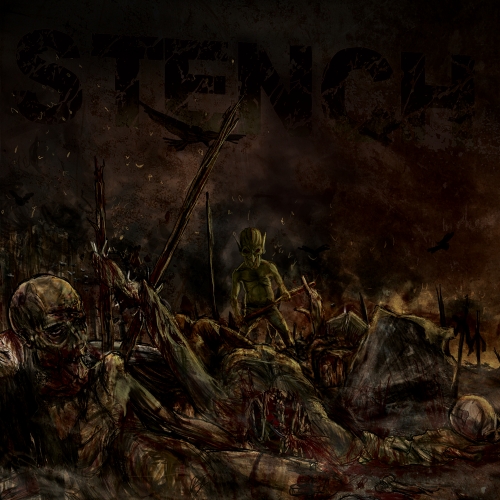

 Through the Shattered Lens