October True Crime: Drew Peterson: Untouchable (dir by Mikael Salomon)


From the years 2007 to 2013, it’s hard to think of anyone who was as universally despised as Drew Peterson.

Drew Peterson was the Illinois cop who first came to national attention when his fourth wife, Stacy, went missing.  Stacy had been on the verge of completing her nursing degree at the time of her disappearance.  Though Drew was a cop, he wasn’t the one who reported her missing.  Instead, it was her sister who called the police after she failed to hear from Stacy.  When Drew was asked about Stacy, he seemed unconcerned and even cocky as he claimed Stacy had run off with another man.  Few people believed him.  It had only been three years since another Peterson had been convicted of murdering his wife and, like Drew, Scott Peterson also claimed that his wife left their home and vanished.

The investigation into Stacy’s disappearance led to authorities taking another look at the death of Drew Peterson’s third wife, Kathy Savio.  Kathy death had originally been found to be an accidental drowning, though how one can drown in an empty bathtub was never really explained.  A second autopsy revealed evidence of a struggle and, in 2013, Drew Peterson was convicted of her murder.  Drew Peterson is currently in prison and Stacy is still listed as missing.

The thing that sticks out about Drew Peterson is how smug he always seemed.  Like Dennis Rader (who was a serial killer by night and a neighborhood compliance officer by day), Drew Peterson was the ultimate nightmare authority figure.  He had a uniform and he had a badge and he had an attitude that said, “I can do whatever I want and if you complain, nobody will believe you.”  When we looked at Drew Peterson, we saw every cop who had ever pulled someone over for a busted taillight or he had ever tried to hit on someone after stopping them for speeding.  Even when he had people accusing him of killing Kathy, Drew would appear on television and smirk and basically dare you to do anything about it.  If you want to know what we mean when we use terms like “mansplaining,” go watch an interview with Drew Peterson.

Drew Peterson’s legal troubles were so drawn out that the 2012 Lifetime film, Drew Peterson: Untouchable, actually went into production before Peterson had even been convicted of anything.  (Peterson actually filed a cease and desist letter demanding that production be halted.)  The film ends not with Drew Peterson being convicted of killing Kathy but instead with Rob Lowe (playing the paunchy, middle-aged Peterson) doing a slow motion strip tease after being arrested.  The film does a very good job of not outright accusing Peterson while, at the same time, reminding viewers of why so many of them instantly disliked him.

Of course, when the film was first aired, it received a lot of attention for casting the amiable and handsome Rob Lowe as Drew Peterson, a man who was neither of those things.  Lowe gives an excellent performance as Peterson, capturing the somewhat desperate swagger of a man who doesn’t want to admit that he’s aging.  Lowe captures Peterson’s cockiness and his manipulative nature and, even more importantly, he captures the arrogance of a man who believes that, because he wears a uniform, he can get away with anything.  As his victimized wives, both Kaley Cuoco and Care Buono gave poignant performances.

I don’t know where Drew Peterson is but, wherever he’s serving his time, I hope he’s being forced to watch this movie at least once a day.
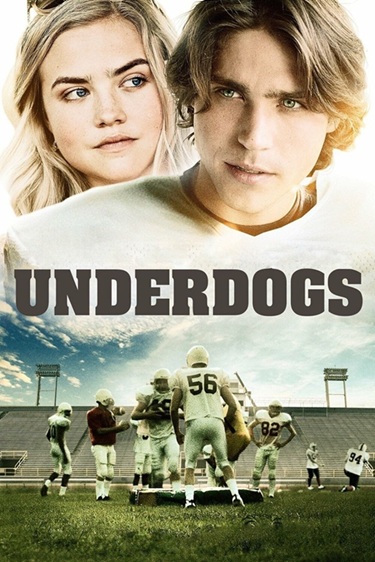
So, I Watched Underdogs (2013, Dir. by Doug Dearth)


In a rural Ohio, a working class high school football teams plays an exhibition game against the rich school on the other side of town.  The working class team is coached by Vince DeAntonio (D.B. Sweeney), a former NFL offensive coordination and the son of a coach.  Vince is a tough taskmaster who tells his players that winning is not going to easy and it’s not going to be fun but he also has the connections necessary to get Joe Namath to stumble into the locker room and give a speech to his team.  The quarterback (Charlie Carver) of the rich high school is the son of the businessman (Richard Portnow) who is planning on moving his factory down to Mexico and putting the entire town out of work.  The quarterback (Logan Huffman) of the working class high school team is the son of an inventor (Willlam Mapother) who is being sued by a corporation that wants to steal his invention.  Both of the quarterbacks like the same cheerleader (Maddie Hasson).  This game is about more than just who scores the winning touchdown.  It’s about town pride.

I love a good underdog story but Underdogs didn’t seem to know what story it wanted to tell.  It spent as much time with the inventor and his court case as it did with the football team and the whole thing ended up becoming a commercial for his product.  (The movie is based on a true story.)  When it actually did get around to the football scenes, it was all too predictable.  The team was bad and then the team was good and the entire game came down to one final throw of the football with the clock counting down.  One weird thing about the movie is that it put a lot of emphasis on Vince recruiting unlikely players to his team but once he had them on the team, we hardly ever saw them again.

At least the movie’s heart was in the right place and it didn’t turn the cheerleaders into stereotypes, like so many high school football movies do.  D.B. Sweeney was okay as the coach but I don’t know if William Mapother’s character was supposed to come across as being as strange as he did.  I’m glad the underdogs proved themselves but the movie could have been better.

Shattered Politics #90: FDR: American Badass! (dir by Garrett Brawith)


FDR-American-Badass-movie-poster

So, as I was thinking about Hyde Park On Hudson, I started to ask myself: what would have made that movie better?  Obviously, the script could have been improved.  Bill Murray could have had some better lines.  Laura Linney could have been a bit less bland.  The direction could have been a bit more dynamic…

And of course, the film could have used a few more werewolves.  Maybe not a huge amount of werewolves because, after all, you do want to keep things plausible.  But, at the same time, a werewolf or two would have livened things up.

And then I thought about Sunrise at Campobello and I realized that film was also missing something.  Once again, the film could have used some werewolves.

“My God,” I thought, “aren’t there any filmmakers out there willing to combine Franklin Roosevelt with werewolves!?”

And then, I realized that there was!

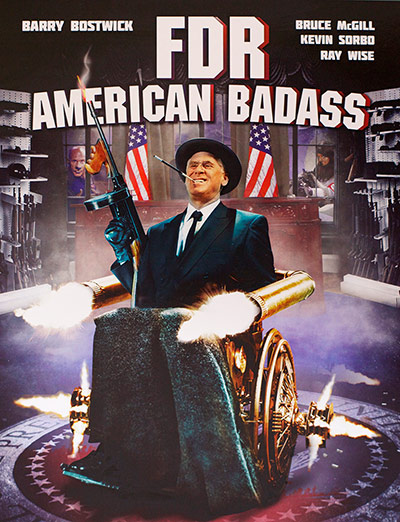
The 2012 film FDR: American Badass! features Barry Bostwick in the role of Franklin D. Roosevelt.  At the start of the film, Roosevelt is the dynamic and athletic governor of New York.  However, while out jogging one day, Frank is attacked by a werewolf and ends up contracting polio as a result.  Recovering in the hospital, Roosevelt decides to run for President and kill werewolves.

Over the course of the film, he does just that.  And, when it turns out that the leaders of the Axis Powers are all werewolves as well, FDR single-handedly wins World War II.  Fortunately, with the help of Albert Einstein, FDR gets his wheelchair equipped with all the latest weaponry.

And did I mention that, as President, FDR smokes weed with Abraham Lincoln (Kevin Sorbo)?  Because he so totally does…

So, at this point, you’re probably already getting the feeling that FDR: American Badass! is kind of a weird film.  And it is.  But what makes the film better than you might think is the fact that it totally commits itself to making no sense.  FDR: American Badass! is full of scenes that are alternatively hilarious, disgusting, and offensive but it works because, unlike something like A Million Ways To Die In The West, FDR: American Badass! is at least creative in its stupidity.  Say what you will about the idea of FDR killing werewolves, the fact of the matter is that there’s only one film where you can actually see that happen.

So, should you see FDR: American Badass?

Go back and read the film’s title.

Did it make you roll your eyes and say, “Oh my God, that is so stupid?”  If so, you’ll probably have a similar reaction to the film itself.

On the other hand, did the title make you smile?  If so, you’ll probably find something to enjoy in this movie.

At the very least, FDR: American Badass! is better than Hyde Park on Hudson.

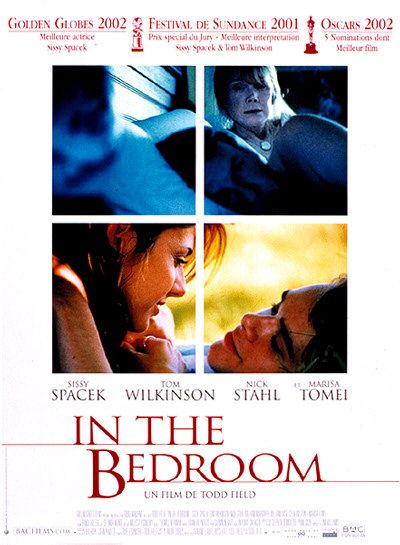
Embracing the Melodrama #50: In the Bedroom (dir by Todd Field)


in_the_bedroom_ver3

If some enterprising young filmmaker were to try to remake Ordinary People as a film noir, he would probably be wasting his time because director Todd Field already beat him to it with the 2001 best picture nominee In The Bedroom.

In the Bedroom takes place in a small town in Maine, the type of idyllic location where almost everyone is a fisherman and, in one way or another, everyone’s future is dependent on the whims of the rich and powerful Strout family.  Dr. Matt Fowler (Tom Wilkinson) and his wife Ruth (Sissy Spacek) seem to have the perfect life: a happy marriage and a smart and likable son, Frank Fowler (Nick Stahl).  Frank has just graduated from college and appears to have a great future ahead of him except for one thing.  He’s fallen in love with Natalie Strout (Marisa Tomei), the ex-wife of the abusive Richard Strout (William Mapother).  When Frank announces that he’s thinking about not going to grad school but instead staying in town so he can work as a fisherman and marry Natalie, Ruth is horrified that her son is throwing his life away.  However, Matt argues that Frank is just going through a phase.

The violent and unstable Richard is determined to win Natalie back.  When Frank attempts to protect Natalie during one of Richard’s rampages, Richard kills Frank by shooting him in the eye.  Richard is arrested for the murder but, largely as a result of his family’s influence, he is only convicted of accidental manslaughter and gets off with probation.  Matt and Ruth are left to both work through their grief and guilt and to eventually seek their own violent vengeance on Richard Strout.

In the Bedroom is probably one of the darkest films that I’ve ever seen in my entire life.  Not only is the film thematically dark but a good deal of it takes place at night and Todd Field fills the screens with shadows.  In the Bedroom is full of scenes of characters just staring at each other, struggling to find the right words to express their feelings and, far too often, simply giving up and saying nothing.  Field makes good use of the frequent silence though.  When Matt and Ruth yell at each other in the kitchen of their home, it’s both shocking and poignant because it stands in such sharp contrast to their usual silence.  Later. when Matt confronts Richard, the frequent pauses in their strained conversation serves to make the scene all the more ominous and creepy.

However, despite being one of the saddest films ever made, In The Bedroom is worth watching just for the performances of the cast.  You probably know that Tom Wilkinson, Sissy Spacek, and Marisa Tomei are all great so instead, I’m going to focus on the two members of the cast who did not receive Oscar nominations.  William Mapother does a really good job playing an unlikable character.  The dangerous yet dorky vibe that made him so menacing when he played Ethan Rohm on Lost is fully present and put to good use here.  Finally, Nick Stahl gives a wonderful performance as poor, doomed Frank.  With limited screen time, Stahl makes Frank into such a believable and sympathetic character that his death becomes a tragedy that the audience feels as well.

Sadly, Nick Stahl has recently been in the new more for his personal troubles than his film careers.  Films like In The Bedroom and Bully show why Nick deserves a chance to make a comeback.

bedroom-11

Lisa Marie Is Disappointed With Another Earth (dir. by Mike Cahill)


As I’ve mentioned on this site a few times, I was really excited about seeing the new independent sci-fi film Another Earth.  Well, I finally saw it and wow.  What a disappointment!

Another Earth is a film about an intelligent teenage girl (Brit Marling) who gets a scholarship to M.I.T.  She goes out to celebrate and while drunkenly driving home, she hears a report on the radio that a new planet has been discovered.  Looking out the window of her car, she spots the new planet while, at the same time, smashing into another car and killing the wife and son of composer William Mapother.  Mapother is put in a coma and Marling ends up getting sentenced to prison.

Four years later, Marling is released from jail.  She gets a job working as a janitor in her old high school.  She also tracks down Mapother, who has come out of his coma and has no idea that Marling is the girl who killed his family.  Through a couple of plot contrivances that makes less sense the more you think about them, Marling becomes Mapother’s maid.  Though Mapother is, at first, surly towards her, he soon falls in love with her because otherwise, nothing would happen in the movie.

Meanwhile, it turns out that the new planet is actually a mirror Earth!  Wow, isn’t that exciting?  Well, no one on “Earth 1” seems to be all the excited about it.  Don’t get me wrong — they talk about it a lot and we got a lot of monologues about the possibilities of a mirror Earth and how we’ve all apparently got a double on this other Earth but still, everyone’s just kinda like “Oh, that’s neat.”  Anyway, Marling wants to go to the new Earth to see if the alternate her is doing any better than her.  Luckily, there’s a Richard Branson-type billionaire who is having an essay contest to win a chance to take a civilian flight to the new Earth.  We’re told that this civilian flight will be the first to land on Earth 2, which I guess can only mean that the Earth 1 equivalent of Barack Obama really did a number of Earth 1’s version of NASA.

Another Earth isn’t necessarily a terrible film but it certainly is a disappointing one.  The film is essentially a collection of indie film clichés that are all held together with an intriguing premise.  Unfortunately, the only thing intriguing about the finished film is thinking about how great it could have been if director Mike Cahill and screenwriter (and star) Brit Marling had actually bothered to explore any of the film’s issues beyond a surface level.  Mapother does a good job playing his surly role but he has next to no chemistry with Marling and you never, for a minute, believe in their relationship.  When Marling isn’t lying to Mapother, she’s bonding with a blind janitor from India who only speaks in philosophical one liners.  Why is the janitor in the film?  Why does he suddenly decide to mentor Marling?  Why does he drink bleach?  There’s also a really embarrassing scene where Marling talks on the phone with a guy doing a really over-the-top imitation of Richard Branson.  Director Cahill offers up endless montages of Marling looking pretty and sad as she wanders around aimlessly and he’s got the whole shaky cam, zoom lens thing down but he doesn’t seem to understand that images are empty without some sort of honest emotion behind them.  

That said, the film does have a great ending, an ending which hints at the film that Another Earth could have been.