Retro Television Review: St. Elsewhere 2.4 “Qui Transtulit Sustinet”


Welcome to Retro Television Reviews, a feature where we review some of our favorite and least favorite shows of the past! On Fridays, I will be reviewing St. Elsewhere, a medical show which ran on NBC from 1982 to 1988.  The show can be found on Hulu and, for purchase, on Prime!
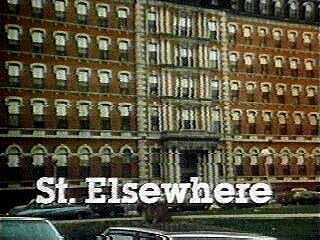
This week. Dr. Craig finally gets to perform his first heart transplant.

Episode 2.4 “Qui Transtulit Sustinet”

(Dir by Victor Lobl, originally aired on November 16th, 1983)

It’s a busy day at St. Eligius.

While Morrison struggles to come to terms with the death of his wife, her heart is transplanted into Eve Leighton.  Morrison tells Westphall that he wants to keep working at the hospital and that he doesn’t need any time off.  Westphall tells Morrison that he’s too distraught to be trusted with patients and that he has to take some time off.  Westphall actually has a point, even if he does come across as being a bit cold when talking to Morrison.  Even Peter White, that drug-addicted sleazebag, tells Morrison that he’s needs to take some time.  Seriously, I think this is the first time that Dr. White’s been correct about anything since this show began.

Dr. Craig finally gets to perform a heart transplant but afterwards,  in a wonderfully-acted scene, he tells Westphall that he feels a bit let down.  After all the anticipation and the preparation, Craig isn’t sure what to do now that he’s actually performed the surgery.  For once, he doesn’t want to talk to the press, regardless of how much the city of Boston expects him to.  It’s a nicely human moment, one that we don’t often get from Dr. Craig.

Nurse Rosenthal attempted to console another breast cancer patient and met with Mark Harmon’s Dr. Caldwell to discuss getting breast reconstruction surgery.  Nurse Rosenthal’s breast cancer storyline has consistently been well-acted and well-written and it has also been consistently difficult for me, as someone who lost her mother to cancer, to watch and write about.  That was certainly the case for me with this episode.

Meanwhile, Fiscus and Luther pool their money to make an investment in silver but, at the last minute, Fiscus pulls out of their investment.  His nerves get the better of him.  Luther makes a lot of money.  Fiscus doesn’t.  Hey, guys — Morrison’s wife is dead.  Show some respect and save the comedy for another episode.

This was an intense episode but it ended on a beautiful note, with Dr. Morrison listening to the sound of his wife’s heart beating in someone else’s body.  A beautiful note but also a very sad one.  I’m worried about Jack Morrison.  I’m worried about the recipient of the heart.  I’m worried about Helen Rosenthal.  I’m worried about the entire hospital!

Here’s hoping for happier days ahead.


Embracing the Melodrama Part II #25: West Side Story (dir by Robert Wise and Jerome Robbins)


West_Side_Story_poster

Nearly two weeks ago, I started on something that I call Embracing the Melodrama, Part II.  For the next month or so, I will be reviewing, in chronological order, 126 examples of cinematic melodrama.  I started things off by reviewing the 1927 classic Sunrise and now, 24 reviews later, we’re ready to start in on one of my favorite decades, the 1960s!

And what better way to start the 60s than be taking a look at the 1961 best picture winner, West Side Story?

Being a lifelong dancer, I have to admit that I’ve lost track of how many times I’ve seen West Side Story.  If you love to dance, this is one of those films that you simply have to see.  Of the various musicals that have won best picture, West Side Story is arguably the best.  Based on a hit Broadway show (which was itself rather famously based on William Shakespeare’s Romeo and Juliet), West Side Story was co-directed by the great choreographer Jerome Robbins and it features some of the greatest dance numbers ever filmed.  If you don’t get excited while watching the Sharks and the Shark Girls arguing about America, then there’s really no hope for you.  Tonight Quintet, Somewhere, A Boy Like That, Maria … even Gee, Officer Krupke, has there ever been another musical score that just leaves you wanting to sing as much as West Side Story does?

(I mean, I’ll be the first admit that I absolutely love the theme song from Santa Claus Conquers The Martians but it can’t even compare to West Side Story!)

What’s funny is that, in between viewings of the film, I always seem to forget just how good West Side Story actually is.  (Fortunately, this also means that I’m pleasantly surprised every time I watch the movie.)  In theory, this is an easy film to joke about.  It tells the story of street gangs who are apparently just as good at dancing as they are at fighting.  The all-white Jets snap their fingers and tell us that when you’re a jet, you’re the best.  The Puerto Rican Sharks are moving in on the Jets’s territory.  The two leaders of the gangs — Riff (Russ Tamblyn) and Bernardo (George Chakiris) — want to settle thing with a “rumble.”  And it’s easy for contemporary audiences to laugh because “rumble” is such an old-fashioned way of saying things that it’s now one of those terms that’s only used when one is trying to be ironic or snarky.

(For instance, I was with some friends at the movies and the people sitting behind us kept talking.  One of my friends told them to shut up.  One of the loud people replied that we were the ones who need to shut up.  As the insults escalated, I finally said, “Y’all — do we really have to have a rumble right now?”  Unfortunately, everyone was too busy arguing to appreciate my pitch perfect delivery.)

Riff’s best friend is Tony (Richard Beymer).  Tony was a co-founder of the Jets but now, he wants to move on from the gang.  He meets a girl named Maria (Natalie Wood) and the two of them fall in love.  However, Maria is Bernardo’s younger sister.  Her best friend, Anita (Rita Moreno), is Bernardo’s girlfriend.  Loving Tony, in other words, is prohibido.

And, since West Side Story is based on Romeo and Juliet, you can probably guess to what type of tragedy all of this leads.

Now, before I heap too much praise of West Side Story, I do need to admit that, in the role of Tony, Richard Beymer does not exactly radiate charisma.  He’s handsome enough but you never quite buy that he was former member of the Jets.  Since Tony’s singing voice was dubbed by Jimmy Bryant, you do believe everything that he sings.  But otherwise, Richard Beymer comes across as being stiff and rather awkward.

And it doesn’t help, of course, that he’s acting opposite Russ Tamblyn who, in the role of Riff, is a whirlwind of unstoppable energy.  Tamblyn is the one who you remember at the end of the film, followed by George Chakiris.  Compared to those two, Richard Beymer’s performance is just dull.

Fortunately, there’s Maria (played by Natalie Wood with Marni Nixon doing the singing).  Natalie Wood is one of my favorite of the classic Hollywood actresses.  She’s certainly one of the actresses with whom I most idenitfy.  With Richard Beymer sleepwalking through the role of Tony, it falls on Natalie to provide some true emotion to the film’s love story and that’s exactly what she does.  Every time I see West Side Story, I want to be Natalie Wood and I want to have a best friend like Rita Moreno and I want to meet someone like Riff…

Sorry, Tony.

West Side Story is one of the best musicals ever made.  If you’re not dancing and then crying and then dancing while crying as you watch West Side Story, then you’re doing it wrong.

http://www.youtube.com/watch?v=yA_aFprGzyc