4 Shots From 4 Films: Special Wes Craven Edition


4 Shots From 4 Films is just what it says it is, 4 shots from 4 of our favorite films. As opposed to the reviews and recaps that we usually post, 4 Shots From 4 Films is all about letting the visuals do the talking.

Today’s director is the great Wes Craven!

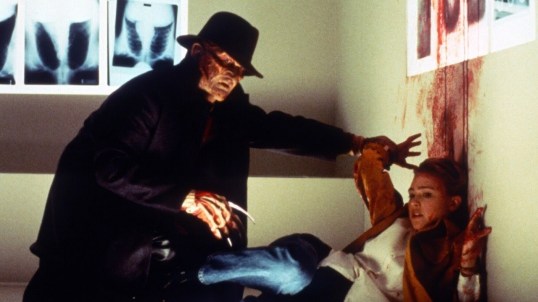
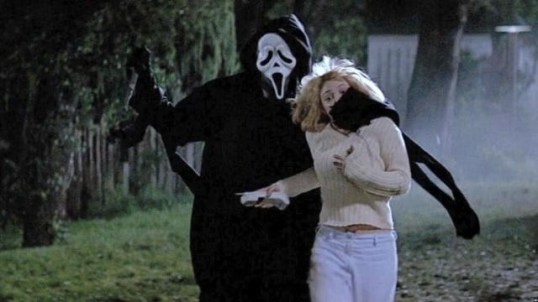
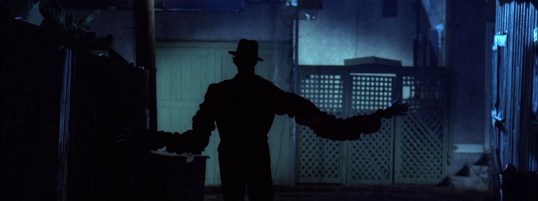
4 Shots From 4 Wes Craven Films

The Last House On The Left (1972, dir by Wes Craven, DP: Victor Hurwitz)

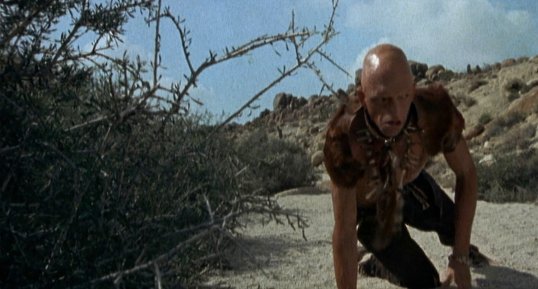
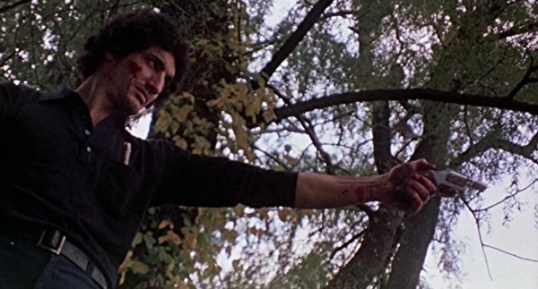
The Hills Have Eyes (1977, dir by Wes Craven, DP: Eric Saarinen)

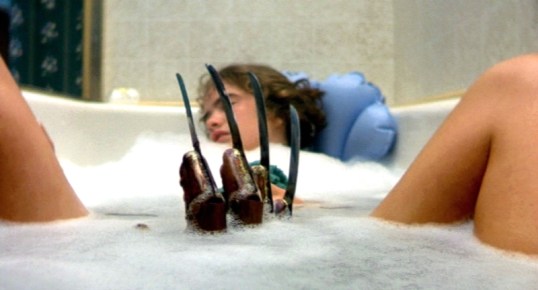
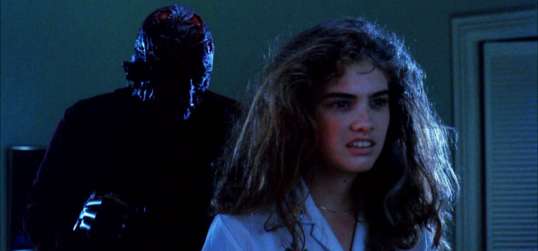
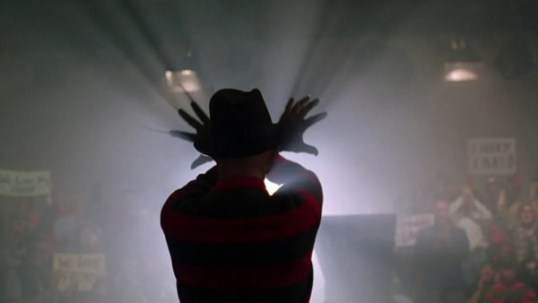
A Nightmare on Elm Street (1984, dir. by Wes Craven, DP: Jacques Haitkin)

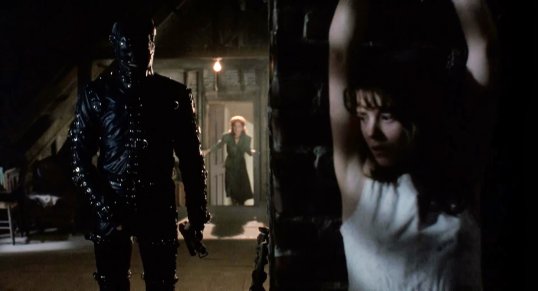
The People Under The Stairs (1991, dir by Wes Craven, DP: Sandi Sissel)

Late Night Retro Television Reviews: Nightmare Café 1.6 “Aliens Ate My Homework”


Welcome to Late Night Retro Television Reviews, a feature where we review some of our favorite and least favorite shows of the past!  On Mondays, I will be reviewing Nightmare Café, which ran on NBC from January to April of 1992.  The entire show is currently streaming on YouTube!
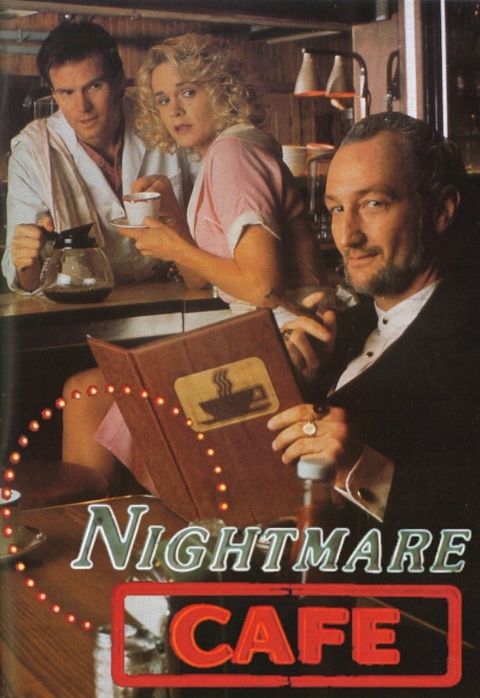
This week, Nightmare Café comes to an end!

Episode 1.6 “Aliens Ate My Homework”

(Dir by Wes Craven, originally aired on April 3rd, 1992)

When it came to the sixth episode of Nightmare Café, I don’t know if executive producer Wes Craven knew that it was going to be the final episode of the series when he decided to direct it.  It would be nice to think that Craven decided to say goodbye to the series by sitting in the director’s chair but the realities of network television make that doubtful.  It’s probably just a coincidence that the final episode of the series was directed by Wes Craven but it still feels appropriate.  Not only did Wes Craven create the series but he was directed the movie that made Robert Englund a big enough star that NBC was actually willing to make him the star and narrator of a prime time show.

(It’s interesting to consider that playing a viscous child murderer turned Robert Englund into a beloved pop culture legend but it says something about the natural friendliness that Englund projected that audiences still liked him even after he became most identified with playing the man of everyone’s nightmares.)

It’s a rather playful episode, one that eschews the drama and horror of the first five episodes for some rather broad comedy.  It’s also the episode that features the most narration from Blackie, as he both tells us what’s happening and also provides some commentary on the actions of the people in the story.  Robert Englund really seems to enjoy playing the character in this episode and it’s fun to watch him.

The episode focuses on tabloid reporter Harry Tambor (Bobby Slayton), who has been ordered by his new editor to hit the road and find an amazing story.  As ordered, Harry hits the road and, while driving through the country, he happens to pick up three little people (Jimmy Briscoe, Kevin Thompson, and Arturo Gil) who claim to be Romanian circus performers.  Harry’s new friends inform him that the town he is approaching has been the site of several mysteries disappearances.  It’s not humans disappearing, though.  It’s cows!

Since Bobby’s new editor just happens to be Blackie in disguise, it’s not a surprise that the town is not just home to a bunch of cows but also the Nightmare Café.  In fact, we learn that Harry is Frank’s favorite writer.  Fay thinks that you can’t believe anything that you read in the tabloids, which is a pretty judgmental attitude to have when you’re working in an extra-dimensional café that can randomly materialize anywhere.

Anyway, while stopping in the café for cup of coffee, Harry comes up with the brilliant idea to fake a UFO invasion.  He sends away for not only a fake flying saucer but also alien costumes that the Romanian circus performers agree to wear.  Harry fakes his UFO invasion but it causes a complete panic in the town and soon, Sheriff Filcher (Don S. Davis, best-known for playing Major Briggs on Twin Peaks) and the townspeople are looking to lynch the invaders.  Unfortunately, the Sheriff believes that the aliens are the folks working at the newly arrived Nightmare Café.  Who can blame him, really?  I mean, the place just showed up from out of nowhere!

As I said a few paragraphs ago, there’s nothing particularly serious about this episode of Nightmare Café.  Almost every plot development is played for laughs and there’s really not a subtle moment to be found in the entire episode.  We don’t really think of Wes Craven as being a comedic director, though all of his films displayed a certain subversive wit.  Craven does well-enough with the comedy in this show, though one gets the feeling that, if the episode had been any longer than 45 minutes, all of the running around and yelling would have gotten a bit exhausting to watch.  The comedy may be broad but everyone in the episodes — from Robert Englund to Don S. Davis — appears to be having fun and that goes a long way towards keeping things entertaining.

This episodes ends on a slightly different note than the other episodes of Nightmare Café.  Each character gets a title card, which explains what happened to them after the episode ended.  First, we learn about what has happened to the reporter, the circus performers, and the sheriff.  Then, the final title card informs us that Frank and Fay are still working at the Nightmare Cafe and they hope we’ll stop by if we’re in the area.  It’s a nice way to wrap up the series.

This was the final episode of Nightmare Café.  It was a fun show to watch and review.  Nightmare Café felt as if it was a bit before its time.  The show’s anthology format and it’s horror-themed stories would have made it a natural fit for the streaming era.  Unfortunately, it aired during the age of network television dominance and apparently, it never found an audience.  It’s a shame, because Jack Coleman, Lindsay Frost, and Robert Englund really did make for an intriguing team.

Next week, I’ll be reviewing something new in this time slot.  Who knows what it will be?  Certainly not me!  I have a few shows that I’m considering for Monday and Tuesday so we’ll see what happens.

Music Video of the Day: Are You Ready For Freddy? by the Fat Boys (1988, directed by Harvey Keith)


I always assumed that this song was specifically written for one of the Nightmare on Elm Street movies but actually, the Fat Boys were just fans of the movies and they decided to put a song about them on one of their albums.  The song was included in The Freddy Krueger Special, which aired on CBS in 1988.  That’s amazing to think that Freddy got his own primetime special.

This video, which features several of Freddy’s victims and Robert Englund himself, was written by Wes Craven and directed by Harvey Keith.  Keith directed a few films, including 1988’s Mondo New York and 1990’s Jezebel’s Kiss.

Enjoy!

Late Night Retro Television Reviews: Nightmare Café 1.4 “The Heart of Mystery”


Welcome to Late Night Retro Television Reviews, a feature where we review some of our favorite and least favorite shows of the past!  On Mondays, I will be reviewing Nightmare Café, which ran on NBC from January to April of 1992.  The entire show is currently streaming on YouTube!

This week, a dying detective is allowed a chance to solve one last case.

Episode 1.4 “The Heart of Mystery”

(Dir by John Harrison, originally aired on March 20th, 1992)

This week’s episode of Nightmare Café is the first to largely focus on a guest star.  While Jack Coleman and Lindsay Frost do play roles in this week’s episode and Robert Englund’s Blackie actually gets to do more than usual, the majority of the episode is still dominated by Timothy Carhart as Detective Stan Gates.

One dark night, Stan chases a young thief (played by Alfonso Quijada) into a dark alley.  When the thief pulls a gun on him, Stan explains that he’s a police officer and he’s not trying to take the thief to jail.  He explains that he knows the young man is on drugs and is not in full control of his actions.  He asks the young man to give him the gun.

Meanwhile, in the nearby Nightmare Café, a bored Frank and Fay are playing a game of Clue.  (Colonel Mustard did it.)  Stan walks into the café and asks for a cup of coffee.  Robert Englund’s Blackie suddenly appears sitting in a booth and eating from a bag of popcorn.  He introduce himself to Stan and then leads Stan over to a window.  Looking through the window, Stan can see himself and the thief in the alley.  The thief has fired the gun and the bullet appears to be suspended in the air.  Blackie explains that the café has slowed down time to give Stan the chance to solve one last case before the bullet hits and kills him.

The case involves the death of Charlotte Bening (Laura Mae Tate), a wealthy woman with whom Stan was in love.  One night, when Stan was investigating a break-in at her mansion, Stan fired his weapon at what he believed to be the burglar.  Someone hit him from behind, knocking him out.  When Stan woke up, he discovered that the person who was actually shot was Charlotte!  While the police ruled it an accidental shooting, Stan was convinced that someone specifically set him up.  Could it have been Charlotte’s brother, a frustrated artist named Philip (Denis Forest, who also appeared in last week’s episode of Friday the 13th)?  Or could it have been …. well, there is no one else, actually.  The great Lochlyn Munro does make a brief appearance as one of Charlotte’s more aggressive suitors but he’s only onscreen for a few minutes.  There’s not much suspense to this mystery.

That said, I did enjoy this episode of Nightmare Café, which not only pays homage to film noir but which also features Robert Englund at his quippy best as he passive-aggressively pushes Stan into solving the case.  Fay does briefly leave the café so that she can pretend to be the producer of a true crime series and interview some of the people who knew Charlotte and Stan but, for the most part, this episode is centered around Timothy Carhart and Robert Englund and both of them carry things nicely.  Though the episode’s format probably confused those who, on the basis of the previous three episode, didn’t realize that Nightmare Café was originally envisioned as being an anthology series, The Heart of Mystery holds up very well.

4 Shots From 4 Films: Special Wes Craven Edition


4 Shots From 4 Films is just what it says it is, 4 shots from 4 of our favorite films. As opposed to the reviews and recaps that we usually post, 4 Shots From 4 Films is all about letting the visuals do the talking.

This October, I am going to be using our 4 Shots From 4 Films feature to pay tribute to some of my favorite horror directors, in alphabetical order!  That’s right, we’re going from Argento to Zombie in one month!

Today’s director is the great Wes Craven!

4 Shots From 4 Wes Craven Films

A Nightmare on Elm Street (1984, dir. by Wes Craven, DP: Jacques Haitkin)

Deadly Friend (1986, dir by Wes Craven, DP: Philip H. Lathrop)

Wes Craven’s New Nightmare (1994, dir by Wes Craven, DP: Mark Irwin)

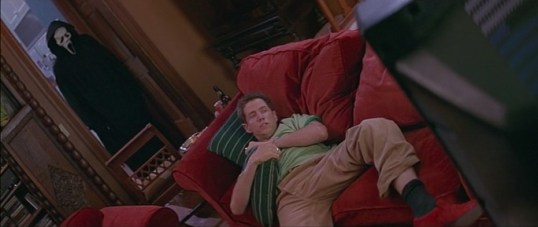
Scream (1996, dir by Wes Craven, DP: Mark Irwin)

Horror Scenes I Love: Robert Englund in A Nightmare on Elm Street


Ah, Robert Englund.

By most accounts, Robert Englund is one of the most affable men in Hollywood, someone who is so talkative and friendly that people are often stunned to remember that he’s best known for playing Freddy Krueger.  Indeed, in his pre-Nightmare on Elm Street films, Englund was usually cast as quirky and often shy characters.  It was rare to see him play a villain.

That all changed when he was played Freddy Krueger in 1984’s A Nightmare on Elm Street.  (Interestingly enough, director Wes Craven wrote the role with David Warner in mind.)  In the role of Freddy, Englund became a horror icon.  Freddy himself became such a quip machine in the later films that it’s easy to forget just how terrifying a figure he was in the first film.

In this scene, we see just how scary Robert Englund’s performance truly was in A Nightmare on Elm Street.

Last Night Retro Television Reviews: Nightmare Cafe 1.1 “Nightmare Cafe”


Welcome to Late Night Retro Television Reviews, a feature where we review some of our favorite and least favorite shows of the past!  On Mondays, I will be reviewing Nightmare Cafe, which ran on NBC from January to April of 1992.  The entire show is currently streaming on YouTube!

Created by Wes Craven and Thomas Baum, Nightmare Café was an anthology show about a mysterious café and the people who worked there.  The proprietor was played by Robert Englund.  The series only aired for six episodes and apparently, NBC didn’t really give the show much of a chance to find an audience.  Myself, I just recently came across it on YouTube and I’m looking forward to reviewing it over the course of October!

Episode 1.1 “Nightmare Café”

(Dir by Phillip Noyce, originally aired on January 29th, 1992) 

“See those two folks up there?” Robert Englund, playing a sharply-dressed man named Blackie, asks while staring straight at the camera.  “They’re about to get a second chance.  And you know what?  I bet they blow it.”

The two people to whom Blackie is referring are Frank Nolan (Jack Coleman) and Fay Pernovic (Lindsay Frost).  On a foggy night, Fay stops her car on the side of the bridge and jumps into the water below.  Fortunately, Jack already happens to be in the water so he grabs her and pulls her to dry land.  Standing on the deserted road and soaking wet, Fay refuses to say thank you and Frank refuses to mention why he was there to begin with.  However, when they see an all-night café in the distance, they decide to get a cup of coffee.  As they head to the café, Blackie watches them from the shadows.  As they enter the café, the neon sign changes from saying “Night Café” to “Nightmare Café.”

The café appears to be deserted, though in working order.  Jack goes behind the counter finds a chef’s outfit.  Fay finds a waitress outfit.  When she heads into the restroom to change clothes, she briefly hears the sound of a woman crying but, upon entering, she finds no one.  Meanwhile, Jack notices that a TV screen at the front of the café has come to life and …. uh-oh!  He’s suddenly watching what appears to be security footage of Fay removing her wet clothes.  Jack does the right thing and turns the TV off but seriously, what’s happening with this place!?

In the restroom, Fay marvels at how well the waitress uniform fits, almost as if it was made for her.  Suddenly, she hears more crying.  She touches the bathroom mirror and she sees herself sobbing and pulling pills out of a medicine cabinet.

Fay steps back into the main part of the café.  Frank confesses about watching her change on the television.  Fay demands to know what color underwear she was wearing.  “White …. with red hearts on back,” is Frank’s reply.  (For the record, as I sit here typing this, I am wearing black underwear with red hearts on the back.)  Fay accuses him of being a pervert and peeking in on her while she was changing.  Frank turns on the TV in an attempt to prove that he’s not a perv but, instead of showing the restroom, the TV shows the chemical plant where, according to Frank, he works as a night watchman.  He watches as two men steal a barrel of chemical waste and brag about how they’re going to dump it into the harbor.  Frank says that his worst nightmare is seeing something that’s wrong and not doing anything to stop it.  Fay pinches Frank in an attempt to wake him up.  On the TV screen, Frank Nolan tries to stop the men from driving off with the chemical waste.  Frank is fired and then knocked unconscious.

Realizing the Frank has vanished from the café, Fay runs over to a payphone and dials 9-1-1, just to be informed that the number cannot be reached.  Fay opens the door to the café and discovers that she and the café are apparently floating in space!

Returning to the television, Fay sees that, at the chemical plant, Frank is still on the ground and his employer tells a bunch of thugs that he wants them to make Frank watch as they dump the waste into the harbor.  However, once the thugs drive down to the harbor, Frank jumps out of the trunk of their car and into one of the trucks transporting the chemical waste.  The thugs shoot at the truck until it explodes and then decide that it’s time to get a cup of coffee.

Realizing that the thugs might be coming, Fay decides she better pretend to be a real waitress.  She grabs a cup of coffee and walks into the back where she discovers Frank rising out of a water-filled sink.  “You know what?” Frank says, “I don’t think this is your run-of-the-mill all night café!”

Fay congratulates Frank on doing the right thing and standing up to the thugs.  Suddenly, Fay starts to worry about what she saw in the restroom so she and Frank enter and, in the mirror, they see the two thugs approaching the cafe.  Frank and Fay run into the kitchen.  Frank opens a door marked exit and plunges back into the harbor.  Fay closes the door and then opens it again and finds herself staring at a back alley.  Deciding to face the thugs, she heads to the front of the café, where the two thugs demand to know where Frank is.  She tells them that he’s in the ladies room.  They rush into the restroom and suddenly find themselves on a police shooting range with a bunch of cops aiming their guns at them.

“This place has possibilities,” Fay says as the two thugs run from the café.

Suddenly, the TV turns on Fays sees herself in her bedroom, getting dressed for a date.  Frank steps back into the café and watches the TV, barely noticing that Fay has vanished from the café.  While he’s doing this, Blackie steps into the café and, breaking the fourth wall, says, “This ought to be interesting.”

On the television, Fay gets a call from a guy named Al (John D’Aquino) who explains that he’ll be delayed but he’ll see her later.  Frank recognizes Al as being his boss at the chemical plant and then he realizes that Blackie also worked at the chemical plant and was one of the people who always told him not to waste his time reporting the toxic waste dumping.  Blackie holds up a deck of cards and says that whoever pulls the low card will pay for their meal.  Frank says that the only person that he’s betting on is Fay.

On the TV, Fay drives towards Al’s house.  Suddenly, Frank is standing on the side of the road and hitchhiking.  Fay gives him a ride and suddenly, the two thugs pop up and start shooting at them.  Fay speeds off, with Frank in the car.  Fay outmaneuvers the pursuing thugs, who end up crashing their car into the harbor.

Suddenly, Blackie is the only one sitting in the café.  He watches Fay and Frank talk in the car.  Frank tells Fay all about Al and Fay kicks Frank out of the car, not understanding how he could possibly know her name.  Suddenly, Frank is back in the café.  He and Blackie watch as Fay knocks on the door of Al’s penthouse.  No one answers and Frank cheers as Fay starts to walk away.  Suddenly, Blackie appears on the television and unlocks the door so Fay can enter the penthouse.

Fay gives Al a really ugly sweater for his birthday but is then shocked to discover that Al is at the penthouse with another woman (played by Carrie-Anne Moss in an early role), who promptly asks if Fay is the maid.  As Fay heads for the penthouse’s bathroom, one of the thugs shows up and announces that he previous saw Fay at the café.  Meanwhile, Fay searches the medicine cabinet for pills before heading back to her car

Seeing Fay driving towards the harbor on the television, Frank runs out of the café to save Fay again.  But this time, instead of jumping into the harbor, Fay looks at the water and then says that it would be foolish to kill herself over a loser like Al.  Suddenly, Al drives up and Fay and Frank have to jump into the water to avoid getting hit.  However, once they hit the water, Frank realizes that they’re already dead.

Upon figuring this out, Frank and Fay are transported back to the café where Blackie tells them that they’re dead in the real world but they’re alive in the café and now, they get to make a difference in other people’s lives.  Blackie opens the door, to show Frank and Fay that they are once again floating in space and that the Earth in the distance.  Blackie tells them that they’ve been selected by “a higher authority” to help the people who enter the café and “maybe learn a little about yourselves along the way.”  But they’re both dead so what’s left to learn?

Suddenly, Al enters the café.  Blackie tells Al that Frank and Fay are in the restroom.  Al steps into the restroom and suddenly has a vision of Fay testifying against him in court.  Terrified, Al runs from the café but, upon opening the door, he plunges through space and lands in a vat of chemical waste.

A woman (played by Joan Chen of Twin Peaks fame) opens the front door.  “Hi,” she asks, “Are you open?”

Nightmare Café only ran for 6 episodes and anthology shows are notorious for being uneven.  All that considered, I really enjoyed the pilot for Nightmare Café, with its twisty plot, frequently surreal visuals, and — last but not least — Robert Englund having what appears to be a lot of fun as the show’s host.  The pilot was directed by Philip Noyce, who keeps the action moving a great pace.  Even more importantly, from their first scene together, Lindsay Frost and Jack Coleman have a lot chemistry.  I’m looking forward to watching the remaining episodes and seeing where all of this goes!
4 Shots From 4 Films: Special Wes Craven Edition


4 Or More Shots From 4 Or More Films is just what it says it is, 4 shots from 4 of our favorite films. As opposed to the reviews and recaps that we usually post, 4 Shots From 4 Films lets the visuals do the talking!

84 years ago today, Wes Craven was born in Cleveland, Ohio.  Craven started his career as an academic, teaching high school English.  However, realizing that there was more money to be made in the film industry, Craven changed careers.  By his own admission, he started his career directing “hardcore, X-rated films” under a pseudonym and it has been rumored that he was a member of the crew of the first “porno chic” film, Deep Throat.  Eventually, Craven broke into the mainstream with some of the most influential and often controversial horror films ever made.  From being denounced for the original Last House On The Left to changing the face of horror with A Nightmare on Elm Street to becoming something of a revered statesman and a beloved pop cultural institution with the Scream franchise, Wes Craven had a truly fascinating career.

In honor his films and legacy, it’s time for….

4 Shots from 4 Wes Craven Films

The Last House On The Left (1972, dir by Wes Craven, DP: Victor Hurwitz)

A Nightmare on Elm Street (1984, dir by Wes Craven, DP: Jacques Haitkin)

New Nightmare (1994, dir by Wes Craven, DP: Mark Irwin)

Scream (1996, dir by Wes Craven, DP: Mark Irwin)

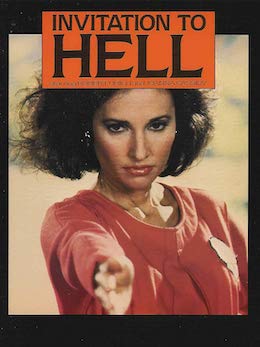
Retro Television Reviews: Invitation to Hell (dir by Wes Craven)


Welcome to Retro Television Reviews, a feature where we review some of our favorite and least favorite shows of the past!  On Sundays, I will be reviewing the made-for-television movies that used to be a primetime mainstay.  Today’s film is 1984’s Invitation to Hell.  It  can be viewed on YouTube!

There’s one rule in life that should never be forgotten.

Any movie that opens with Susan Lucci casting a hex that causes a man’s head to explode is going to be worth watching.

That’s certainly the case with Invitation to Hell, a 1984 made-for-TV movie that casts Lucci as Jessica Jones, an insurance agent who lives and works in an upper class suburb in Southern California. Jessica not only sells insurance but she also runs the ultra-exclusive Steaming Springs Country Club! Anyone who is anyone in town is a member of Steaming Springs! Of course, joining Steaming Springs requires going through a strange ceremony in which you walk into a mist-filled room. Jessica says that the room is called “the Spring” and that it contains everything that someone would need to be happy. However, one need only consider that the film is called Invitation to Hell to guess that Jessica might not be completely honest.

Matt Winslow (Robert Urich) and his family have just moved into the suburbs. Matt’s an engineer whose job involves designing a state-of-the-art space suit. Matt is a little bit annoyed when Jessica starts pressuring him and his family to join the country club. He’s even more perturbed when his wife (Joanna Cassidy), upon returning from the mist-filled room, starts acting and dressing just like Jessica. Matt soon comes to suspect that something strange might be happening, especially after his own daughter attacks him! Fortunately, Matt’s spacesuit comes with a flame thrower, a laser, and a built-in computer that can determine whether or not someone is actually a human being. (Wearing the space helmet means viewing the world like you’re the Terminator.) Soon, it’s science vs. magic as Matt dons the suit and tries to rescue his family from country club living!

Invitation to Hell is totally ludicrous but also a lot of fun. Robert Urich is properly stolid as the hero while the film itself is, not surprisingly, stolen by Susan Lucci. Lucci is totally and wonderfully over-the-top as Jessica, playing the role with the same cheerfully unapologetic intensity that made her a daytime television star. This is a film that has a little bit for everyone — familiar television actors, flamethrowers, space suits, demonic possession, exploding cars, and even a little bit of social satire as the film suggests that living in the suburbs is a terror even without weird country clubs and chic spell casters.

Interestingly enough, this made-for-television film was directed by none other than Wes Craven! The same year that this film was broadcast, Craven directed a little film called A Nightmare on Elm Street. While Invitation to Hell might not be in the same league as that classic shocker, it’s still an enjoyably campy horror flick.

Retro Television Review: Summer of Fear (dir by Wes Craven)


Welcome to Retro Television Reviews, a feature where we review some of our favorite and least favorite shows of the past!  On Sundays, I will be reviewing the made-for-television movies that used to be a primetime mainstay.  Today’s film is 1978’s Summer of Fear.  It  can be viewed on YouTube!

In this made-for-TV movie from 1978, Linda Blair (fresh from the first two Exorcist films) plays Rachel. Rachel is a teenager who lives on a ranch in California. She loves horses and she loves her boyfriend and she’s especially happy that her cousin, Julia (Lee Purcell) is coming to live with her. Julia recently lost both of her parents in a tragic auto accident. Though neither Rachel nor her parents have ever met Julia before, they’re all planning on welcoming her into their very nice home.

The only problem is that, once Julia arrives, she seems to be a little bit strange. She speaks with a strange accent that no one on the ranch has ever heard before. The horses all seems to be terrified of her. After Rachel discovers that Julia has stolen minor personal possessions from her new family, Rachel starts to suspect that Julia might be witch and that she might be casting spells! Of course, by this point, Julia is no longer as shy and awkward as she seemed when she first showed up. Instead, she’s now glamorous and every man who meets her becomes intrigued, including Rachel’s boyfriend!

Based on a best-selling novel, Summer of Fear originally aired on NBC. If it were made today, it would probably air on something like Lifetime and it would have a title like, “Deadly Spell” or “Dangerous Seductress.” Seen today, it’s a bit of a slow movie and Linda Blair occasionally seems to be trying too hard to come across as being wide-eyed and innocent in her role but it’s entertaining as long as Lee Purcell is giving people strange looks and chewing up the scenery. The more out-of-control Pucell becomes, the more entertaining the film. Summer of Fear does build to a satisfying conclusion but it’s still hard not to wish that the story itself had moved just a bit quicker.  Jaded audiences in 2022 are no longer as shocked at the idea of witch coming to visit as audiences in 1978 may have been.  In the end, probably the most interesting thing about Summer of Fear is that it was an early credit for horror master, Wes Craven. This was his third film and his first “major” production, one that he made in order to show that, after directing two independent films, he could be trusted with a mainstream, studio production.  As such, you can argue that, without this film, Craven never would have gone on to do Nightmare on Elm Street and Scream.  Modern horror would be very different without Summer of Fear.

Ultimately. the film’s a bit too slowly paced to really be successful but if you’re a fan of Wes Craven’s or even Linda Blair’s, you’ll probably want to watch it at least once.