Welcome to Late Night Retro Television Reviews, a feature where we review some of our favorite and least favorite shows of the past! On Wednesdays, I will be reviewing 1st and Ten, which aired in syndication from 1984 to 1991. The entire series is streaming on Tubi.
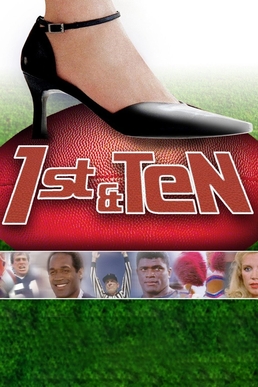
This episode was confusing. Is syndication to blame?
Episode 3.6 “The Bulls Change Hands”
(Dir by Stan Lathan, originally aired on September 9th, 1987)
Diana no longer owns the Bulls!
That was the main plot development to be found in this cluttered episode of 1st & Ten. As I’ve mentioned before, the episodes of 1st & Ten that are available on Tubi are the heavily edited versions that were sold into syndication as opposed to the original, R-rated versions that appeared on HBO. With quite a few of these episodes, it’s obvious that entire plotlines have been pretty much chopped out. That certainly feels like the case here because, despite having watched the episode, I’m still not totally sure how Diane lost the Bulls in the first place.
What I do know is that she threatened to expose Teddy’s insider trading. Teddy responded by leaving the country but, before he left, he gave his ownership shares to his daughter, Jill (Leah Ayres). Teddy explains that this makes Jill the owner of the Bulls. But my understanding was that Teddy only owned half the team so it seems like that would mean Jill and Diane would now be co-owners. Perhaps I missed something in an earlier episode or maybe some line of dialogue was cut out for syndication, I’m not sure. What I do know is that Jill now owns the Bulls. The first thing she does is break up with Yinessa because she can’t be both his boss and his girlfriend.
In her final locker room speech, Diane orders the Bulls to win because Diane is taking Jill to court and she wants the team to be in the playoffs once she returns as the owner. It’s not a bad speech but again, I thought Diane still owned at least half of the team.
Meanwhile, Yinessa is back as quarterback. And he leads the Bulls to their first victory of the season. His new wide receiver, Billy Cooper (Michael Toland) catches the game-winning pass. At the same time that Billy is scoring, some guy who we’ve never seen before is shooting at him from the roof of the stadium. The police arrest the guy and Billy later discovers a bullet lodged in his helmet.
Bubba’s sex therapist (Penny Johnson) is now obsessed with him, despite Bubba’s attempts to set her up with with Jethro. I have a feeling that the Jethro/Bubba storylines were the ones that really got left on the cutting room floor when it came to editing these episodes for syndication. Jethro and Bubba have been with the show since the beginning and they’ve got prominent billing in the opening credits but, when it comes to their roles in the episodes themselves, it seems like the only thing that happens is Bubba says that he needs to get laid and then the two of them disappear for several weeks. When they do finally reappear, Bubba is always in some sort of new trouble with his wife.
Speaking of marriage, in this episode, TD Parker finally confesses to his wife that he’s been having an affair.
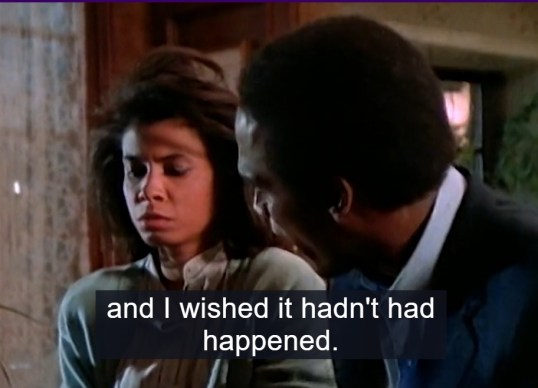
TD apologizes. His wife tells him to get out. Agck! I can see where this storyline is heading but OJ Simpson fighting with his wife still lands differently in 2026 than it probably did in 1987.
This episode was a mess but I guess Jill is the owner of the Bulls now and Teddy’s fled to South America. Can’t the Bull just concentrate on playing football and earning their paycheck?

 I think I was twelve when I first saw Heavy Metal. It came on HBO one night and I loved it. So did all of my friends. Can you blame us? It had everything that a twelve year-old boy (especially a 12 year-old boy who was more than a little on the nerdy side) could want out of a movie: boobs, loud music, and sci-fi violence. It was a tour of our secret fantasies. The fact that it was animated made it all the better. Animated films were not supposed to feature stuff like this. When my friends and I watched Heavy Metal, we felt like we were getting away with something.
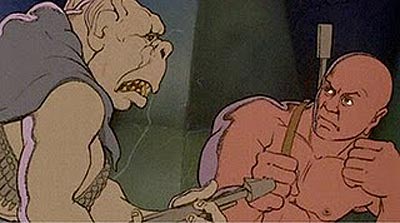 Den (directed by Jack Stokes, written by Richard Corben)
 On a space station orbiting the Earth, Captain Lincoln F. Sternn is on trail for a countless number of offenses. Though guilty, Captain Sternn expects to be acquitted because he has bribed the prosecution’s star witness, Hanover Fiste. However, Hanover is holding the Loc-Nar in his hand and it causes him to tell the truth about Captain Sternn and eventually turn into a bloodthirsty giant. Captain Sternn saves the day by tricking Hanover into getting sucked out of an air lock.
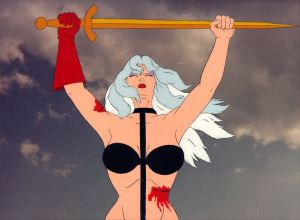 In the film’s final and most famous segment, Taarna, the blond warrior was featured on Heavy Metal‘s poster, rides a pterodactyl across a volcanic planet, killing barbarians, and finally confronting the Loc-Nar. She sacrifices herself to defeat the Loc-Nar but no worries! We return to Earth where, for some reason, the Loc-Nar explodes and the girl from the beginning of the film is revealed to be Taarna reborn. She even gets to fly away on her pterodactyl. Taarna was really great when I was twelve but today, it is impossible to watch it without flashing back to the Major Boobage episode of South Park.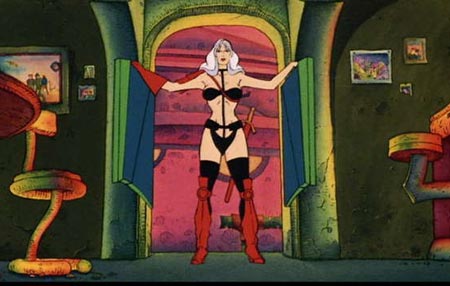
 Through the Shattered Lens